
How a BART Crisis Intervention Specialist helped a mother find her lost son and get him into treatment
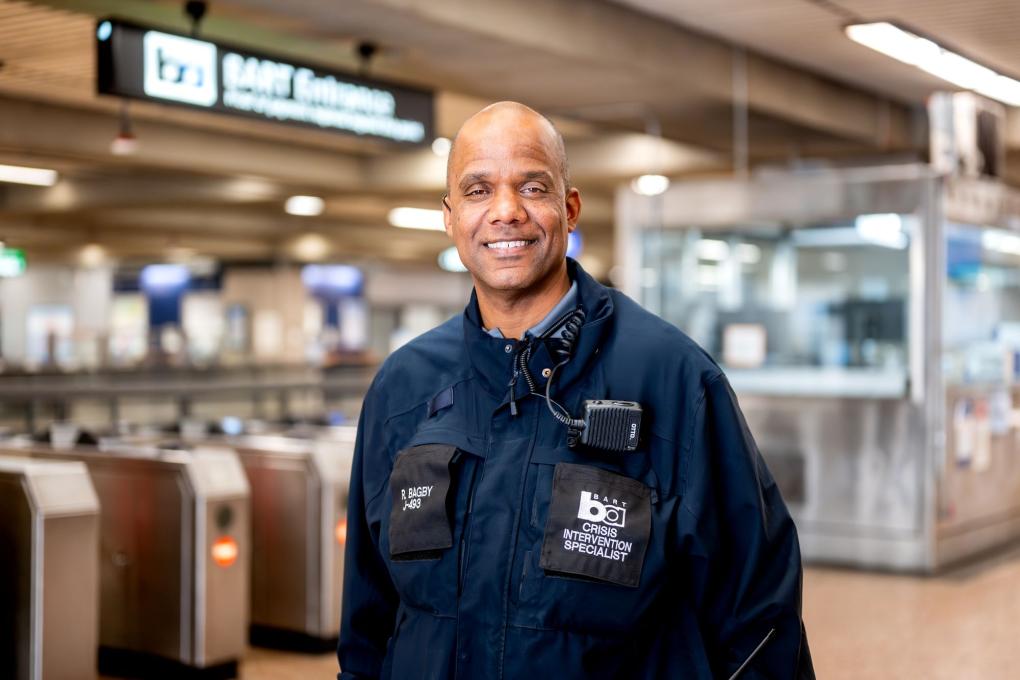
A photo of Crisis Intervention Specialist Rahman Bagby in Lake Merritt Station.
In October 2024, Alec decided he’d had enough.
He had been living on the street for about three years, struggling with severe substance addiction, when he finally decided it was time to get help.
His first call was to BART Crisis Intervention Specialist Rahman Bagby.
Bagby had known Alec for about a year by the time the young man said he was ready to make a change. In that time, Bagby and his CIS partner Ontreal Wiltz, had made contact with Alec more than 20 times.
Bagby and Wiltz first met Alec on the street by Powell St. Station in San Francisco. During their initial encounter, Alec was still standing upright, wearing clean clothes and shoes. He wasn’t open to services, but he wasn’t disgruntled when Bagby and Wiltz offered.
“I told him, ‘Look, I’ll get you something to eat, but can you put me in touch with a family member?’” Bagby said.
Some months later, Alec relented, giving Bagby and Wiltz his mom’s phone number.
“We’re with your son, Alec. He’s been living on the street,” Bagby said when Alec’s mom picked up.
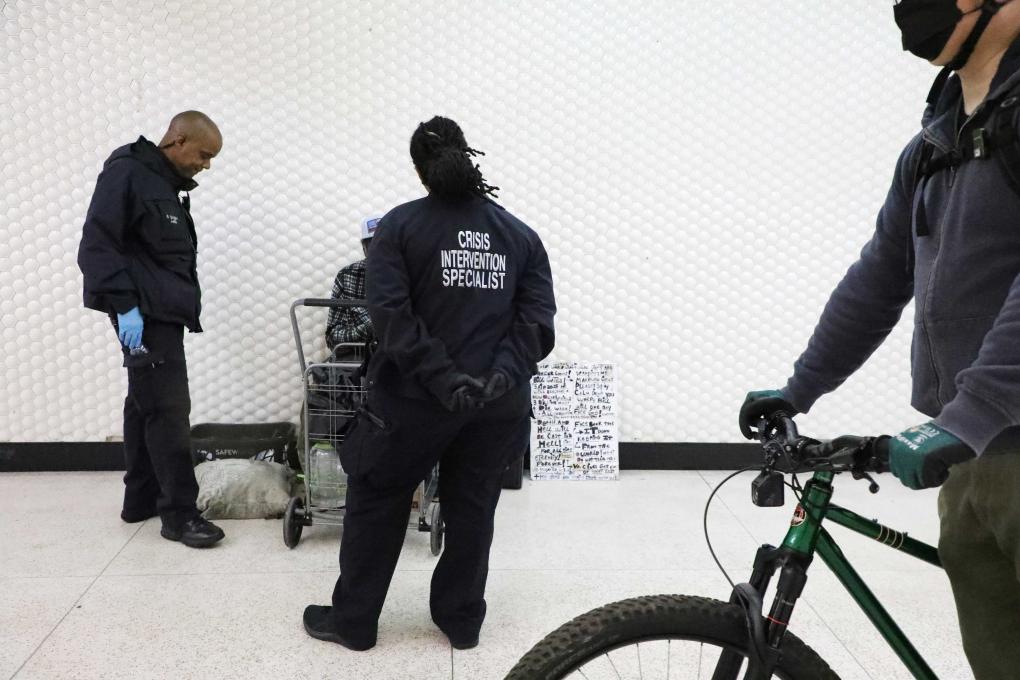
CIS Rahman Bagby and CIS Lataisha Marin responding to a call in San Francisco.
Alec’s mom hadn’t heard from her son in about two years. One day he was in touch with her via phone, the next, silence. Before Bagby and Wiltz got involved, she said the last contact she had with Alec, who had lost multiple phones, was in 2022 from Santa Rita Jail, where he was being held after failure to appear in court following multiple arrests and infractions.
Alec’s mom said that before he began living on the street, he was a bright student who earned his master's degree in chemistry at UCLA in 2016 and intended to continue his studies in a doctorate program.
But Alec had been struggling with a chronic back problem for some time, and following an unsuccessful discectomy surgery, his life began to unravel.
Like so many others, Alec became addicted to opioid-based painkillers, which eventually led him to harder drugs, like heroin and fentanyl. He was also self-medicating with alcohol and marijuana.
Alec’s family had tried for years to give him the support he needed, paying for housing and food. But he continued to abuse drugs and alcohol and refused to seek employment or medical treatment. For some time, he bounced between various short-term rentals.
Then in 2020, his parents received a call from a hospital in Oakland informing them he'd been resuscitated with Narcan for an overdose. His family begged him to get help, but he refused and began acting paranoid as well as destructive. Eventually a warrant was issued for his arrest. He became homeless, which he always claimed was his biggest fear.
With guidance from Bagby and Wiltz, Alec’s mom leapt into action, hiring an interventionist and connecting the CISes with a facility and provider who would take him.
"I could sense her love for her son,” Bagby said of Alec’s mom. “She has so much heart and so much grit.”
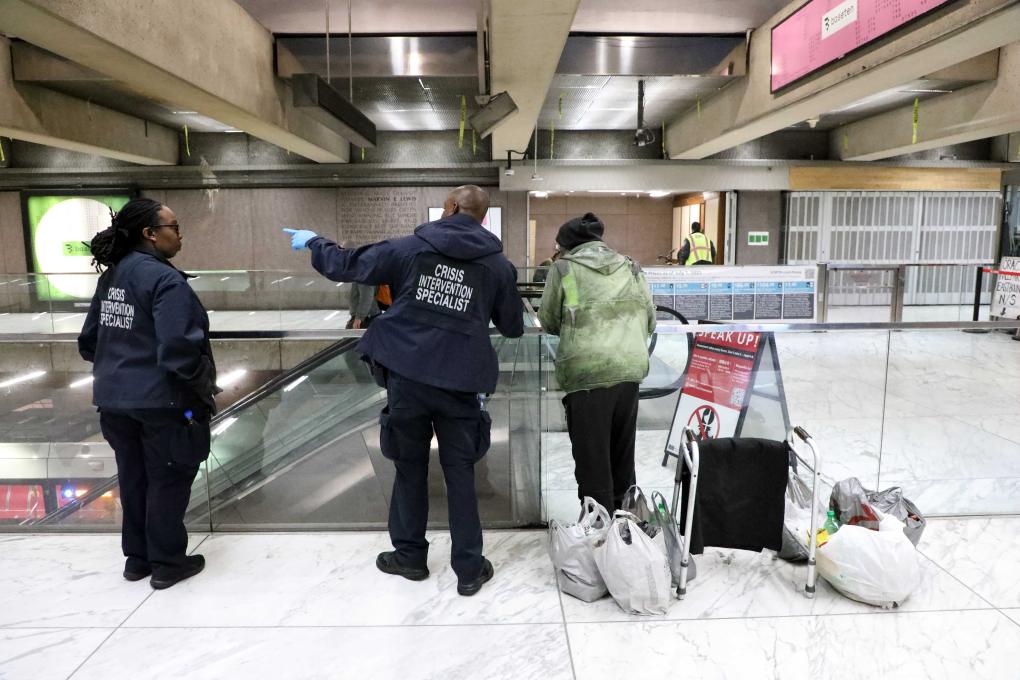
CIS Lataisha Marin and CIS Rahman Bagby respond to a call.
Supporting a family member with severe drug addiction is challenging and devastating. Alec’s mother, who asked to remain anonymous, had been trying for years to get Alec the help he needed before he disappeared. It was a struggle. Many organizations weren’t right for Alec or wouldn’t accept him. Often it felt like there was no place for him at all.
It took months and months of research, contacting organizations, and a large financial investment until she was able to find a program that might be right for her son.
“You have to advocate endlessly,” she said by phone. “People in the state my son was in cannot deal with the bureaucracy of social services. You have to be able to communicate eloquently and be persistent, and he couldn’t do that.”
Bagby and Wiltz networked for Alec’s mom, connecting her with organizations that might suit her son’s needs. Eventually, she got to know the entire BART Crisis Intervention team. For the first time in a long time, she had hope that she could get him into the right rehabilitation setting.
“Without Rahman, Alec wouldn’t be in recovery today,” she said. “He totally committed himself to Alec. He was always available, would call me when he saw Alec on the street so I could connect him with the interventionist.”
“Alec felt so comfortable with Rahman, and with his help, we were able to stabilize him,” she continued. “Rahman was the one who truly understood Alec, and he coordinated so many efforts.”
She said Bagby took her son to a safe place and stayed with him while he slept, waiting for transport to the rehab community his mom connected him with.
Bagby said rapport building is crucial and understanding that getting someone help can be a process requiring repeated interactions.
“You’re working with people on stages of change,” Bagby explained. “Many of them are in the pre-contemplation stage of their addiction – they're not addressing the issue, and they don’t want to. Sometimes, they’re not quite ready, but they’re grateful you spoke to them.”
Bagby says you must lead with compassion and patience in his line of work.
“You have to embrace the challenge and recognize that a lot of times when you’re talking to people, it’s the drugs, the addiction talking back to you,” he said.
With Alec, Bagby focused on talking to him about his declining health in order to get him to a place where he might consider treatment.
“You are not able to sustain what you’re putting your body through,” he told Alec. “It resonated with him. He knew he was not comfortable. And I always said, ‘Alec, you’re the expert, I’m just here to help if you want it.”
The turning point was when Alec recognized his complete physical exhaustion.
“I’m not comfortable,” he told Bagby, who replied, “As soon as you tell me to go, I have transportation and a facility for you. This can be immediate.”
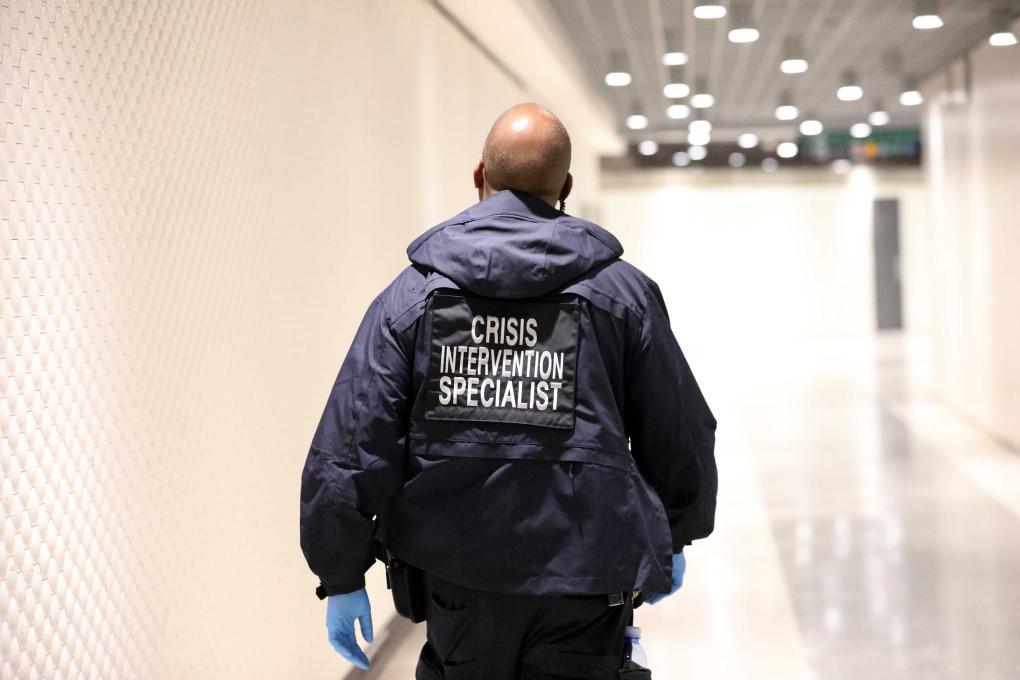
CIS Rahman Bagby on duty.
Alec is still in treatment today, a process full of setbacks but also incremental wins. He successfully transitioned out of his residency program to a partial hospitalization program, and he is now under full LPS conservatorship, which Bagby said is “an amazing feat for his mother.” The legal process applies to adults who are unable to meet their own basic needs due to severe mental illness and appoints a conservator to help ensure the individual receives appropriate care.
“This is a long process, but he’s on an upward trajectory,” Bagby said. “He’s still on his path, and that is very hopeful.”
Alec’s mom’s support is strong as ever, and she keeps in close touch with Bagby.
“The BART Crisis Intervention team is the only organization that gave me any help in getting Alec into treatment,” she said.
Her advice to those with a family member facing addiction and homelessness: “Get educated about the interventionist and rehabilitation community. Start the conversation with anyone you can. And do not give up.”
Bagby was recognized for his efforts at the 2024 BART Police Awards Ceremony, where he was named Civilian of the Year. Bagby grew up in Oakland, and prior to becoming a CIS, he worked as a BART Train Operator and System Service Worker.
Crisis Intervention Specialists and Transit Ambassadors are members of BART Police’s Progressive Policing and Community Engagement Bureau (PPCEB). Launched in 2020, the PPCEB builds on more than a decade of progressive reforms aimed at elevating equitable policing and ensuring BART is welcoming to all riders. The unarmed CISes and ambassadors work in special engagement teams to boost visible presence in the system and connect people with support services.