
Search Results
BART partners with Ford GoBike for Bike to Work Month
Riders get free one-month membership May is Bike to Work Month and to celebrate, BART is partnering with Ford GoBike to offer riders FREE one-month Ford GoBike memberships. This helps make getting to and from BART fast, fun and convenient, and means access to a bike (without having to bring your own). Bike
BART Board approves platform digital displays for advertising and news
The BART Board voted to move forward with converting up to 34 existing poster ads located in three downtown San Francisco stations to 17 digital screens that will display a mix of advertising, news, weather and BART messages. The decision came after a survey concluded there is strong rider support for the
BART joins White House discussion on earthquake early warning system
BART Board Director John McPartland is scheduled to participate in The White House Earthquake Resilience Summit, on February 2, 2016 in Washington, DC to help build greater support and funding for earthquake warning technologies. BART plays a leadership role in being the first transit agency in the United
BART will run a Sunday schedule on Labor Day, 9/5/22
On Monday, September 5, 2022, BART will be running a Sunday schedule (8am-midnight) as we observe Labor Day. We will run five-line service until 8pm with 30-minute frequencies on all lines, and then three-line service after 8pm. Five-line service means all lines will be running including Red and Green lines
BART now takes American Express for credit card purchases
American Express has been added to the approved credit cards accepted on the BART system. The American Express card may be used to purchase tickets at all logoed ticket vending machines throughout the system as well as for purchases at the Customer Services Office located in the Lake Merritt Station. For more
Sunny outlook for BART solar power in Contra Costa county
On October 27, the Board of Directors authorized BART to enter into an agreement with Solar City to install, operate, and maintain solar panels at the new, upcoming Antioch station as well as Lafayette Station. BART will purchase electricity generated from these two new installations, which once constructed
50 years of BART: Rarely seen photos of the prototypes that started it all
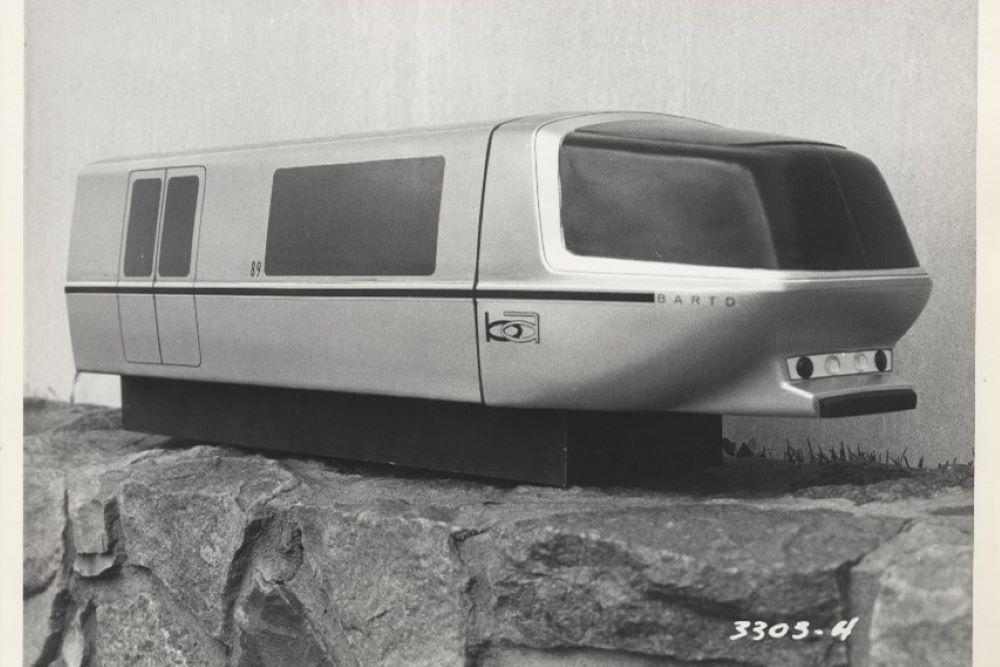
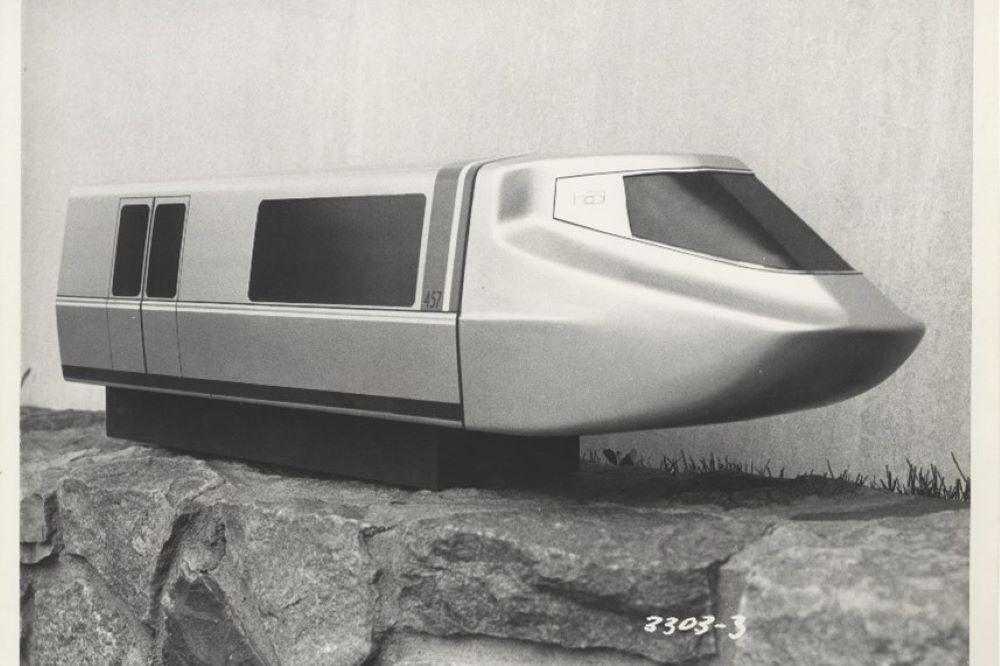
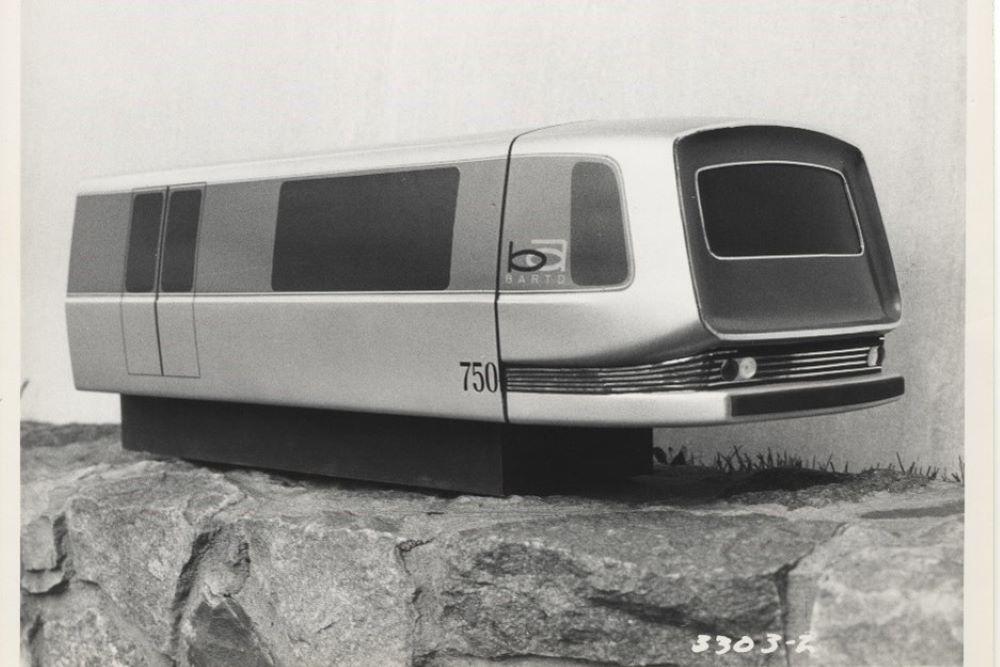
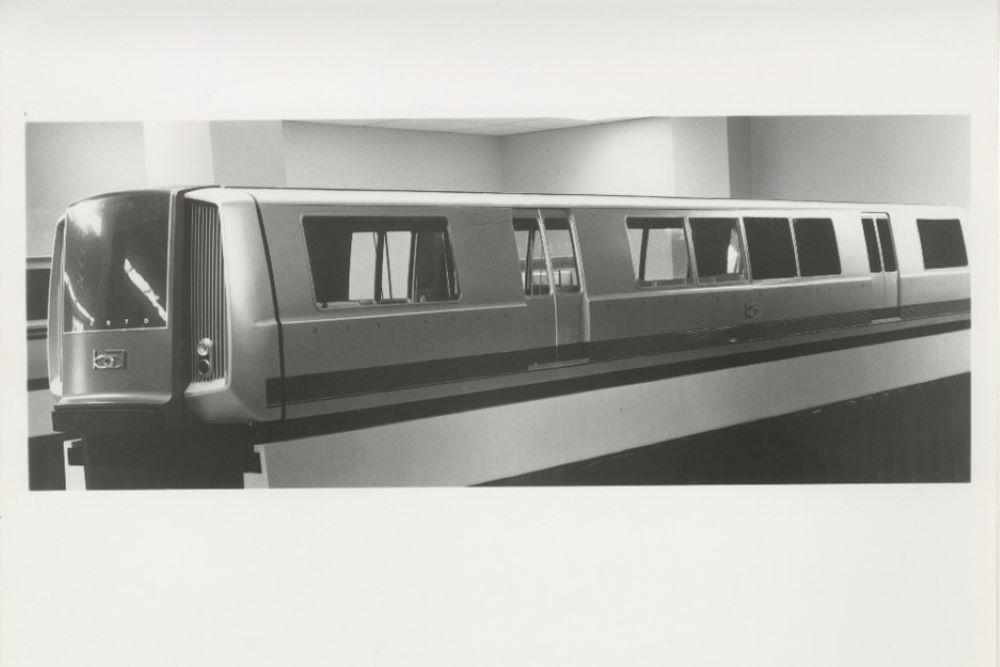
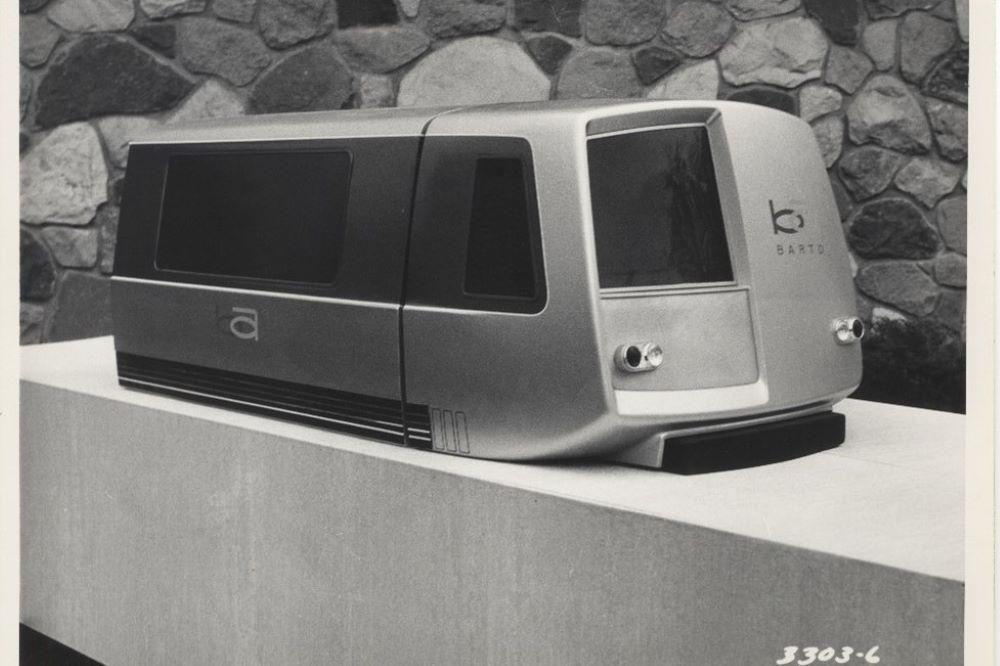
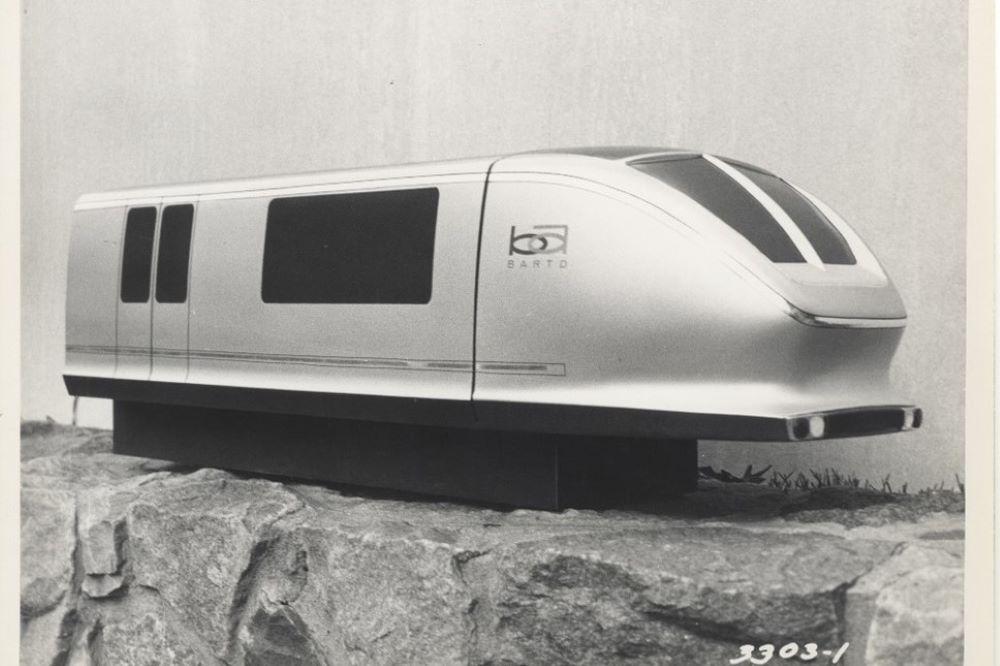
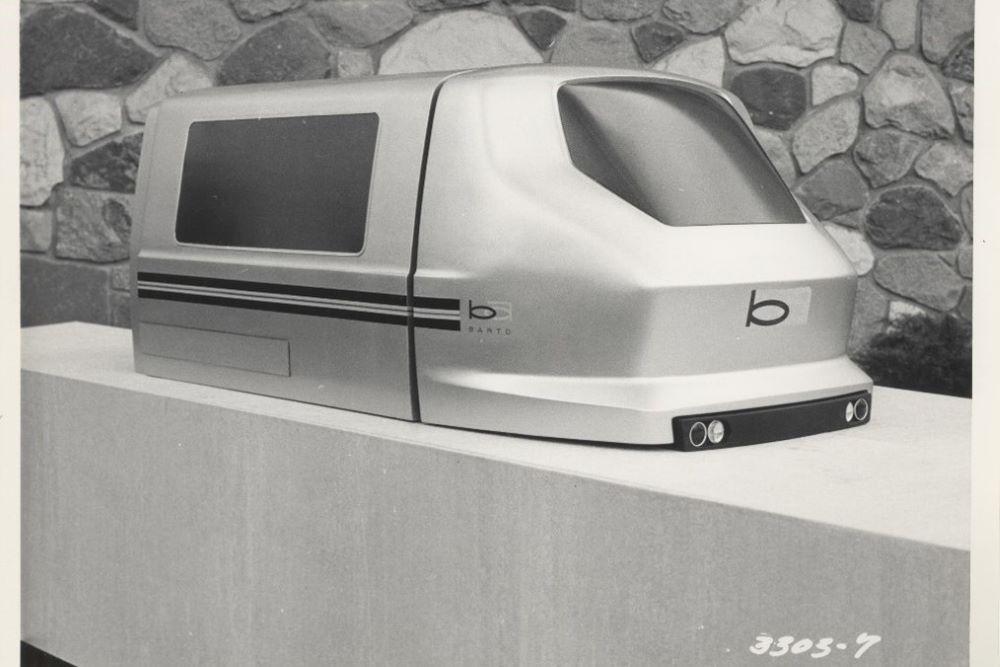
The iconic original BART car could have looked very different.
Industrial design firm Sundberg-Ferar, which created the concept and design of the original car, recently unearthed a trove of photographs from the 1960s that show BART in its earliest stages. Among the images, selections of which we’ve included in this story, are numerous snapshots of early BART prototypes.
“Prototypes are a low-cost, low-risk way to test design ideas,” explained Lynnaea Haggard, Sundberg-Ferar’s Marketing Manager. “They’re the creation of artifacts for stakeholders to react to, which helps figure out what’s working and what’s not working.”
BART contracted Sundberg-Ferar to design cars for its budding mass rail system in the early 60s. By 1964, the firm had hit the ground running, starting with basic concept sketches. From there, Sundberg-Ferar built a series of car prototypes at 1/12th scale. To put that in perspective, the initial prototypes were about 5 3/4 feet long – pintsize compared to the actual cars, which measured 70 feet.
It’s worth briefly turning our attention to the sketching phase. Many of the original BART car concepts were designed by acclaimed visionary designer Syd Mead, who’s largely responsible for creating the look and feel of science fiction classics such as “Star Trek,” “Blade Runner,” and “Tron.”
“I worked on the original design for the BART system train cars. Sundberg-Ferar designed the BART system cars,” Mead said in a 2015 interview before his death in 2019. “I did all of the presentation renderings for that.”
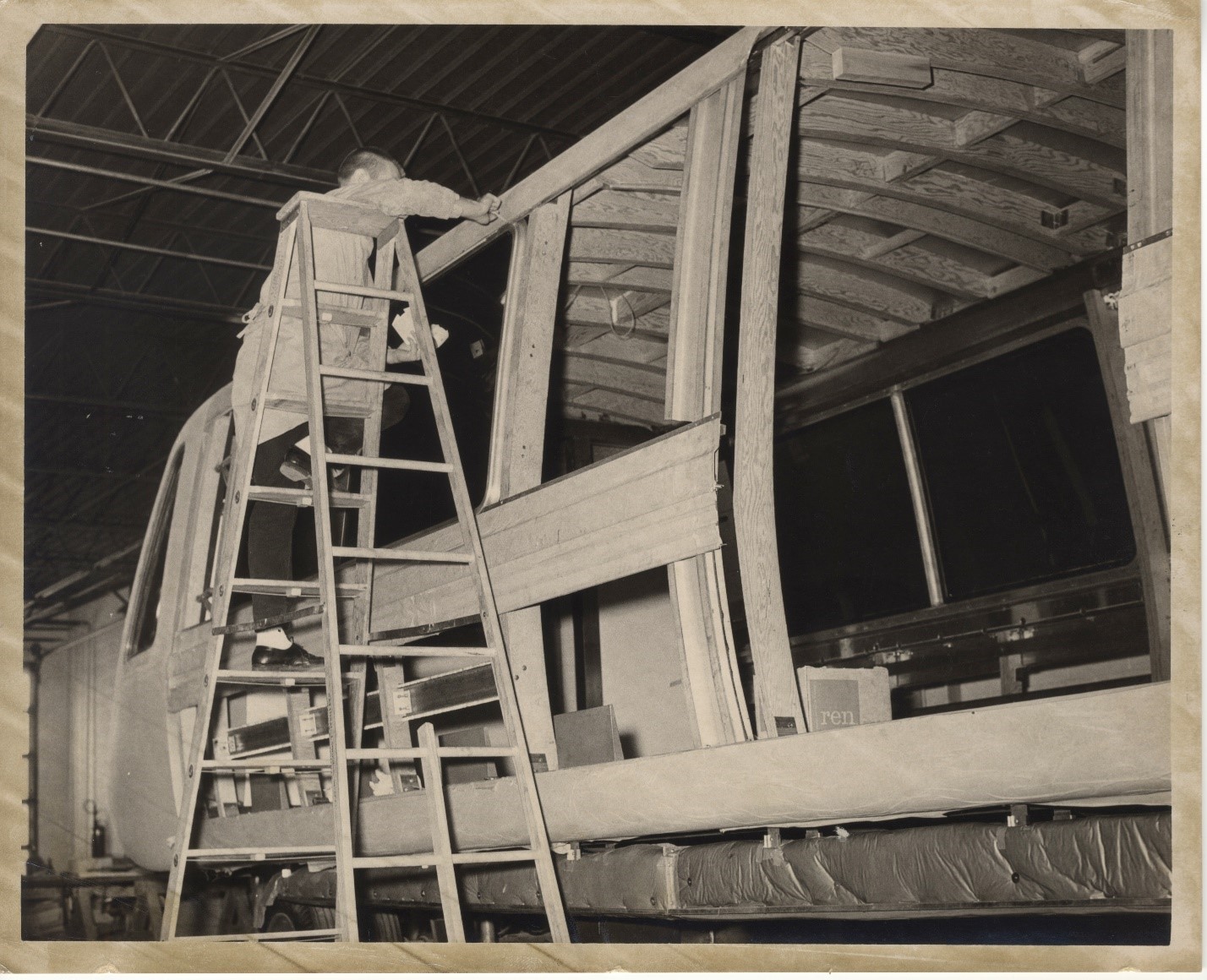 Construction of the full-size prototype. Photo courtesy of Sundberg-Ferar.
In the interview, Mead revealed that in initial discussions, the idea was to have a spare cab (the place where the operator sits) on each end of each line “so when the train would go across the Bay and then it would come back, you wouldn’t have to change the whole train around. You could take the control cabin off the back, install another one on the front and then, and away you go.”
That never came to be because “it’s such an elaborate thing,” Mead said.
After the sketch phase, Sundberg-Ferar began building a variety of small prototypes with wood, using a natural metal finish on the outside to further refine and evaluate the design direction. The firm then constructed quarter-scale models and eventually a full-scale prototype that was delivered to California (Sundberg-Ferar was based in Detroit) on the back of not one, but two, trailers. That model was unveiled officially at BART’s Hayward Test Track in June 1965 – about seven years before the system opened for service.
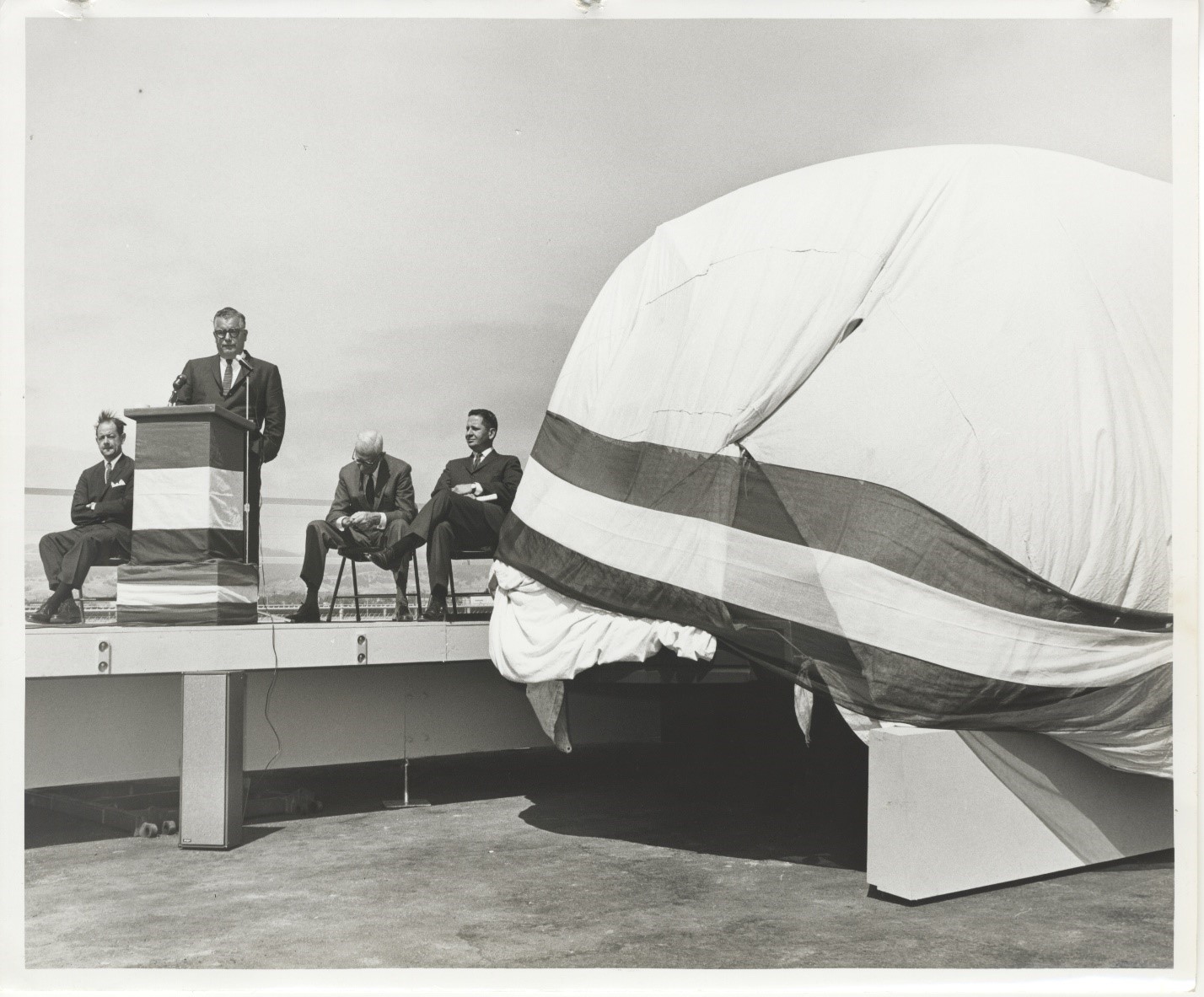 Representatives speak at the BART car prototype unveiling in June 1965. Photo courtesy of Sundberg-Ferar.
The full-scale model was shipped around the Bay Area, with BART allowing members of the public to walk through and try out the feel of it for themselves.
“The experience of the vehicle was mission critical to adoption,” Haggard said.
Per BART historian Michael Healy’s book, “BART: The Dramatic History of the Bay Area Rapid Transit System,” spot surveys suggested that “visitors to the models were, for the most part, very impressed with the cushioned seats, the carpeted floors, and the clean, wide body.” Some people, Healy writes, compared the experience to “being on an airplane, only with picture windows.”
“New standards of attractiveness, efficiency, and comfortableness was the banner flag,” Haggard said. She noted that BART’s design considerations for the project included ensuring the train cars were comfortable, well-lit, temperature-controlled, and as quiet as possible on the tracks.
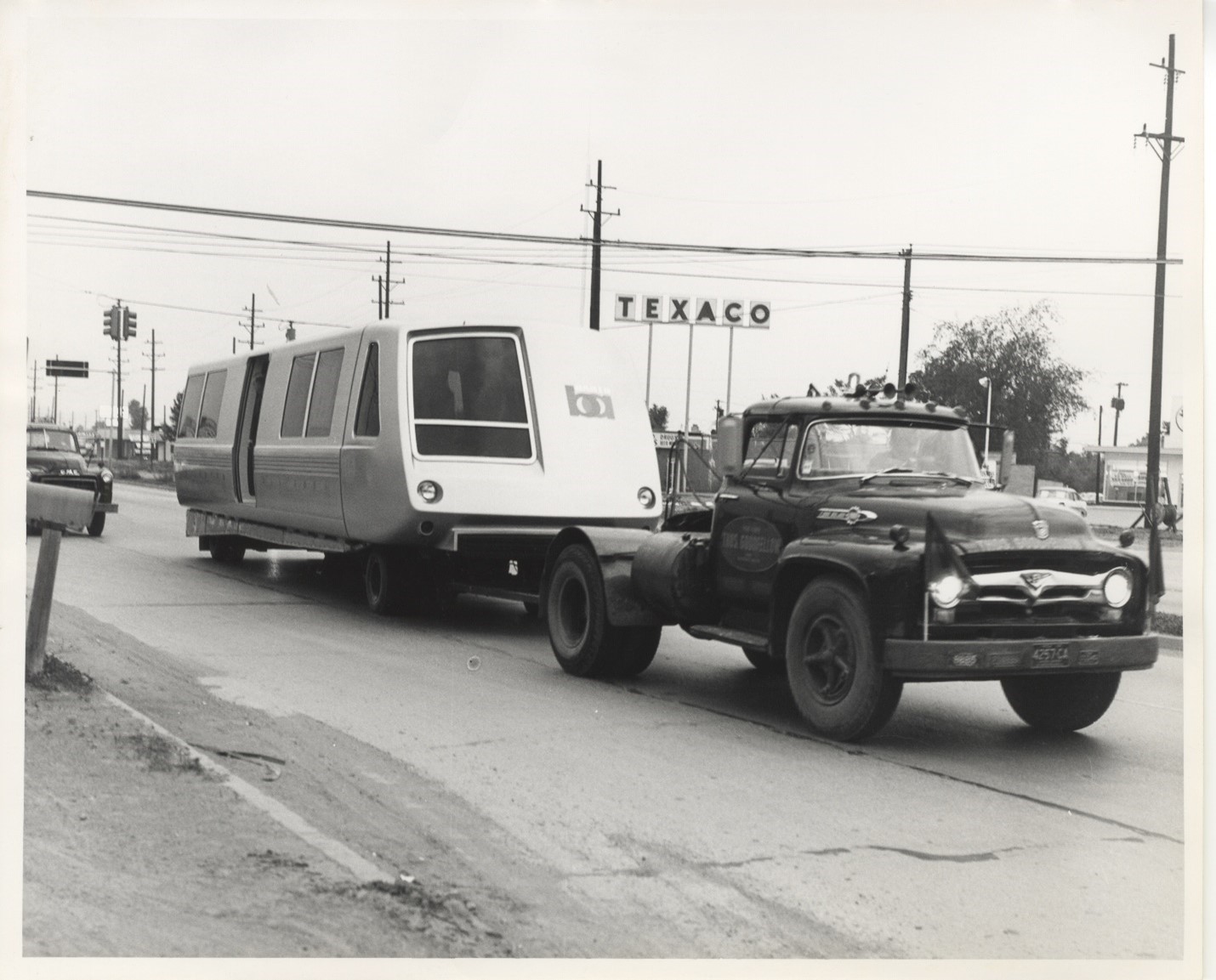 Half of the final BART car prototype traveling on a trailer to California in 1965. Photo courtesy of Sundberg-Ferar.
Carl Sundberg, one of the cofounders of Sundberg-Ferar, had a direct hand in the creation of the prototype. His goal: design a train car for the people.
“This was not to be some newfangled train,” Haggard said. “Even though BART was implementing all these new technologies, that didn’t mean the car was going to look like some sort of spaceship.”
In fact, Sundberg wanted the BART car to look like anything but a relic of space travel. He’s quoted as saying, “We are not going to the moon or across the country. It doesn’t have to look like a projectile.”
For that reason, Sundberg didn’t want the public to expect anything streamlined, hence the iconic sloping nose of the cab.
“It had to be an honest design,” Haggard said. “A rapid transit vehicle should look like a rapid transit vehicle.”
Haggard called the project “the opportunity of a lifetime” for Sundberg-Ferar designers, who had the chance to build a mass rail car from the ground up with plenty of creative leeway on BART’s end. At this time, in the mid-1960s, BART was the first mass urban rail transit system built in the US since the early 20th century (The New York City Subway, for instance, opened in 1904).
Sundberg, above all else, wanted to design train cars with people in mind. Though human-centered design is now a well-accepted concept, it was novel at the turn of the century.
“It must be borne in mind that the object being worked on is going to be ridden in, sat upon, looked at, talked into, activated, operated, or in some way used by people individually or en masse,” wrote Henry Dreyfuss, an industrial designer, in November 1950. “If the point of contact between the product and people becomes a point of friction, then the designer has failed. If, on the other hand, people are made safer, more comfortable, more desirous of purchase, more efficient – or just plain happier – by contact with the product, then the designer has succeeded.”
With voices such as Dreyfuss’s painting a backdrop of design thought, Sundberg set out to apply the theory of human-centered design to the BART car.
“This is really the beginning of an era,” said Haggard. “BART is an amazing representation of what was a huge mindset shift in mass transit.”
Antioch
Construction to begin on subway section of Fremont BART extension
On Monday, August 24, BART will reach another milestone on a major phase of the Warm Springs Extension project that will ultimately bring BART closer to Silicon Valley. BART will issue a “Notice to Proceed” to Shimmick Construction Company, Inc./Skanska USA Civil West California District Inc. Joint Venture
BART breaks ground for transit village at Pleasant Hill Station
A new transit village promises to help future Contra Costa County residents end their addiction to the automobile. Today BART, AvalonBay Communities, Inc., Millennium Partners and the County of Contra Costa broke ground on a new transit-oriented development at the Pleasant Hill Station. The extensive