
Search Results
25 years after Loma Prieta quake: BART, then a lifeline, now stronger than ever
BART Stronger Than Ever Mother Nature provides few guarantees but this much is certain: A major earthquake will strike the Bay Area. Precisely when, where and how strong it will be are mysteries, but BART isn’t waiting to find out. Instead, we are employing a two-pronged approach to prepare for the inevitable
Expect a wait as record crowds board BART after the parade in San Francisco
Before noon there were over 72,000 more riders than usual BART is carrying record numbers of people leaving San Francisco following the World Series parade, and you should expect long lines in stations and on platforms. BART is extending train length as long as possible and has added an additional 13
BART adds cars to handle demand after tanker fire shuts down I-880
BART is closely monitoring passenger loads and will adjust train sizes whenever possible to accommodate increased ridership as a result of the continued closure of I-880 following this morning’s fiery tanker crash that shutdown a portion of the freeway near 16th Avenue. Caltrans tells BART that it expects
BART riders can get virtual commemorative token for new West Dublin/Pleasanton Station
An example of what the token will look like when unlocked. Visitors to BART’s new West Dublin/Pleasanton Station, BART’s 44th station that is opening on Feb. 19, can try a first-of-its-kind experience – using augmented reality technology to unlock a 3-D virtual commemorative token. The token is an outgrowth
BART to open early, run long trains for 2018 Bay to Breakers Race
Timetable BART customers will be able to get to the world famous Bay to Breakers race in San Francisco on Sunday, May 20, 2018, because we’ll open early and run additional long trains. All BART stations will open early with service starting at approximately 6am Sunday so racers can get to the race well before
BART runs regular service the day after Thanksgiving (11/29)
BART will run a Sunday service schedule for Thanksgiving this year. This means on Thursday, November 28, 2024, BART hours will be 8am-midnight with all five lines running until 9pm and three lines running from 9pm-midnight.
On Friday, November 29, we will be running regular weekday service (5am-midnight).
Free parking at BART on Thanksgiving Day
Parking will be free at all stations except for Milpitas and Berryessa/North San Jose, which are operated by the Valley Transportation Authority. All other parking rules will be enforced.
The day after Thanksgiving, Friday, November 29, is not a parking holiday. Those who need to park can purchase Daily Fee parking using the official BART app. Click here for instructions to pay by app.
Parking at a BART station for your Thanksgiving trip
Airport parking can be a hassle and is always expensive, except at BART stations. We offer inexpensive multi-day parking (see options below) at many stations with easy online reservations. Purchase parking on the official BART app or pay by website.
Single/Multi-Day Reserved parking is for consecutive overnight stays of up to 20 weekdays. You will need to provide the license plate of the car you plan to drive and a phone number. Reference our guide for paying for Single/Multi-Day Reserved parking here.
Monthly Reserved parking is for stays of up to 24 hours at a time, charged on a recurring monthly basis, and provides a guaranteed space until 10am. This is not to be used while travelling for several days in a row.
Reserved parking signs are blue + white or yellow. During the holidays we experience a higher demand in Reserved parking; if there is not a reserved spot available when you arrive, park in the Daily Fee area and you will not be cited. Daily Fee parking is only allowed in the Daily Fee area.
Another option to travel to SFO via BART is to purchase Multi-Day Reserved parking and drive to Millbrae Station or San Bruno Station, then take a quick ride to SFO Airport.
Find an overview of parking at BART at bart.gov/parking.
Taking BART to SFO or OAK
Traveling by plane for the holiday? It’s easy to ride BART to the airport. You can take the train directly to San Francisco International Airport (SFO) and Oakland International Airport (OAK). Plan your trip and find fares by using BART’s online Trip Planner and read our comprehensive guide on riding BART to the airport.
Let’s Glow! BART Anime Festival at Warm Springs Station September 6
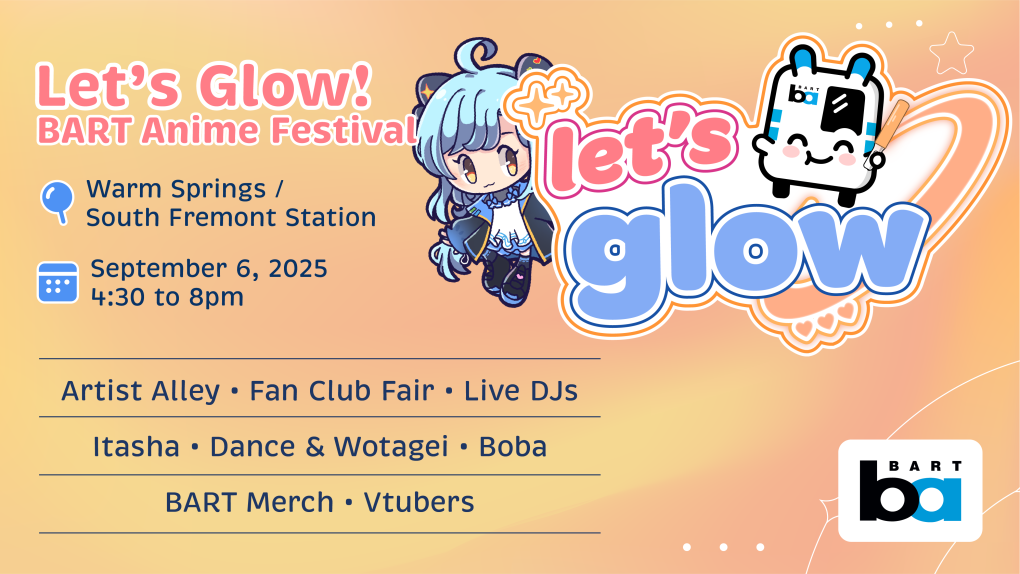
This September, the BART Anime Project invites the public to Let’s Glow! BART Anime Festival – a novel community gathering that celebrates anime, art, music, and transit.
On Saturday, September 6, join BART anime mascots Baylee, Nimbus, Jasmine, Mira, and BARTy for this unique event that will bring artists, live DJs, dance lessons, boba, and more to Warm Springs/South Fremont Station.
---
What: Let’s Glow! BART Anime Festival
When: Saturday, Sept. 6, 4:30pm to 8pm
Where: Warm Springs/South Fremont Station plaza
---
BART's anime mascots are inspiring youth to ride public transit by making it exciting and accessible. Nearly half of Gen Z in the U.S. – a growing and reliable ridership demographic – watches anime, and BART’s mascots help us meet young people where they’re at, building connections and relationships through their own interests.
Let us know you're coming to this free event (RSVPing is not required to attend): bartletsglow.eventbrite.com/
Giveaway! The first 50 people who arrive by BART will get a free Let’s Glow \ light stick /. Find BART anime mascot Mira by the Station Agent booth to get your light stick before they’re all gone. Show them off at the festival as @sanflare teaches the crowd a choreographed wotagei dance. We’ll also sell a limited number of Let’s Glow light sticks at the event.
What to expect at Let’s Glow:
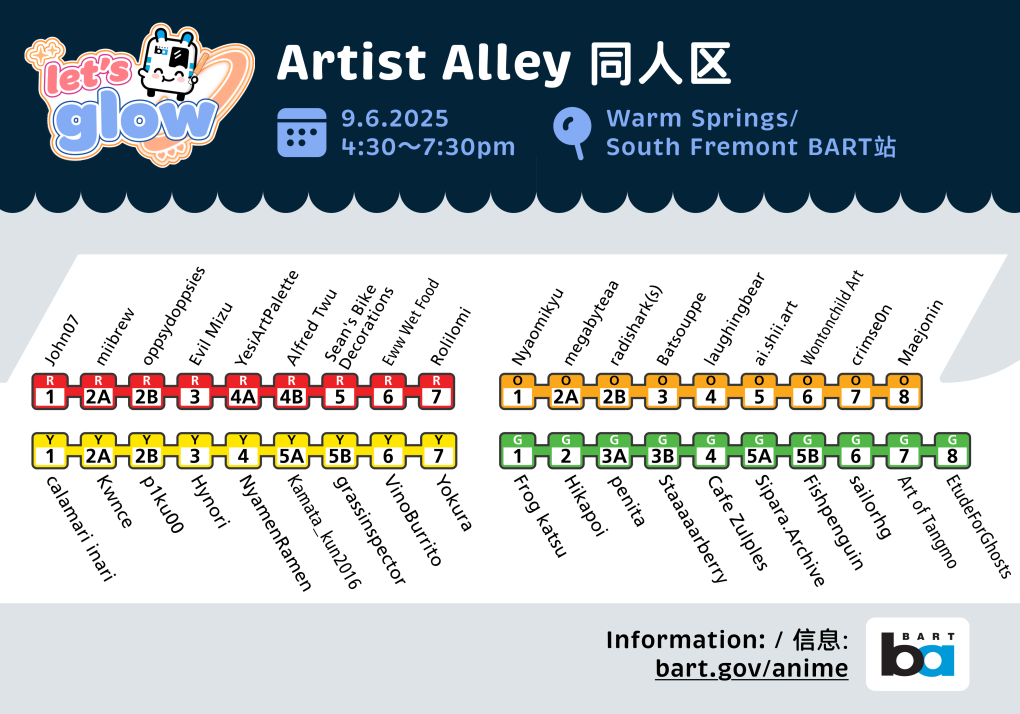
- An artist alley featuring art inspired by transit, anime, games, and more!
- Fan club & community tables. Find your crowd like a club fair in college.
- Food & boba stands, with exclusive themed drinks based on the BART Anime Mascots!
Live DJs from AniClover!
- Free dance & wotagei lessons with SanFlare
Shortly after sunset, we will all dance together. Be sure to bring your light sticks if you have them.
- Itasha arranged by Dreamscape: bold, anime-inspired cars and scooters
- Railgoods Popup Shop, featuring original BART merch
VTubers! Meet & greet your favorite virtual creators at the OffKai Expo table. VTuber Research Club will also bring their roaming robots.
An exclusive eki stamp~
Art boards!
- Lantern decoration!
Learn more about BART’s anime mascots and their real-life inspirations, download coloring sheets and cosplay guides, and stay up to date with the project at bart.gov/anime. Purchase BART anime merch on Railgoods.com.
If you’re interested in hosting a fan club or community table at the festival, a limited number of spaces are available. Apply at https://bart-anime.notion.site/240b53326cb2813d8c91d563abce18ef?pvs=105
BART launches interactive game, hosts events to let public weigh in on projects
BART is seeking public input on important spending decisions while planning for the next 40 years of reliable service. The public can weigh in on projects such as: a second Transbay Tube; an Express Bus Service along the busy I-680 corridor; more infill stations in key areas; and fixing the backlog of needed
What BART PD's newest hires did before joining the department
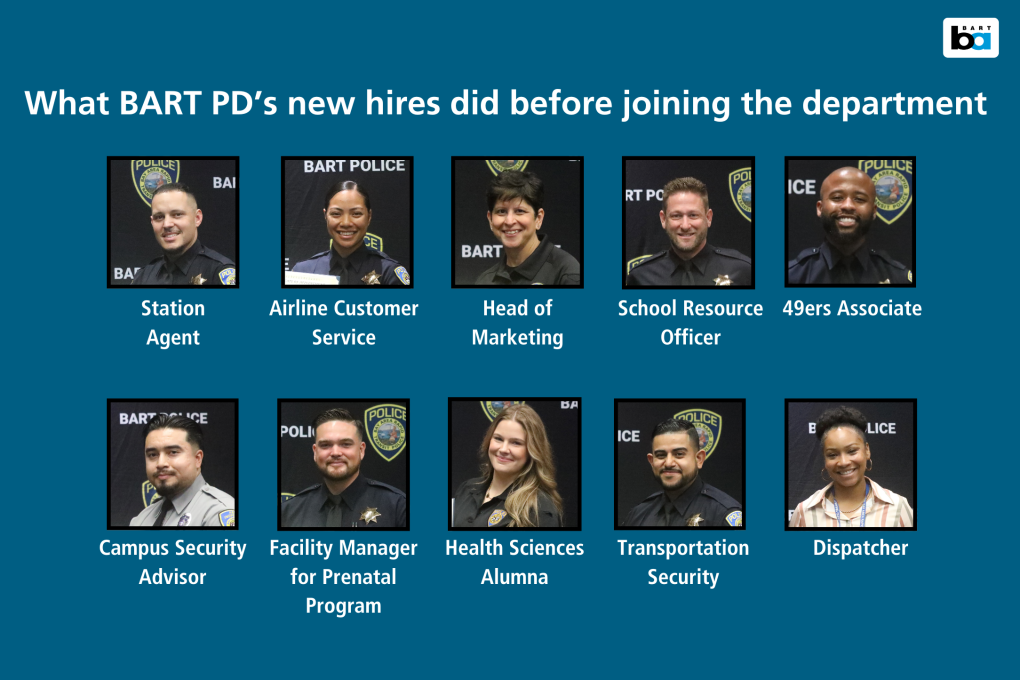
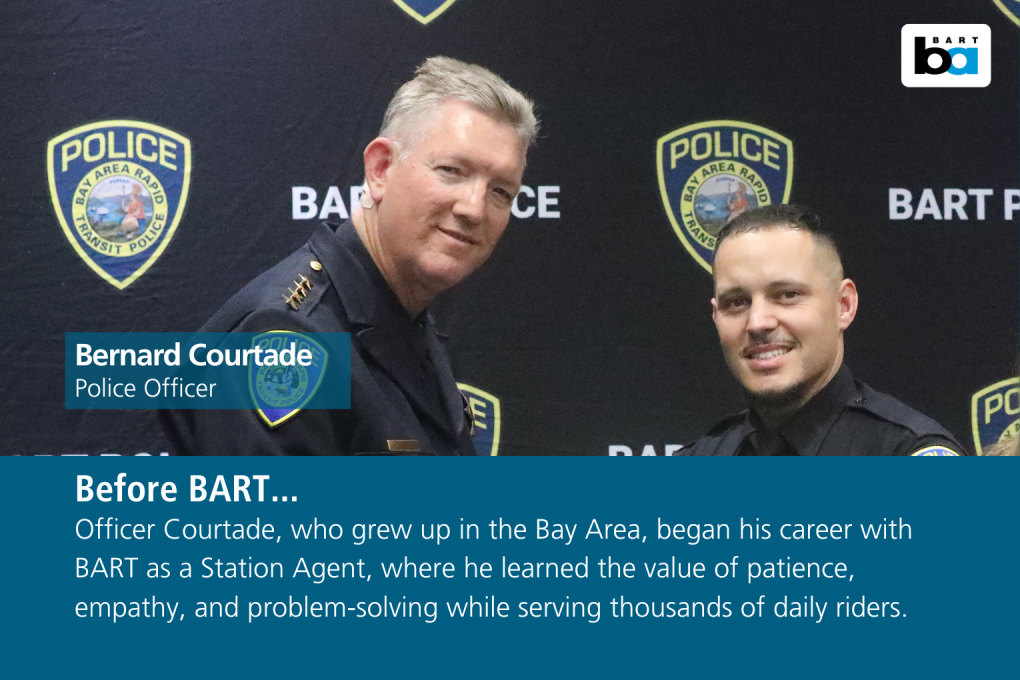
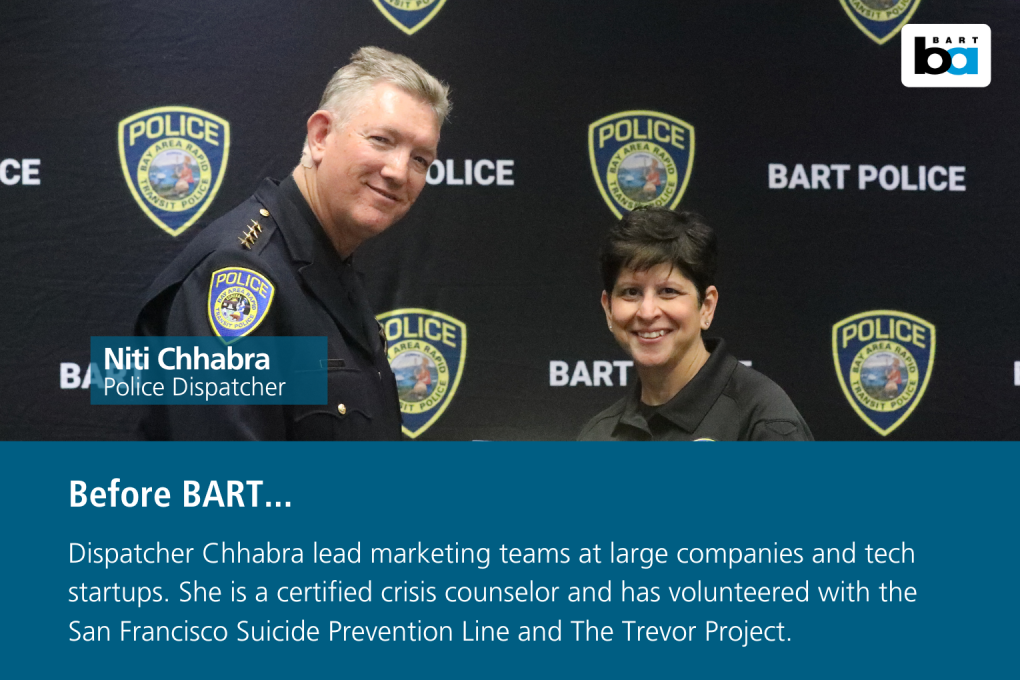
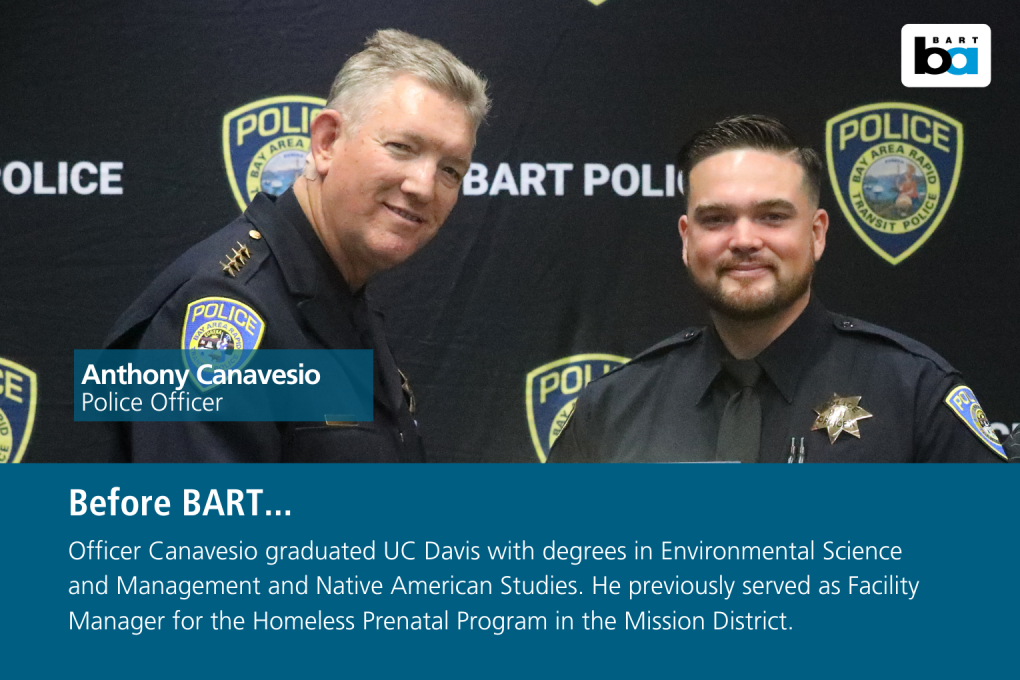
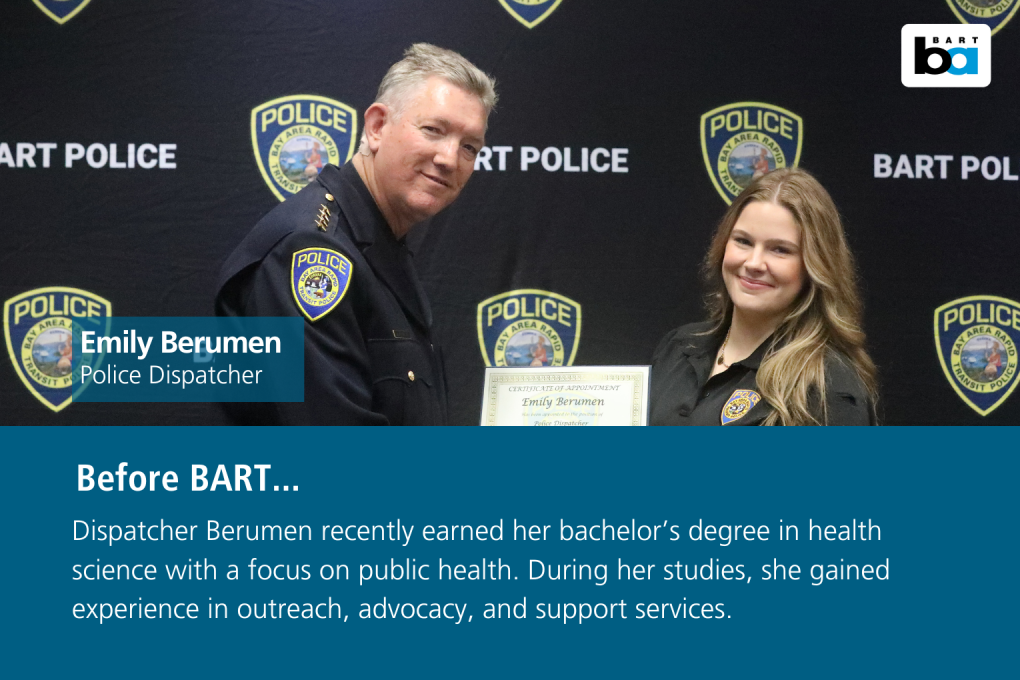
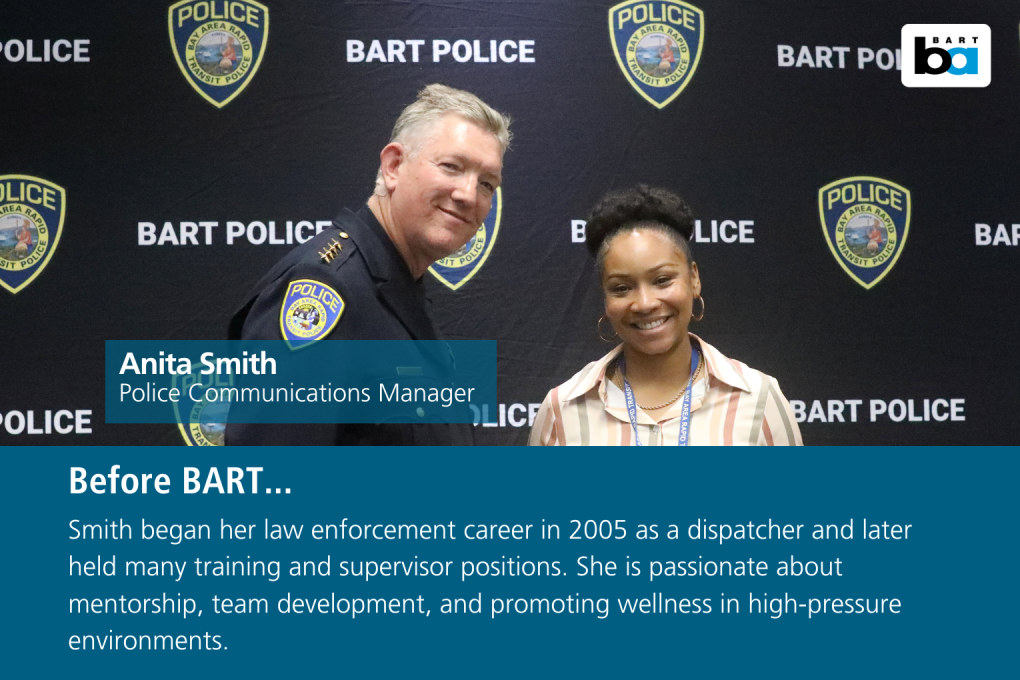
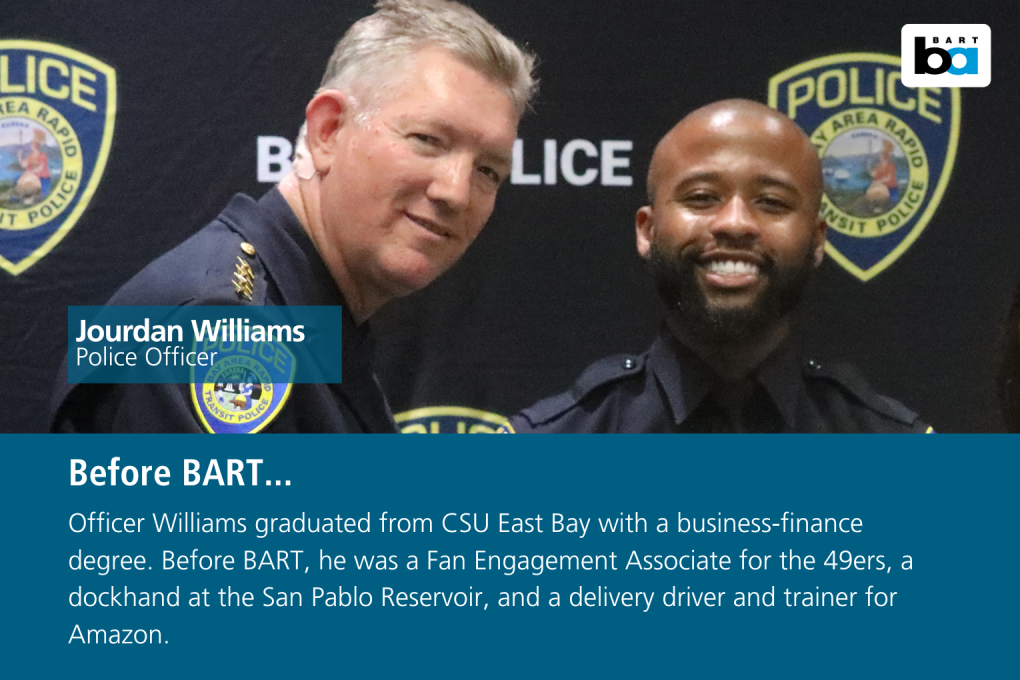
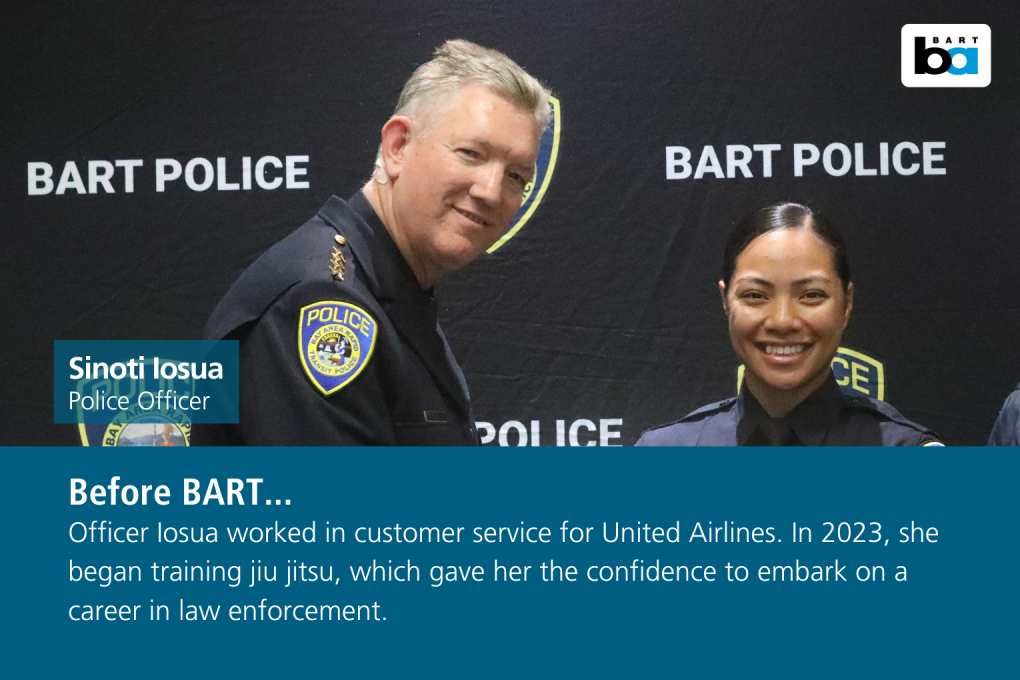
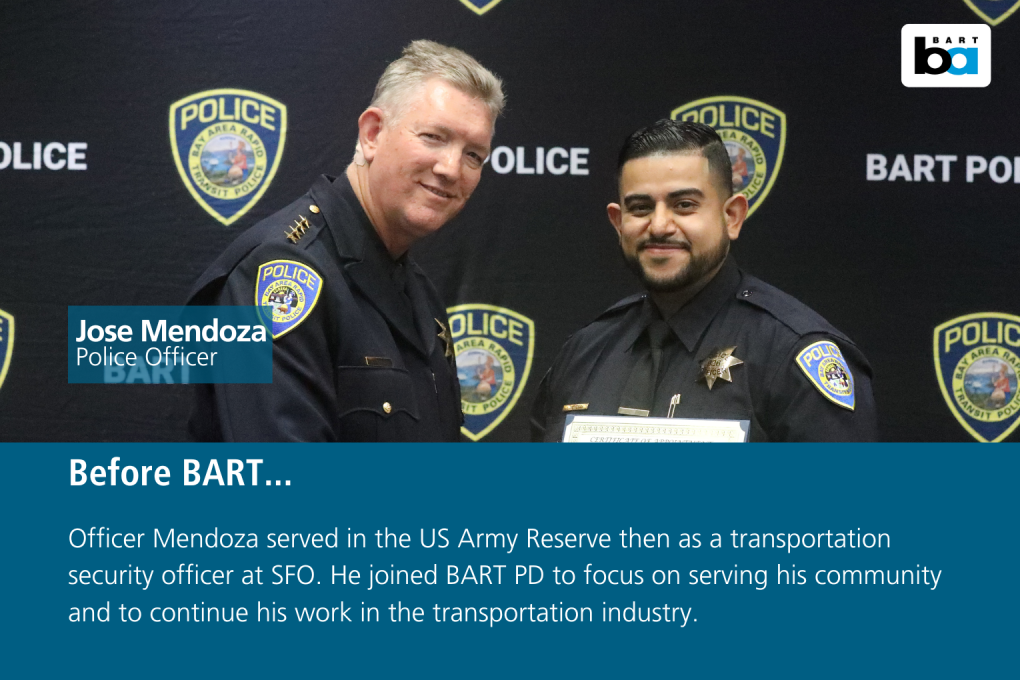
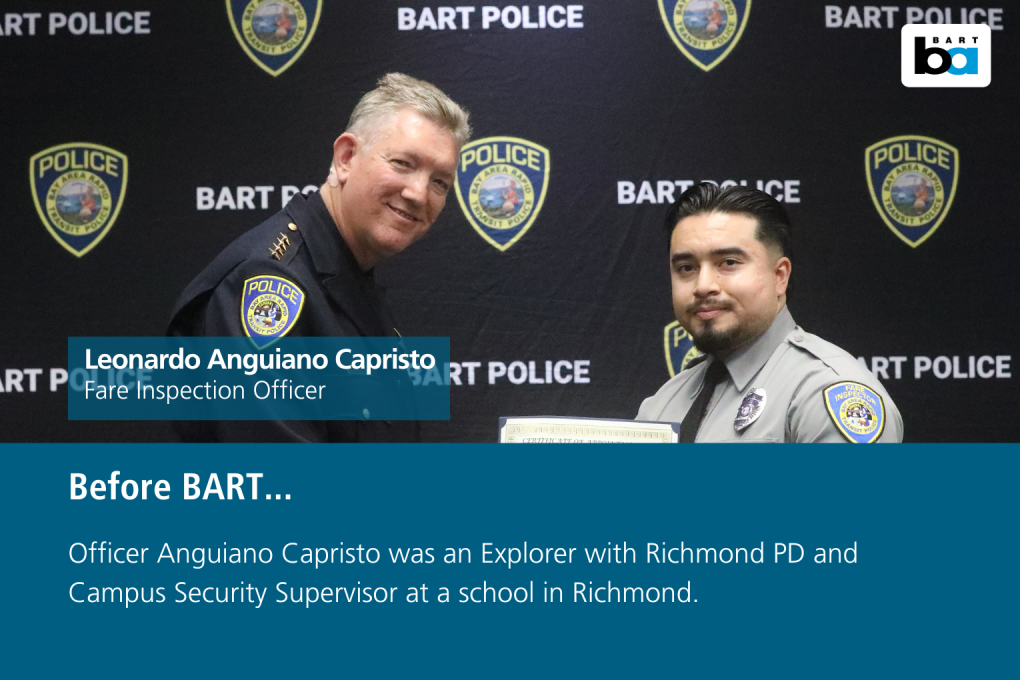
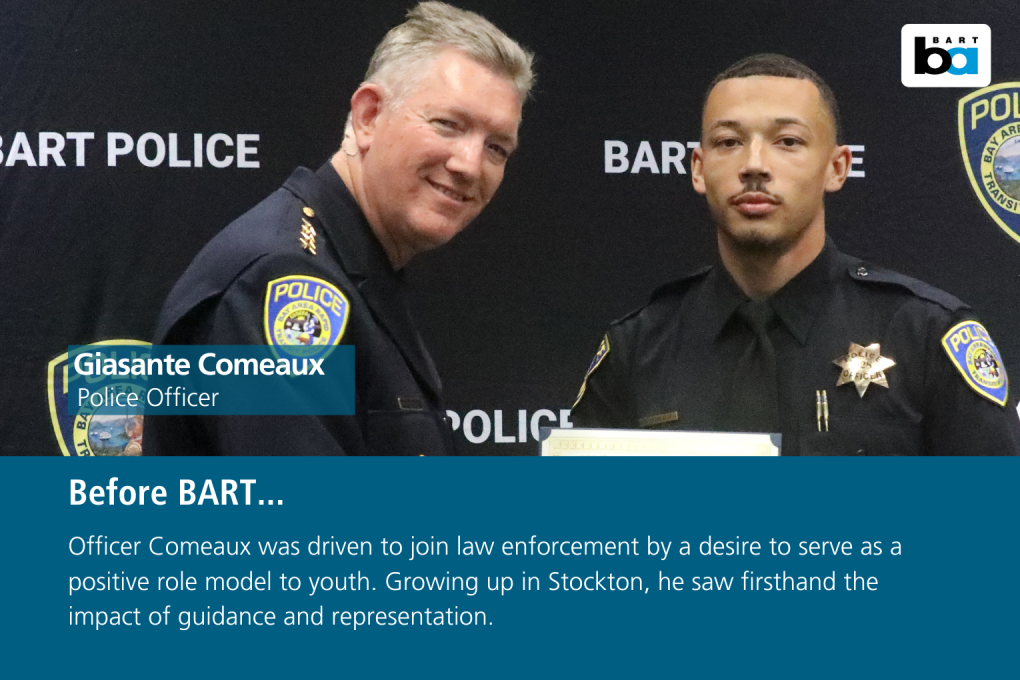
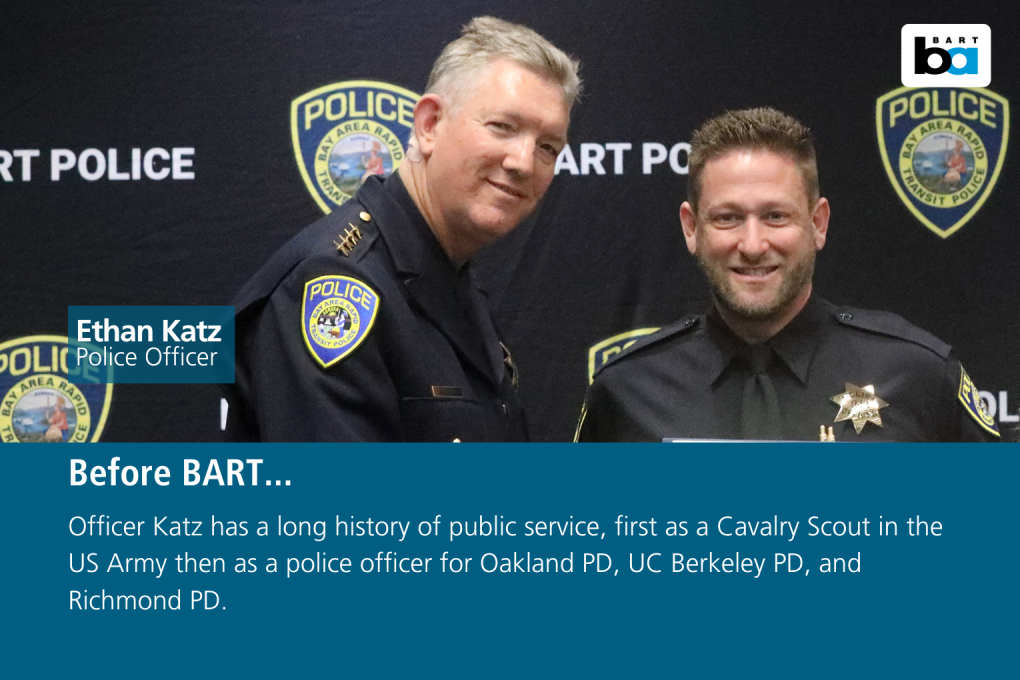
The BART Police Department recently welcomed 11 new members during a formal pinning ceremony hosted by Chief of Police Kevin Franklin.
The new hires were celebrated by the department and their families as Chief Franklin presented their badges and certificates. This is a significant achievement marking their official welcome to the force and the completion of their initial training.
The new members of the team come from a variety of backgrounds, and we honor their unique experiences that will bolster the department’s ongoing focus on community-oriented progressive policing.
Click thru the above slideshow to learn more about BART PD's newest members. To pause the slideshow, click and hold an image.
BART has been working to boost its safety presence in the system with significant recruitment efforts that help to ensure the department is fully staffed and able to respond to incidents swiftly and with appropriate resources. Read more about BART's safety efforts, including increasing officer and unarmed safety presence on trains and in stations, by visiting bart.gov/safeandclean.
BART PD is actively hiring for a variety of roles, including non-sworn positions! To learn more about BART PD careers or to chat with a member of the BART PD team, visit JoinBARTPD.com. BART PD also hosts quarterly open houses (the next is in November) and virtual open houses. Details will be posted on the BART Police Department Facebook page.
BART and project partners break ground on extension to East Contra Costa County
BART customers will soon have rail service to East Contra Costa County thanks to the eBART extension project, which officially broke ground in a ceremony on Friday, October 29, 2010. eBART, shorthand for east Contra Costa BART extension, is a 10-mile extension from Pittsburg/Bay Point Station to the City of