
Search Results
BART service resumes following earlier computer problem
Read the update from Thursday March 14th into the cause of the network problem here. Monday March 11th Update At 2:45 am on Saturday we experienced a computer network failure. The failure was software related at one switch that is part of a complex computer network. As a result, trains were not dispatched
New hours for BART's Transit Information Center
Starting Mon., Jan 7, 2013, BART's Transit Information Center will be open from 8am to 9pm daily. Automated schedules, fares and real-time information is also available 24/7. If you'd like a help planning your BART trip, or more information about transit services that connect to BART, give us a call! Local
Take BART to SF Pride Celebration
The 36th Annual San Francisco LGBT Pride Parade and Celebration hits the streets Saturday, June 24 and Sunday, June 25. Join the party all weekend long at San Francisco's Civic Center. SF Pride is two days of music, food and fun?all for free! The celebration area will open Saturday from noon until 6 p.m. and
BART fares to increase July 1, 2022
On July 1, 2022, all BART fares will increase by 3.4% to keep up with the rising cost of providing safe and reliable service. This fare increase is well below the current rate of inflation and is part of the Board-approved Inflation-Based Fare Increase Program which has been in place since 2003 and offers
BART Board approves Art in Transit Program
“Where someone might see rafters, I see ladybugs. Where someone might see dividers, I see honey bears,” said the artist known as “fnnch,” who provide these mock up images. With the goal of making our stations and riding experience more inviting, delightful, and vibrant, the Board of Directors voted to adopt
Start of construction at Hayward BART Station
As part of our systemwide Earthquake Safety Program, we will begin strengthening elevated structures outside Hayward Station to better withstand future earthquakes. This work will require the temporary closure of the sidewalk near the northwest corner of the Hayward Station parking lot starting the week of
BART explores late-night bus service options
The BART Board considered the late Friday Night Service Demonstration proposal at Thursday's regular Board meeting and decided to keep Saturday morning service intact. (To view details of the proposal go to the Board Agenda and Minutes page, click on "Agenda" for the Nov. 17, 2011, meeting, and go to the PDF
Take BART to San Francisco's "Sunday Streets"
Join an urban experiment this Sunday as San Francisco opens the streets along a four-and-a-half-mile route to encourage walking, biking, skating and other car-free activities. From 9 a.m. to 1 p.m. the city will limit traffic on a stretch of road connecting the Bayview to Chinatown via the Embarcadero. The
BART Connects: A high school for gifted neurodivergent youth relocated to be closer to BART
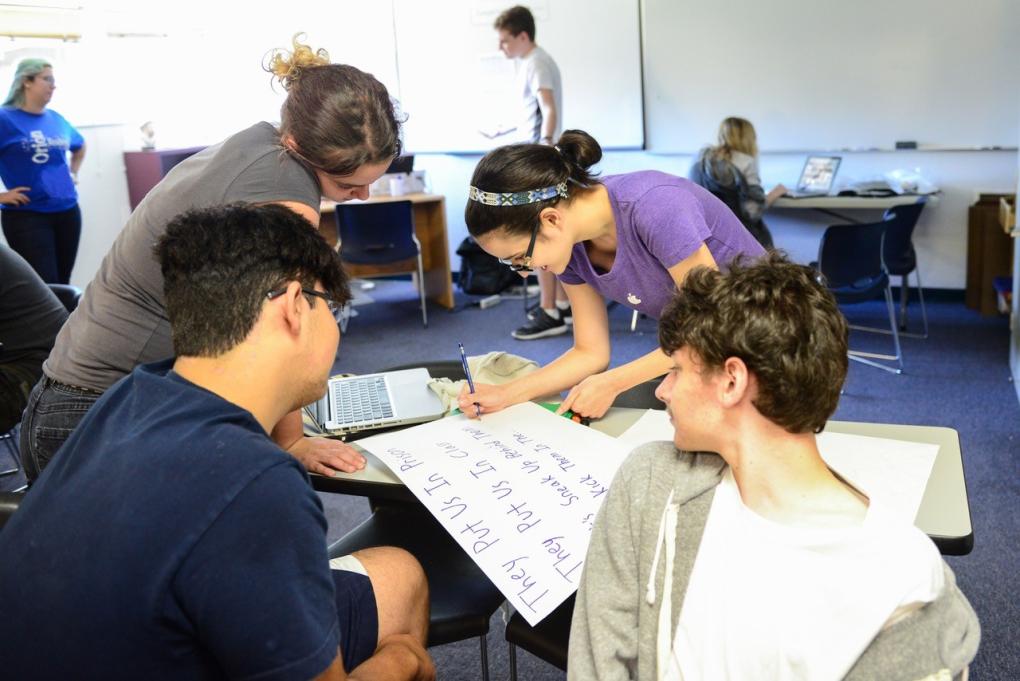
Students in class at Orion Academy near Concord Station.
Do you have a favorite BART memory or story to share? Email a short summary to BART Storyteller Michelle Robertson at [email protected], and she may follow up to schedule an interview.
In 2022, Orion Academy moved from Moraga to Concord, largely to be closer to a BART station.
The academy is a private high school that provides a comprehensive program for gifted students who are neurodivergent. In addition to rigorous college preparatory classes, such as Latin and physics, the 24-year-old school requires students to pass transitions classes that emphasize social and executive functioning skills.
“I don’t care how good you are at math and science, if you can’t keep track of assignments and turn them in on time, you’re going to fail,” said Dr. Kathryn Stewart, the founder and Executive Director of the academy.
More than half of Orion Academy’s students take BART to school, located just a short walk from Concord Station. Moving the school near a station makes the academy’s resources accessible to a broader community and teaches students how to independently navigate urban environments, where many will live and work after graduation.
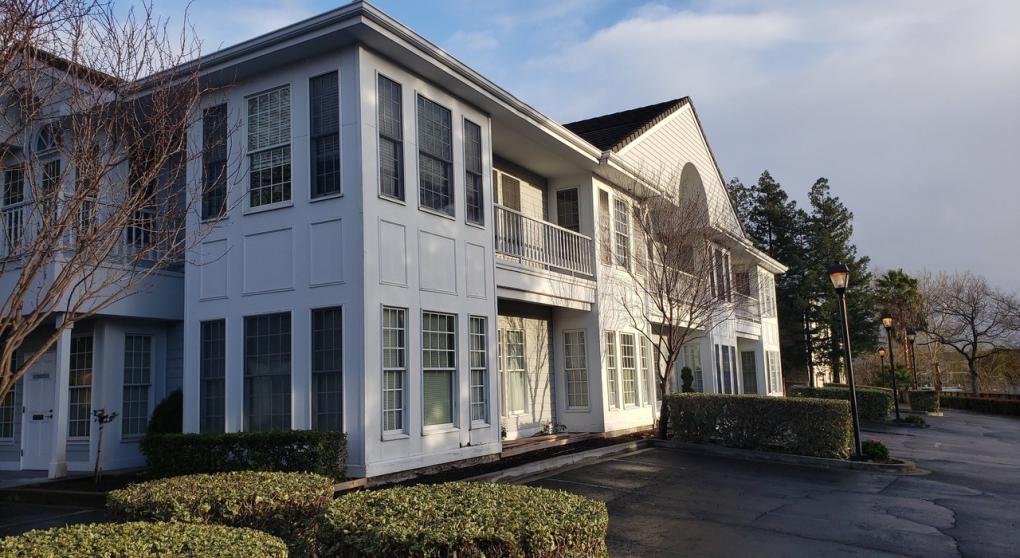
The Orion Academy campus near Concord Station.
“My kids are bright, but can you imagine working as a physicist at Lawrence Berkeley Lab and having mommy drop you off each day?” Stewart said.
Because many Orion Academy students have trouble with visual-spatial processing, driving a car can be overwhelming.
“So, what is your alternative? Taking public transportation!” said Stewart. She strongly encourages parents to teach their children how to navigate the BART system before the school year starts.
BART has also become crucial for field trips, transporting students to destinations like the Asian Art Museum, the California Academy of Sciences in San Francisco, and the Aquarium of the Bay. The school’s van was recently vandalized, so public transportation is the only way to take students off campus, Stewart said.
This past summer, Samantha Greenstone’s dad taught her how to take BART. She'd used the system only rarely before starting at Orion Academy this past fall, and when she did ride the train, it was always with her parents. Now, she takes BART to school every day by herself.
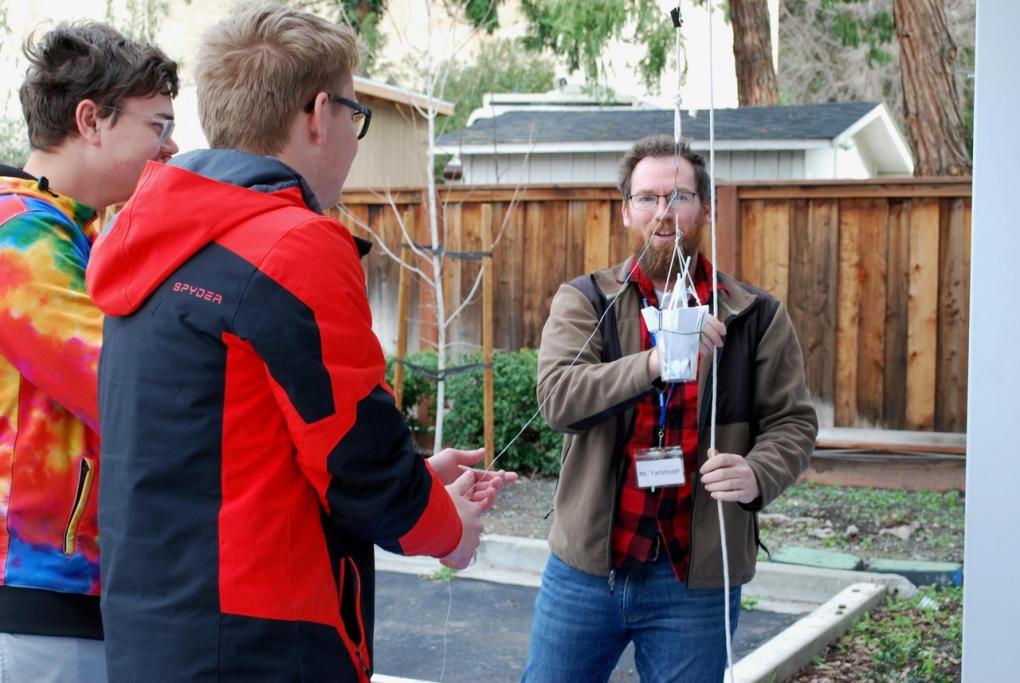
Students in class at Orion Academy near Concord Station.
Greenstone’s commute is slightly unconventional. She lives in Marin, and each day her mom, who works in San Francisco, drops her off at Embarcadero Station. From there, Greenstone catches a train to Concord Station then scooters the short distance to school.
Taking BART makes Greenstone “feel much more environmentally conscious,” she said. She appreciates its affordability and the fact that she never gets stuck in a traffic jam. Only once has she missed her stop.
“I think BART makes the world a better place,” she said. “It provides an economy of scale, is better for the environment, and allows for more urbanization in the region.”
It also makes her dad’s life easier, she said, “and I’ve learned I should be good to my dad.”
Greenstone intends to become an engineer or physicist. She says she’ll continue to take BART after she graduates, maybe even to travel to her future workplace.
About the BART Connects Storytelling Series
The BART Connects storytelling series was launched in 2023 to showcase the real people who ride and rely on BART and illustrate the manifold ways the system affects their lives. You can follow the ongoing series at bart.gov/news.
The series grew out of BART's Role in the Region Study, which demonstrates BART’s importance to the Bay Area’s mobility, cultural diversity, environmental and economic sustainability. We conducted a call for stories to hear from our riders and understand what BART means to them. The call was publicized on our website, social media, email blasts, and flyering at stations. More than 300 riders responded, and a selection of respondents who opted-in were interviewed for the BART Connects series.
BART Connects: A Bay Area dad uses BART to spend time with his teenaged daughter
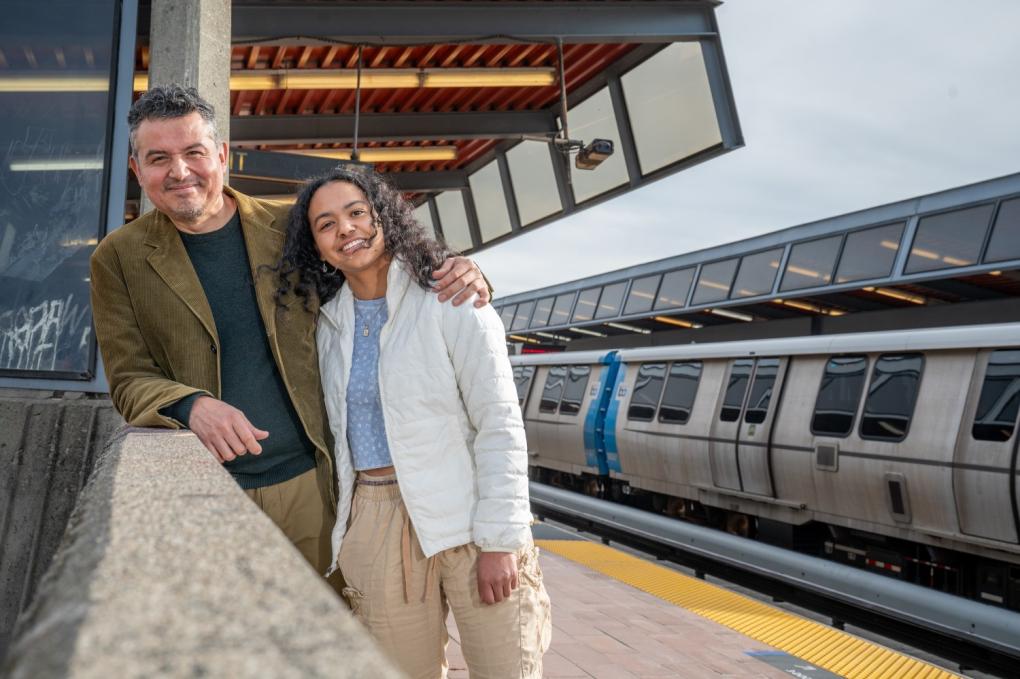
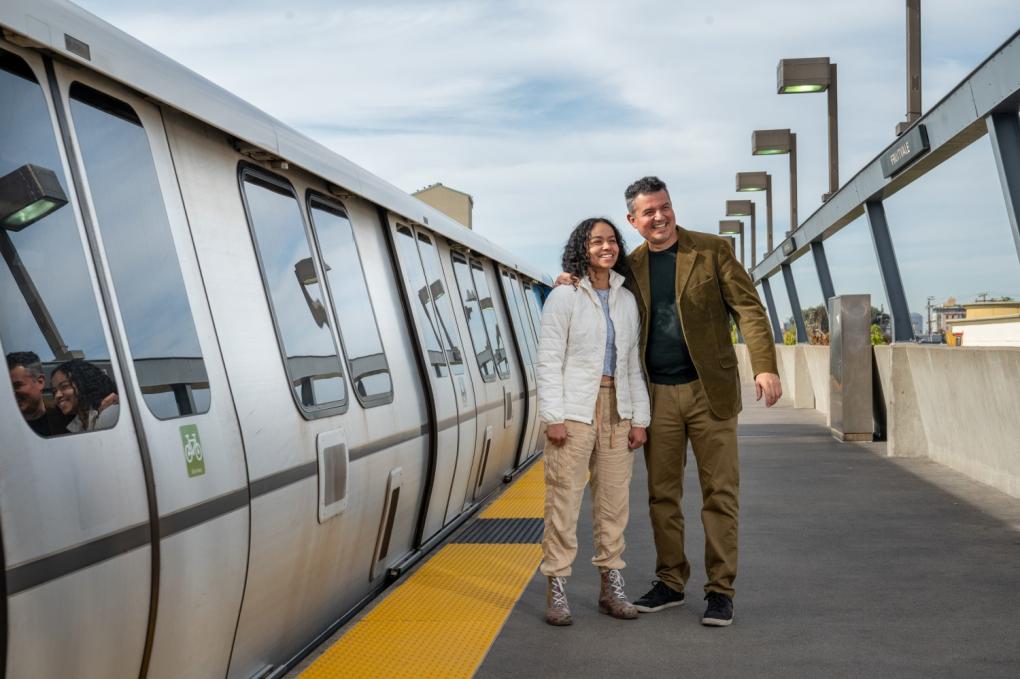
Ed and Elyse Cabrera pictured at Fruitvale Station.
Do you have a favorite BART memory or story to share? Email a short summary to BART Storyteller Michelle Robertson at [email protected], and she may follow up to schedule an interview.
Ed Cabrera spent most of his childhood in San Francisco’s Mission District. When he was two years old, his family immigrated from Guadalajara, Mexico, and they settled on the ground floor of a three-story flat at 18th and Dolores, just a few blocks up from the BART station at 16th.
The Cabreras took BART pretty much everywhere – to school, to appointments, to the library, and especially to visit family in the East Bay. The Cabreras were the last remaining members of their extended family still living in San Francisco, and if they wanted to see grandma and grandpa and the cousins, an eastbound BART ride was required.
Today, Cabrera lives in the Laurel District of Oakland, and now he travels in the reverse direction to hang out with his teenaged daughter, Elyse, when she’s staying with her mom in San Francisco. Cabrera said he regularly uses BART "to facilitate spending time with my daughter and acclimate her to city living.”
Elyse rode BART as a kid here and there – she loved the trains so much the Cabrera household was overrun with Thomas the Tank Engine toys – but she didn’t rely on it like her dad did in his San Francisco youth. Mostly, her parents shuttled her by car to school, social activities, and extracurriculars.
“That was more so because of her mother’s preference, and that was fine. It had its advantages,” Cabrera said. “But it also had a lot of disadvantages.” One being she didn’t spend much time exploring her surroundings outside of a vehicle, he said.
“You don’t want to have a kid who grew up in a city and doesn’t know it,” Cabrera continued. “And there’s no better way to get to know a neighborhood or community than walking, riding transit, and talking to people.”
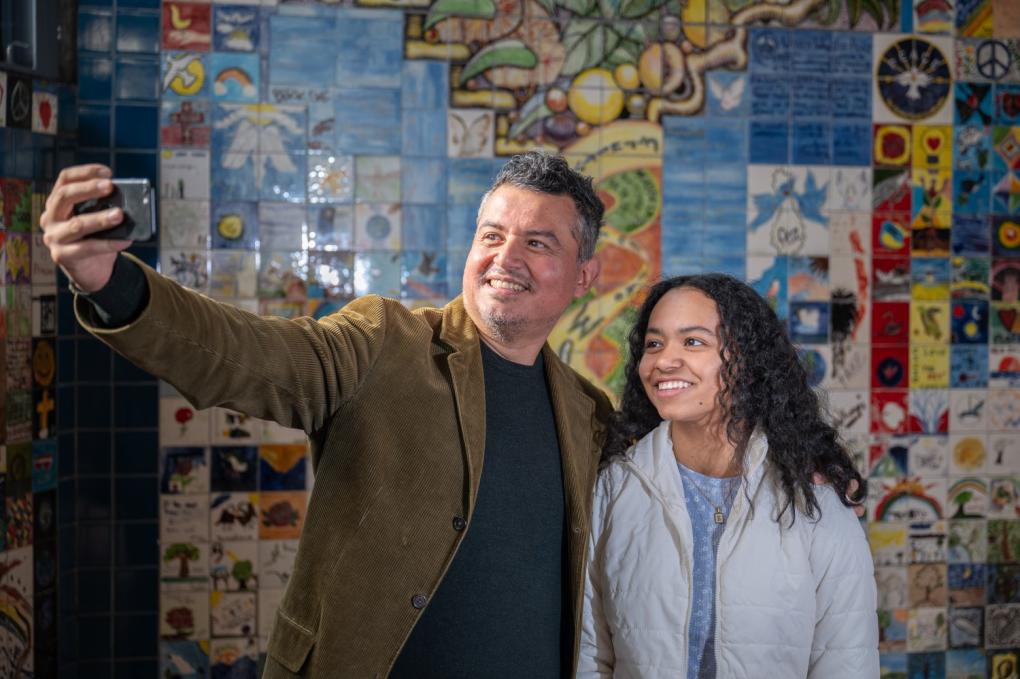
As his daughter grew, Cabrera wanted her to feel comfortable navigating the city independently, so he made a point to “transition Elyse out of the family car” and get her on public transportation to explore the neighborhoods beyond the Portola District, where she grew up.
Soon, Elyse was taking BART and Muni to meet friends at Dolores Park, to hang around the Castro, and to play mini golf at the course in the Mission District.
“It exposed her to different types of people,” Cabrera said. “What better place than BART to get to know the people around you? It’s the great equalizer!”
Cabrera and Elyse now spend much of their time together exploring the Bay Area. He doesn’t own a car, so most often, they take transit. In addition to riding BART to San Francisco to walk around the Mission and the Embarcadero, they’ll get onboard to visit Lake Merritt or head to their climbing gym – Elyse recently got her dad into rock climbing – and sometimes they’ll take it to explore the area’s regional parks. The pair plans to visit the Oyster Bay Regional Shoreline near Coliseum Station when Elyse is home from school.
Cabrera’s next transit challenge is getting Elyse comfortable on a bike. She's now a sophomore in college, and her campus is well-suited to biking.
Beyond getting her around the Bay, BART has also changed Elyse’s life, her father said. She's currently studying aerospace engineering, and Cabrera credits her interest in the field to early experiences riding BART and looking out the windows of the SFO AirTrain, watching the motion of the planes on the tarmac.
About the BART Connects Storytelling Series
The BART Connects storytelling series was launched in 2023 to showcase the real people who ride and rely on BART and illustrate the manifold ways the system affects their lives. You can follow the ongoing series at bart.gov/news.
The series grew out of BART's Role in the Region Study, which demonstrates BART’s importance to the Bay Area’s mobility, cultural diversity, environmental and economic sustainability. We conducted a call for stories to hear from our riders and understand what BART means to them. The call was publicized on our website, social media, email blasts, and flyering at stations. More than 300 riders responded, and a selection of respondents who opted-in were interviewed for the BART Connects series.