
Search Results
Installation work to begin Friday, August 8, for Next Generation Fare Gates at Balboa Park Station
On Friday, August 8, BART will begin the installation of Next Generation Fare Gates on the concourse level of Balboa Park Station. The installation work will happen in stages so riders can continue to use the remaining gates while new ones are being installed. There will be additional BART staff as well as signage to direct riders to the open gates. There will also be a service gate available for those riders who would typically use an accessibility gate. The installation of each new set of gates is expected to take up to two weeks to complete.
A temporary barrier will be installed around each array when it is ready to be removed to provide a safe workspace for the installation team as well as to protect riders from construction. The work will not delay train service, but riders may experience a few extra minutes wait to pass through the fare gates during peak travel hours.
The latest work comes after BART has successfully installed Next Generation Fare Gates at 44 stations across the system. All 50 BART stations will have new fare gates by the end of 2025. You can learn more about BART’s Next Generation Fare Gates project here.

Installation work to begin Friday, August 15, for Next Generation Fare Gates at Milpitas Station
On Friday, August 15, BART will begin the installation of Next Generation Fare Gates on the concourse level of Milpitas Station. The installation work will happen in stages so riders can continue to use the remaining gates while new ones are being installed. There will be additional BART staff as well as signage to direct riders to the open gates. There will also be a service gate available for those riders who would typically use an accessibility gate. The installation of each new set of gates is expected to take up to two weeks to complete.
A temporary barrier will be installed around each array when it is ready to be removed to provide a safe workspace for the installation team as well as to protect riders from construction. The work will not delay train service, but riders may experience a few extra minutes wait to pass through the fare gates during peak travel hours.
The latest work comes after BART has successfully installed Next Generation Fare Gates at 44 stations across the system. All 50 BART stations will have new fare gates by the end of 2025. You can learn more about BART’s Next Generation Fare Gates project here.
Safe & Clean Plan
Fleet of the Future now projected to come in hundreds of millions of dollars under budget
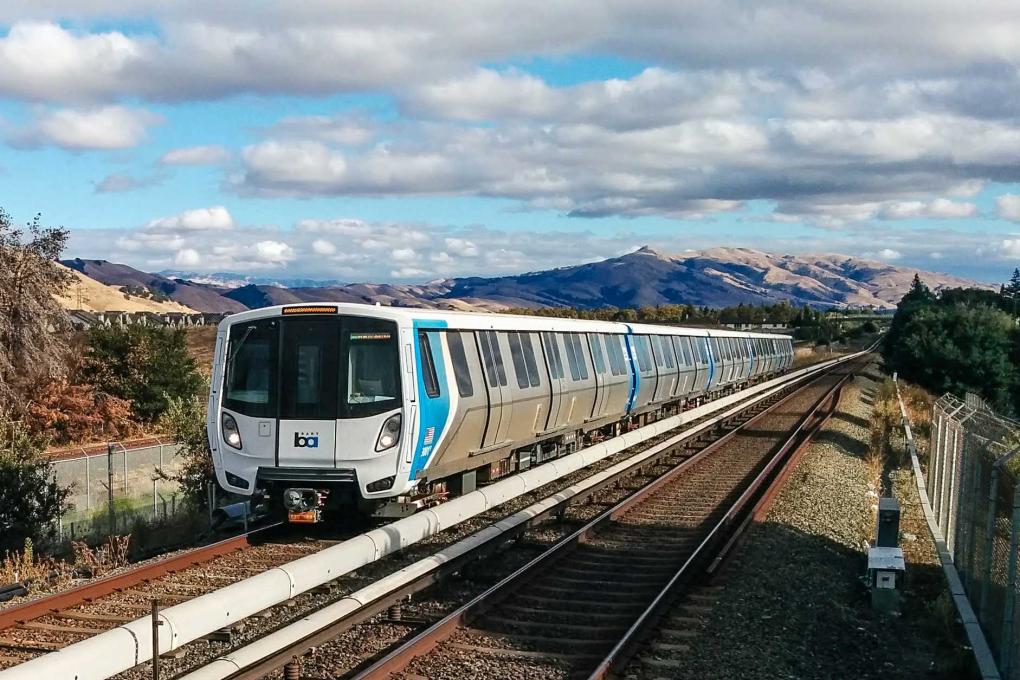
BART’s Fleet of the Future trains are now not only carrying riders on all regularly scheduled trips, but the project also is coming in hundreds of millions of dollars under budget thanks to tight project management.
Thanks to a revised schedule, and an accelerated monthly delivery rate of new rail cars, the project is expected to cost $394 million less than when the contract was awarded in 2012.
“There’s no question the Fleet of the Future project is a success story,” said Project Manager John Garnham. “Riders love the newer, cleaner modern feel of the cars and now we have great budget news for the project.”
The original contract awarded for 775 cars forecast a project cost of $2.584 billion but an October 2023 financial update lowered the forecast by 15%, to $2.190 billion. Over the course of 11 years, BART and the manufacturer, Alstom, have increased the pace of making and delivering the cars, resulting in significant savings.
The original delivery schedule called for the delivery of 10 cars a month, but BART worked with the manufacturer to increase the rate to 16 cars a month, saving more than $100 million.
Another big cost saver was BART’s decision to have its own highly experienced staff do more of the engineering work in house. The project team has included engineers who have successfully completed new rail car projects at other agencies.
The delivery schedule is now faster than ever – 20 cars a month are being delivered to BART – and, as of December 31st, 672 of the 775 cars are on BART property.
You can learn more about the Fleet of the Future, including what's being done to respond to wheel flats, you can listen to our latest podcast.
Alert: Red line cancelled on Wednesday, June 26th due to maintenance vehicle derailment
Update: June 26, 2024 7:15 am
Crews moved our maintenance vehicle out of the way last night.
The Red Line returned to service when we opened this morning.
We apologize for the inconvenience it caused and we thank our riders for their patience.
--------------------------------------------------------------------------------------------------------------------------------------
At about 3:30am on Wednesday, June 26, 2024, a BART track maintenance vehicle derailed near 19th Street/Oakland Station blocking one set of tracks.
No BART stations are closed but the Red Line is cancelled. We anticipate the Red Line to be cancelled all day but back in service tomorrow. Red line trains will show as cancelled in real time departures and the Trip Planner.
- San Francisco bound passengers coming from the Richmond direction who would normally take a Red Line train should take an Orange Line Berryessa train and transfer to a Yellow Line San Francisco train at MacArthur Station.
- Millbrae riders should take the Yellow Line.
- Orange Line trains coming from Richmond will need to divert to West Oakland after 12th St. Station and then turn back towards the Berryessa direction. So they will run: 12th St, West Oakland, Lake Merritt, and so on. Orange Line trains coming from Berryessa don’t need to do this.
- Platform 2 at 19th Street/Oakland Station is closed and trains may be stopping at a different platform that usual at 12th and 19th St stations.
The incident is not causing major delays.
BART Service Alerts are available via email, text, or customized push notifications in our official BART app.
Text and email opt-in: http://cloud.info.bart.gov/signup
On our app, select the profile icon and then notification settings. Set as many as you need for exactly when you typically ride BART. You will get push notifications of our alerts only during the selected times.
Expect 30-minute delays starting at 9pm some Sunday-Thursday nights between Millbrae and SFO, plus delays in the area for train control modernization work through Summer 2026
The trackside construction work to replace BART’s aged train control system with a modern Communications-Based Train Control (CBTC) system has reached a new phase that will cause evening service delays between Millbrae, SFO, San Bruno, South San Francisco, Colma, and Daly City stations. Expect 30-minute delays starting at 9pm on some Sundays-Thursdays for riders travelling between Millbrae, SFO, and Daly City stations due to planned train control modernization construction work.
BART staff will update the Trip Planner on a weekly basis to indicate if the work is taking place each week.
This construction and the service impacts in this area are expected to continue until Summer 2026.
The work was first announced in January 2025 with changes to service for Millbrae riders after 9pm with a shuttle train running every 15 minutes between Millbrae and SFO, making loops, with an easy cross platform transfer at SFO to board a Yellow Line train if continuing on. However, after midnight, the final Yellow Line trains to SFO station proceed to Millbrae (riders will not need to transfer for Millbrae service), and the final train of the evening bypasses SFO, as it always does, and goes straight to Millbrae.
The shuttle train service plan for Millbrae riders is expected to last through 2026 as BART has prioritized this section of track to be the first area to bring on CBTC in the BART system.
The state-of-the-art CBTC system will transform BART service by enabling trains to run closer together. A modernized train control system will enable BART to increase projected Transbay capacity to 30 trains per hour per direction in the core system area, up from the current limitation of 24-trains per hour per direction.
Civic Center Station: UN Plaza entrance stairway closure August 3 - August 12
The stairway that serves the Civic Center-UN Plaza BART entrance will be closed to public access from Monday, August 3 to Wednesday, August 12, to complete stainless steel cladding and handrail installation along the new escalator walls. This is the only access into Civic Center Station at this entrance on the north side of Market Street. Riders can exit the station via the escalator next to the stairway.
Riders should use the following options to access the Civic Center Station during this 10-day period:
North Side of Market Street – Stairway Access
- Entrance in front of Orpheum Theatre
- Stair-only Entrance at 7th Street @ Charles J. Brenham Place
North Side of Market Street – Elevator Access
- Elevator at UN Plaza
South Side of Market Street - Stairway / Escalator Access
- 8th & Market Canopy Entrance
- Mid-Block Stair only Entrance
- 7th & Market Street – Entrance has both stairway and escalator
Status of the Escalator Project
There are two escalator units located above the Civic Center Station that serve the United Nations Plaza on the north side of Market Street. The BART Escalator Renovation Project contractor has been working since April 2026 on the second of the two units and expects to complete the second unit by September 2026. All work at the Civic Center / UN Plaza entrance is expected to be completed by September 2026.
BART’s Escalator Renovation Project is replacing 45 escalator units (41 BART plus 4 additional MUNI escalators) in the four downtown stations at both platform and street levels. To date, BART has completed installation of 27 units, 2 are currently under construction, and there are 16 remaining escalator units to be completed through January 2029.
Thank you for your patience as we work to complete this important escalator renovation project.
For more information on this project visit: bart.gov/about/planning/sfentrances
Heading to the airport? Multi-Day Reserved parking now available online
Airport parking can be a hassle and is always expensive, except at BART stations. We offer inexpensive multi-day parking at many stations with easy online reservations.
Multi-Day Reserved parking is for consecutive overnight stays of up to 20 weekdays (weekends are free). Pay by website or on the official BART app. You will need to provide the license plate of the car you plan to drive and a phone number.
Park in the designated Reserved area. There is no need to print anything in advance or display anything inside your car.
View our Parking Pricing page with links to parking area maps for each station.
Millbrae Station is quicker and easier than SFO parking
While you can park at any BART station that offers parking, one great option to get to SFO via BART is to purchase Multi-Day Reserved parking and drive to Millbrae Station then take a quick 4-minute BART ride to SFO, which is faster than the long-term parking provided at SFO. Millbrae is also cheaper at $6/day, plus free weekends.
The reserved parking area at Millbrae is located on levels 3, 4, and 5 of the parking structure.
Daly City, Colma, South San Francisco and San Bruno also offer parking and have frequent service to SFO served by both the Yellow and Red lines.
Check out our BARTable Holiday Airport Travel Guide
We’ve put together a complete airport guide to make your trip a seamless one. https://bartable.bart.gov/featured/bartable-holiday-airport-travel-guide
More Details about Parking
Multi-day reserved parking may be purchased up to 60 days in advance, and twenty weekdays of parking may be purchased at a time. Parking on weekends is free. Visit the Parking section for more information.
You may cancel your reservation on the official BART app or the Reserved parking website by clicking on the “cancel” button next to where your active reservation is shown. For single/multi-day parking, you may cancel up to 11:59 p.m. on the night before the reservation. You can elect to cancel the entire reservation or only specific days. You will be assessed a $2 fee for each cancellation action, and the refund (minus the fee) should appear on your payment method within 72 hours. Please note that the transaction cannot be cancelled until it has been settled with your bank, which can take up to 24 hours.
Installation work to begin week of November 17 for Next Generation Fare Gates at Warm Springs/South Fremont Station
The week of November 17, BART will begin the installation of Next Generation Fare Gates at Warm Springs/South Fremont Station. The first set of gates to be replaced will be the array on the south end of the concourse. While work happens to install the first set of new gates, the second array of old gates will remain open for riders. There will be signage to direct riders to the open gates. Once the installation of the first set of new gates is complete, work will begin on the second array.
A temporary barrier will be installed to provide a safe workspace for the installation team as well as to protect riders from construction. Each new array is expected to take up to two weeks to install. While this work will not impact train service, riders may experience a few minutes wait to pass through the old gates during peak travel hours.
The latest work comes after BART has successfully installed Next Generation Fare Gates at ten stations across the system. All BART stations will have new fare gates by the end of 2025. You can learn more about BART’s Next Generation Fare Gate project here. Riders can provide feedback about the new gates at bart.gov/comments.
Installation work to begin Wednesday, May 7 for Next Generation Fare Gates at North Berkeley Station
On Wednesday, May 7 BART will begin the installation of Next Generation Fare Gates on the concourse level of North Berkeley Station. The installation work will happen in stages so riders can continue to use the remaining gates while new ones are being installed. A temporary gate will also be installed to support entry and exit. There will be additional BART staff as well as signage to direct riders to the open gates. The installation of each new set of gates is expected to take up to two weeks to complete. The work to replace all three sets of fare gates at North Berkeley Station is expected to continue into June.
A temporary barrier will be installed around each set of gates when it is ready to be removed to provide a safe workspace for the installation team as well as to protect riders from construction. The work will not delay train service, but riders may experience a few extra minutes wait to pass through the gates during peak travel hours.
The latest work comes after BART has successfully installed Next Generation Fare Gates at 29 stations across the system. All 50 BART stations will have new fare gates by the end of 2025. You can learn more about BART’s Next Generation Fare Gates project here.