
Search Results
Strategic Framework and Action Plans
Bus Bridge and Red Line Cancellation Alert: Major trackway rebuilding work near Richmond Station on four non-consecutive weekends
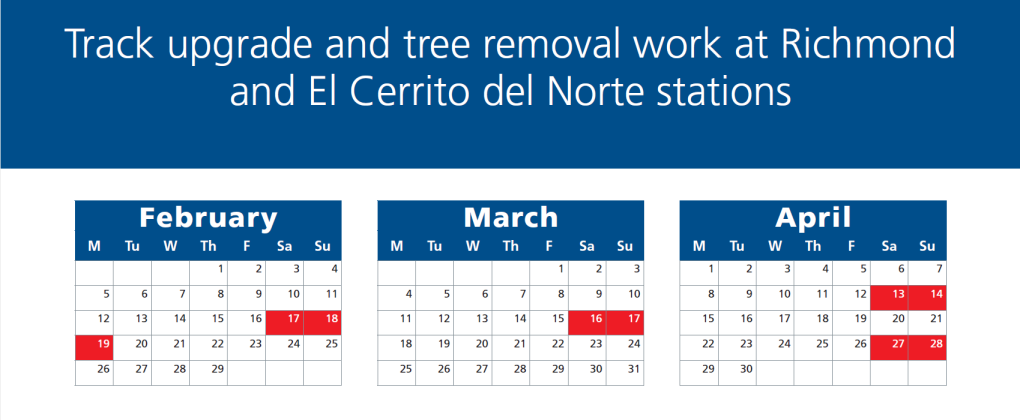
Update 4/15/24: The final bus bridge that had been scheduled between Richmond and El Cerrito del Norte the weekend of April 27-28 has been cancelled. Instead, our team will do trackway replacement work on the Yellow Line between Rockridge and Lafayette stations the weekend of 4/27-28. Get more details on this project here: https://www.bart.gov/news/articles/2024/news20240313
BART’s next major track improvement project will focus on replacing track equipment near Richmond Station. On four non-consecutive weekends in February, March, and April workers will replace an interlocking near Richmond Station. Interlockings allow BART to safely move trains from line to line and are an essential part of the system. Work will also be done to address vegetation that could impact service.
The weekend dates for this project are February 17-19 (Presidents’ Day Weekend), 3/16-17, 4/13-14, and 4/27-28.
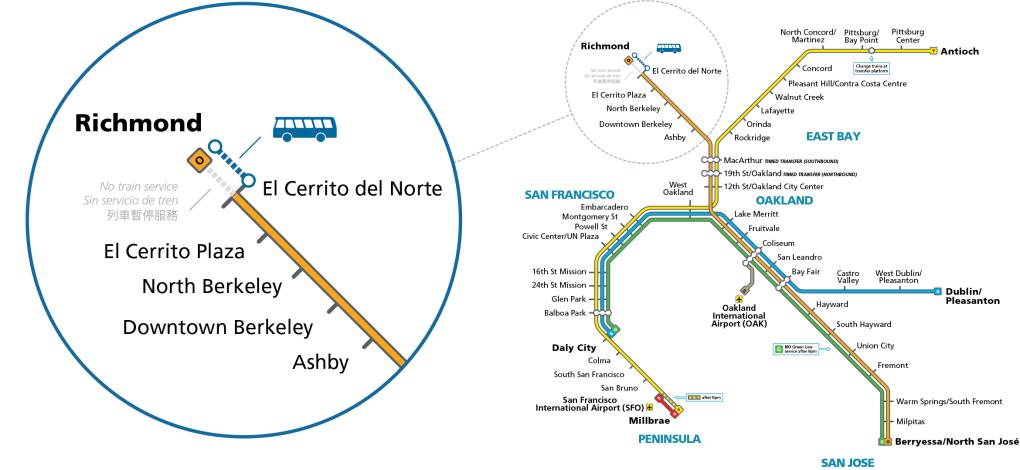
- Free buses will replace train service between Richmond and El Cerrito del Norte stations on all four weekends.
- The Red Line (Richmond-Millbrae) will be cancelled thus reducing service frequency and transbay options during these weekends. Transbay riders in the East Bay who would normally take the Red Line should instead board an Orange Line (Richmond-Berryessa) train and transfer to a Yellow Line train to San Francisco at MacArthur Station. This is scheduled to be a timed transfer to reduce wait times.
- Millbrae riders will be served by a shuttle train between SFO and Millbrae that is timed with the Yellow line train for an easy transfer at SFO.
- Riders can expect delays of up to 20 minutes in the work area on shutdown weekends.
- Richmond Station will not have train service but will still be open for Amtrak passengers and passengers traveling through the station. Riders will be able to board the bus bridge at Richmond.
Cyclists might find it faster to ride their bike along Nevin Ave in Richmond and the Ohlone Greenway to avoid the bus bridge and reduced frequency on the Richmond line.
You can keep up with the latest updates for trackway repair projects that impact service by going to our Alerts and Advisories page. BART’s Trip Planner has been improved to show the full customer journey including bus bridges.
BART wants to thank AC Transit for providing buses for BART riders during this track closure. Bay Area transit agencies are improving regional coordination to keep the Bay Area moving.
The equipment being replaced is decades old and has outlived its design life. Riders will enjoy a smoother, safer, more reliable, and quieter ride once the projects are complete.
This upcoming work is part of BART’s overall effort to improve the safety and reliability of the 131-mile, 50 station system. You can learn more about the progress of this work by reading the 2023 Measure RR Annual Report published by the independent Measure RR Bond Oversight Committee.
This article was originally posted on January 22, 2024.
Projects & Plans
Millbrae parking garage to expand Reserved Area to accommodate anticipated holiday demand
The Millbrae parking garage will be reconfigured over the next few weeks to accommodate for more reserved parking and the growing demand for single/multi-day reserved parking. The top floor of the garage and a portion of the 4th floor will be converted from Daily Fee to Reserved parking in preparation for the holiday season.
Millbrae is a popular and convenient station for BART riders to park and access the San Francisco International Airport, just a quick 4-minute BART ride away. This change supports customers purchasing single/multi-day reserved parking when they are headed to the airport. Customers may purchase single/multi-day reserved parking at Millbrae on the BART Official App or on BART’s website.
There is still ample parking for Daily Fee parking on the first three floors of the garage. In the next few months, additional Daily Fee parking will become available at the nearby surface parking lot.
Join Link21 at educational events to learn more about train options for a future crossing between Oakland and San Francisco
Link21 continues to invest in a more connected, equitable, and accessible future by working toward the goal of linking the San Francisco Bay Area Regional Transit (BART) and Regional Rail network throughout 21 counties – referred to as the “Megaregion” – in Northern California.
This past summer, community members from the Megaregion participated in a variety of virtual and in-person engagement events to discuss Link21 concepts and potential service improvements. Now this fall, Link21 is offering community members the opportunity to learn more about the type of train service, BART or Regional Rail, that would operate in the future train crossing between Oakland and San Francisco. Attendees will learn how these two options benefit riders, communities, and the Megaregion, plus how they differ. They will also have the chance to provide input to help the Link21 Program Team identify a recommendation for consideration of a Preliminary Project to be advanced by the BART and Capitol Corridor Boards of Directors in early 2024.
“The feedback we receive from people across our Northern California Megaregion will help us meet the needs of our diverse communities,” said Sadie Graham, Link21 Program Director for BART. “We can’t do this alone and need the public to continue being part of the planning process at every step of this generational undertaking.”
JOIN THE CONVERSATION!
Virtual Events
Participate in a virtual event or look for Link21 in your community to learn more and help connect Northern California with better train service for future generations. Visit the Link21 Events webpage for more details.
Online Open House
Starting in early November and lasting approximately 30 days, you can conveniently visit Link21OpenHouse.com anytime, 24 hours a day, seven days a week to learn more and provide input.
ABOUT LINK21
Link21 is a long-range transportation program sponsored by BART and Capitol Corridor to transform the train network serving the 21-county Northern California Megaregion, which includes the greater San Francisco Bay Area, the Monterey Bay area, the Sacramento area, and the Northern San Joaquin Valley.
Link21 will make it more convenient for people to take BART and Regional Rail (commuter, intercity, and high speed) throughout the Megaregion.
Learn more at Link21Program.org.
Normal train service has resumed between Richmond and MacArthur Station
(Updated 9am, May 14, 2024)
On Friday, May 10, 2024, a damaged, 20-year-old fiber optic cable was located just north of MacArthur Station late at night before the end of service. The damaged cable was impacting all communication necessary to run train service on the entire line. It was also impacting all station-level communication including the public address systems, phones, and message boards at all stations from Richmond to Ashby. Crews determined the degraded cable was not stable enough for a quick repair.
At 4:48am, the first BART Service Advisory was released alerting the public there would be no Red Line service and the Orange Line would not run between Richmond and MacArthur. Orange Line service was provided from MacArthur to Berryessa and Millbrae service was provided by a shuttle train between Millbrae and SFO. The Yellow, Blue, and Green lines were not impacted.
Partner bus agencies and Capitol Corridor honored BART fares. Extra BART employees were deployed to stations to help guide riders to the various bus options. Given how many stations were impacted, AC Transit was unable to provide a bus bridge with direct service to MacArthur Station. However, Richmond Line stations have high quality transbay and local bus route options and BART riders were able to ride them at no cost. A list of each bus option was posted on the home page of bart.gov and shared on social media.
Crews worked with BART’s fiber contractors to successfully splice BART’s 48-strand fiber optic cable to redundantly located fiber optic cable allowing for service to resume at 11:10am. This solution will remain in place long term.
As of 11:10am, we have restored normal train service between Richmond and MacArthur. We will follow up with more details about the cause of the disruption on Monday.
In an effort to improve communication during disruptions we are asking impacted riders to take this short survey before Monday, May 13th, at 5pm:
bart.gov/delays
We currently have no Red or Orange line service between Richmond and MacArthur due to a wayside equipment problem. Crews are on scene and are trouble shooting the problem. We hope to have this resolved shortly but expect this service disruption to last through the morning commute. The Yellow, Green and Blue lines are not impacted, and we do have normal service throughout the rest of the system.
Richmond riders should seek other means to get to MacArthur Station. Richmond through Ashby station riders should use the existing bus service at each station. For Millbrae riders, take the shuttle train between SFO and Millbrae and transfer to/from the Yellow line (Antioch-SFO). Orange line service is running MacArthur to Berryessa.
While we do have extra staff at each station to help with buses, there isn’t a direct bus bridge. We do have mutual aid from Capitol Corridor and various bus agencies that varies from Station to Station.
Capitol Corridor will offer free rides to BART passengers only between Richmond and Oakland Coliseum until 3PM.
BUSES TO DOWNTOWN SAN FRANCISCO
Richmond Station
- 72M to NL (AC Transit)
- Transfer from 72M to NL at 20th/Broadway in Oakland
- Takes 1 hour and 25 minutes
El Cerrito del Norte
- 72/72M to NL (AC Transit)
- Transfer from 72M to NL at 20th/Broadway in Oakland
- Takes 1 hour and 7 minutes
- L (AC Transit)
- Takes 48 minutes
- 72/72M/72R to G (AC Transit)
- Transfer at San Pablo and Gilman
- 48 minutes
- 72/72M to F (AC Transit)
- Transfer at San Pablo and 40th
- 53 minutes
El Cerrito Plaza
- G (AC Transit)
- 54 minutes
- L (AC Transit)
- Walk from station to San Pablo and Central
- 42 minutes
- 72/72M to NL (AC Transit)
- Transfer from 72M to NL at 20th/Broadway in Oakland
- Takes 55 minutes
- 72/72M to F (AC Transit)
- Transfer at San Pablo and 40th
- 51 minutes
North Berkeley
- J (AC Transit)
- Walk to Sacramento and University
- Takes 48 minutes
- G (AC Transit)
- Walk to San Pablo and Delaware
- Takes 41 minutes
o Casual Carpool: https://sfcasualcarpool.com/
Downtown Berkeley
- F (AC Transit)
- Takes 41 minutes
Ashby
- F (AC Transit)
- Takes 37 minutes
LOCAL OPTIONS for travel between stations.
Richmond Station – El Cerrito del Norte – El Cerrito Plaza
- AC Transit 72/72M
North Berkeley – Downtown Berkeley
- AC Transit 52
MacArthur – Ashby – Downtown Berkeley
- AC Transit 6
- AC Transit 18
Downtown Berkeley – Rockridge
- AC Transit 51B
- AC Transit 79
This 1,200-pound gear makes escalators run. Fixing it is no simple task.
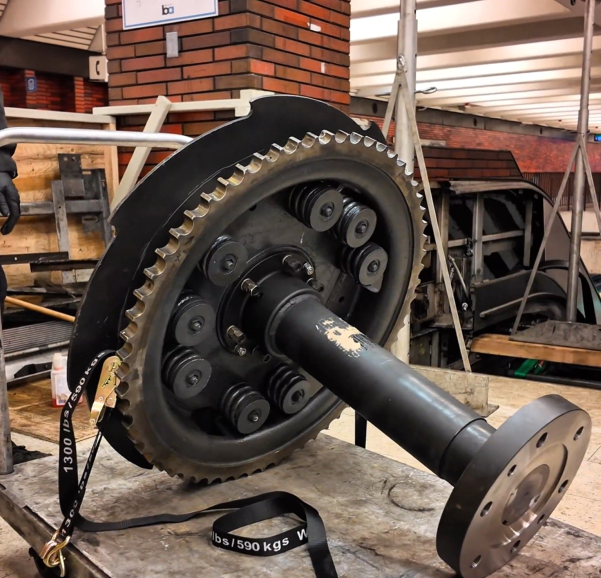
Half of the 1,200-pound bull gear ready for installation at 12th St. Oakland Station.
The sun has just risen in a wash of pink and purple over BART’s Oakland Shops, and four men dressed in blue are standing around a giant gear.
It looks like a bicycle gear with its interlocked steel circles rimmed with teeth. But this gear is big. Very big.
Known as a bull gear, this 1,200-pound steel beast can be found in all of BART’s 175 escalators. Like its namesake, its job is to pull heavy loads, in this case, moving the belt of an escalator used by thousands of BART passengers each day.
The bull gear in question belongs in an escalator that carries riders from the concourse at 12th St. Station to the platform. Many of the escalator’s components, including the bull gear, are nearly as old as the BART system.
Recently, the gear’s bearings were starting to wear, meaning the ride was not as smooth as it should be. So BART’s Elevator/Escalators Maintenance team sprung into action, taking the escalator out of service so the gear could be removed, renovated, and reinstalled in a matter of weeks. Like the gear, it was a big job.
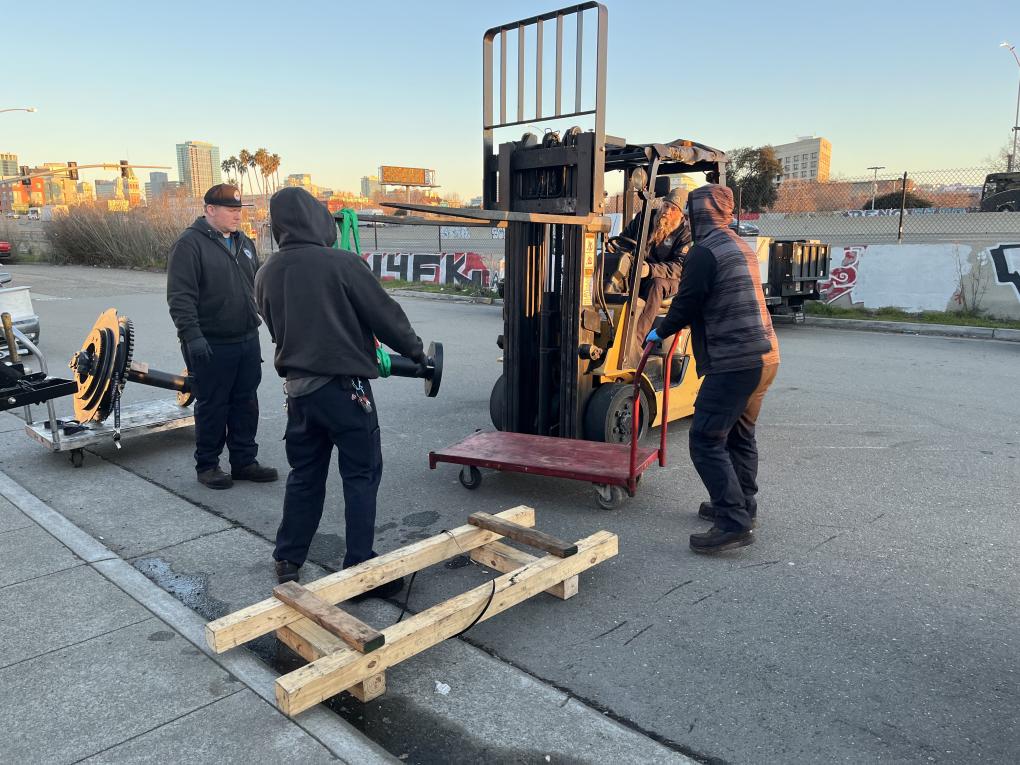
Escalator techs Mehdi Nategh and Brian McMurtrie and escalator tech trainees Austin Eagleston and Luis Gonzalez separate the bull gear with a forklift and load it onto a cart at BART's Oakland Shops.
When this bull gear wore out, rather than ordering a new gear with a price tag in the tens of thousands, the maintenance team saw an opportunity to save money in BART’s operating budget by refurbishing it with new bearings and bolts. The renovated part should provide a smooth and safe ride for years to come.
“We are mitigating problems as they arise,” said Eric Stockton, Section Manager of Elevator/Escalator Maintenance. “Customer service is our number one focus at BART, and escalators play a big role in that.”
So how do you fix a bull gear? Unfortunately, you can’t tinker with it while it’s installed in an escalator. That means Eric’s team has to take the escalator apart, then use a chain fall (a gear system used to raise and lower loads) to lift the bull gear onto a flatbed cart.
These gears are too large to fit in BART’s elevators, so the gear must be wrenched in half with a forklift to split it into two, more manageable pieces. Then up the escalator into the light of day, onto the back of a truck, and off to the parts repair shop for a makeover.
On this particular morning at the Oakland Shops, the four men standing over the refurbished 12th St. Bull gear were tasked with getting it back into its escalator home. That meant, repeating all the steps above but in reverse.
By 8am, the men were off to 12th St., one truck carrying the cloven gear, another carrying their tools. You can watch some of the reinstallation process in the above video.
It took about a month to get the bull gear in place and the parts attached to get the escalator back in service. It’s worth the hard work, said Mehdi Nategh, the team lead who’s been working on escalators for almost thirty years.
“These bull gears can last more than twenty years,” he said.
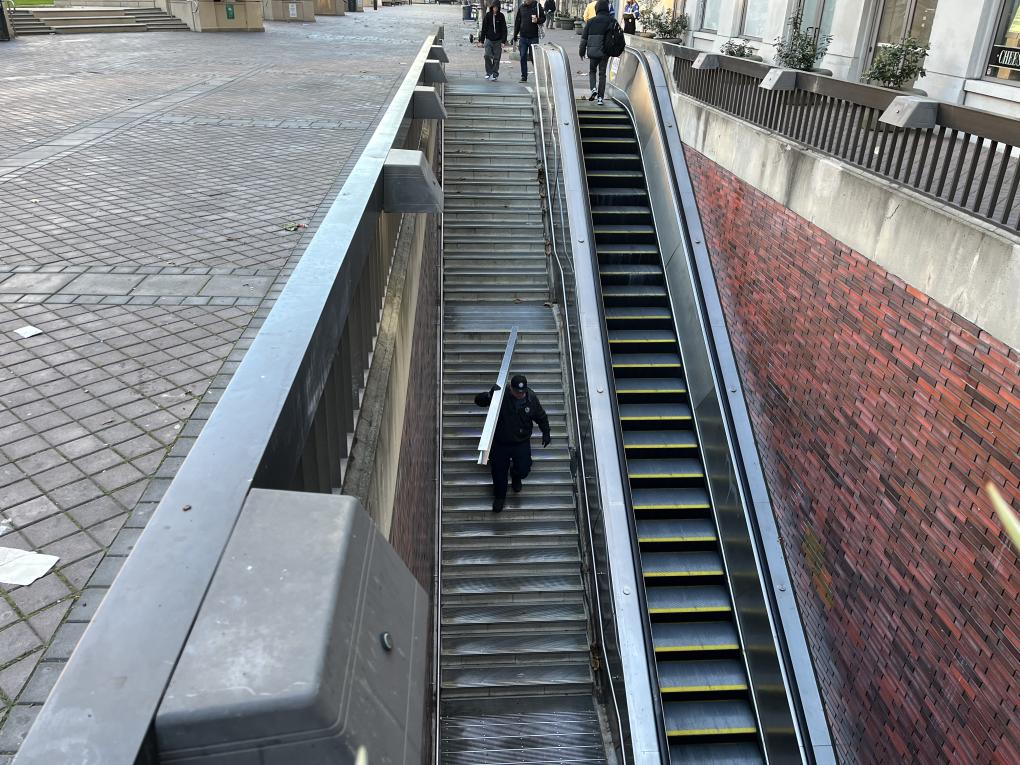
Carrying parts into the station.
While escalator tech Brian McMurtrie and escalator tech trainees Austin Eagleston and Luis Gonzalez prepped the gear from the top, Nategh went down in the machine room directly beneath the escalator. Here, the inner workings of an escalator come to light. As the escalator moves above, you can see the drive chain turning in an endless loop, powered by a drive machine with a gearbox and 480-volt AC motor.
Being down there changes your perspective. When you step onto an escalator, you probably don’t stop to think about how it runs or the little mechanical world beneath it.
Once the bull gear is in place there is much more work to be done.
“We have to hook up the handrails, put the steps backs in, I'm sure there are some sensors we need to replace,” said Gonzalez.
A few weeks later, once the work was complete, a joy ride of the escalator demonstrated the work paid off. The ride was smooth and quiet as the refreshed bull gear pulled us along.
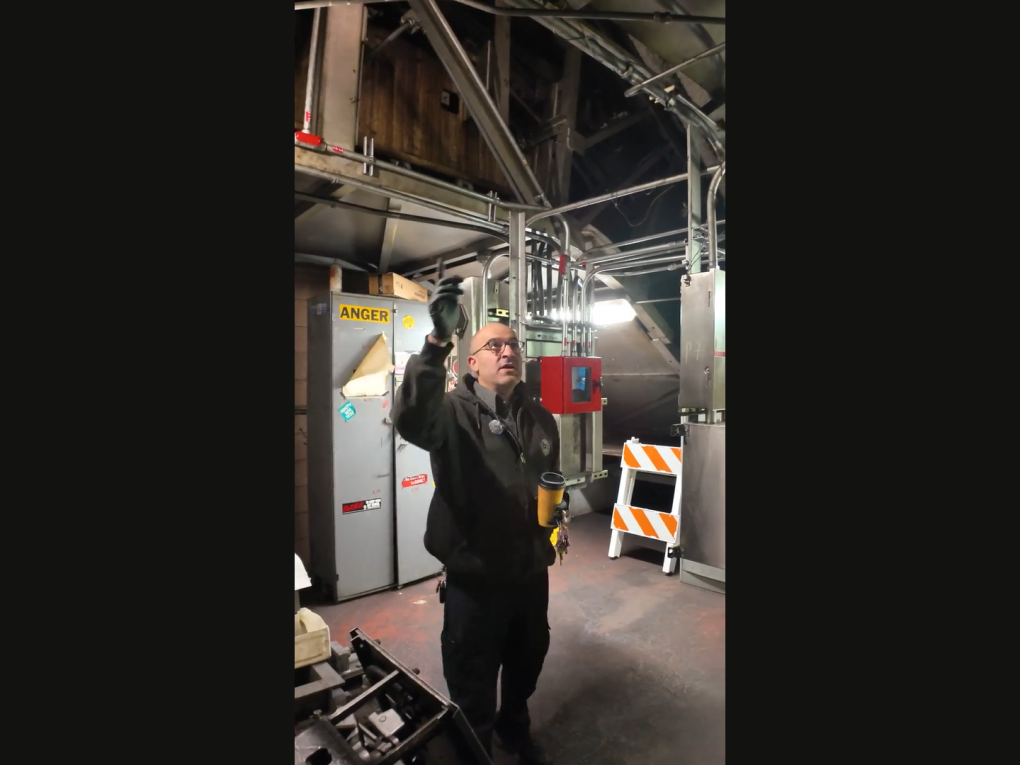
Mehdi Nategh in the machine room.
Minor schedule adjustments go into effect on Monday 8/12/24 to improve service and connections
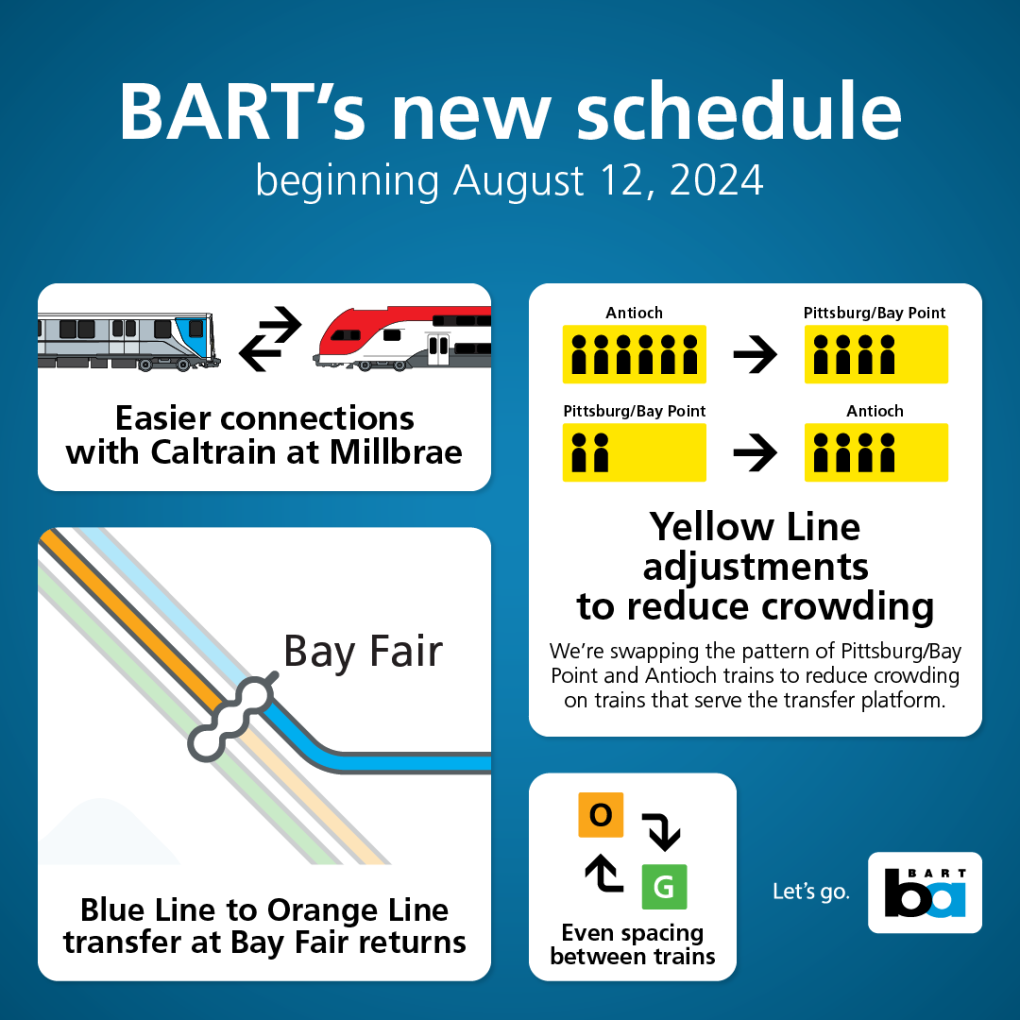
BART is making minor changes to the schedule beginning Monday, August 12, 2024, to improve key connections and to provide less crowding by better spacing of trains.
Some departure times have shifted by a few minutes, and we encourage riders to check the schedule before August 12th to see if their trip is impacted.
The BART Trip Planner has been updated with the new schedule so riders can start planning their trips using the date August 12, 2024, and beyond. PDF timetables of the new schedule are posted below. BART shared the new schedule with all partner transit agencies in March 2024 to give time for them to ensure schedules are aligned and transfers are timed as best as possible. All Bay Area transit agencies are working together to advance schedule bid alignment (in August and January) as part of efforts to improve transfer timing across the region.
Yellow line adjustments
While the intervals between trains will remain at 8 and 12 minutes, we are swapping the pattern of Pittsburg Bay Point bound and Antioch bound trains to ease crowding on the trains that serve the transfer platform.
Even spacing on Orange and Green lines
Riders on the Berryessa line will experience better train spacing than ever before. The Green and Orange line will still run every 20 minutes, but trains serving the Berryessa line will now be evenly spaced 10 minutes apart. This reduces crowding and offers an option for riders every 10 minutes for those willing to transfer to complete their trip.
Blue to Orange line transfer improvement at Bay Fair
BART will bring back the connection from the Blue line to the Orange line at Bay Fair. In the September 2023 schedule change, riders coming from Dublin and travelling towards Richmond were hit with a 17-minute wait at Bay Fair to make the Blue line to Orange line transfer. Instead, riders were given the option of a very tight transfer opportunity at West Oakland to a Red Line/Richmond train. The much easier connection at Bay Fair will return on August 12th.
BART and Caltrain schedule coordination at Millbrae
Both BART and Caltrain will make changes to improve some of the transfers at Millbrae. The improvements will go into effect when Caltrain launches its electric service on September 21. With BART’s schedule change in August and Caltrain’s schedule change in September, ~85% of all weekday trains will have a transfer between 5 and 19 minutes at Millbrae Station. On the weekend, ~90% of trains will have a transfer between 5 and 19 minutes.
5-19 minutes allows for both systems to be off schedule a bit but still provide a reliable connection. If trains were scheduled with less than a 5-minute wait, delays would frequently break the transfer and result in a longer wait.
Transfers at Millbrae don’t always line up perfectly because Caltrain has four trains per peak hour and two trains per off-peak hour/weekends. While BART has three trains per hour at all times. Both systems are also limited in flexibility due to key system timing points elsewhere.
Transit Coordination
Bay Area transit agencies are syncing schedules in a whole new way with a focus on improving transfers between systems and making schedule changes at the same time. Agencies convened a meeting in March 2024 to share planned changes for mid-August and to look for opportunities to improve transfers. Advancing schedule change alignment is a key priority for Bay Area transit general managers who meet on a weekly basis to make transit more rider-focused and efficient. The major agencies are already working on another iteration of a coordinated schedule change to go into effect in January 2025. These coordinated schedule changes will benefit current transit riders while attracting new riders. Read more about these efforts and see details of the August improvements.
Early Bird Express Bus Service
On August 12, 2024 the following Early Bird Express bus trips served by AC Transit will be eliminated:
| Eliminated Route | Origin/Destination | Operator | Time | Alternatives |
| 706 | Bay Fair to Salesforce via 19th St. | AC Transit | 4:21am | 4:04am 703 bus* 4:45am BART train |
| 707 | Fremont to Salesforce | AC Transit | 3:50am | 4:55am BART train |
*The 703 AC Transit bus from Dublin/Pleasanton Station to Salesforce Transit Center will now depart at 3:47am and will now serve what was previously the 706 with a stop at Bay Fair at 4:04am, then at Fruitvale at 4:20am, then arrive at the Salesforce Transit Center at 4:40am.
View the Early Bird Express page for complete service information.
PDF Timetables
Weekdays
August, 12 2024 Weekday Service for Antioch to SFO (Yellow) Line.pdf
August 12, 2024 Weekday Service for Berryessa_N San Jose to Daly City (Green) Line.pdf
August 12, 2024 Weekday Service for Berryessa_N San Jose to Richmond (Orange) Line.pdf
August 12, 2024 Weekday Service for Dublin_Pleasanton to Daly City (Blue) Line.pdf
August 12, 2024 Weekday Service for Richmond to Millbrae + SFO (Red) Line.pdf
Weekends
August 12, 2024 Weekend Service for Antioch to SFO (Yellow) Line.pdf
August 12, 2024 Weekend Service for Berryessa_N San Jose to Daly City (Green) Line.pdf
August 12, 2024 Weekend Service for Berryessa_N San Jose to Richmond (Orange) Line.pdf
August 12, 2024 Weekend Service for Dublin_Pleasanton to Daly City (Blue) Line.pdf
August 12, 2024 Weekend Service for Richmond to Millbrae + SFO (Red) Line.pdf
*This article was posted on July 22, 2024
Tri-Valley teen’s message to parents: Get your kids on transit!
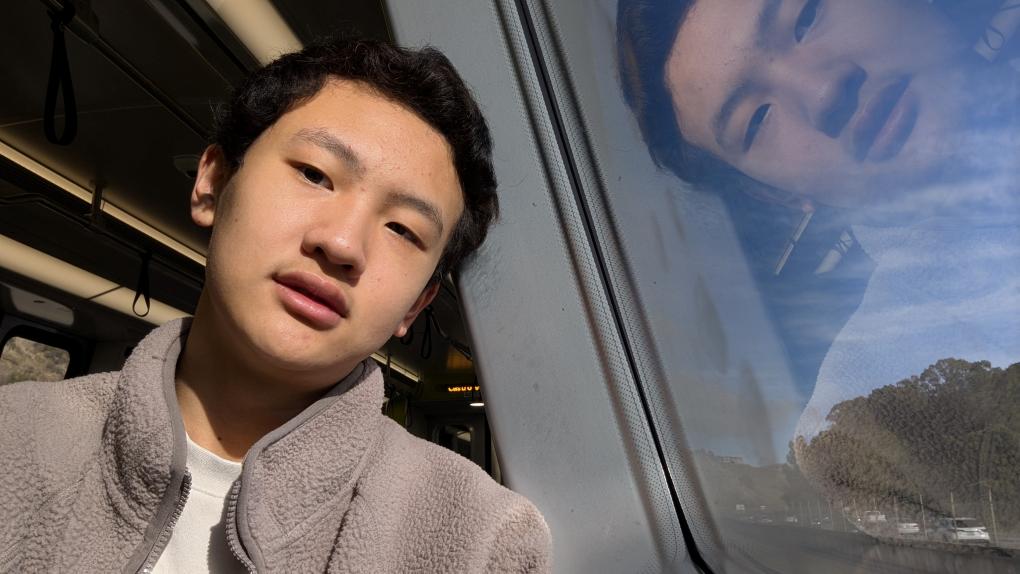
Enzo Wu, 15, is pictured on a BART train.
Listen to Enzo Wu, Ameen DaCosta, and YouTuber Adam discuss the art of speedrunning on the BART podcast.
Enzo Wu is a BART speedrun world recordholder. He’s also a San Ramon teenager working to “spread the gospel of transit.”
“A lot of people I know haven’t actually gone out and tried transit, and they form their opinions about it from family or social media,” Wu said recently. His longstanding question: How can you know you don’t want to ride transit if you’ve never actually ridden it?
Wu believes public transportation is an important tool for people his age. You don’t have to have a license, and you don’t have to beg your parents to drop you off and pick you up. You can just go when you want to, where you want to (with your parents’ permission, of course).
Wu has been working to get his friends to take transit by inviting them to take BART to an unexplored location and offering to pay their fare and even buy them dinner. That's how much the transit cause matters to him.
“People my age don’t go out and do stuff in public enough,” he said. “They’re not getting out there and interacting with new people offline, and if they’re bored on a weekend, they’ll sit around all day and play videogames."
There’s nothing wrong with videogames – Wu's a big gamer himself – but there’s more to life than screens, he said. Transit is his foolproof balm for boredom. It’s also provided him with plentiful opportunities to practice independence and social skills.
“Going out in public, riding the train, these are activities that build social confidence, which so many kids lack these days,” said Wu (who’s darn mature for his 15 years, if you hadn’t noticed). “Knowing how to take a train or a bus or a ferry is a big step in growing up.”
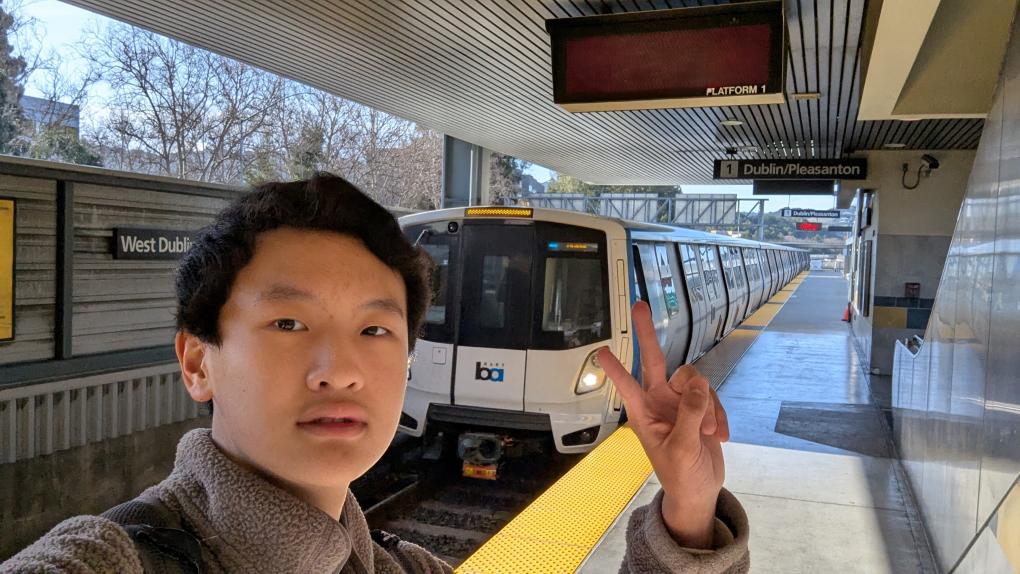
Some of his friends have never done anything alone, let alone take the train from the Tri-Valley to San Francisco, he added.
“We’ll go to a restaurant, and they’ll get stressed because they don’t know how to pay the bill,” he said. “It’s kind of shocking. They lack social skills. But I think transit can bridge that gap. Some of my friends won’t necessarily take transit everywhere like I do, but just getting the idea in their heads is a big step.”
The hurdle isn’t always social; sometimes, it’s parental.
“Some of my friends are game to go into San Francisco and check out a new spot I found,” Wu said. “But then their parents say no.”
“I just find that so sad,” he continued. “Many parents haven’t even tried transit themselves! They see a headline and form an instant opinion. Can you imagine if people did that with airplane travel? If you actually have a decent understanding of traveling by transit, you wouldn’t prevent your kid from riding it, especially during the day and with a group.”
Only two years ago, Wu himself had almost no experience on public transportation. It was his mom who inadvertently gave him the transit bug when she signed him up for 511 Contra Costa’s Pass2Class, a program that gives middle and high school students free bus rides to school for up to two months.
When Wu’s mom first gave him the card with the expectation that he’d at least try taking the bus home from school, he replied: “You want me to take the bus??? Ewwwwww.”
“Enzo, just try it,” she said. “If it’s bad, we’ll find you a carpool.” You know what happened next.
Now, Wu’s getting his parents on the transit train. He regularly shares “good transit news” along with his long list of positive BART and bus experiences. It’s boosted his parent’s confidence in his ability to be out in the world alone, he said. Now they don’t think twice about letting him head out on his own.
Wu has many “transit conversion” success stories to share. Once he gets a friend onboard – that first ride experience is key – it’s not uncommon for the transit ingenue to become transit oriented. He believes he’s “converted” at least a dozen friends directly and dozens more indirectly, thanks to people who watch his speedrun videos and livestreams.
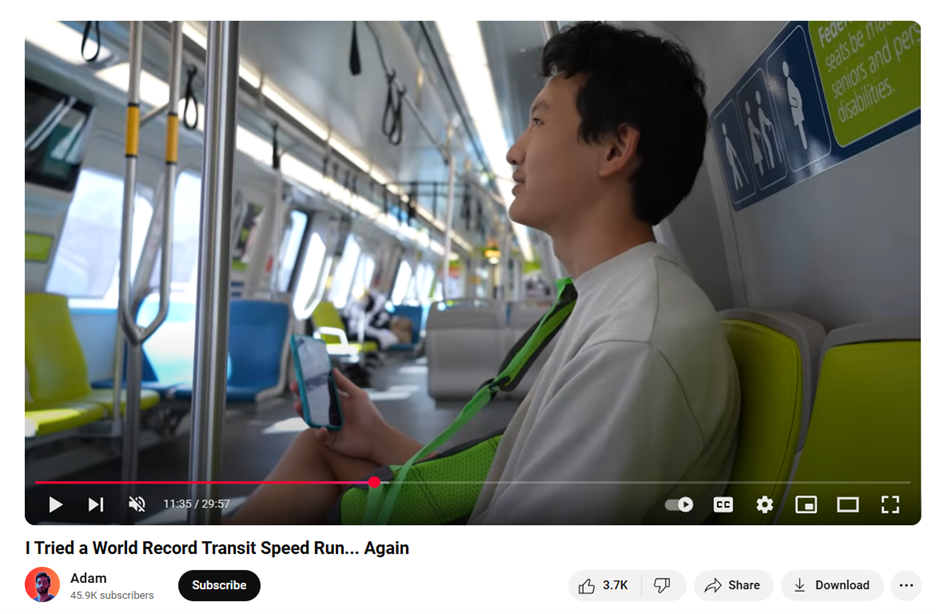
If you’re unacquainted with the term, a speedrun is the total time it takes to travel through all BART stations (or another form of transportation). You can learn more about BART speedrun records here and watch the invigorating video of Wu and YouTuber Adam's new BART speedrun world record here. This past October, the duo speedran the BART system with a time of 5 hours, 9 minutes, and 35 seconds.
“Even just people posting the articles about my speedruns in their Discord chats – people go, ‘Woah, that’s cool Enzo does that. Maybe I should check BART out,’” he said. Now, thanks to the success of his videos, it’s not uncommon for friends to ask to tag along on upcoming runs.
Speedrunning is something of an unconventional hobby (though a solid extracurricular for college apps, Wu hopes). Other than countering some of the transit-negative narratives on social media, the act of speedrunning demonstrates that “if you plan a route in advance, your transit experience can work out well.”
“Once you get experience, planning your trip is fun, simple, and stress free,” Wu said.
And Wu knows it will serve him and his friends as they transition into adulthood.
“Building transit skills now will come in handy many years down the line when you need to get to college, to work,” he said. “That’s why I ride transit, and that’s why I’m advocating for kids my age to do the same.”
“If you can’t ride transit without freaking out, you’ll lose out on all these experiences,” he concluded. “Then, you’ll look back and say, ‘Why didn’t I take transit earlier? Enzo gave me a great opportunity, and I said no!’”
BART offers a 50% fare discount for youth ages five to 18 years old with a Youth Clipper card. Children four years old and younger ride free. Learn more about Youth Clipper cards and other fare discounts here.