
Search Results
Installation work to begin September 20th for Next Generation Fare Gates at Antioch Station
Installation of Next Generation Fare Gates is scheduled to begin September 20th at Antioch Station. The installation process is expected to take up to two weeks to complete. This work comes after the successful installation of Next Generation Fare Gates at Civic Center, Fruitvale, Richmond, and West Oakland stations.
During construction, there will be a barrier around the existing station gate array. Riders will use two temporary accessible gates to enter and exit Antioch Station. Both gates will be placed in front of the Station Agent Booth and will route riders through the existing service gate. Additionally, carpet will be installed immediately before the entrance to each fare gate, to make these two gates easier to locate for riders with visual impairments. The removal of the old gates and installation of the prototypes will not impact train service.
All BART stations will have new fare gates by the end of 2025. You can learn more about BART’s Next Generation Fare Gate project here. Riders can provide feedback about the new gates at bart.gov/comments.

Wear your favorite jersey on transit for Jersey Day on Tuesday, Feb. 3
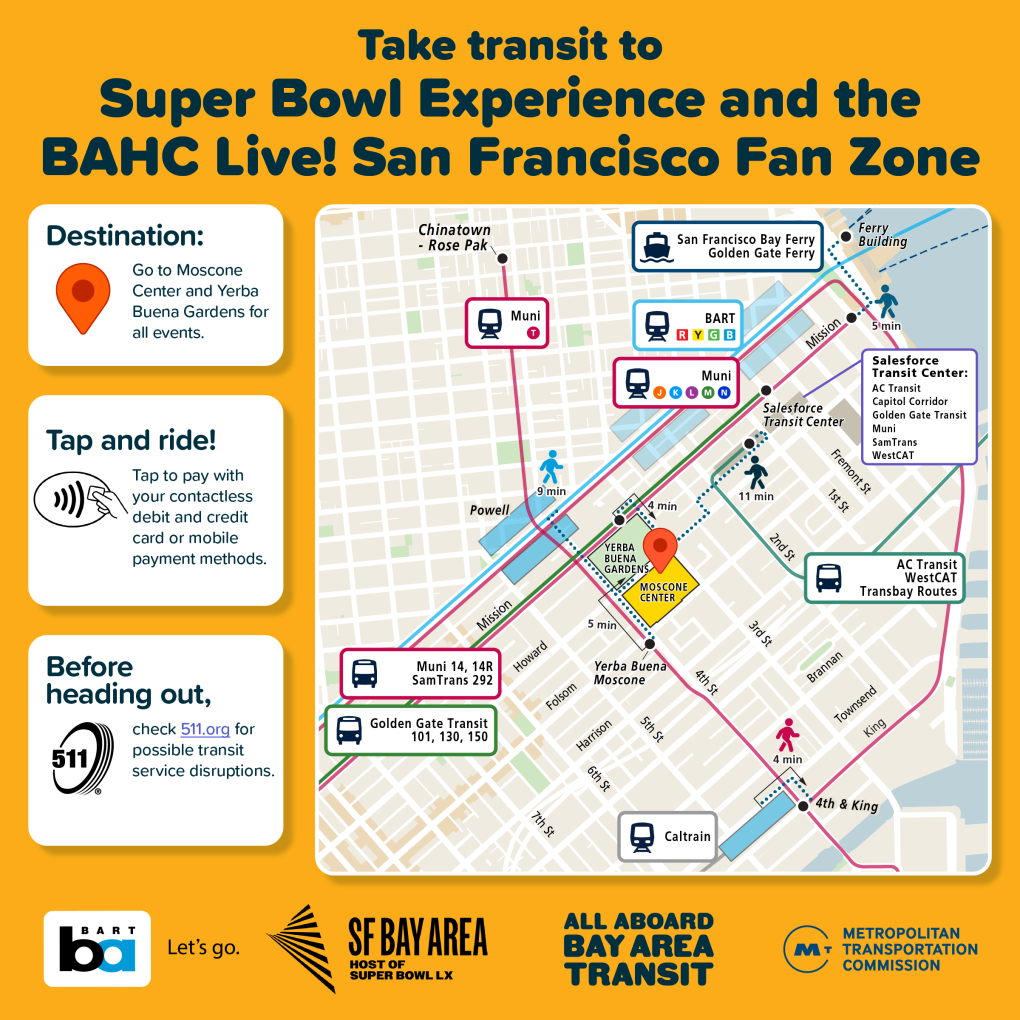
On Tuesday, Feb. 3, Bay Area transit agencies and the Metropolitan Transportation Commission are encouraging riders to wear their favorite jersey on transit to celebrate transit’s role in getting fans to Super Bowl LX-related events. February 3 marks the first day of the Super Bowl Experience at Moscone Center and BAHC! Live San Francisco Fan Zone at Yerba Buena Gardens, both just a short walk from Powell St. Station.
BART and other agencies will have staff handing out prizes to those spotted wearing a jersey during their ride, while supplies last. Any sports jersey counts!
Levi's Stadium in Santa Clara is hosting the championship game on Sunday, Feb. 8, and transit is a great way to get to the stadium and other events. BART will run longer trains and have extra staff and security to help get fans and families to events. Special announcements will be made onboard trains about where to exit and special directional signs will be posted inside stations to help new riders.
Find guidance on getting to Super Bowl LX events at bart.gov/superbowl.
New illuminated artworks on display at 19th St. Oakland Station
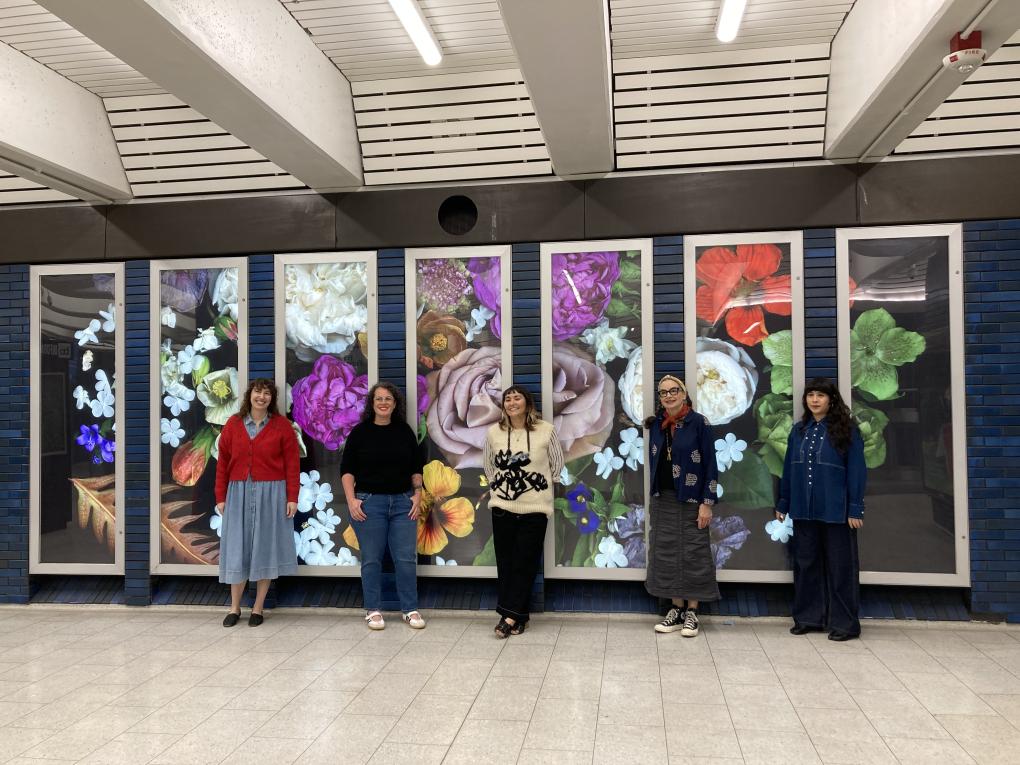
The artists - Courtney Cerruti, Liz Hernandez, Carrie Lederer, and Kija Lucas - and curator Lisa Solomon in front of Lucas's Untitled (Samin’s Garden) at 19th St. Oakland Station.
A new exhibition at 19th St. Oakland Station has been installed in the light boxes that replaced the original phone alcoves as part of the 2023 station upgrades. Intended for rotating art displays, the glowing lightboxes featuring site specific reinterpretations of artworks by four Bay Area artists. Filled with florals, organic textures, and scenes inspired by the natural beauty of the Bay Area, the exhibition brings a burst of spring into the heart of downtown Oakland.
Each of the works, created by Courtney Cerruti, Liz Hernandez, Carrie Lederer, and Kija Lucas, center botanicals, inviting riders to pause and experience a moment of inspiration as they travel through the station. The project was led by the BART Art Program that engaged curator Lisa Solomon, a local artist and educator who is actively involved with local Bay Area art and artists.
“I think it’s really exciting that people get to see [art] in their daily lives. They don’t have to go to a museum, they don’t have to be familiar with artwork; they just have to look up while they’re commuting,” said Lisa Solomon. The project is “all about bringing the outside in.”
“It was really important to show the gamut of what florals can do in art,” she said.
The artworks are located at four locations inside the station, all visible without entering the paid area: three on the eastside of the station near the entrance/station agent booths, and one on the westside of the station across from the mid-station agent booth. They will be on display at least through fall 2026. The pieces complement three stairwell lightboxes (located between the lower and upper platforms) with permanent installations by artists Ron M. Saunders, Phillip Hua, and Lisa and Hailey Banks.
“The role of the art program is to align with BART’s efforts to enhance station environments making people feel more welcome, and connecting with nearby communities,” said BART Art Program Manager Jennifer Easton. Other recent projects supported by the program include the writing contest BART Lines: 826 Valencia, Sound Tracks Music Festival, Fruitvale murals in partnership with The Unity Council, and the upcoming BART Police Headquarters, North Berkeley and Dublin Pleasanton station art enhancements currently in development.
Fox and His Circle of Gold
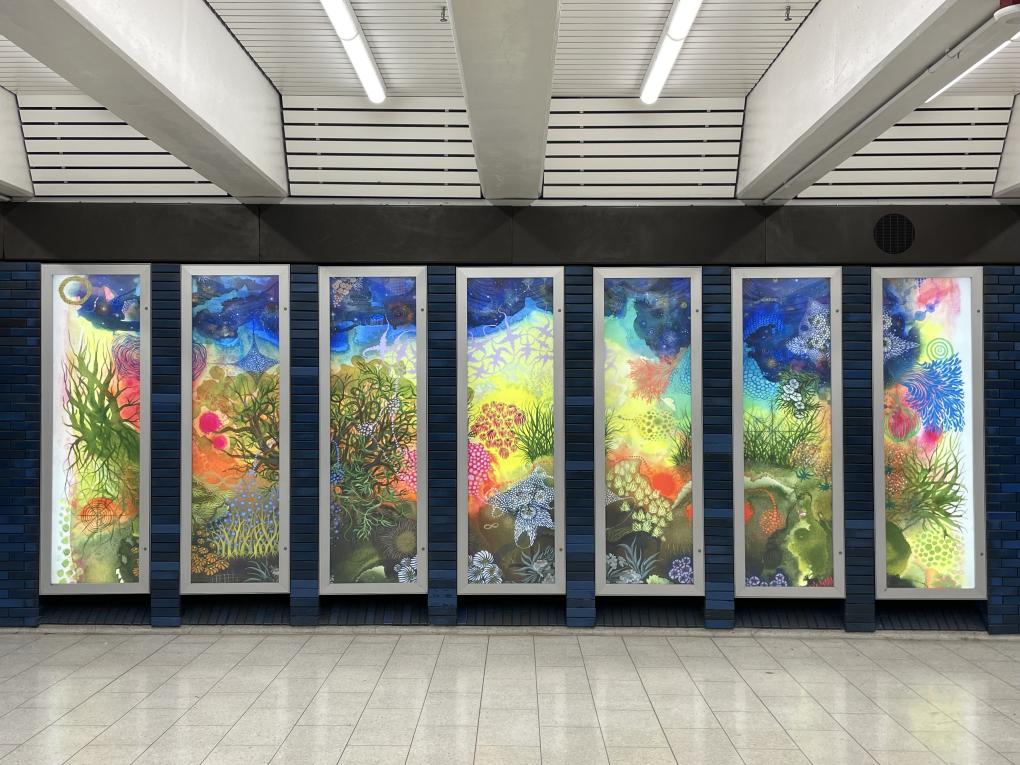
“I often focus on both macro and micro – minute things that people don’t really have a chance to notice, things that are hiding in plain sight. Also, I am focusing on this idea of transporting people across land, water, sky, on out into the cosmos. This idea of a journey is in the work. All the details, the movement, the textures, the patterns. And it dovetails nicely with this idea of people who are on a journey here in BART going somewhere.”
— Carrie Lederer, Oakland (carrielederer.com)
Jacarandas al Viento (Jacarandas in the Wind)
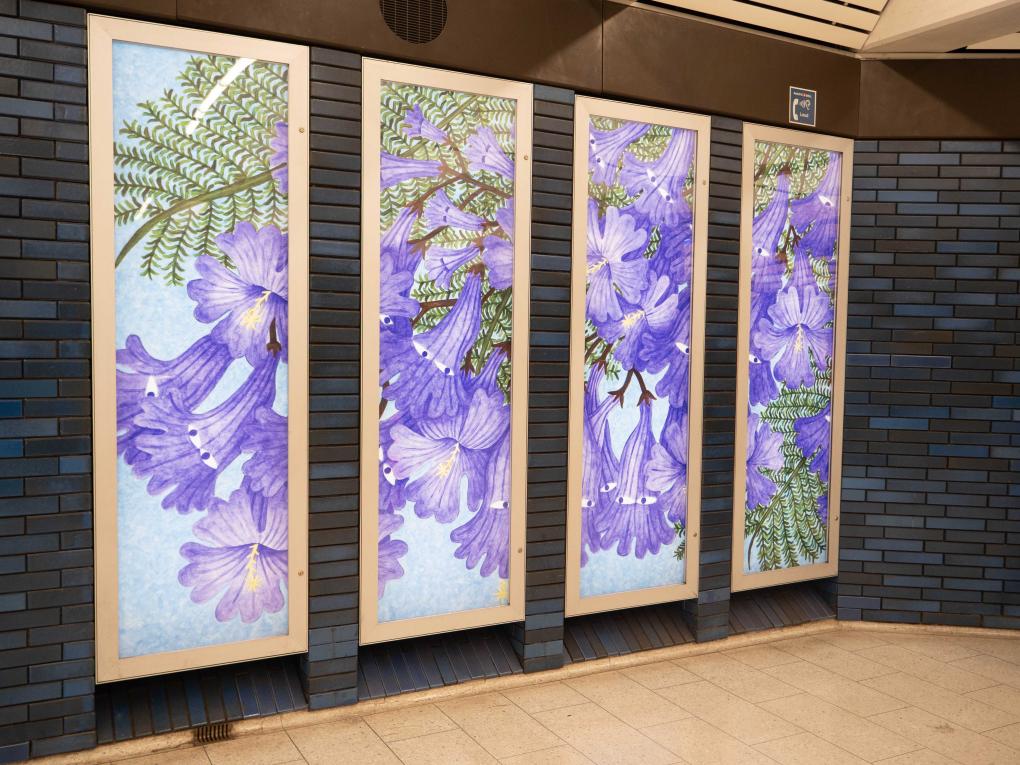
“There's such a big world of people who exist, who spend a lot of time here in the BART system, and who might not spend a lot of time in a museum or attending a show at the gallery. But just bringing art into the space that’s already familiar, that’s ordinary...I think it will help people break that normalcy of their commutes, but also it might make people think that there is room for art in their life. The natural world is not a backdrop for our lives, it’s actually an agent that feels and sees and participates in this, being alive.”
— Liz Hernandez, Oakland (liz-hernandez.com)
Sunday Morning. Lake Merritt Gardens
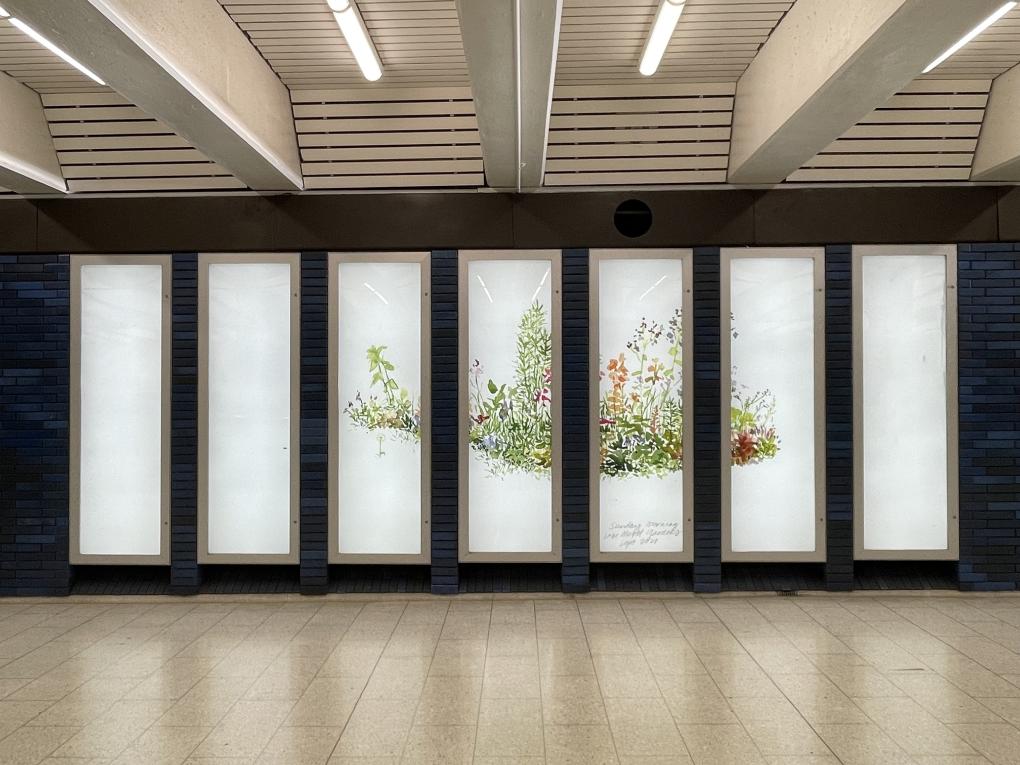
“[The scene] is from the Gardens at Lake Merritt, which I used to spend a lot of time at. This happened on a Sunday that, like most Sundays, it would be a very rare treat for me to have an hour two to be out in the world painting because I have a small child. It was kind of like a miraculous series of events to let me be in a garden painting on a beautiful sunny day in Oakland with my watercolor palette and my sketchbook and a sun hat and nobody else. I really had the garden to myself because it was early, and I think that sort of sereness but also playfulness shows through in the work as well, and that’s my favorite way to paint.”
— Courtney Cerruti, Oakland (courtneycerruti.com)
Untitled (Samin’s Garden)
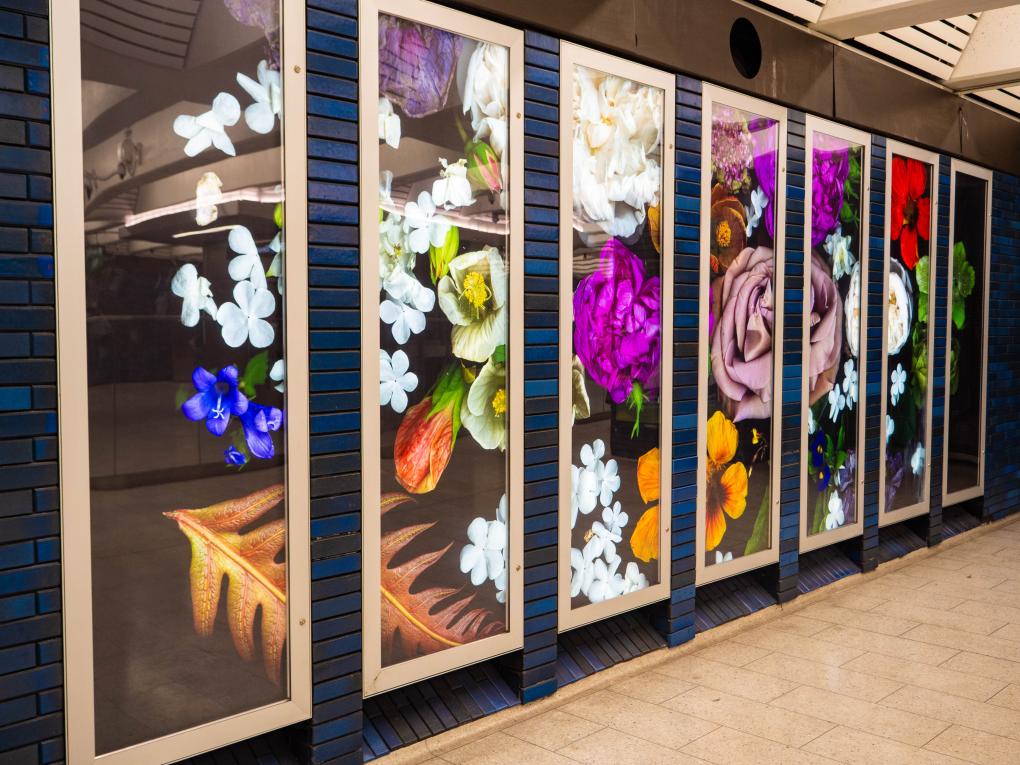
“For me plants have a lot of memories. They might remind you of your home or your grandmother or a person in your life. They might have a certain smell or taste memory to them. You bring them with you like other objects in your life. I love seeing my work in places where people will encounter art where they might not encounter it otherwise.”
— Kija Lucas, Berkeley (kijalucas.com)
Site Info
Installation work to begin March 14 for Next Generation Fare Gates at Glen Park Station
Installation of Next Generation Fare Gates is scheduled to begin March 14 at Glen Park Station. The installation process is expected to take approximately two weeks to complete.
During construction, there will be a barrier around the existing station gates. Riders will use two temporary accessible gates to enter and exit Glen Park Station. Both gates are located next to the Station Agent Booth. When facing the booth from the non-paid area of the station, the fare gate to your right is used to enter the station and the fare gate to your left is used to exit. Additionally, a carpet will be installed immediately before the entrance to each temporary gate to make the gates easier to locate for riders with visual impairments.
The work will not impact train service, but riders may experience a few extra minutes wait to pass through the fare gates during peak travel hours.
The latest work comes after BART has successfully installed Next Generation Fare Gates at 22 other stations across the system. All 50 BART stations will have new fare gates by the end of 2025. You can learn more about BART’s Next Generation Fare Gate project here.
Installation work to begin March 14 for Next Generation Fare Gates at San Leandro Station
Installation of Next Generation Fare Gates is scheduled to begin March 14 at San Leandro Station. The installation process is expected to take approximately two weeks to complete.
During construction, there will be a barrier around the existing station gates. Riders will use two temporary accessible gates to enter and exit San Leandro Station. Both gates are located next to the Station Agent Booth. When facing the booth from the non-paid area of the station, the fare gate to your right is used to enter the station and the fare gate to your left is used to exit. Additionally, a carpet will be installed immediately before the entrance to each temporary gate to make the gates easier to locate for riders with visual impairments.
The work will not impact train service, but riders may experience a few extra minutes wait to pass through the fare gates during peak travel hours.
The latest work comes after BART has successfully installed Next Generation Fare Gates at 20 other stations across the system. All 50 BART stations will have new fare gates by the end of 2025. You can learn more about BART’s Next Generation Fare Gate project here.
Installation work to begin May 2 for Next Generation Fare Gates at Pittsburg/Bay Point Station
The installation of Next Generation Fare Gates is scheduled to begin Friday, May 2 at Pittsburg/Bay Point Station. The process is expected to take approximately two weeks to complete.
During construction, there will be a barrier around the existing station gates. Riders will use two temporary accessible gates to enter and exit Pittsburg/Bay Point Station. Both gates are located next to the Station Agent Booth. When facing the booth from the non-paid area of the station, the fare gate to your right is used to enter the station and the fare gate to your left is used to exit. Additionally, a carpet will be installed immediately before the entrance to each temporary gate to make the gates easier to locate for riders with visual impairments.
The work will not delay train service, but riders may experience a few extra minutes wait to pass through the temporary fare gates during peak travel hours.
The latest work comes after BART has successfully installed Next Generation Fare Gates at 29 other stations across the system. All 50 BART stations will have new fare gates by the end of 2025. You can learn more about BART’s Next Generation Fare Gate project here.
Installation work to begin Friday, July 11 for Next Generation Fare Gates at Castro Valley Station
The installation of Next Generation Fare Gates is scheduled to begin Friday, July 11 at Castro Valley Station. The process is expected to take approximately three weeks to complete.
During construction, there will be a barrier around the existing station gates. Riders will use two temporary accessible gates to enter and exit Castro Valley Station. Both gates are located next to the Station Agent Booth. When facing the booth from the non-paid area of the station, the fare gate to your right is used to enter the station and the fare gate to your left is used to exit. A carpet will be installed immediately before the entrance to each temporary gate to make the gates easier to locate for riders with visual impairments.
The work will not delay train service, but riders may experience a few extra minutes wait to pass through the temporary fare gates during peak travel hours.
The latest work comes after BART has successfully installed Next Generation Fare Gates at 40 other stations across the system. All 50 BART stations will have new fare gates by the end of 2025. You can learn more about BART’s Next Generation Fare Gate project here.