
Search Results
BART gears up for epic weekend with more train cars, special event trains
BART is significantly boosting its passenger carrying capacity for what promises to be an epic Bay Area weekend of events that include Fleet Week activities, America’s Cup races, concerts at East Bay music venues, home games for the 49ers, Giants and possibly the A’s and a full slate of parades and street
Delays on BART to OAK 6/8-10 for maintenance Update: Work complete
Update: The work is complete. We will run regular service Saturday night Beginning 9 pm Friday, June 8 until 9 am on Saturday, June 9, we will close one of the tracks for BART to OAK to complete important maintenance projects. One track will remain in operation, and trains will arrive every 18 minutes, rather
No ordinary fan: East Bay woman is A's BART Rider of the Game
Melissa Wong (left) with Stomper By Stefan Martinez BART Website Intern It was midmorning on a hot Wednesday, July 6, when the BARTMobile took the field at the O.co Coliseum in Oakland. Unprompted, and with no reservations, Melissa Wong leaned out the side to belt out her love for the stadium she was in, and
BART Connects: Why Eric’s students at the Orientation Center for the Blind ‘fall in love’ with BART when they come to the Bay
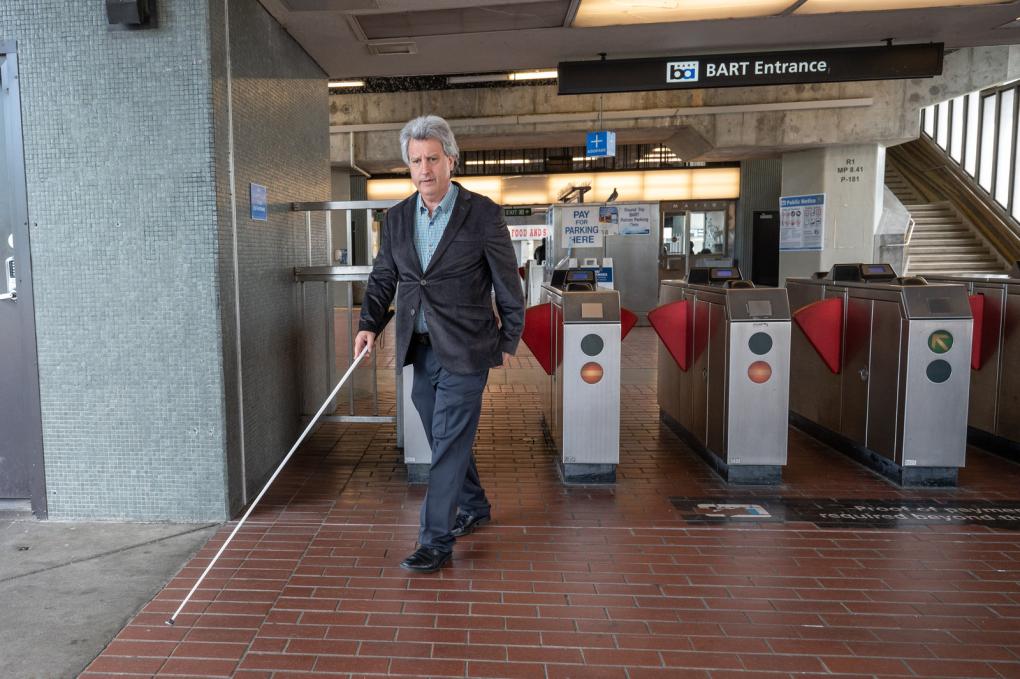
Eric Mazariego navigates El Cerrito Plaza Station.
BART is developing detailed descriptions of station tactile guideways, a navigation system for riders who are blind and low vision that leads to bus bays, fare gates, and platform stairs. Find the descriptions here and read the story of their development here.
Eric Mazariegos has been taking BART “forever.”
His earliest BART memory is riding trains to eye doctor appointments in San Francisco with his mom. He was eight years old when he started losing his vision, and it took doctors two years to figure out what was happening. That meant lots of appointments – and lots of BART.
Those long BART rides from his home in Concord to San Francisco and back turned out to be a useful educational tool as his vision loss continued.
“I rode it so much as a kid, I’d memorized a lot of the stations,” he said. “I had a head start [for navigating the system without vision].”
Later in life, he began taking BART regularly, first to get to class at San Francisco State, then a job in Fremont, and now to his current workplace, the Orientation Center for the Blind (OCB).
“It’s my primary mode of transportation,” he said. Rideshares fill in the blanks when necessary (though BART is always his first choice).
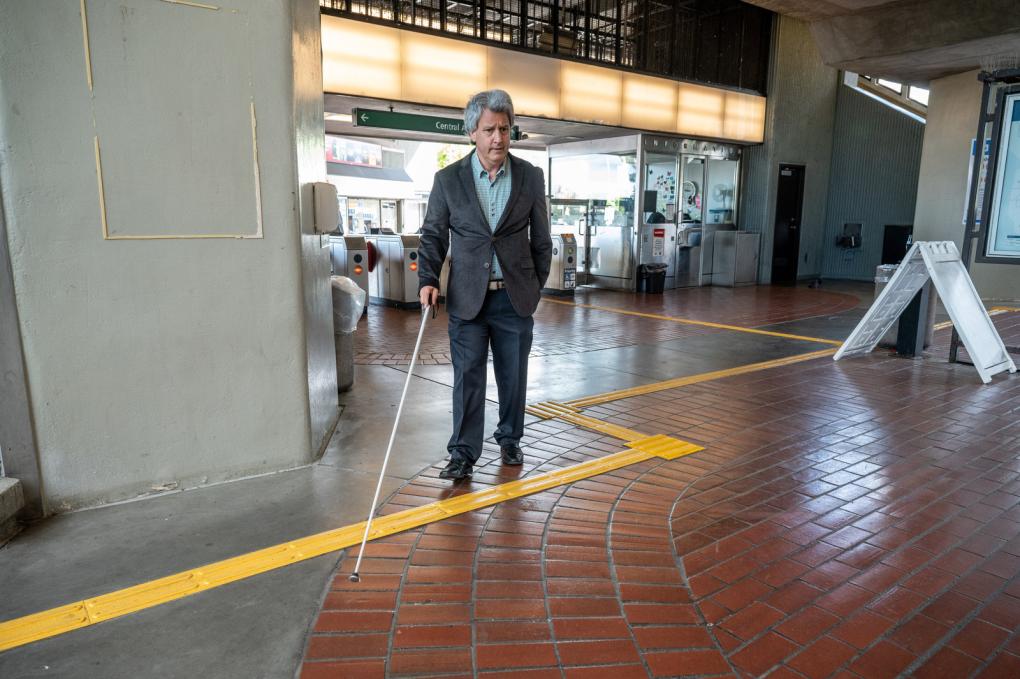
Eric uses his white cane to follow the tactile guideway at El Cerrito Plaza.
When Eric navigates a BART station, he is listening to the sounds around him and translating the tactile clues from his white cane to the spatial map in his mind.
Every BART station has a unique soundscape and tactile geography that allows Eric to make his way through a station and onto a BART train.
“I listen for the turnstile, so I know where to enter. I feel for the carpets near the escalators – a clue that I’m almost there. I hear my cane on the metal landing platform. Then I ascend to the platform,” Eric said, describing some of the cues he uses to navigate a station without vision. When he reaches the platform, there are other guide tools – bumpy tactile guideways that signal you are nearing the trackway, speakers announcing the approach of trains.
Part of Eric’s job is to support people like him -- people who are blind or low vision -- in learning to move around their cities and regions.
Eric serves as the Administrator of OCB, a 60-year-old residential training program run by the Department of Rehabilitation (DOR) that provides free on-site training to job seekers who are visually impaired and blind. Said Eric: “The mission of the DOR is everyone who wants to work can work.”
Eric started at OCB as a dorm counselor in 1999. Twenty-five years later, he’s overseeing the organization’s entire staff of 35. To get to OCB from his home in Concord, Eric takes BART, twice a day, five days a week. Without it, his travel options would be extremely limited.
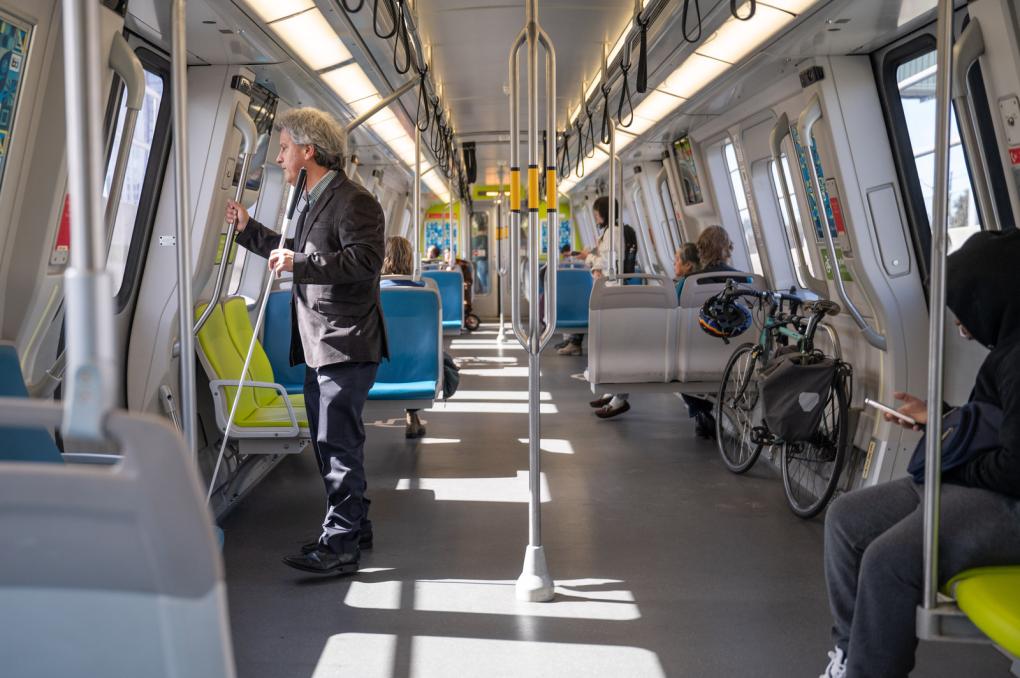
Eric stands on a BART train.
The OCB campus is about a half mile from El Cerrito Plaza Station. Every day of the week, you’ll see OCB participants on campus going to and from classes, which include courses such as Daily Living Skills, Cooking, Braille, Adaptive Technology training, and independent travel. Some students are new to blindness. Some come from outside of the Bay Area. Many live on campus through the duration of their training course.
“I’d have to find a job closer to my house,” he said. “BART opens up the possibilities to work wherever you want, and your job is a huge part of your life. A lot of people take that for granted.”
There’s a learning curve for OCB students ready to set out on their own via public transportation. First, they must learn white cane skills so they can detect obstacles and pathways and safely orient themselves in spaces they haven’t experienced before.
Teachers provide hands-on guidance and “BART field trips” to show students how to confidently navigate the system, and they have tactile maps of some stations so they can get a sense of their layouts. Many students want to go out and learn by experiencing it for themselves.
“When students advance to the point of being able to use BART, they love it. It’s so freeing because it takes you everywhere, runs frequently, and is dependable,” Eric said. “A lot of our students come from Southern California, and they’re not used to having great transit. Many don’t like going back home because they fall in love with our transportation system.”
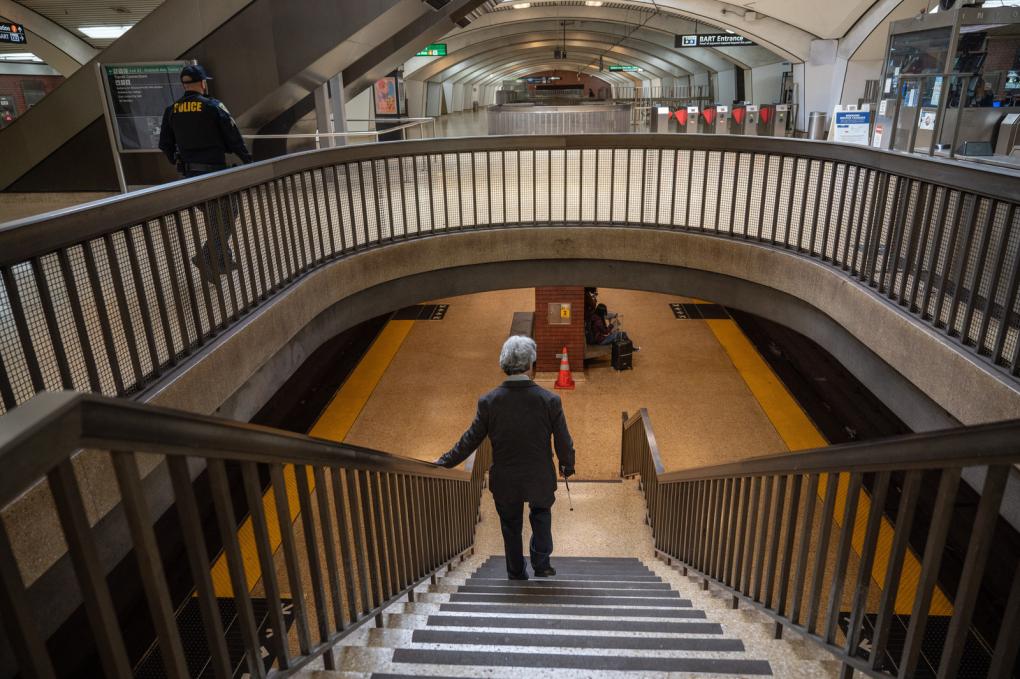
Eric enters Downtown Berkeley Station's platform via the stairs.
About BART Connects
The BART Connects storytelling series was launched in 2023 to showcase the real people who ride and rely on BART and illustrate the manifold ways the system affects their lives. The subjects of BART Connects will be featured in videos as well as a forthcoming marketing campaign that is slated to run across the Bay Area. Find all the stories at bart.gov/bartconnects.
The series grew out of BART's Role in the Region Study, which demonstrates BART’s importance to the Bay Area’s mobility, cultural diversity, environmental and economic sustainability. We conducted a call for stories to hear from our riders and understand what BART means to them. More than 300 riders responded, and a selection of respondents were interviewed for the BART Connects series.
BART officers to provide crime prevention tools as part of National Night Out
Tonight BART Police officers, including members of the well-known K9 team, will provide evening commuters with crime prevention tools at four stations for the 2010 National Night Out. The officers will talk to customers about preventing crime, answer questions and distribute child fingerprinting kits for
BART PD's National Night Out effort focusing on community ties at a pivotal time
By RAQUEL CRITESBART Communications Intern As the lull of late summer transforms to the buzz of back-to-school, BART ridership increases and with it, comes the annual ritual of National Night Out -- a community crime prevention and safety event that has been going strong for 32 years. BART Police have been
Liz Ames
Multi-agency law enforcement training at four BART stations, Tuesday 1/28/14
THIS EVENT HAS BEEN POSTPONED. New event information will be posted as soon as it is rescheduled. From 8:30am to 12:30pm on Tuesday, January 28, BART Police, the Transportation Security Administration (TSA), and Bay Area law enforcement will be working with other local transit agencies to conduct joint
BART will run Saturday service for the 2022 Martin Luther King holiday
BART will run a Saturday schedule on the Martin Luther King holiday, Monday, January 17, 2022. The system will open at 6am and close at midnight. For the most up-to-date schedule information use our Trip Planner or our official BART app to plan your specific trip. Martin Luther King Day is also a parking