
Search Results
Take BART to The Unity Council’s Día de los Muertos Festival (Sunday, Nov. 3) and view 5 new murals at Fruitvale Station
Purchase a BARTy x Dia de los Muertos t-shirt and stickers on Railgoods.com.
Scroll down to read this news release in Spanish.
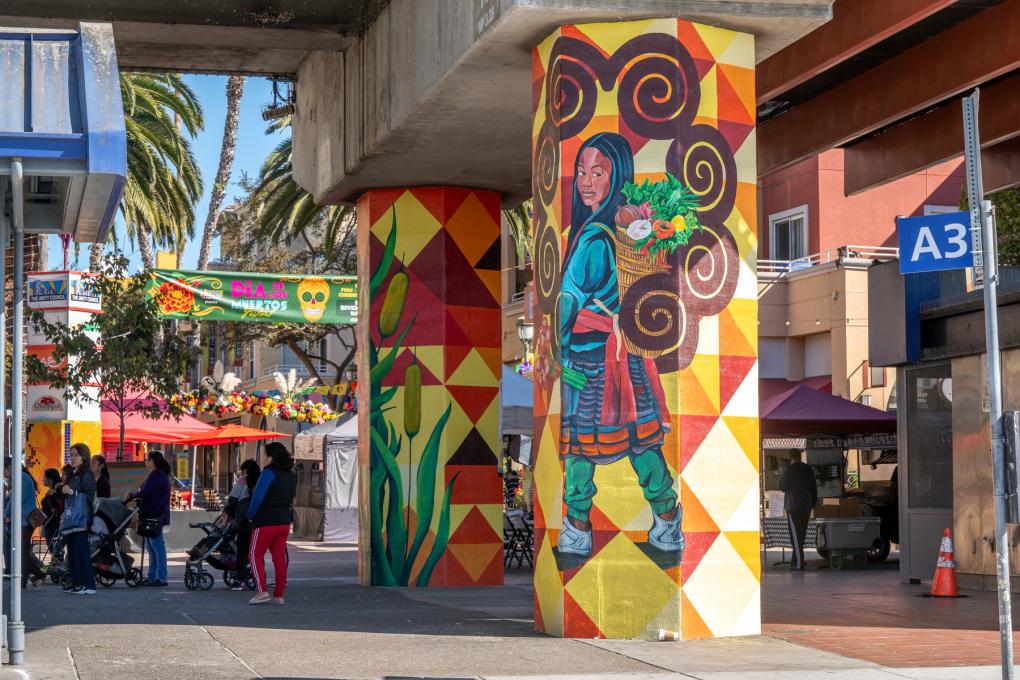
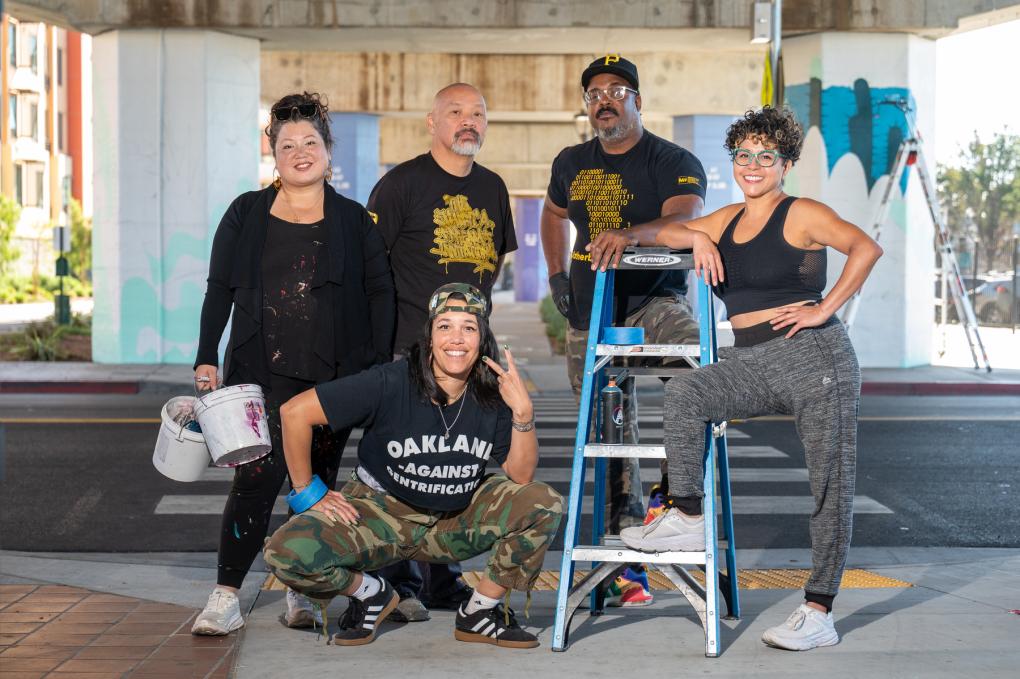
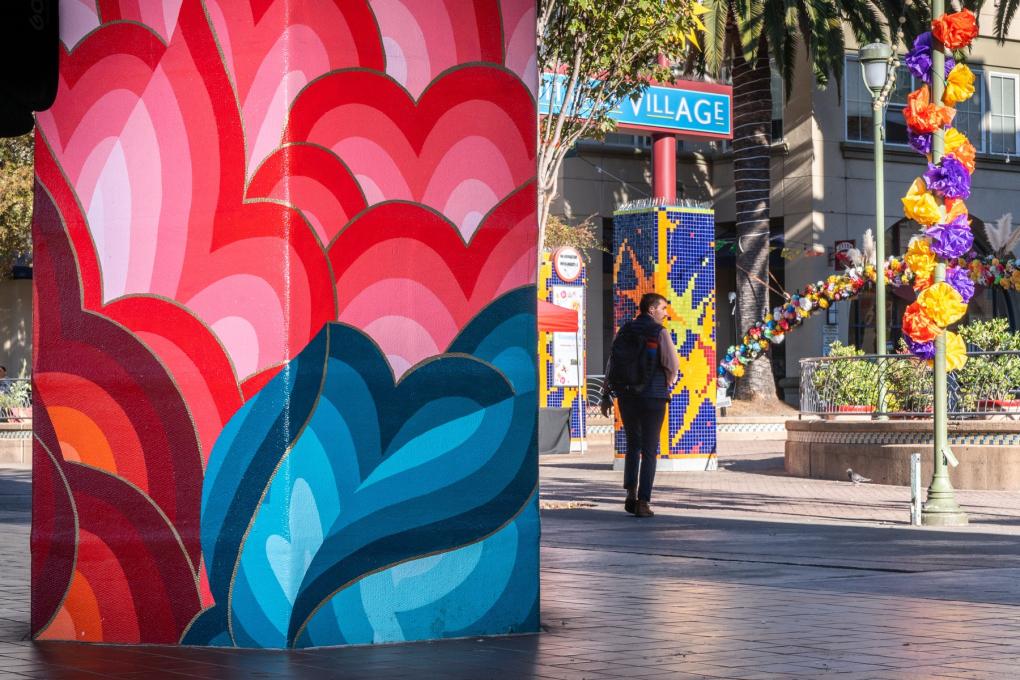
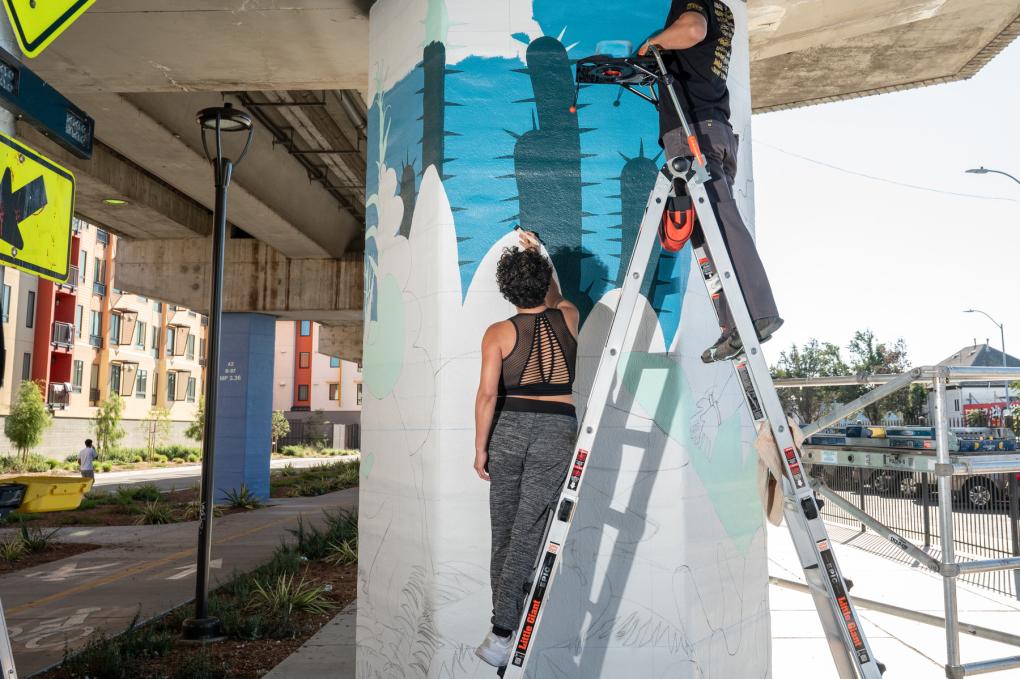
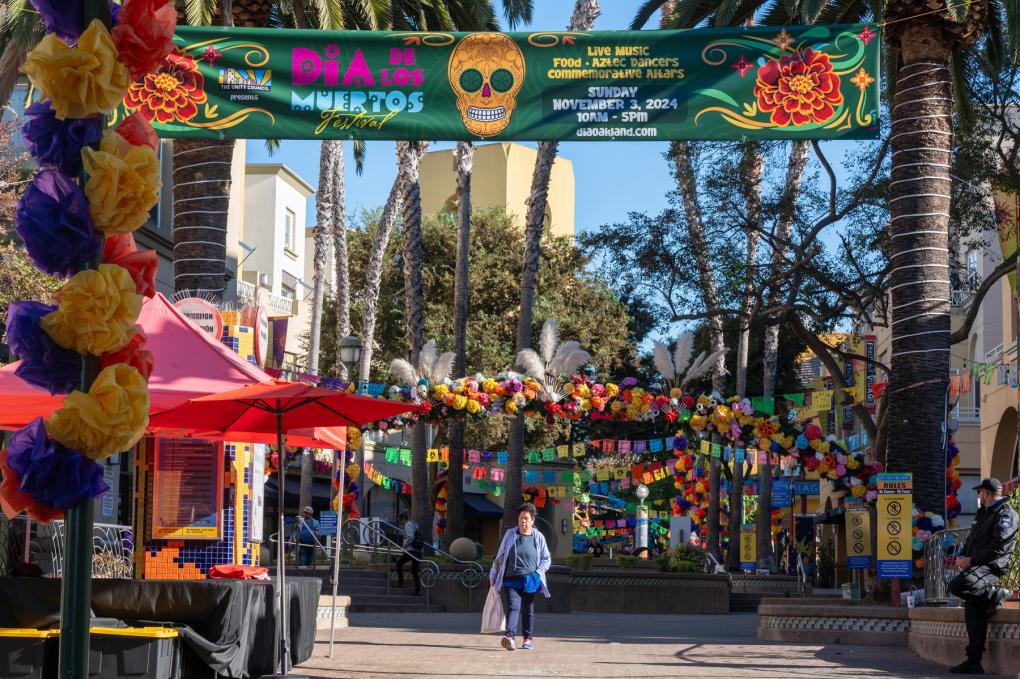
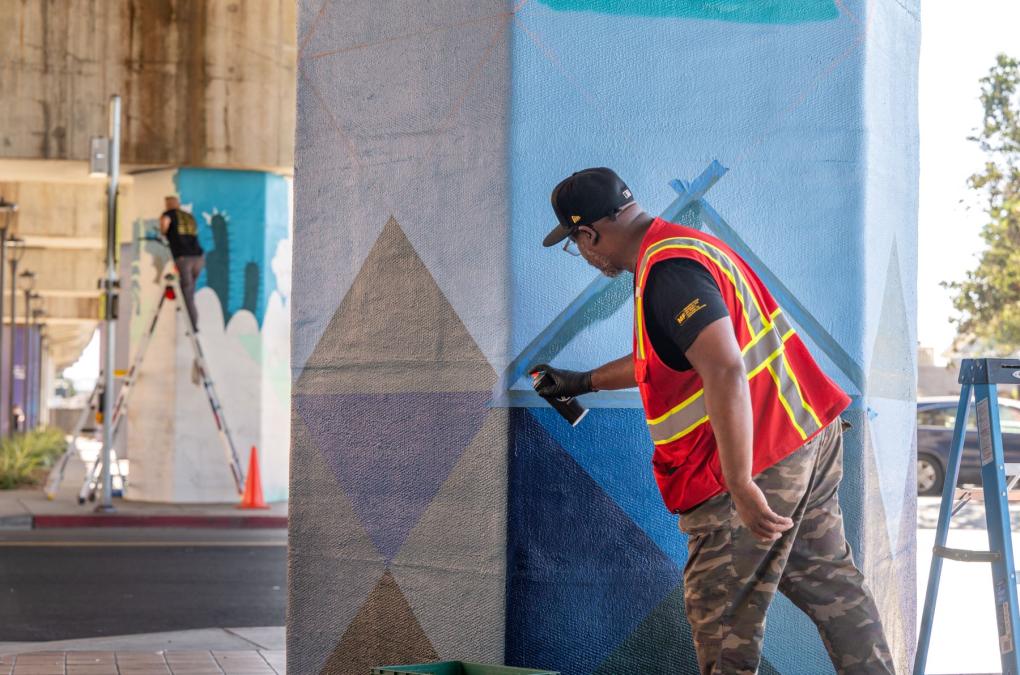
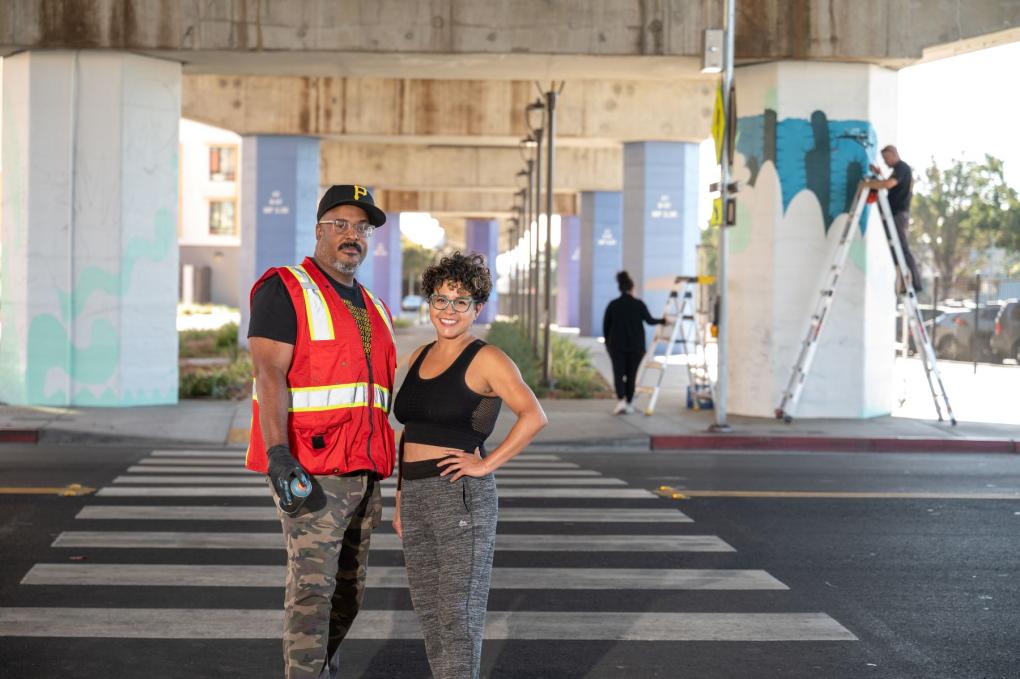
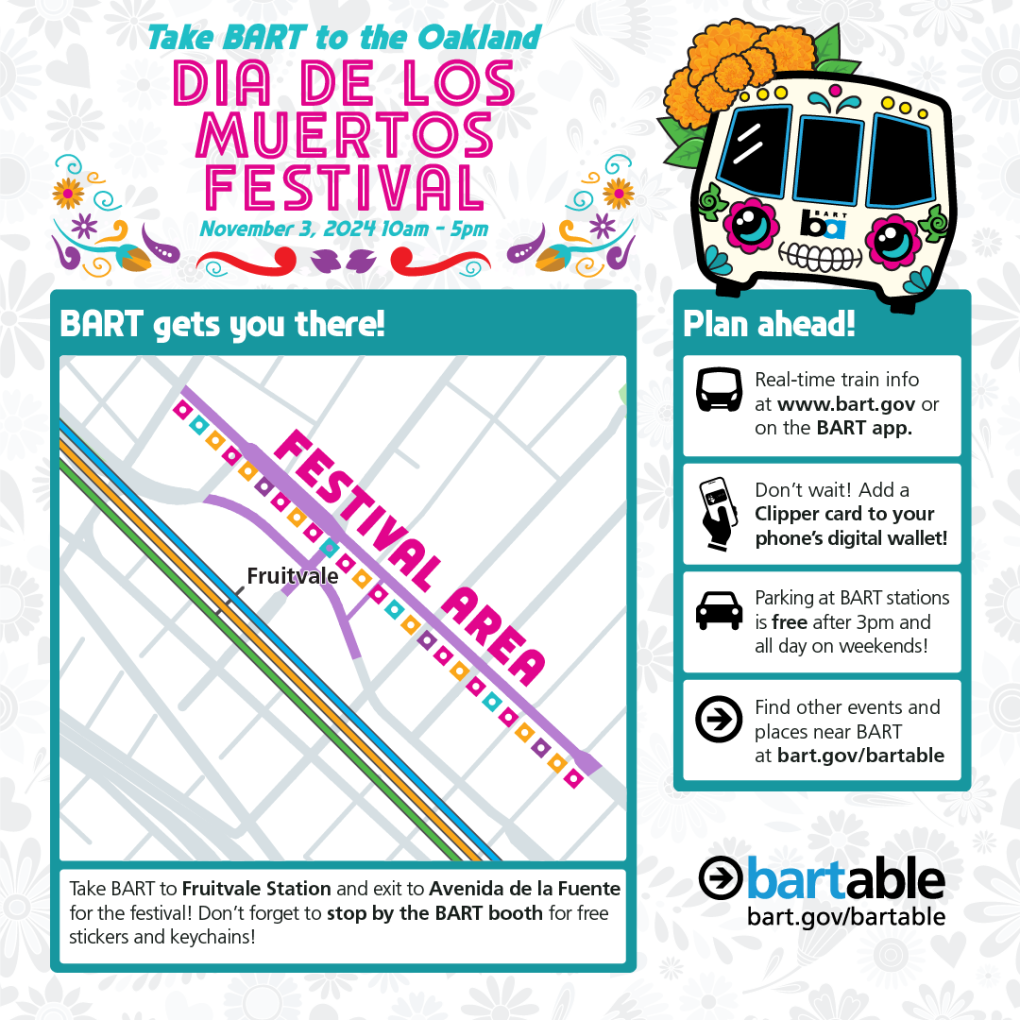
BART invites you to take public transportation to The Unity Council’s Día de los Muertos Festival on Sunday, Nov. 3, from 10am to 5pm, in Oakland’s Fruitvale neighborhood. This year, the annual event coincides with the unveiling of new murals on ten columns in the unpaid area under the platform of Fruitvale Station. The mural project was spearheaded by The Unity Council, and all of the artworks were created by Oakland-based artists: Senay “Refa One” Alkebulan, Cece Carpio, Jet Martinez, and Favianna Rodriguez. (Note: Some murals are works in progress.)
“Since its founding in 1964, The Unity Council has been dedicated to uplifting and advocating for underrepresented communities,” said Unity Council CEO Chris Iglesias. “Today, we build on that legacy with new affordable housing developments near a transit hub, featuring murals that reflect our community’s culture. At the Fruitvale BART station, our latest murals celebrate Fruitvale’s rich cultural heritage, transforming the station into a vibrant, welcoming environment and a testament to the community’s creativity, resilience, and unity.”
Said BART Director Robert Raburn, whose district includes Fruitvale: “The thumbprint of the community is on Fruitvale Station. Thanks to the partnership between BART's Art Program and the Unity Council, talented local artists created beautiful murals with designs that reflect the vibrant Fruitvale neighborhood.”
BART is a longtime partner of The Unity Council and supporter of the Día de los Muertos Festival, a free outdoor event that brings more than 100,000 people to the Fruitvale neighborhood with live music, games, rides, activities, arts and crafts, Latin American artisans, and incredible altar artistic installations created by community members to honor los muertos.
As you enjoy the festival, BART and The Unity Council encourage you to wander among the beautiful new murals, which have contributed to the transformation of the station into a living canvas that reflects the diversity and cultures of the local community. Fruitvale has become a destination for mural making, and the creation of this street gallery at the station is a reflection of the neighborhood’s many culturally rich public artworks. The unveiling of these murals is especially timely given that art, culture, and community gatherings are central components to the Día de los Muertos holiday.
"The murals we are creating at the Fruitvale BART station are not just standalone works of art; they are part of a larger, interconnected vision that extends across the community,” said Evelyn Orantes, Curator. “By linking them with the murals at CASA Sueños, just across the way, we are forming a cohesive 'street gallery'—a vibrant, open-air collection that celebrates the rich cultural heritage and creative energy of Fruitvale. This concept not only beautifies the area but also transforms our public spaces into a dynamic gallery where art and community intersect, inviting residents and visitors alike to experience the neighborhood as a living canvas.”
The idea for the street gallery gained momentum following the 2019 completion of the Fruitvale Station “Long Live Oscar Grant” mural by Refa One, an Oakland artist who also created artworks for this mural project. The five murals were developed and funded by The Unity Council with support from the BART Art Program and a significant grant from the Rainin Foundation. The Unity Council selected the four artists through a process that ensured the vibrant community around the station would be meaningfully honored and reflected.
BART is working to continue deepening its relationship with the historic Unity Council and the Fruitvale community by supporting efforts like this culturally resonant street gallery, which not only reflects the identities of many of the people who live in the neighborhood but contributes to making Fruitvale Station a brighter and more welcoming space to everyone who passes through.
Said Jennifer Easton, BART Art Program Manager: "Art has a critical role in defining spaces. The new murals flipped a switch on Fruitvale Station making its relation to Fruitvale Village and the rest of the Fruitvale neighborhood one of welcome and celebration. Through this monumental partnership with The Unity Council, the BART station now aligns with the cultural richness of the community.”
BART and The Unity Council’s longtime partnership
For decades, BART has partnered with The Unity Council to support the Día de los Muertos Festival and encourage the public to ride BART to the festivities.
BART Director Robert Raburn and BART staff will have a booth at the event to provide information about relevant BART programs, chat with the community, and hand out free keychains and Día de los Muertos x BARTy stickers. Show your spirit for the event and BART by purchasing a BART Día de los Muertos t-shirt on Railgoods.com.
“For over a decade, BART has proudly partnered with The Unity Council to support the annual Día de los Muertos celebration in Oakland's Fruitvale District,” said BART Principal Marketing Representative Jill Buschini, who oversees BART’s external partnership program. “It is an honor to collaborate on this event each year, not only because of The Unity Council’s tremendous contributions to the Fruitvale community, but also for the way this cherished tradition brings people together. The celebration honors loved ones and embodies the cultural richness that resonates with both residents and visitors alike. With the event's growing popularity, taking BART is a convenient and eco-friendly alternative to driving, making it easier for everyone to enjoy the murals and festivities.”
About The Unity Council
The Unity Council is a social equity development organization devoted to improving the quality of life, economic and educational opportunity, and health and safety of low-income communities. The Unity Council was established in 1964, during the civil rights movement, by a group of community members who wanted to ensure the political representation of the Latino community. The organization’s programs and geographically based community development strategy now focuses on building an economically vibrant, physically attractive, and livable neighborhood for the Fruitvale community regardless of ethnic affiliation or national origin. Today, TUC serves over 11,000 clients annually in five languages in the following program areas: early childhood education, youth mentorship and leadership development, employment services, career readiness training, housing and financial stability, senior citizen services, affordable housing and neighborhood development, and arts and cultural events.
About the neighborhood and the Fruitvale Transit Village
The Lisjan Ohlone people, who thrived in the region long before the arrival of European settlers in 1769, are the original inhabitants of the territory of Huchiun. Their rich and vibrant culture has deep roots in the land that would become more widely known as the vibrant city of Oakland.
In the 1800s, the area surrounding the Fruitvale BART Station held a different identity - 'Fruit Vale.' This name was bestowed upon the neighborhood due to its lush and abundant apricot and cherry orchards. The bountiful fruit trees that graced this area not only offered sustenance, but they also added a natural beauty and allure to the landscape, which has since evolved into a thriving urban center known for its diverse and rich history.
Today, it's a vibrant neighborhood and one of Oakland's main commercial areas. Fruitvale is hailed as one of the most diverse districts in Oakland. Its residents have said that the district’s diverse cultural community makes it an ideal place to live and raise children. The largest concentration of Oakland’s Latine population resides in Fruitvale, and the district hosts some of Oakland’s most popular cultural events and International Blvd is a major shopping and dining corridor. Fruitvale is also 25% persons of diverse Asian backgrounds, and 10% Black.
Fruitvale Village, created by The Unity Council in the early 2000s, is a national model for livable communities. Located in the heart of the vibrant Fruitvale neighborhood, Fruitvale Village is a mixed-use development with prime retail spaces, offices, a high school, senior center, and apartments. Fruitvale Village is adjacent to the Fruitvale BART station, the system’s 4th busiest and 9th most widely traveled station, and a bustling AC Transit hub, making the property an internationally renowned Transit-Oriented Development (TOD). The pedestrian plazas running through the Village are host to weekly farmers market and event spaces and are a great place to sit and enjoy the sun.
About the artists
Senay “Refa One” Alkebulan is an Oakland native who has been instrumental in the development of the innovative genre known as “Aerosol Art” (Spray Can/Style Writing). Refa's refined HipHop calligraphy is inspired by a cultural tradition originating from the New York City subway art movement. A lifetime of involvement in HipHop culture and political organizing has afforded Refa a successful career as a professional muralist, illustrator, activist, and arts educator. His work has been featured throughout the U.S. and various countries in Europe and the African continent. Refa One is currently the director of AeroSoul, an international organization of spray can artists from the African Diaspora, transforming the visual landscape of the African world.
Cece Carpio is a multifaceted artist, educator, and community organizer whose work is deeply rooted in social justice and cultural empowerment. With a background in mural painting and public art placemaking installations, Carpio's vibrant and dynamic artworks often explore themes of ancestry, resilience, and collective liberation. As an Indigenous immigrant, she paints everyday people who have been invincible to share their thriving presence and to show the dignity and power of their existence. Through her murals, workshops, and community projects, Carpio creates spaces for dialogue, healing, and celebration, inspiring others to engage with social justice and provoke the power of their imagination. Her art serves as a powerful tool for storytelling and resistance, challenging dominant narratives, and envisioning more inclusive and equitable futures.
Jet Martinez is an Oakland-based artist known for creating vibrant works of art that engage the traditions of Mexican folk art with contemporary aesthetics. Originally from the small beach town of Tuxpan, Veracruz, Mexico, and raised in Cuernavaca, Morelos, Martinez takes inspiration from his native culture’s rich traditions of pottery, weaving and embroidery, enlivening the rigid architecture of urban environments with ornate patterns and abstract forms. Through his paintings and murals, Martinez evokes a multi-cultural dialogue that explores the consistencies of visual culture throughout time. Martinez’s work can be found locally and globally. He is proud to call Oakland home and is a dedicated father, and husband to fellow artist Kelly Ording.
Favianna Rodriguez Giannoni is an interdisciplinary artist, cultural strategist, and entrepreneur based in Oakland. Her art and praxis address migration, gender justice, climate change, racial equity, and sexual freedom. Her work centers joy and healing, while challenging entrenched myths and dominant cultural practices. Favianna's creative partnerships include companies like Ben & Jerry's, Spotify, Old Navy, and Playboy Magazine. She has completed a number of large-scale public art commissions with the City of San Francisco and the Presidio National Park. Her signature mark-making embodies the perspective of a first-generation American Latinx artist with Afro-Latinx roots who grew up in Oakland, California during the era of the war on drugs and the birth of Hip Hop.
Evelyn Orantes has spent over two decades creating community-centered experiences in museums and beyond. Her work celebrates the uniqueness and commonalities within communities, using collaboration, visitor-centered design, and participatory methods. She co-creates projects with community groups, educators, artists, and cultural leaders, with a focus on serving multilingual and diverse audiences. Ms. Orantes is passionate about connecting institutions with cultural leaders, scholars, and artists. She develops strategies that engage communities, assess their needs, and align them with institutional resources, strengthening relationships and bringing art and culture to new spaces.
Domingo 3 de noviembre en la estación Fruitvale: Tome BART al Festival del Día de los Muertos de The Unity Council y disfrute de 5 nuevos murales creados por artistas locales
Los invitamos en BART a tomar el transporte público para el Festival del Día de los Muertos de The Unity Council el domingo 3 de noviembre, de 10 a. m. a 5 p. m., en el vecindario Fruitvale de Oakland. Este año, el evento anual coincide con la finalización de cinco nuevos murales en diez columnas en el área no remunerada debajo de la plataforma de la estación Fruitvale, un proyecto encabezado por The Unity Council. Las obras de arte fueron creadas por los artistas de Oakland Senay “Refa One” Alkebulan, Cece Carpio, Jet Martinez y Favianna Rodriguez. El Festival del Día de los Muertos de The Unity Council es un evento gratuito al aire libre que atrae a más de 100,000 personas al vecindario de Fruitvale con música en vivo, juegos, atracciones, actividades, artes y manualidades, artesanos latinoamericanos e increíbles instalaciones artísticas de altar creadas por miembros de la comunidad para honrar a los muertos.
“Desde su fundación en 1964, The Unity Council se ha dedicado a elevar y abogar por las comunidades subrepresentadas,” dijo Chris Iglesias, director ejecutivo de The Unity Council. Hoy, construimos sobre ese legado con nuevos desarrollos de vivienda asequible cerca de centros de transporte, que incluyen murales que reflejan la cultura de nuestra comunidad. En la estación Fruitvale de BART, nuestros murales más recientes celebran la rica herencia cultural de Fruitvale, transformando la estación en un lugar vibrante y acogedor, y un testimonio de la creatividad, resiliencia y unidad de la comunidad.”
El director de BART, Robert Raburn, cuyo distrito incluye Fruitvale, dijo: “La huella de la comunidad está en la estación Fruitvale. Gracias a la asociación entre el Programa de Arte de BART y The Unity Council, talentosos artistas locales crearon hermosos murales con diseños que reflejan el vibrante vecindario de Fruitvale”.
Mientras disfruta del festival, BART y The Unity Council lo invitan a pasear entre los hermosos murales nuevos, que han contribuido a la transformación de la estación en un lienzo viviente que refleja la diversidad y las culturas de la comunidad local. Fruitvale se ha convertido en un destino para la creación de murales, y la creación de esta galería callejera en la estación es un reflejo de las muchas obras de arte públicas culturalmente ricas del vecindario. La inauguración de estos murales es especialmente oportuna dado que el arte, la cultura y las reuniones comunitarias son componentes centrales de la festividad del Día de los Muertos.
"Los murales que estamos creando en la estación Fruitvale de BART no son solo obras de arte independientes; son parte de una visión más grande e interconectada que se extiende por toda la comunidad", dijo Evelyn Orantes, curadora. “Al vincularlos con los murales de CASA Sueños, justo al otro lado de la calle, estamos formando una 'galería callejera' cohesiva: una colección vibrante y al aire libre que celebra el rico patrimonio cultural y la energía creativa de Fruitvale. Este concepto no solo embellece el área, sino que también transforma nuestros espacios públicos en una galería dinámica donde el arte y la comunidad se cruzan, invitando a residentes y visitantes por igual a experimentar el vecindario como un lienzo viviente”.
La idea de la galería callejera cobró impulso tras la finalización en 2019 del mural de la estación Fruitvale “Long Live Oscar Grant” realizado por Refa One, un artista de Oakland que también creó obras de arte para este proyecto de mural. Los cinco murales fueron desarrollados y financiados por The Unity Council con el apoyo del Programa de Arte BART y una importante subvención de la Fundación Rainin. The Unity Council seleccionó a los cuatro artistas a través de un proceso que garantizó que la vibrante comunidad alrededor de la estación fuera honrada y reflejada de manera significativa.
BART está trabajando para continuar profundizando su relación con el histórico Unity Council y la comunidad de Fruitvale al apoyar esfuerzos como esta galería callejera culturalmente resonante, que no solo refleja las identidades de muchas de las personas que viven en el vecindario, sino que contribuye a hacer de la estación Fruitvale un espacio más brillante y acogedor para todos los que pasan por allí.
Jennifer Easton, directora del programa de arte de BART, comentó: "El arte tiene un papel fundamental en la definición de espacios. Los nuevos murales cambiaron la relación de la estación Fruitvale con Fruitvale Village y el resto del vecindario de Fruitvale, convirtiéndose en una relación de bienvenida y celebración. “A través de esta asociación monumental con The Unity Council, la estación BART ahora se alinea con la riqueza cultural de la comunidad”.
Asociación de larga data entre BART y The Unity Council
Durante décadas, BART se ha asociado con The Unity Council para apoyar el Festival del Día de los Muertos y alentar al público a viajar en BART a las festividades.
El director de BART, Robert Raburn, y el personal de BART tendrán un stand en el evento para brindar información sobre programas relevantes de BART, charlar con la comunidad y repartir llaveros gratuitos y pegatinas del Día de los Muertos x BART. Muestre su espíritu por el evento y BART comprando una camiseta BART Día de los Muertos en Railgoods.com.
“Durante más de una década, BART se ha asociado orgullosamente con The Unity Council para apoyar la celebración anual del Día de los Muertos en el Distrito Fruitvale de Oakland”, dijo la representante principal de marketing de BART, Jill Buschini, quien supervisa el programa de asociación externa de BART. “Es un honor colaborar en este evento cada año, no solo por las tremendas contribuciones de The Unity Council a la comunidad de Fruitvale, sino también por la forma en que esta preciada tradición une a las personas. La celebración honra a los seres queridos y encarna la riqueza cultural que resuena tanto entre los residentes como entre los visitantes. “Con la creciente popularidad del evento, tomar BART es una alternativa conveniente y ecológica al automóvil, lo que hace más fácil para todos disfrutar de los murales y las festividades”.
Acerca de The Unity Council
The Unity Council es una organización de desarrollo de equidad social dedicada a mejorar la calidad de vida, las oportunidades económicas y educativas, y la salud y seguridad de las comunidades de bajos ingresos. The Unity Council se estableció en 1964, durante el movimiento por los derechos civiles, por un grupo de miembros de la comunidad que querían asegurar la representación política de la comunidad latina. Los programas de la organización y la estrategia de desarrollo comunitario basada en criterios geográficos ahora se centran en construir un vecindario económicamente vibrante, físicamente atractivo y habitable para la comunidad de Fruitvale, independientemente de la afiliación étnica o el origen nacional. En la actualidad, TUC atiende a más de 11,000 clientes anualmente en cinco idiomas en las siguientes áreas de programas: educación de la primera infancia, tutoría juvenil y desarrollo de liderazgo, servicios de empleo, capacitación para la preparación profesional, vivienda y estabilidad financiera, servicios para personas mayores, vivienda asequible y desarrollo de vecindarios, y eventos artísticos y culturales.
Acerca del vecindario y Fruitvale Transit Village
El pueblo Lisjan Ohlone, que prosperó en la región mucho antes de la llegada de los colonos europeos en 1769, son los habitantes originales del territorio de Huchiun. Su cultura rica y vibrante tiene raíces profundas en la tierra que llegaría a ser más conocida como la vibrante ciudad de Oakland.
En el siglo XIX, el área que rodeaba la estación Fruitvale de BART tenía una identidad diferente: "Fruit Vale". Este nombre se le dio al vecindario debido a sus exuberantes y abundantes huertos de albaricoques y cerezos. Los abundantes árboles frutales que adornaban esta zona no solo ofrecían sustento, sino que también añadían belleza natural y encanto al paisaje, que desde entonces se ha convertido en un próspero centro urbano conocido por su diversa y rica historia.
Hoy en día, es un vecindario vibrante y una de las principales zonas comerciales de Oakland. Fruitvale es aclamado como uno de los distritos más diversos de Oakland. Sus residentes han dicho que la diversa comunidad cultural del distrito lo convierte en un lugar ideal para vivir y criar a los hijos. La mayor concentración de la población latina de Oakland reside en Fruitvale, y el distrito alberga algunos de los eventos culturales más populares de Oakland y International Blvd es un importante corredor comercial y gastronómico. Fruitvale también está compuesto por un 25% de personas de diversos orígenes asiáticos y un 10% de personas negras.
Fruitvale Village, creado por The Unity Council a principios de la década de 2000, es un modelo nacional de comunidades habitables. Ubicado en el corazón del vibrante vecindario de Fruitvale, Fruitvale Village es un desarrollo de uso mixto con espacios comerciales privilegiados, oficinas, una escuela secundaria, un centro para personas mayores y apartamentos. Fruitvale Village está adyacente a la estación Fruitvale de BART, la cuarta estación más concurrida del sistema y la novena más transitada, y un activo centro de AC Transit, lo que convierte a la propiedad en un Desarrollo Orientado al Tránsito (TOD) de renombre internacional. Las plazas peatonales que recorren Village albergan mercados de agricultores semanales y espacios para eventos y son un excelente lugar para sentarse y disfrutar del sol.
Sobre los artistas
Senay “Refa One” Alkebulan es un nativo de Oakland que ha sido fundamental en el desarrollo del género innovador conocido como “Aerosol Art” (Spray Can/Style Writing). La refinada caligrafía HipHop de Refa está inspirada en una tradición cultural que se origina en el movimiento artístico del metro de la Ciudad de Nueva York. Una vida dedicada a la cultura HipHop y a la organización política le ha proporcionado a Refa una exitosa carrera como muralista profesional, ilustrador, activista y educador artístico. Su trabajo se ha exhibido en todo Estados Unidos y en varios países de Europa y el continente africano. Refa One es actualmente el director de AeroSoul, una organización internacional de artistas del aerosol de la diáspora africana, que transforma el paisaje visual del mundo africano.
Cece Carpio es una artista, educadora y organizadora comunitaria multifacética cuyo trabajo está profundamente arraigado en la justicia social y el empoderamiento cultural. Con experiencia en pintura mural e instalaciones de creación de entornos de arte público, las obras de arte vibrantes y dinámicas de Carpio a menudo exploran temas de ascendencia, resiliencia y liberación colectiva. Como inmigrante indígena, pinta a personas comunes que han sido invencibles para compartir su próspera presencia y mostrar la dignidad y el poder de su existencia. A través de sus murales, talleres y proyectos comunitarios, Carpio crea espacios para el diálogo, la curación y la celebración, inspirando a otros a comprometerse con la justicia social y provocar el poder de su imaginación. Su arte sirve como una poderosa herramienta para contar historias y resistir, desafiando las narrativas dominantes e imaginando futuros más inclusivos y equitativos.
Jet Martinez es un artista con sede en Oakland conocido por crear obras de arte vibrantes que combinan las tradiciones del arte popular mexicano con la estética contemporánea. Originario del pequeño pueblo costero de Tuxpan, Veracruz, México, y criado en Cuernavaca, Morelos, Martinez se inspira en las ricas tradiciones de cerámica, tejido y bordado de su cultura nativa, animando la arquitectura rígida de los entornos urbanos con patrones ornamentados y formas abstractas. A través de sus pinturas y murales, Martinez evoca un diálogo multicultural que explora las consistencias de la cultura visual a lo largo del tiempo. El trabajo de Martinez se puede encontrar a nivel local y global. Está orgulloso de llamar a Oakland su hogar y es un padre dedicado y esposo de su colega artista Kelly Ording.
Favianna Rodriguez Giannoni es una artista interdisciplinaria, estratega cultural y emprendedora radicada en Oakland. Su arte y su práctica abordan la migración, la justicia de género, el cambio climático, la equidad racial y la libertad sexual. Su trabajo se centra en la alegría y la curación, al tiempo que desafía mitos arraigados y prácticas culturales dominantes. Las asociaciones creativas de Favianna incluyen empresas como Ben & Jerry's, Spotify, Old Navy y Playboy Magazine. Ha realizado una serie de encargos de arte público a gran escala con la Ciudad de San Francisco y el Parque Nacional Presidio. Su estilo característico encarna la perspectiva de un artista latino estadounidense de primera generación con raíces afro-latinas que creció en Oakland, California, durante la era de la guerra contra las drogas y el nacimiento del Hip Hop.
Evelyn Orantes ha pasado más de dos décadas creando experiencias centradas en la comunidad en museos y centros de encuentro cultural. Su trabajo celebra la singularidad y los puntos en común dentro de las comunidades, mediante la colaboración, el diseño centrado en el visitante y métodos participativos. Ella co-crea proyectos con grupos comunitarios, educadores, artistas y líderes culturales, con el objetivo de servir a audiencias multilingües y diversas. A la Sra. Orantes le apasiona conectar instituciones con líderes culturales, académicos y artistas. Desarrolla estrategias que involucran a las comunidades, evalúan sus necesidades y las alinean con los recursos institucionales, fortaleciendo las relaciones y llevando el arte y la cultura a nuevos espacios.
Congressmember Mark DeSaulnier helps BART usher in a new era with Next Generation Fare Gates at Pleasant Hill/Contra Costa Centre Station
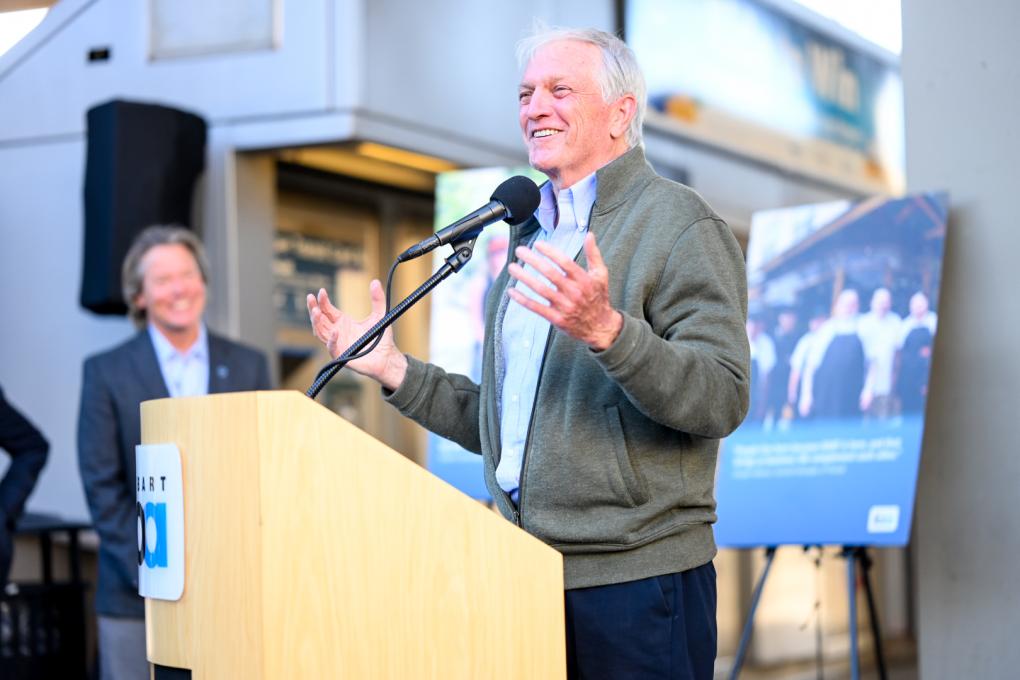
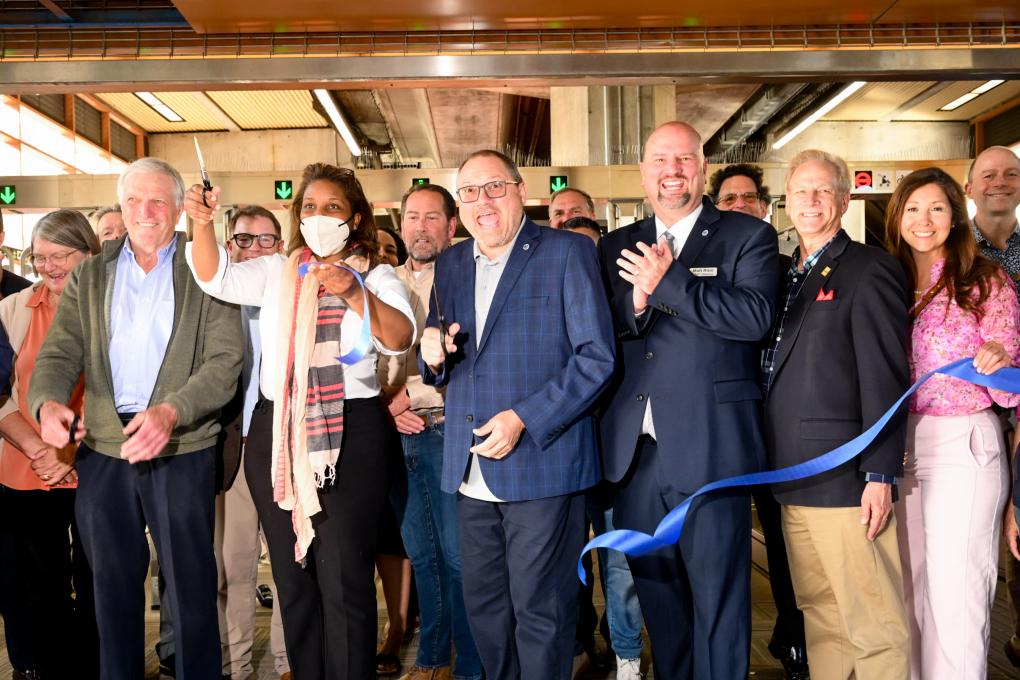
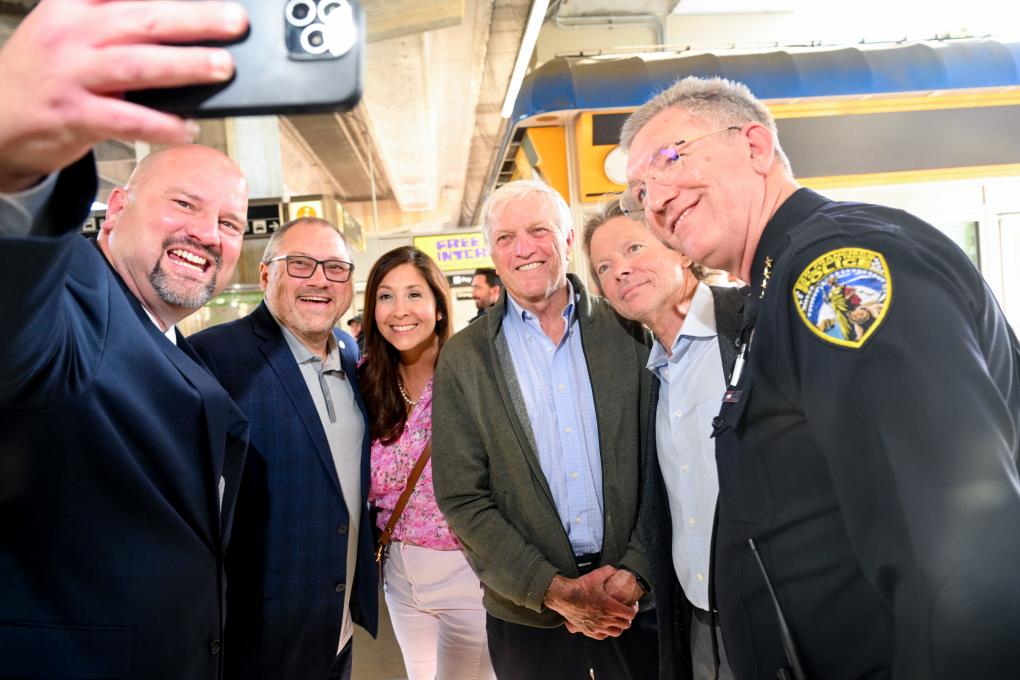
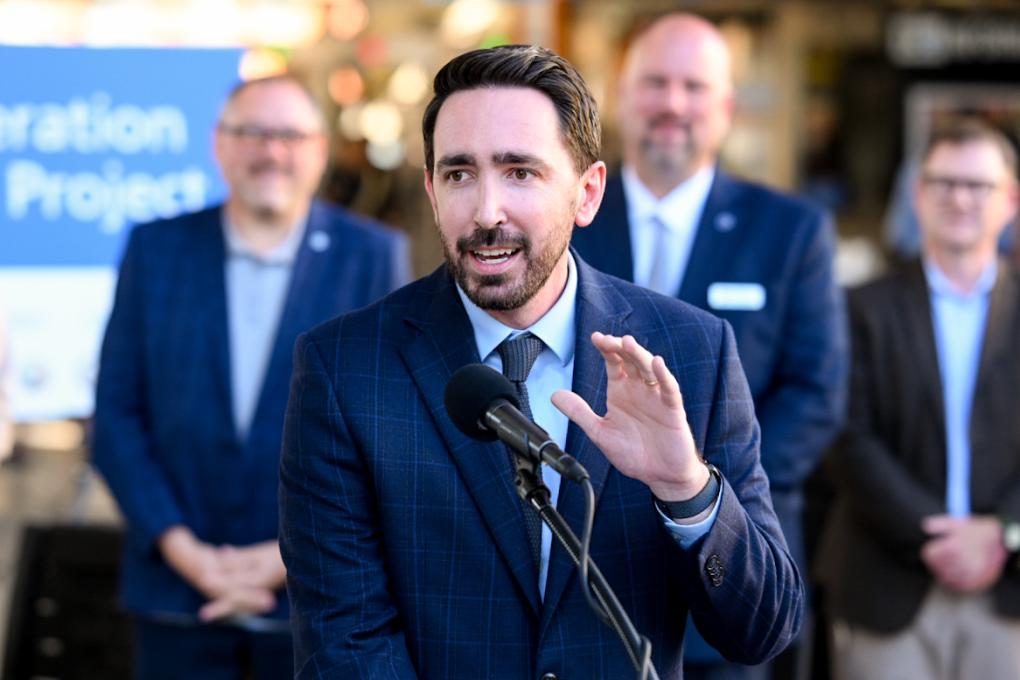
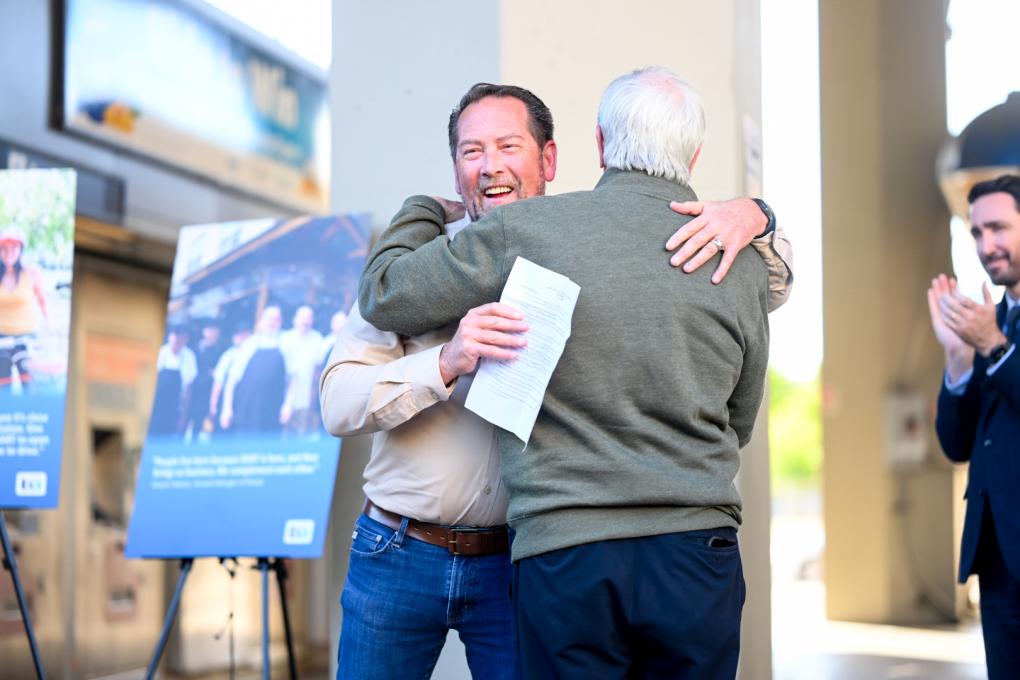
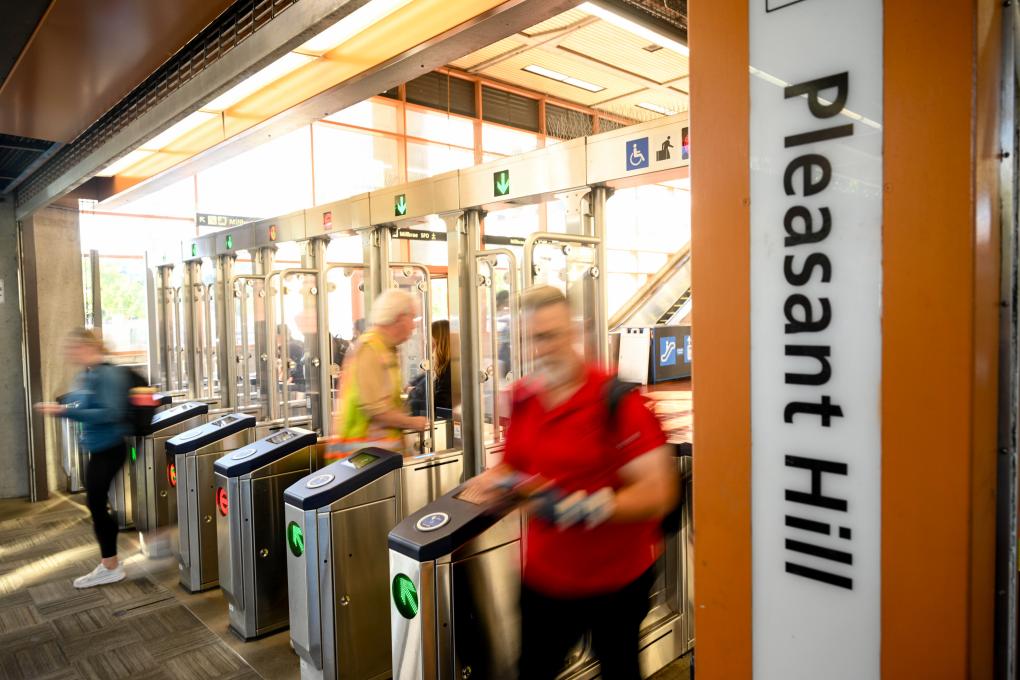
Congressmember Mark DeSaulnier, so often at the forefront of transportation improvements in Contra Costa County, helped commemorate the installation of Next Generation Fare Gates at all 12 BART stations in Contra Costa County with a ribbon cutting ceremony at Pleasant Hill/Contra Costa Centre Station on May 29, 2025. The event marked a major milestone in BART’s systemwide plan aimed at enhancing safety, accessibility, and the overall rider experience.
The Next Generation Fare Gates feature cutting-edge security and user-centered design elements, including enhanced reliability, better accessibility, and reduced fare evasion. With transparent barriers and faster processing technology, the new gates offer a seamless experience for all passengers, including those with mobility devices, strollers, and luggage.
Congressmember DeSaulnier, who provided leadership for the BART to Antioch extension during his time in the state legislature, noted the importance of investing in the future of BART in Contra Costa County.
"We know that these fare gates will make a tremendous impact for farebox recovery, safety, and the overall experience," Congressmember DeSaulnier said. "This is a significant project for the region, and I'm grateful to be a part of it."
This milestone was made possible thanks to critical funding contributions from partners such as the Contra Costa Transportation Authority (CCTA), led by Executive Director Tim Haile. CCTA’s support underscored a strong regional commitment to modern, integrated transit solutions.
BART Board President Mark Foley and Director Matt Rinn, who represents Pleasant Hill/Contra Costa Centre Station, also spoke at the event, emphasizing the importance of updating aging infrastructure and restoring rider confidence.
“I am thankful for the opportunity to showcase these fare gates, which are just one example of our new approach to safety and security on BART,” Rinn said. “Pleasant Hill/Contra Costa Centre Station is a big part of the community, and I appreciate the opportunity to showcase the station and what it’s all about.”
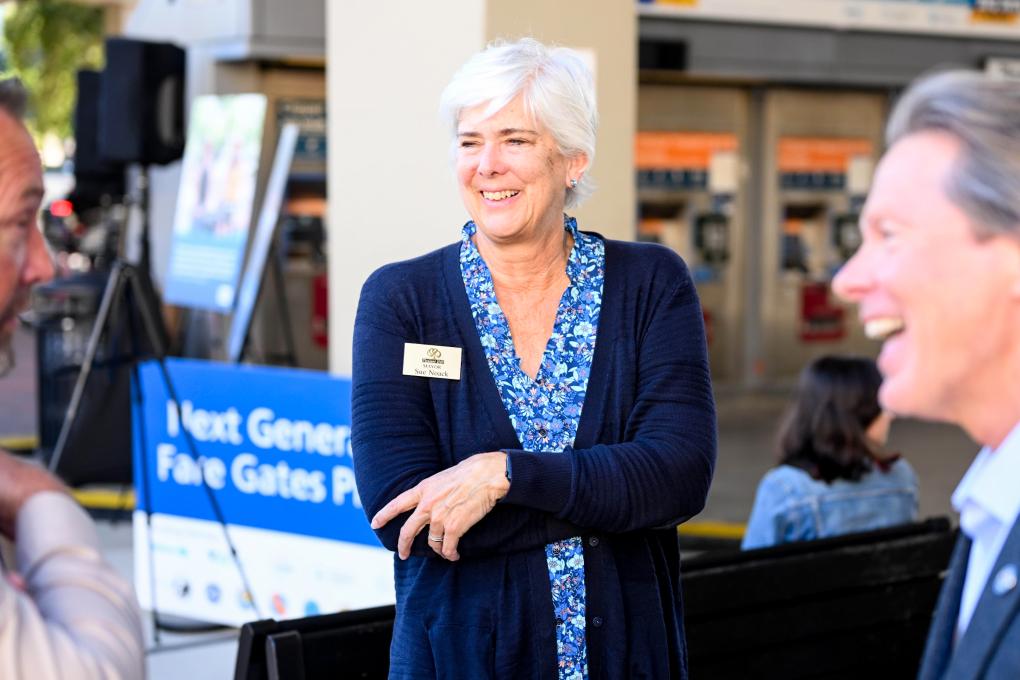
Metropolitan Transportation Commission chairperson Sue Noack, who is also the mayor of Pleasant Hill, noted the role of Pleasant Hill/Contra Costa Centre Station in connecting the surrounding community to the region, providing convenient and easy access to places of employment, recreation, and services. New fare gates across the system are increasing paid ridership and improving customer safety.
In his remarks, President and CEO of the East Bay Leadership Council Mark Orcutt stressed the importance of transportation to the region's economic well-being.
“The rollout of the Next Generation Fare Gates behind me represents something more than safety upgrades; it’s a strategic investment in regional economic competitiveness,” said Orcutt. “Transit moves people, and people move the economy. This is a visible step towards a safer, cleaner, and more welcoming experience for riders.”
As a BART rider, CCTA Commissioner and Contra Costa Supervisor Ken Carlson said he is "thrilled to have these new gates."
“CCTA is committed not only to our local transportation system, but the regional system at large, and I applaud BART and the efforts they’ve made to build trust in the community and to make the system more efficient and secure," he said.
With the successful completion of the Contra Costa County installations, BART reaffirmed its commitment to completing fare gate upgrades at all 50 stations in the system by December 31, 2025.
The installation of the new fare gates at Contra Costa County stations would not have been possible without the support of BART’s funding partners:
The California Strategic Growth Council / California Housing and Community Development (HCD)
Caltrans / California Transportation Commission
The Contra Costa Transportation Authority
The Federal Transit Administration
The Metropolitan Transportation Commission
BART's low-income fare discount to increase to 50% on Jan. 1: Here's how the program impacts an East Oakland community
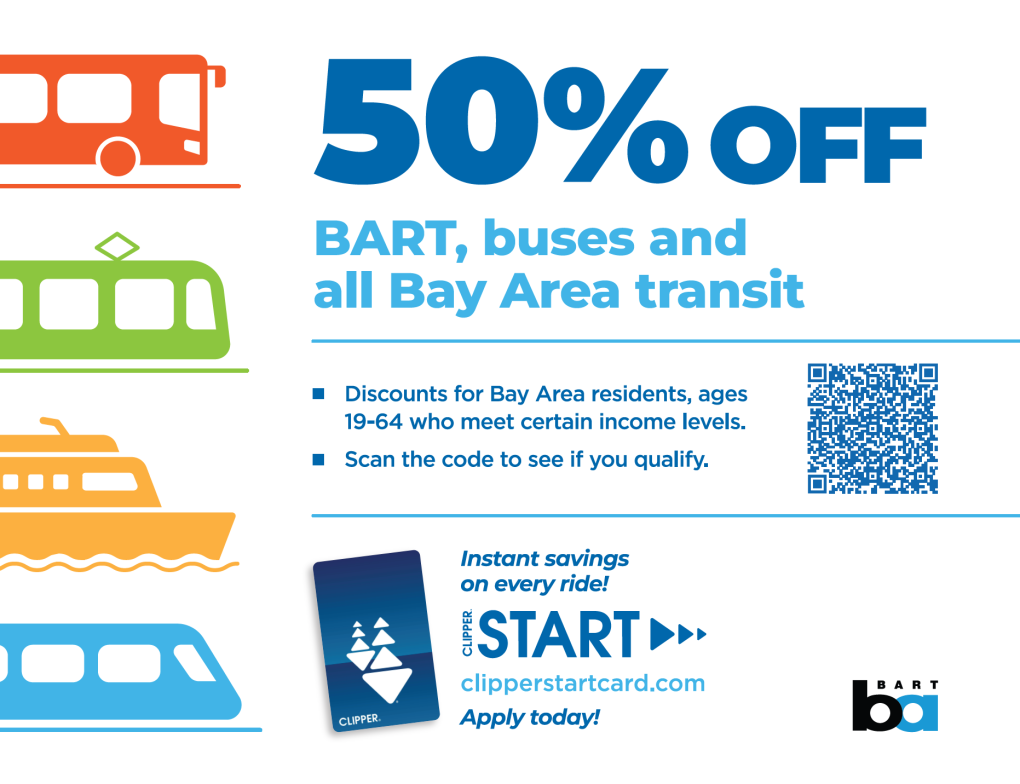
BART is helping lower-income riders pay their fare by increasing its Clipper START means-based fare discount from 20% to 50%, beginning Monday, Jan. 1, 2024. This means that Clipper START users will pay half the regular BART fare.
Clipper START, a pilot program facilitated by the Metropolitan Transportation Commission, offers the discount for Bay Area residents ages 19 to 64 whose incomes are less than 200% of the federal poverty level. Clipper START is accepted by more than 20 regional transit operators. Those who qualify can apply for the program here.
Keep scrolling to read about an East Oakland-based organization's efforts to register people for Clipper START and hear about its impact on community members.
BART offers multiple fare discounts in addition to Clipper START, including discounts for youth (50% off with a Youth Clipper card), seniors (62.5% off with a Senior Clipper card), passengers under 65 with qualifying disabilities (62.5% off with an RTC Clipper card), and a High-Value Discount (adult Clipper users who buy $45 or $60 Clipper cards when autoload is set up get $48 and $64 worth of value, or a 6.25% discount).
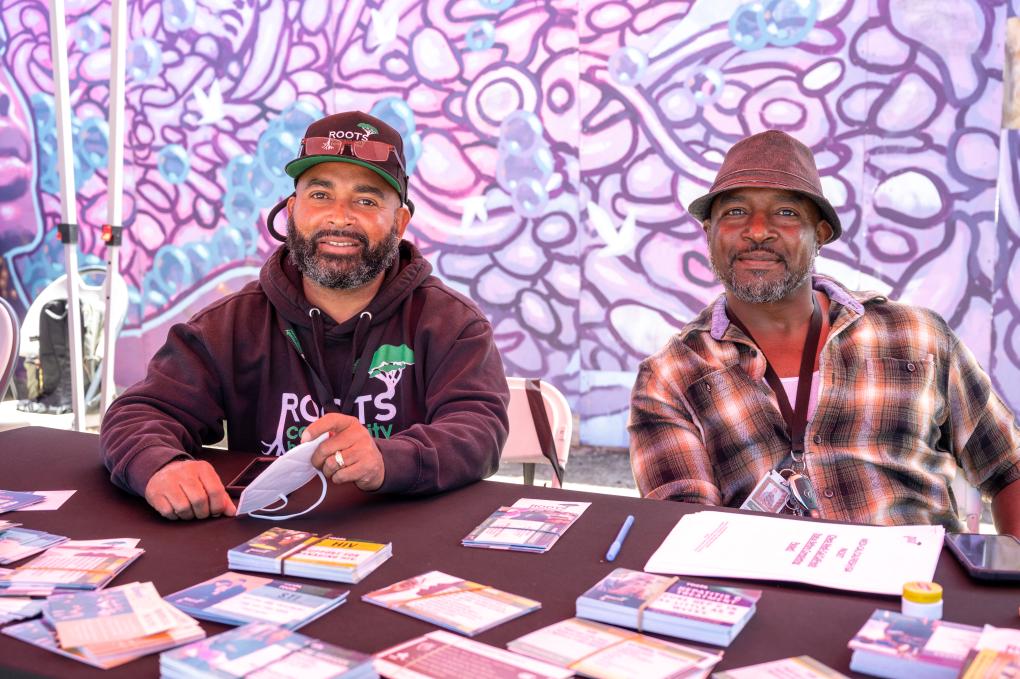
Members of the Roots Community Health Center outreach team. Roots conducts outreach to promote and register community members for Clipper START.
“When you have a Clipper card, your first thought isn’t 'I can't' but ‘What time can I get there?’” says Jamaica Sowell, who has witnessed firsthand the importance of increasing access to affordable transportation in the Bay Area.
Sowell is the Director of Programs and Policy at Roots Community Health Center, an organization working to uplift people impacted by systemic inequities and poverty, especially in a stretch of the East Oakland community known as the 40x40, where nearly half of Black families living in poverty in Oakland reside.
Since 2022, Roots has been conducting outreach to promote and register community members for Clipper START, a pilot program from the Metropolitan Transportation Commission (MTC) that offers discounts on transit fares. To qualify, applicants must be Bay Area residents between the ages 19 and 64 with a gross annual income at or below 200% of the federal poverty level. Beginning January 1, 2024, BART’s Clipper START discount increased from 20% to 50%, meaning users pay half the regular BART fare.
Roots Clinic has a holistic approach for supporting the health and well-being of the communities it serves. Enabling access to transportation, especially affordable transportation, is a key piece of the puzzle.
“Mobility has a lot to do with access, including things like health care,” said Sowell. If people don’t have the means to get to the Roots’ clinics, “they’re not going to come.”
Mobility is a central component of one's physical and mental health, Sowell stressed. Transportation, especially affordable transportation, ensures that people can access things like medical appointments, mental health care, treatment programs, benefits enrollment support, and other crucial services that organizations like Roots offer.
But going to appointments is "just one facet” of the benefits of public transportation to community members, Sowell said. Transportation gives people easier access to civic engagement activities, like city council meetings, and takes people to parks and green spaces, where you can walk, soak up sunshine, picnic with your family, and play sports with friends. For some people, just getting out of their neighborhood for a few hours is healing in and of itself.
“Transit takes you places outside your own block, including places you might not have had access to before,” Sowell said.
Clipper START actively conducts outreach to organizations like Roots, which have well-established lines of communication and trust within the communities they serve. Sowell said Roots jumped at the chance to partner with MTC on Clipper START because her organization understands the specific needs of the East Oakland community.
“When our people hear Roots is partnering with MTC and BART, it automatically establishes buy-in,” she said. “Our community members trust us and trust that we’ve vetted the program.”
Since Clipper START launched in June 2020, MTC reports that more than 30,000 people have signed up for the program. Between 2020 and 2022, the period for which the most recent data is available from MTC, Clipper START users took more than 1 million transit trips, with most of these trips taken on BART (40% of total trips).
“[Clipper START] makes me want to do more [with my family] on public transportation for necessity, but also for fun, like going to San Francisco for free museum days,” one user said.
As awareness of the program grows around the region, so too does usage.
That’s in no small part thanks to organizations like Roots, whose outreach teams promote the program at community events, apartment complexes, encampments, faith-based organizations, and door to door. Roots is exploring additional outreach avenues for the new year.
“Being able to tap into a discounted transportation platform like this is huge for our folks,” Sowell said. “Clipper START has been beneficial in improving transportation accessibility to our East Oakland community, and we look forward to our continued partnership in the new year.”
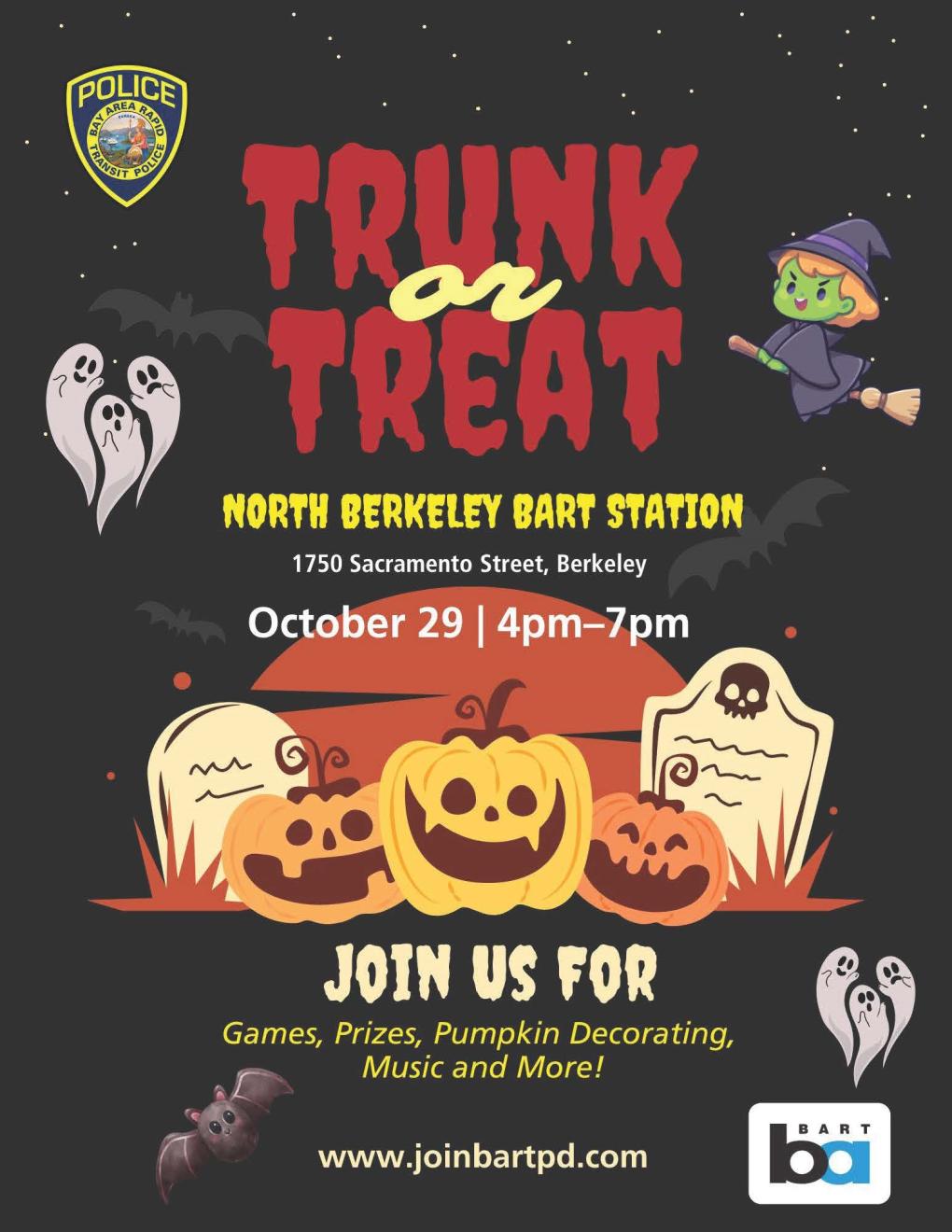
BART Police hosts Trunk or Treat at North Berkeley station on 10/29/24 from 4pm to 7pm
A spooky vibe is coming to the North Berkeley station!
The BART Police Department will be hosting its annual Trunk or Treat Halloween event there Tuesday October 29 from 4 pm to 7pm. There will be games, prizes, pumpkin decorating, music, and more ghoulish delights!
Children are invited to wear their Halloween costumes, but costumes are not mandatory. Kids will get to collect candy and non-candy treats, play games and win prizes.
The event is open to children under the age of 12 and entrance is free. Children must be accompanied by an adult.
*This article was originally posted on Oct 2, 2024.
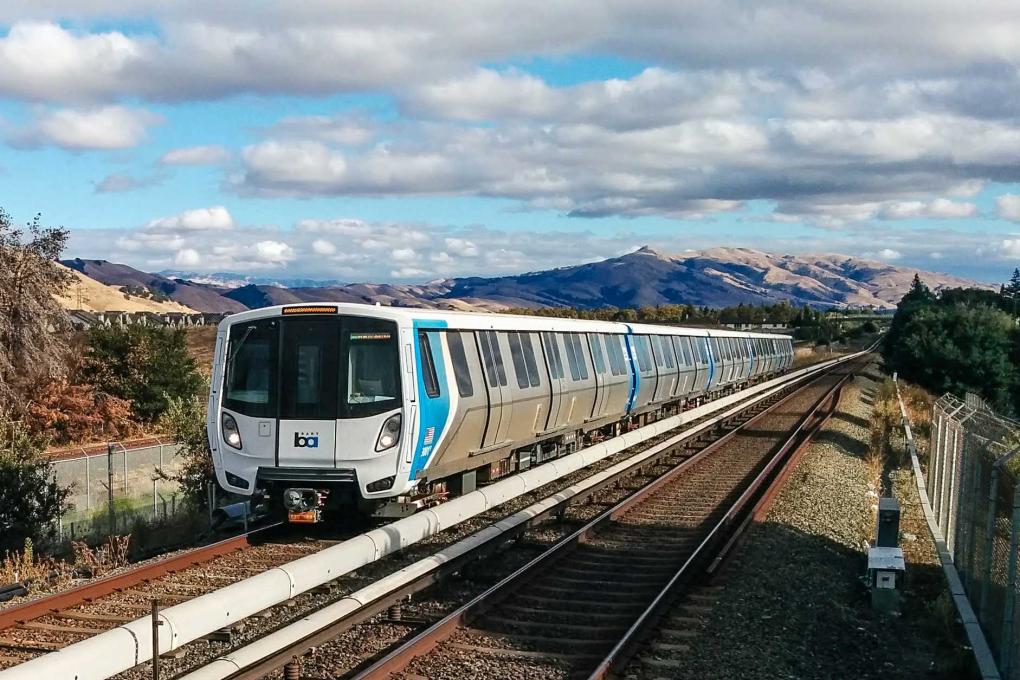
Podcast: The future is now; the journey of the Fleet of the Future from blueprint to backbone of BART’s daily service
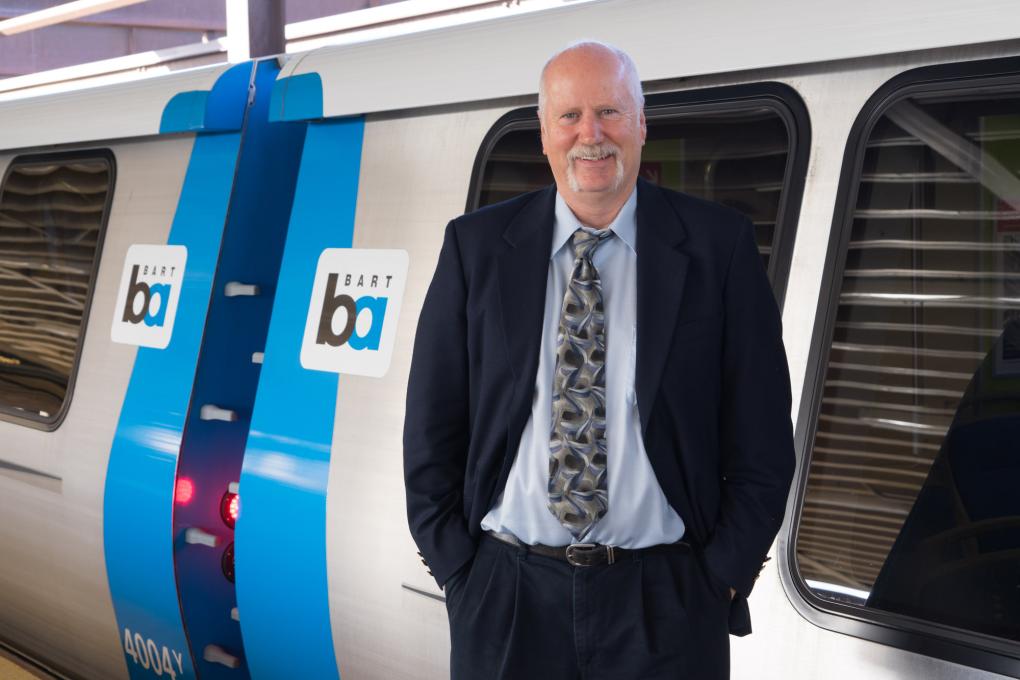
BART’s base train schedule now consists of all new Fleet of the Future trains, a major milestone for a project that’s been more than a decade in the making. On our latest edition of “Hidden Tracks: Stories From BART,” Project Manager John Garnham reveals how fast the new cars speed along BART’s test track, explains why the process of building the outer shell is a bit like using a classic DIY toy and other insider nuggets.
Transcript below:
JIM ALLISON: Welcome to the latest edition of “Hidden Tracks: Stories from BART”, I'm Jim Allison. On September 11, 2023, BART began to run only new cars for the base schedule, truly a history making milestone for BART. All 55 trains in service are made up of new cars what we call the Fleet of the Future. So, it's my pleasure today to speak with John Garnham, the Group Manager of the Rail Vehicle Capital Program. John, I think that's your official title but I like to think of you as the honcho of the Fleet of the Future. How long have you worked on the program to bring these news cars to BART?
JOHN GARNHAM: Well, we started this program in 2012 so, it's been 11 years in development.
ALLISON: So, 11 years in now, what's the latest on the delivery schedule, how many cars do we have in service, how many do we have on our facilities and how many more can we expect?
GARNHAM: So, we have 611 in service, and we have 627 onsite. They come in every day so it's hard to keep up with it. They've been given us 20 a month. So pretty much one a day, or five a week is usually what they deliver over to us and then we put into service.
ALLISON: And I remember back a couple years ago you had told the board that the delivery schedule would ramp up and in fact is has now.
GARNHAM: It has. They have some issues with suppliers, but they've managed it very well. So, to make 20 a month for the last six months is pretty, pretty remarkable.
ALLISON: Okay, so describe the journey of a car when you have, a blueprint, how does it end up getting here on our facilities, what is the process, where is it built?
GARNHAM: What actually starts with this developing the specification and that started in 2008 or somewhere around in that timeframe. But then the supplier is awarded the contract, and then it's a three or four year design effort.
We spent a lot of time in Montreal, and they spent a lot of time her. Understand our facilities doing testing, testing different bases. The car body, for example. There was this collapsible unit that we had to test we tested it first and then we put it onto the end of a car and we tested that and then we put a whole car body together and we crashed that just to make sure that we knew where the energy went during a crash. So, there's a series of build ups you start with a with a drawing and then you have a part and then you have an assembly and then you have a car. And from there I went down to Sahagun, Mexico. That's where they build the shell. They have a very large facility down there and they build the shell complete. They ship it to Plattsburgh (New York) and Plattsburgh does the final assembly. They put in all the air conditioning, the propulsion. They build the trucks there, the wheel assemblies, we call them trucks, their power, they have motors on them.
ALLISON: The trucks are axles with the wheels.
GARNHAM: That's correct. They're a big structure on each end of the car with two axles and two motors and two sets of brakes. You put those on and then they put them on a truck and they ship them to our test track where the final testing is done.
ALLISON: Okay, so you mentioned in Mexico, they build the shell, the shells are aluminum. And I understand it's kind of an interesting process to take that aluminum which is a metal that we're all familiar with and make it into the outside of a BART car. How's that work?
GARNHAM: Actually, it's an aluminum extrusions. So, an extrusion is like if you had kids you have Playdough and you put it in this thing and you push the handle down in this little tube come out, that’s an extrusion except they do it with metal but the same kind of process. They force it through a dye, and they have the 70-foot extrusions that they weld together for the floor. And they do the same for the ceiling. Then they actually build the floor up in the ceiling up, before they put it together and they do the same with the sidewalls. They weld those all up and build them together. So, they put in insulation, they put wiring, they put lights on, everything's together and then they take it to this area where they call it the splice station and they put the floor down and they put the sidewalls down and they put the roof on top. They have a special bolt called a Huck bolt. It's a rivet but it explodes at a certain force, so you know what the forces are.
ALLISON: What’s it called?
GARNHAM: It’s called a Huck bolt. It's a type of rivet, basically it's an engineered rivet. So, you want it a specific length and it holds a specific pressure. So, they Huck the car together and then they bend it send it down the line where they put the windows in. They do a water test. They put some end cabinets in and some additional wiring and then they put the doors on, and then they ship it over for final assembly.
ALLISON: They Huck it together, that's a good verb. So, you have the process finished in Mexico how does it get to Plattsburgh, which is in upstate New York?
GARNHAM: It's trucked. So, I think they have 27 or 28 trucks on the road at any given time. Between taking, they take one a day up to Plattsburgh and they take one a day to BART and then they run that trailer back down to Mexico and fill it up again.
ALLISON: Those are some long-haul truck drivers.
GARNHAM: They get their work.
ALLISON: What happens in Plattsburgh, New York?
GARNHAM: In Plattsburgh, they take all the sub systems like the propulsion everything under the car, the propulsion, the air conditioning, the brake systems, the auxiliary power system, resistors, and they assemble that to the to the vehicle. They wire it up, they connect all the wiring and the connectors. They assemble the trucks, so they put the axles on the frames and the motors are on there and then they assemble the truck to the vehicle. And once they do that, they do another water tests. They do a complete water test to make sure that the equipment doesn't leak and that the interior of the cars, doors etc. doesn't leak because it kind of changes when you get different weights on it.
Then they put it to a full static test. It takes them a couple of days to do but they test every subsystem to make sure it's interfacing with each other.
ALLISON: So, it’s tested all along the way.
GARNHAM: It is, there's quite a few tests.
ALLISON: And you've been to both facilities. Which you like better and why?
GARNHAM: They’re both unique in what they do. So, Sahagun’s impressive in the capabilities they have. The first time you go in there it's kind of a wow factor. But Plattsburgh’s very organized as well. I spent a lot of time up there, particularly in the beginning. I liked them both.
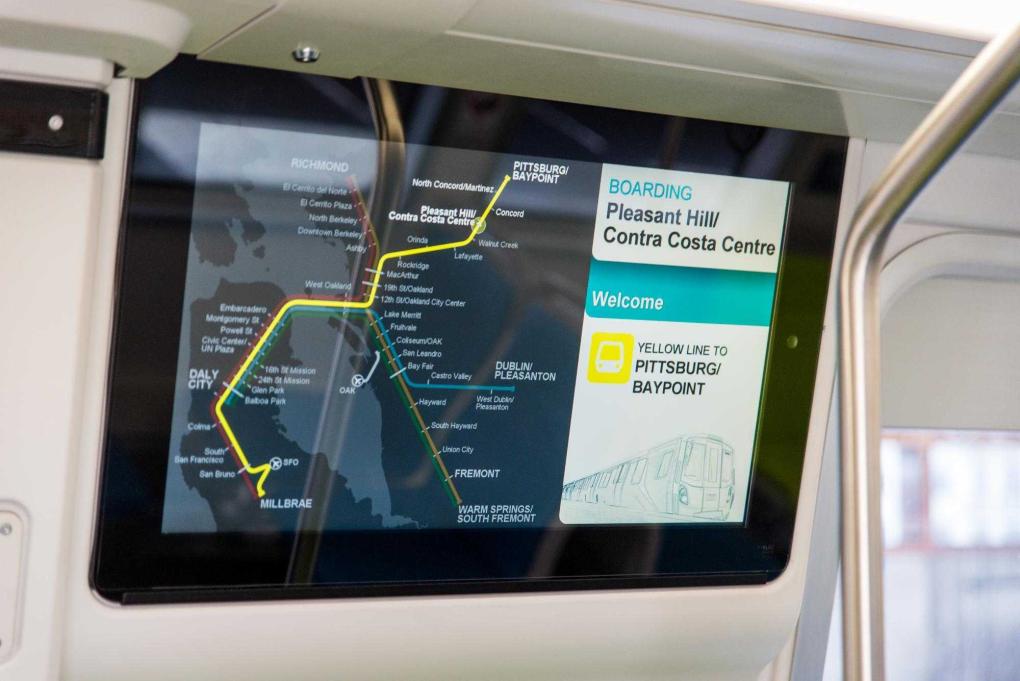
ALLISON: So, tell me what happens when it gets here to BART. You've got a test track at our Hayward Maintenance Complex that was specifically built for the Fleet of the Future. What happens when the car gets here to BART?
GARNHAM: So, there's a ramp at the test track and they back the truck up and they basically drive the vehicle off of the bed of the truck. The truck bed has rails on it so it sits on the rails and it's fastened down to it. So we roll it off the off the ramp, we take it into the inspection pit and then they put on any of the parts that had to come off like collector paddles and copperhead, whatever had to come off to ship it they put it on and then they do a 9001 test. It's a static test again, to make sure everything functions, the lights come on, everything blinks. Everything is working correctly.
Our inspectors go over and do a shipping inspection to make sure there was no damage that everything's on, everything looks good, make sure the covers are on all the equipment. Then Alstom brings it down, well, actually our guys our moving crew brings it down to the lower test track which is powered. And then BART Train Operators do the testing of the 9001. Alstom’s technicians are on board, but our Train Operators drive the train. So, they do a 9002 tests which tests the propulsion and it tests the brakes. So, you have got to get it up to a certain speed like 80 miles an hour and then you hit the brakes and make sure it stops.
ALLISON: You get up to 80 miles an hour on the test track?
GARNHAM: Yes, with single cars and in a small group of cars not with 10 cars but rather with a smaller group. So, they do the brake testing and then they put a train together of two D cars and three E cars. The D cars are the cab control cars and the E cars are just the passenger cars. Then they do a 9004 test which verifies the automatic train control. So, make sure that the automatic train control is working and it stops at the pseudo stations on either end of the test track and it reads the speed codes properly, opens the doors.
ALLISON: How long is the test track?
GARNHAM: It's two miles. It’s a good-sized test track. Yeah.
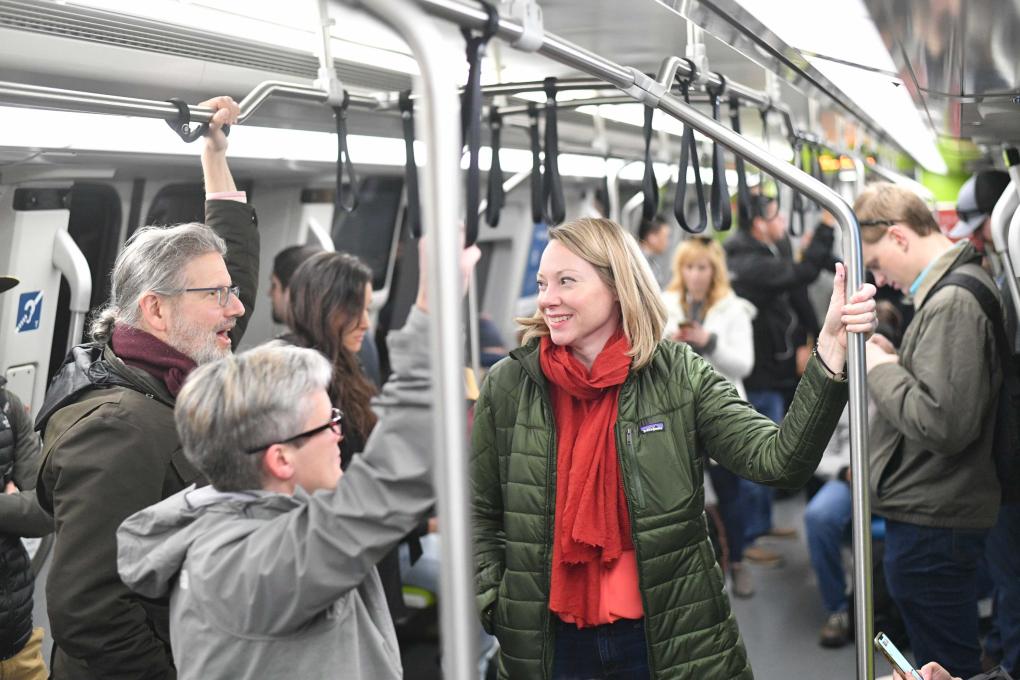
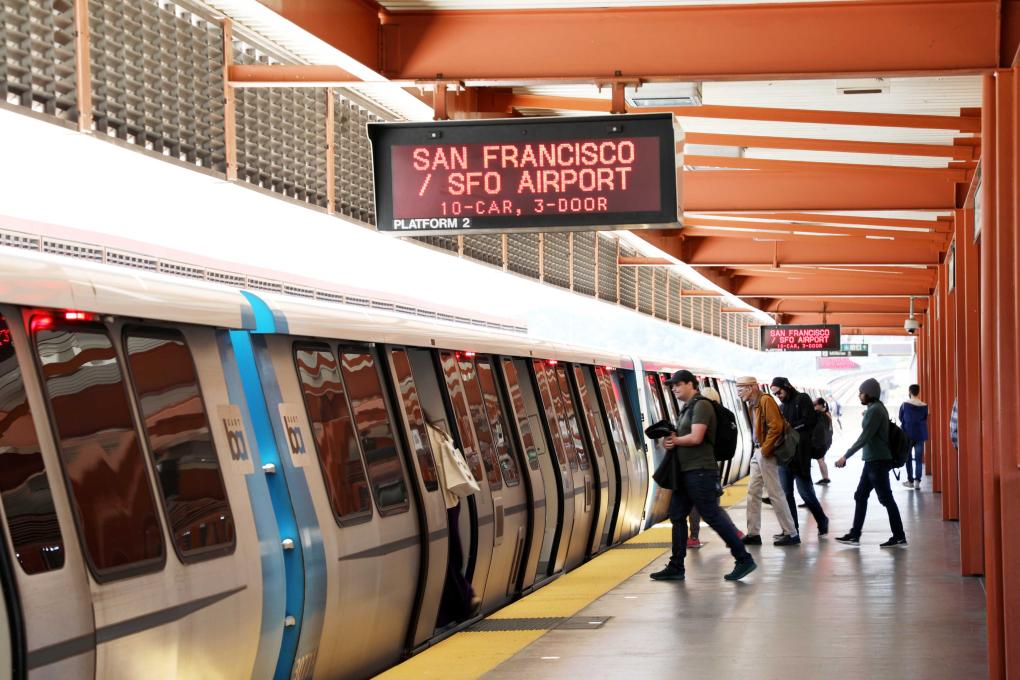
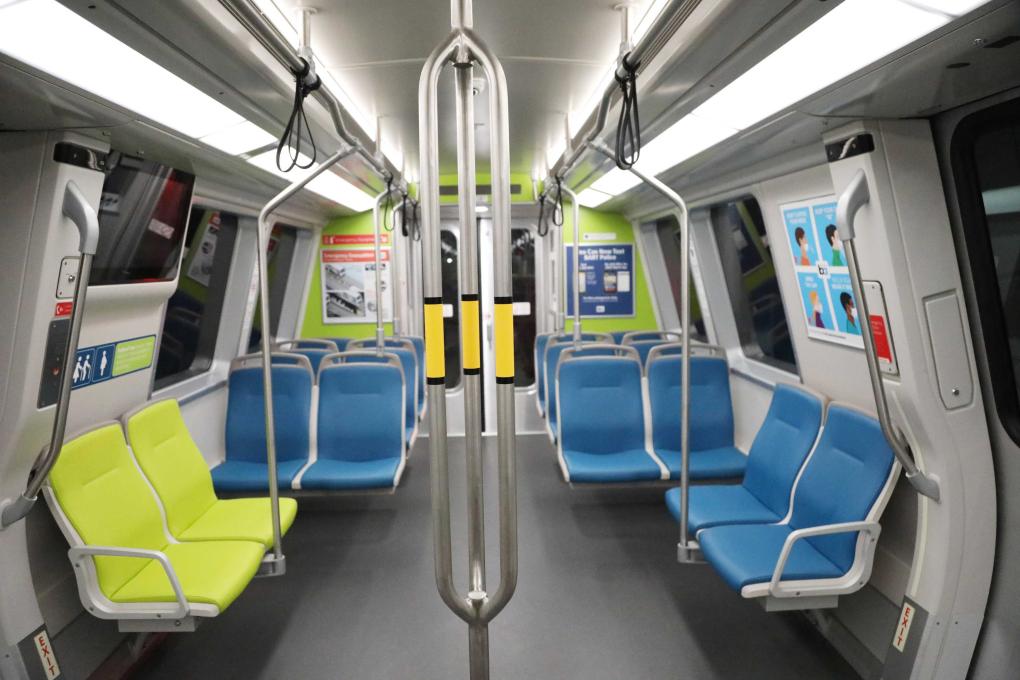
ALLISON: This is all good stuff for gearheads. Let's talk about some of the things that just the regular passengers notice about the new cars. The most obvious thing of course, is that they have one more set of doors. They have three doors on each side. But what are some of the biggest differences between the new rail cars and the old fleet aside from those doors?
GARNHAM: It's different seating arrangements so it's open. It has the regular commuter seats and then it has the lounge-style seating, but I think with the new maps, where it has a dynamic map. Yeah, it's the customer display monitor and then it's able to put out announcements and do the various messages.
The air conditioning also comes from the ceiling rather than up from the floor. Cold air drops so it feels a little cooler.
ALLISON: So, you're working with physics.
GARNHAM: That was the idea.
ALLISON: So how much has technology changed, rail car technology changed since the early 70s to the cars you're putting in service now? It's got to be pretty profound.
GARNHAM: Yeah, that's a good question. Actually, it's like the old cars were DC motors and these are now AC motors so that's a big difference. You don't have all the brushes and problems with that.
ALLISON: Direct Current, Alternating Current.
GARNHAM: Correct. But the biggest difference is it's all solid state. The old motor boxes when you open them up, there was all these gears that would turn and hit a switch and move it. It's now all solid state you just have a, they’re called IGBTs but that's the mechanism that runs the power and it basically drives the car, you don't have cam operated switches. That's the good thing. The tough part of that is you know, it's tougher to diagnose where the problem is. You can't just open it up and see that there's a connector welded together or something like that. So, if there's a failure you have to take it off and we have these special test units in the component area where you put it on and then you can test it and verify with what the problem is.
ALLISON: Now I remember in the past, you cited some jaw dropping numbers in terms of the length of the cables in these cars, and the number of software changes your team has made as you progressed. You remember those stats off the top of your head?
GARNHAM: You're testing my memory. I think it was 40 miles of cable or something like that. I don't know how many, it's in the hundreds of how many software changes we've done. We continue to do software changes because we're continuing to try and get the reliability up on these cars. So, there's a change going in right now for the train control monitoring system that we're implementing, and it affects the maps and the passenger information system, etc. It's a constant upgrade.
ALLISON: Well, let's be honest, we've had some challenges. Describe why we paused the delivery of the new cars for a time and how your team overcame those challenges.
GARNHAM: Yeah, we did pause. The main issue was reliability. We were retiring the old fleet with a higher reliability number than a new fleet and it just didn't make sense. So, we didn't have the manuals to fix the cars. We didn't have the bench test equipment. All of those were handicapping us to be able to actually work on these cars. We paused, we gave the supplier time to get their arms around the issues, get their arms around the manuals, get the bench test equipment to us, and then we restarted the contract.
ALLISON: So, we talked about the pause in delivery and we've had other starts and stops. Is that a common theme when transit agencies get new fleets of vehicles or is this something that was a particular problem to BART? I would imagine that every rail system has growing pains when they're bringing in a new fleet of rail cars.
GARNHAM: They do. I've been doing rail cars for 40 some years and I don't know project that hasn't had some kind of an issue. If you look at Boston, they are a couple years late on their fleet because they're trying to work out some issues, WMATA (Washington D.C.) had several new fleets and they were late. And then they had some major issues that they had to iron out. The latest New York one was a bit late. Everybody looks at it and says well, it's just a rail, it's just a train, it's pretty easy you should be able to do this but it's got 40 some microprocessors on it. It's got hundreds of pieces of software on it, It's not just a train and each one is different. Each requirement is different. So, in the United States, we don't have a standard product. If you go to Europe, and you go across the different countries that they're trying to standardize all their products, so that once you build it, you just keep putting it out. It's like General Motors or Ford, that first car that they put together. It takes them awhile to engineer it, but then everyone's the same. And the United States was a little bit different. So, every fleet has its unique set of problems.
ALLISON: I think one thing that people may not initially appreciate is the fact that they're entrusting their safety to a transit agency and so safety has got to be paramount, and that that adds to the complexity of delivering these vehicles. Is that correct?
GARNHAM: That's correct. Absolutely, we worked hand in hand with the California Public Utilities Commission. CPUC. We started in 2015 working with them on all the documentation and to verify the safety of it. They had to look at everything, even now before we before we put a train in service we send them to test records, and they verify it and then we put the trains into the service. The original document was probably a five inch binder with paper and records and tests and all the different things that we had to do to put this into service.
ALLISON: And if one is buying an automobile from an automobile manufacturer, you're talking about something to you to use for maybe 10 to 15 years we're going to use these much longer. That's a factor too I would imagine.
GARNHAM: Yeah, the subsystems are a 30-year life. They're designed for 30-year life and the car shells are designed for 40-year life. There are periodic overhauls that you can do on the rehab project, for instance. Those cars the A, B cars, we had them for 50 years, but 30 years in we completely rehabbed them. Replaced everything basically except the car shell on a truck frame.
ALLISON: Is that something that these cars could do?
GARNHAM: I think what we're looking at is many overhauls as we go along, to do that and that's one of the things that we're putting into the manuals where at 12 years you do this, 15 years you do this, at 20 years you do this and it's all about extending the life as long as possible.
ALLISON: Wow, that's interesting. What do you think about what the third generation of BART cars, when these Fleet of the Future ones become the new legacy cars and what's that going to look like?
GARNHAM: They probably won't need rails. It's mind boggling to see the technology in my brief career. You know, from all the cam operated stuff when I started working on it. I was building propulsion for the C cars back in the early 80s for a company called Westinghouse and to see the propulsion that's coming out of their predecessors now it's totally different. It doesn't even look the same.
ALLISON: You mentioned the supplier, and the supplier was originally Bombardier, which successfully was awarded the contract they were competing against Alstom and now Alstom has acquired Bombardier so Alstom is now the supplier. Has that transition affected a project in any way? I know Alstom is a major player obviously in rail vehicles and in the rail industry at large.
GARNHAM: It really hasn't. The project team has stayed the same. I mean, there's constant changes on the project team, but for the overall structure, the consequence of the project team from Bombardier and then to Alstom has remained the same. They've had people leave for various reasons, retirements, or other opportunities, and they had to plug other people in, but for the most part, it's been the same team
ALLISON: And Alstom has people here in the Bay Area working with us.
GARNHAM: They do they do, that team has remained the same. We had one guy retire but they brought another guy in a couple of years ago. So, there's a group on the test track and then they have folks that come in to shops if there's an issue to help our techs troubleshoot it. Our techs do the work but they kind of advise, that's part of the warranty support.
ALLISON: Speaking of the contract, I understand it's coming in 15% under the projected cost. How did you manage that?
GARNHAM: In the very beginning, we spent a lot of time with Bombardier to look at some of their cost drivers. One of the big ones that they had was the original contract was to ship 10 cars a month. And they said early on that they wanted to go to 16 cars a month. So, in the beginning, we did a schedule adjustment to go to 16 cars a month. Obviously worked very well for us. They've had some problems and haven't been able to meet that but when we redid that schedule, it helped on the cost side for us for escalation. There's a clause in the contract that we look at four different indices every year, and we pay them whatever the inflation rate is of those indices. So, that they don't have to try and cost that into their price. It gives everybody an even playing field. Prior to COVID the inflation was very mild. So that helped. But then when we cut a year and some off of the schedule, that cut saved us over $100 million in escalation. That was key to us and that escalation is based on the schedule not on when the cars are delivered. So, we did very well. They ran into problems, and it didn't help them as much as they thought it would but that was one of the cost drivers that they requested and we did so we did a change notice in 2013 or 14 to do that.
ALLISON: How did you cut time on the schedule a year and a half.
GARNHAM: We went from 10 car delivery to 16 car delivery. It got done quicker. They're two years behind, but they're really close to what their original schedule was. So, that was one thing we did. The second thing we did was we tried to bring in as much work as we could inside to our engineers. There are some specialty engineers that we had to get help from that we just didn't have, we don't have the day-to-day knowledge of software, some of the requirements or things like that. You just don't deal with them every day. There were outside folks that we had to bring it to do that but everything else we tried to bring in because our engineers are motivated to fix the problem and solve it. And sometimes the outside folks aren't as motivated to get it done because then they don't have any other work. So, I'm not saying that everybody does that but from my experience if you can do it yourself you really want to get it done.
ALLISON: Well, they’re our cars so our people are really invested in it.
GARNHAM: That’s one thing and then the other thing is our engineers have a lot of experience. We had folks in there with 40 years’ experience, so we gave them a problem they had seen it before. So, it got solved quicker, in my opinion.
ALLISON: Let’s get back to some of the things that these cars improve for riders. We mentioned the three doors on each side, the passenger information. The interior seems roomier. It seems like there's more room for wheelchairs for instance. Data shows these cars are more reliable than the legacy fleet has been in recent years since we resumed delivery, but what's your taken on why that has occurred?
Why are they out there and breaking down less often than the old cars that we've retired?
GARNHAM: Well, part of the contract is there certain reliability milestones that they have to meet. And so that's why we're still doing software changes because although the reliability is improved, they haven't hit the contractual requirements yet. So, there's a very big payment associated with that, which is a motivation for them to meet that and that's a continual process that we're working with them to get to, to where we can pay them that because we want the reliability. When we get to the number we're glad to pay them we just need to we just need to hit that number.
ALLISON: So, the winter of 2022 and 2023 brought the Bay Area's some historic bad weather. We had an unusual number of cars, especially new cars taken out of service. The new cars are more reliable but we did have these cars taken out of service because of something called wheel flats. Tell me what a wheel flat is.
GARNHAM: So, a wheel flat is if the cars are not stopping in the prescribed distance that they have to stop they lock the axels up and it skids to bring it to a stop. When metal skids on metal it creates a little flat spot on the on the round wheel itself. And that's what the flat spots are. So, those have to go into the shop. If they're small, it's not a problem, it's an annoyance. But if they get to be too large, we have to take them in and we cut them off at the wheel. We cut the wheel round again and send it back out.
ALLISON: Why did we have this issue with so many of the new cars as opposed to the old cars?
GARNHAM: That's a great question. The old cars, their train motion ran on stopping at three miles per hour per second. With the new contract, we put in that they had to stop at certain distances. And that's really the right way to do it. You want to make sure it stops within that distance.
ALLISON: Because it's safer.
GARNHAM: It's safer. So, the only way that Alstom could do that was with the train motion that they put in place and instead of one or two cars locking up, the whole train locks up. And so, there's this timer on there. It's called the BPM timer. And basically, it looks at the speed and it says okay, you're over speed, you're over speed, you're over speed, and it gives them like five seconds. And if they don't meet the speed, if they're not coming down to meet the distance, then they lock up all the axles and we ended up getting whatever cars are in that train, we could get flats on them all. So that's why it seems to be more we're working on some issues. We found that there was a couple places in the system where the speeds were changing rapidly. So, we smoothed those out. We kind of blended it so we could, whenever we get the flats we look at where they're at and what time they are and engineers go in and analyze it and if we see that one area, we got six trains flattened then we went in and we would look at those areas and say, oh, yeah, the speed codes. We have charts that we can look at, we can download the car and see the actual charts that have seen and we see and this one is a problem area, we need to blend this out a little bit and reduce the speed a little sooner when it's coming in.
ALLISON: Okay, so that's one design change that kind of braking protocol that's different. I imagine that manufacturing cars for BART, because most people know we have wider tracks than the standard railroad and our cars are unique. What are some of the engineering challenges to design and build a new fleet of cars to run on BART, on the BART system?
GARNHAM: Well, you did a couple of good ones. I mean, obviously the wheel gauges is one. That's why we do the dynamic testing in our test track. Most of the other car builders have normal gauge and car builders have their own test tracks and they do the testing there. Probably the biggest one though is the weight. These cars are 65,000 pounds roughly. An average car of this size would be about 95,000 pounds. If it was made out of steel and our infrastructure just won't handle it because these cars weren't, the infrastructure was designed around the original cars. The original cars were 60,000 pounds. These cars are 65,000 pounds, was a very big effort to get there. Took a lot of work. They had to actually go in and retrofit some of the systems to take some weight out it was not an easy task to do that. The reason these are heavier, we gave we gave them a little extra weight because we had stricter crash worthiness requirements on this car than we did on the legacy fleet. So, as you go along regulations get tighter and tighter and tighter. You can go in and remodel an old house but you couldn't build it to those standards. You'd have to build it to a totally different standard.
ALLISON: We learn as we go along what it takes to be safe. That's a good point. you're taking the existing tracks and the aerial tracks and all of that and you're putting a whole new vehicle on it with all of these new standards that need to be met.
GARNHAM: That's correct.
ALLISON: Wow, that's pretty amazing. So, let’s circle back to the beginning. All the trains and the base schedule our Fleet of the Future. As someone who has so much invested personally and professionally. How's that accomplishment make you feel?
GARNHAM: It makes me feel great. I rode one in today to come here. Always like getting on him, and I kind of look out and see what's going on whenever I’m riding them. But it’s a great feeling. When you’re riding down the road and you point them out to your friends or whatever.
ALLISON: All the sweat and tears worth it.
GARNHAM: It’s a pretty nice feeling.
ALLISON: Well John thanks for joining us and thank you for listening to “Hidden Tracks: Stories from BART.” You can listen to our podcast on SoundCloud, iTunes, Google Play, and of course at our website BART.gov/podcasts.
Pride Month 2024: BART’s Terri Hodges on saying what she feels, meaning what she says, and bringing a dash of weird to the workplace
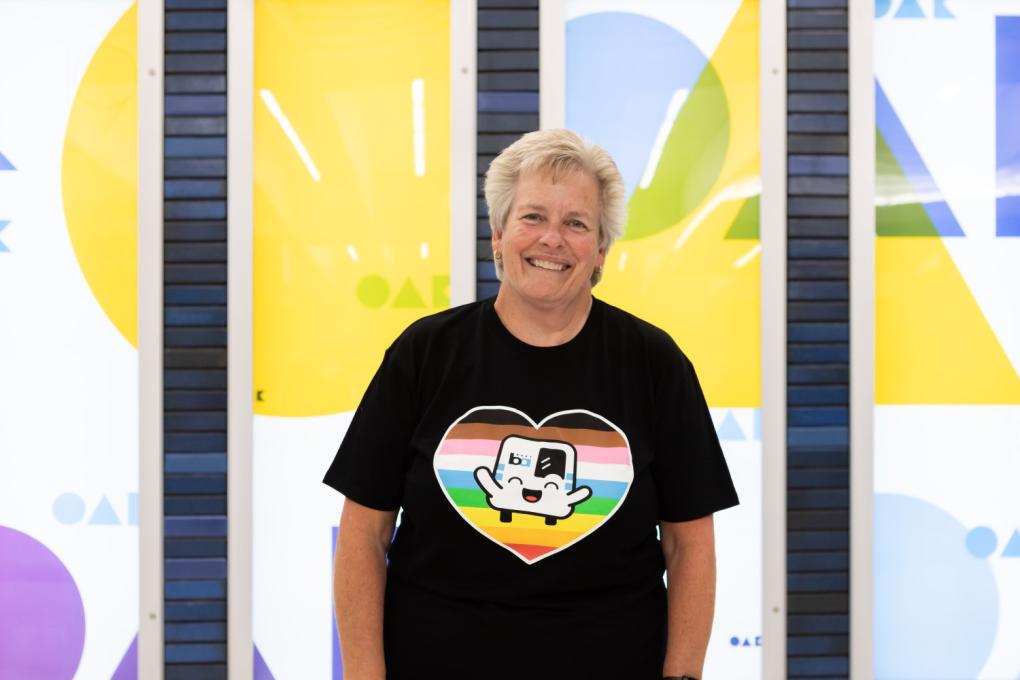
Happy Pride Month from all of us at BART!
BART gets very into the Pride spirit every year. Throughout the month, we'll be publishing more stories, walking in the San Francisco Pride Parade with the BARTmobile, and releasing new Pride merch.
Speaking of merch...
BART's new 2024 Pride Tees are now listed for sale on Railgoods.com.
Terri is modeling the t-shirt above. More merch coming soon.
Read about the history of BART's iconic Pride merch here.
“I am large, I contain multitudes,” wrote the 19th-century queer poet Walt Whitman in his celebrated poem, Song of Myself.
The famous line could not be more relevant when talking about Terri Hodges, BART’s Director of Risk and Insurance Management.
She’s a multitudinous woman: a partner, dog mom, “insurance geek,” high-ranking manager, and an exceptional pool party hostess for her “gaybors” (gay + neighbors = gaybors). Add to the list: BART’s Director of Risk and Insurance Management.
The “song of herself” she returns to each Pride Month is Born This Way by Lady Gaga “because it’s not just inclusive of gay people, but so many others.” And to Terri, inclusivity and intersectionality are what Pride Month is all about.
“The thing is, people think Pride Month is one month where everyone’s great to each other and celebratory,” she said. “But for me and my partner, it’s not just a month. That’s just how we live our life.”
Besides her famous pool parties, Terri doesn’t do much out of the ordinary to celebrate Pride Month.
“I celebrate my gayness by doing all the things people who aren’t gay do,” she said. “I love my house, I love my girl, I love my dog. I just celebrate people. It’s not about being gay or not gay, it’s about being a good person.”
As you can imagine, Terri’s kindness-first approach makes her a much-loved manager at BART, where she’s worked for 29 years. One of her longtime colleagues, Liability Risk Analyst Steve Shatz, called Terri “a flexitarian: somebody who does what it takes to accommodate their employees.”
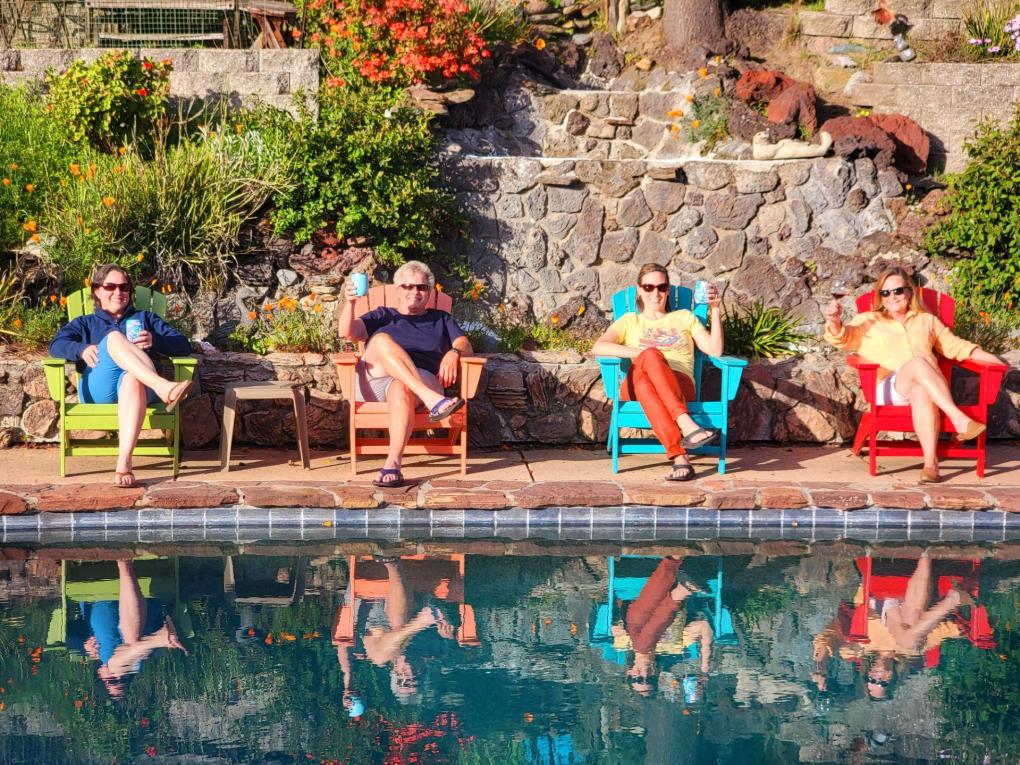
A photo from one of Terri and Patti’s ”gaybor” pool parties during Pride Month.
Terri and Steve have worked together for nearly three decades. When they are not referring to each other as husband and wife – “I’ve known Terri longer than my real wife. There isn’t really anything about me that she doesn’t know,” Steve said – they call each other “Scabby.” It’s a long story for another article, but it’s illustrative of something key to Terri’s workplace disposition. The best kind of work relationship, she said, is one in which you can be honest and fun (and trust that everyone gets their work done). The other members of the Risk and Insurance Management team, Matt Goltaio and Tesia Bell, have nicknames, too. Sometimes they call each other hybrids of their real names – just to keep the jovial camaraderie in play.
“We kid with one another and have a very breezy relationship, while still being very professional,” Terri said of the close-knit team.
The playful, inclusive environment at BART is quite different from the atmosphere at the insurance companies Terri worked for early in her career. Before coming to BART, Terri experienced frequent discriminatory behavior – things like people asking her if she was “really gay” or acting inappropriately at company functions.
The Bay Area has long been a trailblazer in advocating and securing equal rights for all. But when Terri was growing up in Concord, she said “the mindset was different” than it is now.
"When I was younger, it was either you’re gay or you’re straight. There was no in between. Even bisexuality was considered way out of the norm,” she said. Stringent categorization didn’t exactly work for Terri. She's someone who likes existing within the liminal spaces of human experience.
“When I was younger, it wasn’t that I wasn’t secure with my sexuality, but I was very fluid in it,” she said. “I wasn’t always just gay. I’ve come out and gone back in. I’ve always liked people for who they are, not necessarily because of their gender.”
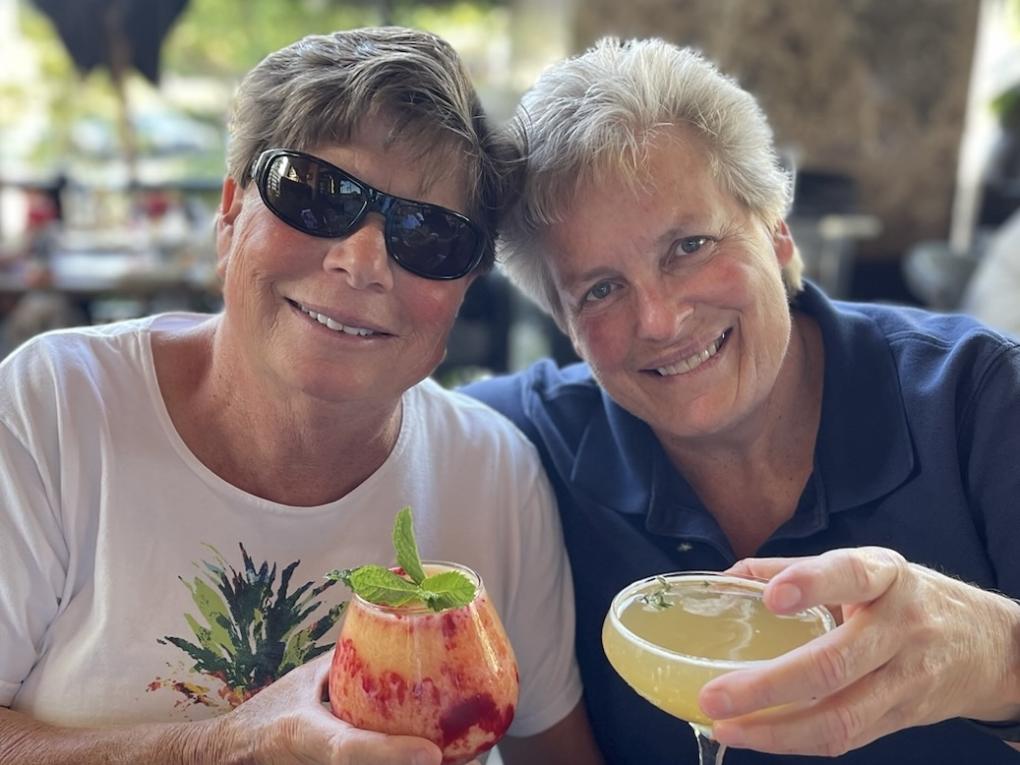
A recent photo of Patti (left) and Terri (right).
Growing up, Terri was fortunate to always feel safe and supported in her sexuality. She doesn't really have a “coming out story,” she said. The coming out just happened naturally.
“When I first realized I liked women, I was in high school. My parents were like you have a boyfriend, though. And I was like, I want a girlfriend, too,” she said. “My parents didn't totally get it, but they said, if that makes you happy, that makes you happy. I feel so grateful to have that support system because I know many don’t.”
That early encouragement had a lasting impact on Terri and her character.
“What I bring to the table is inclusivity and understanding that not everyone has had the opportunity to be treated equally,” she said. “I hope to bring a level of kindness and understanding to people who have not always been given that luxury because of who they are, what their status is.”
She continued: “Everyone deserves to be treated with kindness and love. Not always respect, though. You have to earn that!”
Terri has the right demeanor for the work she does. Balancing compassion with professionalism is crucial in her field. At face value, the group “is the least sexy department at BART,” Terri said. But there's more to it than meets the eye. The department thoroughly researches every claim that comes to BART guided by goals of fairness and protection of taxpayers and riders who fund BART.
“Claim settlements come from taxpayer money,” Terri said. “I’m a taxpayer myself, and it is my fiduciary duty to make certain that if we owe it, we pay it, and if we don’t owe it, we don’t pay it.” For a time, she admits she was known as “Hell No Hodges.”
One must strike a balance between BART’s fiduciary duty while thoughtfully holding space for the complicated emotions a person or family experiences after a crime or tragedy. BART is public, and anything can happen on public property. But as Terri says, “Just because it happened on BART doesn’t mean its our responsibility.”
“We’re not an insurer of the public, we can’t afford to be,” Terri explained. “But we do have an obligation to approach each claim with kindness.”
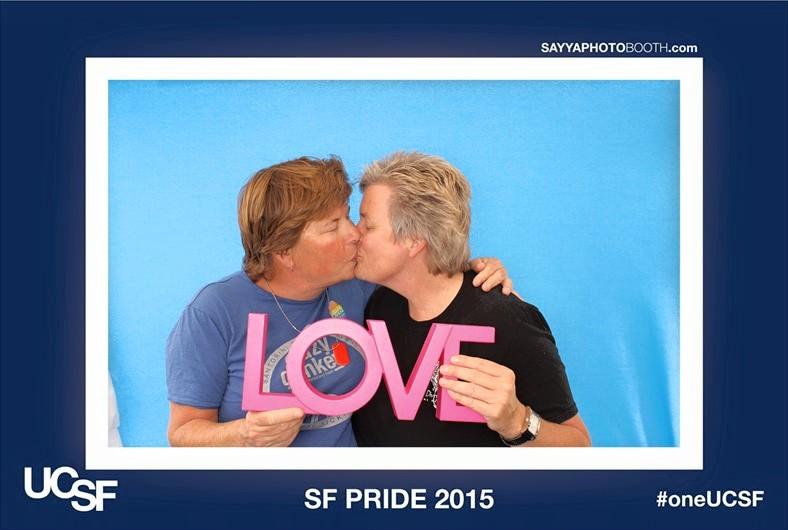
Patti and Terri at SF Pride 2015.
The emotionally taxing work is made easier by the warm, accepting environment that has held sway at BART since Terri started working there almost three decades ago.
“I have had the best experience at BART. I have never been an outcast for my sexuality. Everyone is unbelievably inclusive, and every manager has supported and advocated for me,” Terri said. “BART goes hard with Pride. We have the swag, the parade, the celebrations for employees. But we don't just celebrate Pride; we celebrate all diverse communities. And that’s not just because BART has to. There is a genuine warmth here. People can be who they are.”
Terri is a woman of multitudes, but also contradictions. As an insurance professional, she is by default “risk averse" (“risk” is literally in her job title). But multiple times a year, Terri and her partner, Patti, go diving. Their dive trips have taken them from Hawaii to Belize, Mexico to Australia.
“I’m risk averse yet I’m doing one of the riskiest things ever,” Terri laughed, admitting she usually swims down just about 50 feet, where she can still see the surface. She leaves the deep-sea thing to Patti.
And soon, the couple will have a lot more time to dive. Terri plans to retire next year. She's already mentally preparing for the milestone that she knows will “be hard and sad.”
“This is the place that has allowed me to grow both professionally and personally into the person I am,” Terri said. And that person is one who “says what I feel, means what I say, and tries to be as solid of a human as I can be – but sometimes in a weird way.”
BART and Jasmine Gao and Gao family issue a joint statement about a settlement agreement related to an officer-involved shooting on November 18, 2024
On June 19, 2025, Jasmine Gao reached a mediated pre-litigation settlement with Bay Area Rapid Transit regarding an officer-involved shooting by BART police officer Nicholas Poblete on November 18, 2024, in Union City. The settlement is in the amount of $6.75 million. According to her attorneys, the shooting left Ms. Gao, 33 years old, with significant physical and emotional distress injuries. About twelve hours after the shooting, BART Chief of Police Franklin made a public media statement based on the available information from the investigation at that time that included “the driver is alleged to have assaulted a police officer.” Having reviewed the body-worn camera footage, BART acknowledges that Ms. Gao did not assault the officers with a deadly weapon and that she was driving away when Poblete discharged his gun.
Officer Poblete responded to a report of a vehicle doing donuts. Ms. Gao was cleared of that possible crime shortly after the officers arrived, when an officer checked her tires and noted they were cold. The officers determined that Ms. Gao’s vehicle’s registration appeared to be expired. When Ms. Gao drove away from the officers Poblete fired.
BART acknowledges that when Ms. Gao drove away, no officer was being dragged or had any body part stuck in the window of her car when Poblete fired, and that no officer was otherwise endangered by the Ms. Gao’s driving of the vehicle. After completing an administrative investigation of the incident, BART issued a notice of intent to terminate Poblete.
No criminal charges were filed against Ms. Gao. As part of the settlement, Ms. Gao, her attorneys John Burris and Ben Nisenbaum, BART and Chief Franklin agreed to a joint statement acknowledging the public statement issued the morning after the incident was not accurate. While it was alleged that Ms. Gao assaulted the officers with her vehicle and that was the reason for the shots being fired, the body-worn camera shows that allegation was not accurate.
Ben Nisenbaum, an attorney for Ms. Gao, said “Ms. Gao was badly injured by a police shooting that was an unreasonable overreaction to a vehicle registration that had expired so recently that California law prevented police from taking any law enforcement action against her.”
Nisenbaum added: “Ms. Gao was shot in the back, and the bullet passed between her heart and a major artery. She nearly died. She was hospitalized and no longer has full mobility in her left arm. Ms. Gao and her family recognize the importance of resolving this case expeditiously without filing a lawsuit. The acceptance of accountability by BART and Chief Franklin are significant factors in the settlement.”
BART’s Chief Communications Officer Alicia Trost said, “Our priority is public trust. We immediately placed Nicholas Poblete on leave pending an independent investigation. We engaged Ms. Gao’s attorneys before a lawsuit was filed to work toward an early resolution that brings closure for Ms. Gao and her family while avoiding years of litigation. BART believes resolving this matter promptly is also in the best interest of our riders, employees, and the community.”
Holiday Toy Drive: BART employees donate more than 1,020 gifts and $3,275 in gift cards to organization supporting local youth and families
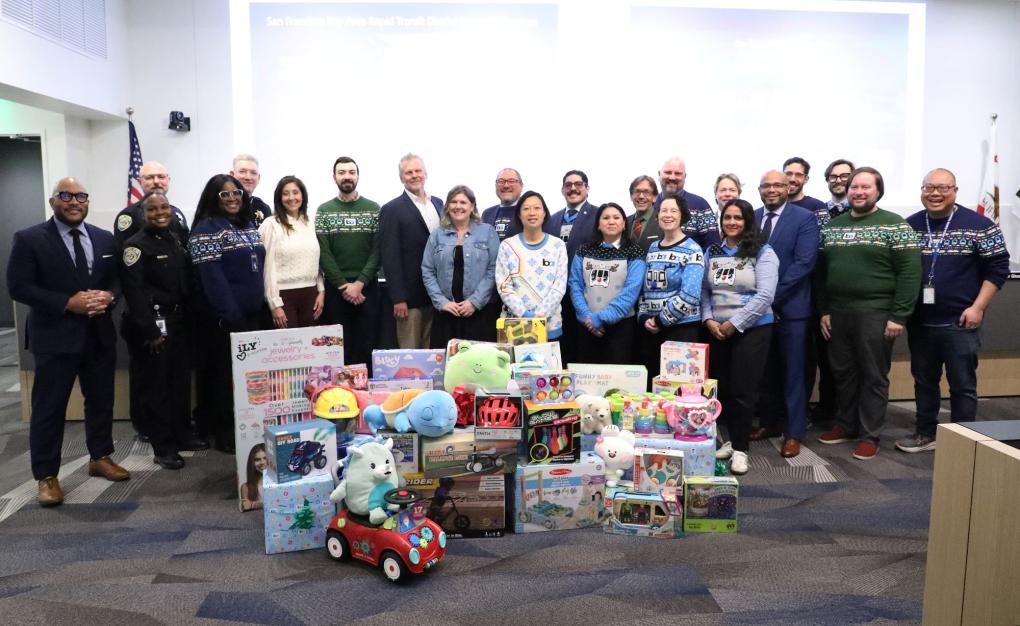
A photo from the Dec. 18, 2025, BART Board meeting with representatives from We Care, members of the BART Board of Directors, BART executives, and BART employees who organized the drive.
Update Dec. 18, 2025: More than 1,020 toys, games, sporting equipment, and books, along with approximately $3,275 in gift cards, were presented to Concord’s We Care Services for Children at the BART Board meeting on Thursday, Dec. 18, 2025.
We Care Executive Director Pete Caldwell and Director of Community Engagement Erica Williamson attended the meeting to express their gratitude to BART. They said all of their 1,000 young clients will receive a toy this year, along with their siblings.
Caldwell said the gifts will help families free up money for food and basic survival necessities.
"These families would go without in order to give their children a present for Christmas," Caldwell said. "This is an amazing gift for them and an opportunity to have the kind of holiday that will make their lives better."
Caldwell thanked BART employees for their "overwhelming amount of generosity."
"This has turned what would be a typical rush season for us into an exciting time," he said. "We could not be more grateful for everyone at BART."
1023 Toys
131 Gift Cards ($3275)
The holidays will look a little different at We Care Services for Children this year.
The Concord-based nonprofit is the recipient of BART’s 2025 Holiday Toy Drive, a seasonal tradition where employees give back to the communities BART serves. The drive is organized by the BART Police Department and Office of External Affairs.
BART Board President Mark Foley chose We Care as Toy Drive’s beneficiary, a choice he said was easy.
“BART has hosted a holiday toy drive for more than twenty years, and this year, we're proud to continue the tradition by partnering with We Care,” Foley said. “It’s an honor to get to spread joy to the young children and families this important local organization uplifts.”
We Care supports its young clients and families with a range of targeted mental health and developmental programs. The organization rarely gets the chance to give clients gifts for the holidays, but this year, every We Care child and their siblings will be gifted a special toy to celebrate the season.
The generosity of BART employees will “allow us to bring joy to children and hope to parents in a way that will be remembered long after the holidays,” said We Care Executive Director Pete Caldwell. “With the cost of living rising and so many families balancing everyday pressures, this partnership with BART helps bring joy and relief at a time when it’s needed most.”
Rodd Lee, BART Assistant General Manager of External Affairs, said the toy drive reflects the spirit of BART and those who work there.
“BART employees are deeply committed to public service, and their participation in our annual toy drive exemplifies this dedication,” he said. “Our agency is grateful to give back to the communities we serve.”
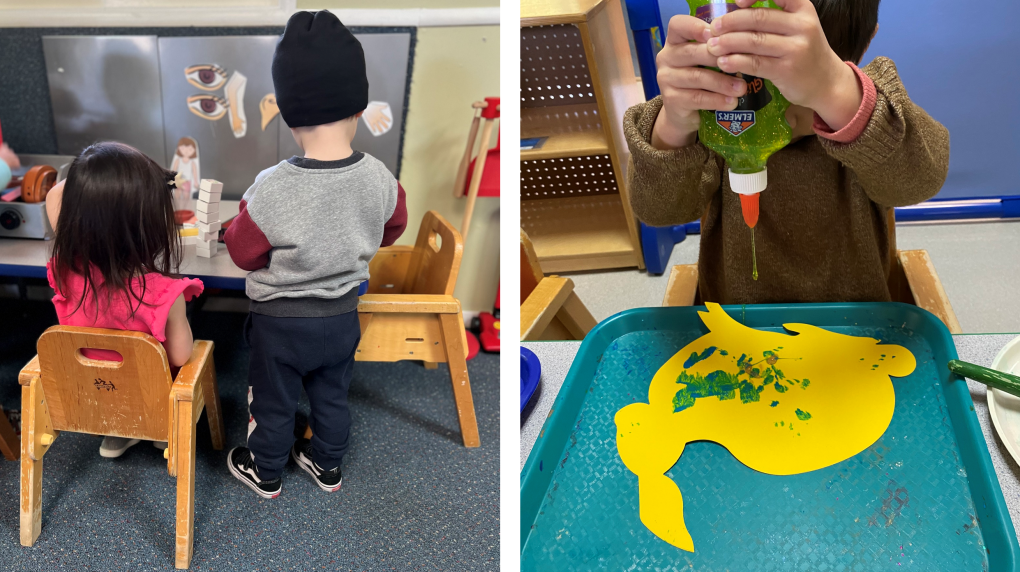
Children crafting at We Care Services for Children in Concord.
In 2024, BART employees donated more than 1,100 toys and $3,600 in gift cards for the year’s recipient organization, Mission Food Hub.
In December, We Care is planning a special holiday week, where staff will distribute gifts during therapy sessions, preschool visits, and home-based appointments. We Care staff knows every family personally, so they can match each child with a gift they’ll love, whether it’s a toy train, giant stuffie, singing rabbit, or sit ‘n spin.
“The children know and trust our staff, so receiving something from us feels genuine — like a small extension of the care and support we are known for,” Caldwell explained. “It’s a gesture that reminds them they’re valued and cared for.”
We Care alum Jason is testament to the great heights children can reach when they’re respected and supported.
When Jason was adopted, his dad worried about finding a preschool that would understand his abilities, including his delayed speech development. Jason's dad was initially hesitant when referred to We Care, but he began noticing his son changing and growing not long after joining the preschool program.
“We Care helped my son discover his creativity and capabilities, and to build the foundation for the remarkable person he is today,” his dad said. “The staff at We Care are true heroes.”
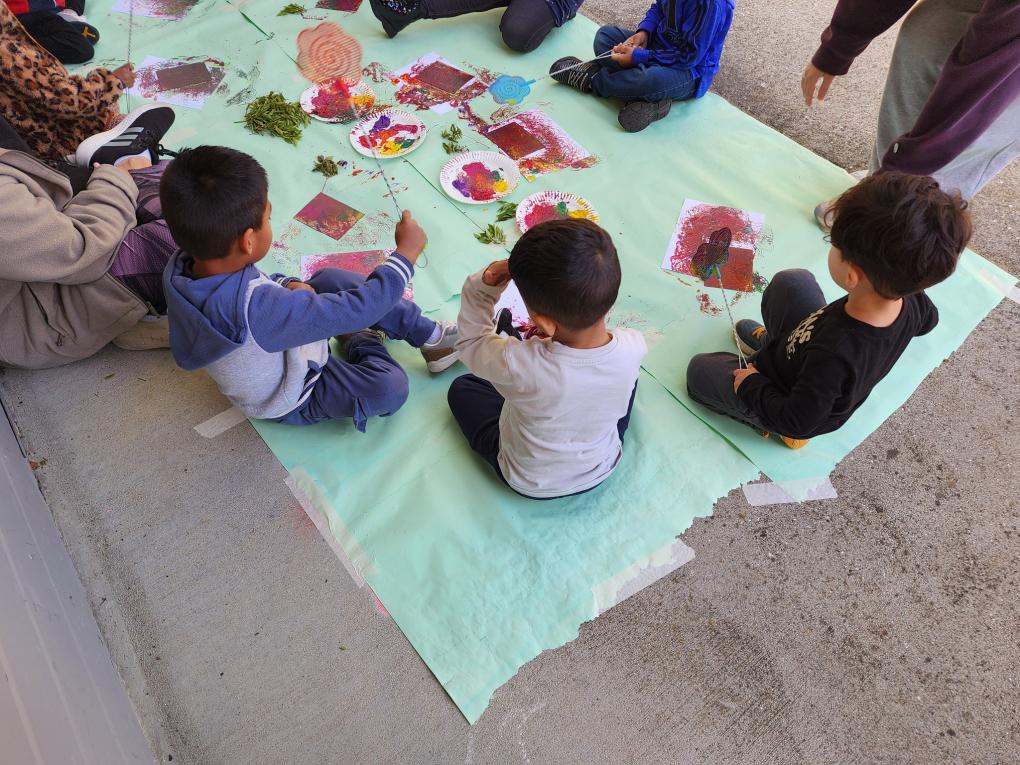
Children crafting at We Care Services for Children in Concord.
Fifteen years after graduating from preschool, Jason walked across the stage at Mt. Diablo High School to accept his high school diploma.
“Because of We Care, Jason doesn’t think about his limitations,” his dad said, adding that Jason aspires to become a chef or school bus driver. Jason, like many children, loves public transit.
Many We Care families rely on BART to get around the Bay Area, including to their programs, so partnering with BART on the toy drive seemed a natural extension of this work.
“BART plays a vital role in keeping our community connected,” Caldwell said. “It helps parents reach work, schools, and essential services that support family stability — things that directly impact the well-being of children like those we serve.”
“This partnership with BART reflects the spirit of public transit – connection and care,” he concluded. “BART is committed to strengthening the communities it reaches, which makes the toy drive especially meaningful and greatly valued.”
Learn more about We Care Services for Children, including how you can support the organization this season, at wecarechildren.org.
The mother of all Train Operators: BART's Mama Linda on the miles she’s traveled, the meals she’s shared, and the ancestors who shaped her
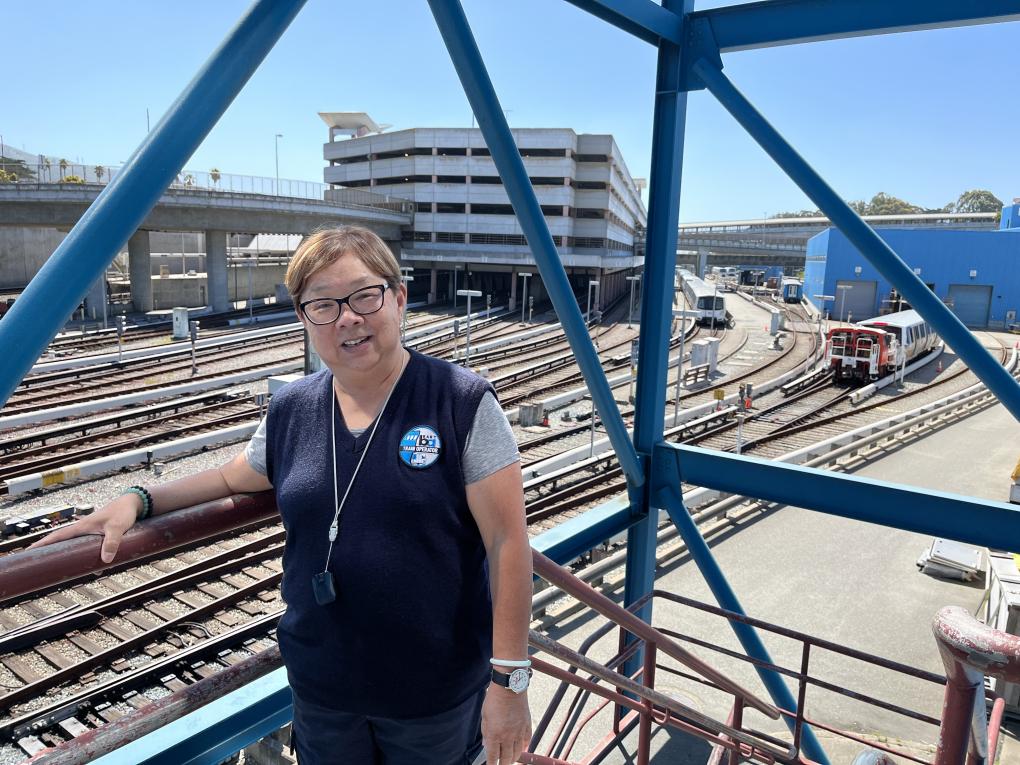
A recent photo of Linda Yee-Sugaya, a.k.a. Mama Linda, at Daly City Yard.
For 33 years, Train Operator Linda Yee-Sugaya, better known as “Mama Linda,” has said a prayer before stepping onto her train.
“Please let me have a smooth day, a good day,” she whispers before hoisting herself into the cab.
She remembers one of her first rides after receiving her Train Operator certification in 1991. She pulled into Embarcadero Station to find it packed with people on all sides and realized: “When I’m operating a ten-car train, I'm responsible for 2,000 people!” And her job was to keep every single one of them safe.
That early anxiety has long evaporated. But Mama Linda still says a prayer before each ride, just in case.
After so many years in the cab of a train car, the seasoned Train Operator has seen a lot. She’s watched the old trains become the new; stations being built and BART lines lengthen; and thousands upon thousands of faces stream past the windows of her train on their way to parades and protests and celebrations. (Fact: Mama Linda's operated trains during every single Giants Championship Parade this millennium.)
But there is one image, seen through the glare of her cab window many years ago, that she holds most dearly: Her father, Dock Ong Yee, waving at her train on the platform at Glen Park.
“My father thought it was the greatest thing that I worked at BART. He would brag to all his friends, ‘My daughter drives the BART trains!’” she said.
Mama Linda with her father, Dock Ong Yee.
On his way back from Chinatown each day, Dock would take BART from Powell St. and disembark at Glen Park Station, near his house. He’d wait on the platform to see if his daughter’s train went by.
When he didn’t see his daughter pass through the station, Dock would walk up to the cab window and ask the operator: “My daughter, Linda, is an operator. Is her train behind you?”
The trouble was, he always said “Linda,” and without fail, the operator would respond, “Who is that?” Most people at BART knew her then and now strictly as Mama Linda. We’ll get to that story later.
Dock would then go to Mama Linda and say, “How come you’re never on the train? I ask for you, and the operators never say you’re there.”
She’d reply: “Daddy, I am on the train. You have to ask for Mama Linda.”
Only once did their schedules align at Glen Park, he on the platform and she in her cab. Dock got in the first car just behind his daughter’s cab and rode with her to the end of the line. Mama Linda then drove him back home in her car.
Mama Linda grew up in Akron, Ohio. It was the 60s, and the Yees were one of six Asian families in town. Racism and discrimination were routine parts of their life.
Dock immigrated to the U.S. in the early 1940s as a “paper son,” a term referring to people born in China who immigrated to the U.S. and Canada with documentation stating they were related to those who had already received citizenship or residency. On the papers, he was listed as his sister’s son. She lived in Akron, so he did too. A few years after immigrating, Dock joined the U.S. Army and served in China on the “Burma Road.” That’s where he met the mother of his children, Sue Gin Yee, who died in 1957 when the kids were very young.
Dock owned a laundry, and when Akron was undergoing urban renewal in the 60s, the city bought the building. With some moving money in his pocket, Dock packed up the house, and he and his three kids left for San Francisco in pursuit of a better livelihood and more opportunity.
In San Francisco, Mama Linda, 11 at the time, finally began to understand her Asian roots. Back in Akron, she and her family stood out in the crowd, she said. In San Francisco, things were different.
Mama Linda points to a photo of her Train Operator graduating, July 1991, on the massive corkboard at Daly City Yard.
“The first day we were in San Francisco – it was August ‘66 – we walked to Chinatown and saw all these Asian people,” Mama Linda said. “We were amazed. Look at everyone!”
A few weeks later came the first day of school. Mama Linda walked into the classroom and was shocked to find she looked “just like everyone else.” It was a strange feeling, and it took some getting used to.
“I was accustomed to being the center of attention in Akron,” she said. “In San Francisco, I was the same as all the others in my class.”
While growing up, Mama Linda and her younger brother were alone a lot. Their father was working as a custodian at a government building, and her older siblings did their own thing or had moved out. But when the family was home together, the love and joy overflowed.
Dock loved having his kids’ friends over, and he always insisted on feeding them.
“Even my friends called my dad ‘Pops,’” Mama Linda said. “I took after him.”
The “Mama Linda” moniker came into being around 25 years ago, when she was working with a Train Operator in his thirties named Raymond Jew Tsang.
“I’m always telling people what I think they should be doing,” she said. And Raymond was not spared. She always asked him: “Why aren’t you married? Why don’t you settle down?”
“I’d nag him all the time,” she said. “And one day he came over and said, ‘Who are you trying to be? My mama?”
From then on, she couldn’t shake the “Mama” loose from “Linda.”
Raymond Jew Tsang is memorialized on the corkboard at Daly City Yard.
Raymond passed away in 2015, and photos of him are still posted to the giant corkboard that’s overtaken a wall in the Daly City Yard breakroom that is so comfy, it feels more like a living room or den. Raymond, Mama Linda said, never did settle down.
Years after earning her nickname, Mama Linda is still mama-ing. She brings food to the Daly City breakroom – and often entire meals for her colleagues to cook together – pretty much every day. Just like her dad, she wants to make sure her friends are well fed.

“Train Operators are in and out throughout the day, and they don’t always have lunch. This breakroom is our second home, we spend so much time here. So I try to keep stuff on the center island in the kitchen,” she said.
On days when the team cooks together, they gather in the kitchen and get crafty with the hot plate, toaster oven, and Instant Pot (donated by Mama Linda herself). Typical meals include pulled pork, Japanese curry, and “hot dog, hamburger, and root beer float day.” On Cinco de Mayo, the on-duty operators made tacos.
At home, Mama Linda said her husband, Alan, does all the cooking.
Mama Linda plans to retire next year, and as these things usually go, she’s feeling bittersweet about it.
“As my career here concludes, I’m just grateful for the last 33 years,” she said. “It’s been a great experience. I think what I’ve gotten out of it the most is the people I met here. I have lifelong friends thanks to BART.” And lots of treasured recipes shared and tested in the breakroom.
She will certainly not lay idle in retirement, however. She likes to craft, travel, and shop. But she’s most excited to sleep in. Those 3:30am wake up calls get old after 33 years. She’s also thrilled to have time to attend her soul-inspired line dancing class. It’s like line dancing, but to soul music – RnB and Motown and oldies.
“My husband doesn’t like to dance,” said. “In line dancing, you don’t need a partner.”
As Mama Linda winds down the BART chapter of her life, she’s already making arrangements to ensure the culture she's stewarded for so long is thoughtfully maintained.
“I’m leaving all my kitchen stuff here, my Instant Pot and everything,” she said. “And I keep asking, OK, who’s going to do the next party?”
This AAPI Heritage Month, she also plans to participate in the events taking place in Japantown, near where she lives. She likes to stay active in the neighborhood.
“I’m proud of my heritage, to be in this position now, to be living this life, knowing what my ancestors have gone through,” she said.
Mama Linda thanks her stars that her dad moved the family west when he did. She went back to Akron in 2007 for the first time since she’d left as a child. Her mother is buried there, so she and her siblings made a pilgrimage to visit her as well as their living relatives in Cleveland.
“It was a coming home thing, but I was also like, geez, I’m glad I don’t live here,” she said. “I love the diversity in the Bay Area. I couldn’t live anywhere else.”

BART wishes you a wonderful Asian American and Pacific Islander (AAPI) Heritage Month. More than 24% of BART employees are members of the AAPI community (as of May 1, 2024), and we want to honor and recognize the ways their heritages and cultures have contributed to BART and our region.
In celebration of the month, BART Communications interviewed Ni Lee, Group Manager and Deputy Project Director for VTA’s BART Silicon Valley Phase II Project. Lee discusses growing up between Taiwan and Southern California, the many lessons she learned working in food service, and shares her favorite recipe for hot pot dipping sauce.
BART celebrates heritage and diversity months throughout the year, and with stories such as Lee’s, we want to recognize some of the exceptional employees in our organization.
Read about two other amazing AAPI BART employees:
- From McDonald’s and Dennys to trains and trackways: How working in food service formed top engineering manager Ni Lee’s work philosophy
- Crisis Intervention Specialist Caryl Blount on BART, family, and food
And check out BARTable’s suggestions for celebrating AAPI Heritage Month near BART stations.
“It’s heartwarming to know your work is making a difference”: The BART Police Department honors exceptional officers and civilians at 11th annual awards ceremony
Photos from the 2023 BPD Awards
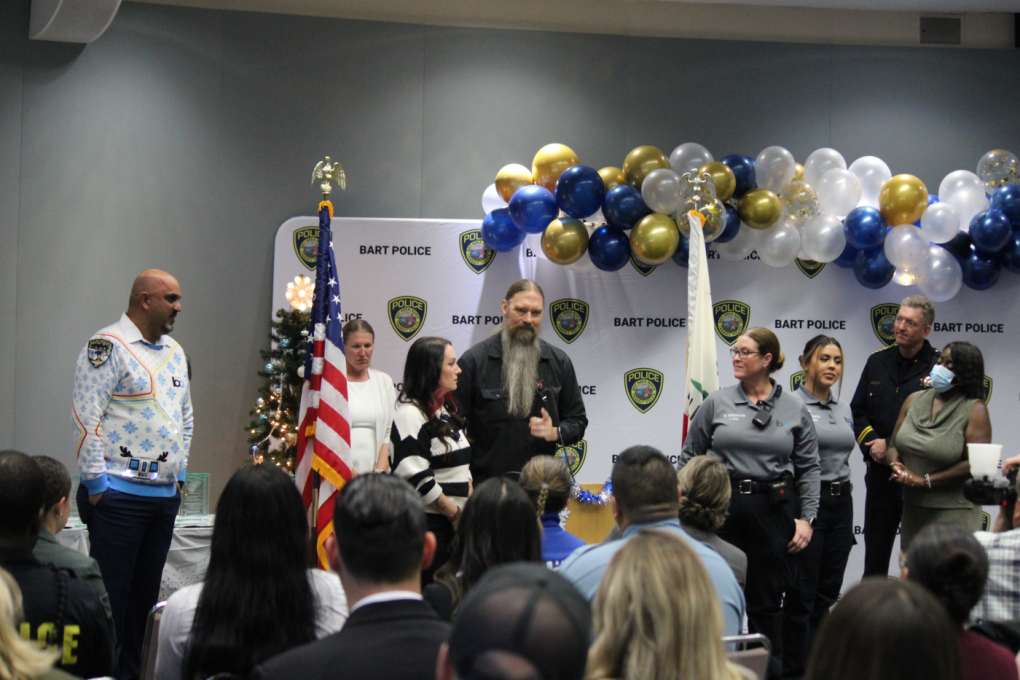
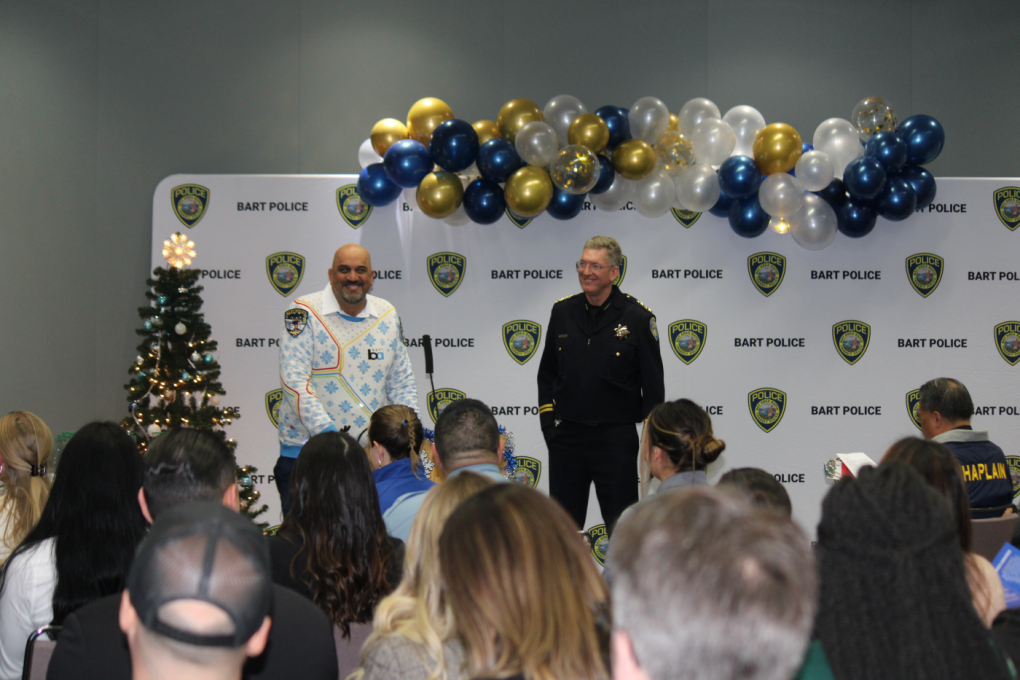
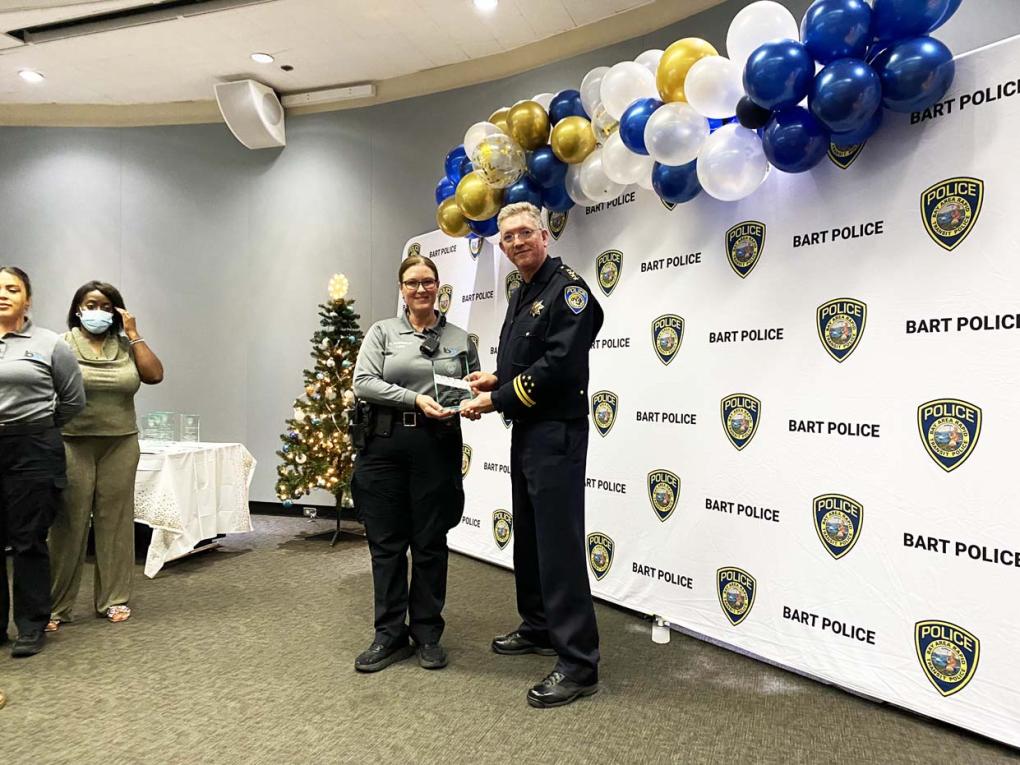
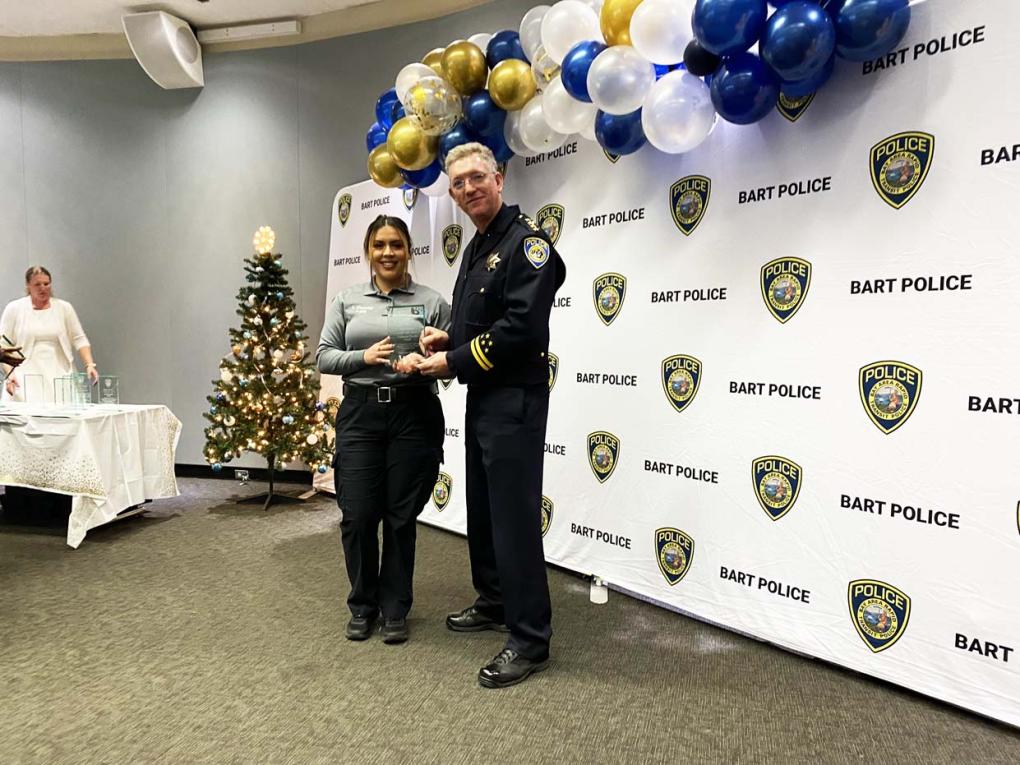
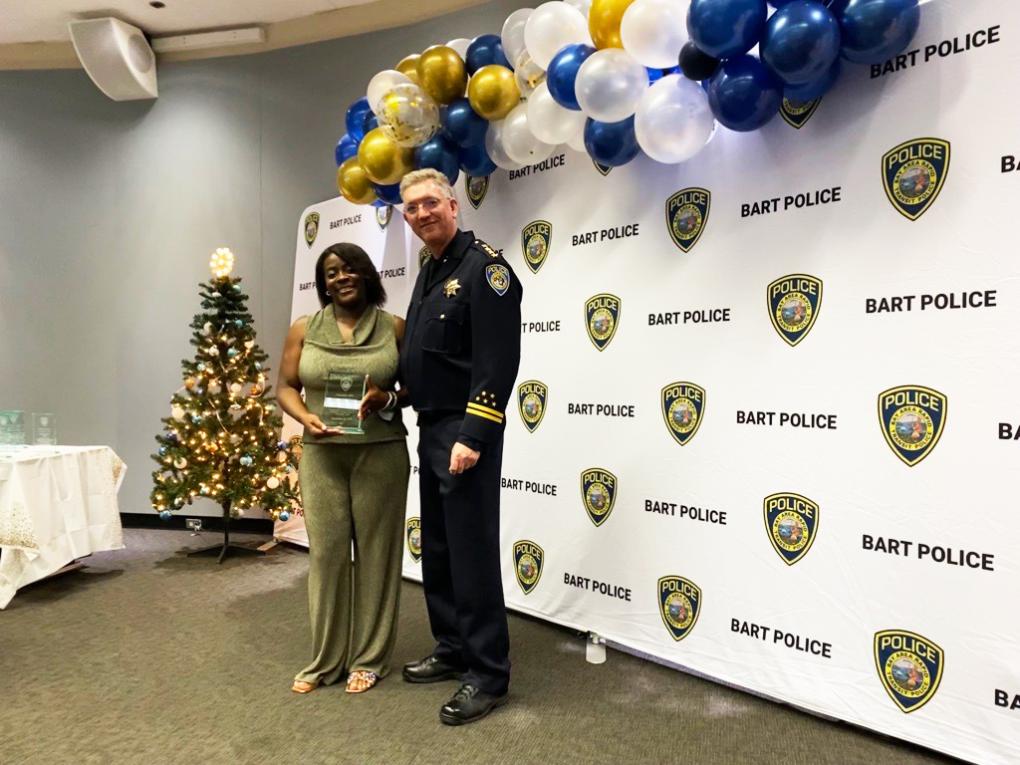
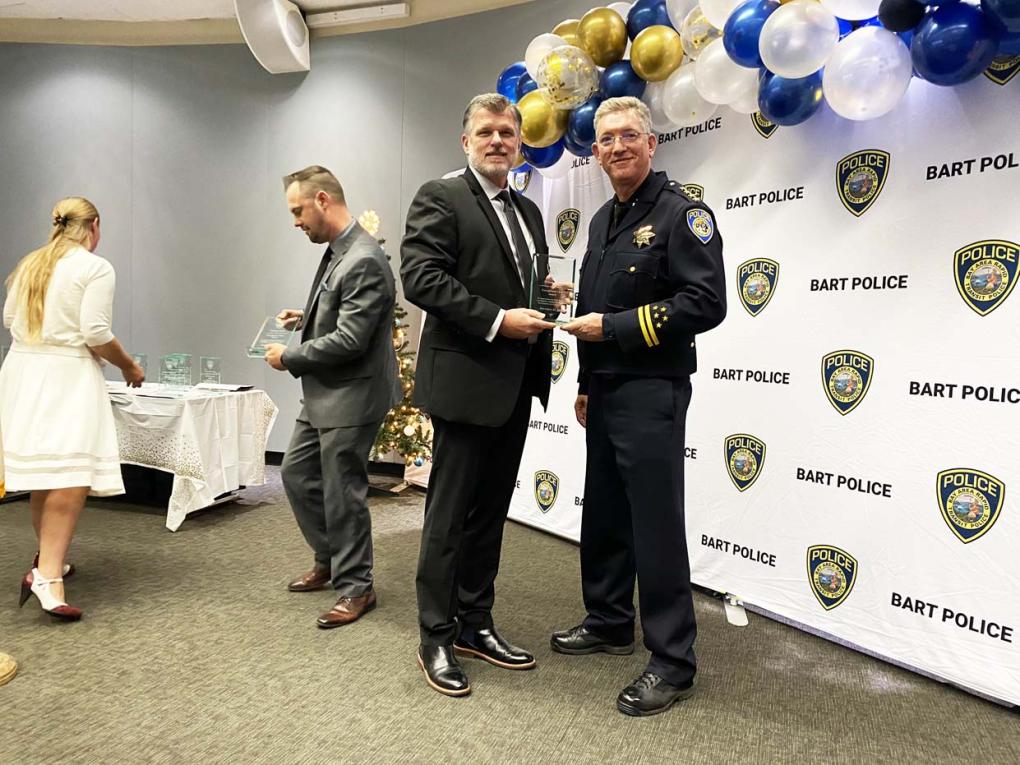
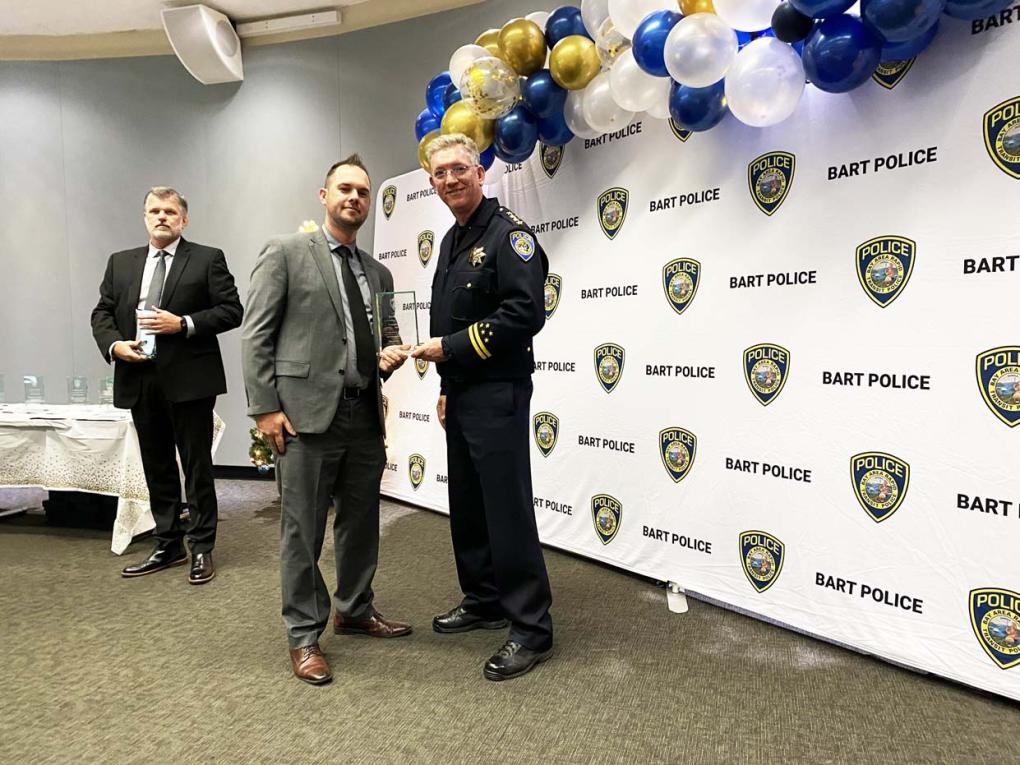
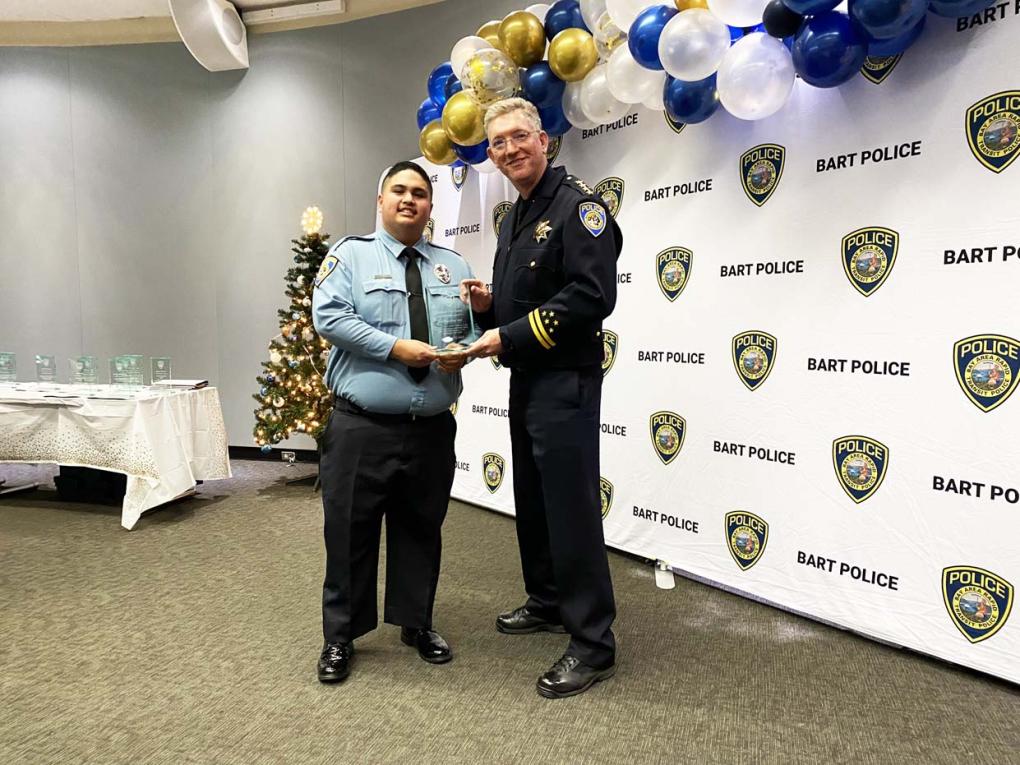
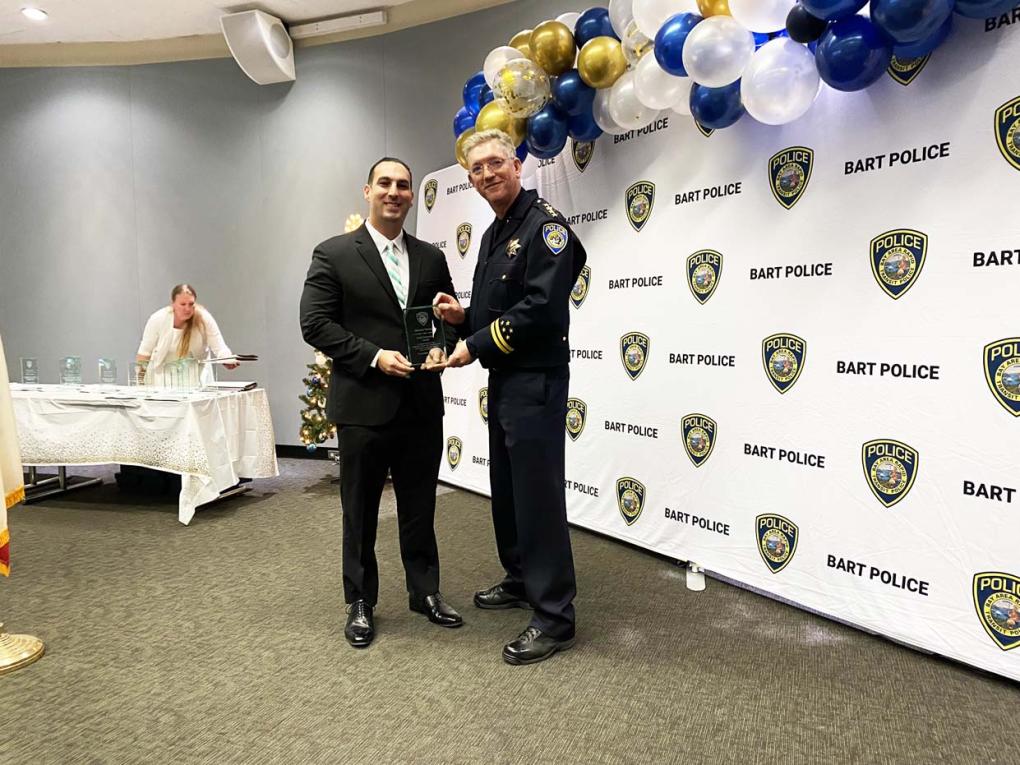
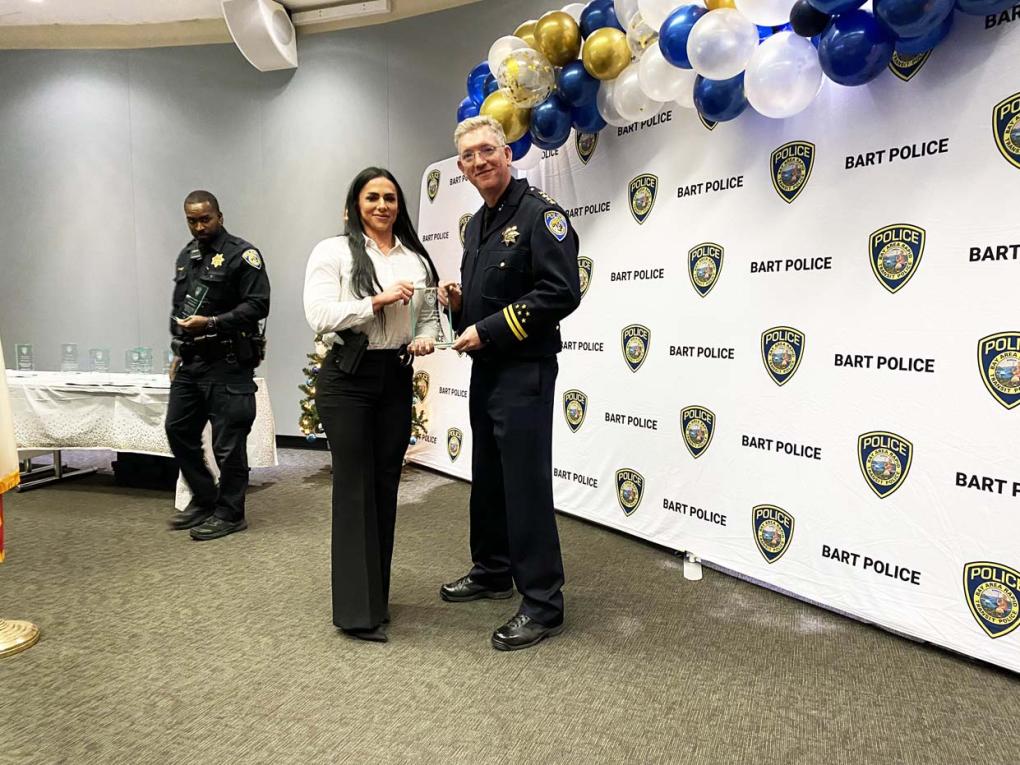
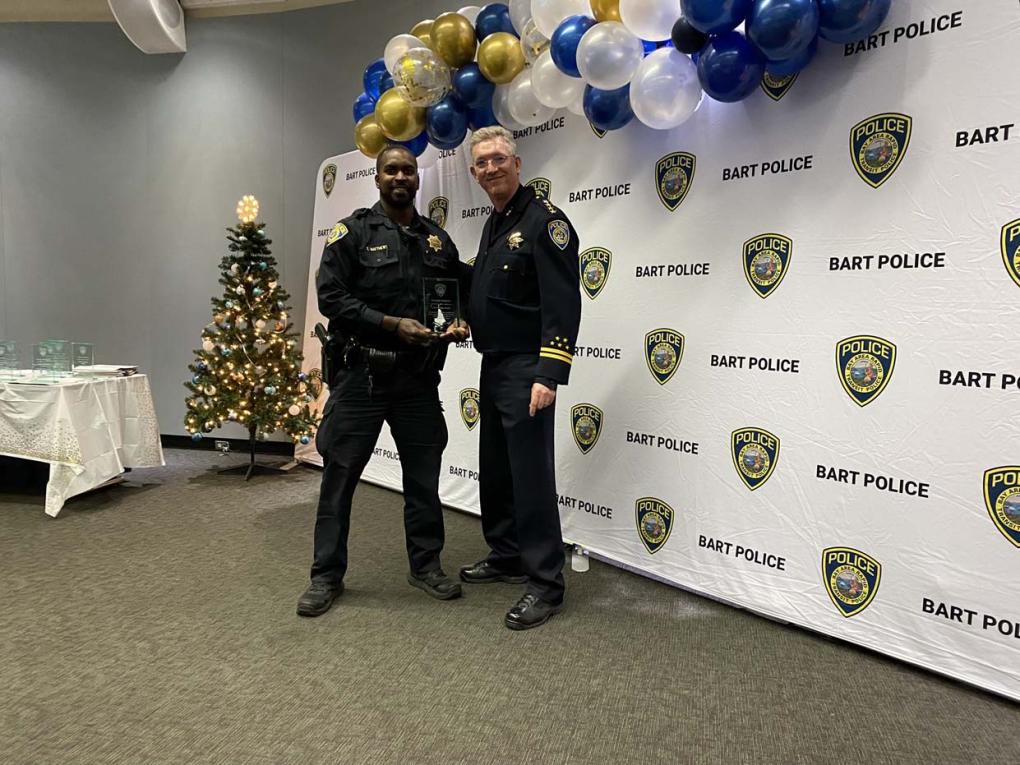
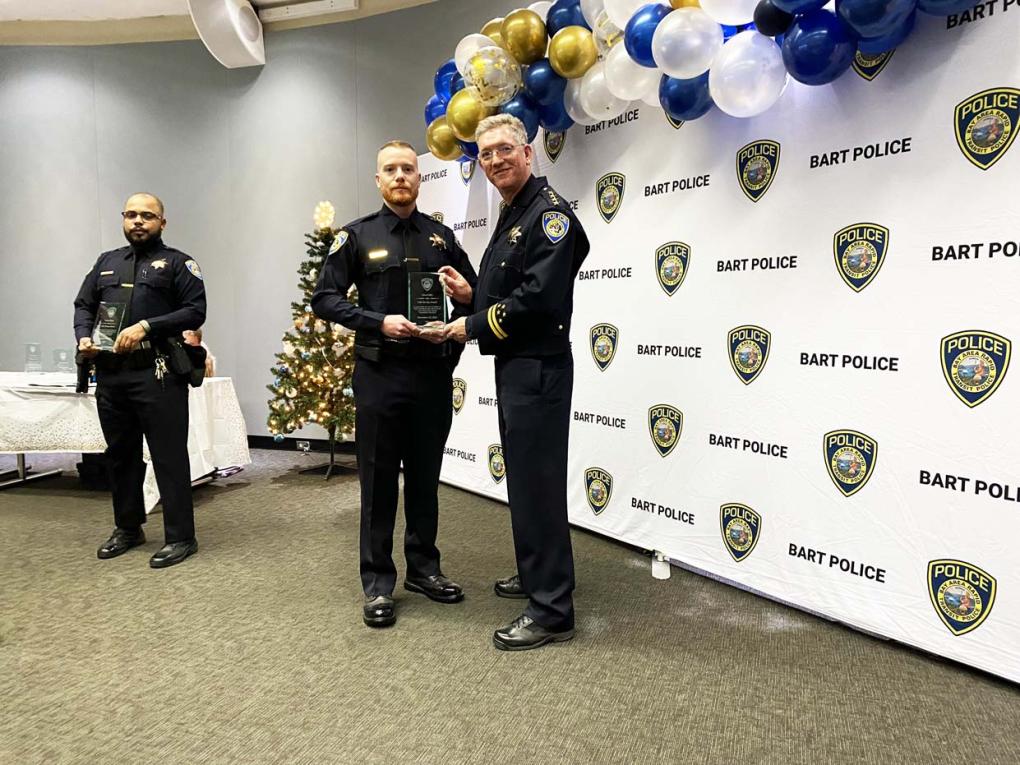
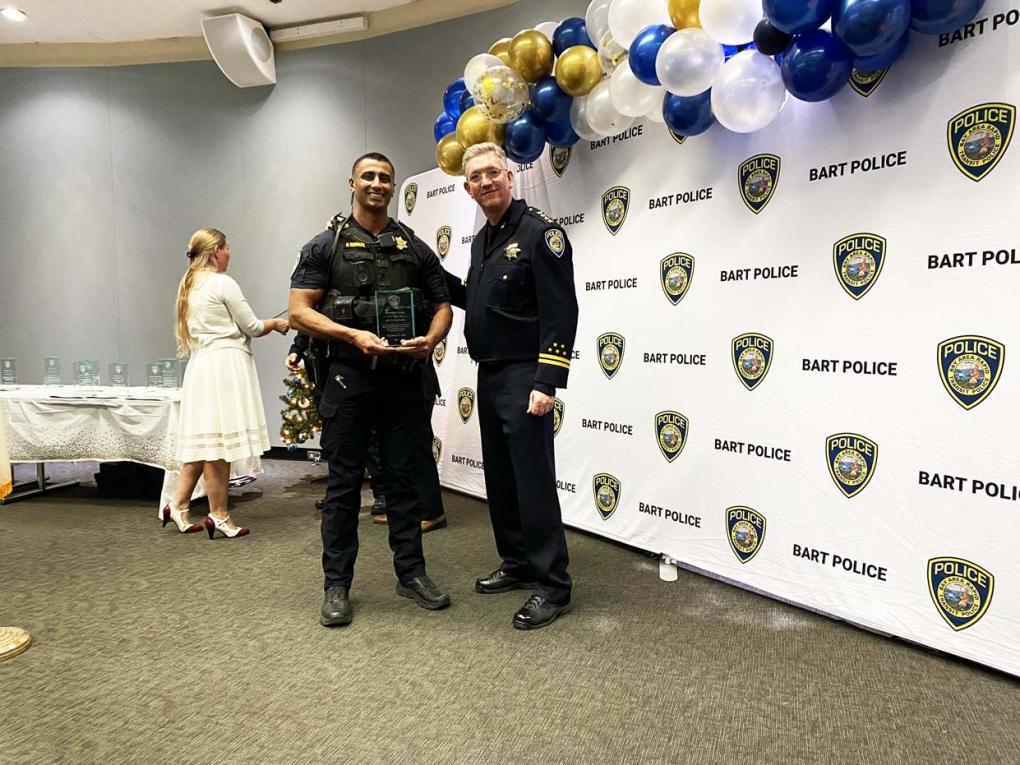
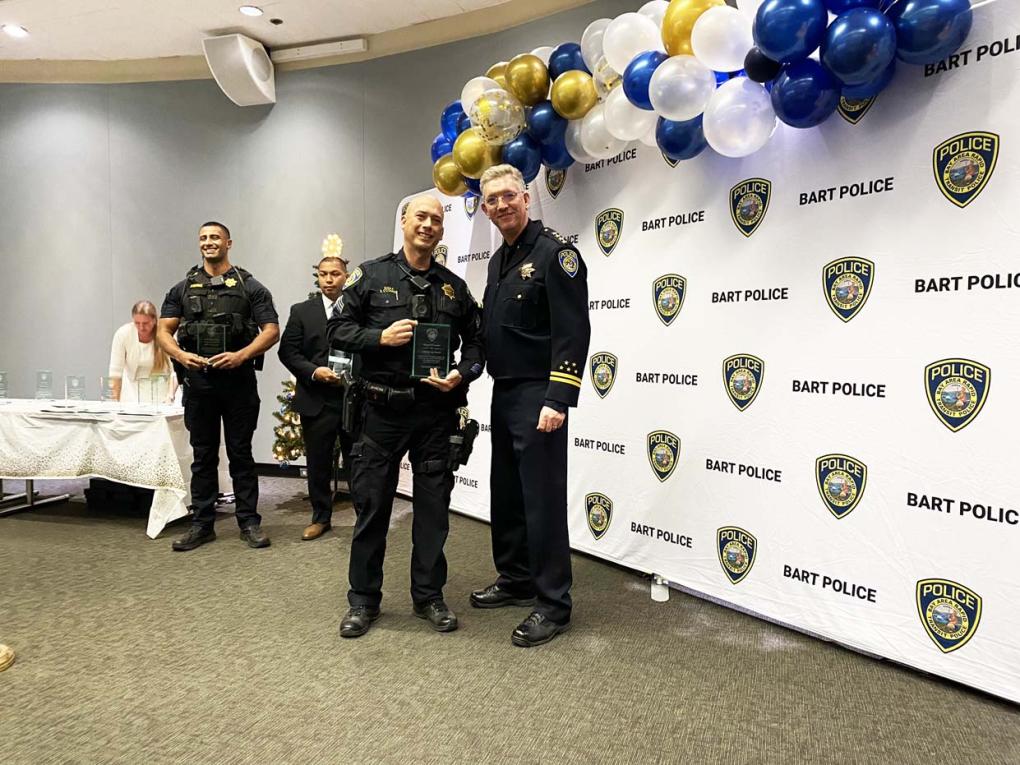
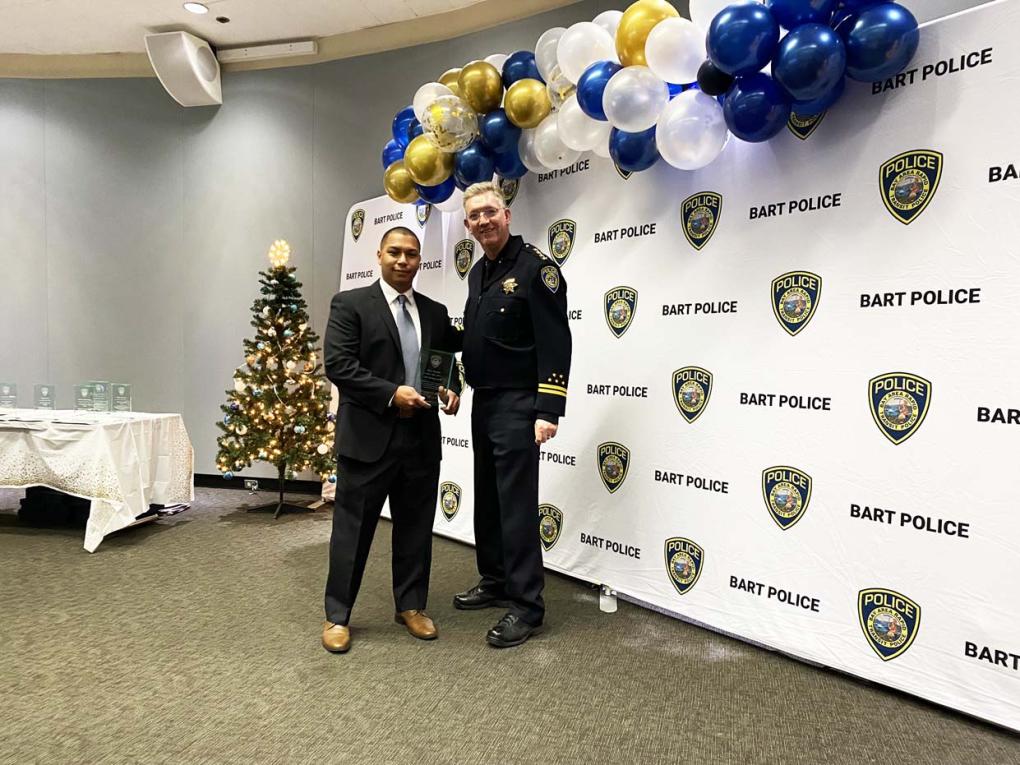
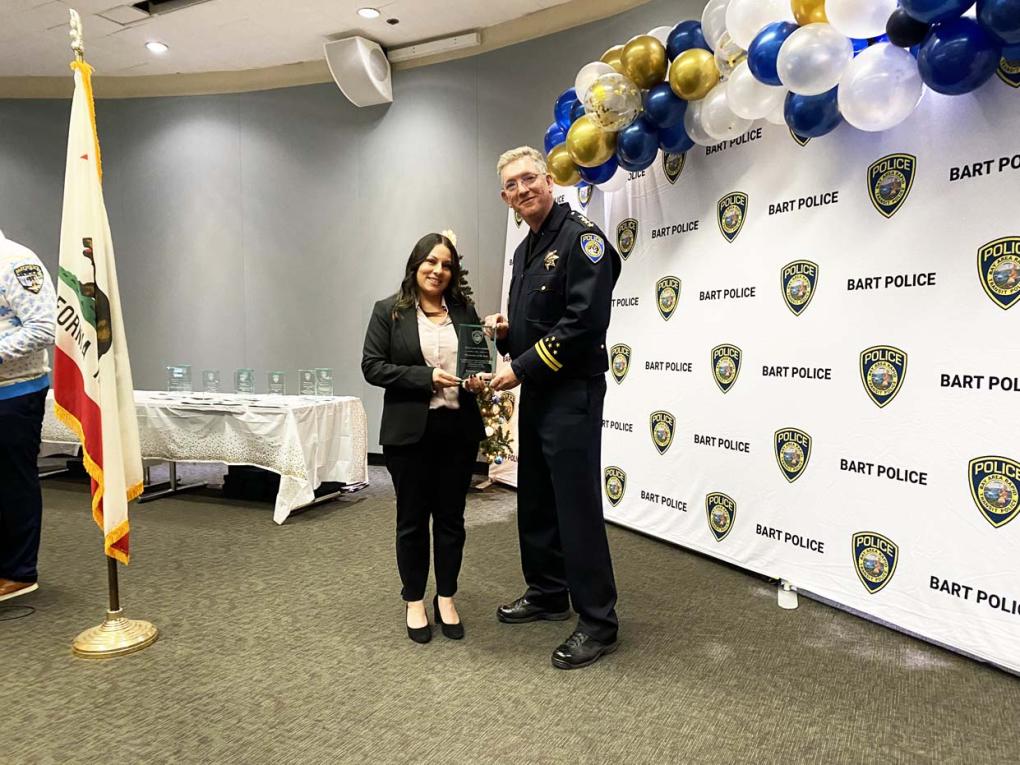
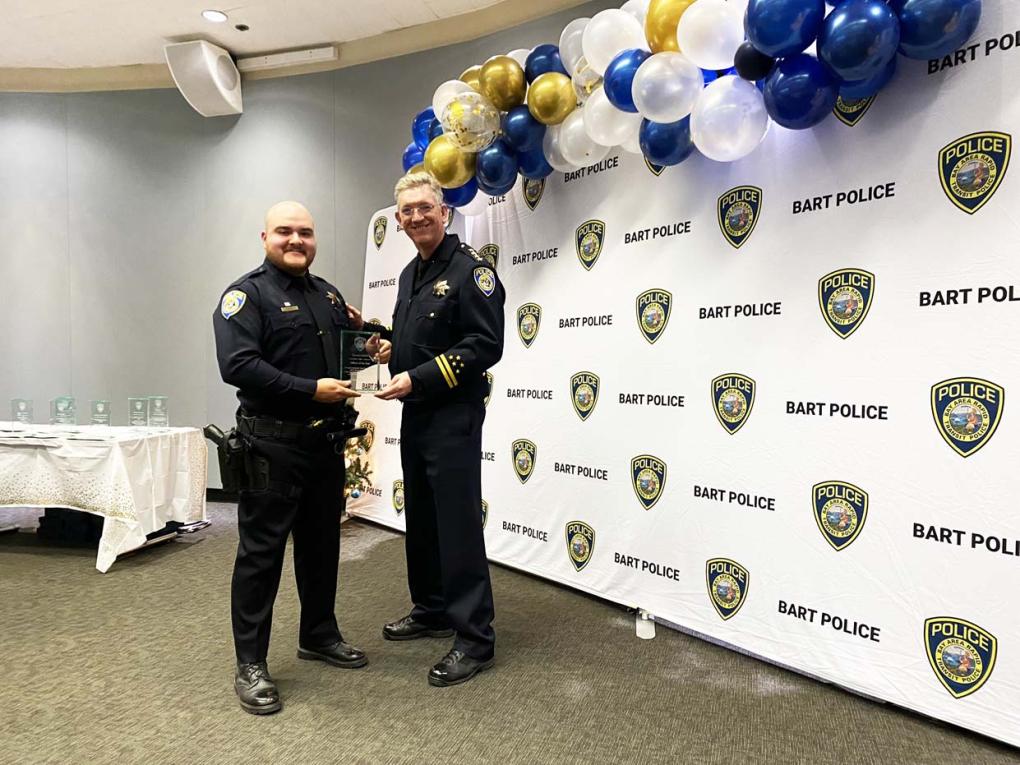
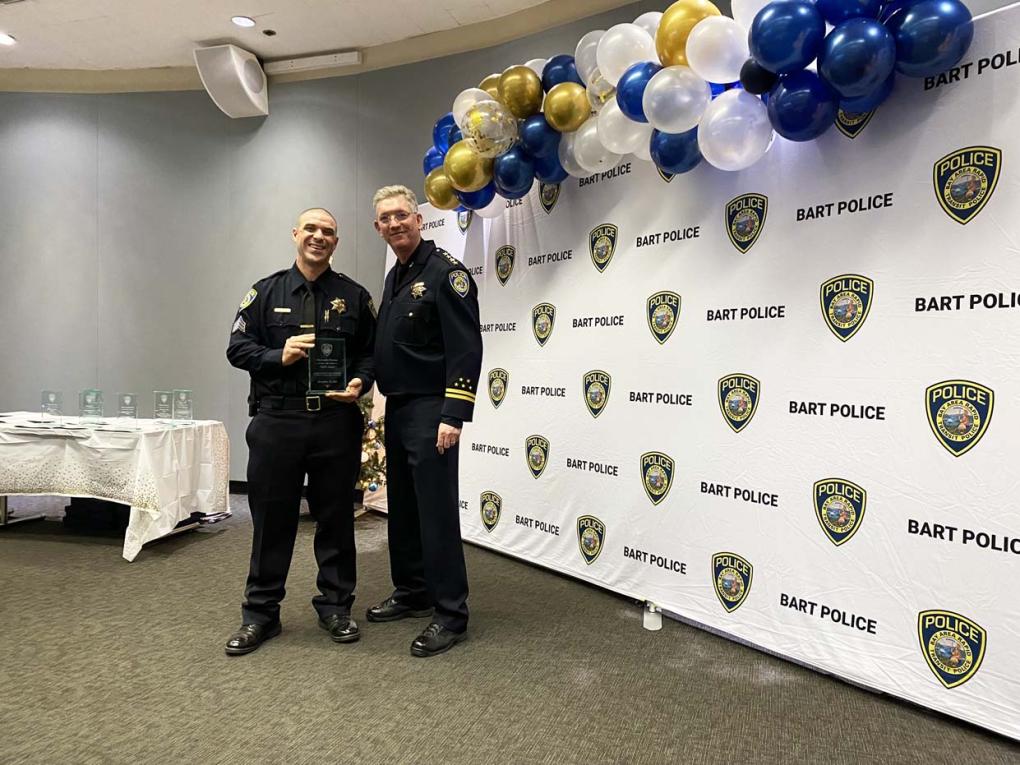
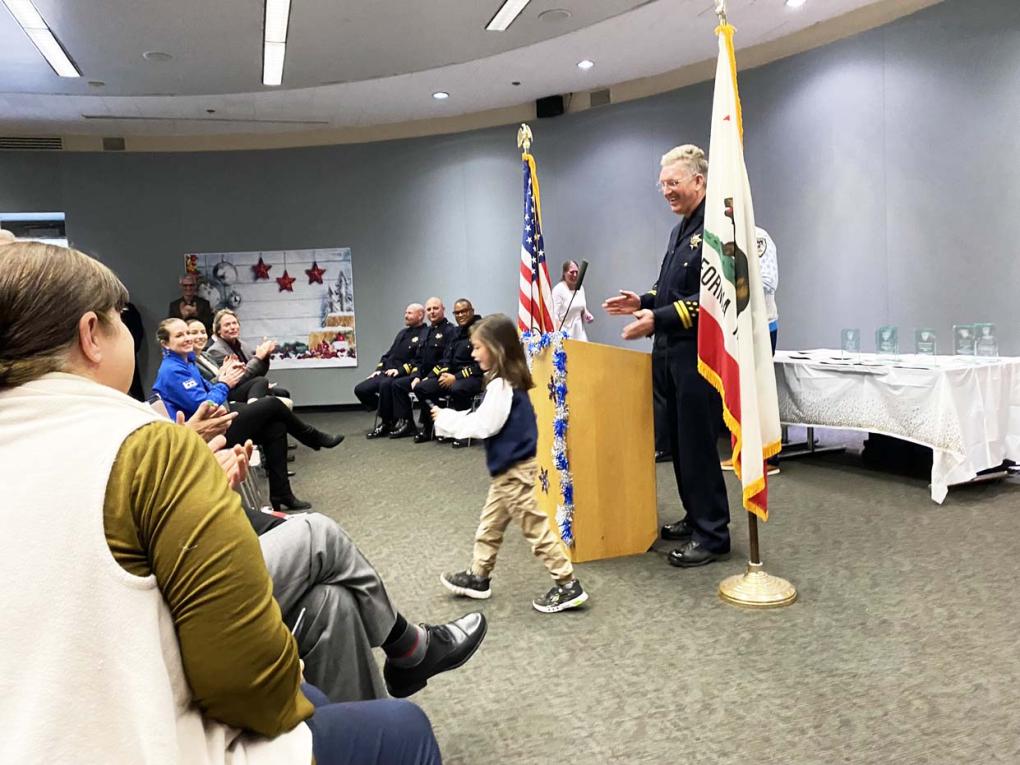
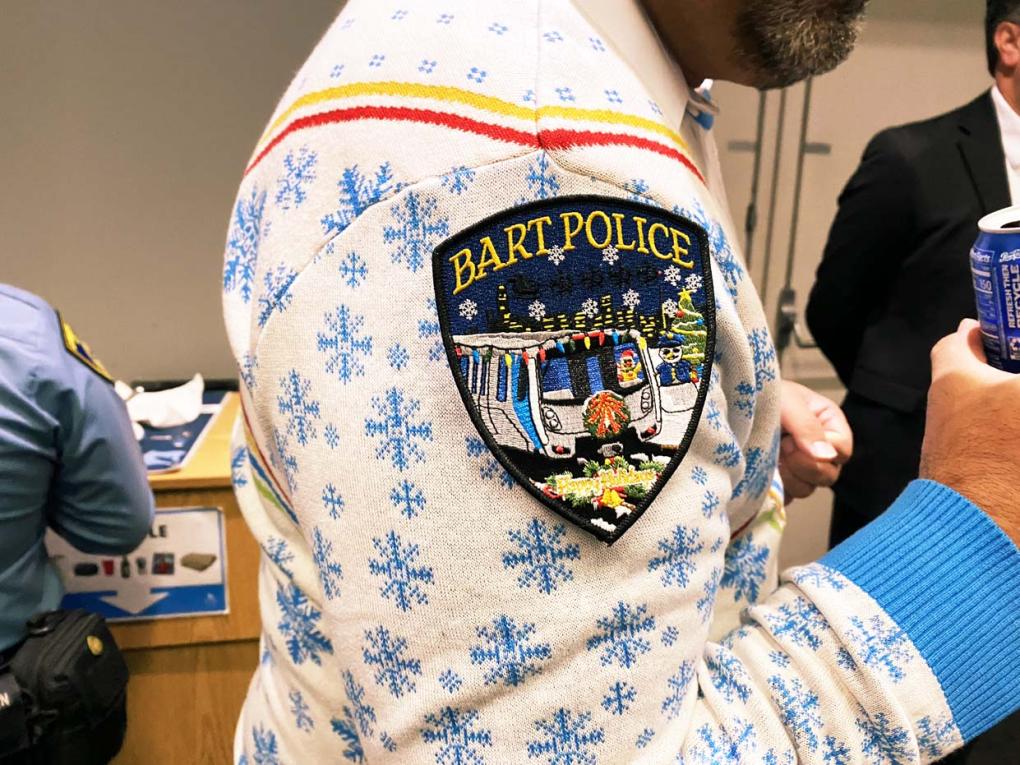
On Tuesday, Dec. 12, the BART Police Department hosted its 11th annual awards ceremony to honor the officers, civilians, and good Samaritans who went above and beyond to serve their community over the past year. View photos of the honorees in attendance in the above slideshow.
There was a heavy heaping of holiday cheer in the air as department members gathered with their families in a festive room, decorated with balloons and trees trimmed in BART’s blue and white colors. The jovial master of ceremonies, Lieutenant Jesse Sekhon, came dressed in a new BART holiday sweater, embellished with holiday-themed BART Police patches.
Chief of Police Kevin Franklin opened the ceremony by welcoming attendees, including recently retired BART Police Chief Ed Alvarez, to the standing-room-only gathering and recognizing department members who were working shifts during the celebration. Franklin began his remarks by defining some of the many changes the department saw in 2023, including a redeployment strategy that has more than doubled the presence of sworn officers on trains.
Franklin also cited the department’s immense recruitment efforts to fill officer vacancies. In June, the BART Board of Directors approved an agreement that increases police officer salaries to put the department’s pay on par with other Bay Area law enforcement agencies.
“Hiring is nonstop right now,” Franklin said.
Following Franklin’s remarks, the presentation of colors, and the chaplain’s invocation, Sekhon – the lights of his holiday sweater blinking – took to the mic to begin the awards ceremony. All honorees were nominated for their awards by their colleagues.
The first honoree was Crisis Intervention Specialist (CIS) Amnesty Afholderbach, who was recognized with the Community Service Award for her “vigilance, awareness, and quick response,” which has resulted in numerous apprehensions and many lives being saved throughout the system. Her peers and supervisor said she represents the ethos and philosophy of community-oriented policing “to the fullest.”
The second Community Service Award recognized CIS Natalie Robinson, CIS Ciaundria Allen, and CIS Leslye Chavez for their efforts to offer services to a specific group of individuals who often visited Castro Valley Station. One of the individuals, Harley, is the son of a BART employee.
On Sept. 25, 2023, Harley walked into the station in search of CIS Robinson. He said he was ready to get help for his drug addiction, which had led to him living on the street. CISes Robinson, Allen, and Chavez coordinated with Harley’s parents, BART foreworker Bryan Snyder and Melissa Snyder, to coordinate paperwork and insurance information and help to arrange travel to the treatment program. The CISes saw him off at the train station. They even packed him food for the journey.
Speaking at the ceremony, Bryan Snyder announced that his son has been sober for 80 days. Attendees clapped and cheered at the news, with many wiping tears.
“We are so lucky to have crossed paths with them. They saved our son,” Melissa Snyder said of the CIS team.
Robinson said the Snyders are “like family to me now," and that she and her team members receive regular updates on Harley’s condition.
“We’re cheering him on,” Robinson said. “It’s heartwarming to know your work is making a difference.”
The emotional presentation of the Community Service Award was followed by the conferment of the Exceptional Case Award, honoring Detective Michael Polcar, Officer Miguel Tellez, and Detective William Baker for their fast work in apprehending a murder suspect just over an hour after the suspect committed the crime.
Community Service Officer Eufracio “Ace” Lanta, who was hired just a year ago at twenty years old, was then named Civilian of the Year for his proactivity and eagerness to support fellow department members. Sekhon noted that for the first time in BART Police Awards history, Lanta’s nomination came from multiple sergeants and officers.
Three members of the public were recognized with the Good Samaritan Award: William Hannigan, Cynthia Christian, and Shawyan Moosavi. Sekhon said the group sprang into action in December 2022 to restrain a suspect on a train until police arrived. Moosavi was in attendance to collect the award.
The Life-Saving Award honored Sergeant Shaun O’Connor, Officer Prabhdeep Chehal, Officer Teaundre Matthews, Officer Frances Shannon, Officer Michael Roman, Officer Justis Miller, Officer Travis West, Officer Glen Eddy, and Officer Marc Mabalot. In January, the officers worked together and demonstrated creativity and quick-thinking to ensure a man was brought to safety from the trackway.
Three awards followed, including Patsy Lara-Hernandez being named Dispatcher of the Year. Lara-Hernandez was commended for always maintaining high spirits in the dispatch center as well as her ongoing efforts to train new employees. She brought a special guest to the ceremony – her new baby.
Officer of the Year Garrett Dibble was recognized as a standout member of the department for his exceptional work ethic, his regular volunteering efforts, and his passion for police work. “I have no doubt that this will be the first of many recognitions in his career,” Sekhon said. After the ceremony, Dibble noted that the award “is a career accomplishment for me."
The final honoree was Sergeant Christopher Plumley, who was honored with the Chief’s Award. Plumley was commended for helping to further define and expand his role as Administrative Patrol Sergeant as well as assisting in the creation of the department’s redeployment plan, which he helped roll out in March 2023.
After the ceremony, Plumley said it “means a lot to be recognized, but it’s always a team effort.”
“We’re a family when we come in each day, and a family when we go home,” he said. His words provide a neat summary for the spirit of the awards ceremony and the department ethos at large.
Congratulations to the 2023 BART Police Award Winners
Community Service Award: Crisis Intervention Specialist (CIS) Amnesty Afholderbach, CIS Natalie Robinson, CIS Ciaundria Allen, and CIS Leslye Chavez
Exceptional Case Award: Detective Michael Polcar, Officer Miguel Tellez, and Detective William Baker
Civilian of the Year: Community Service Officer Eufracio “Ace” Lanta
Good Samaritan Award: William Hannigan, Cynthia Christian, and Shawyan Moosavi
Life Saving Award: Sergeant Shaun O’Connor, Officer Prabhdeep Chehal, Officer Teaundre Matthews, Officer Frances Shannon, Officer Michael Roman, Officer Justis Miller, Officer Travis West, Officer Glen Eddy, Officer Marc Mabalot
Dispatcher of the Year: Dispatcher Patsy Lara-Hernandez
Officer of the Year: Officer Garrett Dibble
Chief’s Award: Sergeant Christopher Plumley