
Search Results
They chatted in the Transbay Tube in 1983. This fall, they celebrate their 41st wedding anniversary
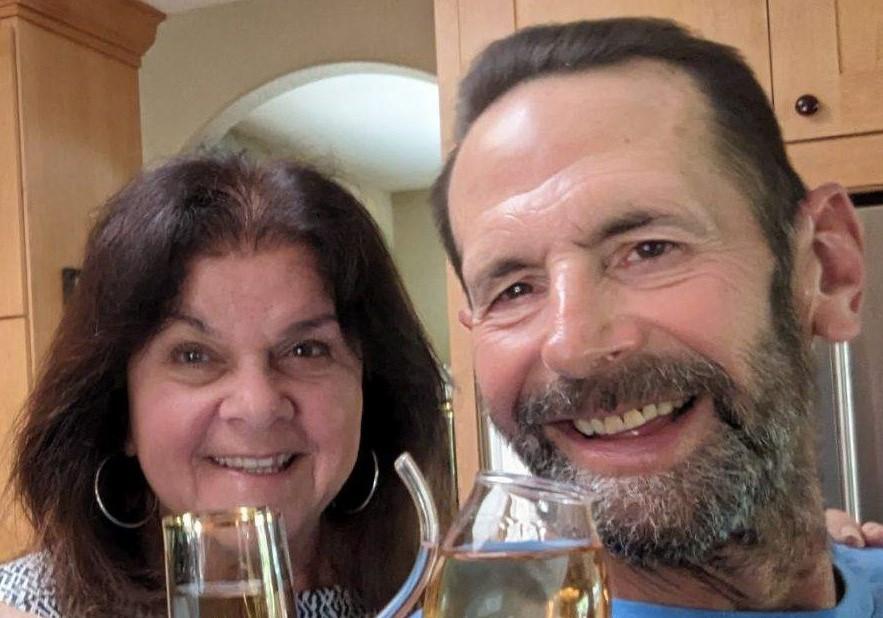
Cindy and Jeff, who celebrate 41 years of marriage this year after meeting on BART, smile in a recent photo.
It was 1983. BART was pretty new to the Bay Area and so was 23-year-old Cindy when she stepped onto a BART train that would change her life.
A few months before this BART ride, Cindy’s company had transferred her from Phoenix to their offices in San Francisco’s Transamerica Pyramid. Everything was different and new and exciting in the glittering city by the bay. Nonetheless, Cindy quickly realized Armistead Maupin’s Tales of the City was rooted more in reality than fiction when it came to the local dating game.
“I dated some interesting people when I got here,” Cindy said, laughing.
It was the Friday before Memorial Day and a sunny spring day in the city – a refreshing reprieve from that winter’s record-setting rains – and Cindy was out with coworkers at a bar on the Embarcadero.
“Back then, they’d let you go early on Friday afternoons before a holiday weekend,” she said. “And that meant happy hour.”
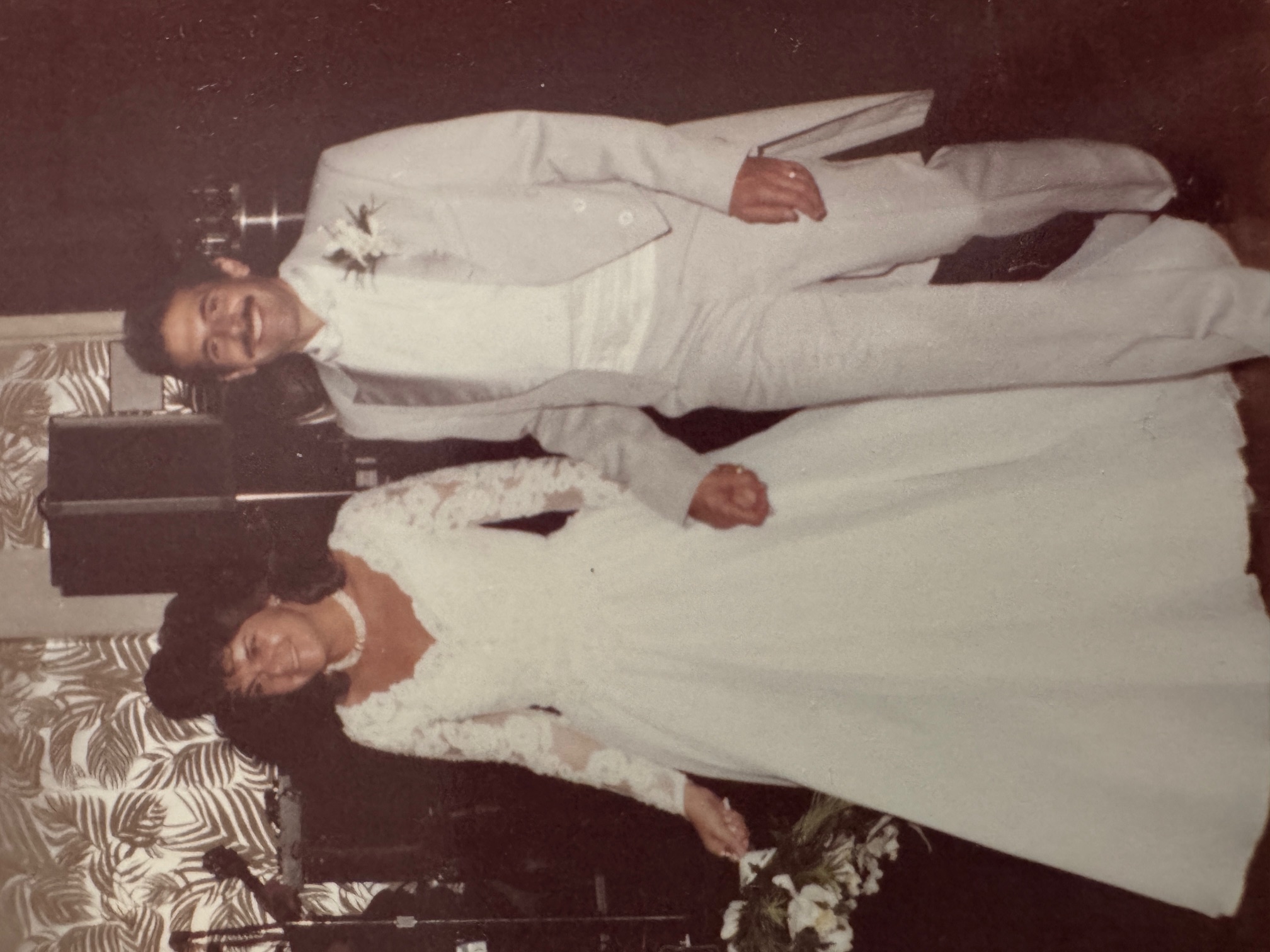
After some cocktails and gossip, Cindy bid her coworkers farewell and walked to Embarcadero Station, catching an eastbound Yellow Line train.
The train car was packed that evening, and Cindy – her feet aching from too many hours squished into heels – couldn't find a seat.
“Why didn’t I bring flat shoes today?” she said aloud, speaking more to the universe than any person in particular.
But then a human voice responded: “Why don’t you just take your shoes off?”
The voice belonged to a young man hanging onto the strap beside Cindy. The two struck up a casual conversation as the train began its underwater journey through the Transbay Tube: “Where are you headed? Are you from here? What do you do for work?”
“He told me he grew up in the Bay Area and had just moved back, and I told him how I’d just been transferred to work in the Transamerica Pyramid,” Cindy said.
After chatting the entire way, the man got off at Lafayette, and Cindy continued her journey to Walnut Creek, where she was meeting coworkers for a “continuation of happy hour.”
At that second bar, Cindy offhandedly mentioned she met a nice guy on BART. Her colleagues – most of whom were married and eager to set up the new girl in town – pestered her with questions. “Did you get his name? His number? Anything?”
“Nope,” Cindy said. And that was that.
Actually, that wasn’t that. Fast forward to the following Wednesday, and Cindy gets a call from the Transamerica receptionist on her floor.
“Did you meet someone on BART last Friday?” she asked.
“Uh why?” Cindy replied.
According to the receptionist, a man had just stopped by with a bouquet of flowers and a note with his phone number, signed “Jeff.” He told the receptionist to deliver the flowers to “the girl who just moved to San Francisco from Phoenix.” He provided no further identifying information.
After picking up the bouquet, Cindy returned to her desk, picked up her landline and called the man named Jeff.
The two set a date for that Friday night. They started out at the Washington Square Bar and Grill and then went to dinner at St. Pierre’s in North Beach. They were the first patrons at the restaurant and the last to leave. At the end of the night, they walked together to the BART station.
“After that first date, I thought the guy definitely had potential,” Cindy said.
Cindy’s early intuition was spot on. She and Jeff were engaged that April, less than a year after meeting, and married that October. Seven years later, they welcomed a baby girl, and three years after that, a baby boy.
This fall, Cindy and Jeff celebrate their 41st anniversary. Four decades later, they’re still head over heels.
So many people have found love on BART! Read some of our past BART meet cute stories:
BART attorney met the love of her life on San Francisco-bound train
BART Connects: A transit wedding happened naturally for these newlyweds
Couple who met on BART tie the knot with whimsical BART-themed wedding at Fairyland
"Good vibes on the train": BART employee takes BART to wedding ceremony at San Francisco City Hall
“BART Guy” and “BART Girl” finds love on an empty Embarcadero platform
Rider alert: Major Transbay Tube delays on weekend of June 4-5
PRESS CONFERENCE VIDEO FROM FRIDAY, MAY 27 The first weekend of critical maintenance work on the Transbay Tube went according to plan, with another round coming up the weekend of June 4-5. The maintenance means major delays and additional transfers for some customers going through the Transbay Tube.
Sustainability Action Plan 2026-2035
Speedrun Records
Fremont Transit-Oriented Development
First phase of Transit-Oriented Development underway at El Cerrito Plaza Station
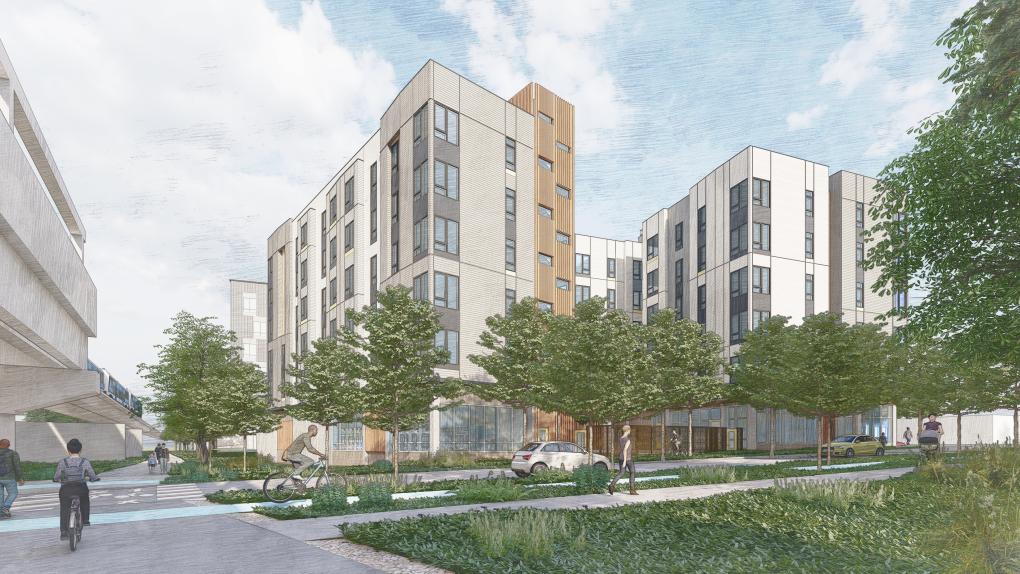
On Thursday, March 5, leaders from BART, the State of California, the City of El Cerrito, and development partner Related California celebrated the groundbreaking of 70 affordable apartments at the El Cerrito Plaza BART Station, marking the official start of construction on the first phase of a transformative Transit-Oriented Development (TOD). This milestone is the first in a multi-phase effort that will ultimately transform approximately 6.5 acres of underutilized BART parking lots into 743 new apartments.
In addition to the new homes, the broader master plan includes a 22,000 square foot public plaza spanning from Liberty Street to the BART station, 20,000 square feet for a potential public library, up to 2,100 square feet of commercial space, secure bike parking, a new bus zone, and 145 parking spaces for BART riders in a new garage. Funding related to the TOD will also improve the surrounding area’s bike lanes and street parking management.
Phase One – the Parcel A South building – will construct 70 homes for qualifying low-income individuals and families earning 30% to 60% of the Contra Costa County Area Median Income. Construction on Parcel A South began in November 2025 and is expected to take approximately two years. Future phases will follow as funding is secured, building toward a vibrant, walkable community centered on transit.
“This project exemplifies what we can accomplish when transit, housing, and community priorities align,” said BART Director Barnali Ghosh, whose District 3 includes El Cerrito Plaza Station. “By building high-quality, affordable homes right next to BART, we make it easier for families to thrive while reducing traffic, emissions, and long commutes, strengthening both our neighborhoods and our regional transportation system.”
“This groundbreaking reflects years of collaboration between the City of El Cerrito, BART, and our development partners,” said El Cerrito Mayor Gabe Quinto. “As a designated Pro-Housing City, El Cerrito is committed to expanding housing opportunities through projects like this that support sustainability, reduce car dependency, and create vibrant, walkable communities near transit, retail, and schools. This development advances the City’s goals by providing housing at a range of income levels while helping meet our region’s housing needs.
“The El Cerrito Plaza development represents an incredible opportunity to leverage BART-owned land to connect residents to jobs and amenities, promote increased BART ridership, and reduce greenhouse gas emissions,” said Ann Silverberg, President and CEO of Related California Affordable. “Alongside our partners, we share a clear vision to help more residents stay in the Bay Area by strengthening the connection between affordable housing and transit. This first phase moves us closer to a vibrant, mixed-income neighborhood that will serve El Cerrito for generations.”
El Cerrito Plaza is one of several major TOD projects that BART is advancing across its system, designed to generate ridership and contribute to the agency’s long-term financial sustainability, strengthen local economies, and provide equitable access to opportunity.
BART’s TOD program delivers well-designed, mixed-use, higher-density housing and community amenities adjacent to BART stations. TODs help reduce household transportation costs and environmental impacts while boosting transit ridership and supporting regional housing goals.
From McDonald’s and Dennys to trains and trackways: How working in food service formed top engineering manager Ni Lee’s work philosophy
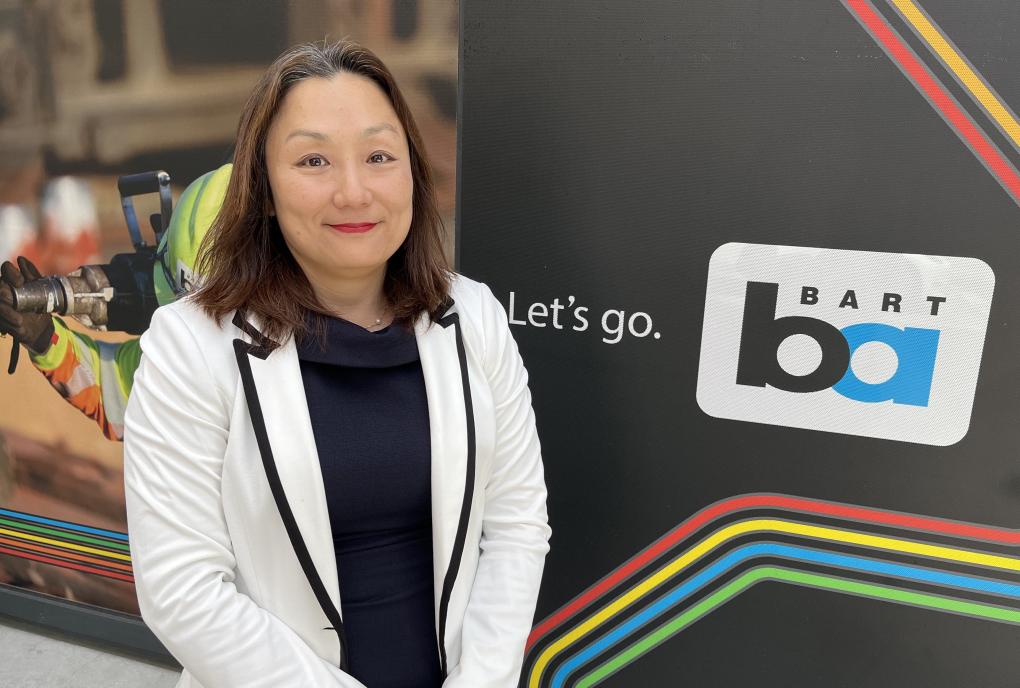
Ni Lee, PE, PMP, Group Manager and Deputy Project Director for VTA’s BART Silicon Valley Phase II Project, pictured outside BART Headquarters in Oakland.
In 16 years at BART, Ni Lee, PE, PMP, has been promoted six times. At this rate, she’s averaging a promotion every 2.67 years.
The secret to her success?
“Much of what I know,” she said, “I learned as a food server.”
Ni started working in food service when she was in middle school, serving donuts at a local shop. In the years that followed, she worked at a smattering of restaurants in both Taiwan, where she was born, and California. The list includes McDonald’s, Applebee’s, Chili’s, and Dennys, to name a few. Her last job in the industry was working as a server at California Pizza Kitchen in Emeryville.
Lee’s current work environment is quite different than those she grew up in. Now a top engineering manager, Lee says much of what she knows about working and managing others crystallized while she was waiting tables and daydreaming about what her future might hold. Writing a book about her restaurant days is on her “secret bucket list.”
Lee is the Group Manager and Deputy Project Director for VTA’s BART Silicon Valley Phase II Project. It’s a big job with an admittedly long title. In the role, she manages a team of seven who are responsible for collaborating with the Valley Transportation Authority (VTA) throughout the phases of design, construction, testing, and commissioning of the Silicon Valley Phase II Project, emphasizing a strong commitment on safety and reliability.
Lee wants her staff to feel supported and empowered. As a leader, her goal is to foster a work environment founded on trust, one in which her employees have the right tools and guidance to be successful. Mentoring and supporting their growth is central to her management philosophy, and in her time at BART, she’s finetuned countless resumes and mapped out many a career plan.
But the teaching goes both ways, she said. In her conversation with BART Communications, Lee referenced a Chinese proverb: “三人行, 必有我師.” In English, the phrase translates roughly to: “When you’re in a company of three, you will find a teacher.”
“I believe that everyone’s my teacher – my supervisor, my peers, my teams,” she said. “I can learn something from anyone.”

Lee was raised between Taiwan and Southern California. Regularly switching between continents was hard. She had to constantly make new friends, and out of necessity, she admits she got pretty good at it.
“This was before the internet and cell phones,” she said. Long-distance calls were expensive, so Ni and her overseas friends sent each other notes in the post.
Lee's congeniality proved especially useful years later as an engineering student at UC Berkeley. She studied electrical engineering and computer sciences, and in one of her classes, there was an option to enter her team’s final project into a robotics competition. Their project was building a robot “to help socially awkward engineers make friends.”
“It would come out, do a little dance, and then say pickup lines in three different languages,” Lee said. Her favorite line was, “Hey baby, what’s your major? Is it looking good?”
Said Lee with a laugh: “We didn’t win.”
The project sparked a passion for robotics in Lee, especially the realm of autonomous vehicles (this was years before Waymos were cruising San Francisco streets). In her senior year, Lee founded and served as the first president of Cal Robotics, a student organization that fostered a community of robotics enthusiasts. The club doesn’t appear to be operating anymore, but Lee and her Cal Robotics colleagues undoubtedly paved the way for the many robotics clubs currently active on the UC Berkeley campus (the university even has a robotics lab now!).
While a student at UC Berkeley, Lee also had her first exposure to BART. She didn’t own a car, so “BART and AC Transit were always there for me.” Though she never did finish the autonomous vehicle she designed as an undergrad, “BART’s fully automatic,” she pointed out, and that satisfies the “geekiness in me."
Lee came to BART from the California Public Utilities Commission (CPUC). She worked closely with BART in her role and quickly realized that the BART staff she worked with “all radiated the same passion.” She wanted to be a part of it.
In 2008, Lee joined BART as a Safety Specialist in Operations Safety. Things snowballed from there. Since that first job, Lee has served as Senior Operations Safety Specialist, Manager of Operations Safety, Project Manager (this was a “pivot moment” for her career, she said), Manager of Engineering Programs, Senior Manager of Engineering Programs, and now Group Manager.
And who knows where Lee will soar from here? She's not totally sure either.
“I should know this because I do career plans,” she said. “Where’s my career plan, ha.”
Lee can say with certainty that she wants to continue mentoring people.
“I was afforded that by many, many people throughout my career,” she said. And she wants to repay the favor.
This story ends where it began. May is Asian American Pacific Islander (AAPI) Heritage Month, and Lee always celebrates the month with delicious meals shared with family, friends, and colleagues.
“I’m very honored and humbled that there’s an entire month dedicated to celebrating my heritage,” she said. “I’m grateful to the trailblazers who paved the way, and I do feel like I have an obligation to promote cultural awareness.”
Her favorite way to do so is through food, she said.
“The month encompasses so many diverse, rich cultures and histories,” she continued, and with that, many different cuisines and dishes and flavors.
“Who doesn’t love a variety of delicious and diverse food?” she said in closing.

BART wishes you a wonderful Asian American and Pacific Islander (AAPI) Heritage Month. More than 24% of BART employees are members of the AAPI community (as of May 1, 2024), and we want to honor and recognize the ways their heritages and cultures have contributed to BART and our region.
In celebration of the month, BART Communications interviewed Ni Lee, Group Manager and Deputy Project Director for VTA’s BART Silicon Valley Phase II Project. Lee discusses growing up between Taiwan and Southern California, the many lessons she learned working in food service, and shares her favorite recipe for hot pot dipping sauce.
BART celebrates heritage and diversity months throughout the year, and with stories such as Lee’s, we want to recognize some of the exceptional employees in our organization.
Read about another amazing AAPI BART employee, Crisis Intervention Specialist Caryl Blount on bart.gov/news.
And check out BARTable’s suggestions for celebrating AAPI Heritage Month near BART stations.
March breaks multiple records for post-pandemic ridership
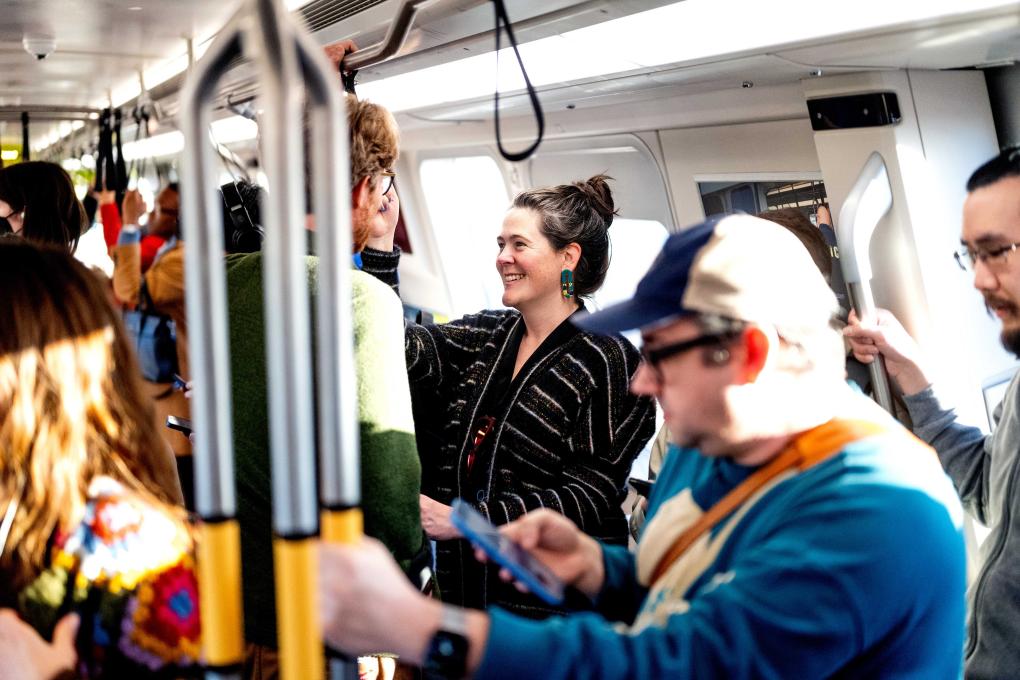
March saw highest monthly and weekday ridership and busiest single day
March marked a major milestone in BART’s ridership recovery; the system recorded its highest ridership month, highest average weekday ridership, and busiest single day since the pandemic. Saturday ridership also surged, rising 38% year over year, reflecting strong demand for weekend travel and major events across the Bay Area.
BART recorded 5,403,140 exits in March, making it the highest monthly ridership since the pandemic and surpassing the previous high set in October 2025 (5,346,890 exits). Ridership for the month finished 13% above budget and 20% higher than March 2025, continuing a steady upward trend seen in recent monthly reports.
The system’s busiest day of the post-pandemic era was March 25 (227,300 exits), coinciding with San Francisco Giants Opening Day 2026. The surge highlights BART’s ability to move large crowds efficiently to major regional events. The previous highest ridership day was February 5, 2026, during Super Bowl LX week, with 225,830 trips.
March also marked a key recovery benchmark as average weekday ridership exceeded 200,000 trips for the first time since the pandemic. This builds on prior highs, such as October 2025, when weekday averages approached 200,000, and signals continued return of riders for both work and everyday travel.
Weekend travel, especially Saturdays, saw some of the strongest gains. Average Saturday ridership rose 38% compared to March 2025, driven by major events including the San Francisco Chinese New Year Parade and No Kings Protest Day. The sharp increase reflects BART’s growing role beyond the traditional commute, supporting travel to cultural celebrations, civic happenings, and entertainment throughout the region.
March’s record-setting performance builds on steady gains reported in recent months. Find additional Monthly Ridership Snapshots here and daily ridership totals here.
Ridership gains alone cannot solve BART’s fiscal cliff
Despite record post-pandemic ridership, fare revenue still falls short of what is needed to sustain BART operations. Even with continued growth, ridership alone is not enough to close the funding gap, and a new funding source is needed.
BART faces a structural deficit of $350M to $400M, driven by long-term shifts in commute patterns, including remote and hybrid work. BART balanced the FY26 budget with $35M in ongoing cuts and cost controls. The FY27 deficit is $376M. BART is taking a number of actions to reduce the shortfall, including more expense reductions, but will need help to completely close the gap. More on BART’s fiscal cliff: bart.gov/fiscalcliff.
Final car of the original Fleet of the Future contract now ready for service
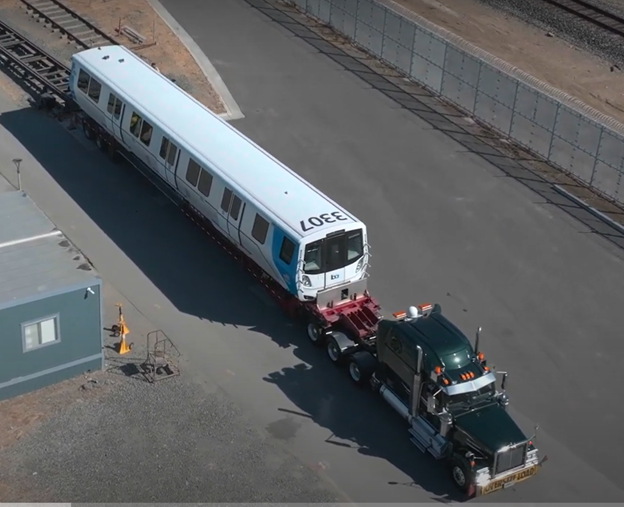
BART’s popular Fleet of the Future project has just completed one milestone, with the final car of the original contract now ready for service. The project is now entering its second phase. The last car of the original contract, car number 775, was officially certified for passenger service on Thursday, July 18th. Without missing a step, BART is now accepting cars from the second Core Capacity contract at the Hayward Test Track.
“It’s remarkable how much the new cars have changed the look and feel of BART for the better,” said BART President Bevan Dufty. “These cars are delivering on the promise of being more reliable, more modern and easier to enter and exit.”
In the six years since the first Fleet of the Future train first went into service, the new trains have gone from a surprising sight for riders to an everyday part of their trip. The legacy fleet was officially retired in April with a fond send off, but the fact is the new trains took over the system by replacing the old cars for all scheduled runs in September 2023.
The increased pace in production and delivery of the new fleet has been essential to the transition. Car manufacturer Alstom is now delivering 20 cars a month to BART, almost twice as many as the 11 cars a month stipulated in the original delivery schedule.
The quicker tempo of deliveries is one of the reasons the Fleet of the Future project is expected to come $394 million under budget. Another big cost saver was BART’s decision to have its own highly experienced staff do more of the engineering work in house. The project team, led by John Garnham, has included engineers who have successfully completed new rail car projects at other agencies.
With all 775 of the cars from the original contract now on board, BART is renewing its focus on the delivery and certification of an additional 306 rail cars for the Transbay Corridor Core Capacity Program (CCP). That’s a package of strategic investments that will allow BART to operate up to 30 ten-car trains per hour in each direction through the Transbay Tube.
An additional 48 cars, which will follow the 306 CCP cars, will serve Phase II of BART to Silicon Valley (BSVII) in the coming decades. The CCP cars and BSVII cars will bring BART’s total fleet to 1,129 rail cars.
“Getting to this transition point has been a true team effort,” said BART General Manager Bob Powers. “We’ve not only worked closely with the car maker to ensure the quality and reliability of the new cars, but we’ve created partnerships to make sure we have the funding to pay for these important investments.”
In addition to BART funds in the 775 Rail Car Project, many funding partners have made the Project possible, including:
- Federal Transit Administration (FTA)
- Metropolitan Transportation Commission (MTC)
- High Speed Rail Authority
- Strategic Growth Council/California Dept of Housing & Community Development
- California Department of Transportation (Caltrans)
- Santa Clara Valley Transportation Authority (VTA)
The Core Capacity (306) Rail Car Project is likewise supported by a coalition of funding partners, including:
- FTA
- MTC
- California State Transportation Agency (CalSTA)
- Caltrans
- San Francisco County Transportation Authority
- Alameda County Transportation Commission
The 48 BSVII rail cars are fully funded by VTA.
BART appreciates the support of all our funding partners in these regionally significant projects.