New trains, new security, new ways to pay
Download the New BART factsheet [pdf]
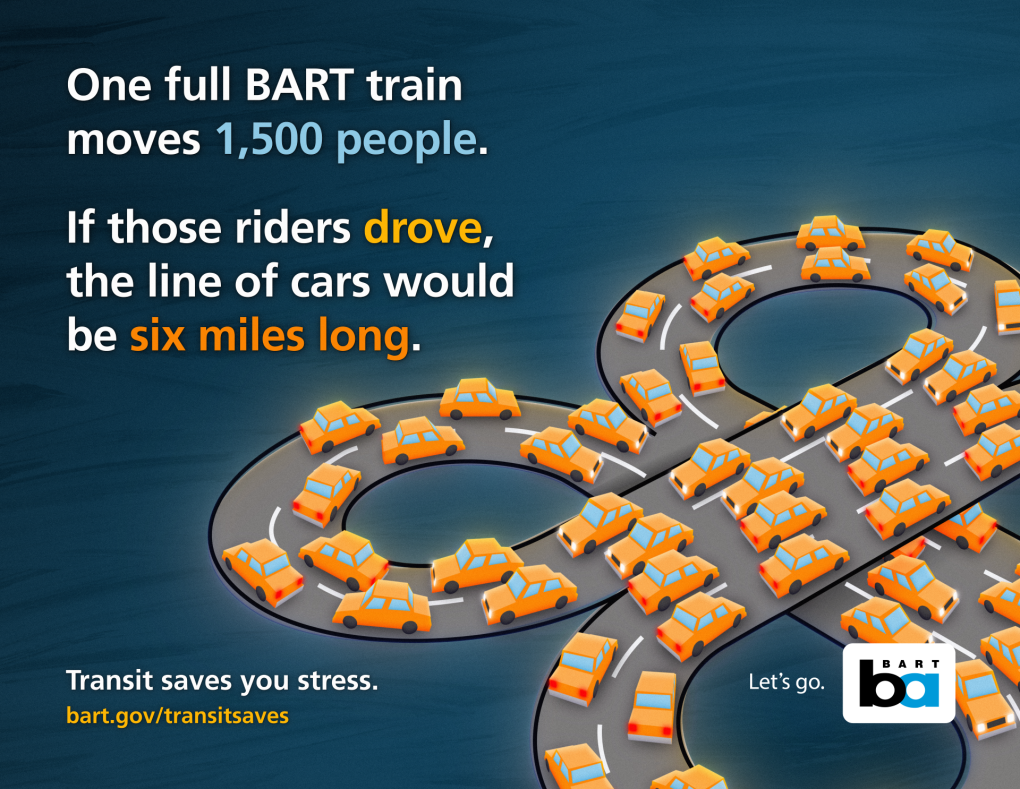
BART has changed. The New BART brings improvements that are moving the Bay Area in the right direction, strengthening the economy, and enhancing the quality of life for all who live here. Funding for BART service has also changed, and new investments are needed to avoid service cuts and station closures.
Clean & Modern Trains
BART’s new train cars are bright and spacious. The onboard digital screens make sure riders won’t get lost. They show the train’s location, upcoming stops, and where to transfer. Each car is equipped with updated surveillance cameras and emergency call buttons for safety. Wi-Fi has started to roll out at station and will then be deployed on trains.
New Fare Gates Make Riders Feel Safer
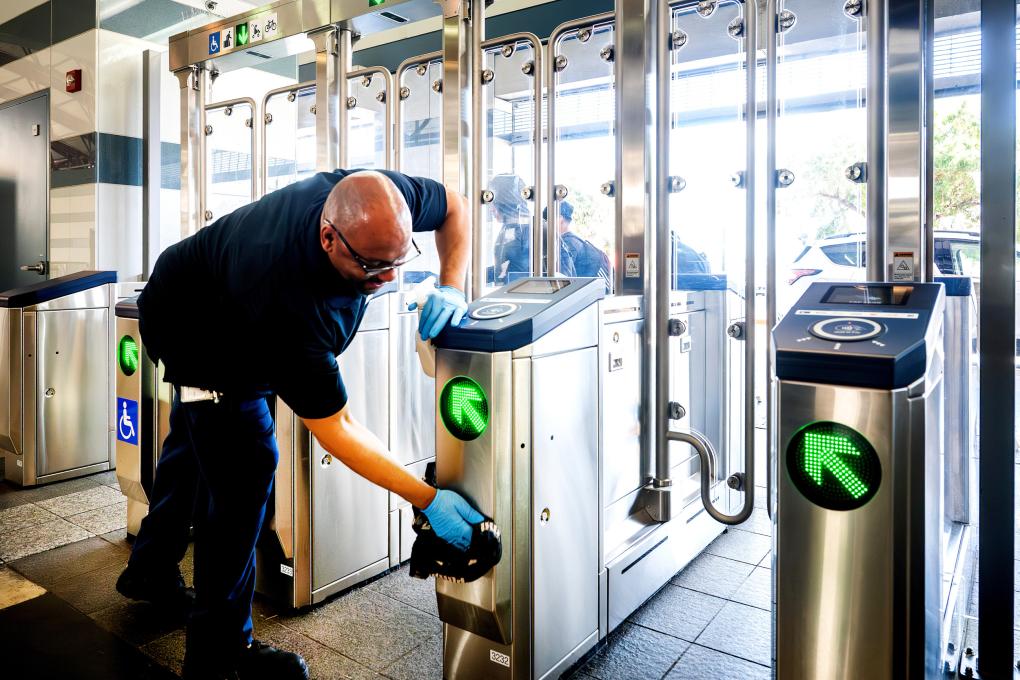
All 50 stations have taller, stronger fare gates that are adding new layers of security and discouraging unwanted behavior. There was a 961-hour reduction in time spent fixing vandalism, broken things, and cleaning up graffiti and large messes in the six months after installation. Fare gates are generating $10M in new revenue per year. Safety in stations and on trains has improved. The number of riders who say they witnessed someone not paying has dropped 59% in the last year. BART’s crime rate also fell 41% in 2025 as it delivered on its promise to put rider safety first by increasing police and staff presence.
Easier Ways to Pay
Riders can now pay for adult fare at the fare gates by tapping a contactless credit or debit card or with Apple Pay and Google Pay. New discounts arrive in 2026 that are automatically applied when transferring between transit systems. BART also offers Clipper BayPass, the region’s first prepaid, all-system transit pass, to employers, colleges, and affordable housing developments.
Big Changes from BART
- Customer Satisfaction: 90%
- Passenger On-Time Performance: 94%
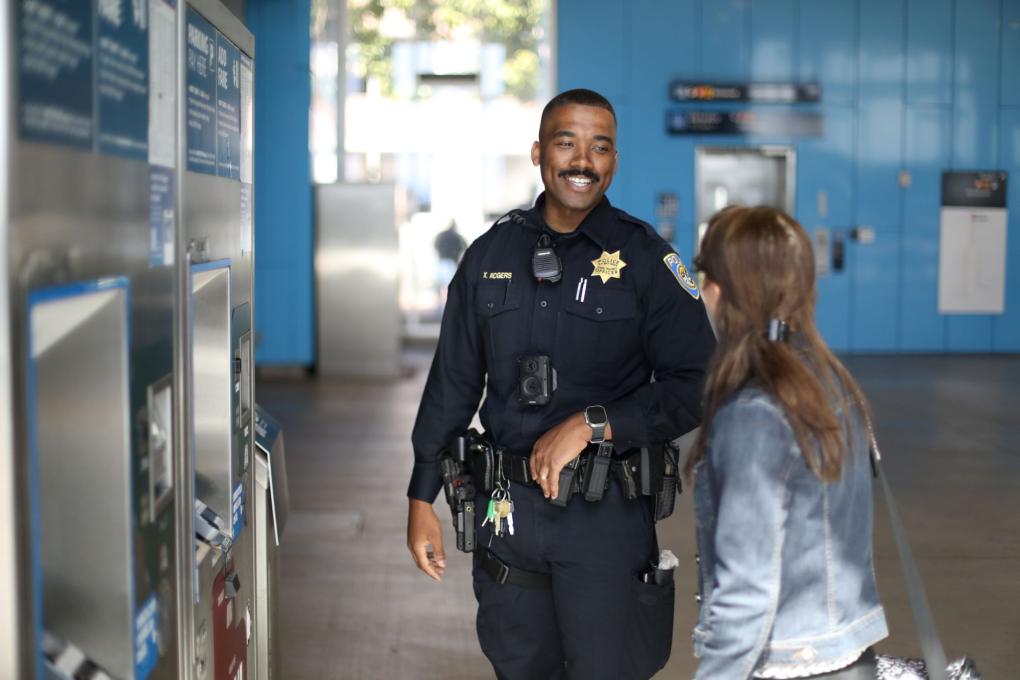
- Overall crime: down 42%
- Property crime: down 43%
BayPass expands revenue and ridership
In 2025, riders took nearly 1.8 million trips on BART using Clipper BayPass— more than double the number of trips taken in 2024. BayPass is the Bay Area’s all-in-one transit pass that provides free access to all bus, rail, and ferry agencies in the nine-county region. As of January 2026, 20 organizations have purchased BayPass for their employees and students. A study of three participating organizations (UCSF, Alameda TMA, City of Menlo Park) found that participants took 35% more transit trips in 2024 vs. 2023 after receiving Clipper BayPass. BayPass is generating $7M in new revenue per year and growing. By generating additional new ridership, the regional BayPass program has proven to be ridership and revenue positive for BART, a key component to making a transit pass work.
Rainy day? No problem
BART trains no longer run at reduced speed when it’s raining. Staff updated the train car braking software and made slight changes to train speeds at some locations to allow BART to run trains at normal speeds during wet weather. Trains still slow down at a handful of select locations near the end of the lines and in areas where the temperature dips below 36°F due to frost and ice. But these are short-lived delays; after a few trains run over the area, the rail quickly heats up enough to return to normal speeds.
It's not just for work anymore
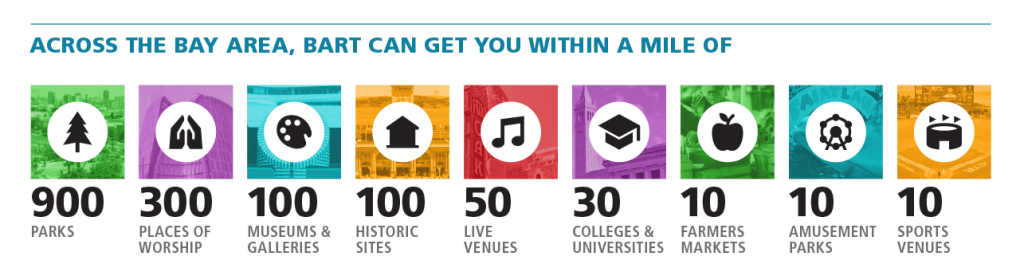
Riders are increasingly using BART outside of commuting hours to access fun experiences, from live music and sports to shopping and dining. Weekend BART ridership is growing faster than weekdays; in 2025, Saturday ridership grew 17% and Sundays 11%, compared to the previous year.
BART is encouraging off-peak travel with an innovative engagement strategy that includes hosting events in stations and on trains, partnering with more than 100+ community organizations, and highlighting BART-accessible experiences around the Bay on the BARTable website. These efforts are getting people excited about transit and emphasizing the many places the system can take them, all while building brand affinity and strengthening community ties.
The New BART needs new funding
BART’s funding model no longer works. Relying on passenger fares to pay for service is unfeasible due to hybrid and remote work trends. BART is helping itself with belt-tightening, internal cuts, efficiencies, and by increasing fares and parking fees. But BART needs new funding sources to continue running frequent, clean, and safe train service.
The progress BART has made in improving the system, and investing in the Bay Area, is at risk if sustainable funding is not secured.
BART benefits the Bay Area
- Traffic relief
- Lowers the cost of living
- Stimulates the economy
- Moves large crowds
- Reduces pollution
- Magnet for businesses and housing
- Mobility freedom for all ages
- Airport connections
- Increases travel options
- Needed in emergencies