
Search Results
Happy Halloween! Download our BART-themed stencils to have the best pumpkin on the block

This year, give your pumpkin a BARTy twist! We created eight BART-themed pumpkin carving stencils (from easy peasy to challenging) that you can download at this link.
Print 'em out and get carving!
If you post a pic of your pumpkin, give us a tag on Twitter (@sfbart) or Instagram (@sfbayarearapidtransit) so we can show it off.
Happy Halloween!

BART successfully completes installation of Next Generation Fare Gates at all stations months ahead of schedule
BART has completed the installation work on a milestone project that is already making the system safer. Next Generation Fare Gates are now in place at all 50 BART stations. BART promised to complete installation by the end of 2025 but beat that deadline by four months with the final gates being installed in August.
“This is the latest in a string of victories for riders that are transforming the daily BART experience,” said BART General Manager Bob Powers. “Since last year we have boosted our visible safety presence in the system, increased cleaning, gone to running only Fleet of the Future trains, became the first transit agency in the Bay Area to offer riders Tap and Ride, and now we have installed state-of-the-art fare gates that are already deterring unwanted behavior. Our riders say they want a system that is safe, clean, and user friendly, and we are responding with decisive actions.”
The number of riders who say they’ve witnessed someone fare evade on their trip has dropped by more than 50% in just the last year. In the latest Quarterly Performance Report, only 10% of riders said they saw someone fare evade. That’s down from 22% in the first quarter of Fiscal Year 2025. Reports of fare evasion have been dwindling as Next Generation Fare Gates have been installed at more stations.
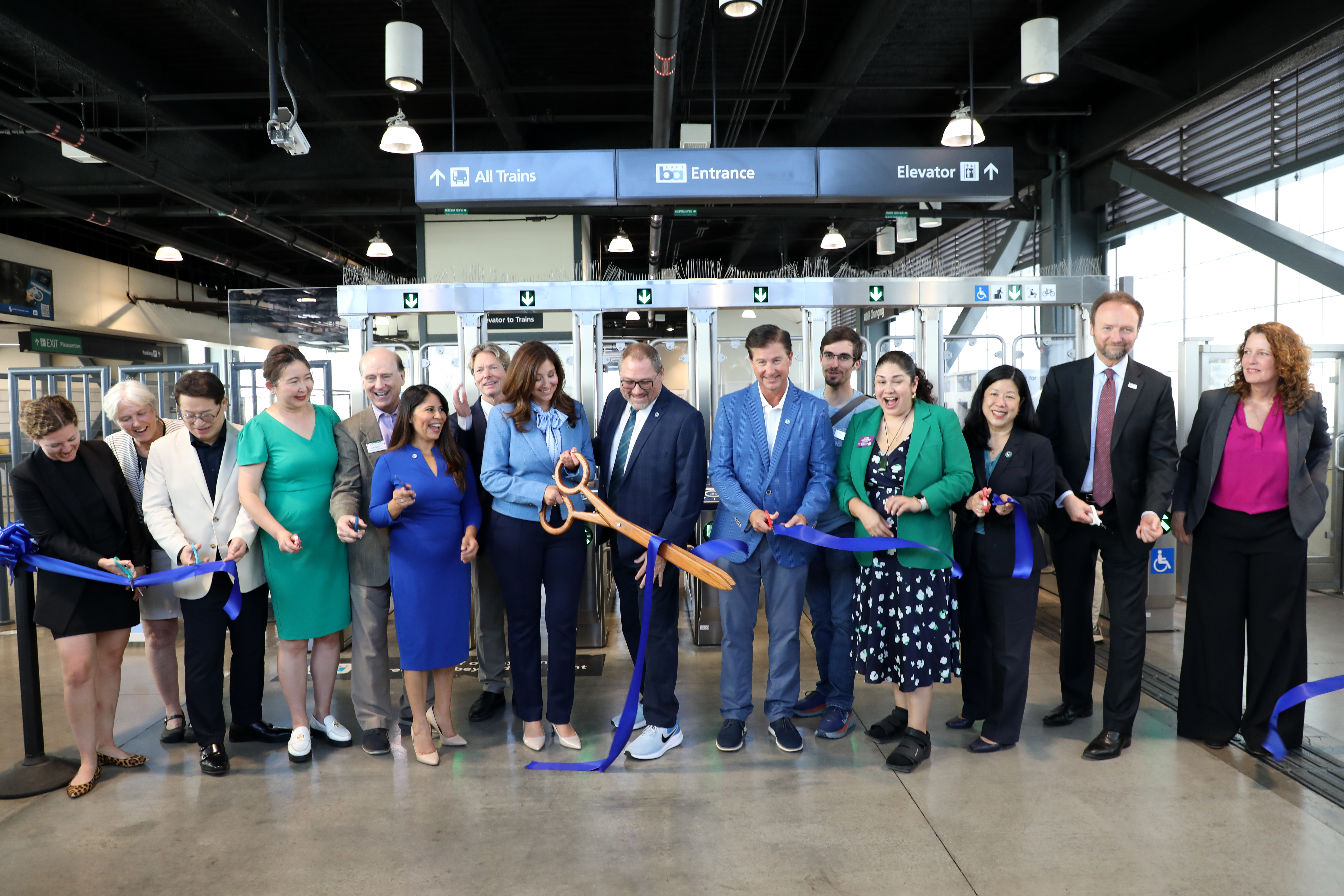
“The completion of the Next Generation Fare Gates project marks a major step forward in modernizing our system and enhancing the rider experience,” said BART Board Vice President Melissa Hernandez. “These new gates improve accessibility, safety, and efficiency, and reflect BART’s commitment to investing in the future of public transit across the Bay Area.”
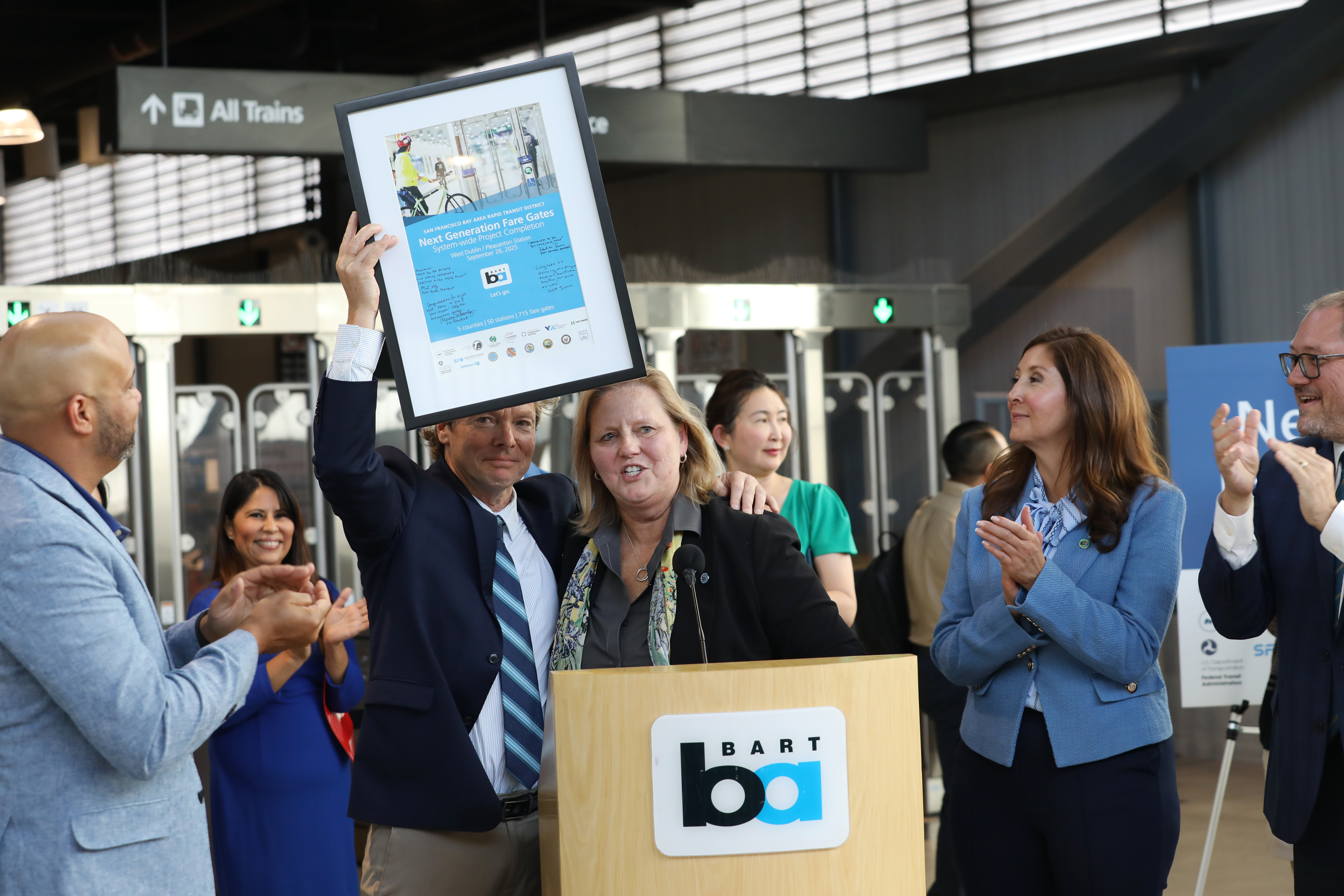
The gates feature a unique door locking mechanism that makes their swing barriers very hard to push through, jump over, or maneuver under. The overall fare gate array height (gate, console, integrated barrier) forms a barrier of 72 inches minimum to deter fare evasion.
“The gates deployed by BART are the only ones of their kind in the world,” said Sylvia Lamb, BART Assistant General Manager for Infrastructure Delivery and head of the fare gates project “Our team did incredible work to beat the installation deadline by several months. Now we will benefit from lesson learned over the last year through the experiences of hundreds of thousands of riders to focus on making these gates even more resilient.”
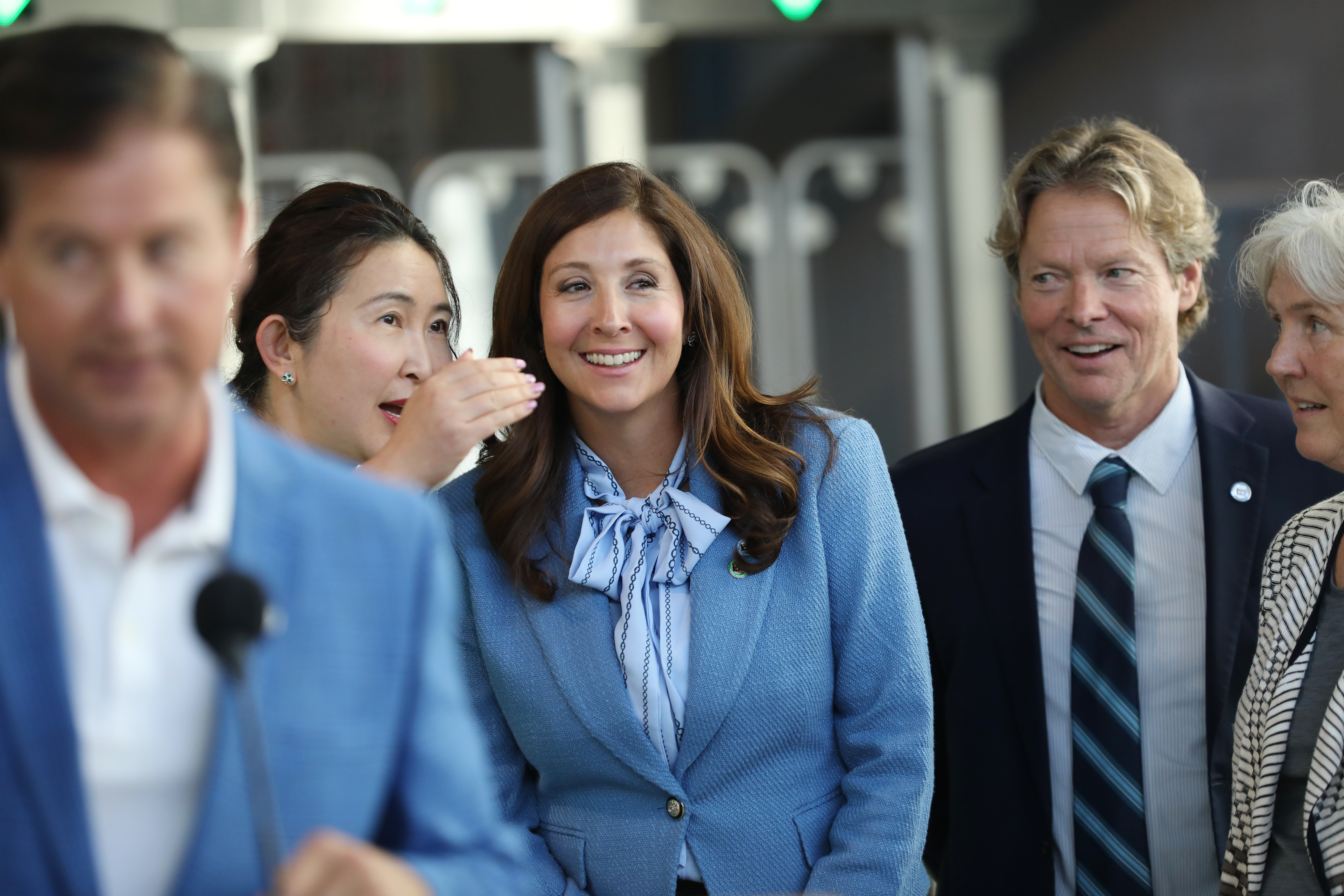
Upcoming work will focus on the full utilization of advanced sensors to make it harder for those who want to “piggyback” into the system by closely following behind paying riders.
BART replaced 715 fare gates across a system that spans five counties.
BART Board to discuss and adopt an Alternative Service Plan if new transit funding not identified
Feb 26, 2026 Update
On Thursday, Feb. 26, the BART Board of Directors adopted an Alternative Service Plan outlining specific budget balancing details to solve a $376M deficit for the next fiscal year if no new funds become available to BART. BART is facing a structural deficit of $350M to $400M because ridership is still down 50% compared to pre-pandemic levels and BART’s current funding model relies heavily on passenger fares. Get more details here.
Feb 17, 2026 Update
In response to feedback from some board members at the February 12 Board Workshop, staff will amend the budget balancing proposal for the scenario a November ballot measure fails and no new revenue becomes available to BART. The change includes moving the BART station closures from occurring during the second half of FY27 (January 2027) to instead take place in FY28 (July 2027 through June 2028). BART will use reserve funds to push the station closures six months. The other cuts, cost savings, fare increases, and layoffs outlined in the original proposal remain the same. The Alternative Service Plan the board will be asked to adopt as soon as February 26, will also make clear the Board will ultimately decide which stations to close, not staff.
Below is a summary of the latest version of the Alternative Service Plan. It will be included on the February 26 agenda as "for information and possible action."
Alternative Service Plan (Second-half of FY27: January 2027 through June 2027)
January 2027 - Immediate Cost Reduction:
- 3-line service, two trains per hour on each line, 9 PM close (Reduce train hours by an estimated 63%)
- Increase fares and parking fees 30% (minimum full adult fare: $3.35, estimated average fare $6.38)
- Target approximately $30M of savings over 6 months from non-service budget reductions to fleet and non-fleet maintenance, police, cleaning, and administrative support functions
- Continue deferrals of Priority Capital allocations and retiree medical contributions
- Balance remainder of FY27 with one-time resources and financial deferrals
- Assess ridership and revenue impacts and the performance of all District functions to determine if further reductions can be safely and legally implemented
- Continue public discussions with the BART Board and public regarding potential station closures and impacts (prep work for FY 28)
FY28 (July 2027 through June 2028) - Budget Balancing (if feasible):
- Target over $175M in annual cost reductions through a cumulative 70% reduction in service hours:
- Maintain 3-line service, two trains per hour on each line, 9 PM close
- Close up to 15 stations and/or up to 25% of system track miles
- The BART Board will be responsible for all decisions on station or line (segment) closures
- Increase fares and parking fees up to a cumulative 50% (min adult fare: $3.85, estimated average fare $7.26)
- Target annual operating expense savings of more than a cumulative $130M from non-service budget reductions to fleet and non-fleet maintenance, police, cleaning, and administrative support functions
- Continue to defer retiree health contributions; defer most remaining capital allocations
Contingency (if required):
- If determined BART can’t safely or legally operate with available resources, stop passenger service
- Use existing District tax revenues to secure system assets
- Work to determine system’s future
This plan includes approximately 1,200 employee layoffs.
Feb 12, 2026 Workshop Update
Today the BART Board of Directors held their annual board workshop where they primarily discussed staff's recommended "Alternative Service Framework" if a November 2026 ballot measure fails and no other operating revenue source is identified. No action was taken, but staff heard feedback from board members about the framework and the proposed phases of service cuts, station closures, layoffs, fare increases, and other deficit reducing solutions. BART staff made it clear it is a policy decision of the Board to ultimately decide which stations to close. The proposed framework and resolution the board will be asked to adopt does not name which 10-15 stations would close, though staff provided recommendations based on the 10 lowest ridership stations and five others stations that would reduce the size of the BART network (view the presentation for details on staff's proposal).
The board discussed potential modifications to the framework they will be asked to vote on as soon as February 26, such as increasing the proposed Phase I fare increase from 30% to 50% while moving all station closures to Phase 2 (July 2027 instead of 10 stations in January 2027, and 5 more in July 2027).
The board asked staff to do additional budget outreach with stakeholders and to conduct more analysis. This discussion will continue at the next board meeting on February 26 with potential action on the Proposed Alternative Service Framework. Though some board members said they may not be prepared to vote until the March 12 meeting.
You can read the full workshop presentation here.
At the annual BART Board Workshop on Thursday, February 12, BART staff will present Directors with detailed plans for an alternative service framework if a November 2026 ballot measure fails and no other operating revenue source is identified. You can read the full presentation here.
During the workshop, staff will outline the risks and tradeoffs for service and non-service reductions. Because rail has high fixed costs and low marginal savings, it is impossible to close the projected FY27 $376M deficit with service cuts and fare increases alone.
BART staff evaluated multiple aspects of service including routes, stations, headways, peak, evening, and weekend service and hours of operation. The proposed framework outlines, for the very first time, specific details including which stations would need to be closed due to a lack of operating funds and the recommended phased approach to triggering further cuts. The plan retains as many riders as possible, while still cutting service to realize savings. System support services would need to be reduced by 40% as cost savings from cutting service would be largely offset by the resulting lost fare revenue.
There will not be a Board vote at the workshop on February 12. After receiving feedback from Directors at the workshop, staff plans to return to the Board on Thursday, February 26, with a resolution to adopt a finalized alternative service framework that would be implemented if new funding is not secured.
You can participate in the workshop. You may join in person (2150 Webster Street, Oakland, CA 94612) or via Zoom videoconferencing (https://us06web.zoom.us/j/89025424156).
Written comments may be addressed to the BART Board in advance via email to [email protected], using “public comment” as the subject line, before 3:00 p.m. on Wednesday, February 11th.
On Jan. 1, BART fares to increase 5.5%, low-income fare discount to increase to 50%
A modest fare increase and a deeper discount on fares for qualifying lower-income riders will both go into effect on Monday, January 1, 2024.
The Clipper START means-based fare discount for BART will increase from 20% to 50%, meaning low-income riders will pay half the regular fare. The Metropolitan Transportation Commission pilot program offers discounts for Bay Area residents aged 19-64 earning under 200% of the federal poverty level. Clipper START is accepted by more than 20 regional transit operators in addition to BART.
Fares will increase by 5.5% beginning January 1, raising the average fare by 23 cents to $4.43. A 12-mile trip from Downtown Berkeley to Embarcadero, for example, will increase by 25 cents to $4.75. For a 45-mile trip from Antioch to Montgomery Street, the fare will increase by 40 cents to $8.60.
The fare increase was approved by BART’s Board of Directors during the June 8, 2023, budget vote. The Board decided to deviate from its policy of approving a fare increase every two years. BART’s Inflation-Based Fare Increase Program, which has been in place since 2003, would have required an 11% fare increase in January 2024. To cushion the economic impact on riders, the Board directed staff to instead raise fares 5.5% in January 2024 and again at the same rate in January 2025.
BART’s Trip Planner and online Fare Calculator have been updated with the new fares. Riders can look up their new fare by selecting a date of January 1, 2024, or beyond. New fare chart decals will be posted at vending machines.
Fares Fund Operations
The fare increases are expected to bring in an additional $26 million in operating funds through FY25.
Historically, BART relies on rider fares to fund safe, reliable, and clean service – more so than most other transit systems. This requires small but frequent fare increases to keep up with the cost of inflation.
New Fare Gates Being Deployed
Because our riders are directly responsible for funding our operations, BART is rolling out new fare gates in 2024 to protect against fare evasion and self-enforce fare payments.
Low-Income Riders Will Pay Less in 2024
Even with the fare increase, low-income riders will pay less for BART because the Clipper START discount is being increased to 50%.
BART Discounts
- Youth 5-18 years old get 50% off with a Youth Clipper card.
- Seniors 65 and over get 62.5% off with a Senior Clipper card.
- Low-income riders get 50% off starting Jan. 1, 2024, through the regional Clipper START program, available to adult riders earning 200% or less of the federal poverty level.
- The RTC Clipper card is a version of Clipper created for passengers under 65 with qualifying disabilities for 62.5% off fares.
- BART offers a “High-Value Discount.” Adult Clipper cards get a 6.25% discount on cash value rides by buying $48 worth of value for $45 or $64 worth of value for $60 when autoload is set up.
Commitment to make BART the Bay Area's safest way to travel extends to infrastructure rebuilding plan
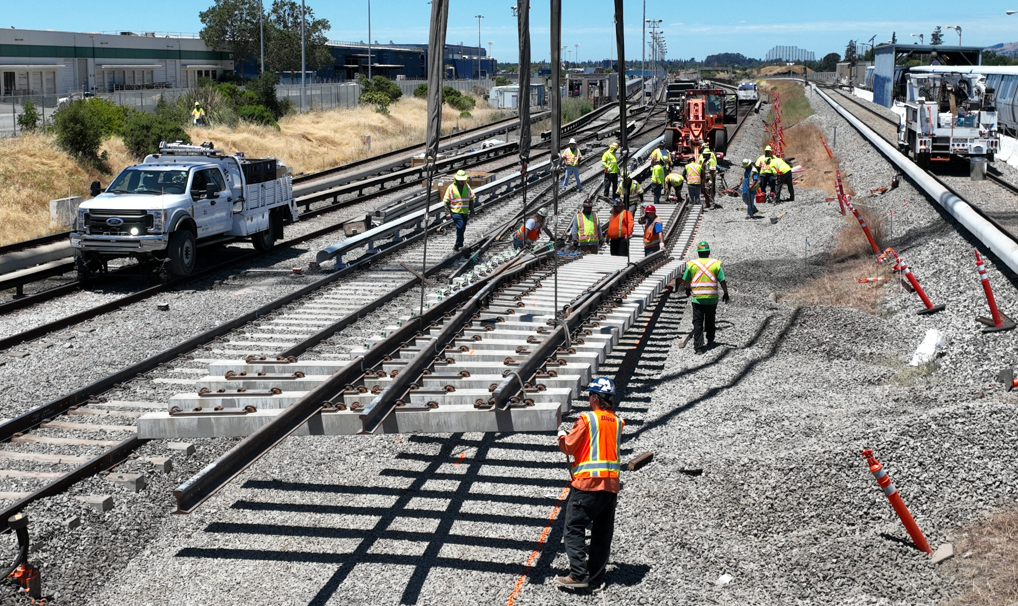
BART’s effort to rebuild its aging infrastructure is on track and is delivering results by improving the system’s reliability and overall safety. That’s the main conclusion from a new annual report issued by the independent panel of experts overseeing the Measure RR rebuilding program. The report will be presented to the BART Board of Directors at its meeting today, August 24.
The independent Bond Oversight Committee’s new Annual Report says through March 2023 $1.57 billion of Measure RR funds had been invested in rebuilding the backbone of BART. There are now 152 RR-supported projects that are in planning, design, construction, or have been completed. A total of 48 projects are complete, up from 36 when the committee issued its previous annual report in 2022.
46% of all anticipated Measure RR work has already been completed. The Bond Oversight Committee wrote the progress is ahead of projections made by BART in 2016 when Measure RR was put before BART District voters. The committee wrote it “believes BART is delivering rebuilding projects in a timely manner and that the work is improving the reliability and safety of the system.”
Significant accomplishments in the last year include:
*Substantial completion of the 34.5kV (kilovolt) traction power cable replacement work in downtown San Francisco.
*Completed trackway demolition and restoration for the Transbay Tube retrofit.
*Station modernization projects completed at Powell Street Station in downtown San Francisco and 19th Street Station in downtown Oakland.
*The number of service delays due to rail-related issues dropped from 217 in 2021 to 95 in 2022.
*Issuance of $700 million in climate-certified Green Bonds to ensure uninterrupted funding of RR projects.
Bond Oversight Committee members have unrestricted access to BART documents, hold quarterly public meetings to review the progress of the Measure RR rebuilding program, and are focused on ensuring BART is spending bond money in a manner consistent with what was promised to voters. You can learn more about the committee at bart.gov/bondoversight.
Measure RR is a $3.5 billion bond measure that was approved by voters in Alameda, Contra Costa, and San Francisco counties in 2016. The Bond Oversight Committee is comprised of seven members who represent a diversity of expertise. The organizations represented on the committee include the American Society of Civil Engineers, the Institute of Electrical and Electronic Engineers, the American Institute of Certified Public Accountants, the Association for Budgeting and Financial Management section of the American Society for Public Administration, the Project Management Institute, and the League of Women Voters.
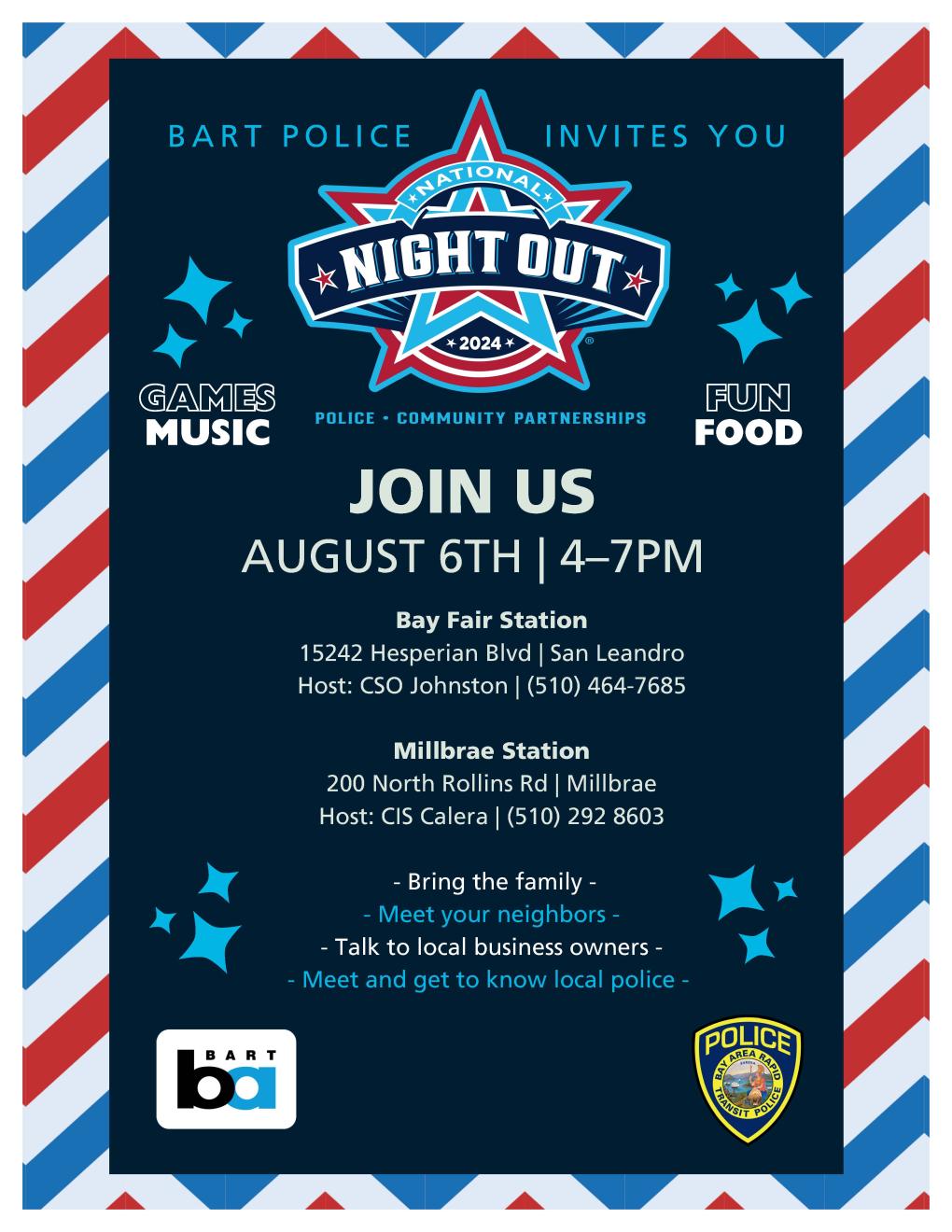
BART PD hosts National Night Out Tuesday August 6th at Bay Fair and Millbrae stations
BART Police is participating in National Night Out, a community-building event held on the first Tuesday in August every year. This year, BART Police will host two events, and BART employees and their families are invited to join in. The events will be held at Bay Fair and Millbrae stations and will feature games, music, food, and opportunities to interact with BART Police officers and staff.
First introduced in 1984, National Night Out aims to enhance the relationship between neighbors and law enforcement. BART Police has participated in the campaign for over a decade.
Both events are from 4-7pm on Tuesday, August 6.
Bay Fair Station
15242 Hesperian Blvd, San Leandro
Hosted by Community Service Officer Susie Johnston
Millbrae Station
200 North Rollins Rd, Millbrae
Hosted by Crisis Intervention Specialist Remberto Calero
Join the BART General Manager on the CEO Ride-Along for Transit Month on September 11
This Transit Month, join BART and local transit agencies for All Aboard with Transit CEOs, a multimodal ride-along with regional transit leaders. The social event is a great opportunity to meet local transit CEOs, including BART General Manager Bob Powers, and ask questions.
All Aboard with Transit CEOs will be held on Friday, September 11th starting at around 3:00pm with rides on AC Transit, BART, SF Muni, and Caltrain.
The theme of the ride is financial efficiency and raising awareness of the $1 billion in cost-saving measures taken by the four agencies from July 2019 through June 2025.
It is also the first year the new transfer discount is in effect! This multi-modal trip will showcase the $2.85 discount each time we transfer within two hours (use Tap and Ride or make sure your Clipper card has transitioned to the new upgraded system by logging into Clipper). Participants must pay for their transit rides. The trip from Oakland to Millbrae will cost under $10 with the discounts. Have enough funds to include your trip home.
General Managers/CEOs from various Bay Area transit agencies and the Metropolitan Transportation Commission (MTC) will ride multiple modes of transit together with the public, transferring from one system to another, promoting the improved coordination among operators to enhance the customer experience.
Route:
- Meet at 3:05pm at the AC Transit Tempo Uptown Oakland Station, located at Broadway and Thomas L. Berkley Way. We will take AC Transit Tempo Line 1T at 3:20pm. From Uptown Oakland, the group will travel southbound through downtown Oakland and into Chinatown, exiting at the Madison Street Station at 11th and Madison Streets. From there, participants will walk two short blocks to the Lake Merritt BART Station at 9th and Madison Streets arriving at about 3:30pm.
- Take BART from Lake Merritt at 3:44pm Blue Line or 3:52pm Green Line to Powell St arriving at 4pm or 4:08pm.
- Walk from BART to Muni Union Square and take Muni Metro T/Sunnydale (4:16pm or 4:26pm train) to 4th and King/Caltrain SF.
- Transfer to Caltrain to take the 420 train at 4:48pm and arrive in Millbrae at 5:07pm.
- Event officially ends.
- For those heading back, people can either take Caltrain 147 at 5:24pm and arrive at 4th and King at 5:46pm and connect via Muni to BART back to the East Bay or wherever. Or from Millbrae you can take BART (5:11pm or 5:31pm) back to your end point. This train ride is longer but there is no need to transfer at 4th and King.
Participating CEOs:
- BART – General Manager Bob Powers
- SFMTA- Director of Transportation Julie Kirschbaum
- AC Transit – General Manager Sal Llamas
- Caltrain – Executive Director Michelle Bouchard
- VTA – General Manager Carolyn Gonot
- SamTrans – General Manager April Chan
- SF Bay Ferry – Executive Director Seamus Murphy
- County Connection – General Manager Bill Churchill
- Tri Delta Transit – CEO Rashidi Barnes
- Golden Gate – General Manager Denis Mulligan
- Marin Transit – General Manager Robert Betts
- LAVTA – Executive Director Christy Wegener
- WestCat – General Manager Rob Thompson
- Metropolitan Transportation Commission (MTC) – Executive Director Andy Fremier
RSVP here. RSVP is not required but it helps us plan crowd expectation.
Cleaner trains than ever: Meet the team that has five minutes to clean every BART train
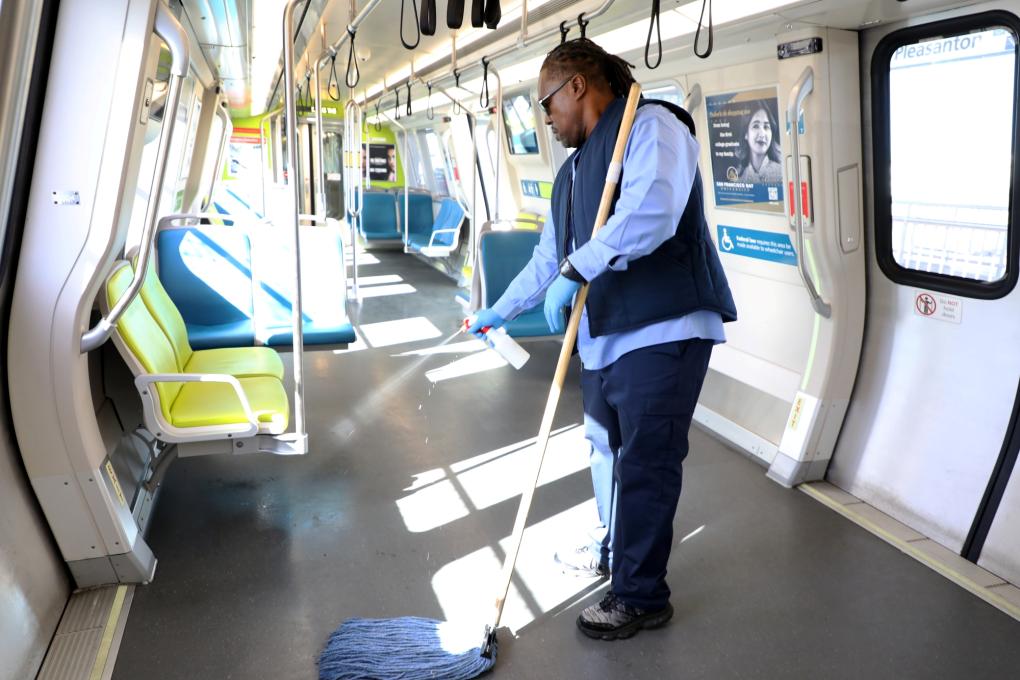
End of line worker Lorinzo Haley
How much can you accomplish in five minutes? Could you clean two 75-foot-long BART cars? Sweep them, mop them, spritz them in the short amount of time the train dwells at an end-of-line station before starting its next run? And – no pressure! -- that five minutes is a hard deadline. Even a brief delay can disrupt the highly choreographed network of trains that make up the BART system.
If you’re one of BART’s nearly 100 end-of-line cleaners, that’s just another day on the job. You see, in five minutes, an end-of-line cleaner accomplishes more than most people can get done in thrice the time.
You might say end-of-line cleaners are the Quicksilver superheroes of BART’s robust cleaning operation. They’re the workers who clean the trains between regularly scheduled “thorough cleans” and “standard cleans,” which require cars be out of service. Unlike these cleans, end-of-line cleans have a time limit five-to-ten-minute deadline, depending on the station, that can’t be compromised. Even a small delay can reverberate across BART’s system.
So what can end-of-line cleaners accomplish in just five to ten minutes? It turns out, quite a bit.
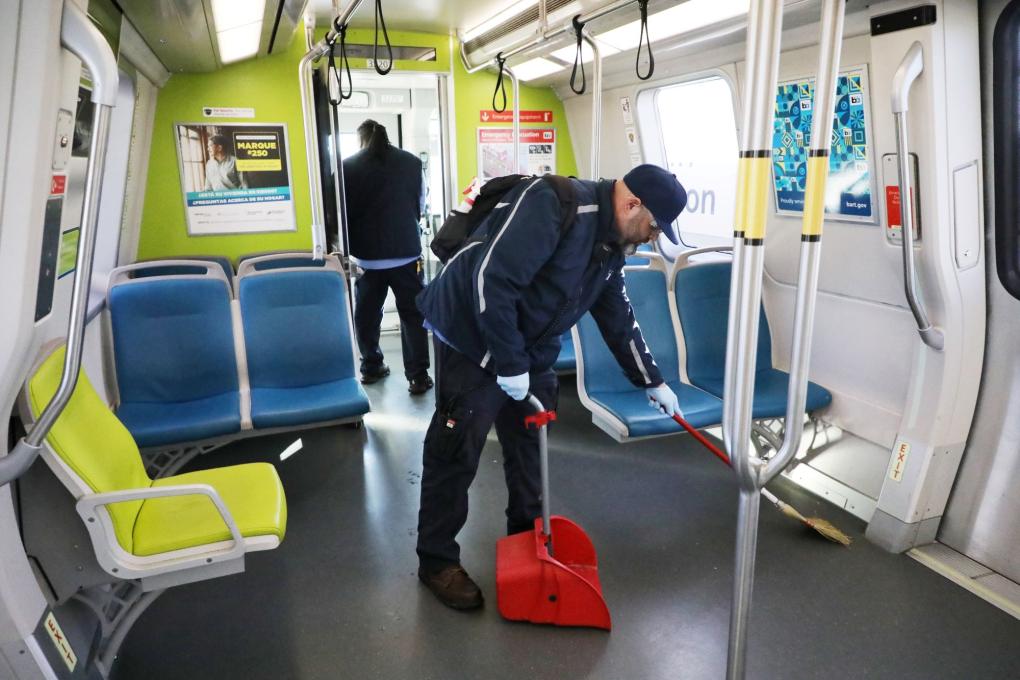
End of line worker Eric Santos
BART Communications recently had the opportunity to follow a group of end-of-line cleaners at Dublin/Pleasanton Station, the last stop on the Blue Line. Each team consists of three to four cleaners, and all the shifts overlap to make sure there’s coverage for every moment BART is in service, including during the cleaners’ breaks and lunches. An additional cleaner joins the team between 9am and 5pm – BART's busiest hours.
Carmen Williams, a utility foreworker who oversees Dublin/Pleasanton and Berryessa/North San Jose stations, said she has more cleaners on her team than ever. As part of its Safe and Clean Plan, BART has hired additional part-time end-of-line cleaners to ensure the cleanliness of train interiors during daily revenue service. At the end of revenue service, trains head to maintenance yards for nightly standard cleans conducted by BART’s car cleaning team. BART also recently doubled the number of times we deep clean trains. These end-of-line cleaners’ work holds the trains over until its time for their until their nightly cleanings in the yard. You can read more about these cleanings here.
Glossary of BART Train Car Cleaning Terms
Thorough Clean | Standard Clean |
End-of-Line Clean
|
| A controlled multi-step clean that requires cleaners scrub every surface of a train car, from ceiling to baseboards. Thorough cleans take two cleaners about two hours to complete. They occur every 450 hours a car is in service. | If a car is not scheduled for a thorough clean on a given night, it will get a standard clean. Depending on time constraints, cleaners may sweep cars for debris, disinfect seats and poles, scrub graffiti, spray hanging straps with disinfectant, and mop the floor. | Between thorough and standard cleans, cleaners hop aboard train cars at the end of the line and sweep up litter and clean up minor messes. If a car has a major mess, it will be removed from service and fully cleaned before it returns to service. |
Note: It is not possible to thorough clean the 461 cars required to run service every single day.
End-of-line cleaner Lorinzo Haley is the day shift co-team lead with Eric Santos. He says the job is never stressful for him because he is “prepared for any and every situation at all times.”
As you can imagine, the situations cleaners like Haley and Santos face vary widely. There’s the regular wear-and-tear from shoes and sticky fingers – these trains carry thousands of people, after all – but also accidental messes and, in some cases, intentional misuse. On busy days, it’s not uncommon for each cleaner to get off the car with a full bag of trash. For events and parades, those trash bags are often filled with feathers, glitter, and confetti.
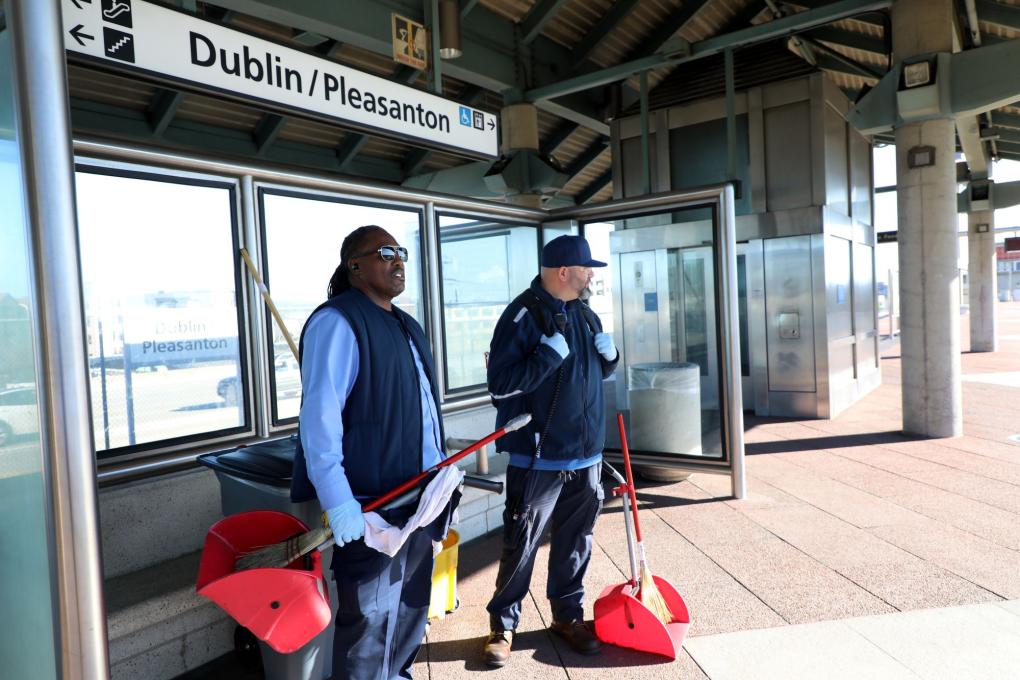
End of line workers Lorinzo Haley and Eric Santos
"We hire experienced janitorial people that have at least a year of industrial janitorial experience before coming to BART, so these are people that are knowledgeable about the equipment and how to pick up spills," said Juan Matta, Manager of Transit Vehicle Cleaning. "We give them additional training at BART as far as how to clean on a moving train safely, how to keep yourself safe around patrons, and how to keep the patrons safe."
Here’s how the typical end-of-line clean goes: Three to four cleaners are stationed at the ready on the platform. Their trash bags are filled with supplies, and their brooms and mops are strategically positioned on the platform for easy access. The train pulls in, the passengers disembark, and then the clock starts ticking.
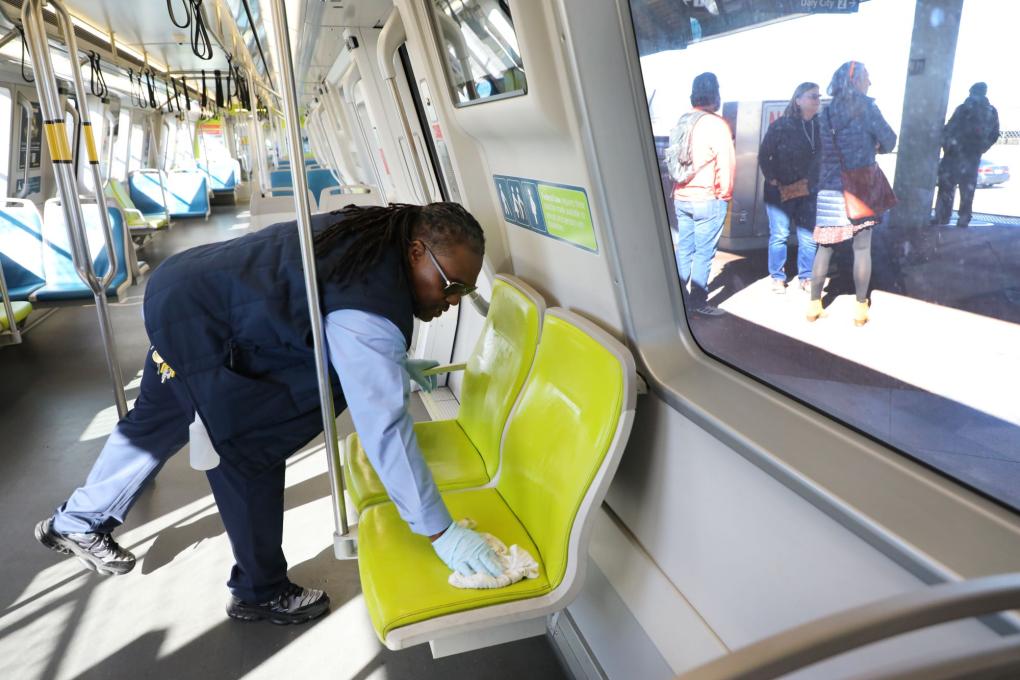
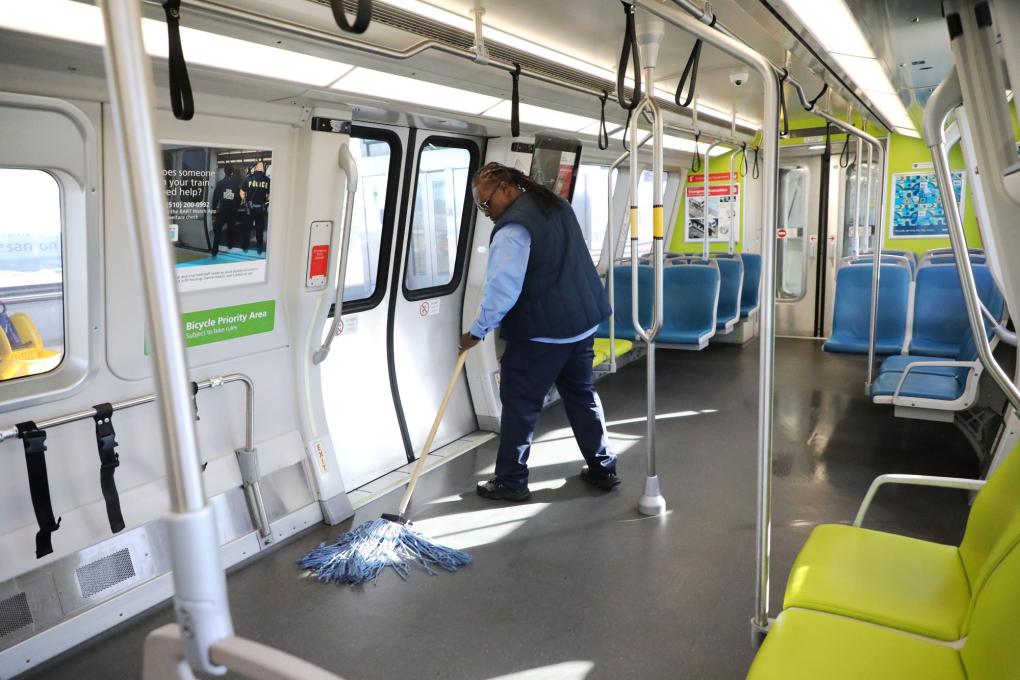
End of line worker Lorinzo Haley
The cleaners split the train in order to cover every car. If the team has been alerted to a mess before the train arrives, they prioritize that first.
The first step is cleaning up any biohazards and offensive graffiti. Cleaners wear gloves throughout their shifts, no exceptions, and receive training to handle biohazard materials. They also carry wipes soaked in a special graffiti removal solution to scrub away graffiti as quickly as possible. From there, they prioritize spills, left-behind garbage, and grime.
After addressing these top priorities – and if the short amount of time on the clock permits – cleaners will sweep the floors, including under seats. If they spot a sticky seat or grimy wall along the way, they’ll whip out their towels and spray bottles filled with antibacterial solution to take care of them.
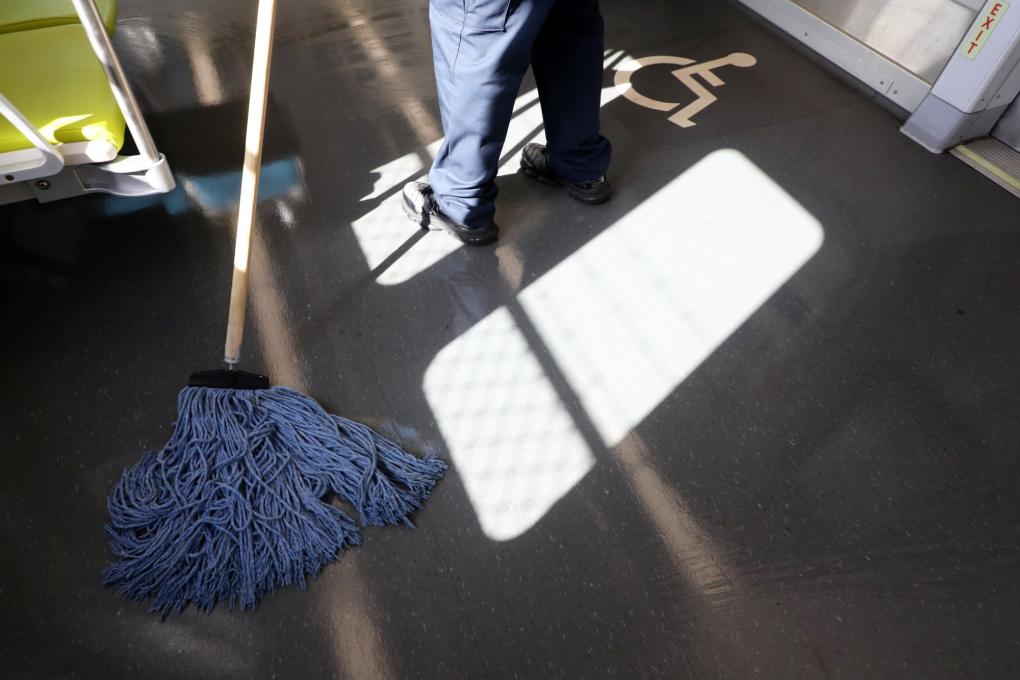
Then, it’s mopping time. On some trains, Haley would start by sweeping a car, and Santos would come behind him with a mop and a bucket. Rather than slippery soap, the buckets contain a water-bleach solution that dries quickly and is specialized for the train's flooring.
“My team knows my biggest pet peeve is dirty water,” said Williams, who started her BART career as an end-of-line cleaner. “They are changing it constantly. It has to be clean, and it has to be hot!”
The finishing touch: a spritz of lemon-scented air freshener.
Rinse, repeat, rinse, repeat. Haley and Santos said they clean around three trains an hour, or forty trains a shift.
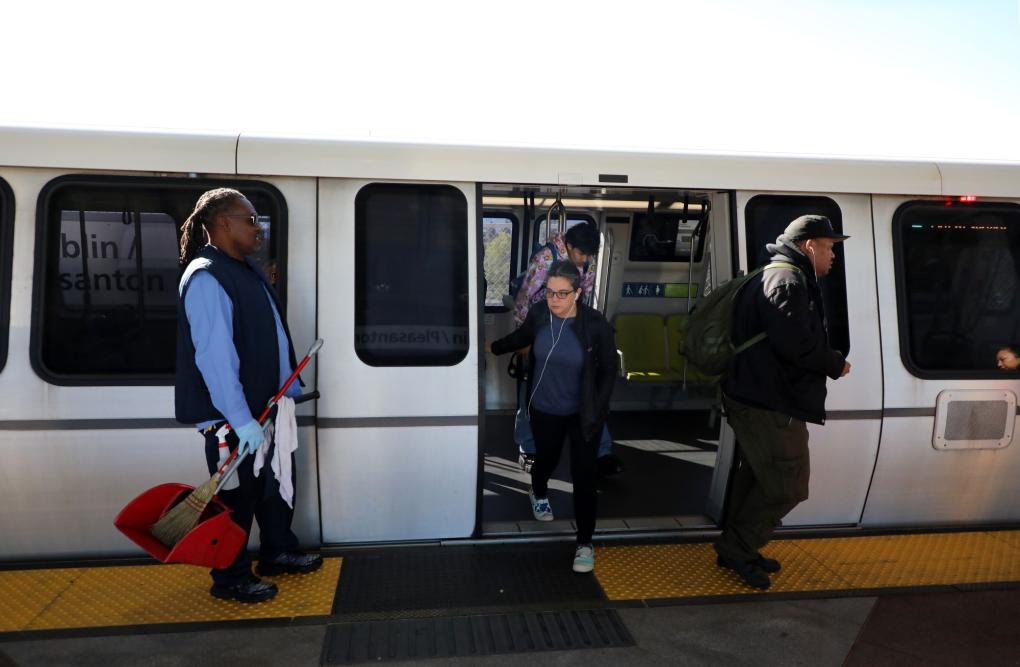
End of line worker Lorinzo Haley waits for passengers to get off a train at Dublin/Pleasanton Station.
The job requires you to be in near-constant motion. While waiting for a train to arrive, the cleaners dispose of biohazards, refill their supplies, change their gloves, and most importantly, fill up those buckets with hot, clean water!
When asked how many miles they walk each day, end-of-liner cleaner AJ Garman pulled out his phone and reported back: about 15,000 steps a day, equivalent to around 7 miles.
It’s tough but rewarding work said Haley.
“This is the best job I’ve ever had – and I’ve been working since I was 12,” the father of six said. “The sun is out, the air is fresh, and the hills are green. I want to come to work, and I have never said that about a job.”
He and Santos said it’s not uncommon for regular riders to come up to them on the platform and say hello and thanks. Haley is no stranger to patron hugs, either.
Said Santos: “I like when people who’ve never taken BART come up and ask me for help. It’s nice to know you’re making a difference.” About three minutes after saying this, a couple approached Santos and asked, “How do we get to the Financial District?”
“Told you,” he said.
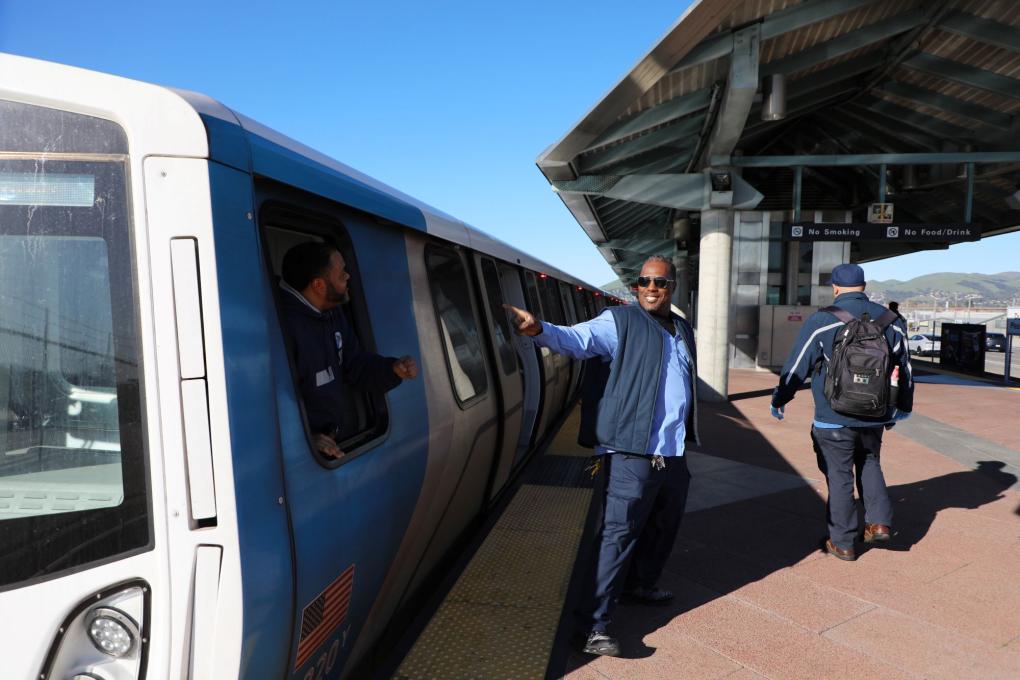
Lorinzo waves to a train operator.
Watch the team in action on this video
Listen to free live music at BART stations March 21-31 for Bach in the Subways
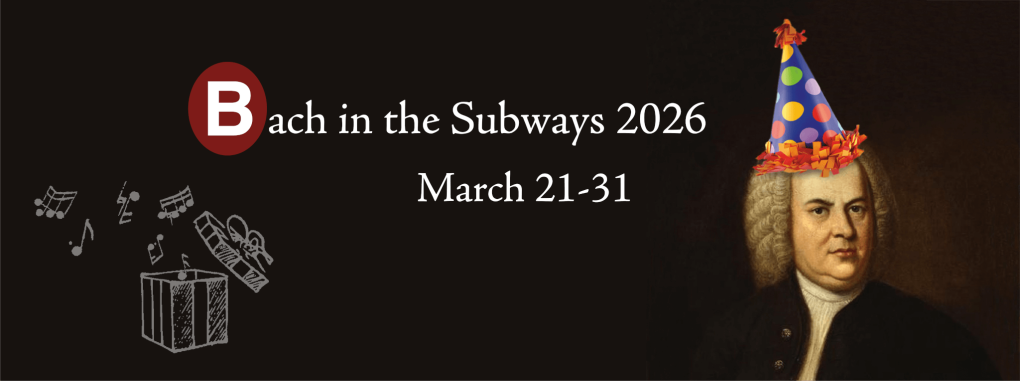
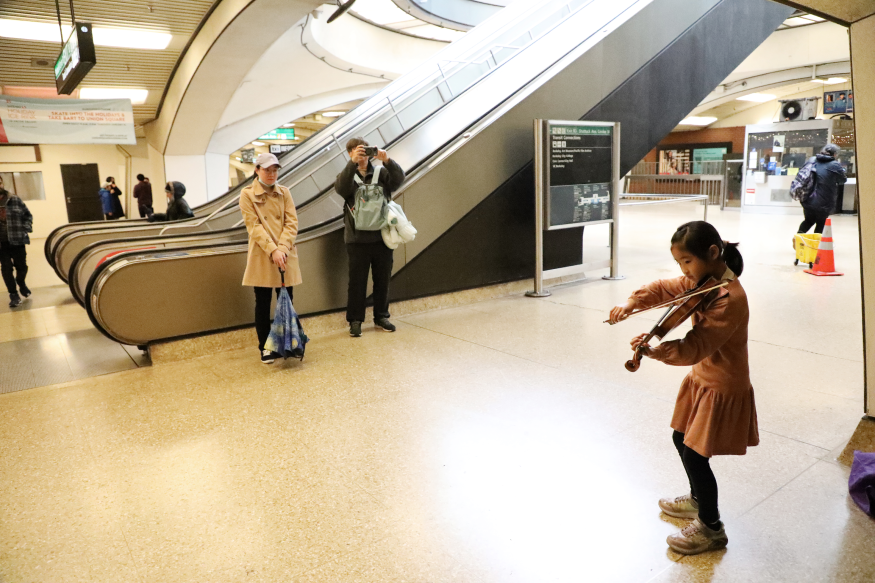
BART invites the public to visit a station between March 21 and 31 to listen to free live classical music as part of Bach in the Subways, a global celebration of Johann Sebastian Bach and his enduring music. Find the schedule, which is subject to change, below. All performances take place in non-paid areas of stations.
Bach in the Subways was started organically in 2010 by New York City-based musician Dale Henderson and has grown into an international event that invites musicians to play Bach in public spaces. Musicians have played in more than 150 cities across 40 countries. Watch a short video of a previous performance here.
Schedule of Performances
Subject to change
| Performer | BART Station | Time |
|---|---|---|
| SF Bach Singers | Embarcadero | March 21, 11-11:30am |
| Michelle Fu/Richard Cheung | Embarcadero | March 21, 1-2pm |
| Mia Lightdale | Downtown Berkeley | March 21, 2pm-3:30pm |
| PALAPALAKA Music and Arts LLC | Rockridge | March 21, 3-4pm |
| Faith Winds and Brass | Castro Valley | March 21, 4-6pm |
| Daniel and Eva Play Bach | Rockridge | March 23, 3-5pm |
| Daniel P. | Rockridge | March 25, 3-5pm |
| Second Career Trumpet player | Orinda | March 28, 12-12:30pm |
| Joseph S. | Embarcadero | March 28, 1-1:30pm |
| Francisco Ensemble | Downtown Berkeley | March 28, 2pm |
| String quintet plays Bach | Embarcadero | March 28, 3-4pm |
| Audacity | Fremont | March 28, 4pm |
| Francisco Ensemble | Downtown Berkeley | March 28, 2pm-4pm |
| California Bach Society | Rockridge | March 29, 3pm-5pm |
| Adarsh and Andres | Downtown Berkeley | March 30, 6:30pm-7:30pm |
| The Cox-Rothmans | Daly City | March 31, 5pm-6pm |
Want to play music at a BART station?
You can still sign up to play music for Bach in the Subways! Playing Bach isn't a requirement, but it is recommended. Follow these three steps:
1) Register here.
2) Apply for BART's free Expressive Activity Permit.
3) Show up with your permit and play!
For participating musicians, BART requires that they not affix any signs on the walls, do not use amplified music, and only perform in non-paid areas of the stations. Bach in the Subways requires that participating musicians not solicit tips or accept any money as it is meant to be a shared gift of musical joy. Read more about requirements and guidelines here.
For general questions about Bach in the Subways, email [email protected]. For questions related to BART, email [email protected].
Now accepting applications for community tables at the 2026 Let's Glow! BART Anime Festival (September 19)
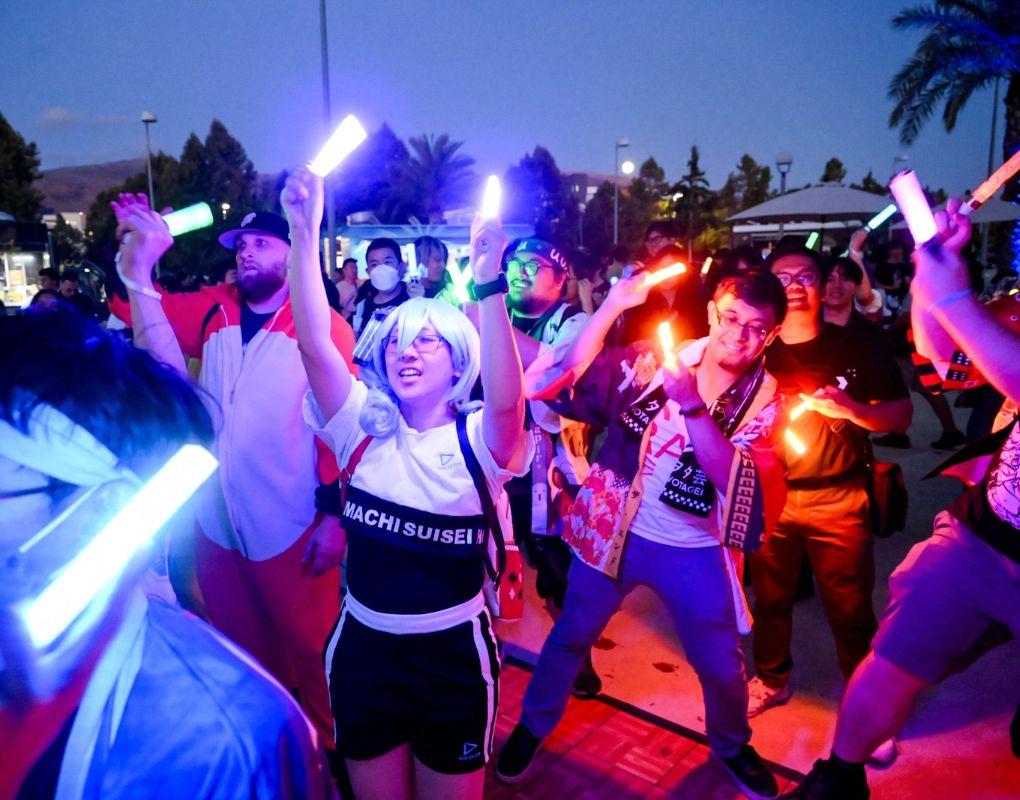
The Let's Glow! BART Anime Festival returns to Warm Springs/South Fremont Station on September 19, 2026, 4pm to 9pm, for a celebration of anime, comics, gaming, and novel (ACGN) culture. We’ll announce more details on cosplay, itashas, freebie trading, stamps, exclusive merch, a detailed schedule, and more in the next few months!
In the meantime, BART is looking for BART fan projects, fan clubs, community fan events/spaces, transit operators, or public services to table at the event. You must be able to table for the required time (4pm to 7:30pm; optional tabling hours are 7:30pm to 9pm). Tabling at this event is free.
Fill out the community table application here. The application closes August 1.
More Let's Glow! opportunities:
- Itashas: We will have a parking lot dedicated to wrapped vehicles (cars, bikes, mopeds, etc) managed by Dreamscape. An application form will be posted in June.
- Do you run a food or boba truck on wheels? We’re especially interested in having local vendors who can make custom food & drinks themed around our mascots or BART. Please reach out to Tom Williams at [email protected].
- Note: The artist alley application has closed.