
Search Results
Fare evasion stop by BART Police leads to arrest of man wanted for murder in Georgia
A routine stop for fare evasion at El Cerrito del Norte Station Tuesday morning led to the arrest of a man who is wanted in connection with a homicide in Georgia. BART Police saw 27-year-old Davonte Fore attempt to fare evade at the station at 8:53am. Fore fled the scene and was apprehended several blocks from the station after a foot chase. Fore provided a false ID to officers, but a check of his fingerprints revealed his identity.
Fore is wanted in connection with a 2021 homicide that occurred in Covington, Georgia. Fore was convicted in 2024 but had been on the run from authorities since then until he was taken into custody by BART Police.
How a BART Crisis Intervention Specialist helped a mother find her lost son and get him into treatment
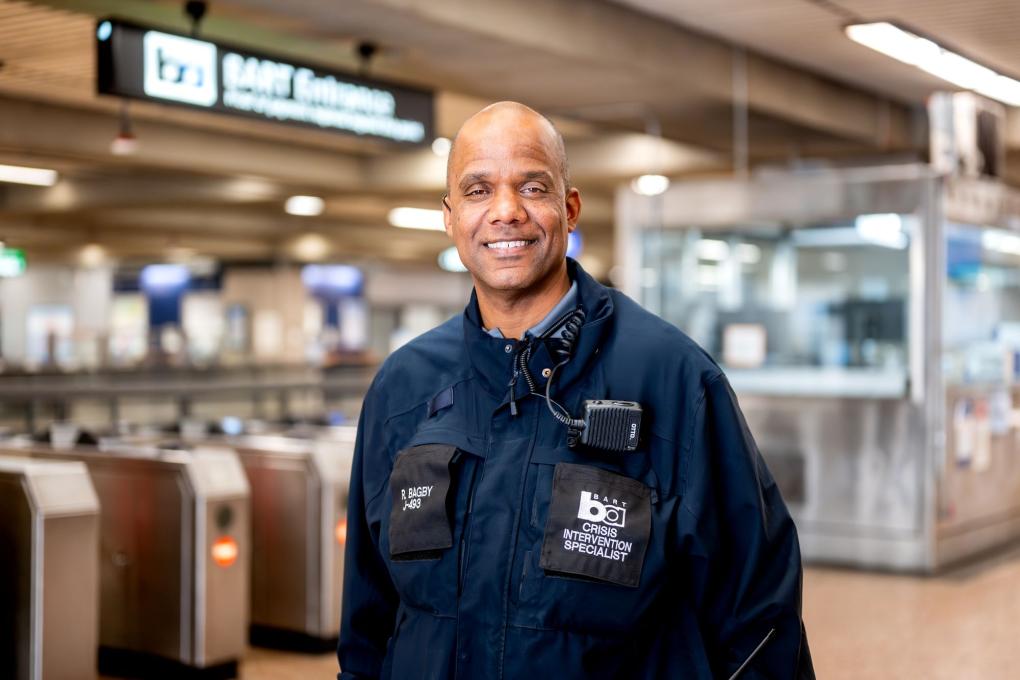
A photo of Crisis Intervention Specialist Rahman Bagby in Lake Merritt Station.
In October 2024, Alec decided he’d had enough.
He had been living on the street for about three years, struggling with severe substance addiction, when he finally decided it was time to get help.
His first call was to BART Crisis Intervention Specialist Rahman Bagby.
Bagby had known Alec for about a year by the time the young man said he was ready to make a change. In that time, Bagby and his CIS partner Ontreal Wiltz, had made contact with Alec more than 20 times.
Bagby and Wiltz first met Alec on the street by Powell St. Station in San Francisco. During their initial encounter, Alec was still standing upright, wearing clean clothes and shoes. He wasn’t open to services, but he wasn’t disgruntled when Bagby and Wiltz offered.
“I told him, ‘Look, I’ll get you something to eat, but can you put me in touch with a family member?’” Bagby said.
Some months later, Alec relented, giving Bagby and Wiltz his mom’s phone number.
“We’re with your son, Alec. He’s been living on the street,” Bagby said when Alec’s mom picked up.
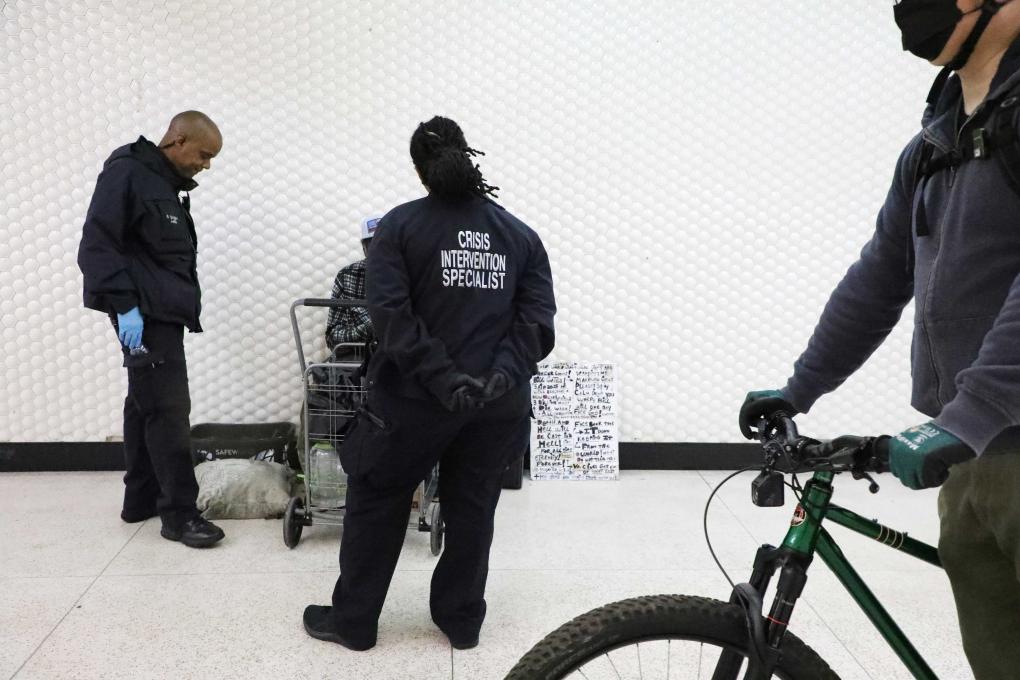
CIS Rahman Bagby and CIS Lataisha Marin responding to a call in San Francisco.
Alec’s mom hadn’t heard from her son in about two years. One day he was in touch with her via phone, the next, silence. Before Bagby and Wiltz got involved, she said the last contact she had with Alec, who had lost multiple phones, was in 2022 from Santa Rita Jail, where he was being held after failure to appear in court following multiple arrests and infractions.
Alec’s mom said that before he began living on the street, he was a bright student who earned his master's degree in chemistry at UCLA in 2016 and intended to continue his studies in a doctorate program.
But Alec had been struggling with a chronic back problem for some time, and following an unsuccessful discectomy surgery, his life began to unravel.
Like so many others, Alec became addicted to opioid-based painkillers, which eventually led him to harder drugs, like heroin and fentanyl. He was also self-medicating with alcohol and marijuana.
Alec’s family had tried for years to give him the support he needed, paying for housing and food. But he continued to abuse drugs and alcohol and refused to seek employment or medical treatment. For some time, he bounced between various short-term rentals.
Then in 2020, his parents received a call from a hospital in Oakland informing them he'd been resuscitated with Narcan for an overdose. His family begged him to get help, but he refused and began acting paranoid as well as destructive. Eventually a warrant was issued for his arrest. He became homeless, which he always claimed was his biggest fear.
With guidance from Bagby and Wiltz, Alec’s mom leapt into action, hiring an interventionist and connecting the CISes with a facility and provider who would take him.
"I could sense her love for her son,” Bagby said of Alec’s mom. “She has so much heart and so much grit.”
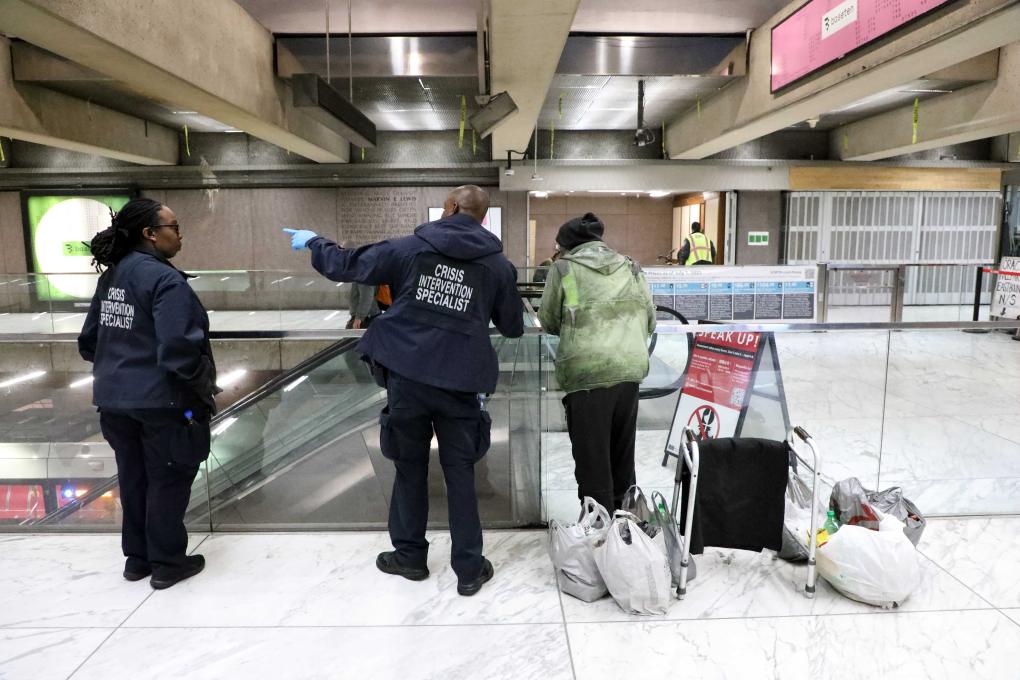
CIS Lataisha Marin and CIS Rahman Bagby respond to a call.
Supporting a family member with severe drug addiction is challenging and devastating. Alec’s mother, who asked to remain anonymous, had been trying for years to get Alec the help he needed before he disappeared. It was a struggle. Many organizations weren’t right for Alec or wouldn’t accept him. Often it felt like there was no place for him at all.
It took months and months of research, contacting organizations, and a large financial investment until she was able to find a program that might be right for her son.
“You have to advocate endlessly,” she said by phone. “People in the state my son was in cannot deal with the bureaucracy of social services. You have to be able to communicate eloquently and be persistent, and he couldn’t do that.”
Bagby and Wiltz networked for Alec’s mom, connecting her with organizations that might suit her son’s needs. Eventually, she got to know the entire BART Crisis Intervention team. For the first time in a long time, she had hope that she could get him into the right rehabilitation setting.
“Without Rahman, Alec wouldn’t be in recovery today,” she said. “He totally committed himself to Alec. He was always available, would call me when he saw Alec on the street so I could connect him with the interventionist.”
“Alec felt so comfortable with Rahman, and with his help, we were able to stabilize him,” she continued. “Rahman was the one who truly understood Alec, and he coordinated so many efforts.”
She said Bagby took her son to a safe place and stayed with him while he slept, waiting for transport to the rehab community his mom connected him with.
Bagby said rapport building is crucial and understanding that getting someone help can be a process requiring repeated interactions.
“You’re working with people on stages of change,” Bagby explained. “Many of them are in the pre-contemplation stage of their addiction – they're not addressing the issue, and they don’t want to. Sometimes, they’re not quite ready, but they’re grateful you spoke to them.”
Bagby says you must lead with compassion and patience in his line of work.
“You have to embrace the challenge and recognize that a lot of times when you’re talking to people, it’s the drugs, the addiction talking back to you,” he said.
With Alec, Bagby focused on talking to him about his declining health in order to get him to a place where he might consider treatment.
“You are not able to sustain what you’re putting your body through,” he told Alec. “It resonated with him. He knew he was not comfortable. And I always said, ‘Alec, you’re the expert, I’m just here to help if you want it.”
The turning point was when Alec recognized his complete physical exhaustion.
“I’m not comfortable,” he told Bagby, who replied, “As soon as you tell me to go, I have transportation and a facility for you. This can be immediate.”
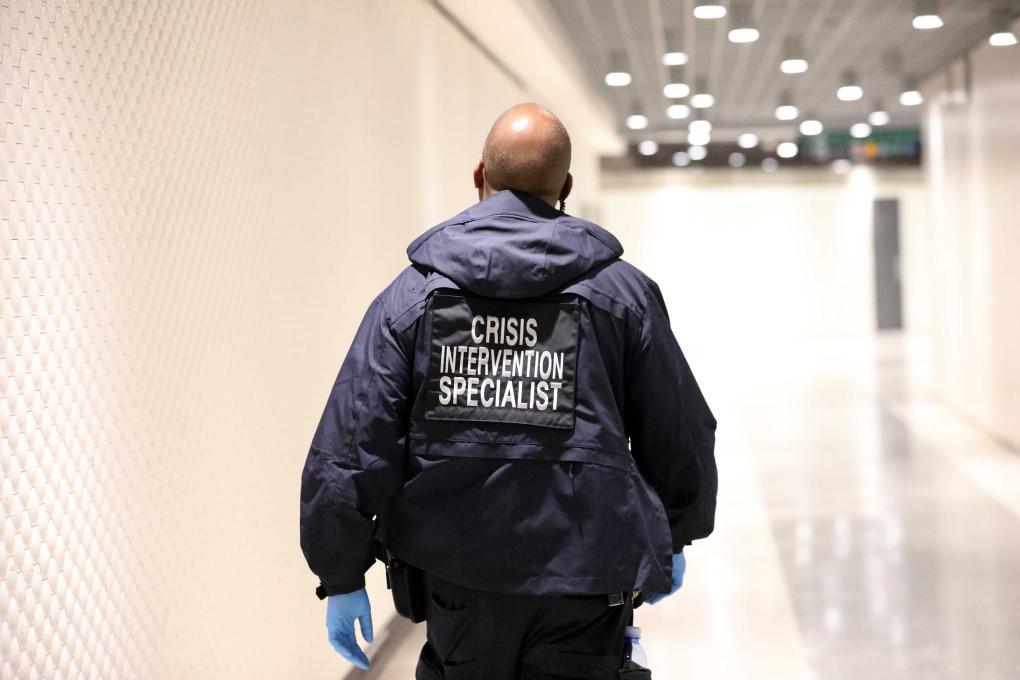
CIS Rahman Bagby on duty.
Alec is still in treatment today, a process full of setbacks but also incremental wins. He successfully transitioned out of his residency program to a partial hospitalization program, and he is now under full LPS conservatorship, which Bagby said is “an amazing feat for his mother.” The legal process applies to adults who are unable to meet their own basic needs due to severe mental illness and appoints a conservator to help ensure the individual receives appropriate care.
“This is a long process, but he’s on an upward trajectory,” Bagby said. “He’s still on his path, and that is very hopeful.”
Alec’s mom’s support is strong as ever, and she keeps in close touch with Bagby.
“The BART Crisis Intervention team is the only organization that gave me any help in getting Alec into treatment,” she said.
Her advice to those with a family member facing addiction and homelessness: “Get educated about the interventionist and rehabilitation community. Start the conversation with anyone you can. And do not give up.”
Bagby was recognized for his efforts at the 2024 BART Police Awards Ceremony, where he was named Civilian of the Year. Bagby grew up in Oakland, and prior to becoming a CIS, he worked as a BART Train Operator and System Service Worker.
Crisis Intervention Specialists and Transit Ambassadors are members of BART Police’s Progressive Policing and Community Engagement Bureau (PPCEB). Launched in 2020, the PPCEB builds on more than a decade of progressive reforms aimed at elevating equitable policing and ensuring BART is welcoming to all riders. The unarmed CISes and ambassadors work in special engagement teams to boost visible presence in the system and connect people with support services.
Transit is punk: Kamala Parks went from cofounding 924 Gilman Street to urban planning at BART
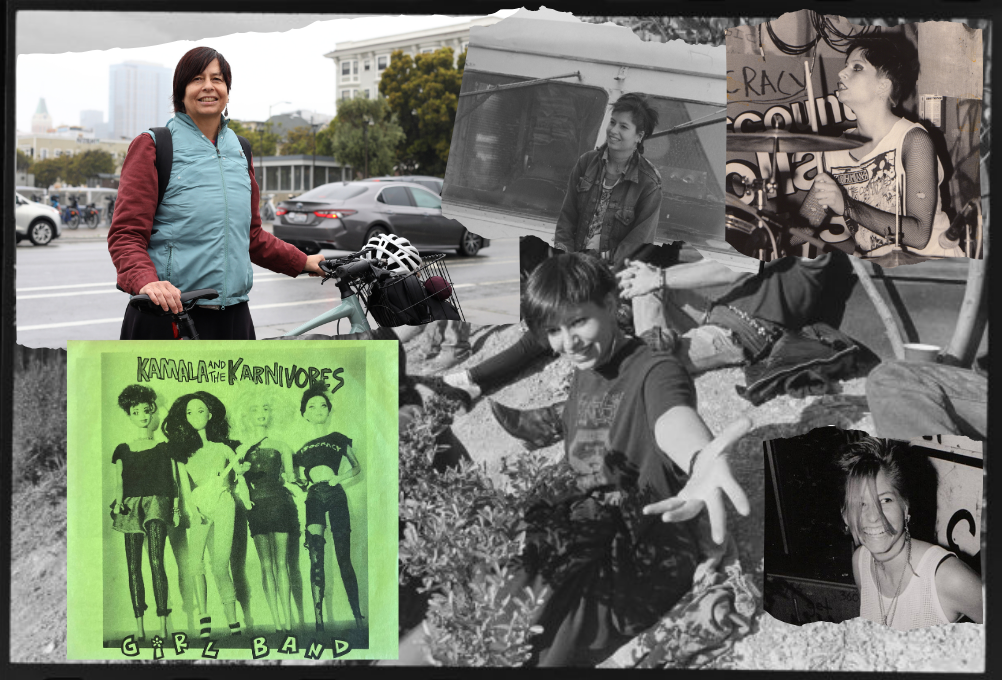
BART transportation planner Kamala Parks is pictured in photos from the 1980s to present. Black and white photos courtesy of Murray Bowles.
“Transit is punk,” according to Kamala Parks, Principal Station Planner at BART.
Parks, of all people, would know.
The transportation planner was a formative force in the Bay Area punk scene, particularly from the mid-1980s through the 1990s. This was an inflection point for punk, with bands like Green Day, Neurosis, and the Offspring making the leap from tiny scene venues to sold-out concert halls and stadiums.
These iconic bands have at least two things in common. All of them are graduates of one of the most legendary punk venues of all time – 924 Gilman Street in Berkeley, often called Gilman by the punk community – and Parks played an early role in their success.
Parks cofounded 924 Gilman – an all ages, collectively organized nonprofit music venue still going strong today – in 1986 as part of the MaximumRockNRoll ‘zine and collective spearheaded by Tim Yohannan. Getting the venue off the ground required wading through the leasing and zoning process, attending city hall meetings, and speaking with officials. The experience was Parks very first taste of urban planning, and it would come to serve her professionally many years later.
So, Green Day...well, Parks was their first-ever band manager. Neurosis and the Offspring? She booked their first two national tours. The Offspring were the first to bring her on tour as their road manager, the first of many tour managing roles she did for multiple bands.
When she wasn’t uplifting other bands, Parks was drumming for Cringer, the Gr’ups, Naked Aggression, and the aptly named Kamala & The Karnivores. If you saw the recent film Freaky Tales, you might have spotted a Kamala & The Karnivores patch stitched on the back of star Ji-young Yoo’s jacket.
“Parks is a networker of East Bay punk,” a 2017 profile of her proclaimed, noting that she unknowingly designed “what would become a blueprint for DIY scenes worldwide.”
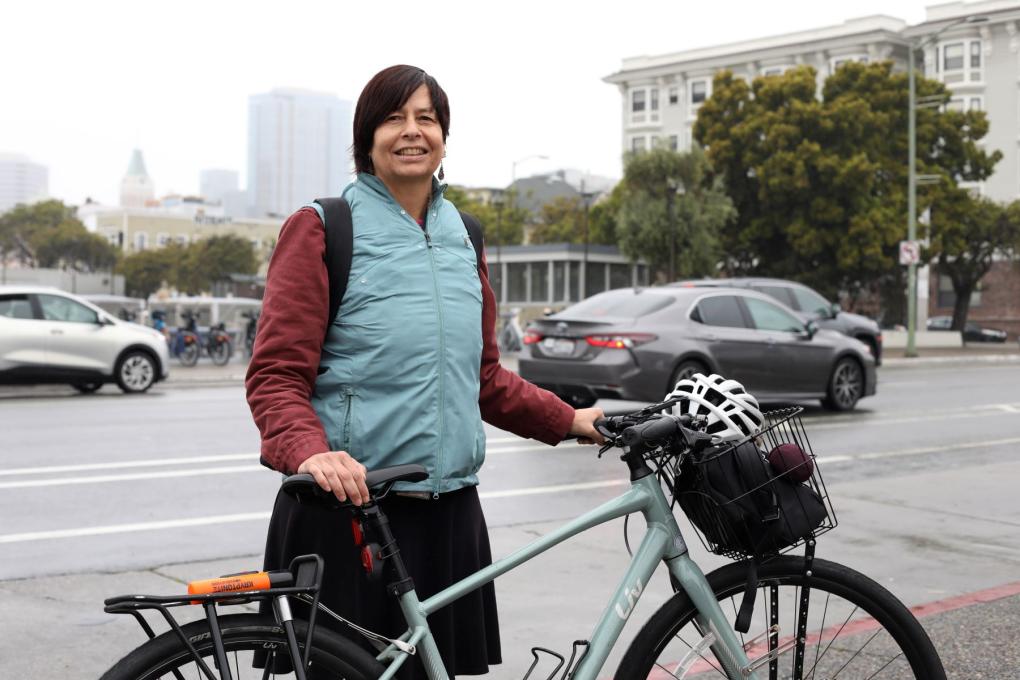
A recent photo of Kamala Parks at Lake Merritt Station.
In sum, Parks is a punk legend.
Many of her BART coworkers have absolutely no idea. Rather, they know Parks from her planning efforts, like her work on BART's Transit-Oriented Development, her leadership on projects like Safe Trips to BART, and her role as the Station Area Planner from Orinda to Antioch.
“Some folks are surprised I’m a punk rocker. They say I don’t look like one,” Parks said. “But I don’t have to look it. It’s my people, it’s a way of being in the world.”
And transit, she said, is decidedly punk.
"When you’re a punk, you love efficiency, sustainability, democracy,” she said. “Transit fulfills all these things.”
Parks brings the spirit of punk to the workplace. When you’re a punk, if there’s an obstacle, you find a way to work around it. Low on resources? Figure it out. And most importantly, never take anything at face value, always question the status quo.
“As a planner, I’m constantly asking myself things like, is there a reason this is the way it is? Can we revisit this? Reimagine it?"
It’s a helpful vantage point for someone in her line of work. Crudely put, planners assess the present to construct the future. There’s a synergy with planning and punk, the music and movement known for holding a magnifying glass to the world and asking, “Why does it have to be like that?”
“You don’t buy into the mainstream narrative as much when you’re a punk,” Parks said.
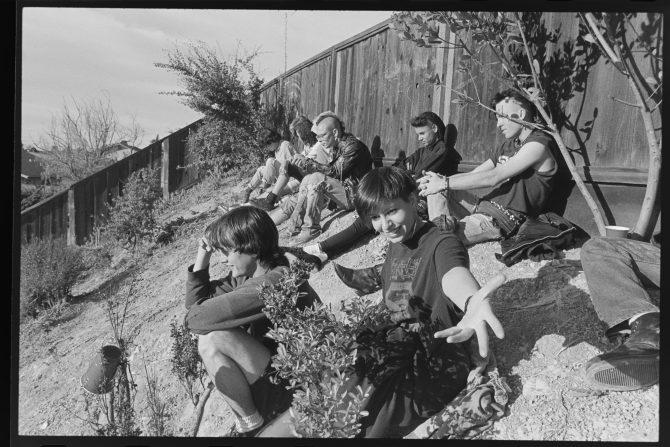
Kamala Parks, pictured front right, circa late 1980s/early 1990s at a backyard gig in Pinole. Credit: Murray Bowles
Parks’ career was the least of her concerns as a free-spirited teenager growing up in Berkeley.
“I was not exactly an ambitious kid,” she said. “When I was young, I wanted to be a cashier. They seemed to know everything – the price of an apple, the cost of a can of corn. This was way before the scanner. You had to enter all the prices manually! But as soon as the scanner rolled out, my dream was quashed.”
Parks described her teenage years as “directionless.” She was a mediocre student at Berkeley High School, didn’t have a lot of friends or grand ambitions.
What she did have was music. Parks recalled the summer before 11th grade when her dad left her in the care of one of his students from Diablo Valley College while he was on sabbatical in Europe. He gave the college kid $500 for Parks’ care and keeping. Not long after dad hit the road, the young woman and her boyfriend decided to spend the summer in Mexico, leaving Parks to fend for herself.
“I came home from school one day and no one was home. But she had left the money on the table,” Parks recalled. “I immediately went to Telegraph [Avenue] and bought records and a Walkman. Needless to say, I spent that $500 in a very short amount of time.”
“Music,” she went on, “was the thing that saved me as a kid. I cared about it so much, and I was beginning to have this incredible community in the punk scene full of very smart, supportive people.”
But she had a bone to pick with Berkeley: All the cool live music venues in town were 21 and over. So 17-year-old Parks wrote a letter to the city council more or less asking, “What gives? There’s nothing for young people to do in this city. Why aren’t there any all-ages music venues?”
That was the genesis of the idea that would eventually give birth to 924 Gilman.
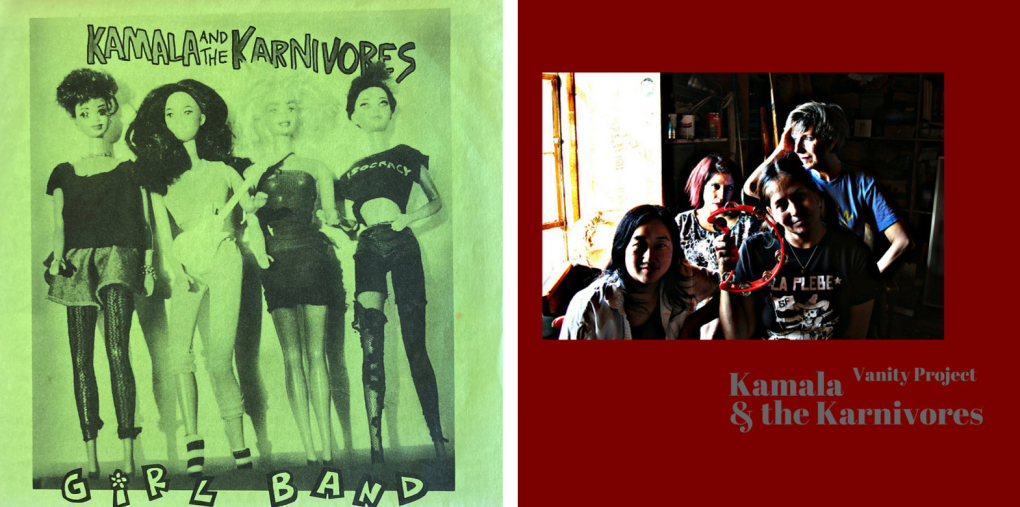
Left: Kamala and The Karnivores Girl Band EP, originally released on Lookout Records in 1989. Right: Kamala and The Karnivores second record, Vanity Project, released in 2018.
Flash forwards a couple of years, and Parks and her cofounders are sitting in a city council meeting, ready to make the case for their venue.
“The lightbulb did not go off that this sort of work was what I should be doing, not at all,” Parks said of urban planning. “I thought the city was being silly, asking things like, ‘Where will people park?’ And I said, ‘Parking? Who cares about parking!’”
Parks argued that the industrial area already had ample street parking, and most people would carpool or use transit. The majority of her friends didn’t own cars.
“We ended up rezoning the building for an entertainment permit,” she said. “At the time, it seemed like a bunch of hooey that we couldn’t have our club immediately. There was so much hoop jumping. I was definitely not inspired to pursue urban planning.”
But there was a lesson in all of it.
“The wonderful thing about youth is you’re not weighed down by past experiences that tell you what is and isn’t possible,” she said. “Fresh, questioning eyes are an asset."
After Parks “barely” graduated high school, she worked at the Peet’s Coffee and Tea warehouse and other blue collar or service jobs to prioritize and fund the unpaid efforts of touring, booking tours and shows, playing music, and volunteering at Gilman. However, part-time studying at community colleges eventually led to her getting a math degree from a four-year college. Unsure of what to do next, she got her teaching credential.
“Teaching was brutal,” she said. “I have so much respect for teachers. That is the hardest job I’ve ever had.”
Before getting the credential, Parks had taken a few urban studies classes at San Francisco State and realized, “This is it! This is what I want to do!”
But Parks wasn’t sure she wanted to spend more time in school to get a second bachelor's degree. And though she loved the field, she was sick of being poor and just wanted to start working.
Her stint as a teacher lasted about two years, and Parks took some time to regroup working as a project assistant at a construction management company. While there, she discovered the urban studies flame still flickered inside her.
Parks eventually decided to enroll in a grueling program at UC Berkeley, where she got two master’s degrees, one in civil engineering and one in city and regional planning.
She went on to work in consulting and for the City of Berkeley. BART, however, was always the dream.
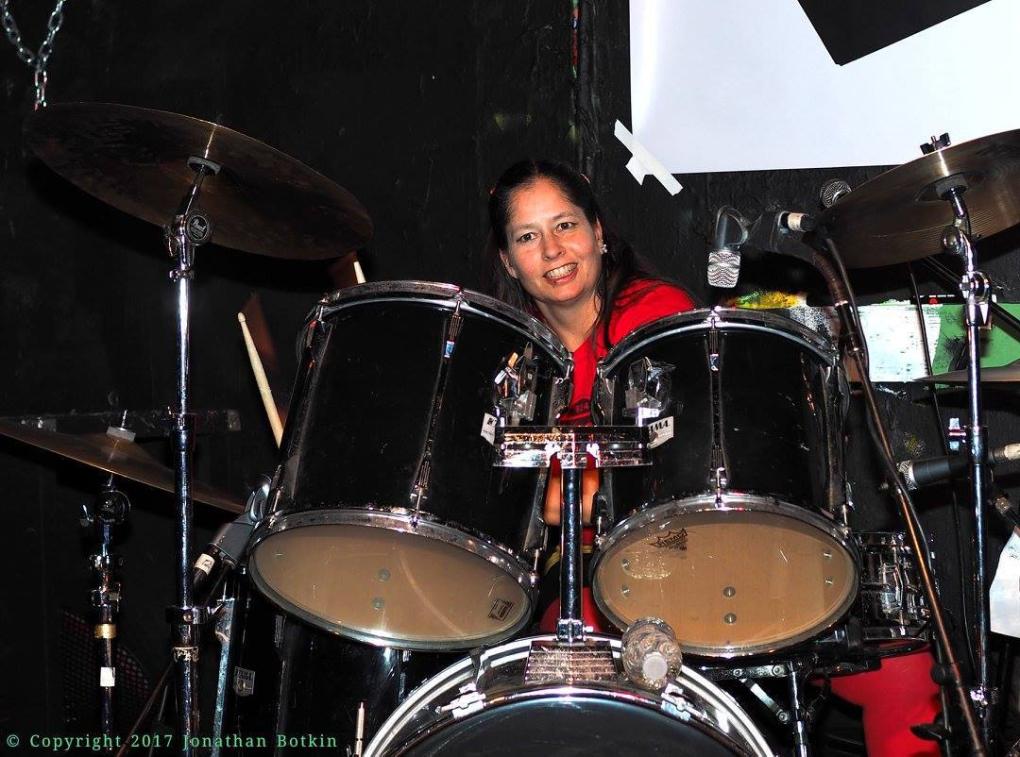
Kamala drumming with Kamala and The Karnivores in 2017. Credit: Jonathan Botkin.
“BART has a very special place in my heart and has been crucial to many aspects of my life,” she said.
In 2018, after applying for years to any position she was qualified for, Parks finally got the call that she was selected for a planner role.
She's never looked back.
“There is rarely a day I wake up and say, ‘I don’t feel like going to work today,’” she said. “I just feel so lucky.”
Parks wishes she had discovered transportation planning earlier. Growing up, she never thought of it as a profession or really knew that the field existed at all. Now, she’s doing her part to amend that for the next generation.
“A few years ago, I went back to Berkeley High School for a lunch session called ‘How did you get that cool job?’ where I met with seniors and talked about what I do,” she said. “I wish someone had done that for me!”
Through it all, the punk community has remained a constant force in her life. And she’s still involved with 924 Gilman, not as a booker or board member anymore, but as an attendee and an as-needed advisor. To this day, the venue hosts more than 20 nights of performances a month, often with bills consisting of five to six bands.
Parks left an indelible mark on the Bay Area punk scene, and now, as a planner for BART, she gets to leave a different sort of legacy behind.
"Planners come up with the ideas that spur improvements to connect communities,” she said.
And that’s a through line in her life. Whether its music or street improvements, she wants more than anything to facilitate connections– to other people and to the spaces in which they gather.
Janice Li
Role in the Region: BART plays an important role in the Bay Area meeting its climate goals
In July, BART released the Role in the Region Report, a comprehensive study of BART's impact on the Bay Area illustrated by new analyses, data visualizations, and powerful personal narratives. Over the coming weeks, we'll be sharing some of the key insights from the report in a series of Role in the Region articles here on bart.gov. Click here to read the first story -- on BART's role in reducing regional traffic -- click here for the second story, which explores BART's contributions to the economy.
We encourage you to read the full report - click here - and visit the project webpage at bart.gov/roleintheregion.
Today's post examines BART's impact on the regional economy. See the full report for methodology.
BART is one of the greenest ways to get around the Bay Area and taking public transit is one of the easiest ways to reduce your greenhouse gas emissions.
Consider these facts:
- Transportation accounts for 38 percent of California's greenhouse gas emissions.
- Driving releases 42 times more greenhouse gases per mile than BART.
- Every BART train car moves as many people as 76 automobiles.
California has a 2045 target date to achieve carbon neutrality and help prevent the worst impacts of climate change. The transition to zero-emission vehicles alone will not happen fast enough to meet state and regional climate goals.
What BART Riders Say…
“I think BART makes the world a better place. It provides an economy of scale, is better for the environment, and allows for more urbanization in the region.”
Samantha Greenstone, High School Student at Orion Academy in Concord
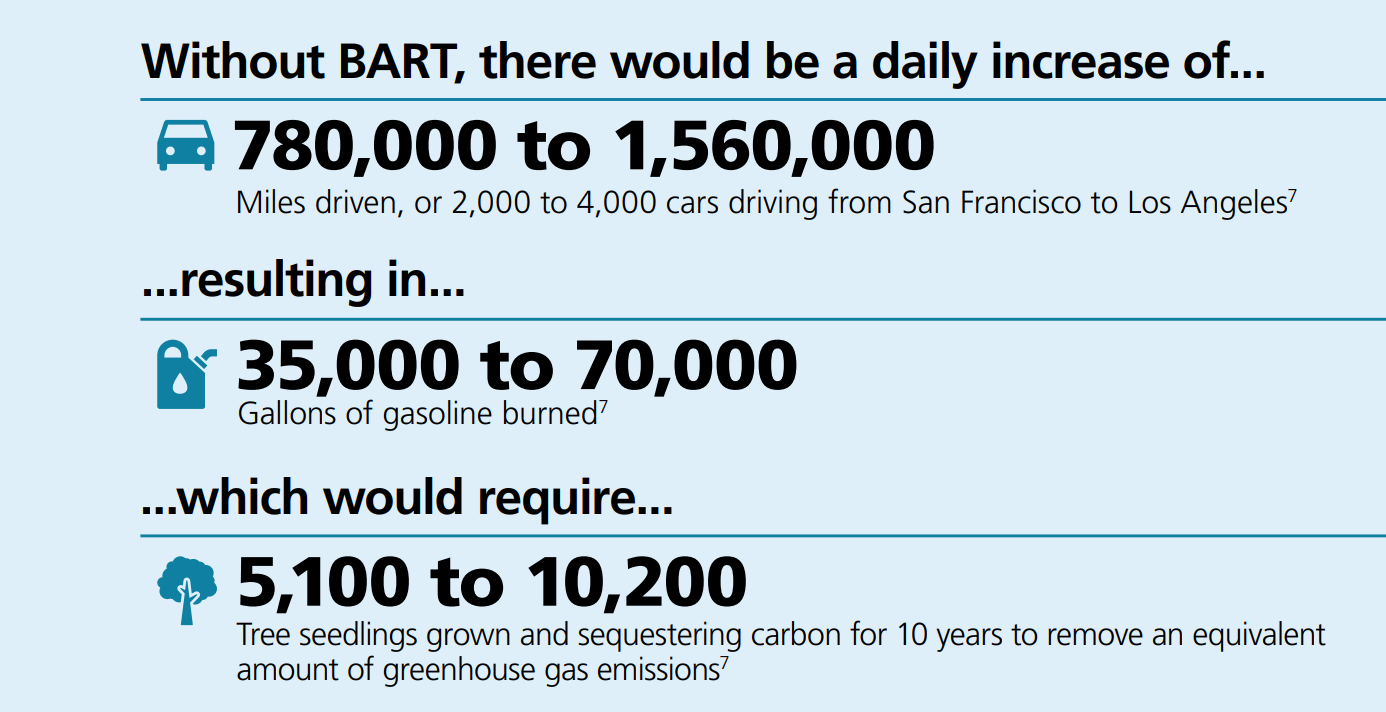
Without BART, there would be a daily increase of 780,000 to 1,560,000 miles driven, which is equal to 2,000 to 4,000 cars driving from San Francisco to Los Angeles. Removing an equivalent amount of greenhouse gas emissions would require planting a new San Francisco-sized forest every two years to offset the extra carbon dioxide.
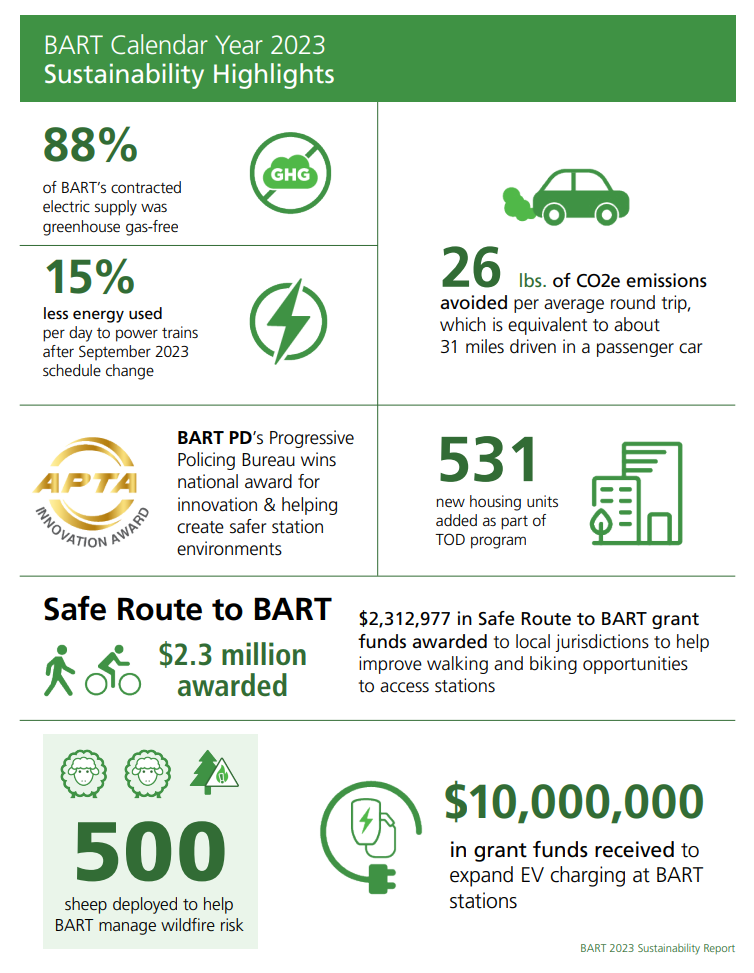
100 percent of BART’s contracted electricity supply has been greenhouse gas emission-free in recent years, and BART is helping transit agencies operating buses achieve their electrification goals with battery charging at BART stations. BART continues to find new ways to lower emissions; our September 2023 schedule change, which introduced shorter trains and only Fleet of the Future train cars running for the base schedule, resulted in a 15% reduction in energy used per day.
What BART Riders Say…
“To me, BART is a sustainable way of life. When I take BART, I feel like I’m doing my part."
Rider from San Francisco, CA
Taking BART and other public transit options is one good thing anyone can do for the planet.
Learn more about BART's sustainability practices and read the 2023 Sustainability Report at bart.gov/sustainability.
Saturday, July 26: Oakland Roots to celebrate BART with special match, station parade, and Kamaiyah halftime show
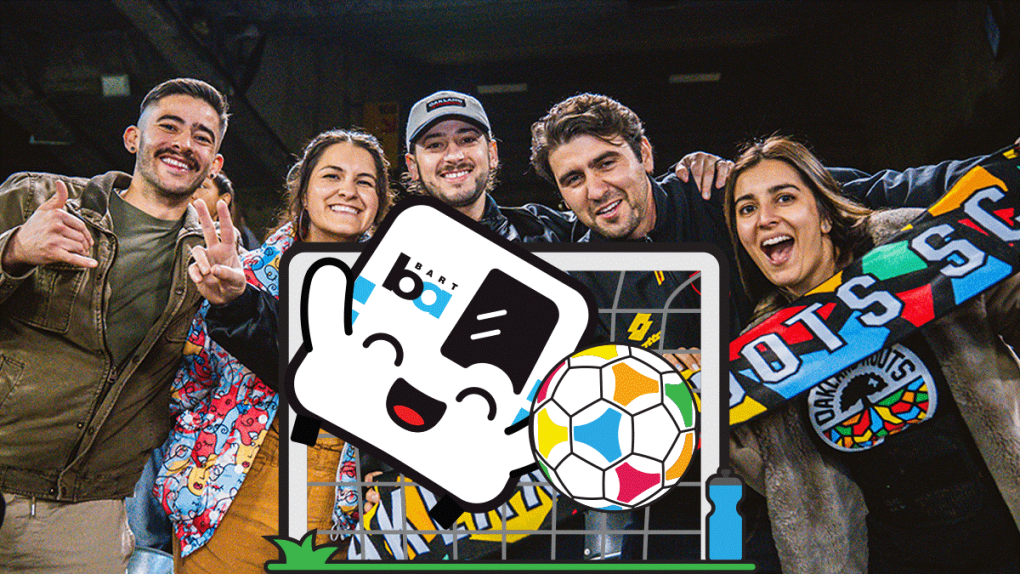
Meet BART on the pitch for a special Oakland Roots match celebrating transit at the Oakland Coliseum on Saturday, July 26.
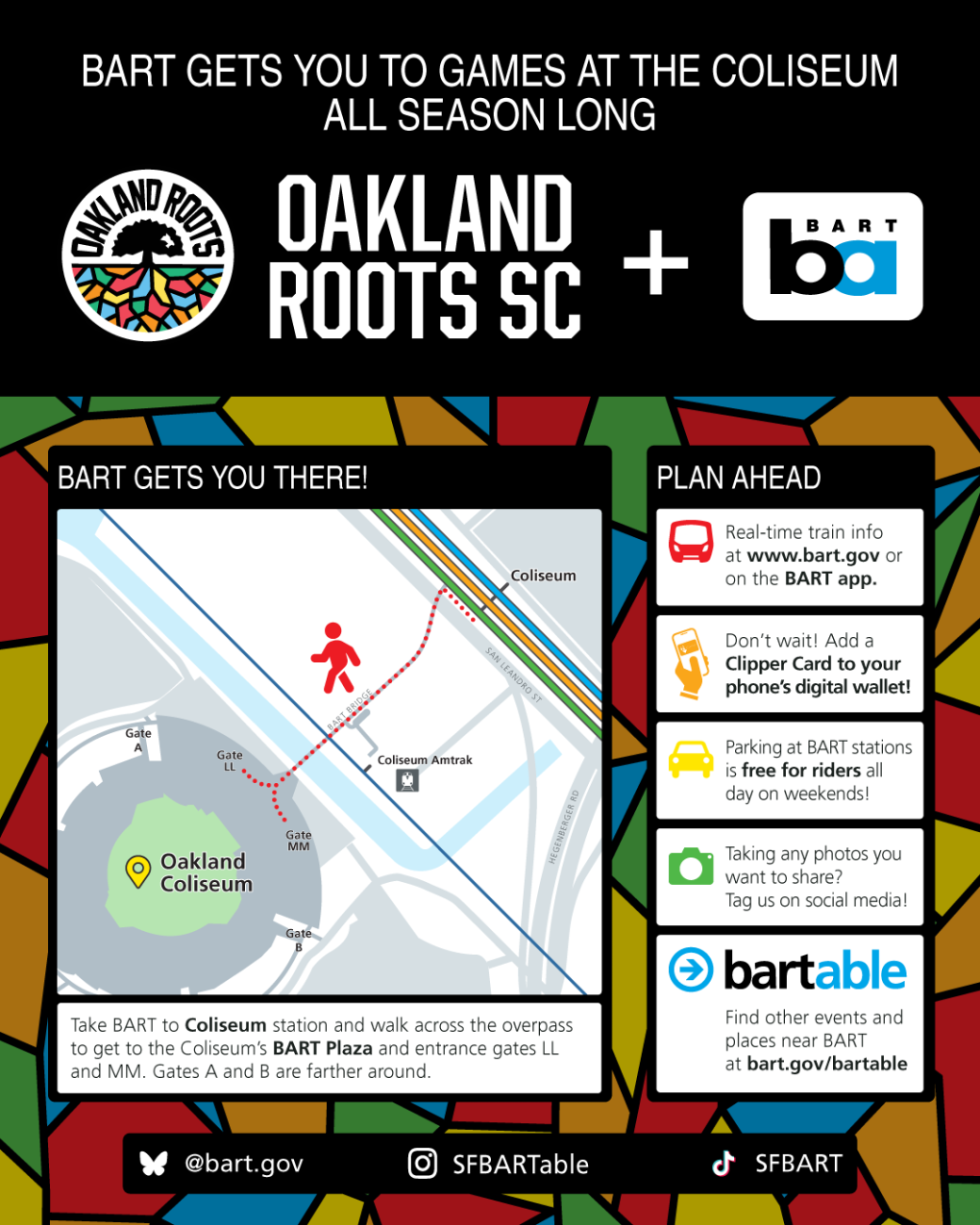
Before kickoff at 1pm, BART invites you to join a fan parade from Coliseum Station across the bridge to the stadium. To get in on the fun, meet BART staff at the station near the bridge between noon and 12:30pm. The parade will begin at 12:30pm.
The Roots are also offering a special discoount. Use the promo code BART to save 20% on Roots tickets for this and all other Roots games.
Purchase discounted tickets to the match here.
The BART Title Game match will be played against Orange County SC at the Oakland Coliseum, just steps from BART’s Coliseum Station. The Oakland Roots compete in the United Soccer League (USL) Championship, which features 24 teams across the United States.
Similar to the Oakland Ballers’ recent Public Transit Night, the Roots’ BART Title Game will feature BART throughout the afternoon. Planned BART activities include the fan parade, photos with the BARTmobile, and surprises. And did we mention Oakland rapper and singer Kamaiyah is playing the BART Halftime show?
Driving ridership through sports partnerships
The BART Title Game is part of BART Marketing’s efforts to boost ridership and foster stronger ties with local communities through strategic partnerships. BART partners with over 250 local organizations annually, helping to significantly expand the reach of our messaging. These partnerships come at no cost to BART and promote that taking BART is fun, in addition to being convenient, inexpensive, and environmentally friendly.
Since the pandemic, ridership on nights and weekends is growing faster than commute ridership. While people may not be going into the office as often as they used to, they are going to games, shows, museums, and other fun events that can only be experienced in person. Our partnerships lean into this.
Discover more BARTable fun at bart.gov/bartable and check out our Rider Guides page with tips for how to get to local sports and entertainment venues by BART.
Tool Time with BART Deputy General Manager Michael Jones: A free family event at Fremont Station on August 8
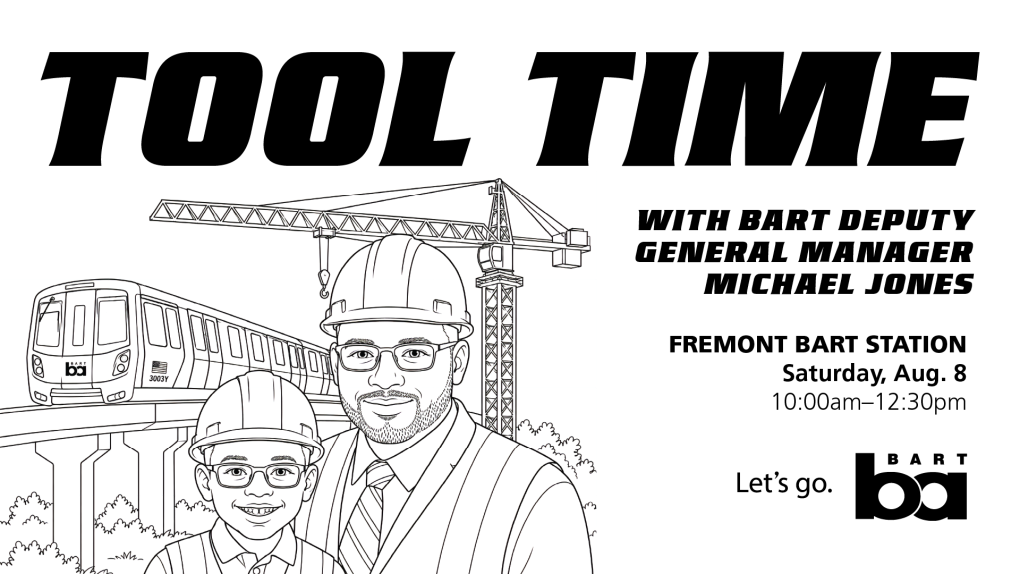
On Saturday, August 8, BART Deputy General Manager Michael Jones invites riders to explore the inner workings of BART and the equipment that keeps it running for Tool Time with the BART Deputy General Manager, in the Fremont Station north parking lot from 10am to 12:30pm.
The free all-ages event will be held beside an active construction area, where BART is currently working to replace a vital interlocking nearing the end of its lifespan. The "Machines of BART," a series of equipment and vehicles BART uses to build, maintain, and run the system, will be on display for the day, giving families the rare opportunity to see things like high railers, a vactor truck, a speed swing, and other cool tools up close, with staff on hand to answer questions.
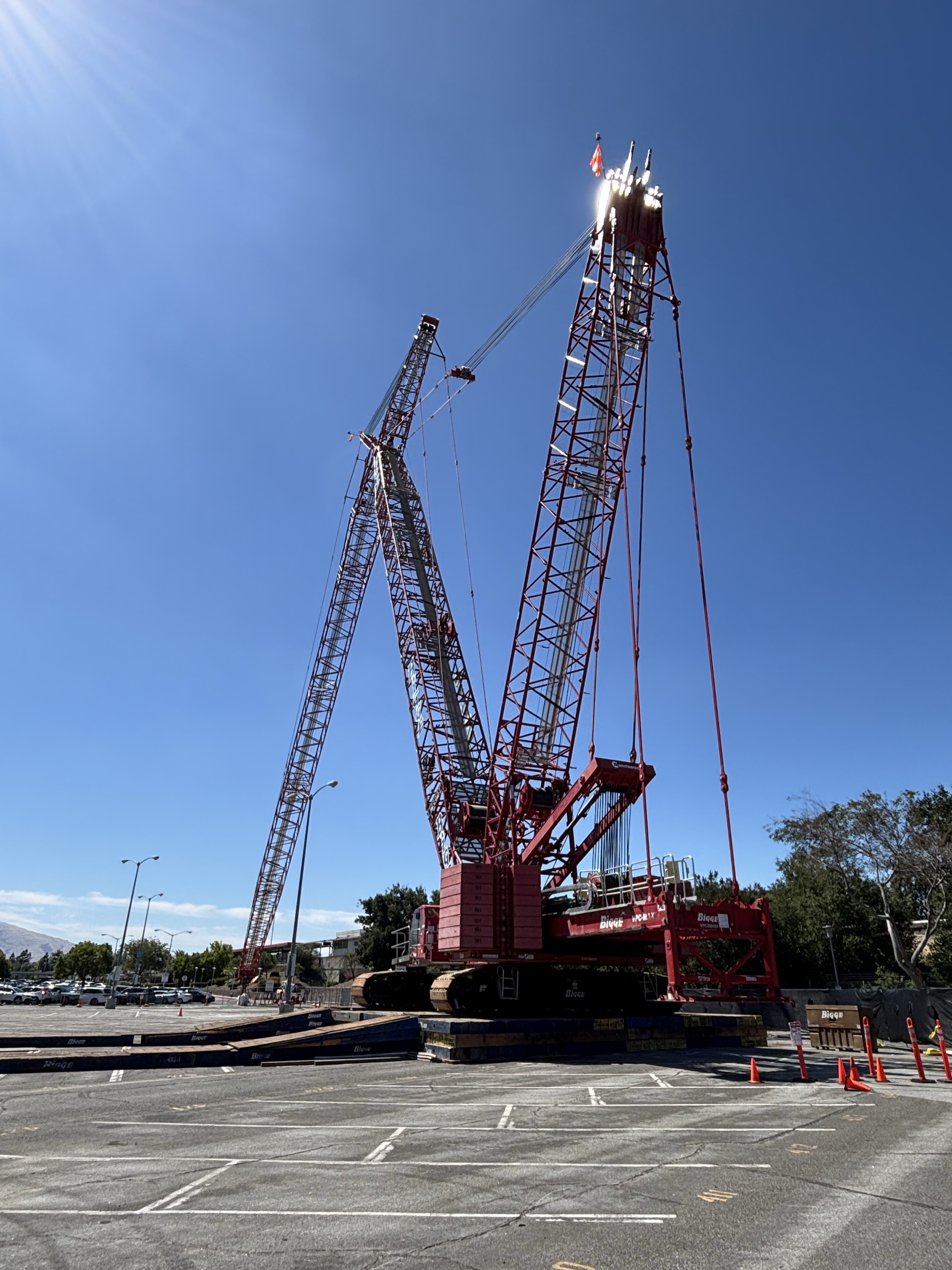
A highlight of the day is a live crane demo, featuring the project’s massive Bigge crane -- the second largest of its kind on the West Coast! The demo will take place at 11am.
Other activities include a BART Police K9 demonstration, BART engineer show-and-tell tables, a Railgoods BART Merch pop-up shop, and more. The event will also give attendees the chance to meet and ask questions of BART Deputy General Manager Michael Jones and members of BART’s dedicated workforce.
Tool Time will be held in the Fremont Station Parking Lot next to the construction area on the north side of the station, which is currently an active construction laydown area where crews are working to replace the interlocking between Union City and Fremont stations. Interlockings are fail-safe systems that allow trains to safety cross from one track to another. Come see for yourself!
What: Tool Time with BART Deputy General Manager Michael Jones
When: Saturday, August 8, 10am to 12:30pm
Where: Fremont Station (2000 BART Way, Fremont), north parking lot beside the construction area
IMPORTANT - If you are driving and parking, the Mowry Ave./Waterside Circle parking lot entrance will be closed during the event. Enter the north lot from Walnut Ave. or the south lot via BART Way.
Parking is free at BART stations on weekends. Taking BART is encouraged.
Free and open to all ages.
Restrooms and water onsite; wear sunscreen and a hat.
Transit Saves the Planet: BART celebrates Earth Day with educational marketing campaign and collaborative community tree planting
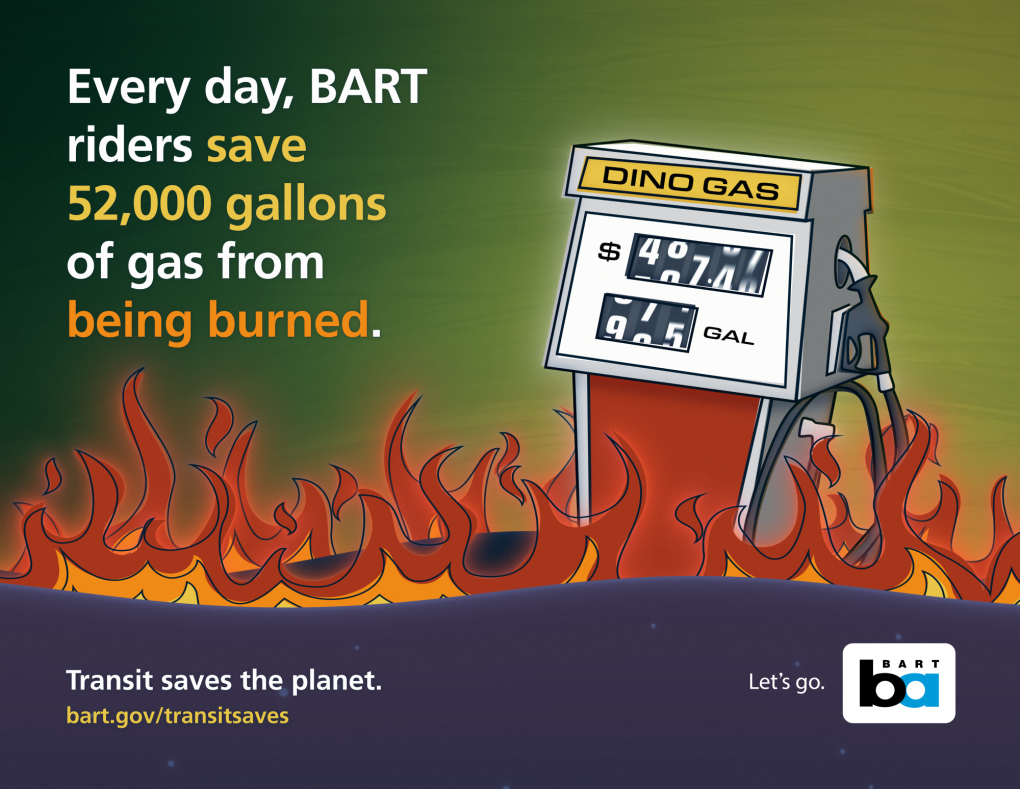
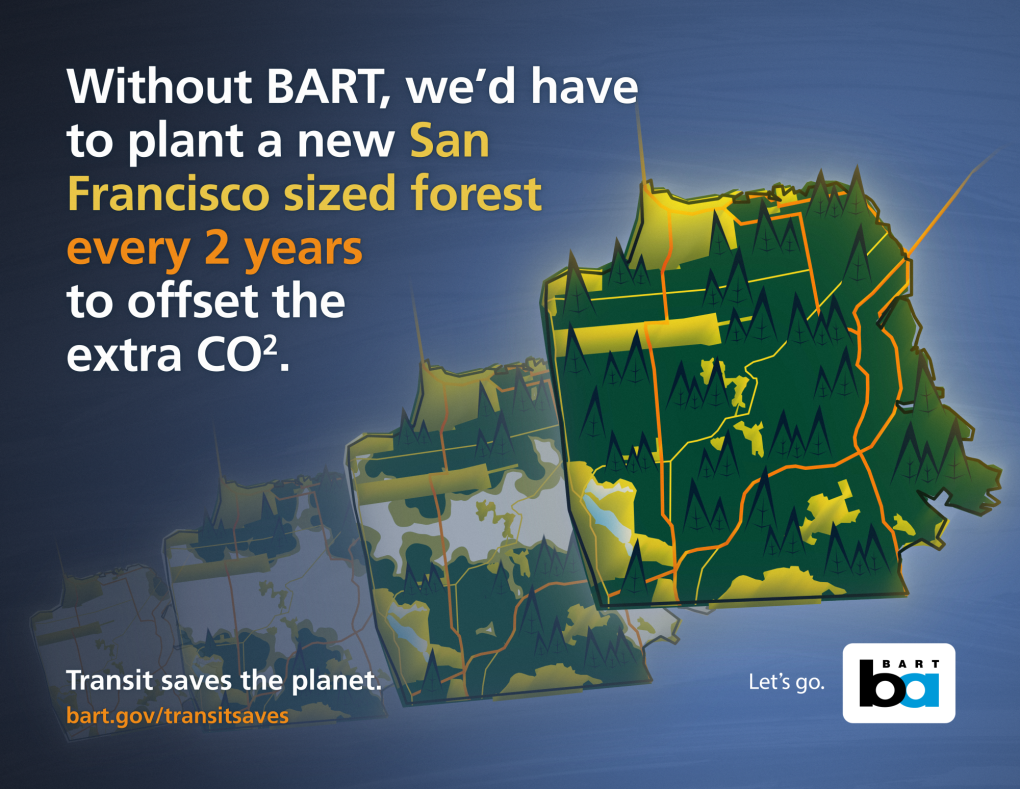
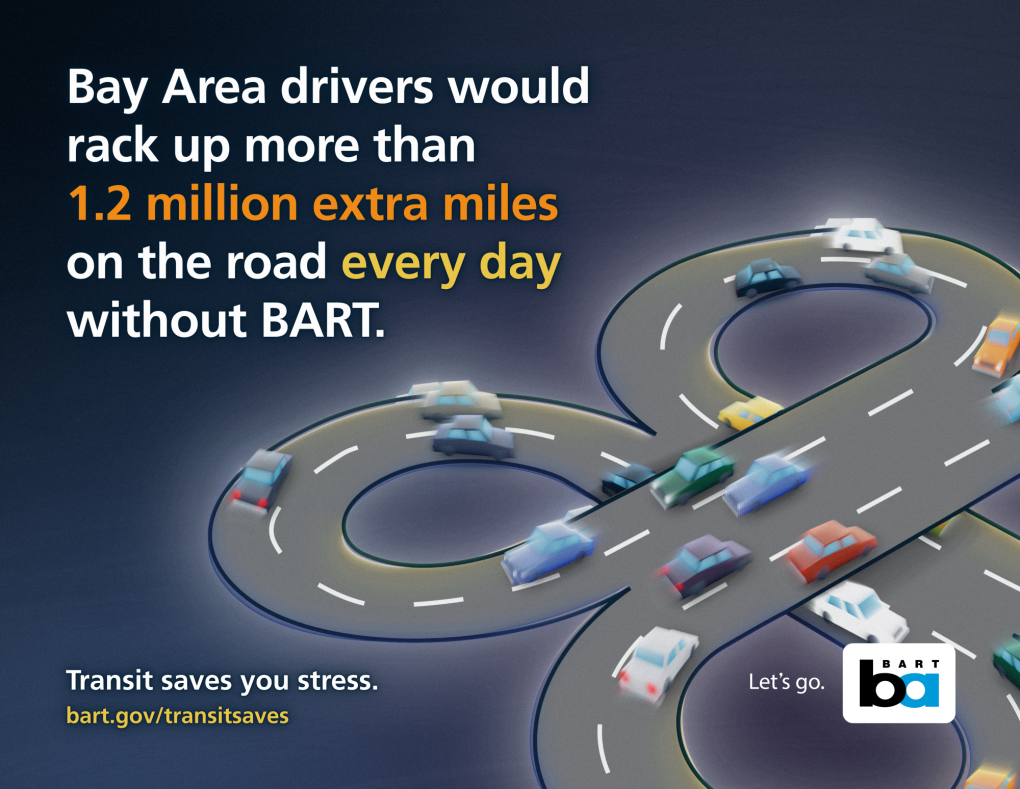
BART's new Transit Saves 2024 campaign art is featured in the slideshow above.
Earth Day is an international event held annually on April 22 to celebrate sustainability and raise awareness about environmental protection. At BART, it is an important opportunity for us to reflect on the many challenges our planet faces, including climate change, deforestation, and environmental pollution, as well as the ways we can be part of the solution.
BART takes special care to acknowledge Earth Day every year because sustainability is a core value of our organization. On past Earth Days, we interviewed riders on trains about their carbon footprints; we created a map highlighting some of the creatures and green features around the BART system; we even put together a BART-themed Earth Day quiz.
This year, we’re celebrating Earth Day with a new educational marketing campaign that highlights some of the environmental benefits of taking BART. The campaign is now live on the digital screens in select stations and will also occupy the ad spaces in stations and trains. You can see the art in the slideshow below.
Additionally, this year BART collaborated with the Oakland Parks and Recreation Foundation and Trees for Oakland to host a tree planting event. The volunteers, which included many BART employees, planted more than 100 native trees at the Martin Luther King Jr. Regional Shoreline in Oakland.
Public transportation is one of the greenest ways to get around, and on Earth Day, BART celebrates that. Learn more about the campaign and the tree planting below.
Happy Earth Day!
BART launches second edition of Transit Saves marketing campaign
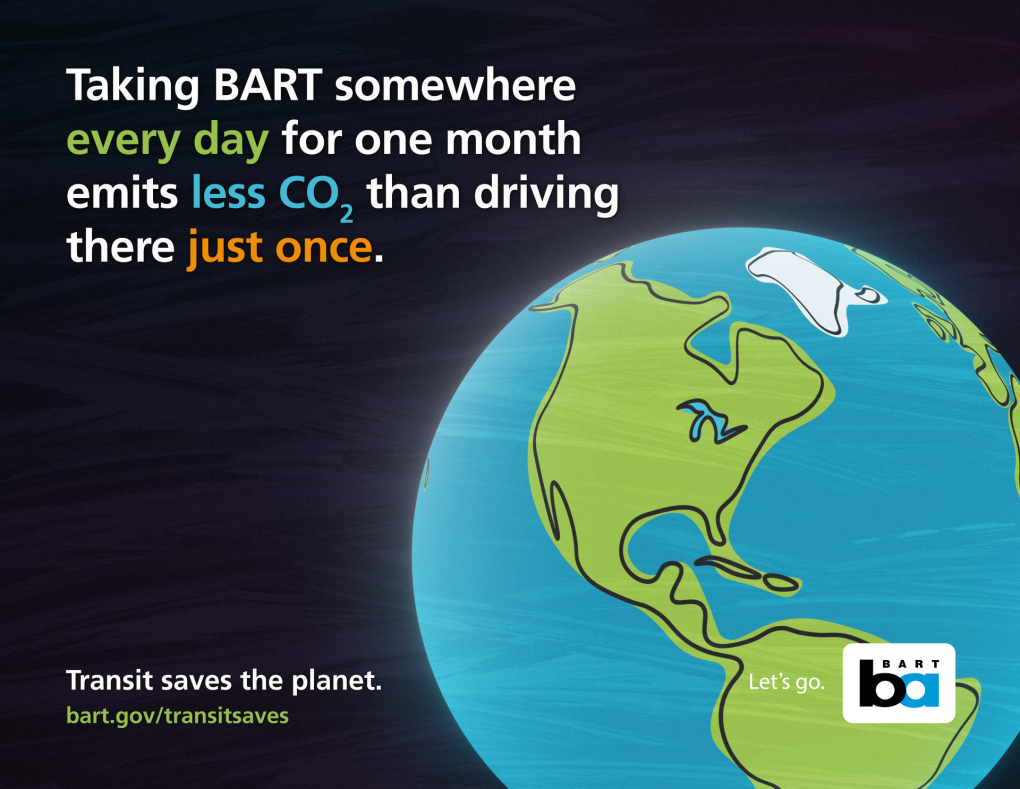
A panel from Transit Saves 2023.
Today, BART is thrilled to launch the second edition of our Transit Saves marketing campaign with three novel art concepts. We debuted Transit Saves in 2023 to highlight the many reasons public transportation enhances our communities, but there were simply too many ways “transit saves” to include in a single campaign. So, we created another one.
You can view the new art, which includes updated data from our forthcoming Role in the Region Study, in the above slideshow. As of today, you will begin to see the art around the Bay Area, including in the ad spaces on trains and in stations. Animated versions of the art will be rotating on the digital advertising screens in some BART stations as well.
Check out our Transit Saves webpage for some quick facts about BART’s importance to the region (environmentally and otherwise) and to view our methodology.
BART collaborates with local organizations for tree planting event
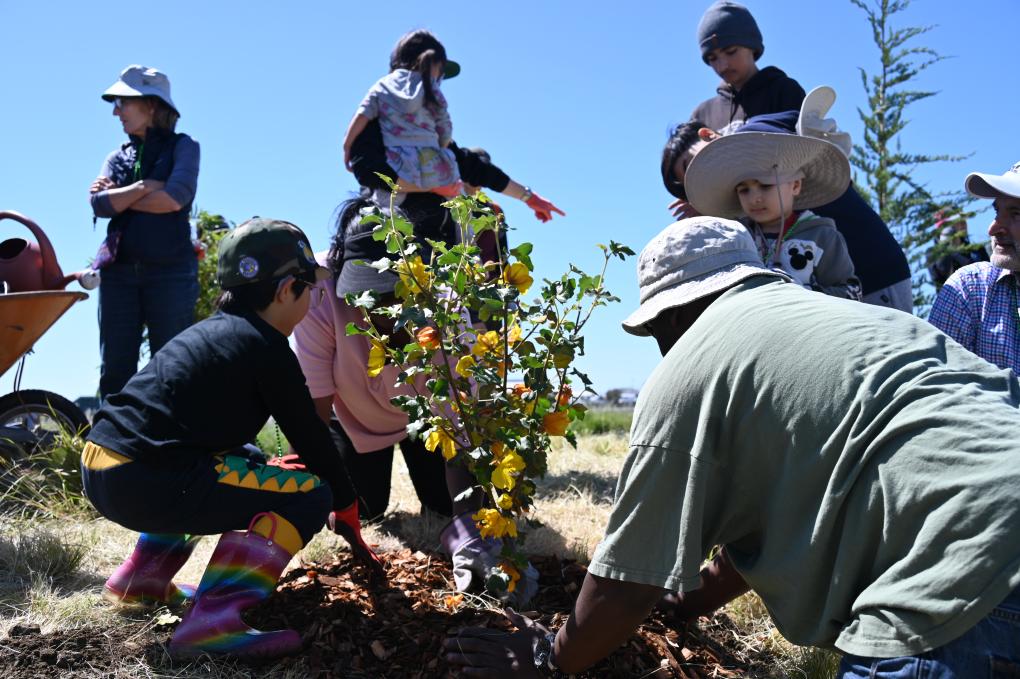
BART is committed to bringing the community together to safeguard our local environment.
For Earth Day, BART’s Sustainability Department organized a tree planting event at the Martin Luther King Jr. Regional Shoreline in Oakland on Saturday, April 20, in collaboration with the Oakland Parks and Recreation Foundation and Trees for Oakland. BART employees, their loved ones, BART District 4 Director Robert Raburn and his wife, Pat, and other members of the community came together to plant 100 trees, including Monterey cypress, Catalina ironwood, hollyleaf cherry, flannel bush, and various types of oak. These trees are native, climate adapted and/or shoreline adapted, and will help sequester carbon that would otherwise contribute to climate change. As you can see in the above Transit Saves art, if we didn’t have BART, we’d have to plant a San Francisco-sized forest every 2 years to offset the extra CO2 emissions. The trees we planted will also provide habitat for animal species and shade for humans and animals seeking relief from heat.
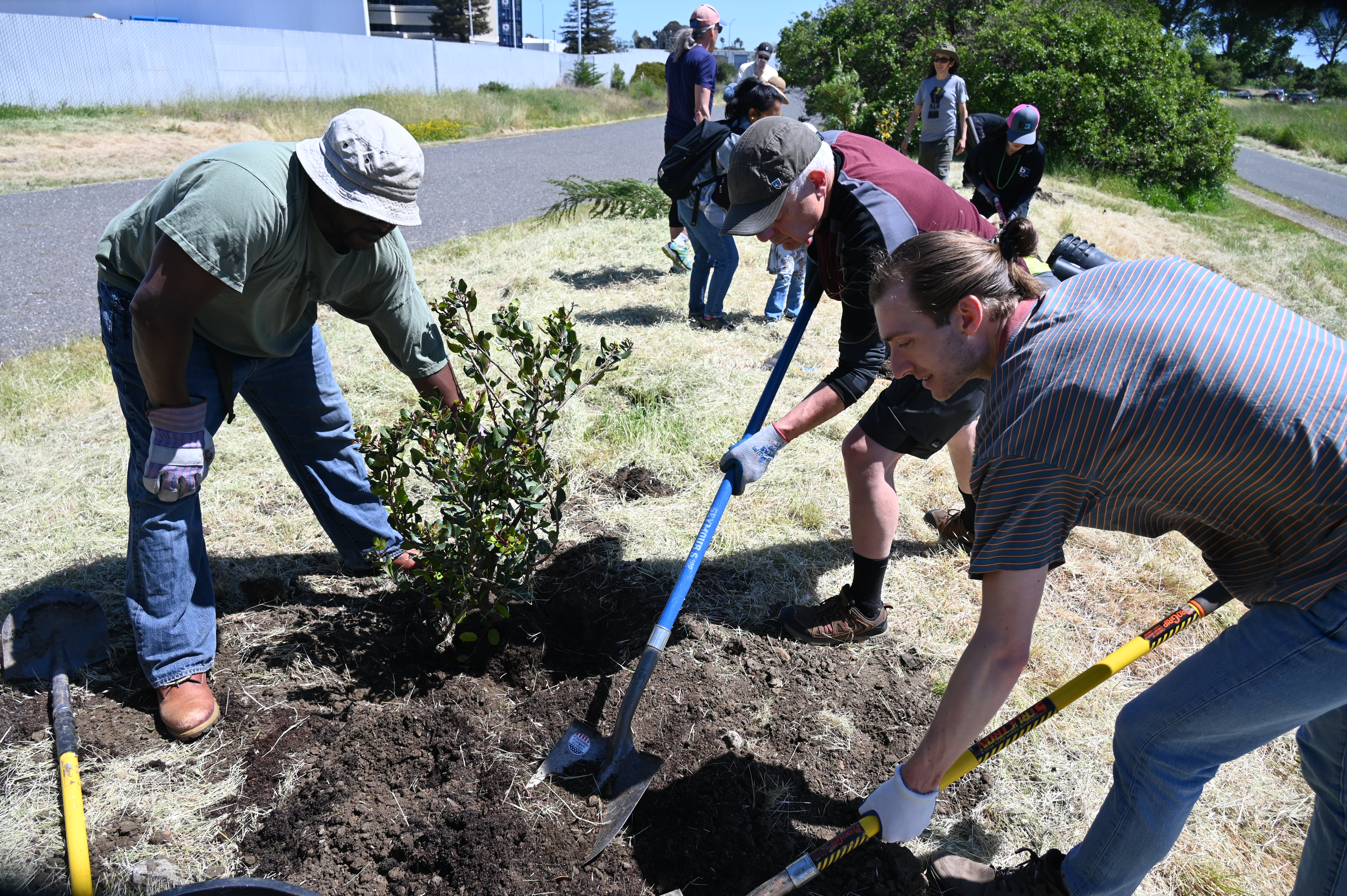
“It was such a pleasure to see everyone out here doing work that helps fight against climate change,” said BART’s Principal Sustainability Analyst, Michael Cox. “We are all public servants at BART, and we take extra pride in being able to help our community with events like this.”
Added Alex Pinto, the Community Greening Program Manager at Oakland Parks and Recreation Foundation: “I see Earth Day as an important opportunity for us to connect with nature in new ways and learn about the natural world. Putting away our electronics and placing our hands in the soil can be a relaxing and gratifying experience.”
Please join us this Earth Day by learning about the role transit plays in protecting the Bay Area and our planet. Additional information about BART's ongoing sustainability efforts can be found here. And of course, consider taking BART to your destination whenever possible!