
Search Results
Transit-oriented development takes off at BART: Coliseum Connections
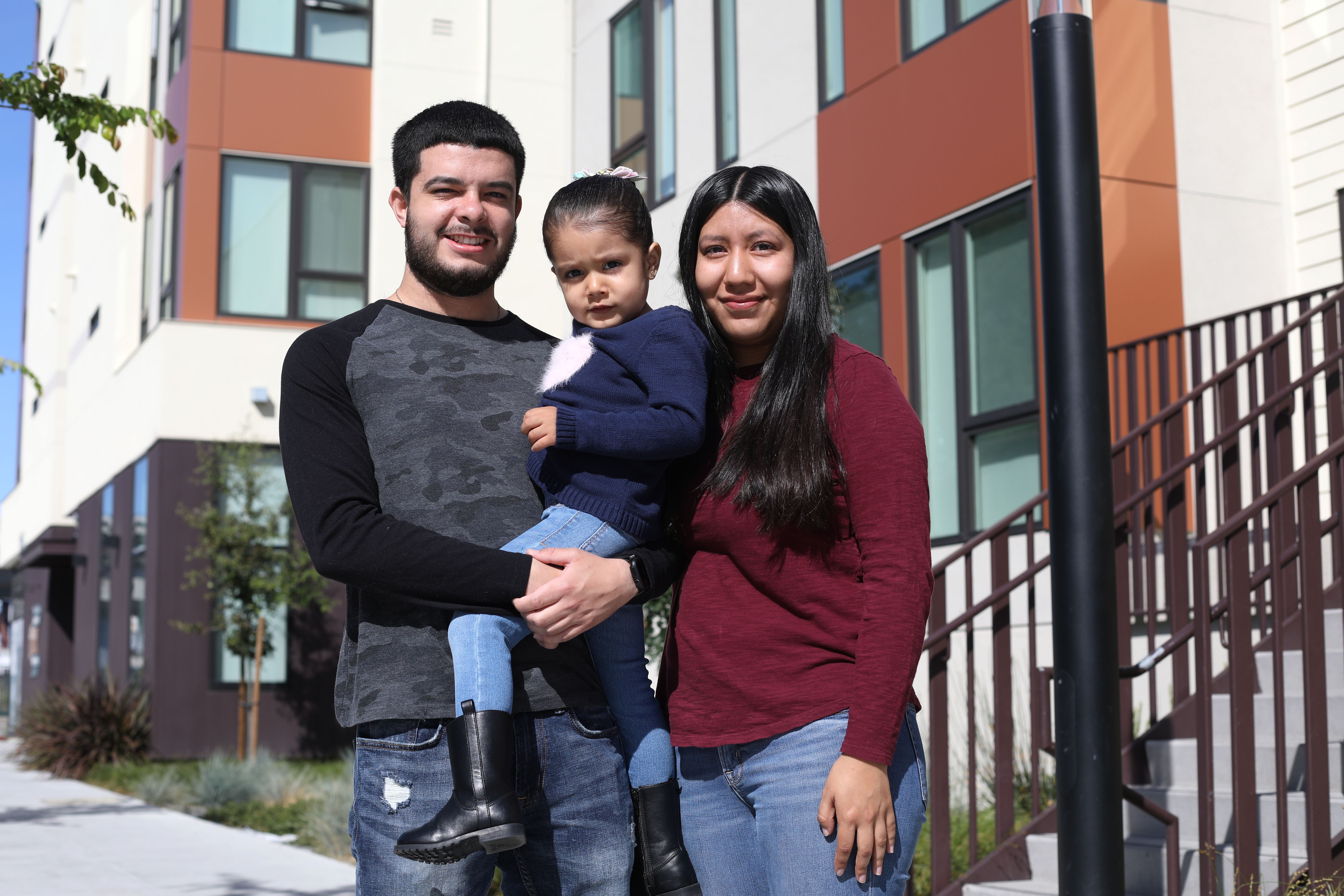
A new transit-oriented development project at BART's Coliseum Station is a rare truly mixed-income property, with half its 110 apartment units designated as moderate-income rents and half set aside as affordable housing for those making 50%-60% of the average median income (AMI) for Oakland.
The Coliseum Connections project is an example of BART’s transit-oriented development program, which is committed to making housing near transit affordable for all income levels. The moderate-income units rent to families that earn 80% to 120% of the AMI, for monthly rents of $2,200 to $2,700; the affordable units rent for $1,100 to $1,570, depending on size and design. (Affordable housing tenants pay 30% of their income in rent.)
A stroke of good luck introduced tenant Jesus Barragan to the property. He and his wife and daughter had been living with his parents while they searched for a place of their own.
"We had been living with my folks and looking for housing for more than a year," Barragan said. "One day I just happened to be browsing the internet and I came across a listing for Coliseum Connections. It was two days before the deadline to submit the application, so I guess it was meant to be."
Barragan knows the benefits of public transit directly; his job is driving the Emery-Go-Round shuttle that connects the MacArthur BART Station to locations in Emeryville. His family, including wife Andrea and 3-year-old daughter Adilyn, love their apartment.
"It's a very good location and the community is really nice," Barragan said. "Everything is new. It has air conditioning, and a dishwasher."
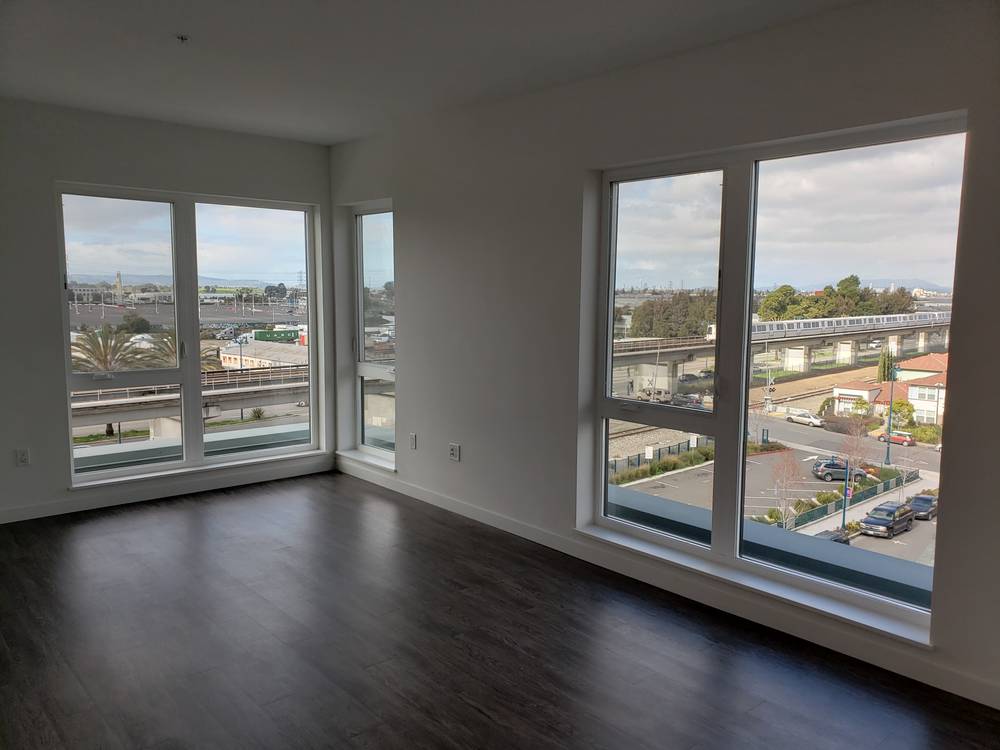
View of sample apartment interior; photo courtesy of UrbanCore Development
The family is looking at preschools in the area for Adilyn, planning to enroll her in the fall. They enjoy being close to BART, which they use mostly on special occasions.
"For my wife's birthday we took BART into the city, then got on the bus, and went to Pier 39 for some sightseeing," he said. "It's very convenient."
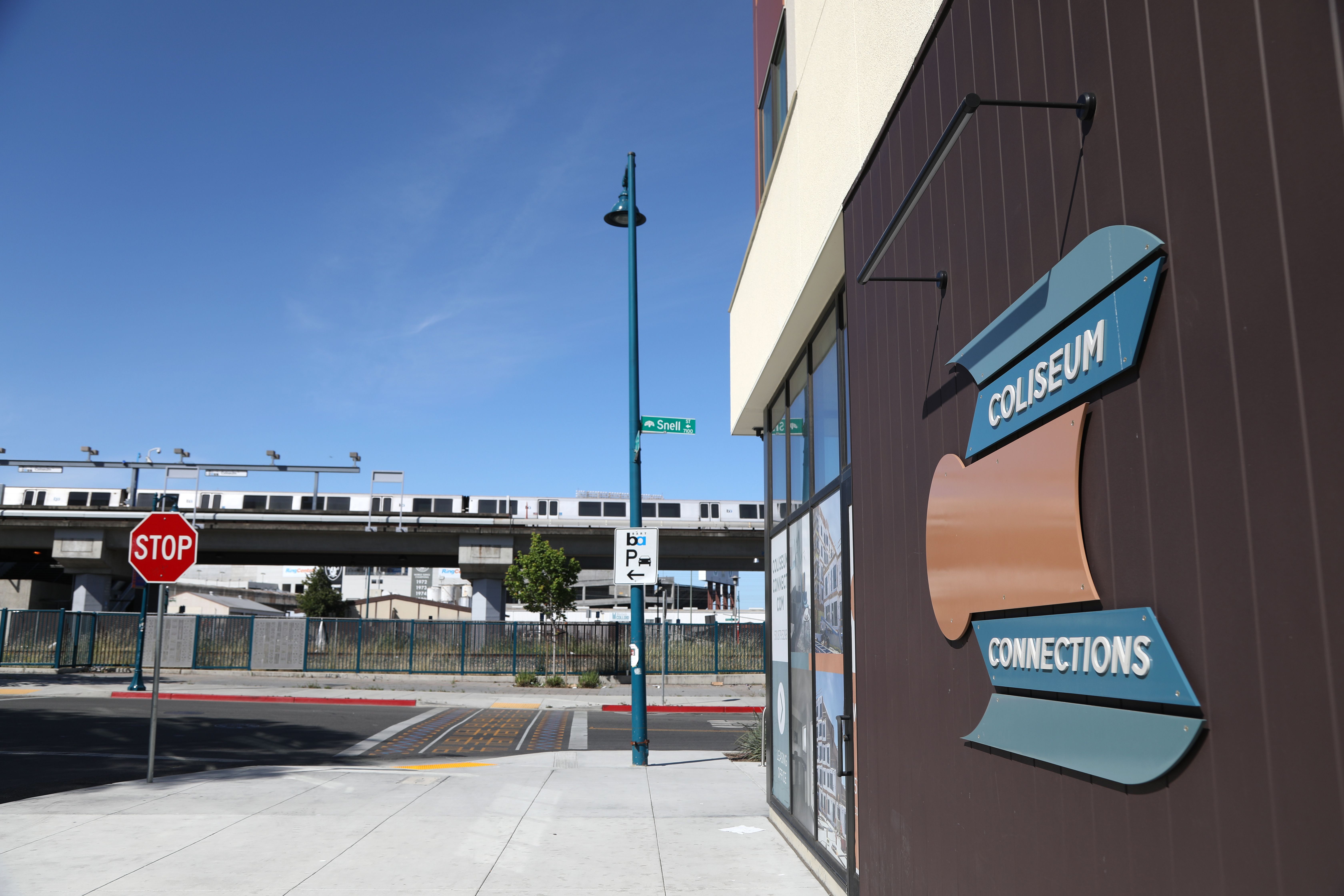
Exterior view of Coliseum Connections building with BART train in the background
Coliseum Connections features a community cafe and other common spaces; 86 residential parking spaces, three of which are electric charging spaces; a bicycle pavilion; and a 25-foot wide landscaped walkway with bioswales to treat stormwater runoff. In addition, City of Oakland replaced 90% of the parking displaced by the development with parking on adjacent city streets so that existing riders would not be significantly impacted.
The project illustrates the complexity of housing developments in the region -- it was about 16 years in the making, according to John Rennels, Project Manager in BART's Real Estate and Property Development Department, who has worked in the field for nearly three decades.
"It took a lot of tenacity and ingenuity to get here," Rennels said. Coliseum Connections was built in collaboration with UrbanCore Development and the Oakland Economic Development Corporation, who hold a long-term lease on the 1.32-acre parcel adjacent to the station.
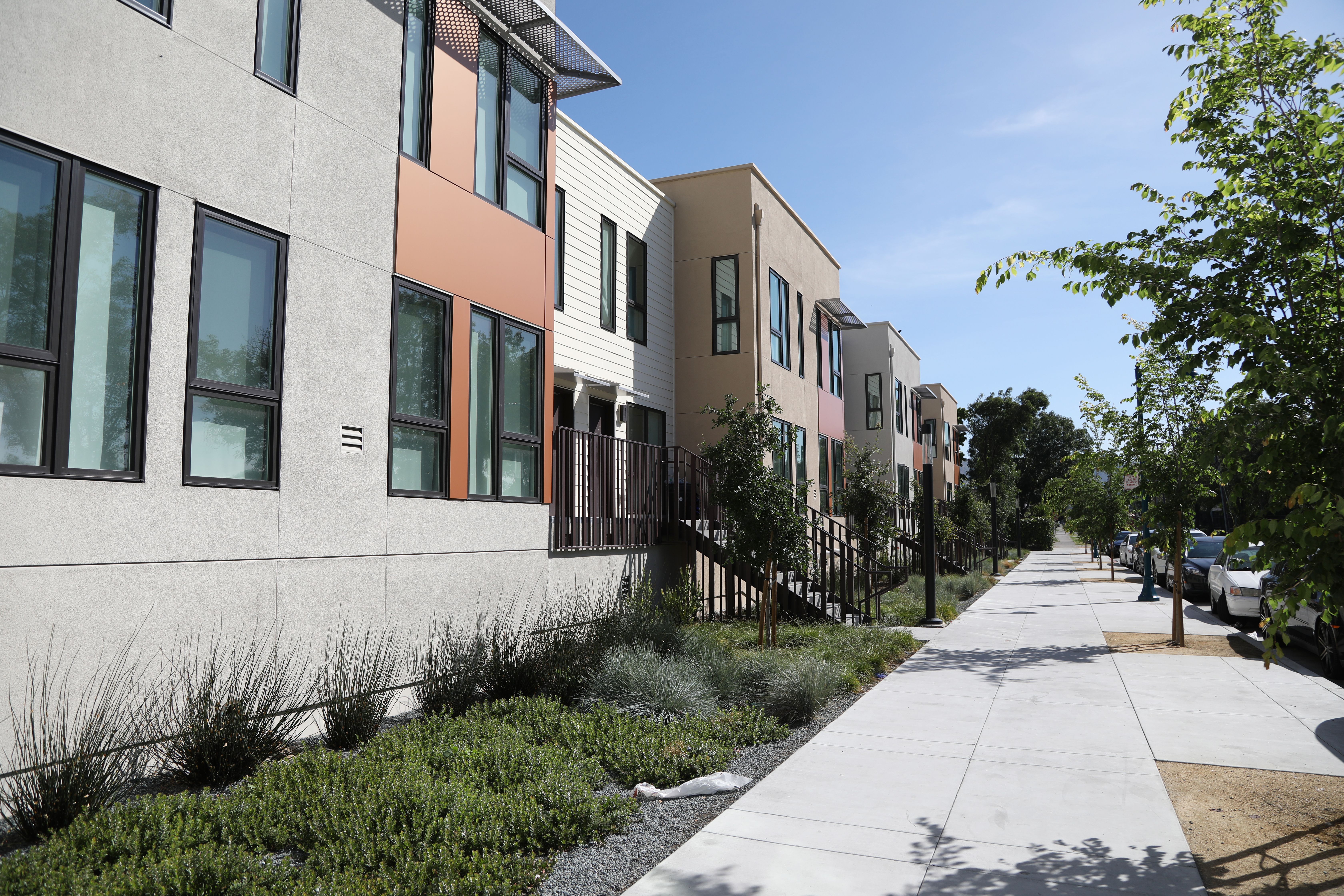
Wide sidewalks and environmentally friendly landscaping surround the apartment units
The project exemplifies how public funds can be leveraged to attract private investments to support regional housing needs. With $24.5 million in public funding, including funds from City of Oakland, the state, the County of Alameda and others. Coliseum Connections was able to leverage $61 million in private investment dollars including a construction loan from Chase Bank. Public-sector funding enabled a larger number of affordable units, exceeding percentages typically found in privately only financed projects.
"It's been very, very hard to deliver affordable projects in this market," said Abby Thorne-Lyman, BART's Group Manager for Transit-Oriented Development. She said moderate-level housing is sometimes called the "missing middle," for middle-income workers who can't afford market-rate apartments yet often make too much to quality for affordable housing subsides.
Michael E. Johnson, President and CEO of UrbanCore, said the mixed-income nature of the project makes it unusual.
"It's not like a typical project where the developer throws in a slice of some affordable housing," he said. "It's right down the middle, 50% market rate and 50% affordable. We haven’t separated the types of units into one building or another. There is no distinction."
Johnson said another important aspect of the project is its location in East Oakland, an area that has not had a lot of reinvestment, despite the easy access to public transportation. "With the traffic jams we have in the Bay Area, it's a big benefit to be close to BART, and cut down on the reliance on cars," Johnson said. One aspect of the project that helped to contribute to its feasibility was the use of modular housing construction, which lowered the project cost by approximately 10% and shortened the time frame for construction by 25%. Contractor Cahill, architect PYATOK architecture + urban design, and modular construction consultant Prefab Logic managed the process to achieve those results, he said.
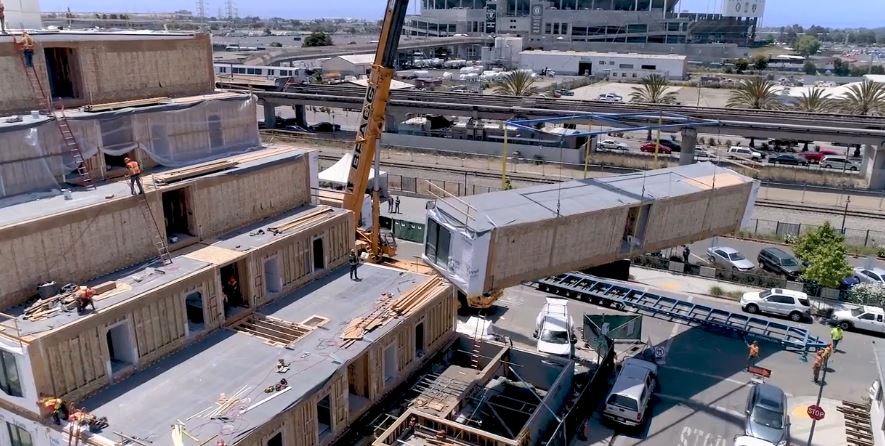
The Bay Area housing shortage is real and not going away anytime soon, he added.
"We have a housing crisis. There's not enough supply at every level – affordable or market rate. We're thousands and thousands of units behind and there's a need for so much more."
BART has seen progress on many fronts toward transit-oriented development this year.
* In April 2020, the Board amended its Transit-Oriented Development Policy to support the production of affordable housing. The policy amendments provide greater clarity about the expected financial affordable return to BART from its developments and allow for a discount of up to 60% from fair market value for its land for projects with affordable housing. Projects with a greater share of affordable housing, and serving households with lower incomes, are eligible for a higher discount.
* On June 11, 2020, the Federal Transit Administration awarded BART $2 million as part of a nationwide TOD grant, to go toward projects at Richmond, El Cerrito Plaza, North Berkeley and Ashby stations.
* On June 24, 2020, BART released the draft of a technical guide to zoning for AB2923, the result of engagement efforts around legislation prioritizing station area development. Public comment is being taken on the draft through Aug. 7. 2020. AB2923 and TOD will be discussed at the Board of Directors meeting on July 23, 2020.
* On June 25, 2020, the state's Strategic Growth Council approved eight additional grants for BART totalling nearly $39 million through the Affordable Housing and Sustainable Communities (AHSC) program, which is funded from the State’s greenhouse gas emissions reduction cap-and-trade initiative. The program combines affordable housing funding with low-carbon transportation investments.
BART submitted eight applications for projects at Balboa Park, Fruitvale, West Oakland, Ashby, Bay Fair, Concord, North Berkeley and Powell Street stations. The AHSC grants invest in new Fleet of the Future train cars and station improvements and will leverage funding from Measure RR Station Access projects.
"We've worked hard to be a good partner on transit-oriented development and that's paying dividends," Thorne-Lyman said.
BART Connects: Meet the real riders whose lives have been changed by BART
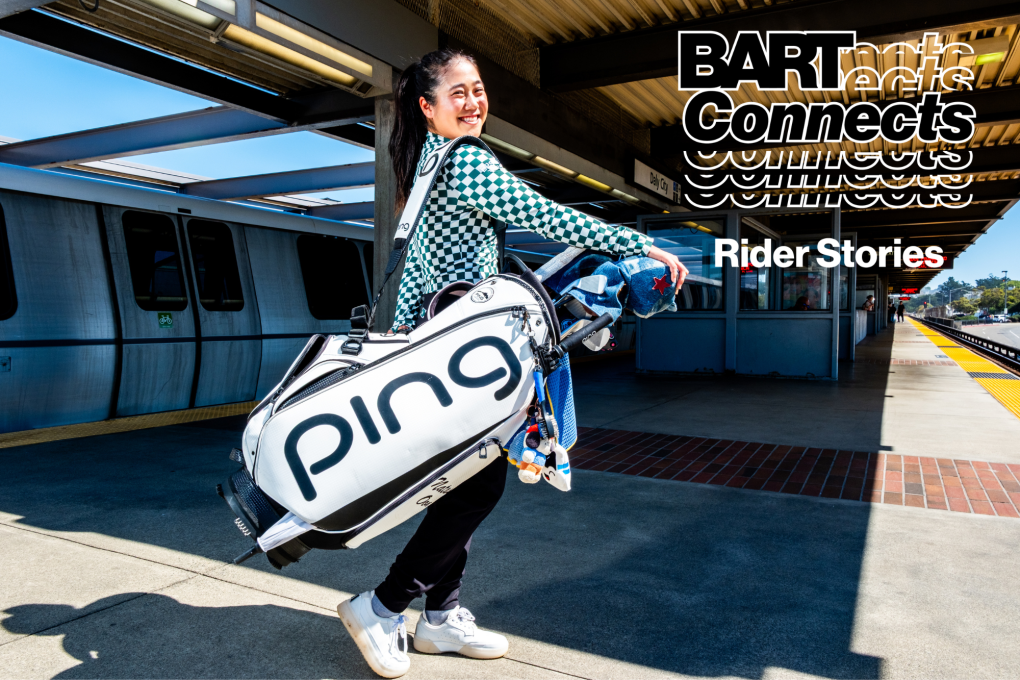
Tens of millions of people ride BART every year -- to work, dates, practice, friends, and fun. BART Connects tells their stories.
Today, June 22, BART Communications is launching the second edition of BART Connects, a storytelling series that features real BART riders who span generations, neighborhoods, and walks of life. You can read their stories now at bart.gov/bartconnects.
In the coming months, the stars of BART Connects will take us for a ride in a series of video featurettes that will be regularly posted on BART social media. Below, watch the first video, featuring Grammy-winning musician Fantastic Negrito.
You will also see the faces of BART Connects riders in advertising spaces in the BART System and across the region.
BART Connects grew out of a call for rider stories BART Communications launched in 2023 to learn how our transit system impacts people’s lives. The initial response made clear that BART means something to those who ride it.
Have a cool BART story to share? Submit a short summary at bart.gov/story. You may be the next BART Connects feature!
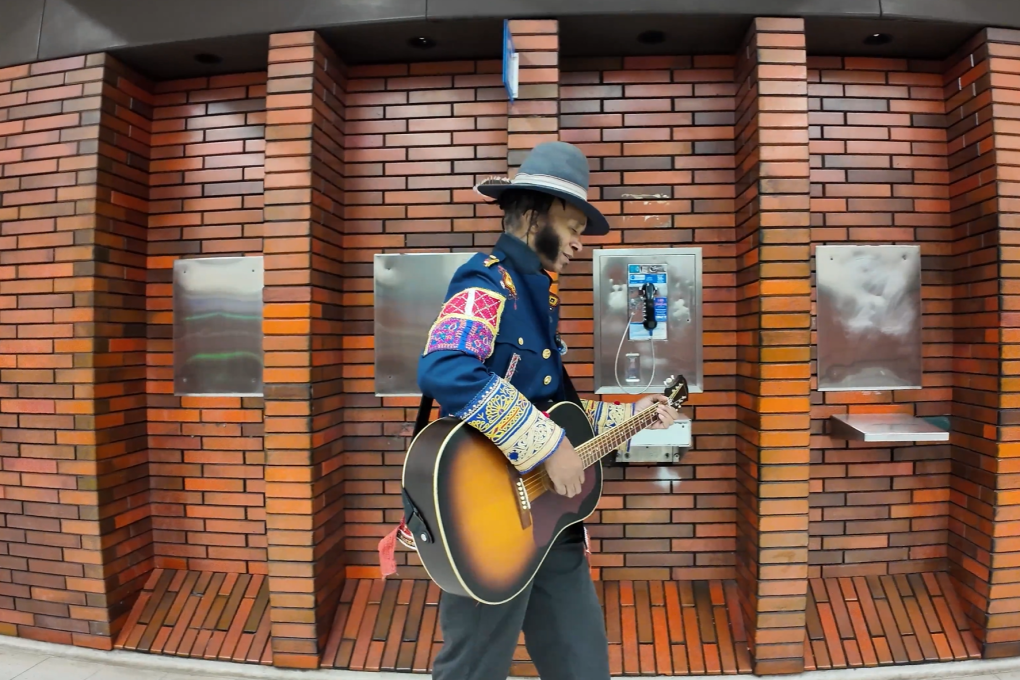
"BART connects me to the first audience I ever had.”
— FANTASTIC NEGRITO —
BART TROUBADOUR
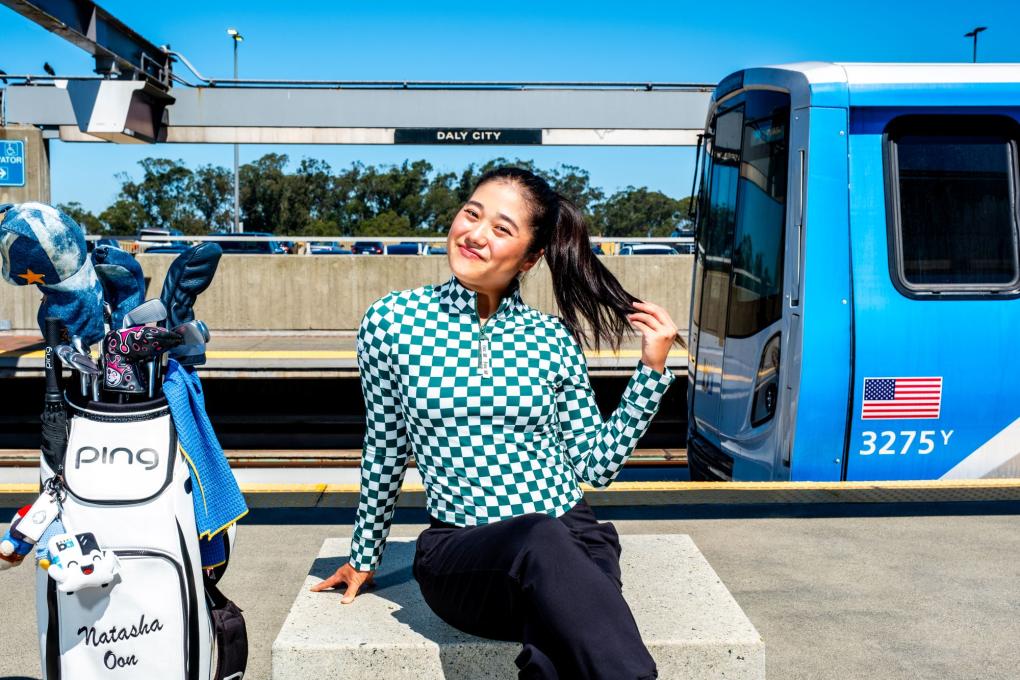
“BART connected me to my dream.”
— NATASHA OON —
BART GOLFER
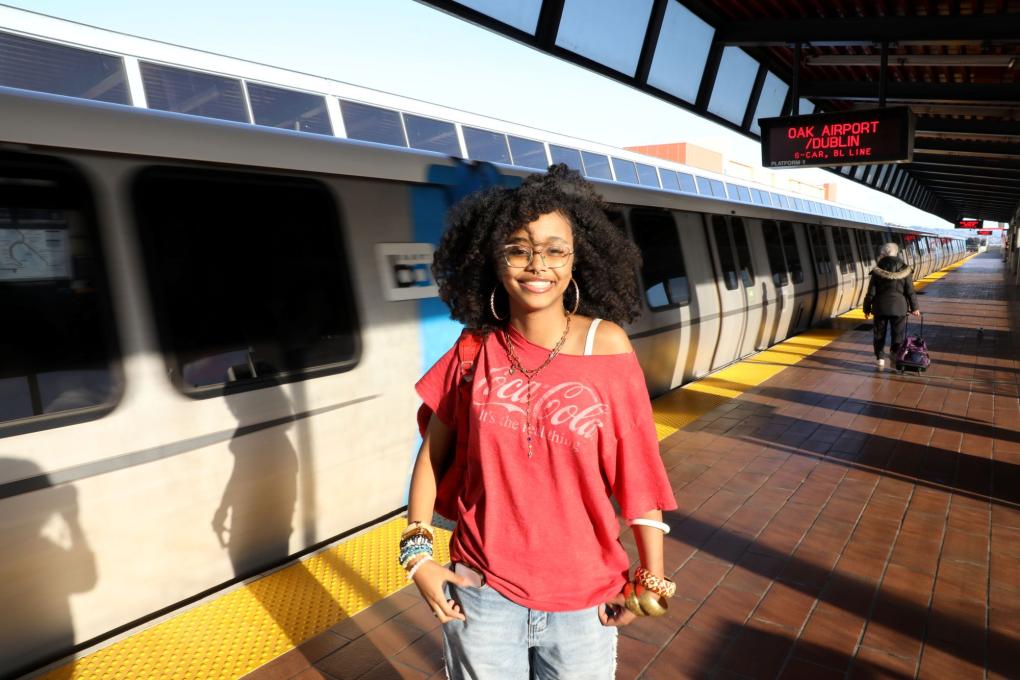
"The Bay is my siren. It pulls me in towards murky waters of Lake Merritt and tells me I am a spring."
— SEHINNE YOHANNES —
BART POET
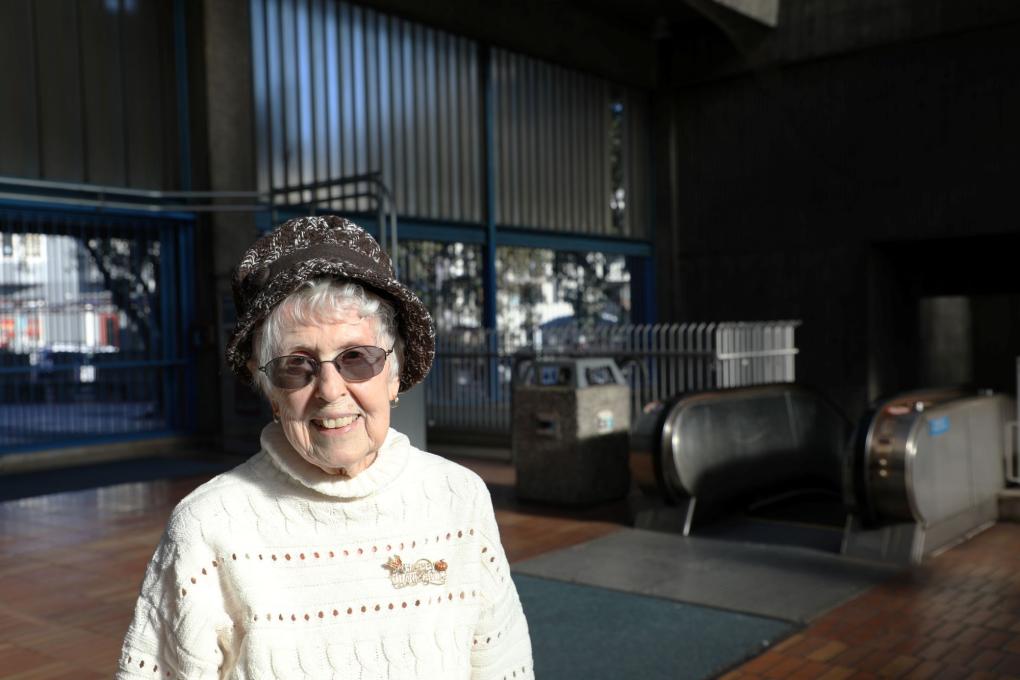
“Seniors like me who have given up driving need BART.”
— NAOMI "NONA" HULME —
LIFELONG RIDER
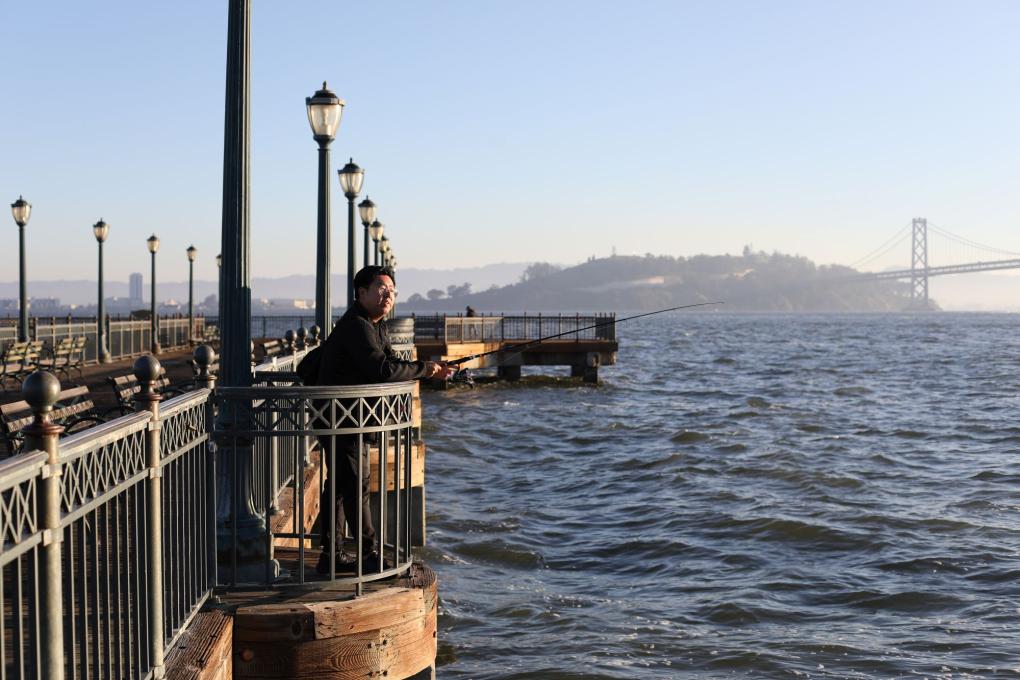
"BART is the cornerstone of what makes my life in the Bay Area unique."
— TOMMY JUNG —
BART FISHERMAN
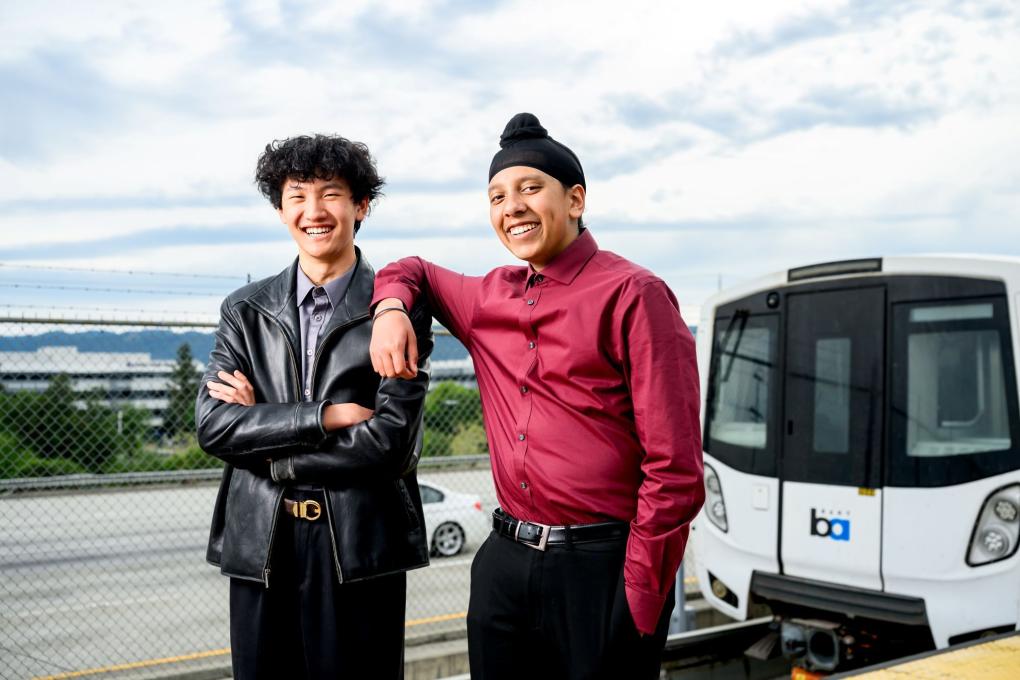
“Knowing how to ride public transit is a big step in growing up.”
— ENZO WU & APARDEEP SINGH —
TEEN TRANSIT CHAMPIONS
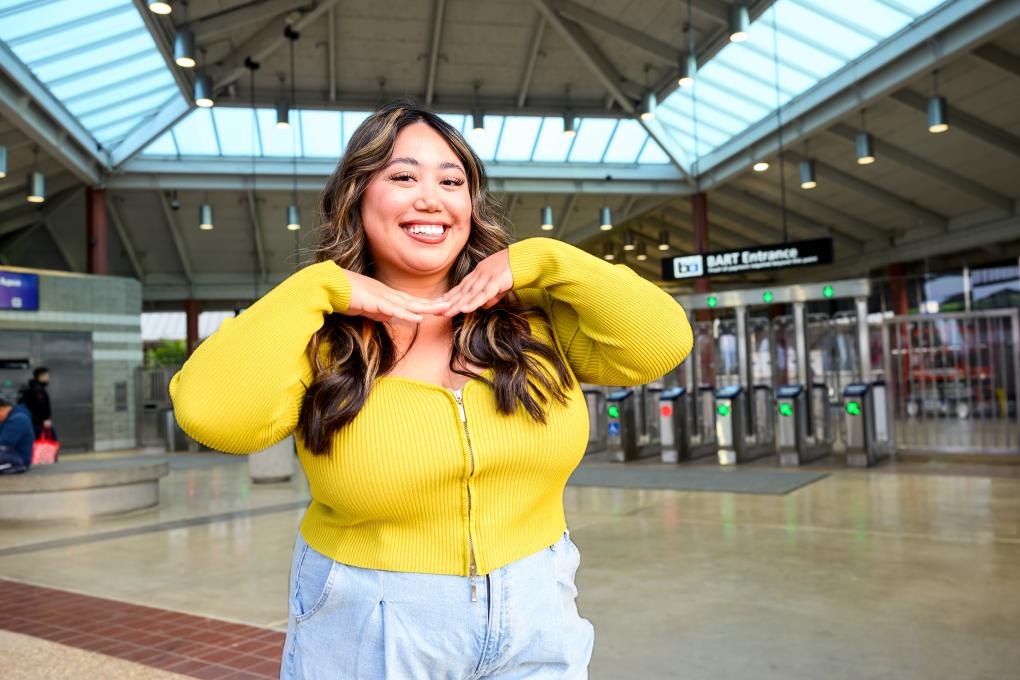
“BART girl math: I can maximize sleep by doing my makeup on the train and still sneak in a nap each way.”
— MARIAH —
BART INFLUENCER
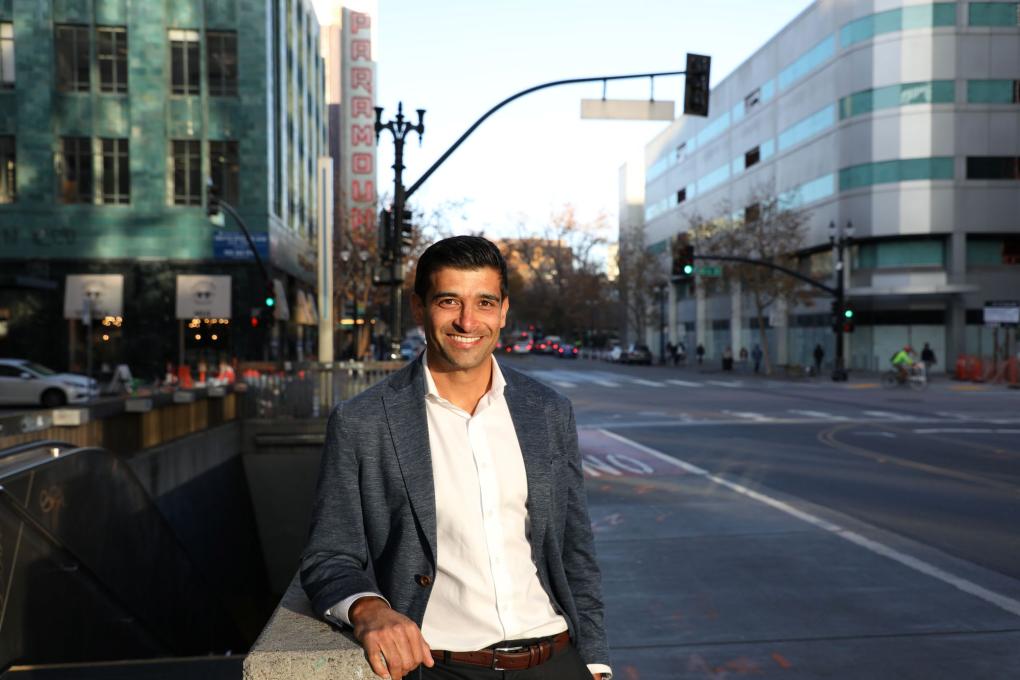
“BART is integral to the long-term success of Bay Area downtowns.”
— ISAAC ABID —
DOWNTOWN DEVELOPER
BART Connects: 92-year-old Nona rode BART to the people she loved
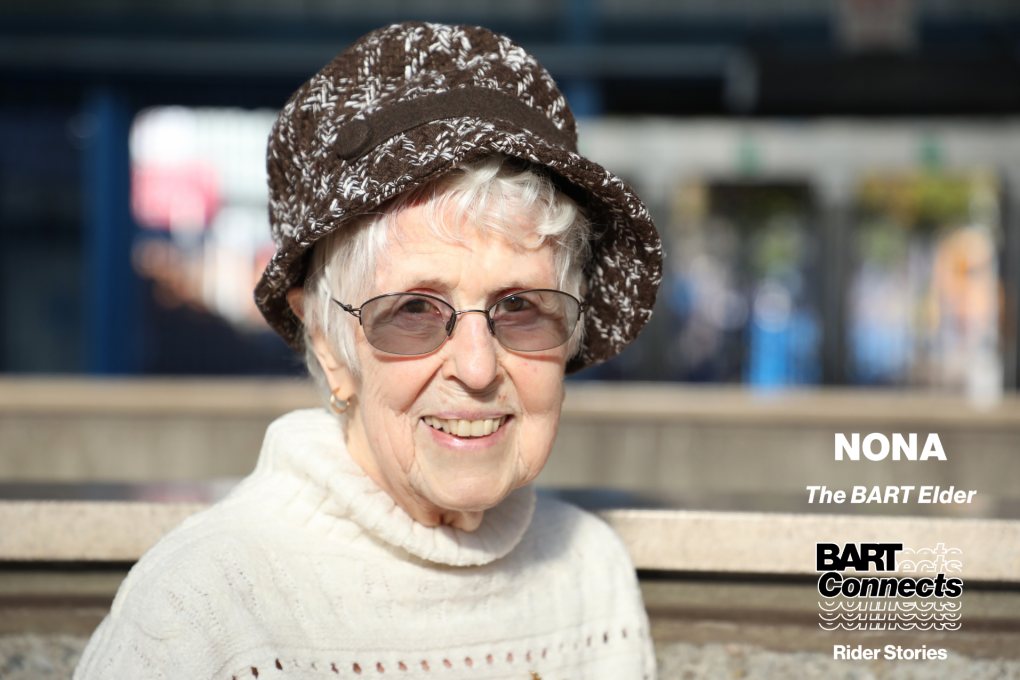
“BART is how seniors like me can get around.”
Read more BART Connects stories at bart.gov/bartconnects.
92-year-old Naomi Hulme stopped driving. But that didn’t mean she wasn’t out and about in her hometown of San Francisco.
Naomi, AKA Nona, would never live in a city without public transportation.
“BART is how seniors like me can get around,” she said.
Nona knew the scope of her life would narrow if she didn’t have the option to take transit. Many seniors experience social isolation, loss of independence, and declining mental and physical health when they give up driving. But transit provides seniors with another option.
For decades, Nona took BART from Glen Park to Pleasant Hill/Contra Costa Centre to see the same person. That would be her best friend of 72 years, Dee. The old pals from college would shop, dine, and once a month, play Bridge.
Nona said riding transit made her feel happy and grateful to be active, and she loved striking up conversations with people on the train: “Where’re you going? Where’d you come from? How’d you meet?”
Earlier this year, Nona passed away. Her family asked us to share this story in her memory and in honor of the many years she spent riding BART to see the people she loved.
About BART Connects
Tens of millions of people ride BART every year -- to work, dates, practice, friends, and fun. BART Connects tells their stories.
In June, BART Communications launched the second edition of BART Connects, a storytelling series that features real BART riders who span generations, neighborhoods, and walks of life. You can read their stories below.
In the coming months, the stars of BART Connects will take us for a ride in a series of video featurettes that will be regularly posted on BART social media.
You will also see the faces of BART Connects riders in advertising spaces in the BART System and across the region.
BART Connects grew out of a call for rider stories BART Communications launched in 2023 to learn how our transit system impacts people’s lives. The initial response made clear that BART means something to those who ride it.
Have a cool BART story to share? Submit a short summary at bart.gov/story. You may be the next BART Connects feature!
BART Connects: This rider uses their BART System Map tattoo to give directions
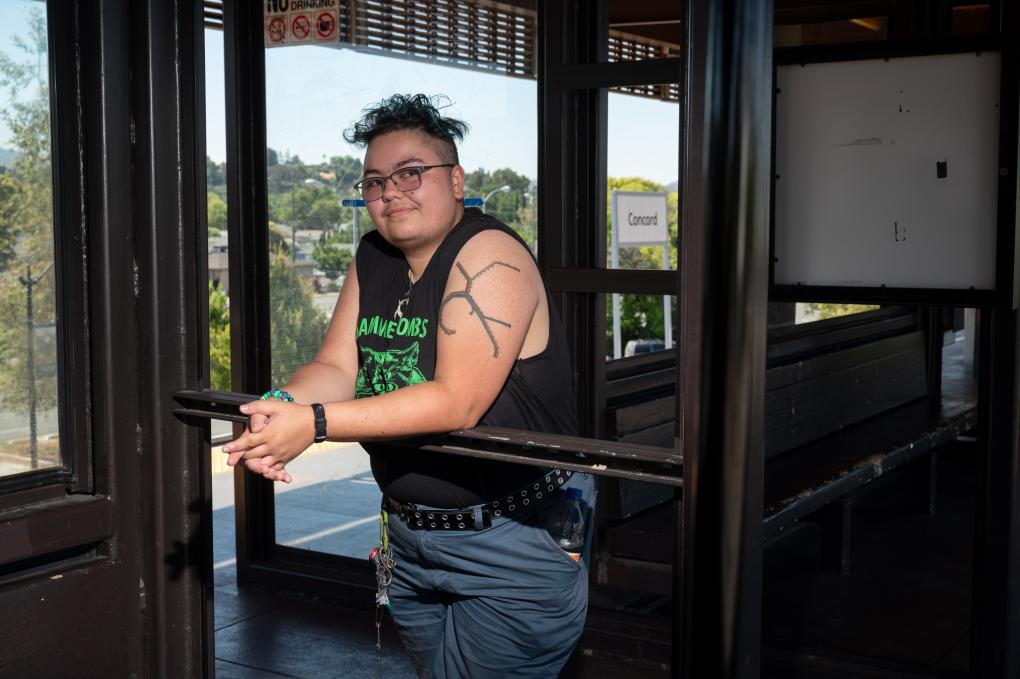
Sam Johnson sports a tattoo of the BART system map on their bicep.
When Sam Johnson sees someone lost in a BART station, they roll up their sleeve and show them a bicep.
Etched five layers deep into the epidermis of Sam’s left arm is a tattoo of the BART System Map. It’s Sam’s first and only tattoo, and in a pinch, it comes in handy.
“I’ve helped a bunch of people figure out where to go,” Sam said. “I point to my arm and say, ‘We’re here in Concord, you’re going to transfer to this station, then ride along here, and get off at this station.’”
It’s a practical tattoo but also a piece of art, an homage to the Bay, a love letter to transit. And let’s be honest, said Sam, “It looks good on me.”
Sam grew up in El Cerrito and now lives in Concord, where they’re studying technical theater at Diablo Valley College. Sam still remembers being six years old and waiting for their Youth Clipper card to arrive in the mail. They still have the card – a memento of BART rides past and how much they’ve grown.
Sam took BART all the time as a kid with their mom and brother and then on their own when they didn’t have a driver’s license and just wanted to get out.
“Sometimes things in my house were not super fun and awesome,” they said. “Being able to get on BART and go somewhere was comforting.”
Sam felt safe in a BART station, where they knew a train would never fail to arrive.
“Every time I saw the train pulling into El Cerrito, felt the wind blowing, the sound of it on the tracks, I felt at home,” they said.
BART is “the veins of the region" and a gateway to community for Sam. When they were growing up, they were pretty shy and introverted. BART and the requisite interactions with strangers on trains "gave me the ability to be myself.”
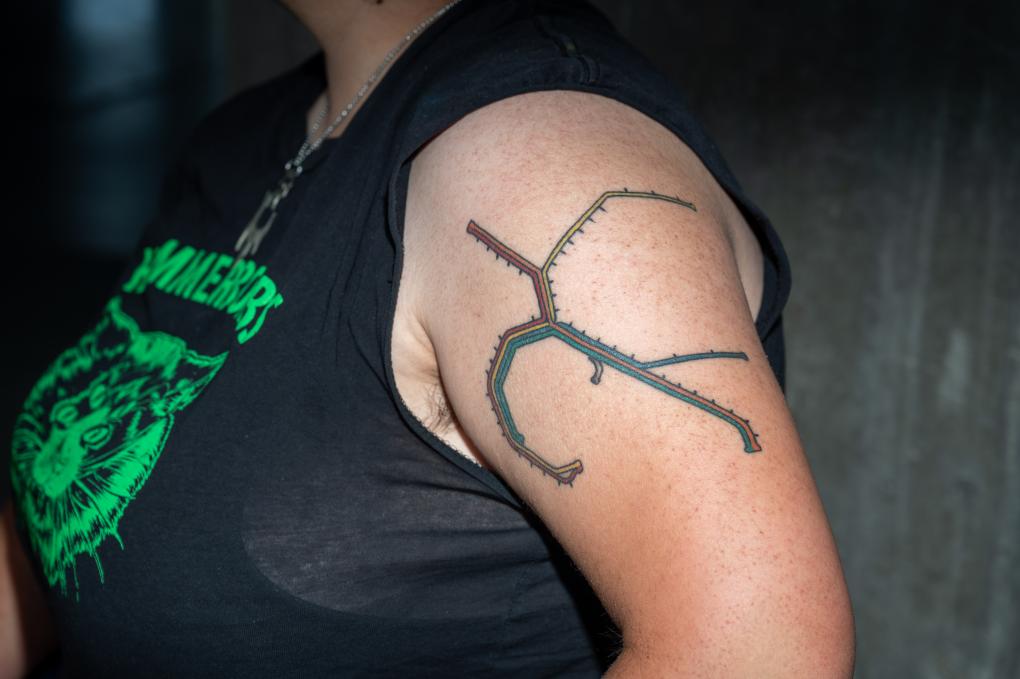
Sam Johnson shows off their tattoo.
“Without BART, I would be less outgoing, less enthusiastic, less able to adapt to new situations,” they said.
Sam especially appreciates that on the train, they get a brief glimpse into others’ daily lives as well as access to a “shared sense of humanity."
“We may be in different worlds, but we’re all here together,” Sam said of their fellow passengers. “When I’m with people on the train, I always think to myself, ‘I hope you get home safe; I hope you have a good day; I hope you get an extra long break at work.’”
So, why the BART tattoo?
For Sam, it’s a way to “spread the gospel of transit.” They’d been thinking about the tattoo for awhile, and one day, they finally got the courage to walk into Black Sea Tattoo in Walnut Creek with a printout of the System Map. Tattoo artist Earl Pitt took care of the rest.
In about two-and-a-half hours, after checking multiple times there were the right number of stops on the BART lines, Sam walked out of the shop with an aching, but beautiful, tattoo.
Thus far, when people see the tattoo, Sam hasn’t had to do much transit evangelizing.
“Everyone loves it and thinks it’s so fun,” they said. “People go, ‘Is that BART?’ They are so tickled.”
And Sam is already thinking about the next one: “I’m thinking it will be a tattoo of a legacy train.”
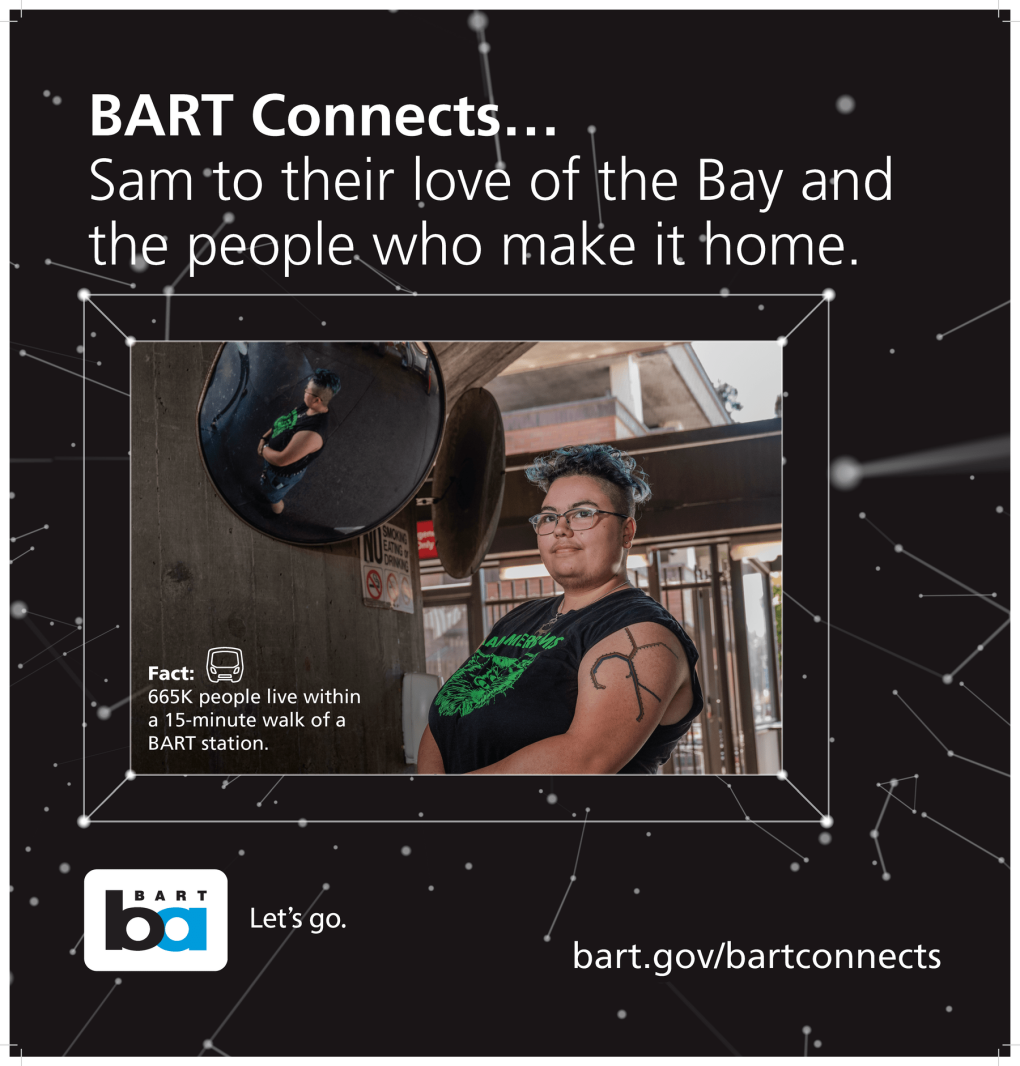
See Sam on our trains. They're featured in our new BART Connects marketing campaign.
About BART Connects
The BART Connects storytelling series was launched in 2023 to showcase the real people who ride and rely on BART and illustrate the manifold ways the system affects their lives. The subjects of BART Connects will be featured in videos as well as a forthcoming marketing campaign that is slated to run across the Bay Area. Find all the stories at bart.gov/bartconnects.
The series grew out of BART's Role in the Region Study, which demonstrates BART’s importance to the Bay Area’s mobility, cultural diversity, environmental and economic sustainability. We conducted a call for stories to hear from our riders and understand what BART means to them. More than 300 riders responded, and a selection of respondents were interviewed for the BART Connects series.
BART crashes the SF Auto Show!
Move over new cars, the BARTmobile is in town and it's about to outshine all of you! The BARTmobile will be at the San Francisco International Auto Show at the Moscone Center to show all of the new hybrids how to really save gas, confront muscle cars with some real mighty-mite power and challenge all the new
BART Connects: BART has carried Elvis Herselvis to drag performances for 30 years
Do you have a favorite BART memory or story to share? Email a short summary to BART Storyteller Michelle Robertson at [email protected], and she may follow up to schedule an interview.
Elvis Presley loved his bubblegum pink Cadillac. Elvis Herselvis prefers a blue-and-white ride. Her vehicle is roomier than that Fleetwood Sixty Special, boasts twice as many wheels, and unlike that old gas guzzler, it runs on electricity.
We’ll toss her the mic so she can say it herselvis: “My life would suck without BART.”
For thirty years, Elvis Herselvis, the drag king persona of legendary drag performer, artist, and musician Leigh Crow, has taken BART to rehearsals, performances, bars, brunches, and her brother’s house in Richmond.
Unlike Mr. Presley, Crow doesn’t drive, so without BART she’s not totally sure what she’d do. Spend a lot on rideshares, probably, but that’s a cruddy option when you’re regularly traveling back and forth between San Francisco, where she typically performs, and Oakland, where she lives. About a decade ago, Crow moved to Oakland after being priced out of San Francisco. She came to the Bay Area from suburban Phoenix as a young lesbian looking for performing opportunities.
“Public transportation was one of the very attractive things about moving to San Francisco,” Crow said. “Where I grew up, you had to have a car. In the Bay, you can get where you need to go almost entirely on transit.”
Crow got her start in drag in the late 80s at the lesbian club Female Trouble in the Haight. The club’s producer needed a small act to fill a hole in the schedule between Christmas and New Years. The girls said, “Let’s do a drag show!”
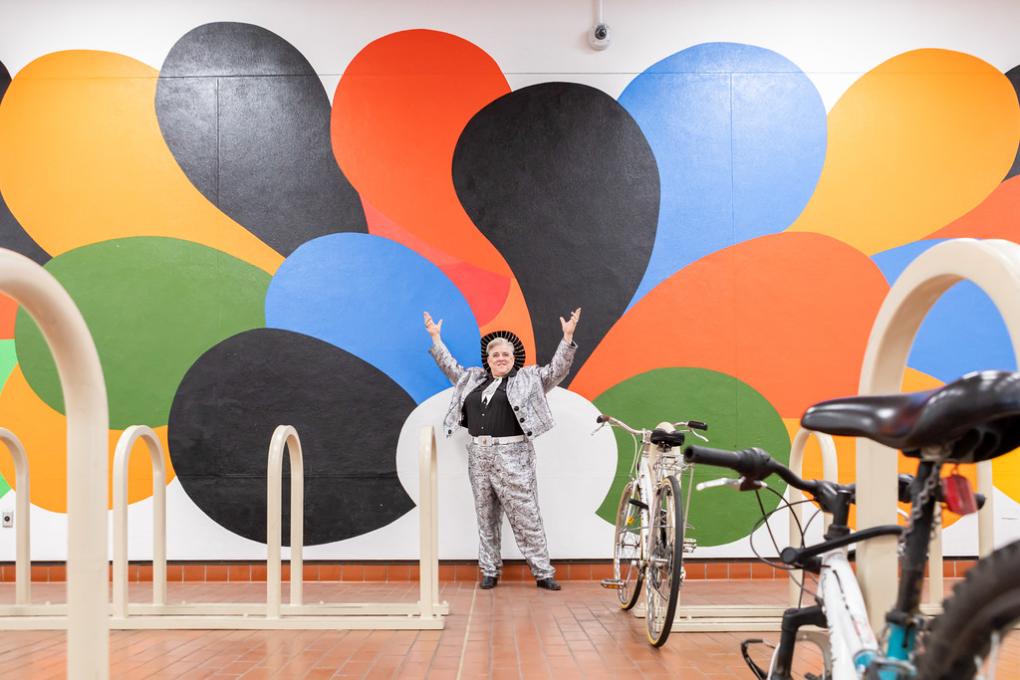
“Some were doing Bowie, Guns and Roses, that type of thing,” Crow said. “But when it came time for the performance, I was the only one left on the billing.” She performed as Elvis Herselvis, and the crowd loved her.
“They got to play the part of being screaming teeny boppers, which many of them had never gotten a chance to do,” she said.
Women were highly involved in the Bay Area drag scene back then, but there weren’t as many drag kings performing, and when they were, you didn’t hear about them as often as the queens.
Crow had a hand in changing that when she started performing as Elvis Herselvis. She’s considered the world’s first female Elvis impersonator, and she was one of the first out lesbian performers to tour the southern U.S., said Ruby Vixen, Crow’s partner in life and performance. The two regularly perform together with their country western band Velvetta.
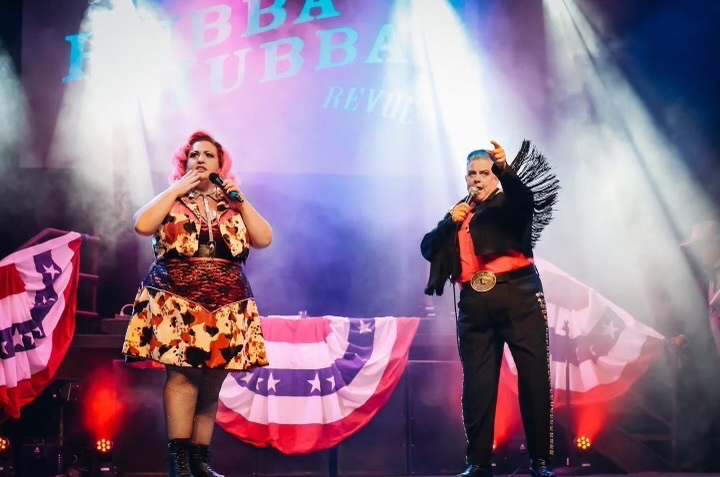
Ruby Vixen (left) and Leigh Crow (right) perform at the Hubba Hubba Revue. Photo: Sylvie Barak
“She toured the South in the late 80s and 90s, long before ‘Drag Race’ and the visibility that came with it,” Vixen said. One of Crow’s tours brought her to the Second International Elvis Presley Conference held at the University of Mississippi in 1996. Crow gained national notoriety when the organization running Graceland pulled their support for the conference due to Crow’s participation.
In San Francisco, things were different. The drag circuit was a punk-rock scene, “very riot grrrl,” Crow said.
“Drag was a lot weirder and less homogenized then,” she continued. “People played all sorts of characters. They were scrappy."
Public transportation enabled Crow and many of her friends and fellow performers to get to and from their performances, including at historic venues like the legendary lesbian bar White Horse Inn.
“I am just so grateful to have an alternative option to driving,” Crow said. “I also feel good that I’m not having an impact on the environment like I would if I were driving. There are little things you can do, and that’s one of them."
Crow can regularly be scene on BART in “various states of drag.” People aren’t fazed by it much – it's the Bay Area after all – and most reactions are positive.
Crow said she's proud to wear her gender-bending costumes onboard. “It’s a signal boost that encourages everyone of every gender that drag is viable, and that you should feel safe and welcome to do it.”
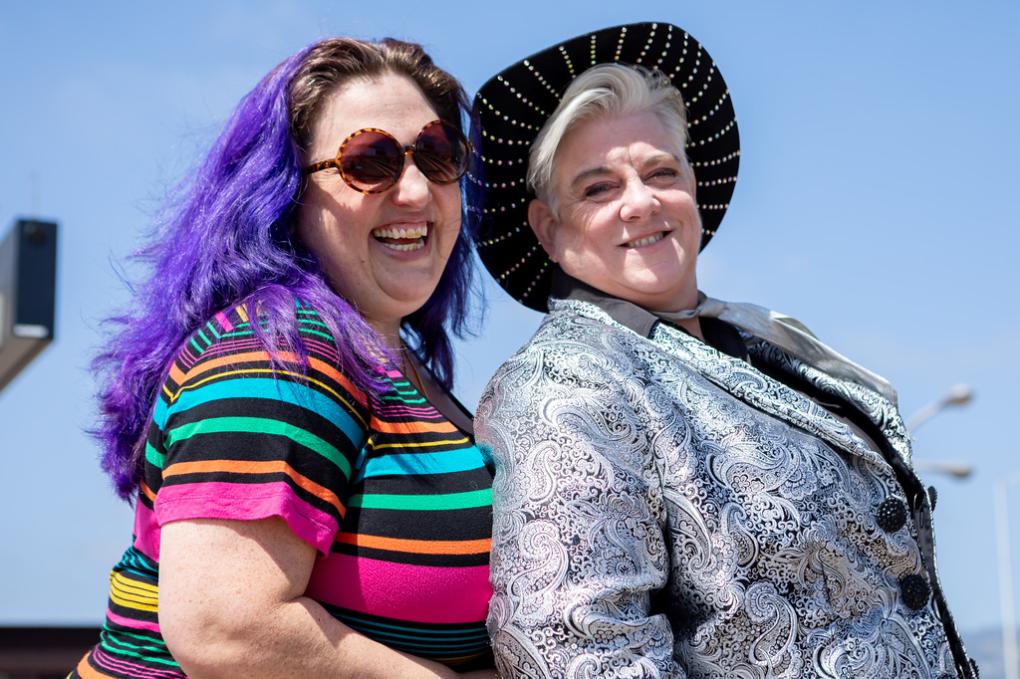
Ruby Vixen (left) and Leigh Crow (right) at MacArthur Station.
Added Vixen: “Public transit serves young and lower-income communities, which often contribute to the most outrageous, diverse, and innovative drag in the Bay. And it’s always been that way.”
Without BART, the underground performance scenes of San Francisco past and present would look different, including venues like OASIS, where Crow performs in the ‘Star Trek’ show as Captain Kirk. She’ll revive the role in August.
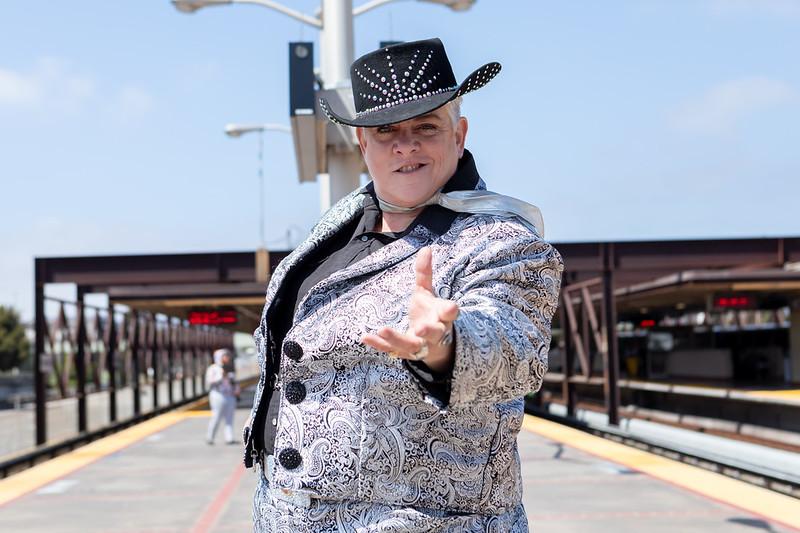
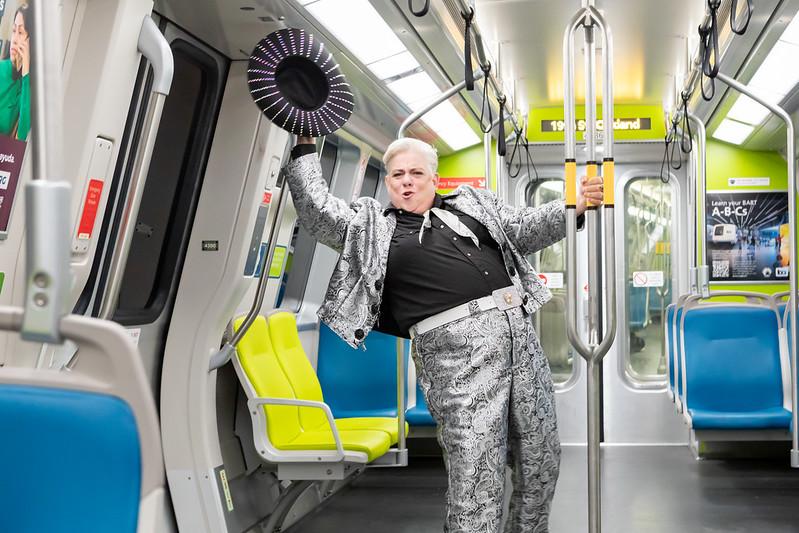
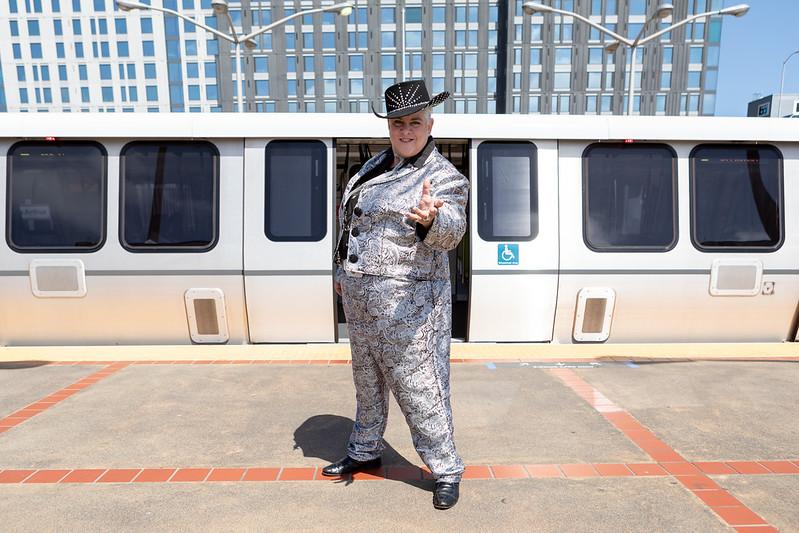
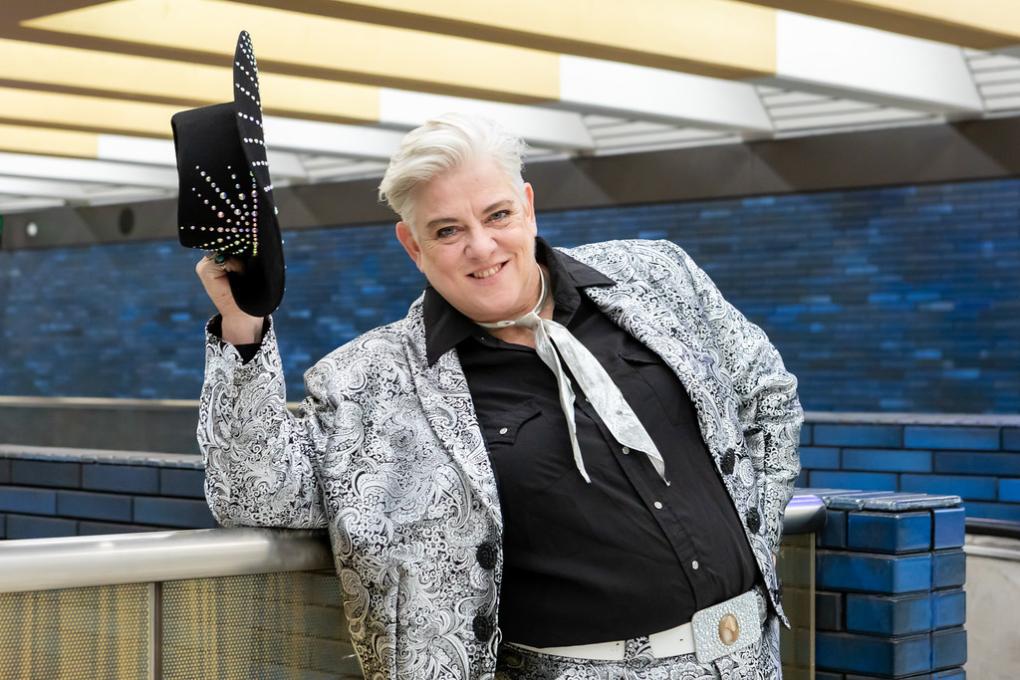
During her photoshoot with BART, Elvis Herselvis turned heads every which way she went. Some passersby took pics on their phones as she strutted about MacArthur Station in her custom silver suit, sparkling cowboy hat, and hefty belt buckle. The suit was custom made by Vixen, a costume and clothing designer who owns Dandy and Vixen with Crow.
“We chose the fabric because it looks great under stage lights,” Crow said. We also discovered the fabric looks sumptuous in front of the silver steel of a passing BART train. In the sun, the two materials bounced off one another like they were dancing.
Crow will have an equally eye-catching outfit for San Francisco Pride celebrations this weekend. Pride Month is naturally her and Vixen’s busiest season of the year. The couple plan to take BART into the city for Pride, including the San Francisco Dyke March on Saturday in the Mission District.
Crow especially looks forward to the ride home on BART after Pride, when “everyone’s tired and sunburned and happy and feeling the freedom and the love.”
BART, she pointed out, is also the safest option if you’re planning to imbibe.
“You can go out and get wasted in San Francisco then take BART home and be safe,” she said. Just remember to be safe, respectful of your fellow passengers, and follow BART’s Code of Conduct.
This weekend, look for Elvis Herselvis and Ruby Vixen on BART and enjoy what will certainly be a festive and celebratory ride.
About BART Connects
The BART Connects storytelling series was launched in 2023 to showcase the real people who ride and rely on BART and illustrate the manifold ways the system affects their lives. The subjects of BART Connects will be featured in videos as well as a forthcoming marketing campaign that is slated to run across the Bay Area. Find all the stories at bart.gov/bartconnects.
The series grew out of BART's Role in the Region Study, which demonstrates BART’s importance to the Bay Area’s mobility, cultural diversity, environmental and economic sustainability. We conducted a call for stories to hear from our riders and understand what BART means to them. More than 300 riders responded, and a selection of respondents were interviewed for the BART Connects series.
Follow our rider guide below and learn more about our special Pride service here.
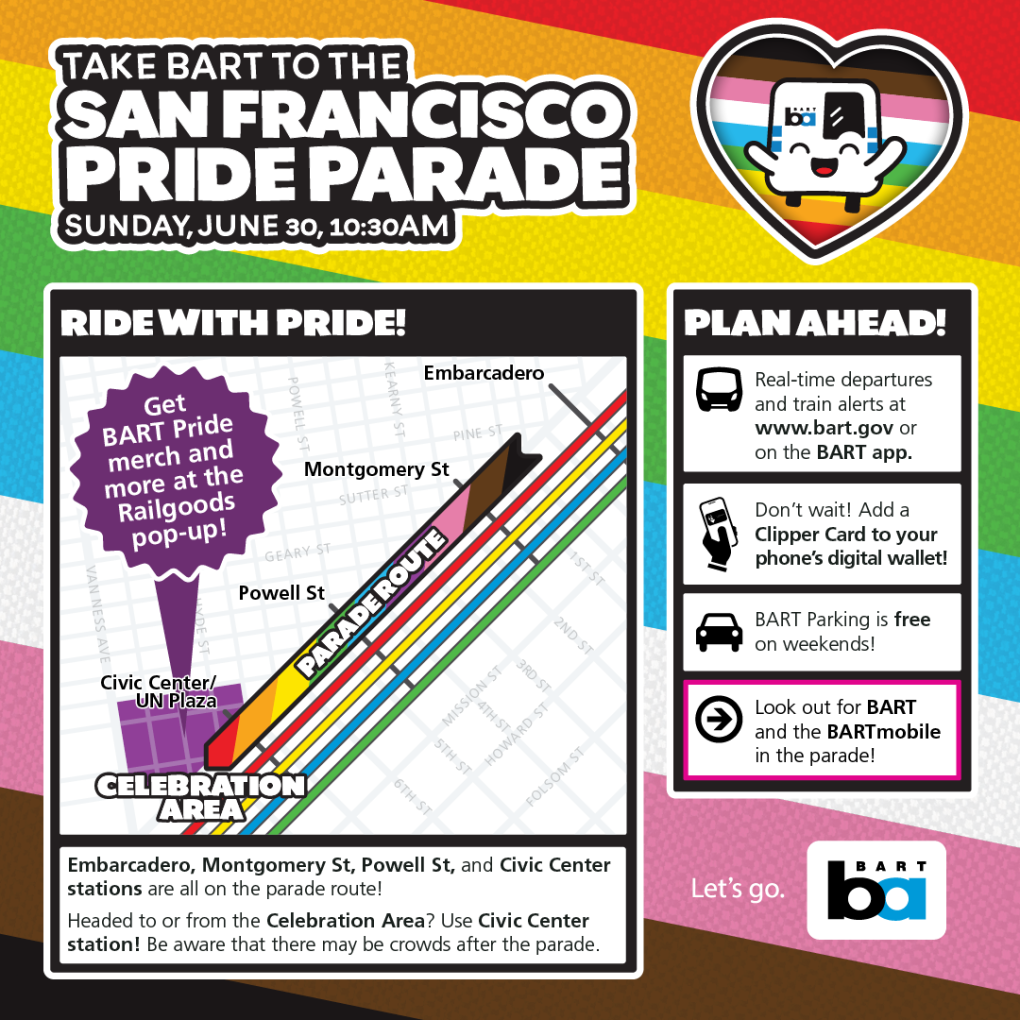
Leigh Crow and Ruby Vixen’s upcoming BARTable events:
Saturday and Sunday, July 1 and 2: Leigh and Ruby will be vending their Dandy and Vixen wearables at Mosswood Meltdown in Mossword Park. To get to Mosswood, take BART to MacArthur Station and walk about 13 minutes to 3612 Webster St., Oakland.
August 8 through 31: D’arcy Drollinger presents Star Trek LIVE!, featuring Leigh as Captain Kirk, at Oasis. Take BART to Civic Center Station or 16th St Mission Station and walk about 16 minutes to 298 11th St., San Francisco.
BART Transbay service restored: expect residual delays
Photo of fire at West Oakland Due to a fire near BART tracks in West Oakland that started early this morning, BART service between Oakland and San Francisco was suspended for most of the day today. BART service continued throughout the East Bay and between San Francisco / Peninsula stations. Reports indicated
BART Connects: BART showed Steve and Vanessa that "there is life out there"
Today, July 26, 2024, marks the 34th anniversary of the Americans with Disabilities Act (ADA), which was signed into law on July 26, 1990. The ADA protects the rights of those with disabilities and is recognized as a watershed milestone for civil rights in the U.S.
More than 7% of BART riders have a disability (as self-reported in a 2022 survey), including Steven Howell and Vanessa Castro. Steven and Vanessa use BART to get just about everywhere. Says Steven: "[BART] showed me there is life out there."
Hear more from the couple in the above video.
Earlier this month, Governor Gavin Newsom proclaimed July Disability Pride Month. BART joins our governor in celebrating and recognizing riders with disabilities and the contributions they have made to our transportation system and region. We encourage you to read about Harold Willson, an activist who fought to make BART accessible for all in the 1960s.
We are continuously striving to make BART as easy to use as possible for every single person who rides and relies on us. Our work is ongoing. Learn more about BART's Accessible Services at bart.gov/accessibility.
BART receives California Digital Inclusion Award
Bay Area Rapid Transit District (BART) is among the winners of this year’s California Digital Inclusion Awards, which celebrate companies and organizations that are making their websites accessible to people with disabilities. "Websites are the virtual ‘front door’ for most businesses and organizations today
Thousands attend BART’s 50th anniversary celebration
09.12.22 Posing for photos at BART’s 50th Anniversary Celebration and Family Fun Festival on Saturday, Sept. 10, 2022. At 8 am on Saturday morning, Lake Merritt Station and Plaza were already abuzz with activity. Train tracks – un-electrified third rail included – sprawled across a small section of the plaza