
Search Results
Lake Merritt Station: entrance closure on April 7
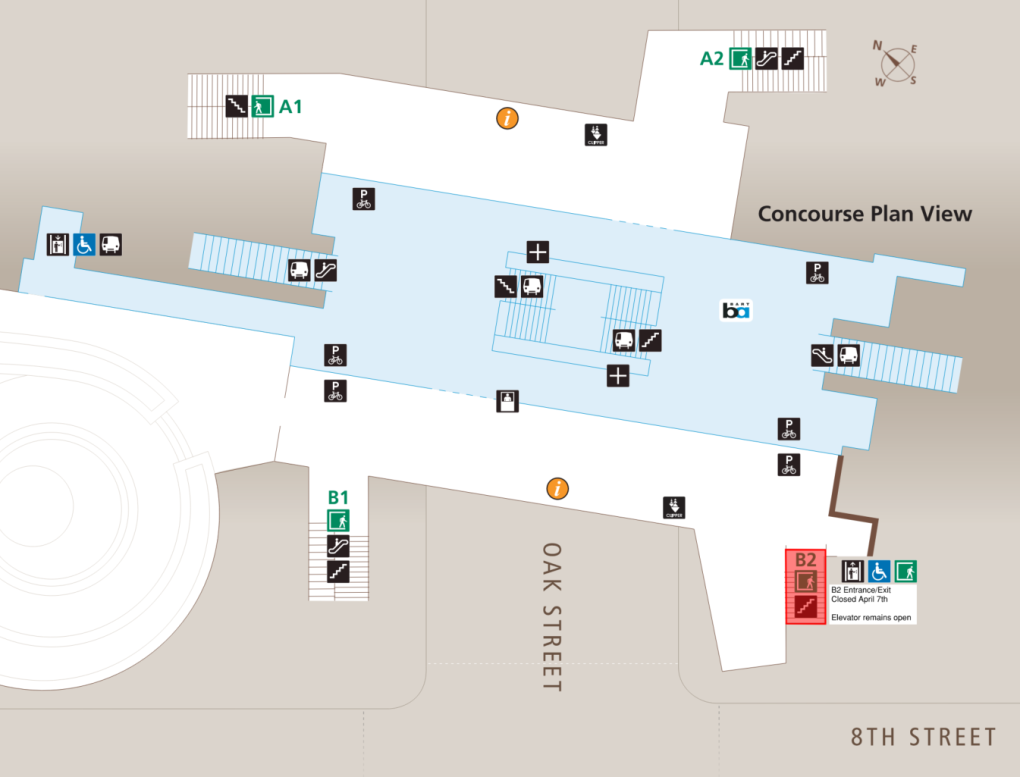
On Monday, April 7, 2025, the south entrance to the Lake Merritt BART Station will be closed for the day to support the construction of affordable housing on the former BART parking lot.
The entrance being closed for the day is at the corner of Oak St. and 8th St. (see map). The elevator at this location will remain open. All other entrances to Lake Merritt Station will remain open.
For more information about the Transit-Oriented Development (TOD) project, visit:
Tap and Go payment
Ashby Station: access impacts expected from bicycle connector project
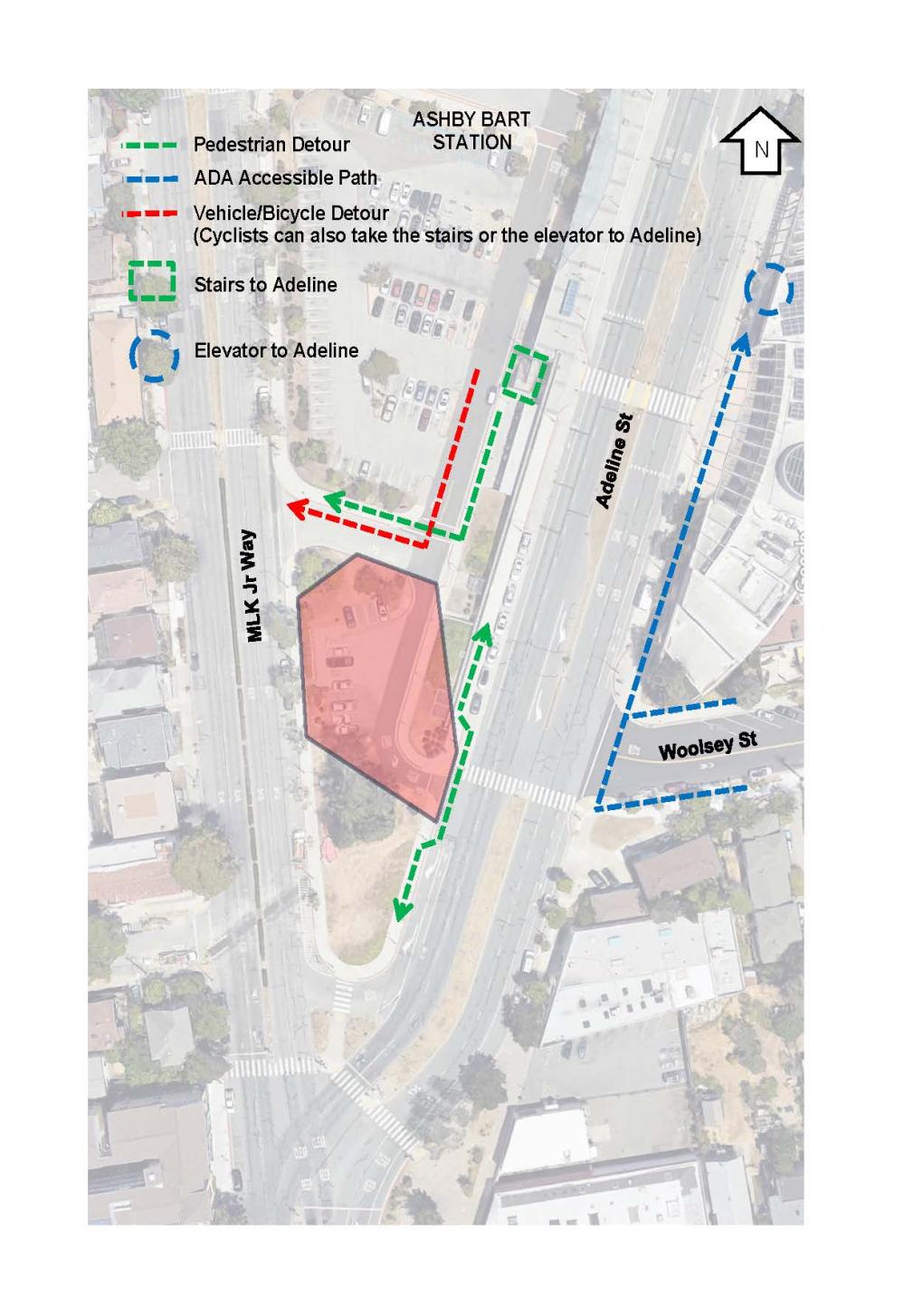
Work is scheduled to begin the week of April 29, 2024, on the installation of new segments of Class IV bicycle lanes at Ashby Station. Once completed, the new bicycle facility will provide a connection between Adeline Street and Martin Luther King Jr Way through the BART parking lot, formalizing bicycle circulation in and out of the Adeline Street driveway. Curb ramps on Adeline Street at the driveway will also be upgraded.
Construction impacts will include the following:
- The Adeline Street exit driveway will be temporarily closed.
- The 13 parking spaces at the south end of the parking lot will be blocked.
- Parking spaces for GetAround will be temporarily relocated.
- Pedestrians traveling north-south on the west side of Adeline will be routed around the work area with barriers, ADA-compliant ramps, and temporary wayfinding signage.
- When the project is completed, the south driveway on Martin Luther King Jr Way will be converted to inbound vehicle movements only.
Most work will be carried out between 7 am and 5 pm on weekdays. The work is expected to last 3-4 months.
In addition to BART’s project, City of Berkeley is currently designing additional bicycle improvements between the BART driveway and Woolsey to the east and between the BART driveway and Prince Street to the west.
Thank you for your patience as we complete this important work.
Installation work to begin December 13 for Next Generation Fare Gates at Dublin/Pleasanton Station
Installation of Next Generation Fare Gates is scheduled to begin December 13 at Dublin/Pleasanton Station. The installation process is expected to take approximately two weeks to complete.
During construction, there will be a barrier around the existing station gate array. Riders will use two temporary accessible gates to enter and exit. The temporary gates are located at each end of the station entrance. The gate to exit the station will be next to the Station Agent Booth and the gate to enter the station will be on the far left at the end of the existing array against the wall. There will be signage and additional staff to help direct riders through the temporary gates. Additionally, a carpet will be installed immediately before the entrance to each temporary gate, to make them easier to locate for riders with visual impairments.
The work will not impact train service, but riders may experience a few minutes wait to pass through the temporary gates during peak travel hours.
This latest work follows the successful installation of new fare gates at 11 BART stations across the system. All BART stations will have new gates by the end of 2025. You can learn more about BART’s Next Generation Fare Gates at our project page. Riders can provide feedback about the new gates at bart.gov/comments.

Joint Venture
Bus Bridge Alert: Hazardous tree removal and track work between Glen Park and Daly City on first weekend in December (12/2-3)
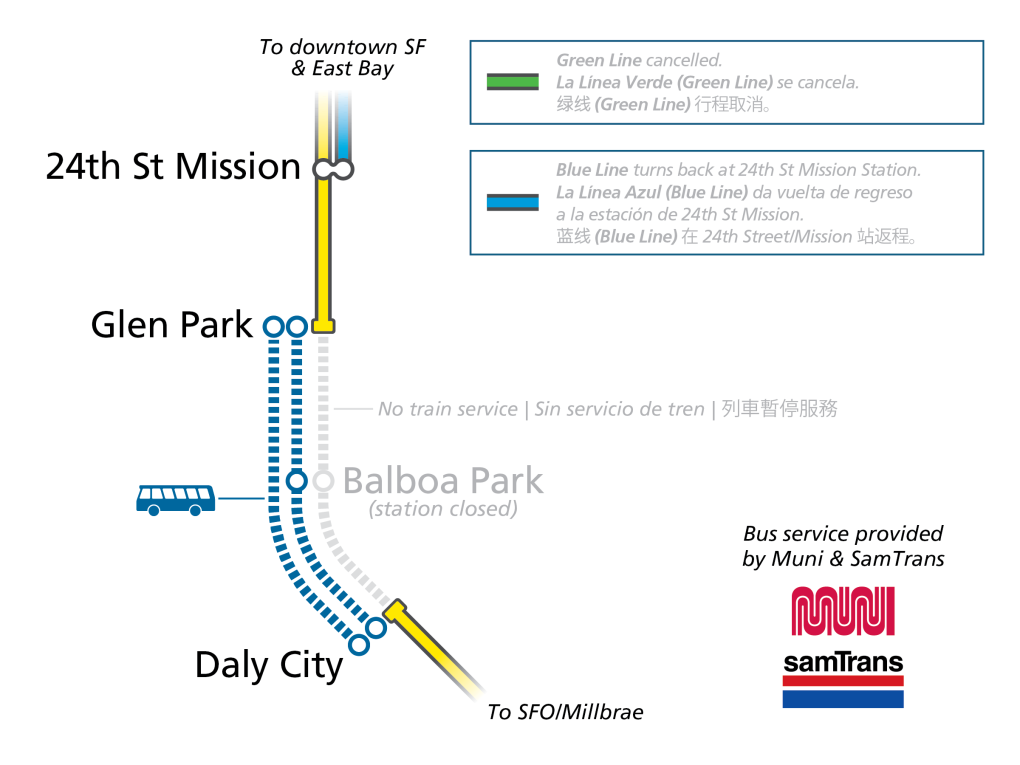
BART’s safety initiative to remove potentially hazardous trees in advance of severe winter storms will next focus on San Francisco and Daly City. To provide crews with enough room to safely do the work, free buses will replace trains between Glen Park and Daly City stations the first weekend in December, Saturday December 2, and Sunday December 3. Riders in the area should anticipate delays of up to 30 minutes. If the weather should interfere with the work on December 2-3, then the tree removal will be rescheduled for the following weekend, December 9-10.
Riders in the area on the work weekend will have to get off their train at Glen Park or Daly City and then board a free bus to get to the next station in their direction of travel to continue their trip. Some buses will run directly between Glen Park and Daly City while others will stop at Glen Park, Balboa Park, and Daly City.
Service from the East Bay to Downtown San Francisco
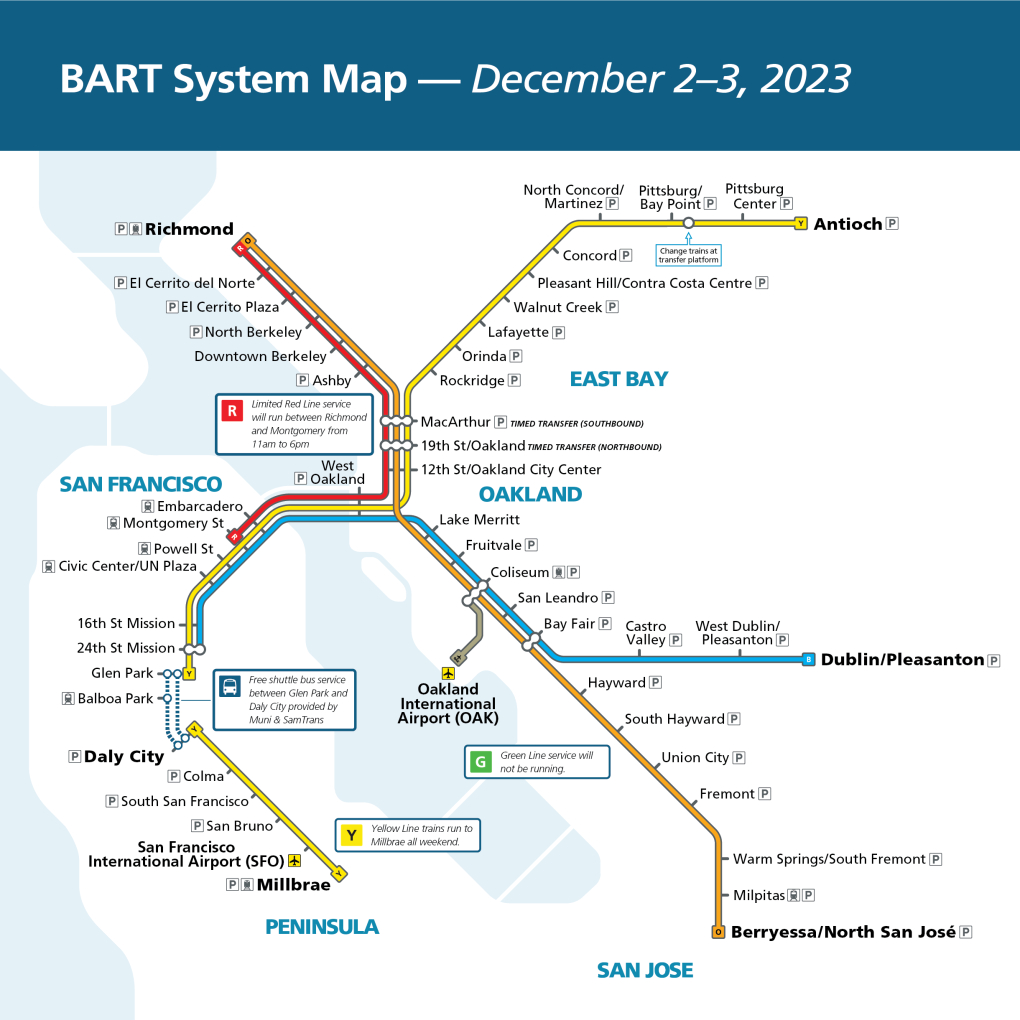
The Yellow and Blue lines will serve the downtown San Francisco stations. The Blue line will turn back at the 24th Street/Mission and the Yellow line will turn back at Glen Park. Blue Line riders traveling beyond 24th Street/Mission will need to walk across the platform and take the Yellow line train to the bus bridge at Glen Park.
Green line service will be cancelled on both days of the track shutdown.
To provide some increased transbay frequency, BART will run some Red line Richmond to Montgomery and Montgomery to Richmond trains between 11:00am and 6pm.
Service between Daly City and SFO/Millbrae and Millbrae/SFO to Daly City
BART will run only one line between Daly City and SFO/Millbrae and Millbrae/SFO to Daly City with service every 20 minutes. Each train will make all stops including SFO and Millbrae. These trains departure times will not match our normal timetable, but will run every 20 minutes. Riders traveling beyond Daly City will need to board the bus bridge.
Late Night Cancelled Train
The last northbound train of the night normally scheduled to leave Millbrae at 11:52pm and SFO at 12:00am will be cancelled both evenings of the track shutdown. Riders instead should plan to catch the 11:40pm departure from Millbrae that leaves SFO at 11:48pm.
BART will make the most of the weekend when this segment of the system will be closed by also working on trackway improvements. You can learn more about BART’s safety initiative to remove potentially dangerous trees on the project page.
You can keep up with the latest updates for trackway repair projects that impact service by going to our Alerts and Advisories page. BART’s Trip Planner has been improved to show the full customer journey including bus bridges. You can also check Real Time Departures for your station of choice.
Public transit ridership records broken for FIFA World Cup Stadium opener
A coordinated network of VTA, BART, and Caltrain, transported more than 37,000 passengers to and from the opening FIFA World Cup match between Qatar and Switzerland, setting a new ridership record for a major event at San Francisco Bay Area Stadium.
Following the match, VTA once again surpassed industry expectations by clearing light rail platforms serving the stadium in less than 90 minutes. The benchmark for clearing crowds after a major event at Levi's Stadium (named SF Bay Area Stadium for the FIFA World Cup) is two hours.
"This was a tremendous success for VTA and our regional transit partners," said VTA General Manager and CEO Carolyn Gonot. "Thousands of fans chose transit to get to and from the match, and together with BART and Caltrain, we provided a seamless travel experience that kept people moving and got them home safely."
A total of 37,642 passengers used VTA service during the event, with post-match crowds exceeding the number of fans who arrived by transit before kickoff. Despite the larger post-game surge, VTA maintained efficient operations and cleared platforms well ahead of the two-hour industry standard. The number is more than 6000 over the transit crowds for Super Bowl LX.
The success was made possible through close coordination among the Bay Area's transit agencies. BART transported passengers from San Francisco and the East Bay to Milpitas Transit Center, where they connected to VTA light rail service for the final trip to the stadium.
“BART saw an increase of more than 160% in ridership at Milpitas Station Saturday compared with the previous weekend,” said BART General Manager Bob Powers. “We’ve worked with our fellow transit agencies to make transfers fan friendly and now the world is seeing how far the Bay Area’s transit network has come.”
Caltrain carried passengers from San Francisco and communities throughout the Peninsula to Mountain View Transit Center, where riders transferred to VTA light rail trains bound for the stadium.
“Caltrain got nearly 7,000 fans to and from the first World Cup match quickly, safely and conveniently,” said Caltrain Executive Director Michelle Bouchard. “With frequent half-hourly service and a great atmosphere onboard with fellow fans, Caltrain is the easiest way to skip traffic, avoid parking costs and get to the World Cup stress-free.”
Additional trains, coordinated staffing, crowd management measures, and extensive operational planning helped ensure fans experienced a smooth journey throughout the day.
Altamont Corridor Express (ACE) and Capitol Corridor also provided service to the stadium. Capitol Corridor handled nearly 2,400 trips to and from the stadium on match day while ACE carried almost 1,600.
The opening match is the first of six FIFA World Cup matches to be played at San Francisco Bay Area Stadium this summer. VTA will continue operating enhanced service throughout the tournament to support residents, visitors, and soccer fans from around the world.
BART ridership broke records in May 2026, including posting the top four ridership days and highest weekday ridership average since the pandemic. Read more.
New test transit maps and signs debut at El Cerrito del Norte Station
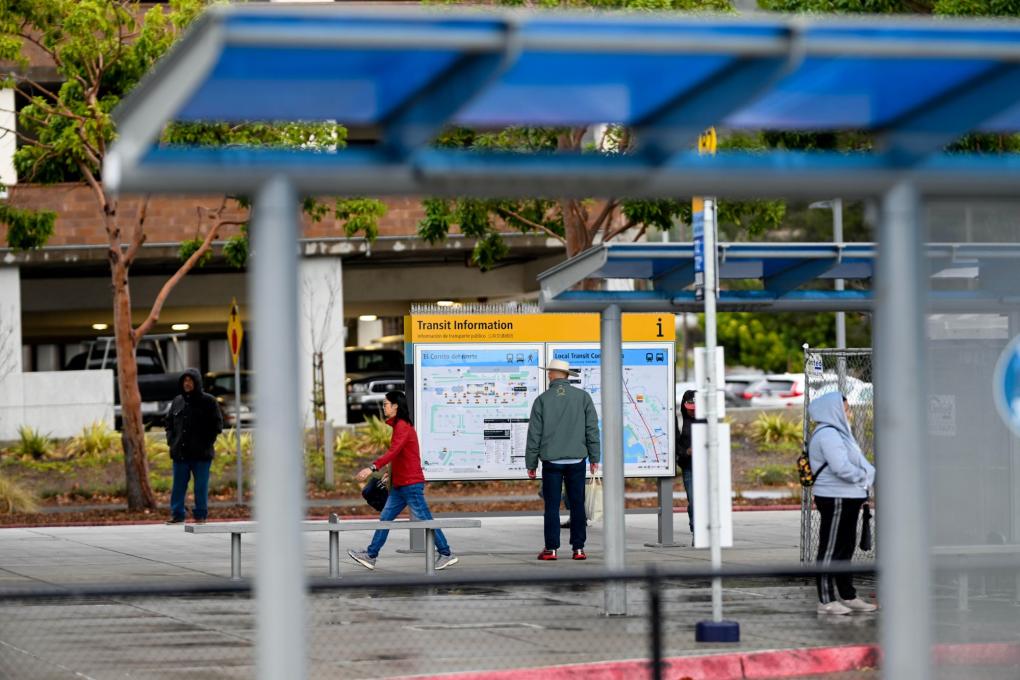
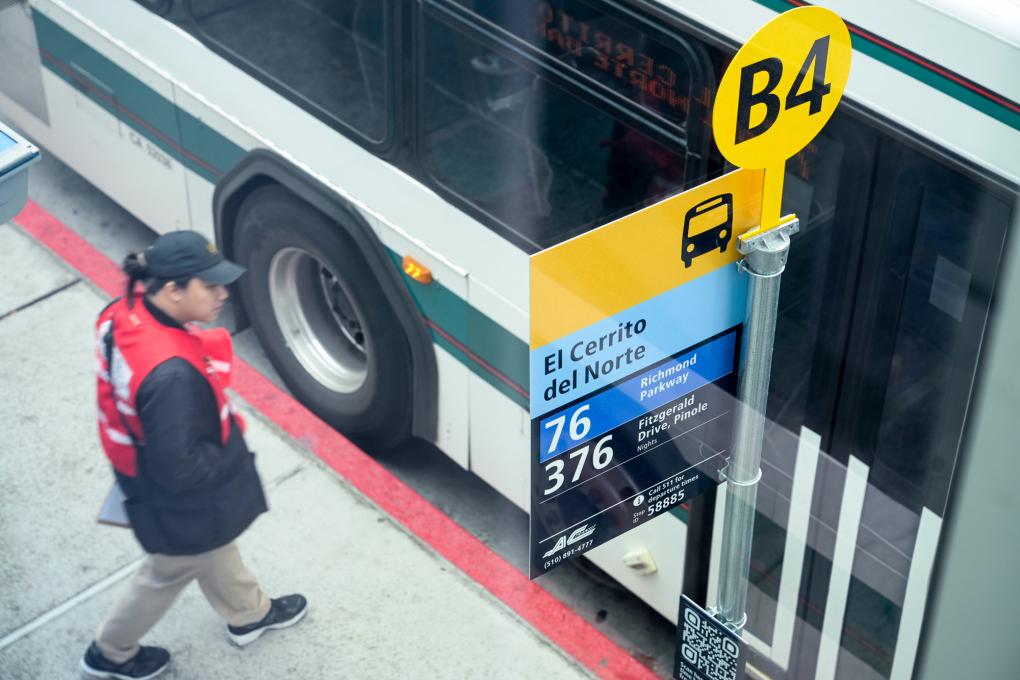
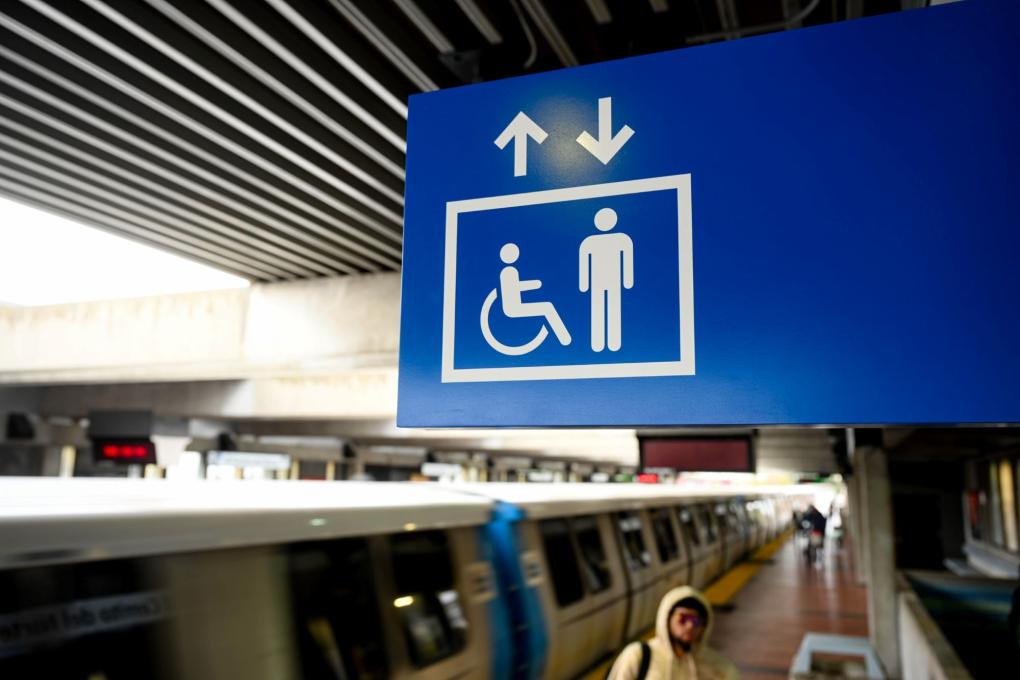
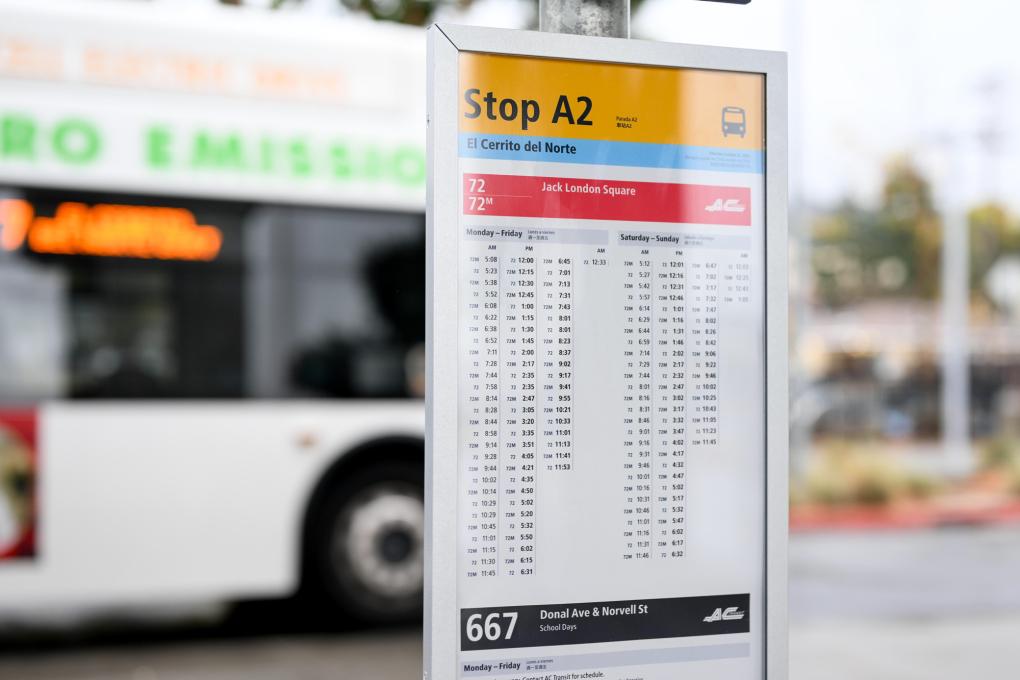
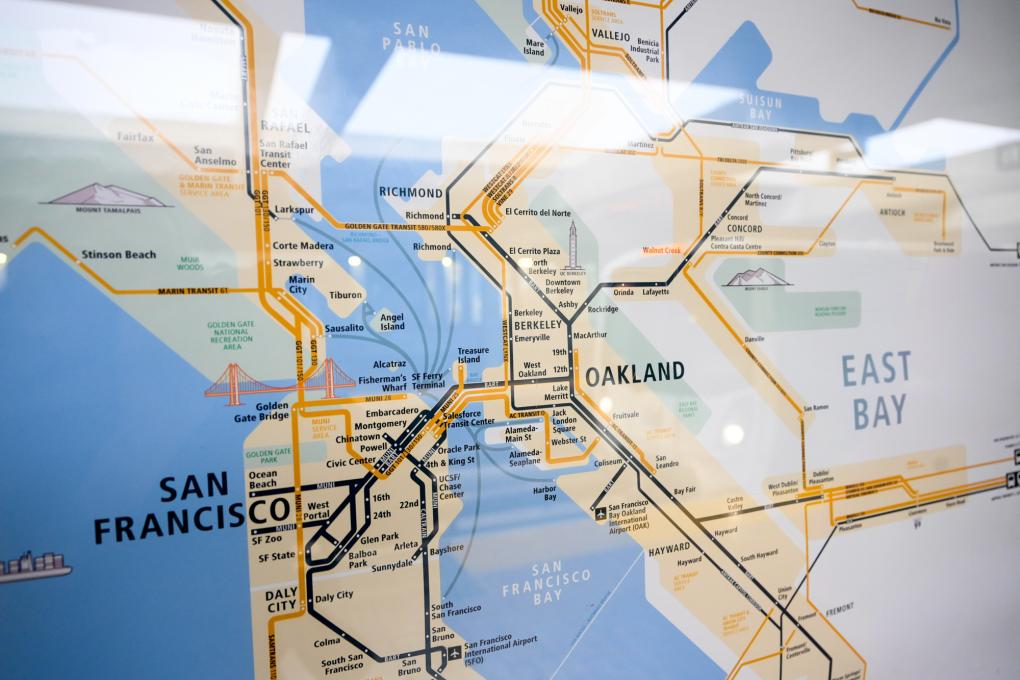
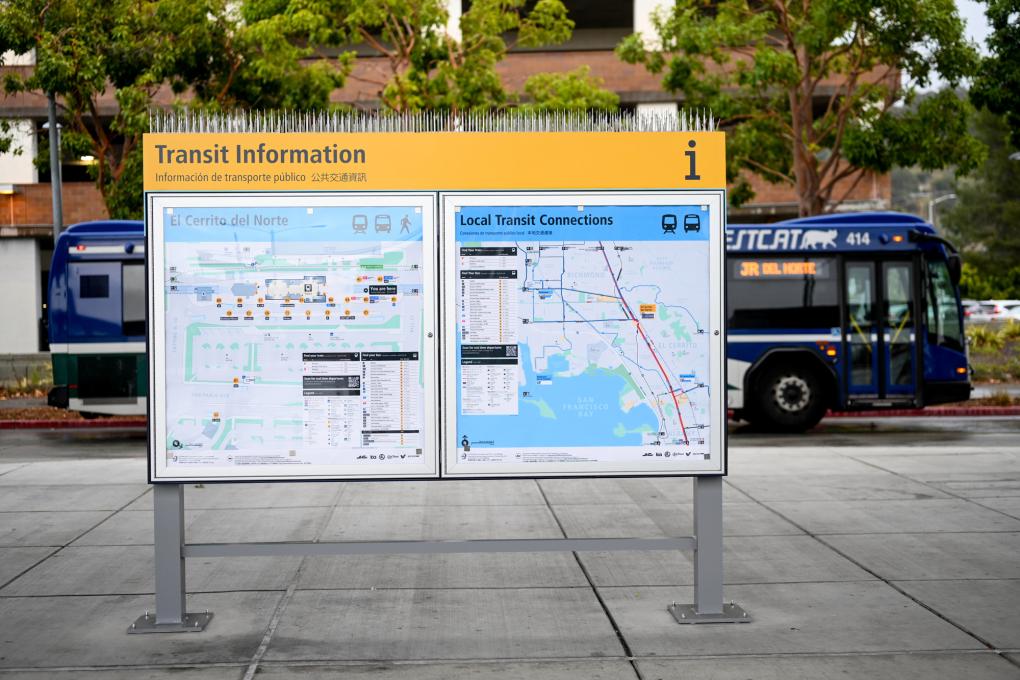
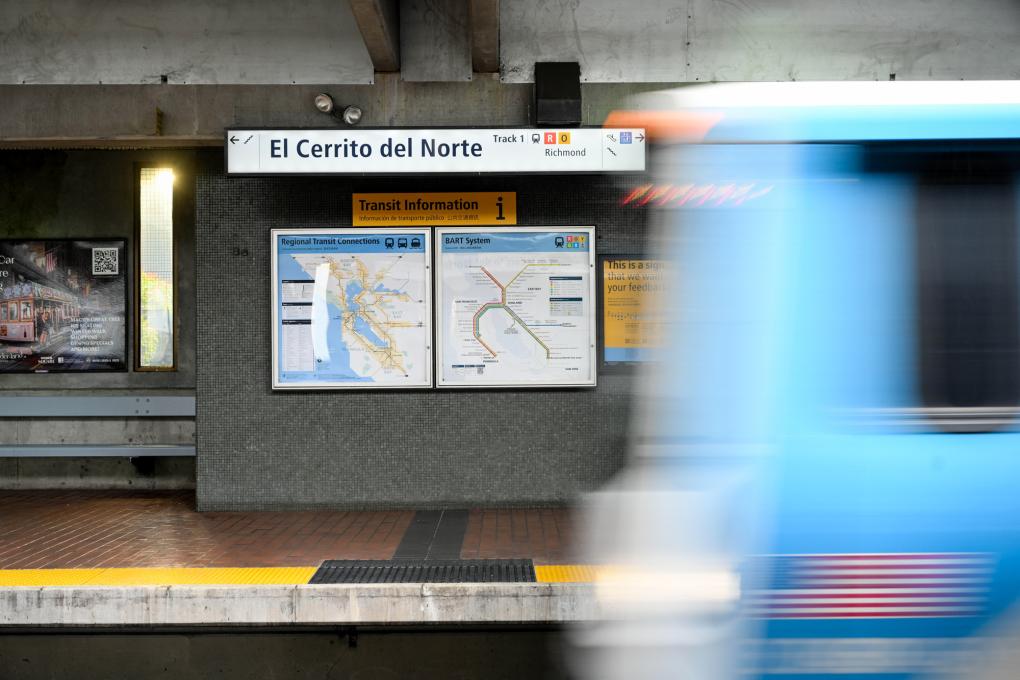
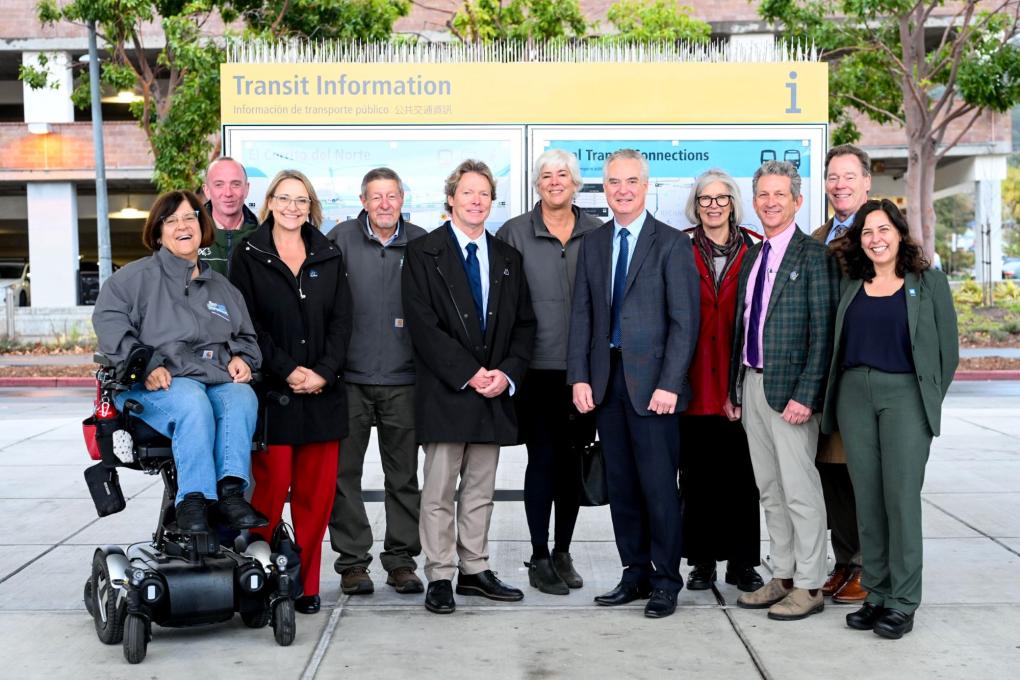
Today, Dec. 12, at El Cerrito del Norte Station, BART, Bay Area transit agencies, and the Metropolitan Transportation Commission (MTC) unveiled new test transit maps and signs designed to help make transit journeys easier to understand for both existing and new riders by delivering information that is clear, predictable, and familiar across service areas and county lines. A new comprehensive transit map, which will enable riders to discover key destinations they can reach on the Bay Area's extensive rail, bus, and ferry network, also was released.
Today’s event kicked off the start of an evaluation period for the Regional Mapping & Wayfinding project, in which BART, MTC, and transit partners invite Bay Area residents and visitors to share their thoughts about the test signs and maps now installed at El Cerrito del Norte Station. Several “test” prototype signs and other communication materials also will be installed at the Santa Rosa Transit Mall/Downtown Santa Rosa SMART station later this month. Members of the public, including those who are unable to visit one of the test locations in El Cerrito or Santa Rosa, are invited to take this online survey to share their feedback and ideas.
“Transit in the Bay Area and elsewhere is still suffering the effects of the pandemic,” said Sue Noack, vice chair of MTC’s Regional Network Management Committee and Pleasant Hill City Councilmember. “But these maps and signs are tangible examples of the work MTC and the transit agencies are doing together to make the Bay Area’s system simpler, easier to use, and more affordable.”
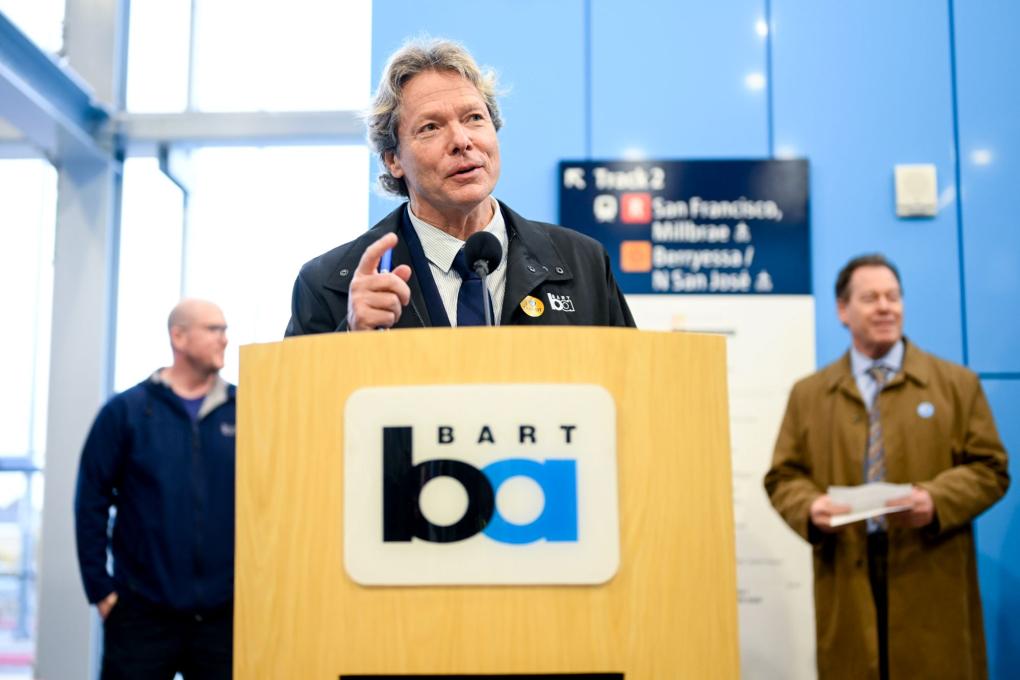
Said BART General Manager Bob Powers: "This is not just a BART project, but a collaborative effort across regional transit agencies to experiment and innovate together. This project will move away from the disjointed look of the region's current transit signage and maps and make it easier for riders to know how to get from point A to point B, especially those who are new to riding Bay Area transit. I am thrilled that all of our agencies and the MTC have worked together to make this important project happen."
Transit riders will be able to engage with the test materials during their journeys and share their ideas about how to make new signs and maps work better for them. This public feedback will help inform the next stage of the project in which the new maps and wayfinding materials are expected to be installed at seven additional locations across the Bay Area in 2025 and 2026.
The new maps and signs are part of the larger Regional Mapping and Wayfinding initiative aimed at making it easier to ride transit in the Bay Area. Whether a rider is traveling by bus, rail, ferry, or a combination, the signs, maps, screens and other communication systems will be consistent and easy to identify across all nine Bay Area counties.
The Regional Mapping and Wayfinding Project — led by MTC in partnership with BART and over two dozen Bay Area transit agencies as well as transit riders and Bay Area cities and counties — is the result of a first-of-its-kind effort to redesign and harmonize maps and signage across all nine Bay Area counties to help people navigate transit more easily. This project is just one piece of a broader effort outlined in the Bay Area Transit Transformation Action Plan, which is focused on making Bay Area transit easier and more convenient for riders of all ages and abilities to use.
The Regional Network Management Council includes top executives from BART, MTC, the San Francisco Municipal Transportation Agency, AC Transit, the Santa Clara Valley Transportation Authority (VTA), Caltrain, SamTrans and the Golden Gate Bridge, Highway and Transportation District, as well as three general managers representing all other transit agencies serving Bay Area communities, including BART General Manager Bob Powers.
MTC is the regional transportation planning, financing and coordinating agency for the nine-county San Francisco Bay Area.
The definitive history of the BARTmobile on its 20th birthday
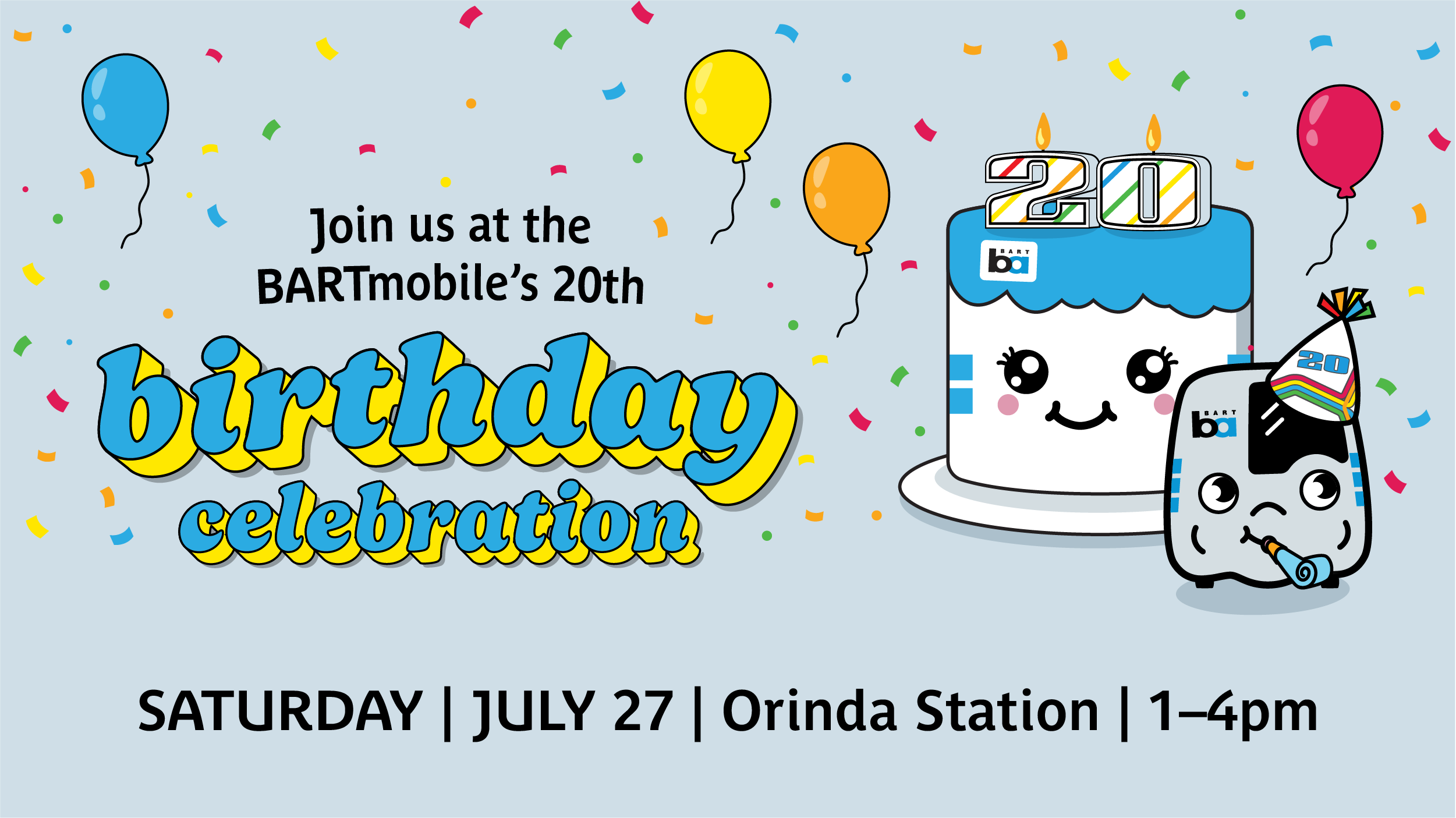
Join us Saturday, July 27, at Orinda Station to toast the BARTmobile on chugging its way to 20 years. More event info here.
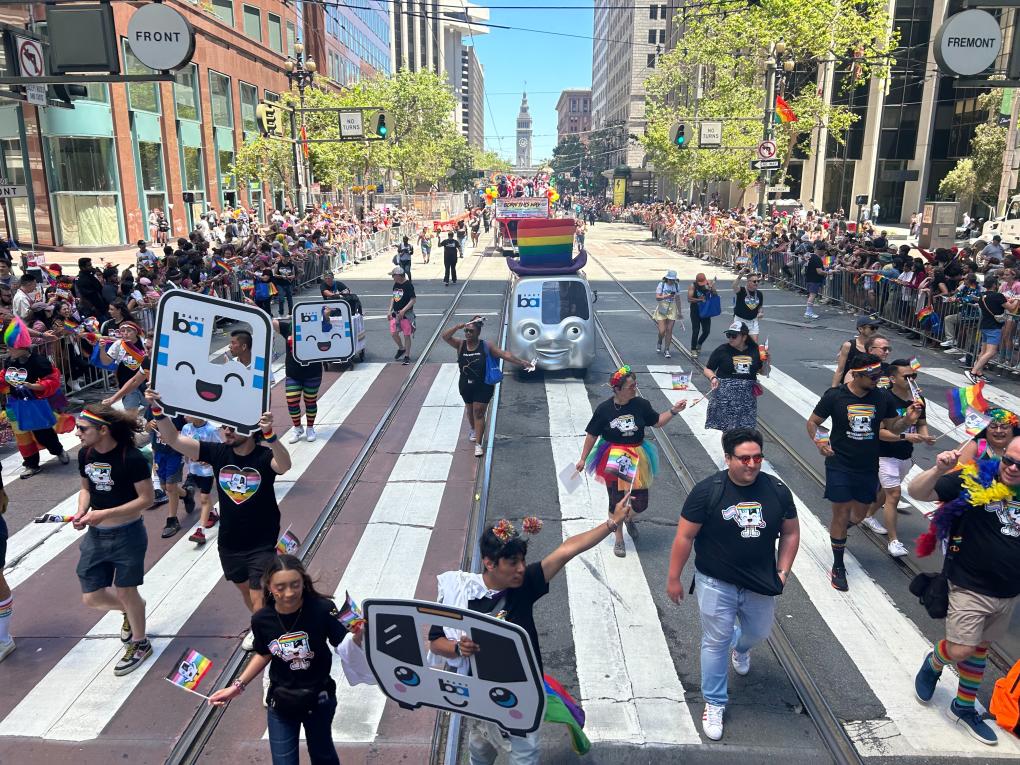
The BARTmobile in the 2024 San Francisco Pride Parade. Watch the parade from the BARTmobile's perspective on Instagram.
It has been said that its eyes can see through to your soul. Some have speculated it has the power to improve society. Those who cross its path are known to start acting joyfully and sometimes erratically. It’s even slowed traffic on the Bay Bridge.
If you have found yourself at a major Bay Area parade in the last two decades, chances are high you’ve encountered this mystical being, known as the BARTmobile.
The BARTmobile inspires in passersby what some may deem insane behavior. As it rolls down its given route, paradegoers will scream and shout at the anthropomorphic train as if it were Taylor Swift – “The BARTmobile is here! The BARTmobile is here!” In many instances, adults and children alike will dig through their wallets and pull out their Clipper cards, waving them maniacally at the BARTmobile’s smiling face as it rolls by.
But what exactly is the BARTmobile? And how did it come to have such a hold on the hearts and minds of Bay Area residents?
Jill Buschini, Principal Marketing Representative at BART, has been the official “BARTmobile wrangler” for the past eight parade seasons. She ensures the mobile gets where it needs to go for its bevy of local engagements. (Note: The BARTmobile currently participates only in major Bay Area parades and festivals.)
The BARTmobile Wears Many Hats
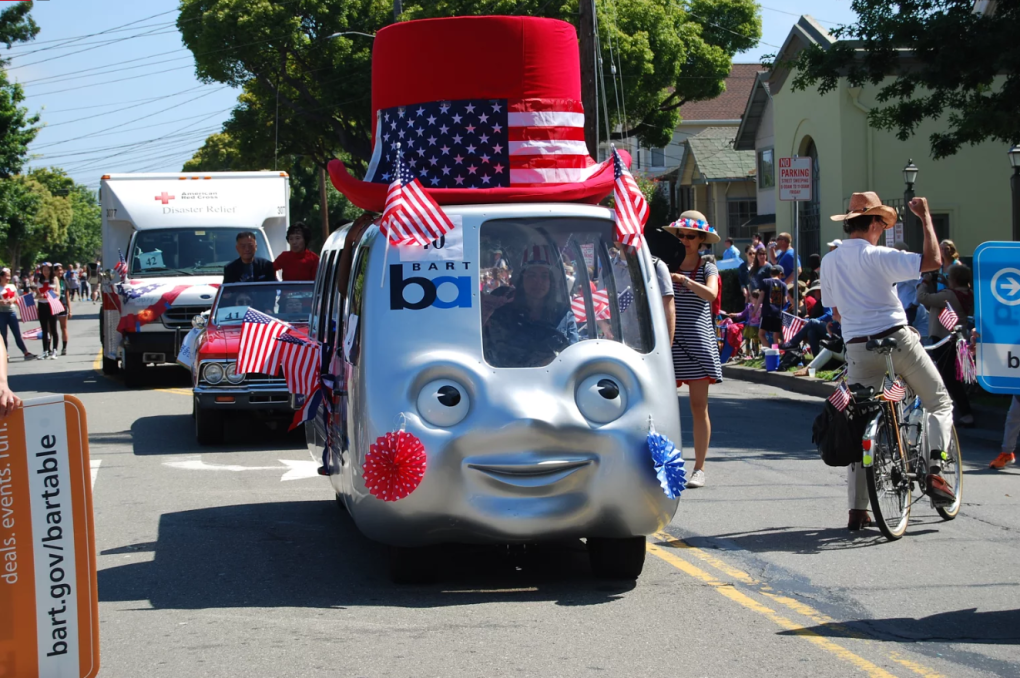
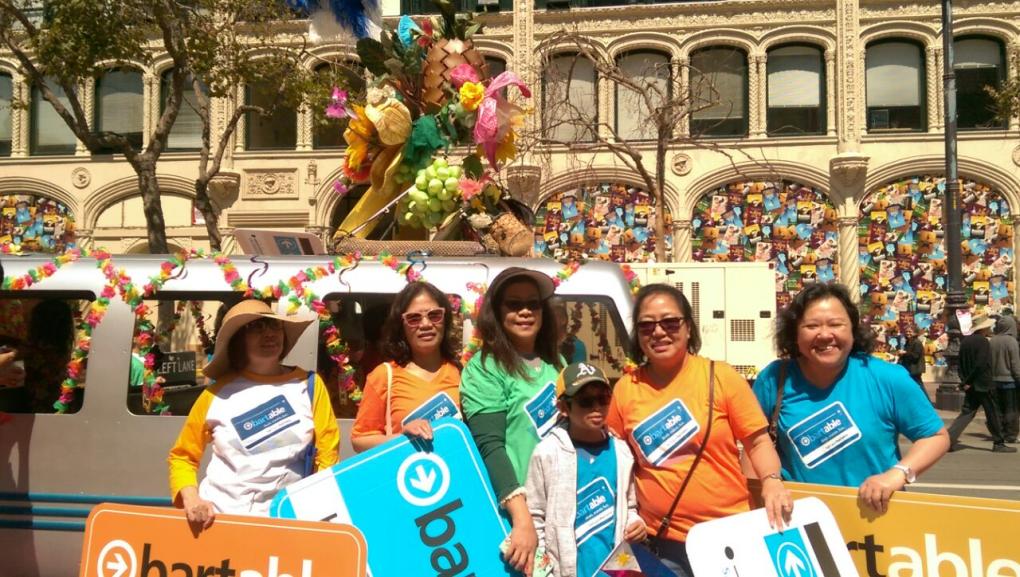
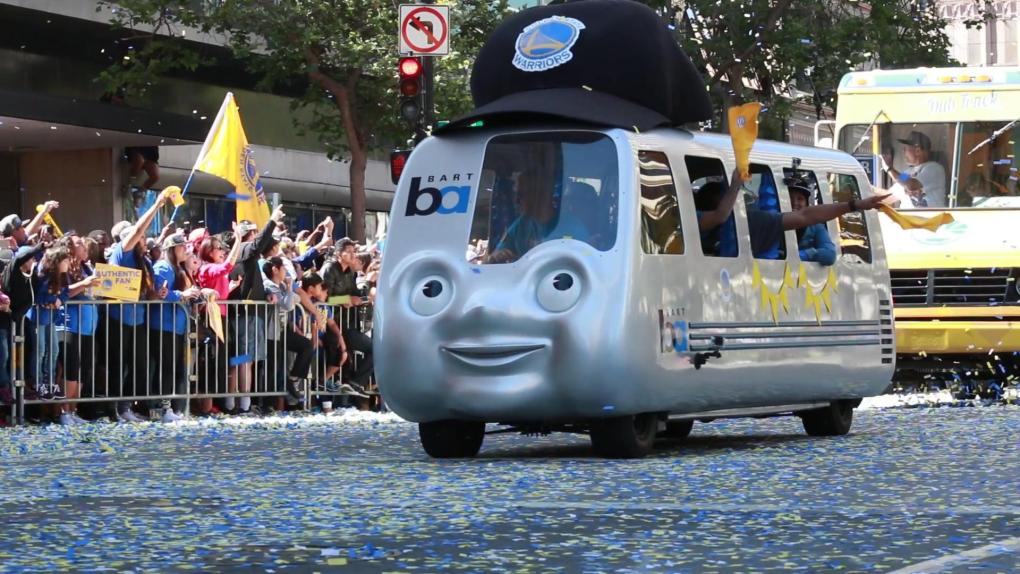
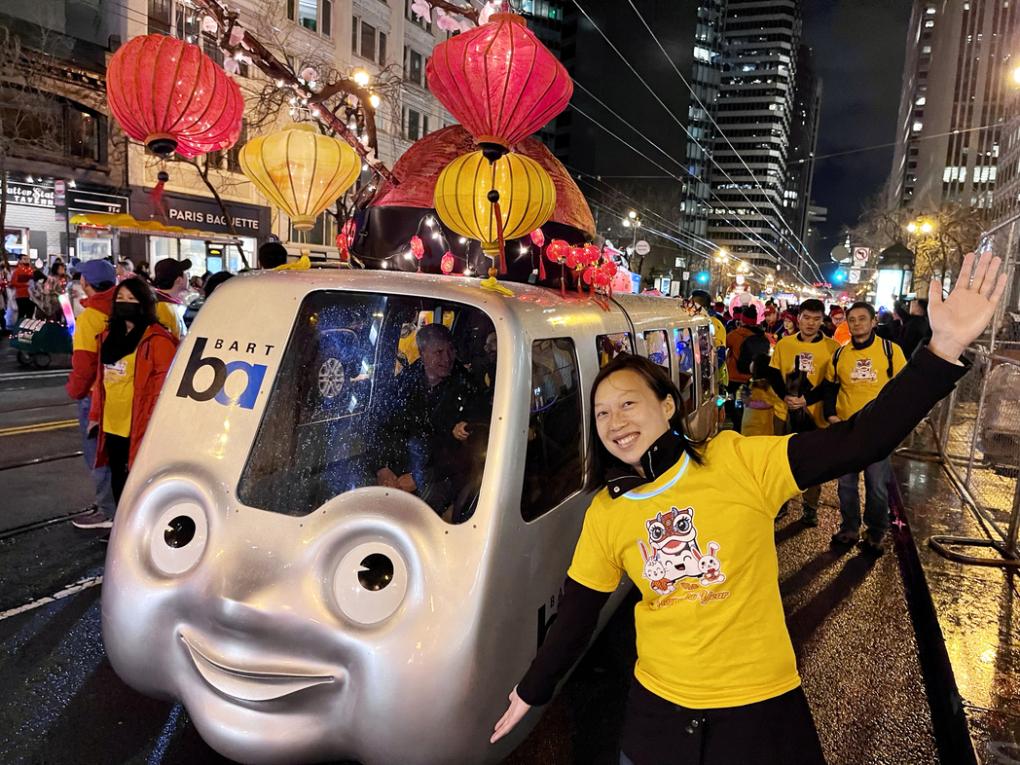
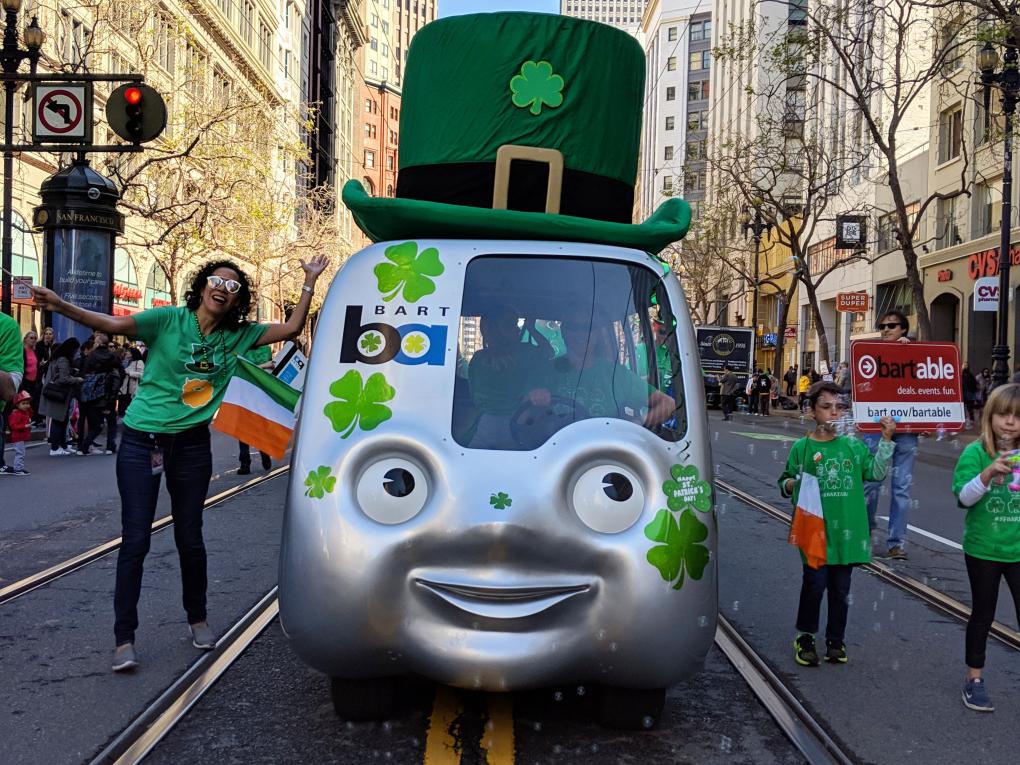
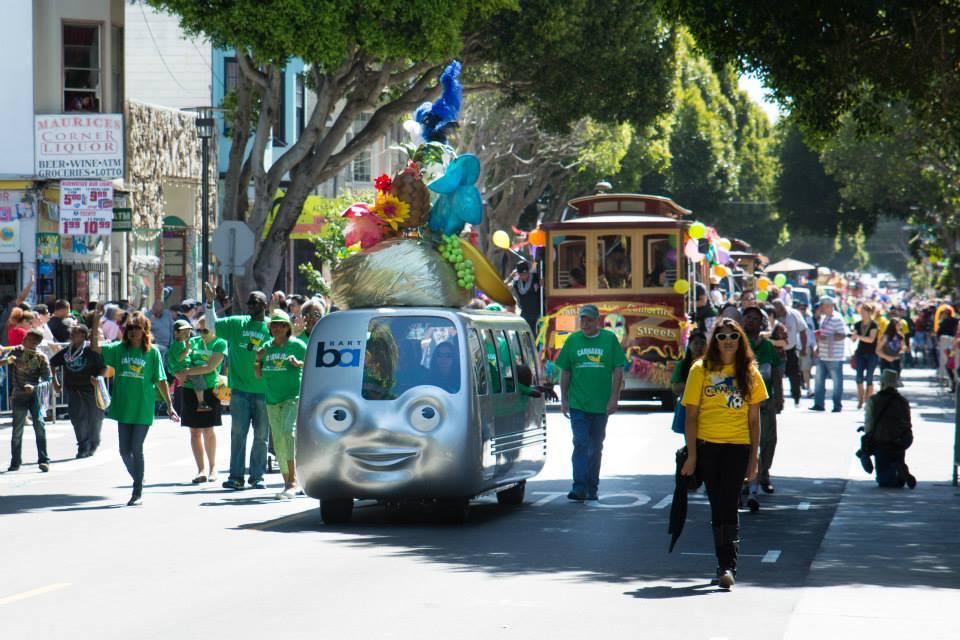
“When the BARTmobile arrives anywhere, the attention it gets still astounds me. It's incredibly fun to see and be part of!” said Buschini. “Kids and adults alike are transfixed by the small BART train with a face.”
Buschini said even the Golden State Warriors, during their 2022 Warriors Championship Parade, pointed and cheered at the BARTmobile when it caught their eye along the parade route.
There are a handful of crafty, ingenious folks responsible for birthing the BARTmobile. But there is one man responsible for kicking things off. That would be Doug Bartlett, a now-retired BART Principal Marketing Representative.
“Basically, anything that wasn’t normal BART marketing business was thrown to me,” Bartlett said, speaking by phone recently.
In the early 2000s, Bartlett arranged for a series of BART appearances in local parades and happenings. At that time, the Buildings and Grounds department lent BART paradegoers a few logo-emblazoned trucks to walk beside.
“The vehicles were obviously gas-powered,” Bartlett said. “It didn’t seem right. BART is electric!”
The BARTmobile by the Numbers
Weight | Height | Width | Length | Max Load | Max Speed | Battery | Seats |
704 lbs | 6 feet | 5 feet | 14 feet | 1,500 lbs | 15 mph | 12 Volts | 8 |
As a temporary solution, Bartlett began renting three-wheelers. They didn’t really have anything to do with BART, but they were electric, at least.
Then, Bartlett attended an Oakland Athletics game at the Coliseum. At the game, the team had golfcart-sized Chevron cars on display, as well as miniature cars to give to children. A switch flipped in Bartlett’s mind: “I said, ‘We should do this with a BARTmobile.’”
From that day forward, Bartlett set out to make the most fantastical, most adorable, most kid friendly BARTmobile possible.
“The justification was, my god, the San Francisco Gay Pride Parade is seen by more than one million people, just for starters,” Bartlett said. “In one year, a BARTmobile could be seen by more than five million people. It could obviously be justified from a marketing perspective.”
The wheels truly began turning on Halloween 2001, when the Commuter Check Service Corporation, a pre-tax commuter benefit solutions provider, agreed to donate $75,000 to cover the cost needed to construct the entirely electric BARTmobile, as well as a trailer and storage container for it to call home.
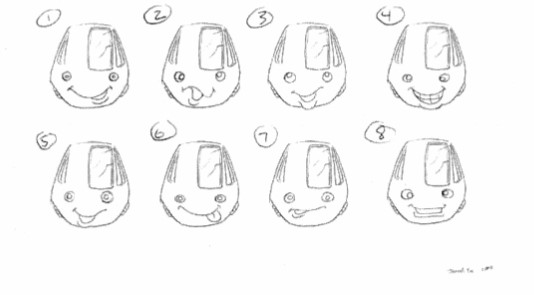
Initial concept sketches for the face of the BARTmobile by David Yee.
With funding secured, the design process began. First, playwright and carpenter Tony Pelligrino sculpted a model. Then, designer David Yee created initial sketches and concept art, trying to determine the right face for the roving mascot.
“Some of these drawings were the coolest I’d ever seen in my life -- think ‘Star Wars’ meets Tesla,” Bartlett remembered. “It was nuts! But at the same time, we had to dial it in to make it really look like a BARTmobile.”
Bartlett said the design team went “more for the character, the softness, the cuteness.”
“I wanted future BART riders to look at this as if BART has a personality,” Bartlett said. “We went through many iterations trying to get that face to look happy, but not strange. Some of the drawings were absolutely demonic – like Chucky leading the BARTmobile.”
Bartlett eventually connected with Charlie Bailey of Industrial Light and Magic, the Marin-based visual effects company founded by George Lucas in the 1970s.
“At the time [Bailey] was building the BARTmobile, his crew was building a massive ship for the ‘Pirates of the Caribbean’ movie. It was like 40 feet long!” Bartlett remembered.
Bailey and his colleague Mark Anderson, of the freelance Bailey Design Services team, built the BARTmobile on nights and weekends out of Anderson’s garage. First, they sculpted the face and the rear of the train out of foam and built the middle section from plywood and polyurethanes. They then painted the model and made a mold of the train, which was used to create the fiberglass body. Inspiration for the shape and style of the BARTmobile came from 1958 VW buses and Corvette concept cars.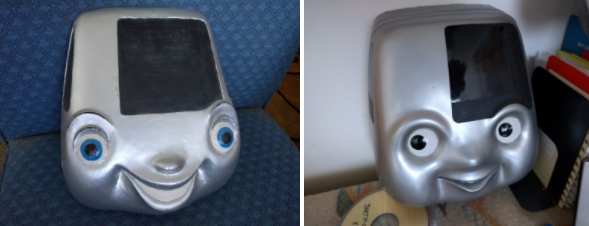
At some point, Anderson and Bailey – who could not be reached for comment – purchased an eight-seater golf cart from Bay Area Golf Carts, which they reinforced with steel. Finally, they built a steel chassis and secured the fiberglass body atop the cart. The last step: painting the BARTmobile with blue bumper strips and Chrysler silver.
Then came the electrical wiring. According to Bartlett, the same Industrial Light and Magic team that worked on “Star Wars” designed and installed the BARTmobile’s electronics. They even converted an actual BART train horn to run on 12-volt battery for the friendly faced vehicle.
“Generally speaking, we had all these incredible guys who oddly loved this project,” Bartlett said. “It was something so different. It was a challenge. And unlike a lot of their projects, it would be around for years to come.”
Bartlett is a musician – he said his current music project is making tunes for robots and aliens – so he was “obsessed” with equipping the BARTmobile with “giant speakers and a monster amp.” Today, he is proud to say that the BARTmobile’s sound system “will rattle your bones” at full throttle, thanks in part to a subwoofer that’s the size of an entire bench – a “must have” for Bartlett.
If you’ve ever witnessed the BARTmobile in a local parade, you will certainly have noticed its “outfits.” The mascot has a variety of specially constructed hats that it wears depending on the occasion: a top hat with rotating “skins” for St. Patrick’s Day, July Fourth, Pride, and the holiday season; a Lunar New Year hat; a Carmen Miranda hat (complete with giant fruit); and a baseball cap for sporting events.
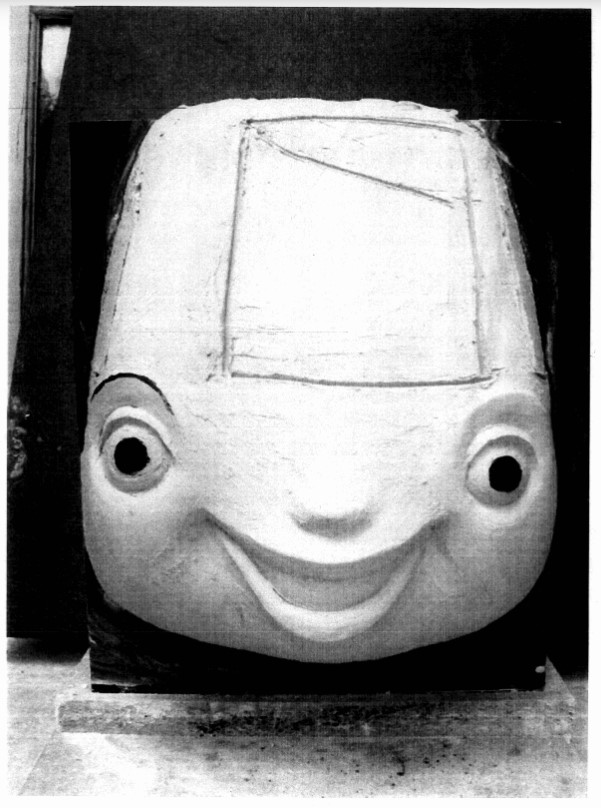
A foam sculpture of the BARTmobile face.
The hats, like all things BARTmobile, have a story of their own. They were made by a team of crafty, creative individuals at Scientific Art Studio, a design and fabrication studio in Richmond that creates everything from museum exhibits to playgrounds and sculptures.
“The BARTmobile was one of those things,” said Ron Holthuysen, the Creative Director and Owner of Scientific Art Studio. “We had a hard time saying no [to the project]. When somebody comes to us, we typically say, ‘Oh yeah, we can do that.’”
To create the hats, Holthuysen began by drawing some concepts. Then, it was a matter of finding the right materials that were “lightweight but also durable,” said Gordon Glasgow, Shop Manager at Scientific Art Studio.
Once they found the materials – they range from heavy cotton to a “very fancy” silk brocade – Glasgow began crafting patterns as well as foam inner structures that would ensure the hats kept their shape and wouldn’t break. What couldn’t be found in stores, the designers made themselves.
“We do basically everything [at Scientific Art Studio],” Holthuysen said. “That’s how we ended up doing BARTmobile hats.”
Construction of the BARTmobile completed in February of 2004. The mascot was unveiled shortly thereafter with a “birthday party,” intended to attract “visibility for marketing programs to gain riders,” according to the run-of-show document for the day. A fife and drum corps kicked off the celebration, which also featured a birthday cake, train-themed CDs (it was the early 2000s after all), and toy train giveaways.
Since then, the BARTmobile has appeared at a multitude of events, driven over 250 miles, and seen by millions of people. To use Bartlett’s phrasing, the mobile has indelibly “put a face on BART.”
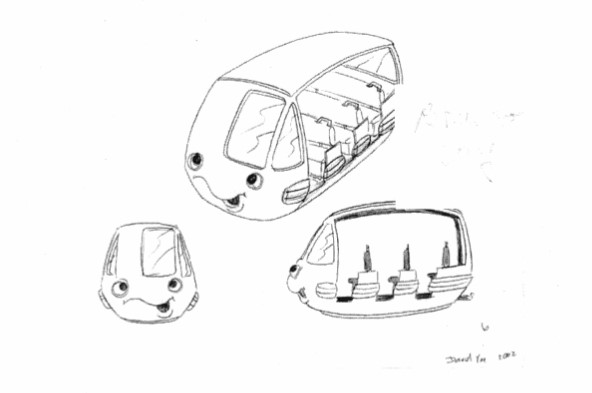
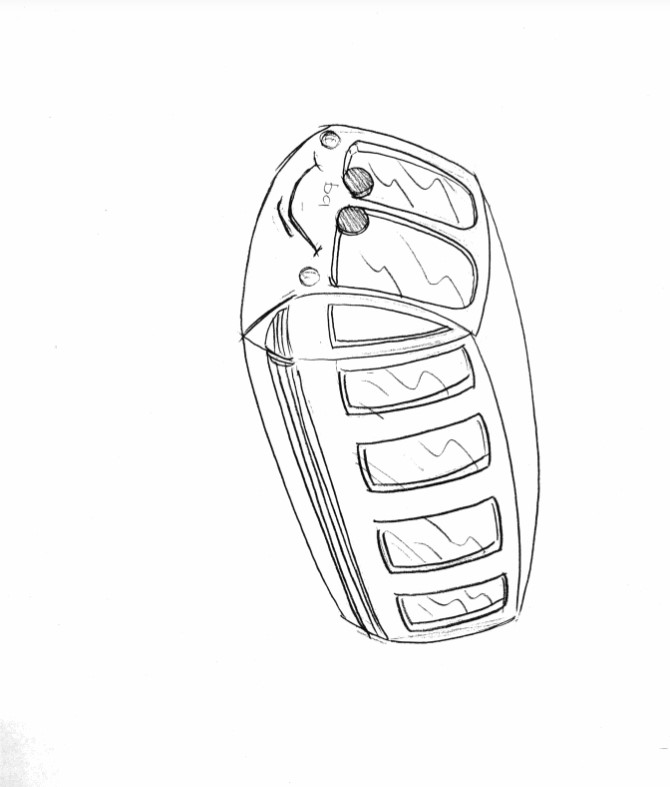
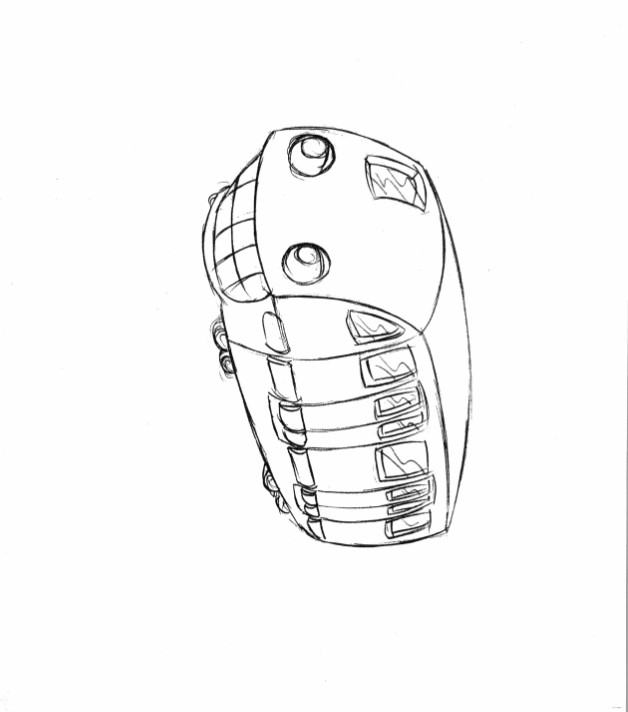
Initial concept sketches for the BARTmobile.
But the BARTmobile would never be seen in public were it not for its army of “handlers” – the BART workers who prepare and transport it to its multitude of engagements.
“I started working at BART in 2018. Since then, every time there’s a parade, I’m trying to get on [BARTmobile duty],” said Tomasz Radzikowski, Buildings Worker. Radzikowski estimates he’s delivered the mobile from its home, in BART’s Oakland Shop Annex, to local events at least six times.
“It’s a very exciting thing to do,” he said. “I like it – no, I love it.”
To prepare the BARTmobile for an event, one team of BART workers polish the chassis, charge the electronics, and soundcheck the stereo. This crew is also in charge of decorating, as well as dressing the BARTmobile in its event-specific hat.
From there, a second team loads and secures the BARTmobile on a special trailer. They’ll drive it from the Oakland Shop Annex to wherever it needs to appear that day and unload the 700-pound vehicle. At the end of the event, the process repeats itself in reverse.
“Whenever we drive from the Oakland shops to the city, people will wave at us and ask us to pull over to take pictures,” Radzikowski said. “Sometimes, people on the Bay Bridge will slow down because they’re so excited to see it.”
Radzikowski often hangs around the parade until it’s time to pack the BARTmobile back up. He said the joy and energy from the crowd when they see the mobile rolling down the street is palpable.
“You can see the good vibes and happiness,” he said. “It’s a beautiful feeling to experience.”
Bay Area history reclaimed: The story of 95-year-old artist Janet Bennett and her longstanding tile artworks at 16th and 24th St. stations
Note: Janet Bennett’s tile murals have come to define the character of BART's Mission District stations, and yet, in the fifty-plus years since the tiles were placed, her contribution has gone unattributed...This Women’s History Month, BART is honored to bring forward the story of the artworks as well as that of the wonderful midcentury artist who made them.
BART will be installing plaques at 16th St. Mission and 24th St. Mission stations to recognize Bennett as the artist behind the character-defining murals.
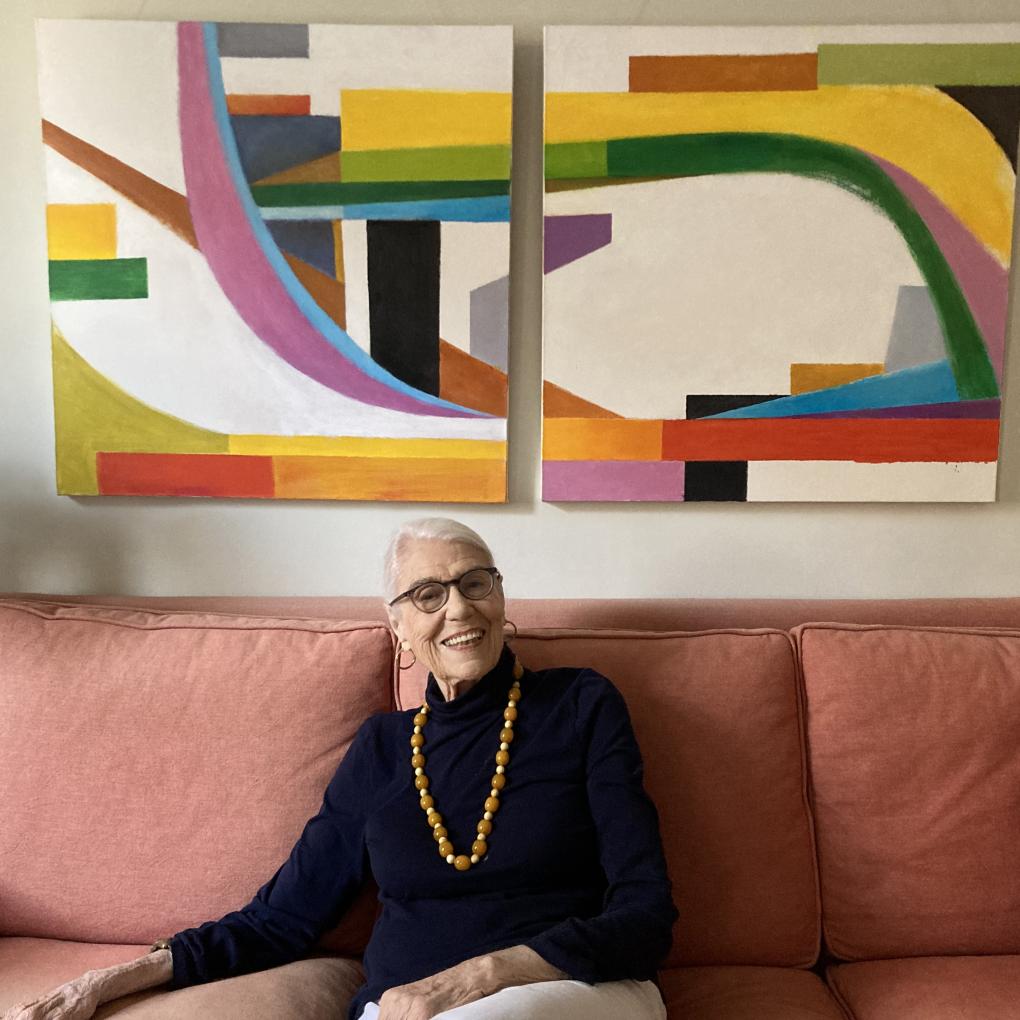
Janet Bennett, the artist behind the tile murals at 16th St. and 24th St. Mission stations, seated in front of one of her paintings in her New York City home.
Every day, thousands of people pass through BART’s Mission District stations in San Francisco. As they enter the fare gates, walk along the concourse toward the stairs, then onto the platform to await their trains, they are walking through history.
It’s a history wrought by many hands over more than five decades: the planners who mapped the system, the architects and engineers who drafted the plans, and the workers who sweated day by day to construct a transit space that would function not just during their lifetimes, but the lifetimes of their children, grandchildren, great-grandchildren, and so on.
BART stations serve a practical purpose, of course. But they are not solely utilitarian spaces. Stories are woven into their floors, their trackways, and their walls. These individual components speak together and alone, and if you take a moment to pause and investigate, they might reveal the stories they contain.
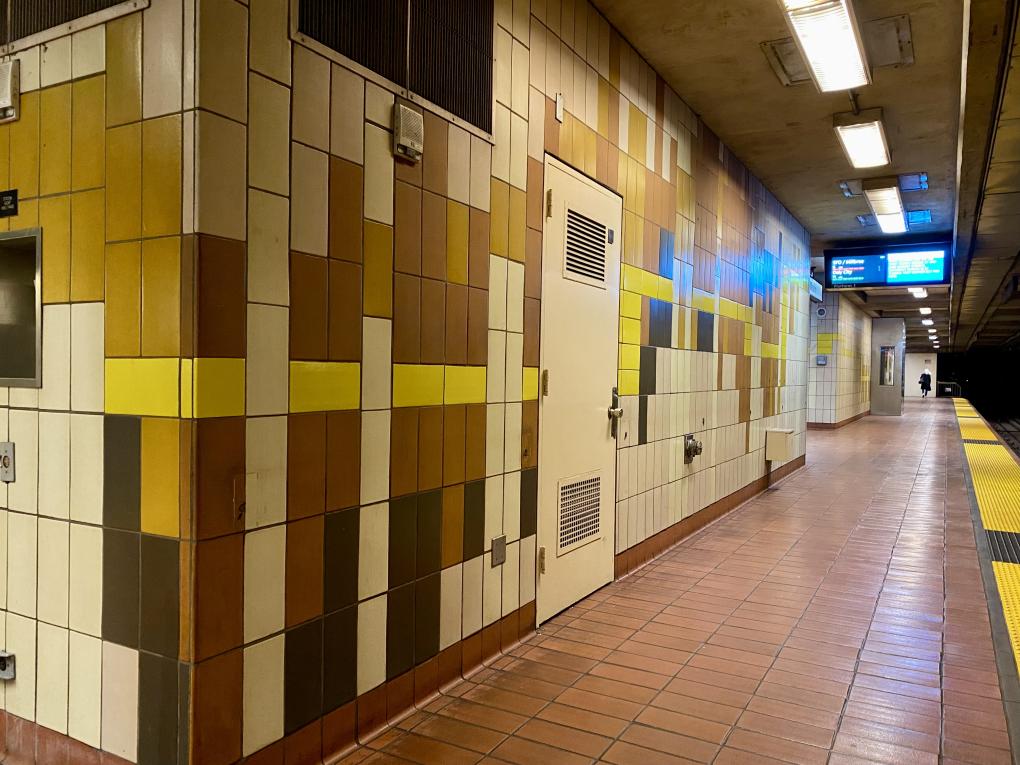
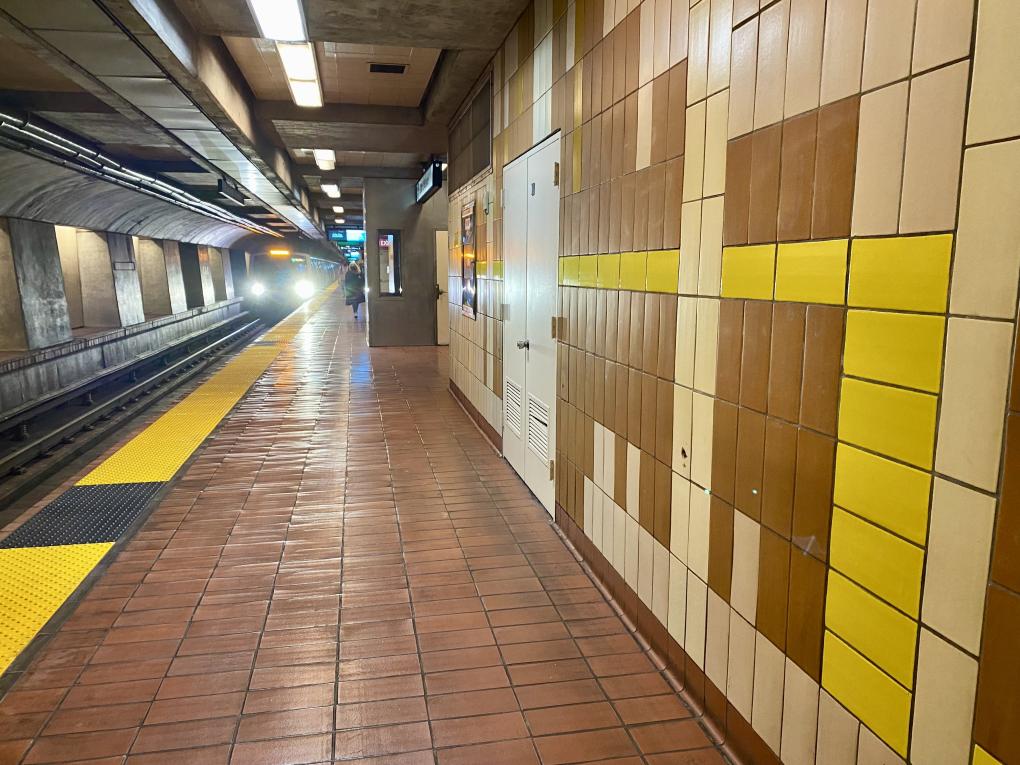
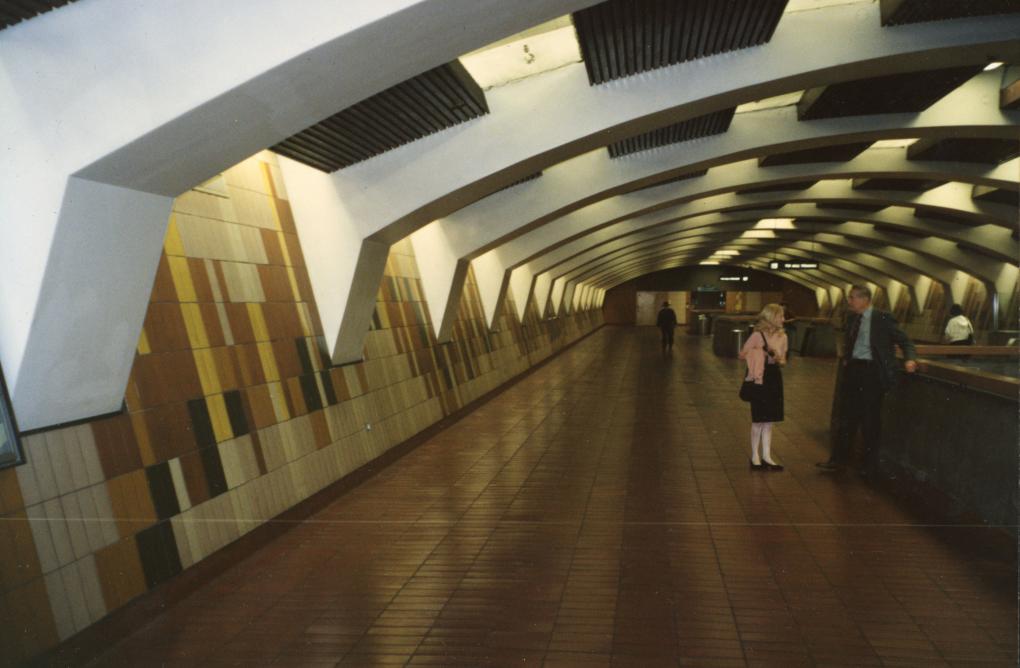
Artist Janet Bennett, now 95 years old and long retired, is a protagonist in the story of 16th St. and 24th St. stations. During the construction of these transit spaces, Bennett was hired by the station architect, Hertzka and Knowles, to design the striking tile murals on the stations' concourse and platform walls. Next time you’re passing through, look around and you’ll find you are surrounded by her tile artworks, from the snaking yellow formations on the platform at 24th St. to the tree-like waves of green and blue that dance on the concourse at 16th St.
“It’s gratifying that these works are still a part of people’s lives,” said Bennett, speaking from her New York City home. “They’ve gone through different lifespans so to speak. I’m happy that my tiles remain and that they’ll be there quite a while longer.”
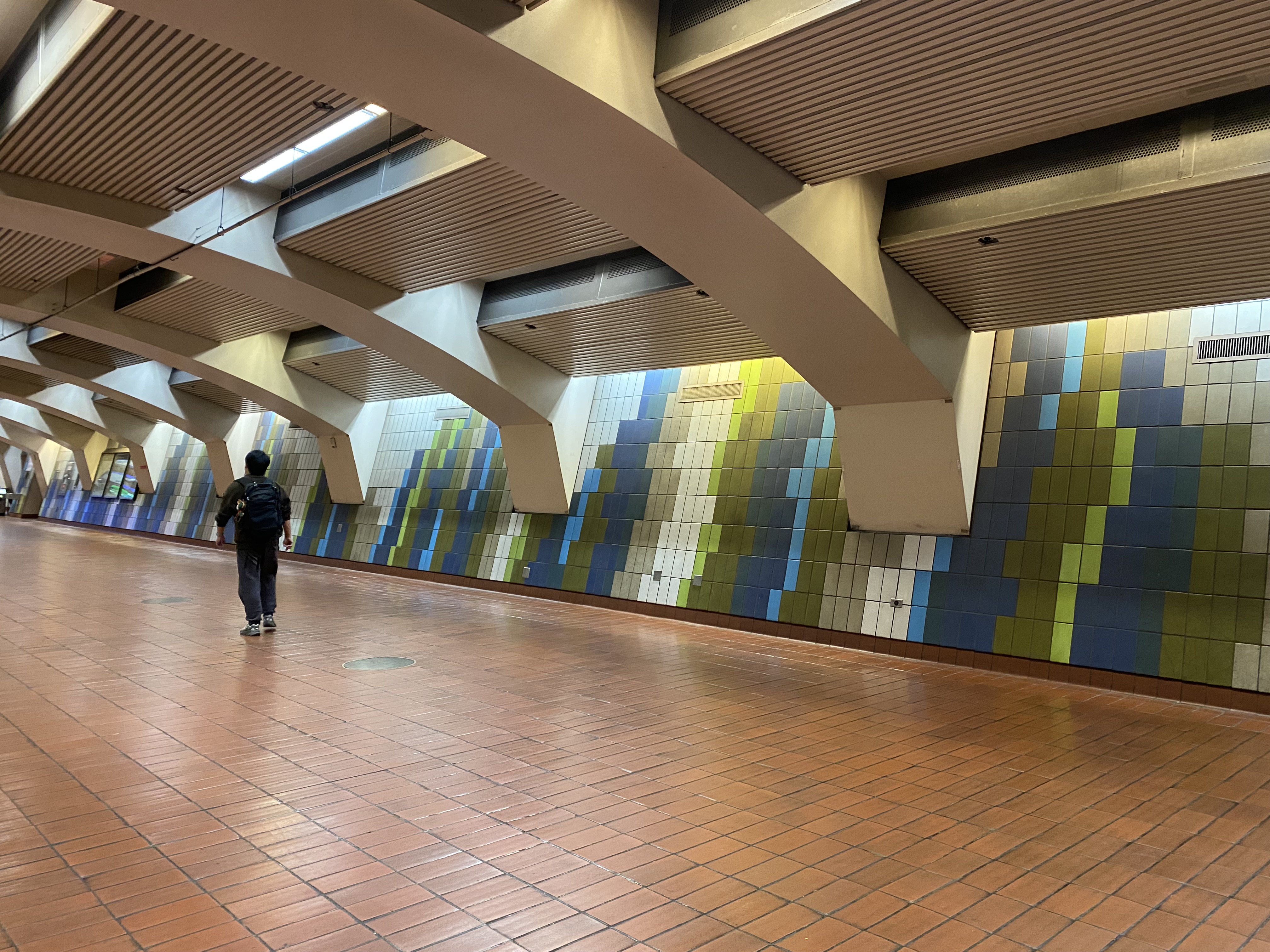
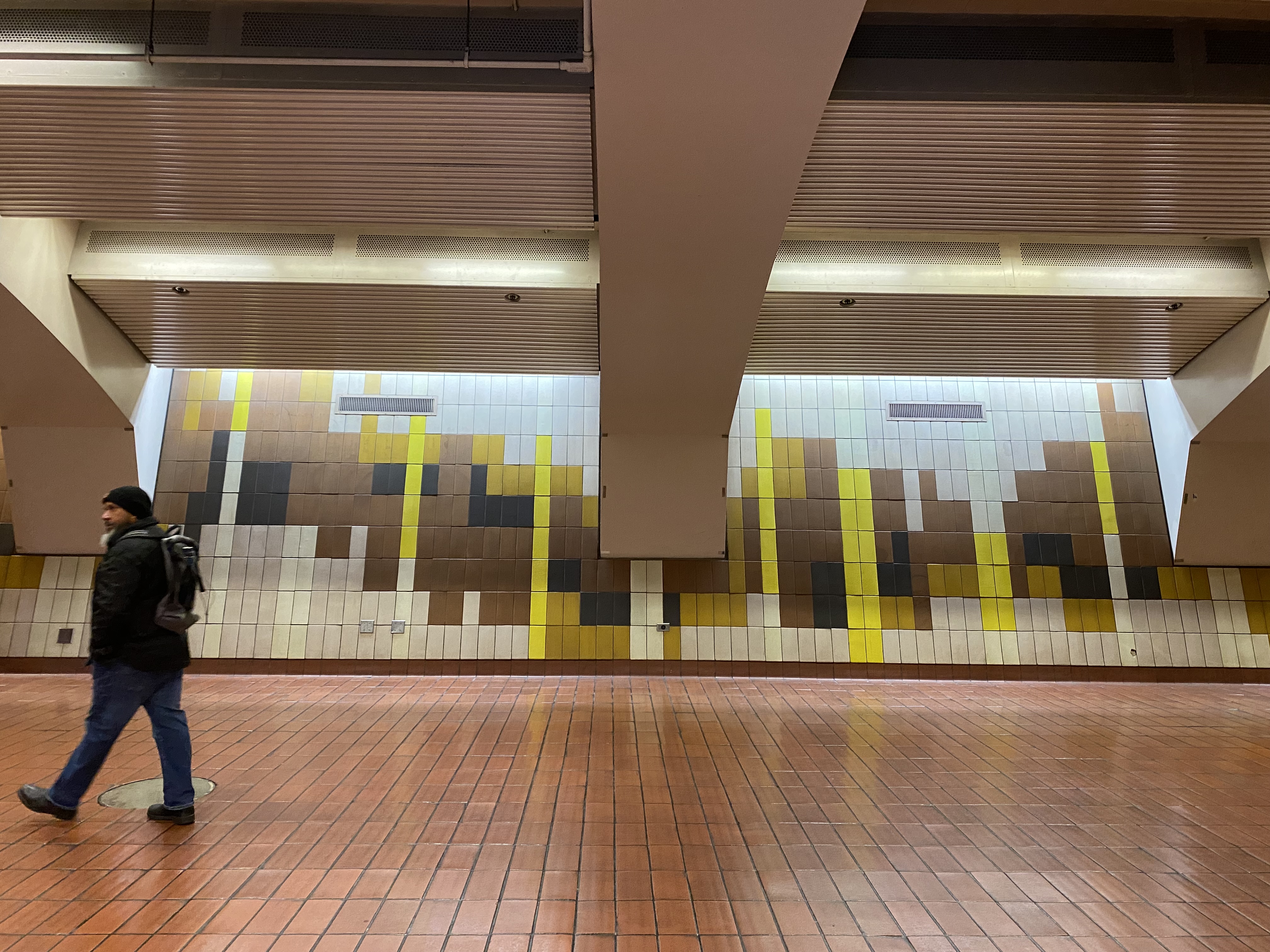
Bennett's tile murals pictured on the concourses at 16th St. (top photo) and 24th St. (bottom photo).
Bennett’s tile murals have come to define the character of the Mission stations, and yet, in the fifty-plus years since the tiles were placed, her contribution has gone unattributed. Said Jennifer Easton, BART’s Art Program Manager: “As a woman and someone who works with artists all the time, it’s so common to see women artists obscured throughout history.” BART learned about Bennett and her connection to the Mission stations after her daughter, Maria McDonald, called BART Customer Services and told them that “my 95-year-old mother named Janet Bennett should be credited as the designer of the ceramic tile artworks at 16th and 24th St. stations.” She added: “It means a lot to her.” BART verified McDonald's claim via 1971 news clippings from local papers.
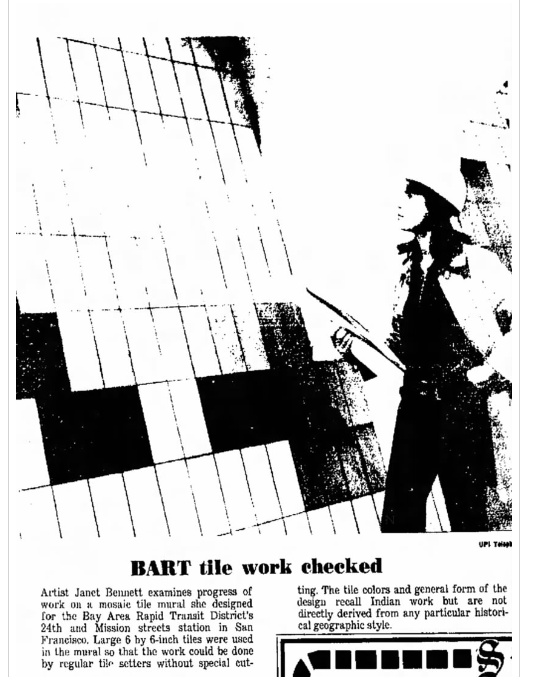
This Women’s History Month, BART is honored to bring forward the story of the artworks as well as that of the wonderful midcentury artist who made them.
“She really is a creative genius in my estimation,” said McDonald.
When Bennett was working as a staff and consultant for architectural firms and corporations in the 60s and 70s, she “was constantly breaking the glass ceiling and unconsciously taking on the lead in roles usually reserved for men,” her daughter said.
Bennett acknowledged that during that period, she was the only woman working for these major architecture firms outside of the secretarial staff. Even before then, when she was a student at Cranbrook, an art and design school in Michigan, Bennett said “no one expected that I would be anything but an architect’s wife.”
“It didn’t bother me at the time,” she said. “I was just doing my thing.”
(A relevant side note: Bennett also designed the famous mosaic passages at LAX, and her boss at the time, Charles Kratka, was long credited as the artist behind the works. Bennett set the record straight in 2007 after reading an obituary for Kratka that named him as the designer. She is now widely credited as the artist behind the mosaics. The artistic similarities between the LAX murals and the BART works certainly reinforce her claim.)
The tile mural at 24th St. Station
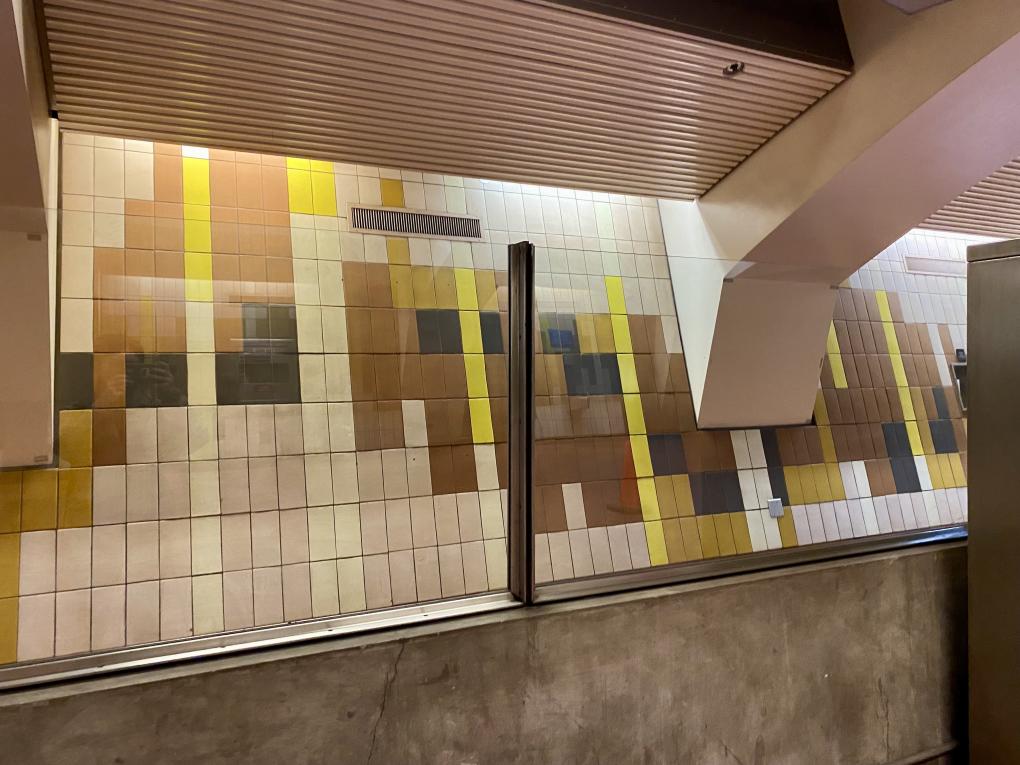
When the station architect contacted Bennett about designing the tile murals, she said she was “very, very excited.” Much anticipation and curiosity swirled around this new “Space Age” transit project, and Bennett was intrigued by the idea of leaving her mark on the system.
Upon accepting the assignment, Bennett got to work in her San Francisco studio outlining on paper the concepts for the murals. Once the initial designs were greenlit by the architect, Bennett executed the working drawings, which indicated the placement of every single tile. It was a lengthy and painstaking process.
Bennett said the designs at each station intentionally contrast with one another – there’s the dry, sunny feeling at 24th St. with its terra cottas and yellows and tans, and then the cooler tone of 16th St. with tiles of olive and gray and yellow green.
“One mural is more earthy, while the other is more sylvan,” she said. “Those concepts helped me create the overall program.”
Bennett’s artworks often reference “something from life,” and in many cases, she lets the colors and their relationships to one another inform her pieces. For 24th St., she referenced the vibrant hues of the Mission District and its close cultural ties to Latin America. The horizontal tiles that wrap around the core structures on the platform represent a yellow serpent, she said.
The tile mural at 16th St. Station
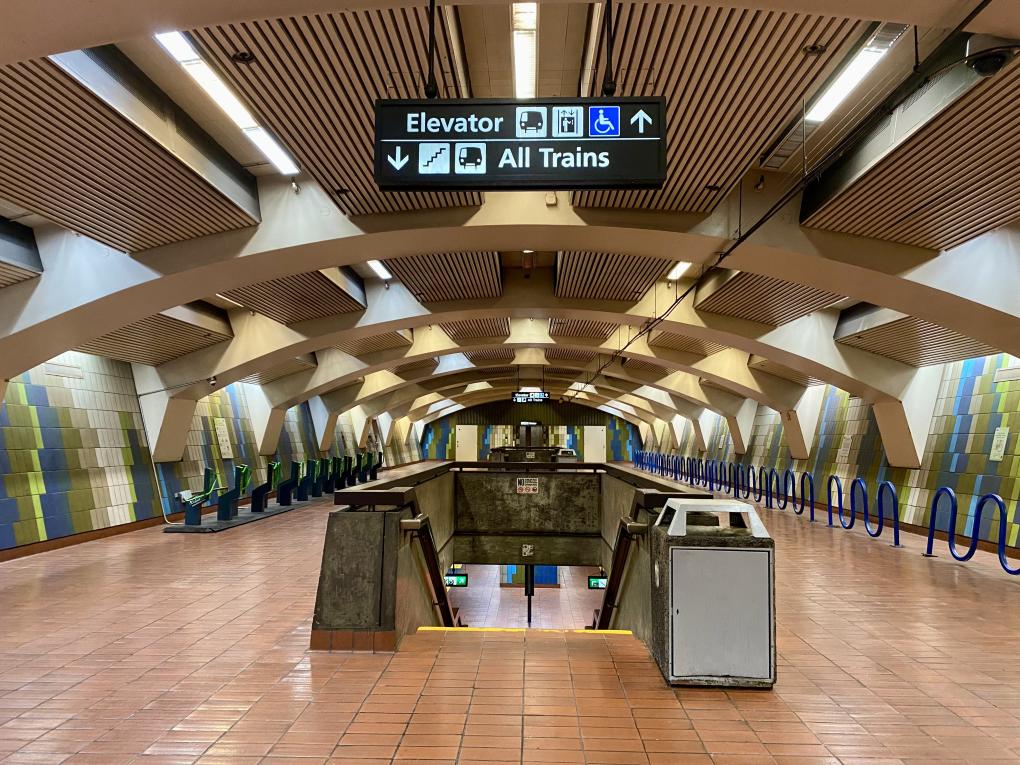
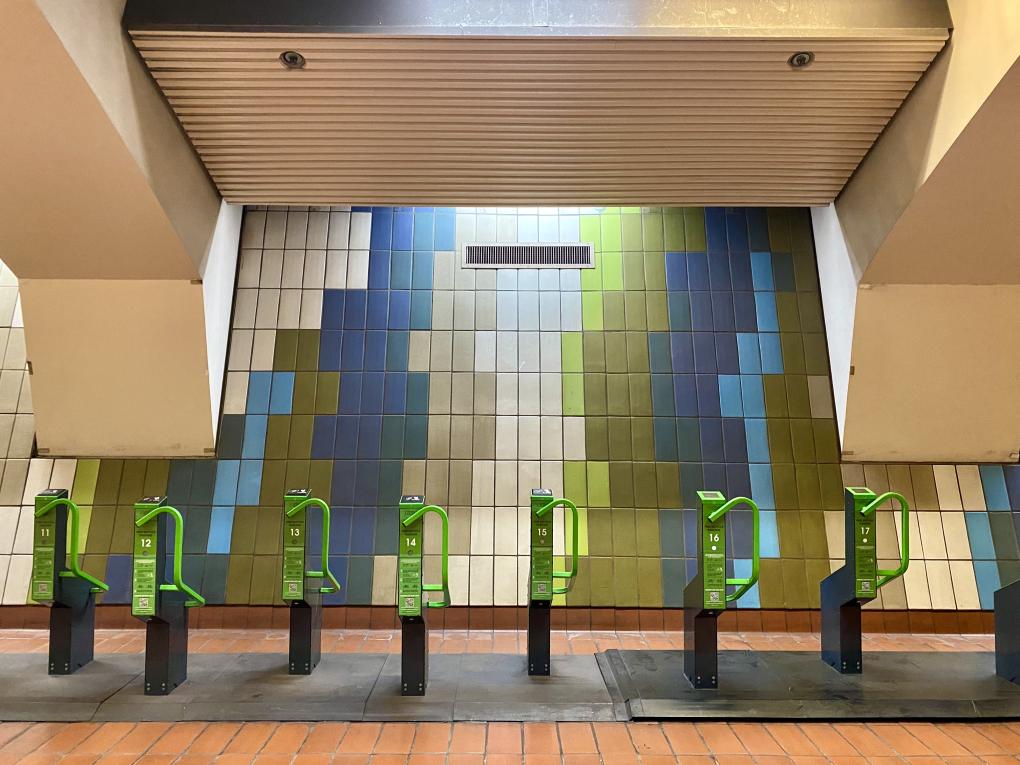
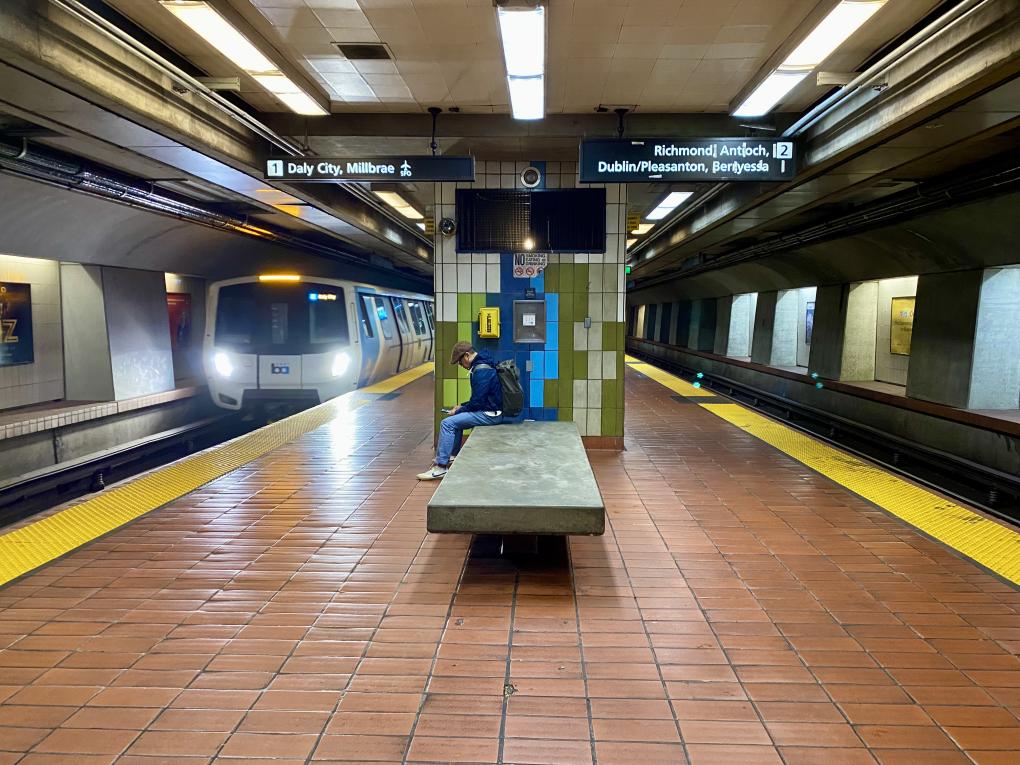
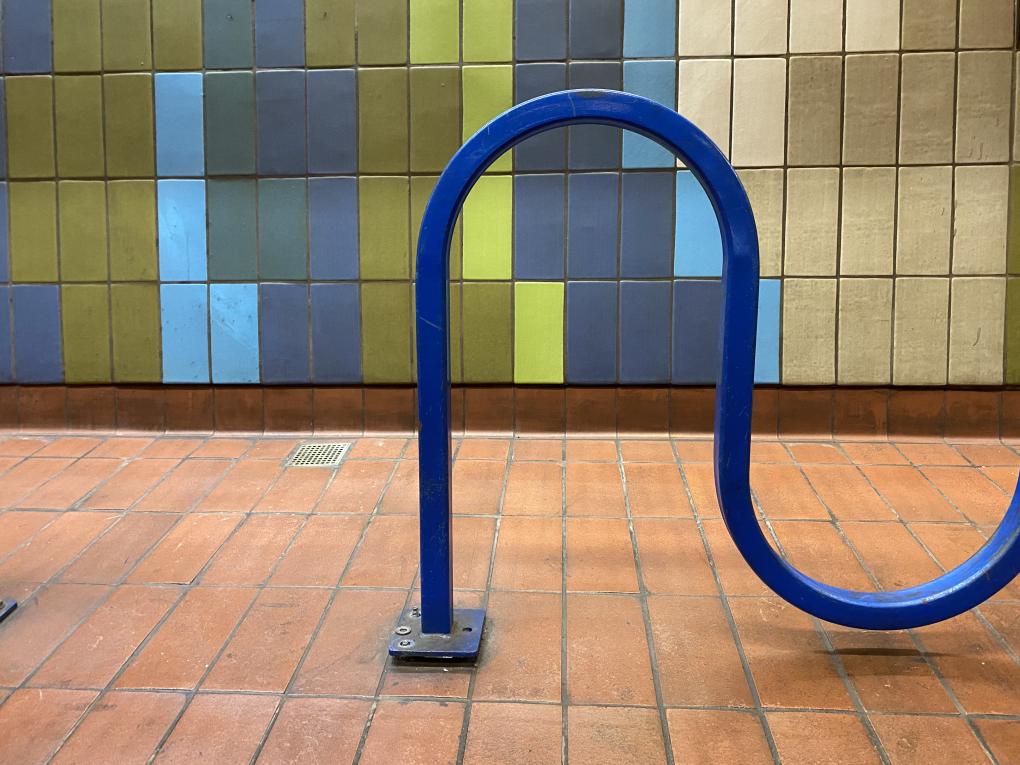
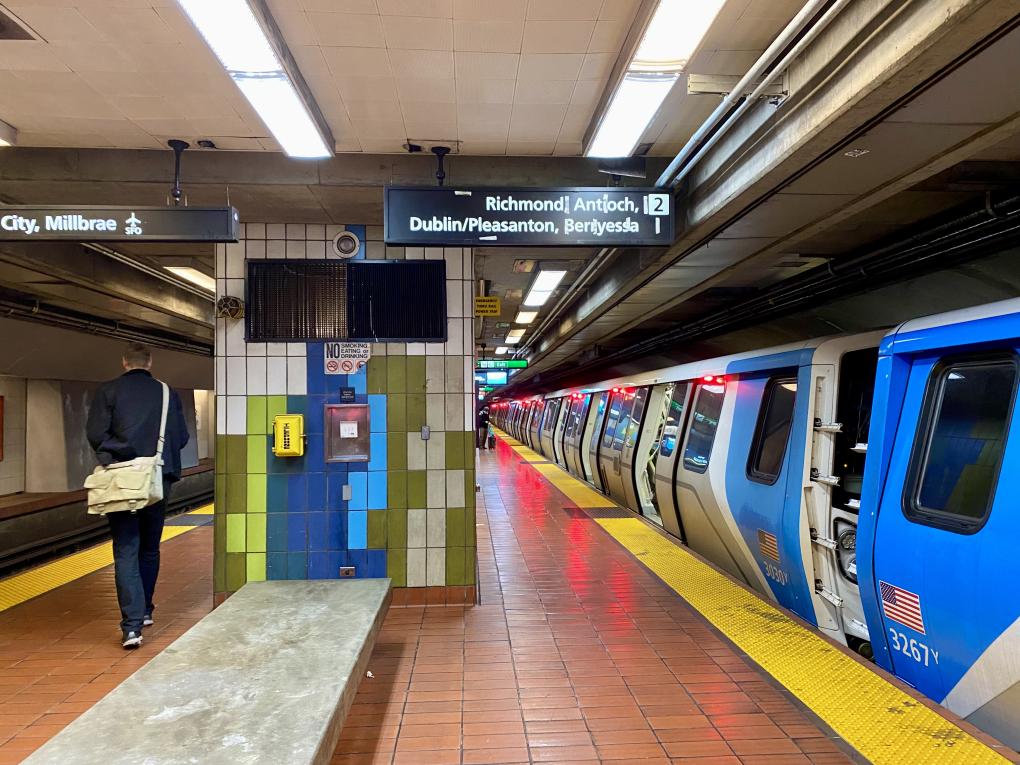
At 16th St., Bennett was influenced by visits to Marin County, its singular “forests, grasslands, and water.”
"Overall, the concern was that the colors worked well together,” Bennett said. “Part of it was motivated by a feeling that I wanted to express."
Bennett frequently traveled to Marin to meet with the tile maker for the project, the historic Heath Ceramics, which was and still is known for its unique glazes and handcrafted tiles. Heath Ceramics was founded by Edith Heath in 1948 in Sausalito, and its architectural tile line had gained acclaim with many architects throughout California by the time Bennett was working in the industry. Bennett said she collaborated closely with Heath to create the color palette for the BART station tile glazes, which she believes were custom made for the project.
Ceramic tiles are expensive, but you will notice that many BART stations incorporate them. That's because the material is durable, easy to clean, and conveys a sense of handcraftmanship, much like the use of wood, unique concretes, marble, and other unique architectural finishes used in the early BART stations. Bennett’s longstanding tile murals are a testament to the durability and timelessness of these materials.
The large ten-inch tiles Bennett used for her project added to its cost, she said. Because they were so large, the tiles sometimes warped during the firing process and had to be tossed out.
The architects of the stations also had something of a bone to pick with Bennett’s decision to use a horizontal tile layout on the core structures of the platform at 24th St.
“The architects said the horizontal tiles complicated the overall layout, and therefore were too time-consuming and costly to use. They said I should change my working drawings,” Bennett said. “I countered that it would cost more to redraw them."
“So,” she said triumphantly, “the horizontal tiles remain.”
After perfecting the drawings and selecting the last tiles, Bennett finally handed the project to the tile layers. The workers installed the tiles one at a time with special care and attention. Their skilled work in tandem with Bennett’s amaranthine designs has ensured that these murals will remain for many years to come.

A portrait of the artist.
Bennett has left a mark on many public spaces, including those in the Bay Area where she lived for a time. She said she created works for a variety of local institutions: metal mobiles for the Ice House, a longstanding set of buildings in San Francisco’s Waterfront District; an illuminated acrylic and steel sculpture for Memorex, considered to be one of Silicon Valley’s first tech startups; and even a stage set for a San Francisco Opera gala.
Back in the 60s and 70s, Bennett said her artworks were mostly considered “decorative” because of their functional usage in architectural settings. She thinks the term demeans her work and its artistic value.
“I didn’t think of my work as merely decorative,” she said. “Heck, [by that definition] Michelangelo ‘decorated’ the Sistine Chapel. It’s applied art made to enhance a space and give dignity to it."
Many of Bennett’s artworks have disappeared in time, just like the buildings and businesses that housed them. But she recognizes that "often art is here one day and gone the next.”
“Artwork has its moment,” she said, “and sometimes that’s it. But artwork as part of architecture can exist for centuries.”
Though Bennett’s art practice mostly consists of painting these days, she says she’d consider taking on another mural commission if the right project came along.
“If somebody contacts me because of this article, I could certainly do this type of work again,” she said. “I don’t have the strength to set the tiles, but I certainly have the strength to design some murals.”