
Search Results
Innovative pilot program results in promising ridership growth for Bay Area transit agencies
New data shows Clipper BayPass a huge success in encouraging the use of transit as it enters its next phase
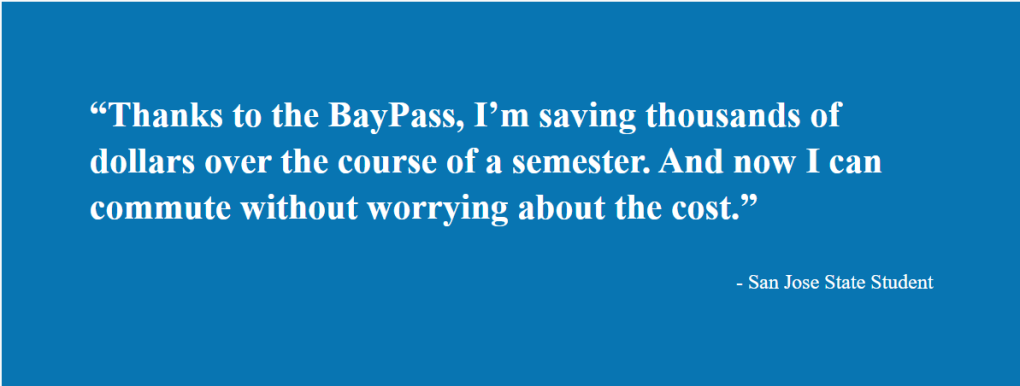
A two-year pilot program designed to test how an unlimited transit pass would work in the Bay Area has recorded more than 2 million trips among participants in its first year of existence. Clipper BayPass provides 50,000 college students and affordable housing residents with a Clipper card that allows them free, unlimited rides on more than two dozen Bay Area transit systems.
The next phase of the BayPass pilot program involves recruiting and enrolling Bay Area employers into the program with an announcement of the first major employer that has committed to offering the benefit to employees being announced in the coming days.
The goal of Clipper BayPass is to measure if giving participants a prepaid card that offers unlimited trips and transfers between systems encourages people to take more transit. The latest numbers measuring ridership from the launch of the pilot in August 2022 to August 2023 paint a clear picture:
*Clipper BayPass cards are logging 40% more trips than the average single-agency Clipper card.
*74% increase in transfers between transit operators
*85% of Clipper BayPass users agree that BayPass helps them travel to new locations in the Bay Area
“In just its first year of existence Clipper BayPass is already establishing itself as a shining example of regional coordination among Bay Area transit agencies,” said BART General Manager Bob Powers. “Clipper BayPass is giving us a vision of the future of Bay Area transit and shows if we make transfers between systems more seamless ridership will increase across the board.”
“It’s exciting to see real-world data on the role fare coordination can play in helping to boost transit ridership,” said Metropolitan Transportation Commission Executive Director Andrew Fremier. “We want to build a more equitable and seamless fare system for the Bay Area. Studying a regional fare pass using students and residents of affordable housing communities shows that commitment.”
Participants in Phase 1 of Clipper BayPass include students at UC Berkeley, San Francisco State University, San Jose State University, and Santa Rosa Junior College as well as residents at affordable housing communities managed by MidPen Housing.
Clipper BayPass is now Recruiting Employers
The next phase of Clipper BayPass involving Bay Area employers launches in January 2024. The program will expand to include about 20,000 employees from a diverse range of employers varying by types of industries, employer sizes, and geographic locations. The program is currently recruiting employers looking to be one of the first to offer their employees the benefits of unlimited transit. More information and an interest form are available at clipperbaypass.com
Funding for the Unlimited Pass Pilot
Clipper BayPass is comanaged by the Metropolitan Transportation Commission (MTC) and BART. The MTC Commission has allocated $4.5 million to reimburse transit operators for the cost of trips taken during the first phase of the program. In Phase 2, participating employers will pay MTC for employee transit passes and MTC will reimburse transit operators for employee trips taken.
Newly rebuilt platform escalator reopens at Powell Street Station
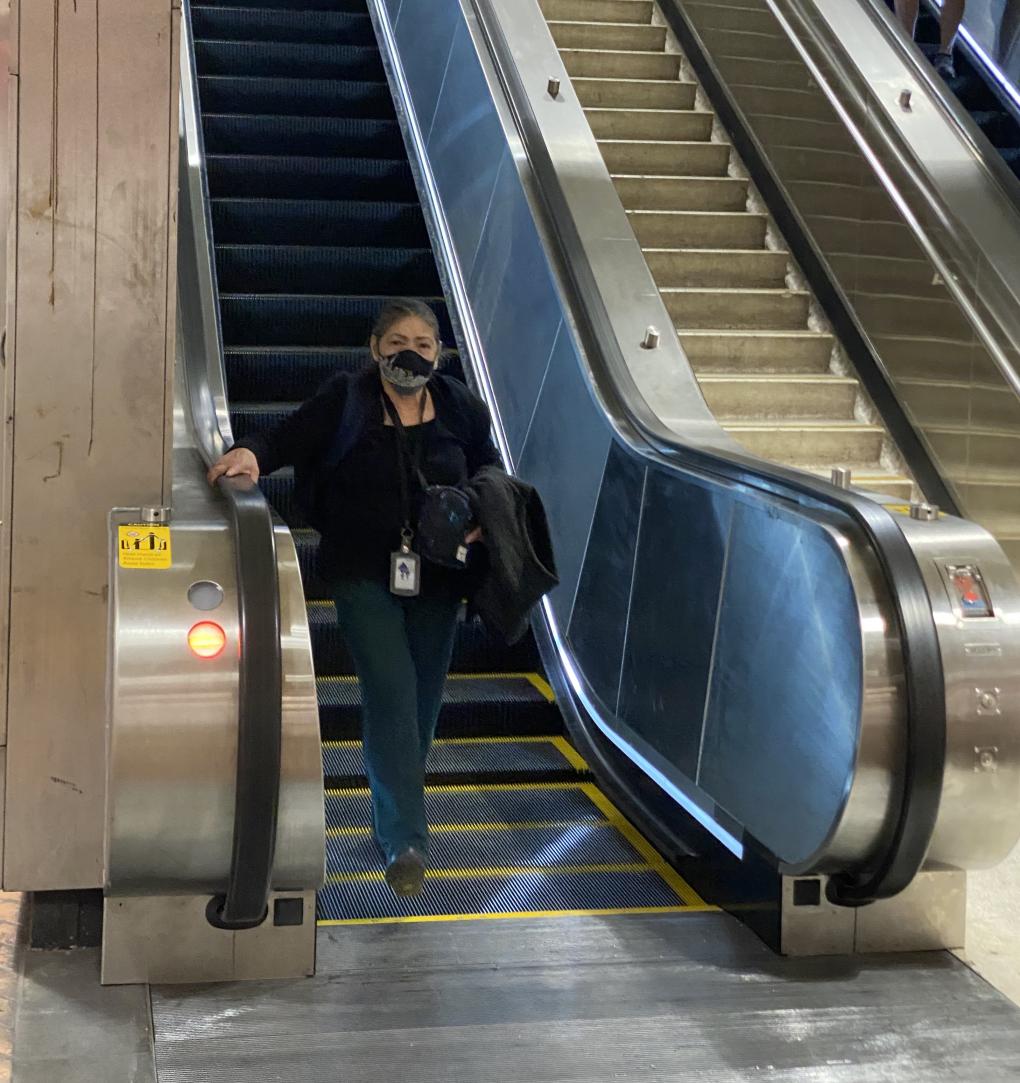
A completely rebuilt escalator is open at Powell Street Station, connecting the platform to the concourse level. This is the fourth platform escalator to reopen with more modern, reliable features at the showcase station; just one more platform escalator remains to be rebuilt at Powell St. and work is already underway.
In fact, one escalator at each of the four downtown San Francisco stations is being replaced simultaneously. The escalator replacement project is BART's biggest investment in this important infrastructure.
Meantime, work continues to build canopies over entrances at the four downtown stations. Once a canopy is complete, escalator crews begin replacing the old escalators with brand new street to concourse units.
Single Tracking Alert: Service to be reduced to one track between Hayward and Union City on Sunday 11/5/23 for tree removal work
On Sunday, November 5 a work crew will be cutting back and removing trees that could pose a hazard to the trackway near Hayward Station. To ensure safe conditions for workers, service will be reduced from two to one track all day between Hayward and Union City stations. Green Line trains will be cancelled. Riders travelling to San Francisco can use the Orange Line and transfer to a Blue Line train at Bay Fair Station. Riders on the Orange Line between Berryessa and Bay Fair stations should anticipate delays of up to 20 minutes.
You can get more details about BART’s systemwide safety initiative to remove potentially hazardous trees at the project page.
Oakland Airport Connector schedule change for maintenance January 7-24
BART's Oakland Airport Connector will be undergoing planned maintenance on its trackway equipment beginning Tuesday, January 7 until Friday, January 24. The work will begin at approximately 9pm each night and last until 7am each morning of the work period. During the maintenance window of 9pm-7am, one track will remain in operation, and trains will arrive every 18 minutes, rather than every 9 minutes. On Sundays during the work period, the Oakland Airport Connector will have continue to have its standard two-car service.
This work is necessary preventative maintenance which will help ensure that the Oakland Airport Connector remains safe and reliable.
We apologize for this inconvenience and appreciate your patience.
Oakland Airport Connector schedule change for maintenance February 4-6 2025
UPDATE January 28, 2025:
Work will begin at 8pm on Monday, February 3 so plan for single tracking from then until revenue service ends that night. The planned maintenance (outlined below) will continue from February 4 until February 6.
BART's Oakland Airport Connector will be undergoing planned maintenance on its trackway equipment beginning Tuesday, February 4 until Thursday, February 6. On these days, one track will remain in operation, and trains will arrive every 18 minutes, rather than every 9 minutes during revenue service.
This work is necessary preventative maintenance involving cable repair, which will help ensure that the Oakland Airport Connector remains safe and reliable.
We apologize for this inconvenience and appreciate your patience.
Embarcadero Station escalator changes
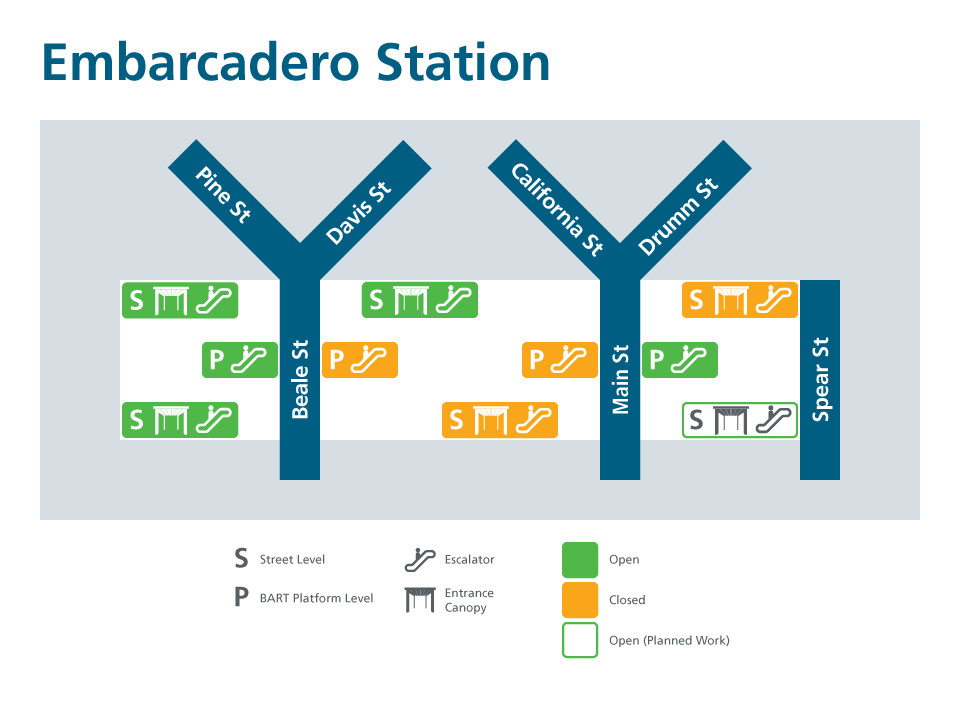
BART will soon begin a months-long project to replace the platform escalator near the Beale and Pine Street entrances at Embarcadero Station. There will be no “down” escalator from the concourse to the platform at that end of the station (please see the map below - the escalator is shown in orange). Two sets of stairs will remain open at that end of the station. In addition, a down escalator to the platform will be available at the opposite end of the station.
A newly-rebuilt escalator near the Main Street entrances is nearing completion and is expected to reopen in the next few days (it is also shown as orange in this map).
The work is all part of the Market Street Escalators Renovation Project, which has already completed 18 newly rebuilt escalators at the four downtown San Francisco stations.
Planned Clipper maintenance will impact some services 9/19/23-9/20/23
Due to scheduled maintenance, Clipper customers will not be able to do the following from 9 p.m. September 19, 2023 to 9 a.m. September 20, 2023:
- Get a card or add value to a card on the Clipper website or app and through Apple and Google digital wallets.
- Check balances on the Clipper website or mobile app.
- Get account information or add value from the phone system.
- Get a card or add value to their cards at a retailer.
During this time, customers will still be able to add value to their cards at BART, Muni and other transit agency ticket machines. They also will be able to tap their plastic or mobile card to pay their fares.
We thank you for your patience and apologize for the inconvenience.
Clipper is run by the Metropolitan Transportation Commission.