
Search Results
Ticket exchange window opens at Richmond BART Station
BART riders with damaged tickets or a handful of tickets with minimal remaining value have a new place to exchange or consolidate them. A "MyTransitPlus" window is now open in the Richmond Transit Center located at the Richmond BART Station. From 10 a.m. to 6 p.m. Monday through Friday, customers can exchange
The cable pull: a major milestone in upgrading BART’s electrical infrastructure
Workers buzzed in a hive of activity last Friday night in the tunnel underground the 16th St./Mission BART Station as crews reached a major milestone in an important infrastructure improvement: large-scale installation of modern and robust high-voltage cables to reliably run trains.
When it’s all done, BART riders can expect a more resilient electrical power system to handle more frequent trains and support the growing number of Fleet of the Future trains.
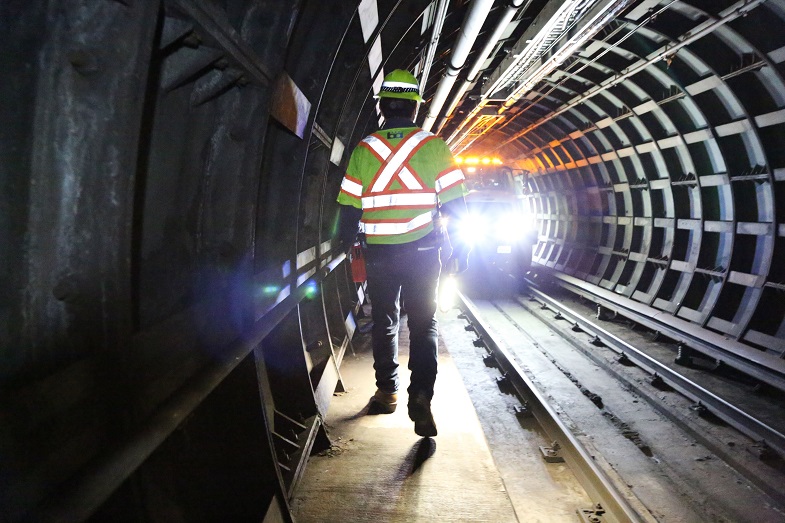
The operation involved pulling three large cables through a conduit using a mechanical cable puller, part of an upgrade funded by the Measure RR bond that voters approved in 2016. The existing electrical system is from when BART was built in the 1960s.
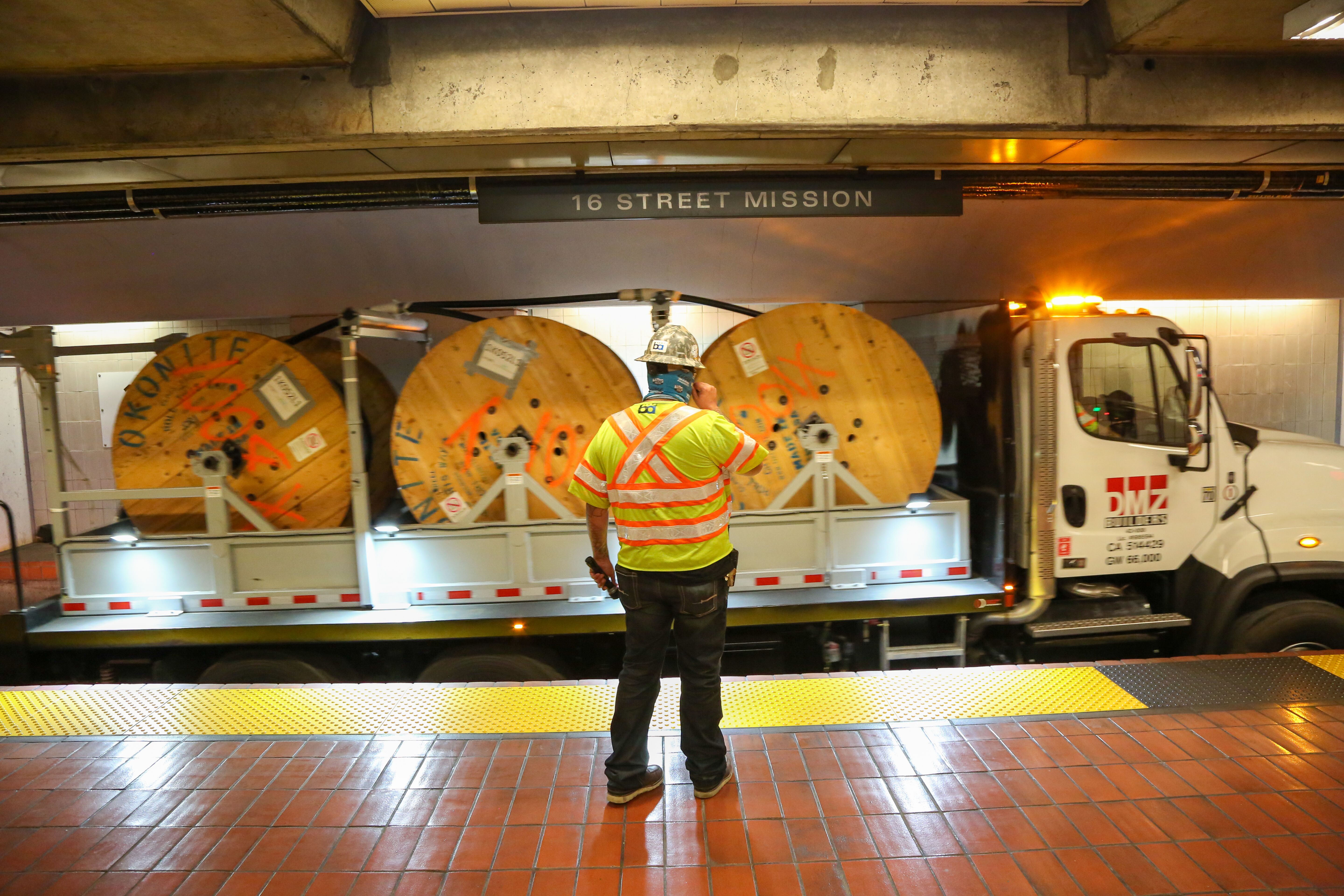
Cable rail truck with 3,000 feet of cable being transported
The first task in a cable replacement project is to install new 6-inch phenolic (a thermosetting resin) conduits. These conduits are attached to the ceiling of the tunnels using high grade structural steel plates and clamps.
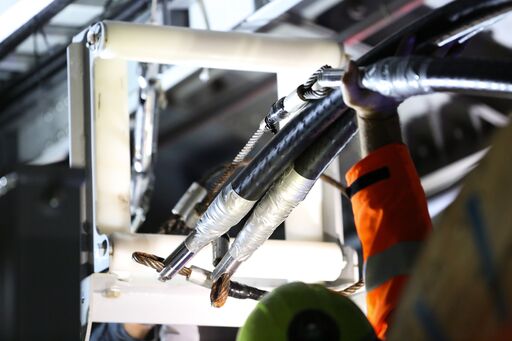
Crew setting cable and steel braided line in pulling guide
BART is using a new type of conduit that is lightweight, strong and durable. Benefits to these new types of conduit include less time to install, lower maintenance cost and longer service life. The second task is to insert a steel braided line into the entire length of conduit, ensuring the conduit is clear of obstructions and ready for the cable pull.
As soon as the steel braided line is pulled through the entire conduit, one end is attached to the electrical cables and the other end is connected to the mechanical cable puller.
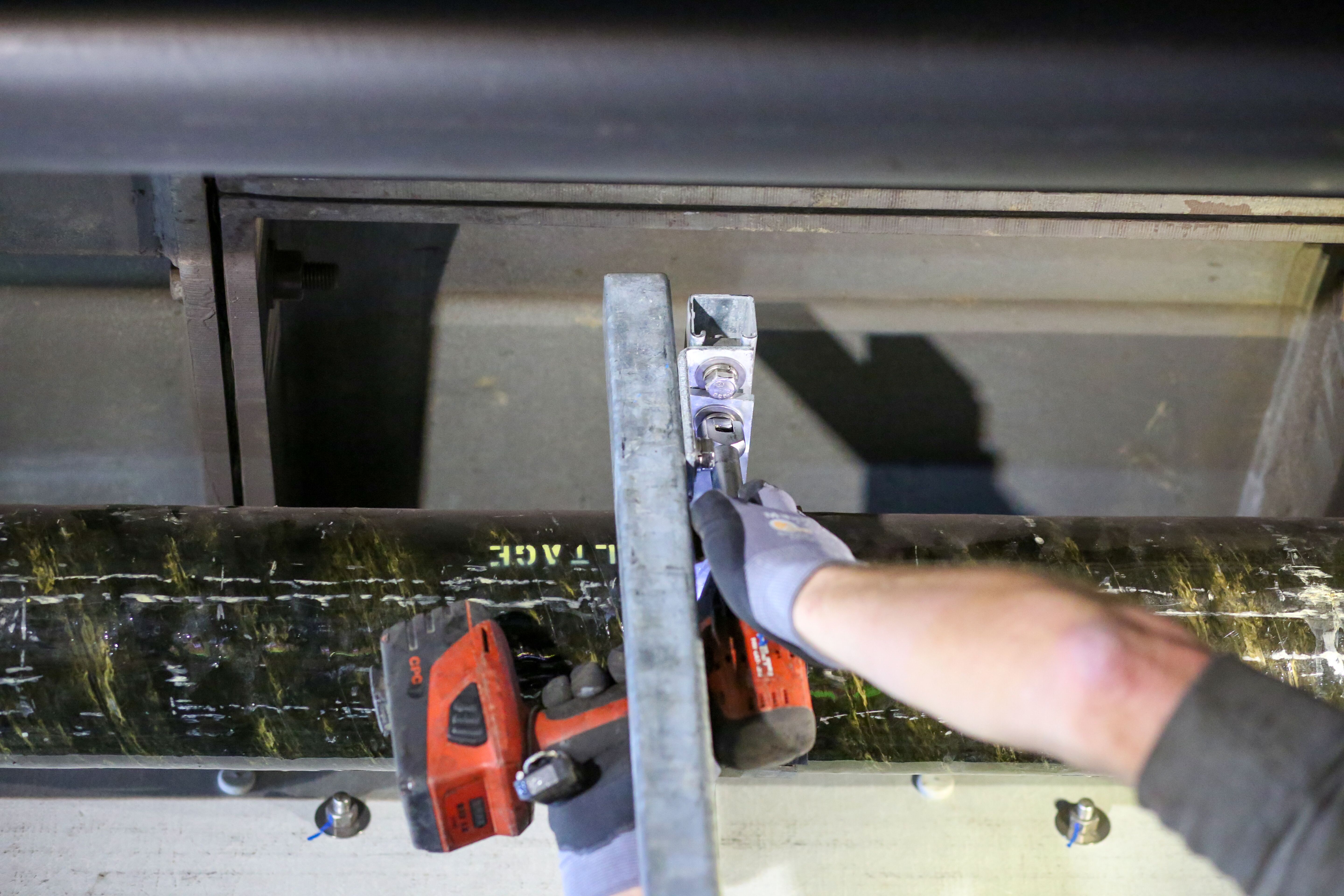
A journeyman electrician attaches cable pulling guides to the steel ring of the tunnel using high-strength structural steel.
Now the cable pulling operation can begin. The seafoam green mechanical cable puller slowly pulls the cable into the lubricated conduit. It measures pulling tension every second to ensure no damage to the cable or conduit. It takes about one hour for the cable to travel through the entire length of the conduit. As the cable snaked along, workers listened for the sounds of its progress through the conduit.
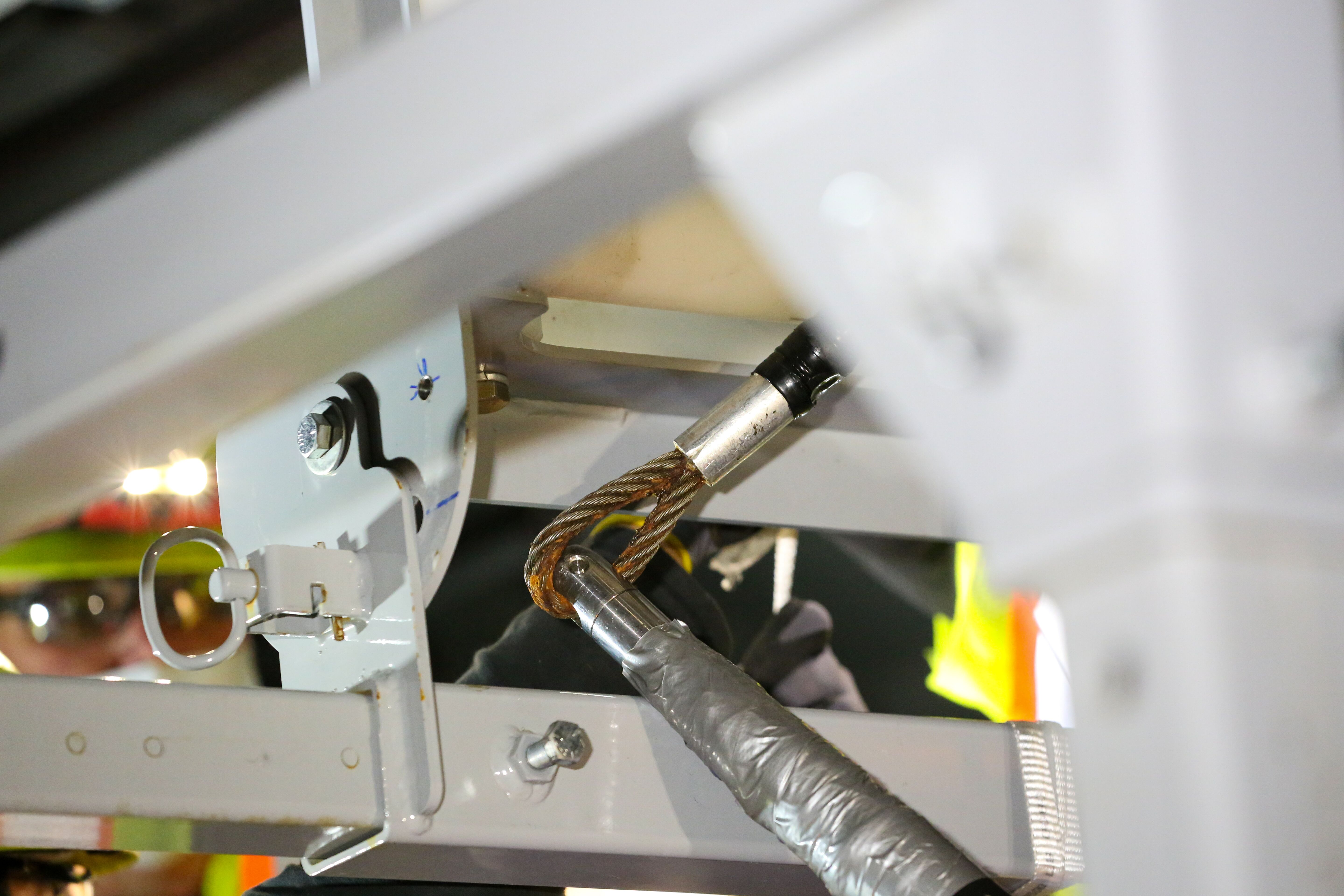
An electrician attaching the steel braided line to the start of the cable pull
Once the cable reaches the mechanical cable puller end, all the cable is inside the conduit and the cable pull is accomplished. It may sound simple, but the workers face challenging conditions in the dark, cramped underground space. Large fans blow fresh air – required for workers to safely breathe -- into the tunnel.
BART’s infrastructure and system upgrades is considered essential work and thus can continue under the coronavirus shelter-in-place orders. Workers are equipped with face masks, safety glasses, hard hats and other PPE, and keep the greatest social distance possible on each job.
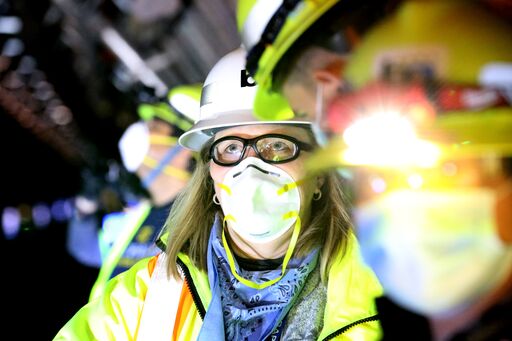
Managers watching work on cable pull operation
The additional time made available by BART’s 9 pm early closure, due to low ridership during the pandemic and in effect until further notice, is being used to ramp up projects like the electrical system upgrade.
Customers may be affected by the need to single-track for this project; the extra time is necessary to bring in staff and materials to be ready to go when trains stop running. This time means, potentially, we will be able to perform three cable pulls instead of one per shift. That equals up to 9,200 linear feet (or nearly 2 miles) of cable that can be installed each night. This could shave off many months of work affecting our customers from the five-year-long project
DMZ Builders, a local general engineering contractor based in Concord, is the contractor for the project.
BART Board elects two women to lead agency
President Lynette Sweet pledges to increase diversity Today the BART Board of Directors unanimously elected two women to BART's most powerful posts?Board President and Vice President. President Lynette Sweet and Vice President Gail Murray assumed their respective posts after the nine member Board of Directors
BART awarded $25 million state grant for project to transform the North Berkeley BART Station
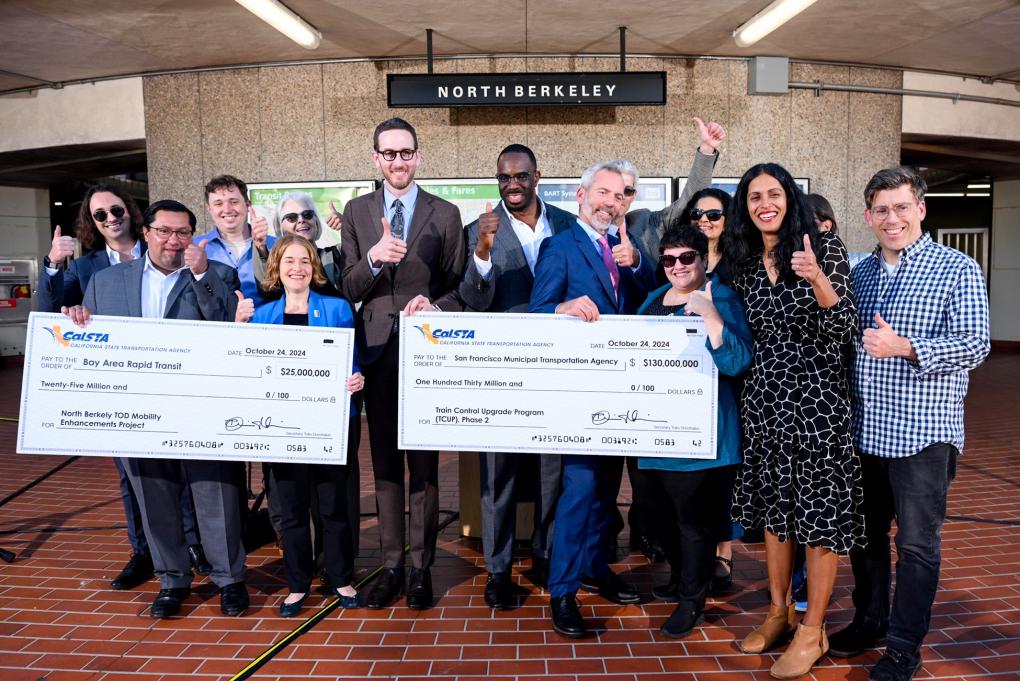
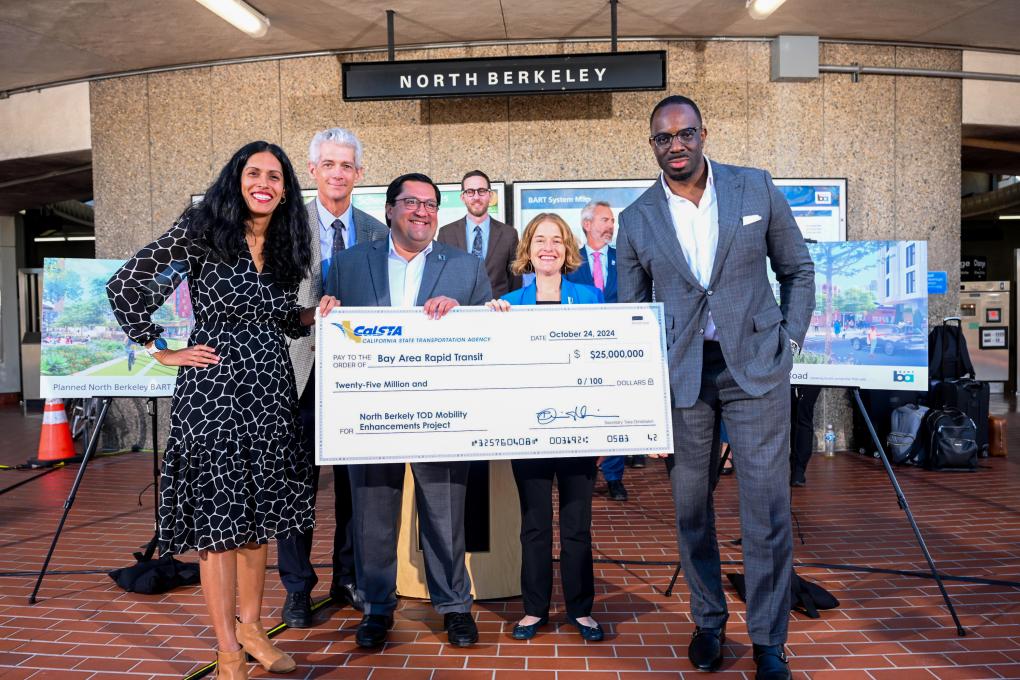
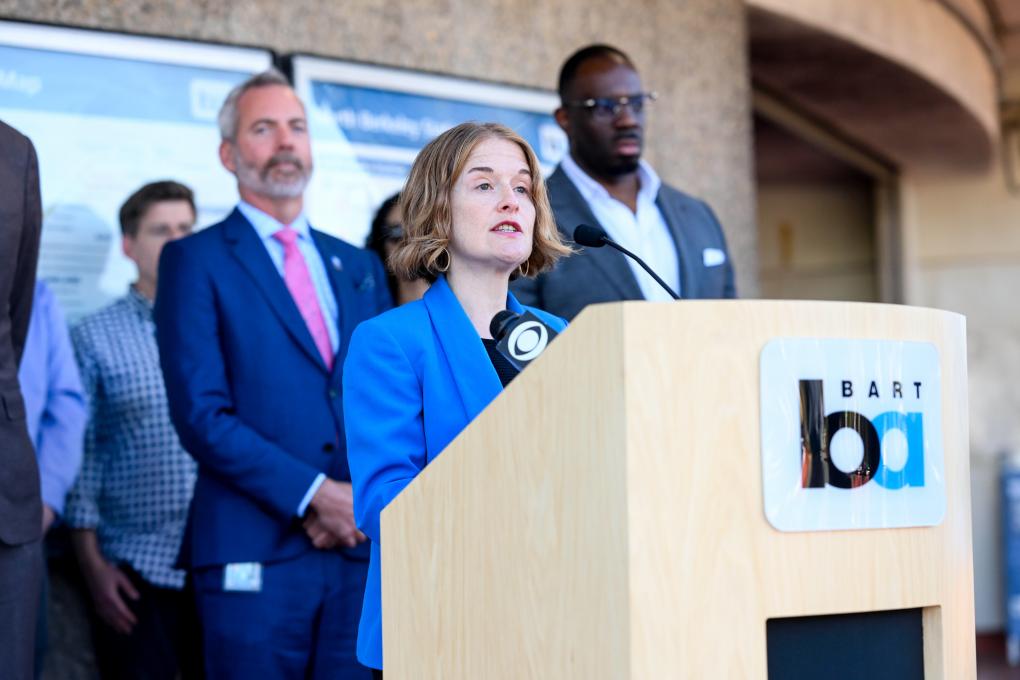
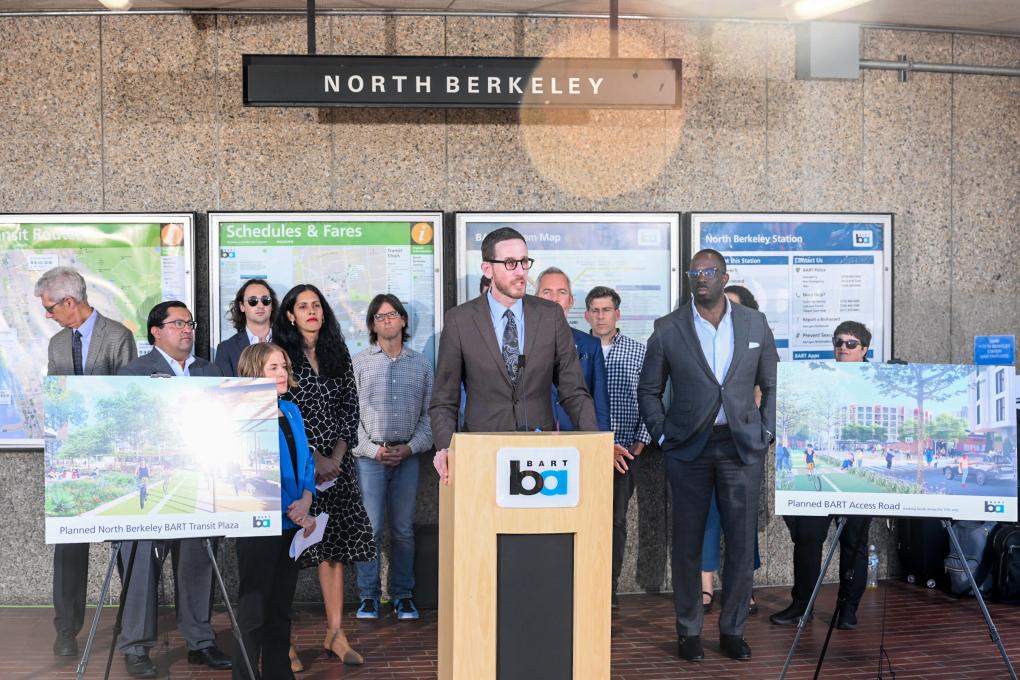
On Thursday, October 24, 2024, California Secretary of Transportation Toks Omishakin announced at the North Berkeley BART Station that BART has been awarded $25 million from the Cycle 7 Transit and Intercity Rail Capital Program (TIRCP) for the North Berkeley Transit-Oriented Development (TOD) Mobility Enhancements Project.
“This funding makes possible two plazas plus bike and pedestrian improvements, which will help transform the North Berkeley BART station area into a mixed-use, sustainable community,” says BART Board Director Rebecca Saltzman, who represents the station. “By enhancing access to public transit and improving bike and pedestrian infrastructure, projects like this will reduce dependency on personal vehicles.”
Key project components include BART rider parking within a TOD garage, publicly accessible open spaces including an intermodal transit plaza, and walking and biking enhancements around the station. The TOD will transform the main North Berkeley Station parking lot into housing and open space. The TIRCP funds are critical to supporting investments that enhance access to BART for current and future BART riders.
TIRCP funds will be used to enhance walking and biking infrastructure and augment multimodal connections. These enhancements are expected to boost ridership by facilitating safe pedestrian and bike access and promoting non-automotive transportation. The estimated total cost for the Mobility Enhancements Project is $37 million. Remaining funding sources are from local and state contributions.
The overall North Berkeley Station TOD project prioritizes affordable housing, aligns with BART’s TOD Policy goals and meets the strategic objectives of the TIRCP program. The project will consist of five residential buildings that will be built in phases.
BART estimates that the 739 new homes in the TOD, with approximately half affordable for households at or below 80% of Area Median Income, would generate roughly 750 new trips per day by 2031.
California Secretary of Transportation Toks Omishakin announces grant awards at North Berkeley Station
Podcast: Explore the history of the BART map
There are few images in the Bay Area that are more iconic than the BART system map. Millions of people see the maps throughout the system every year and regular riders can probably create a fairly accurate version of it from memory. On this edition of our podcast series “Hidden Tracks: Stories from BART,” we
Couple who met on BART tie the knot with whimsical BART-themed wedding at Fairyland
Editor’s note: This love story is written in five parts, in reverse chronological order. The tale begins with a wedding and winds back in time to the couple’s childhoods. Trains – whether of the BART, Pittsburgh Light Rail, or Fairyland Jolly Trolly variety – are essential to each section. Photos courtesy of Katie Weinholt Photography.
I. The BART Wedding
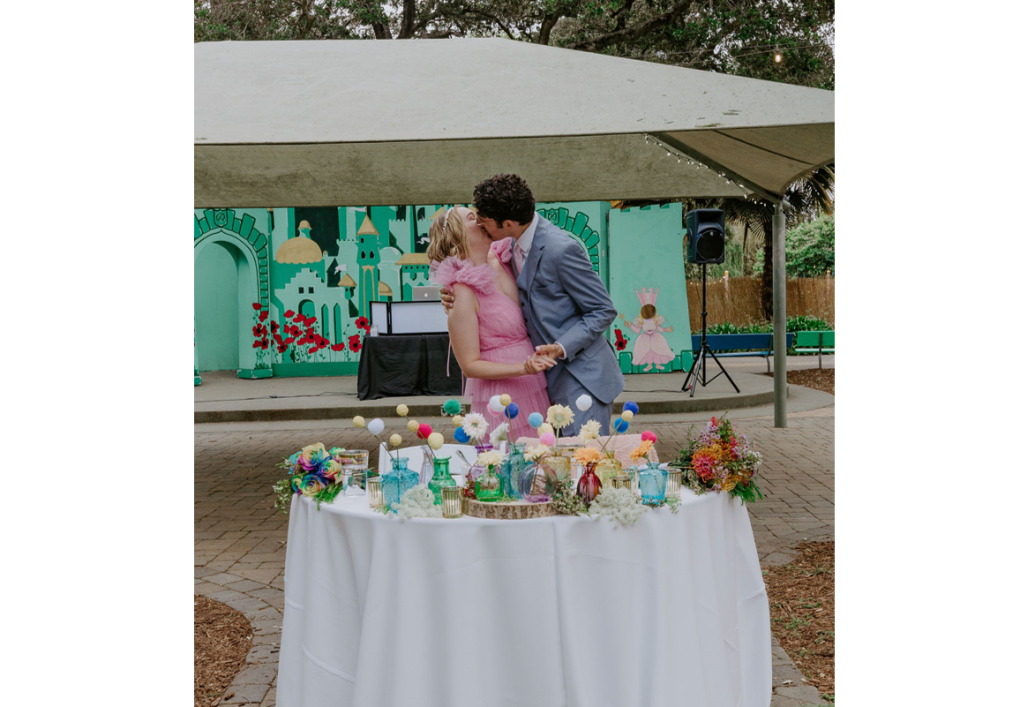
On May 27, 2023 – seven years and one day after Armin Samii and Marylee Williams met on an East Bay-bound BART train traveling from San Francisco – the couple tied the knot in front of 140 family members and friends at Oakland’s Fairyland. The theme of the wedding was BART.
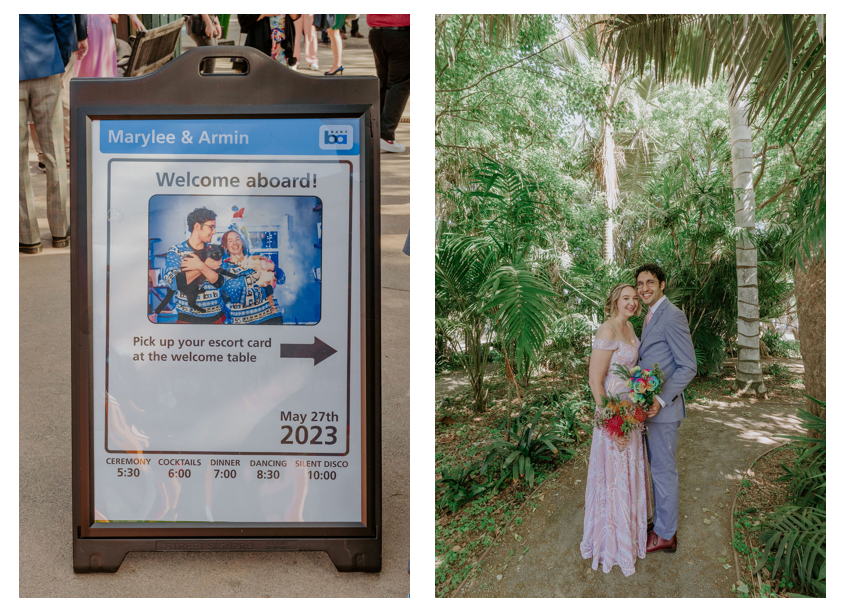
As guests streamed into Fairyland on the idyllic spring day, they were greeted by a sign that read, “Welcome aboard!” The sign included a timetable for the evening’s events as well as a photo of Marylee and Armin in BART holiday sweaters, holding their two cats.
During the ceremony, held in Aesop’s Playhouse, the officiant routinely referenced BART – a central component in the couple’s seven-year-long relationship. The transit system also cropped up in both of their vows.
“I don’t believe in soulmates, but I do believe in the right people at the right time,” Marylee said when it was her turn to speak. “And Armin, you were exactly the right person on BART to talk to. Accosting someone on a train shouldn’t feel natural, but it did.”
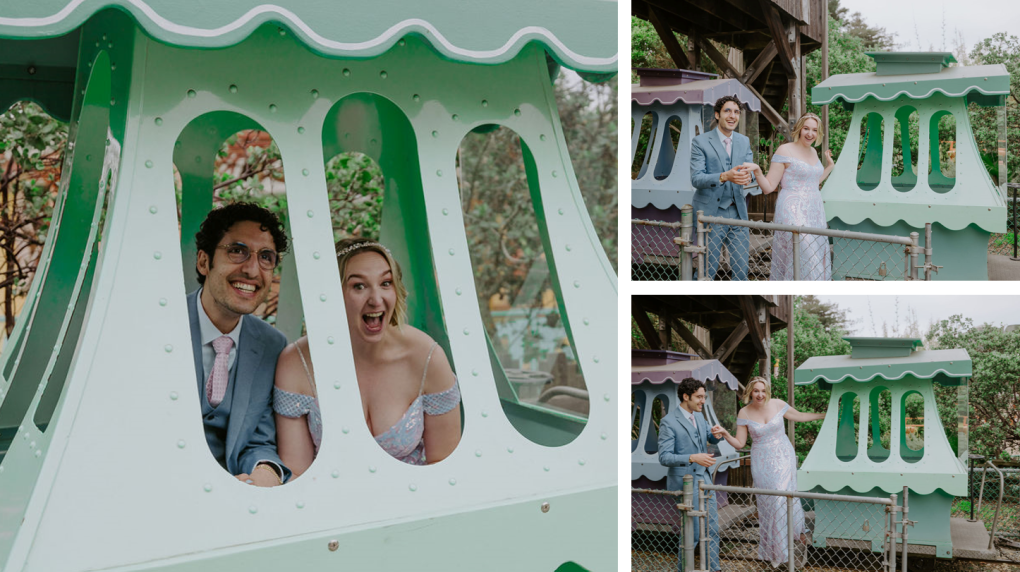
Armin and Marylee enter the happy hour on the Jolly Trolly. Photos courtesy of Katie Weinholt Photography.
Following the tying of the knot, Marylee and Armin rode into their happy hour aboard the famed Jolly Trolly. A hush came over the crowd as the mint green cars chugged into the town square. (If BART is a mass rail system, then the Jolly Trolly is a teensy rail system. The trolly is, however, 18 years BART’s senior).
At the reception that followed, unique BART touches included escort cards imprinted on BART tickets with guests’ names and assigned “stations,” err tables. A handmade “BART System Map” led guests to the proper stations, which were carefully assigned “based off our guests’ BART vibes,” said Armin.
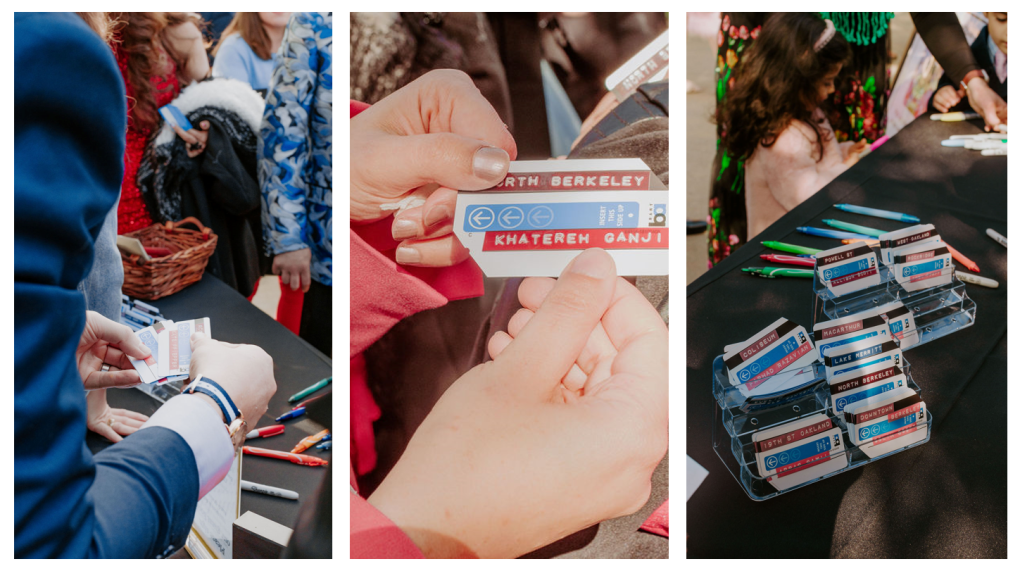
The BART ticket escort cards. Photos courtesy of Katie Weinholt Photography.
Friends they met in Berkeley, for example, sat at the Downtown Berkeley and North Berkeley tables. Visitors from Pittsburgh, Pennsylvania, where the couple currently resides, were seated at the Pittsburg/Bay Point table. The SFO and OAK tables hosted family members who traveled from afar.
“It felt more fun than just a table number,” Marylee said.
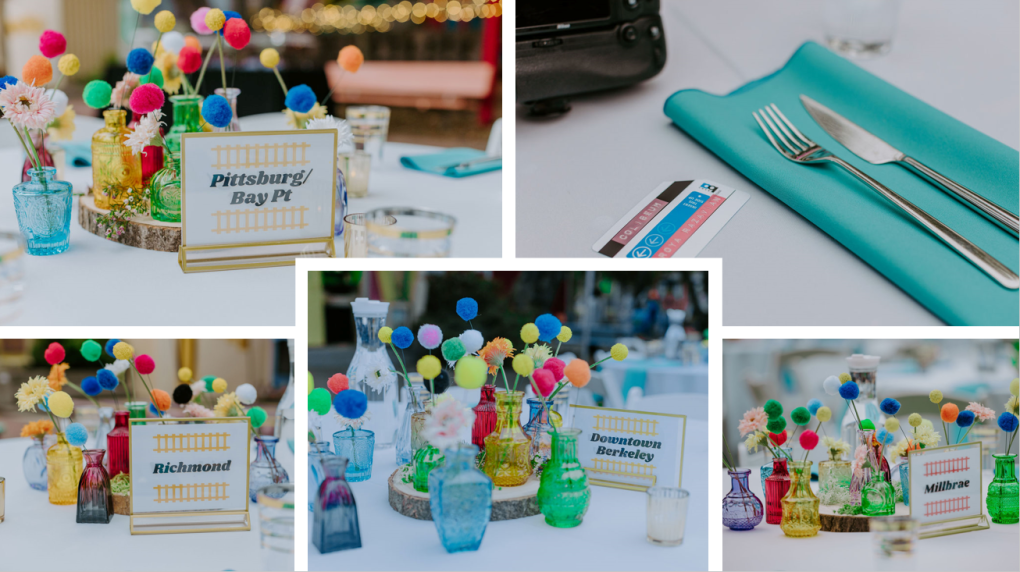
The reception tables each represented a station that was assigned based on the guest’s “BART vibes.” Photos courtesy of Katie Weinholt Photography.
On the tables, multicolor flowers and pom-poms puffed out of Technicolor vases, which popped against stark white tablecloths. The Fairyland Emerald City Stage, long home to puppet shows and story times, served as the deejay’s platform. To match the vibrant setting of the reception, Marylee quick-changed into a fluffy pink mini dress, paired with black tights and chunky white heels.
At the afterparty, hosted in the lobby of the wedding hotel (The Moxy in downtown Oakland), the bartender slung cocktails in a blue-and-white bowtie, an homage to BART’s blue-and-white legacy trains.
Not insignificantly, Armin and Marylee, who are vegan, made the decision to serve solely vegan food at the wedding. The couple said the choice was highly intentional; they wanted to give their friends and family a taste of their day-to-day lives.
“We wanted to hammer home that our wedding was nontraditional, that we were expressing the values we have as people,” Marylee said.
Armin added: “It was about having people experience our lives for one night.” (Only a nine-year-old and his younger sister complained. “I learned today I don’t like vegan food,” said the former.)
To truly give guests a glimpse into their day-to-day lives and core values as a couple, it was essential to Marylee and Armin to frame their wedding around public transportation, especially the system that first introduced them to the joys of transit – BART.
“We wanted a venue that was easily accessible to our guests, and accessibility to us looks like BART,” Marylee said. “BART was where we had our first taste of not being bound by a car.”
Armin also noted that they didn’t want guests to have to rent cars; they especially didn’t want anyone driving home drunk.
“We went back and forth on where to host it,” he said. “Then it was like, why don’t we choose a place near public transit? We didn’t care what city; we just wanted a venue where people could get to easily on transit.”
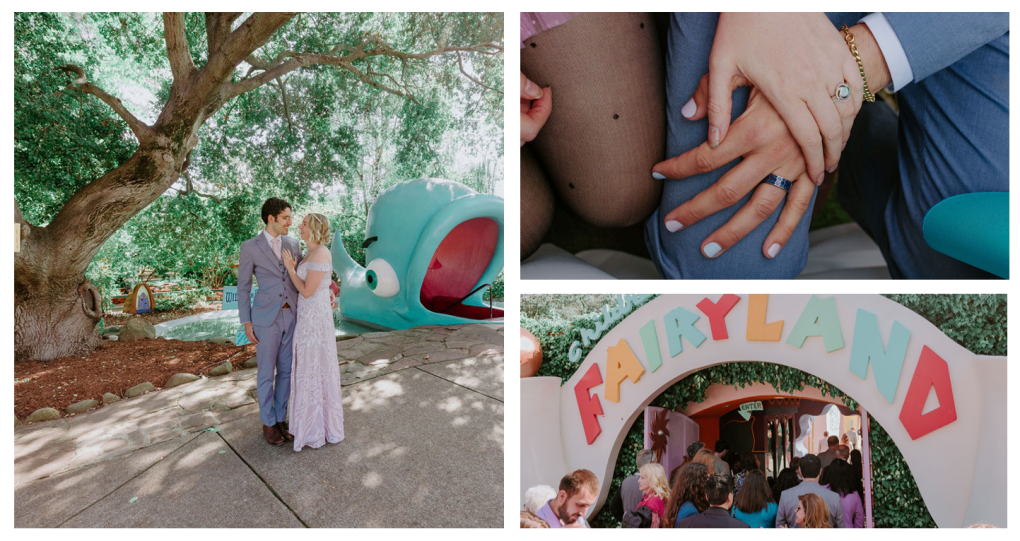
Scenes from the Fairyland wedding. Photos courtesy of Katie Weinholt Photography.
Fittingly, Fairyland is just under a mile from BART’s 19th St/Oakland Station, and if you hop on AC Transit’s NL bus by the station, you can get to the amusement park in about ten minutes. The couple also booked a hotel for their guests that was a ten-minute walk to the venue.
“We wanted people to experience what our lives are like as people who bike and use transit,” Armin said. “We wanted to give people a taste.”
That taste included hosting the wedding eve wine night at Press Club near Montgomery St Station in downtown San Francisco. Of the 100 people who showed up, 90 took BART.
Armin said he and Marylee showed their families at 19th St/Oakland Station how to buy Clipper cards, how to tap in at the fare gates, and how to figure out which train to take and in which direction.
“A lot of our family had never ridden public transit,” Armin said. “We were really grateful to introduce them to it.”
II. The T Train Proposal
In January 2022, after five and a half years of dating and many moves around the U.S., Armin proposed on an aboveground T train in Pittsburgh, Pennsylvania (their current hometown).
“We’ve hit a lot of milestones on trains,” Marylee said.
III. The BART Meet Cute
Armin and Marylee’s paths converged one fateful Thursday evening in 2016. (BART wrote about their meeting in 2021.)
Armin was heading home from a poker game in the city, and Marylee was leaving an Icelandic film festival. They stumbled upon each other on a Richmond-bound Red Line train heading to the East Bay from San Francisco. Marylee had just barely made the train, and Armin had missed the previous one.
As the train veered through downtown San Francisco, Marylee decided to ask Armin about the colorful tape on his bike: “Why does it look like that? Do you go to Burning Man?” Accustomed to this question on BART, Armin replied briefly -- “Not yet, maybe next year” -- then put his headphones back in, planning to ignore her the rest of the trip. Marylee was, Armin admitted some seven years after the chance encounter, extremely persistent.
When the train pulled into Embarcadero Station, Armin watched Marylee get on all fours to pet a “tiny dog” face to face. He became intrigued by the strange woman’s unusual behavior, and, somewhere under the Bay between Embarcadero and West Oakland, the two struck up a proper conversation.
After a few minutes, they began to discuss radio – Marylee is a radio/audio journalist and producer – including a podcast they both enjoyed, 99% Invisible. The podcast had released a special challenge coin (not unlike the challenge coins used by military personnel) for members, allowing coin bearers to “coin check” others. If the coin-checked did not have the coin on her person, she owed the coin-checker a drink.
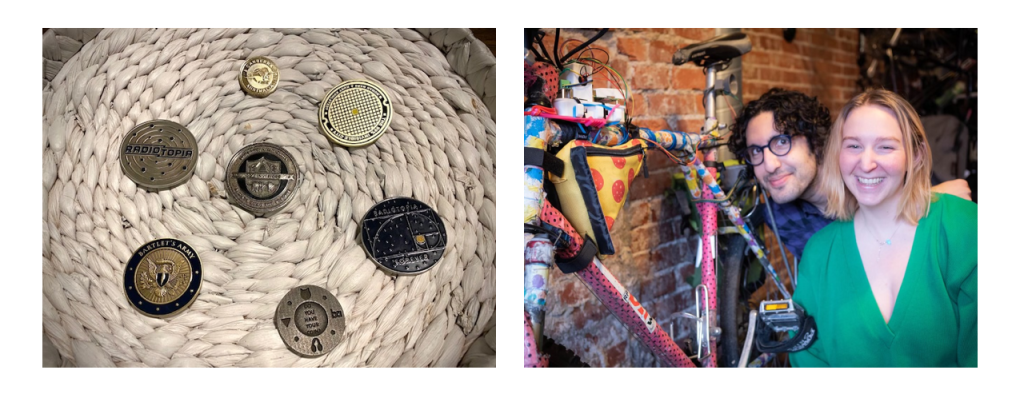
Left: The challenge coins. Right: Armin and Marylee pose with Armin’s colorful bicycle.
Armin proceeded to coin-check Marylee, who fatefully had left her coin at home. She owed him a beer.
Just as the coin-checking scenario unfolded, the BART train carrying the two conversationalists pulled into Downtown Berkeley Station – Armin’s stop.
As he hastily disembarked before the doors closed, Marylee yelled, “How am I supposed to buy you a beer? You don’t even know my name!”
Armin turned around.
“What’s your name?” he asked.
“Marylee Williams!” she shouted as the doors squeezed shut.
As the train carried onward, Marylee was distressed and regretful -- “Why didn’t I get off the train?” she lamented to herself. As her stop came around – North Berkeley Station – she got off the train and called her grandmother. “I met this guy, I don’t know where he is, and I’ll never see him again,” she groaned. Grandma replied, “Well that’s too bad, but maybe you’ll see him again.”
Meanwhile, still at Downtown Berkeley Station, Armin began internet-sleuthing for the mysterious Marylee. Nothing came up, so he then decided to race the train to North Berkeley Station – a trip he knew took five minutes on bike, three minutes by train.
“It’s possible that if she hangs around for three minutes, I might catch her,” he thought. “But it turns out, the trains go faster than I can bike.”
Alas, when Marylee got home, she checked her Facebook. There was a message waiting from a man named Armin. The two had found each other in cyberspace.
After three dates in three days – Armin had a trip booked to Sweden, hence the condensed timeline – the two were smitten.
IV. BART Enters the Picture
When Marylee moved to the Bay Area from Baton Rouge in 2015, she discovered a newfound love in having access to a mass rail transit system.
“I’ve been a fan of BART for a long time. It’s functional, affordable, and gets me where I need to go,” she said. “When I was getting my master's degree at Berkeley, I think I had my best thoughts and most relaxing times on the train.”
Marylee admitted the trains could be crowded and frustrating, “but it was easy,” and she liked the communal experience.
“I’ve always enjoyed the soft swaying of the train as it takes me home,” she added.
Armin had sold his car not long after moving to Berkeley in 2011. Sold might not be quite the correct term.
“I actually lent it to a friend because I wasn’t using it – I was biking and taking transit everywhere. It wasn’t until a year later that I realized she still had it,” he said.
Around that time, Armin was commuting by Amtrak to San Jose from Berkeley. He loved that he could work for the duration of the 90-minute ride.
“That was probably when I started to realize BART and trains weren’t just a way to get around, but something I had an emotional connection to,” he said.
Armin also admitted that Marylee wasn’t the first date he met on BART: “Before Marylee, I had met a ton of people on BART, including dates.”
He continued: “When going on dates in general, I’d always take BART. The date would start and stop at the BART station.”
V. BBE: Before BART Era
Armin and Marylee grew up in places lacking substantial public transportation – if the places had it at all.
Marylee spent her childhood in Mississippi and Louisiana. “I’ve been driving since I was 14-and-a-half,” she said, while Armin grew up in the suburbs of San Diego.
“Back then, public transit was an adventure for me,” Armin said. “My grandpa would say, ‘Let’s take the bus today!’ And we’d ride it for a loop or two. That was about the extent of my transit use.”
The End
BART breaks ground on federal stimulus-funded project
New entrance to improve access to Balboa Park Station The 13,000 BART riders who use Balboa Park Station will soon be able to enjoy a new and spacious entrance equipped with state-of-the-art security cameras and lighting. Today BART, federal and local officials held an event to announce the first stimulus
BART seeks public comment on extension to Livermore
On Thursday, November 5, BART will release its Draft Program Environmental Impact Report (DPEIR) for an extension between the Dublin/Pleasanton Station and the City of Livermore. The goal of extending BART to Livermore is to increase mobility to, from, and through the Tri-Valley region. As added benefits, a
BART seeks members for Business Advisory Council
The San Francisco Bay Area Rapid Transit District (District) is seeking new members for its Business Advisory Council (BAC) for the next term (2022 to 2024) and your organization is invited to apply for membership. The BAC was established in 2010 to encourage communications between the District and the small
BART launches new safety initiative to remove potentially dangerous trees
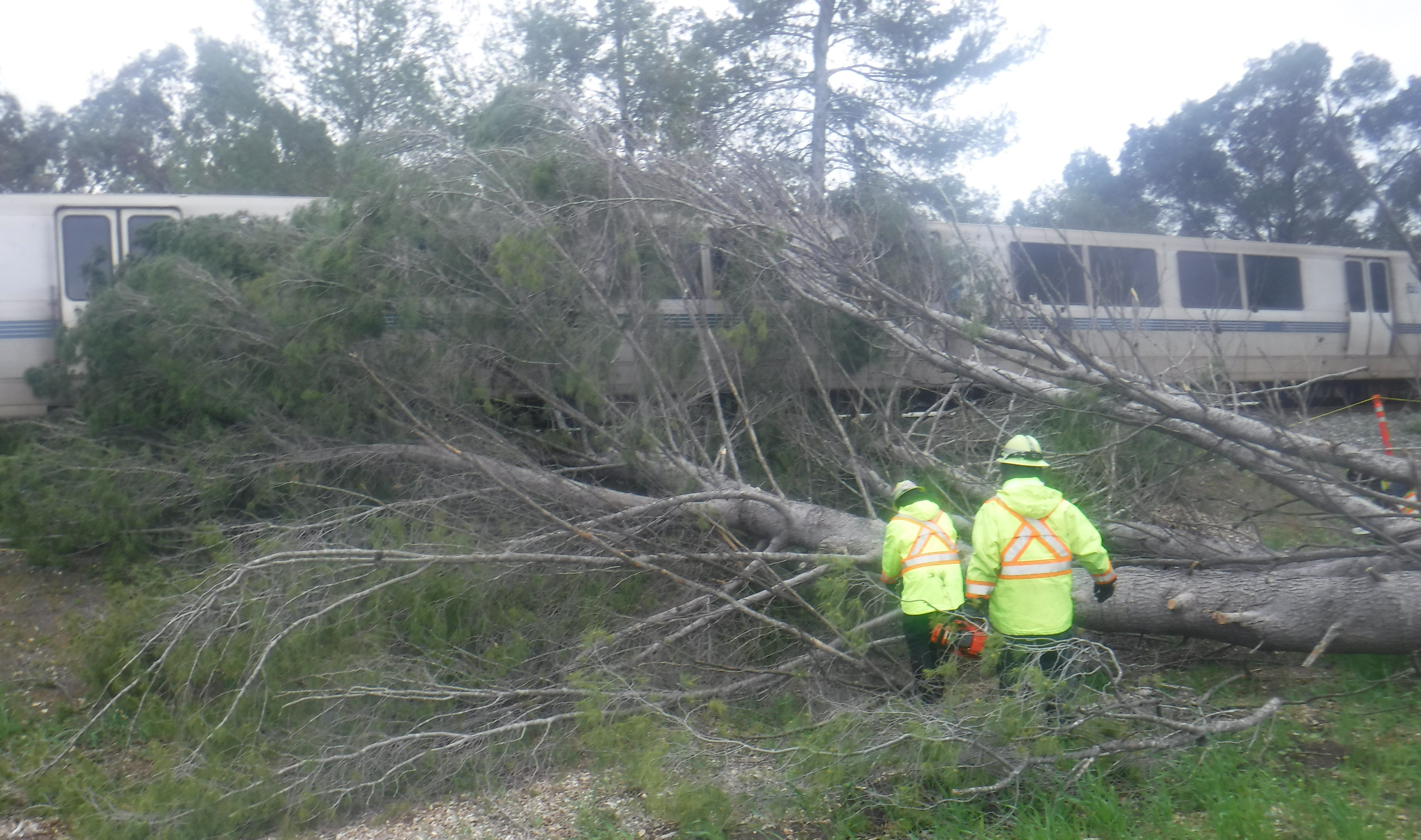
BART is moving forward with a critical preventative maintenance effort to protect the system from trees that could be knocked down into the trackway during severe weather. The program will result in more than 200 trees being removed or cut back along multiple service lines. The work is happening now so the trees with the greatest potential to impact BART are removed well before winter storms arrive in the Bay Area. Last year tree failure derailed two trains and delayed train service a minimum of seven times. Tens of thousands of riders were delayed during those incidents but luckily none resulted in injuries.
The tree removal work starts in July and will continue into November. More tree removal work is expected in 2024 but details are still being finalized. To allow the work to happen in the safest manner possible, service will be impacted at the following locations on the dates listed below.
| Location | Dates | Service Impacts |
| Pleasant Hill-Concord | 7/23, 7/30, 8/6 | Service reduced to one track with delays up to 10 minutes |
| Union City-Fremont | 8/26-27, 9/9-10, 9/23-24 | Free buses replace trains between Union City and Fremont. Delays up to 30 minutes. |
| Balboa Park-Daly City | 8/27, 9/10 | Service reduced to one track with delays of 10-15 minutes. |
| Pleasant Hill-Concord | 10/14-15, 10/28-29 | Free buses replace trains between Pleasant Hill and Concord. Delays up to 30 minutes. |
| Hayward-Union City | 11/5 | Service reduced to one track with delays of up to 20 minutes. |
| Glen Park-Daly City | 12/2-3 | Free buses replace trains between Glen Park and Daly City. Delays up to 30 minutes. |
During bus bridge weekends BART will make the most of its time in the trackway by deploying additional crews to perform track improvement work. This work will include replacing worn rail, destressing rail so it can better cope with extreme temperatures, brightening stations, and other maintenance projects.
This is the largest hazardous tree removal effort in BART’s history. Ongoing identification and removal of hazardous trees will be required yearly to continue to mitigate risks of tree failure impacting service and endangering public safety. You can learn more on our Frequently Asked Questions (FAQ) page.