
Search Results
Critical Asset Patrol team aims to boost BART Police presence in most critical areas
Train patrols just one aspect of multi-faceted efforts to ensure safety By Melissa Jordan BART Senior Web ProducerIn a series of ongoing improvements to the BART Police Department, one change of keen interest to the public has been an increased BART Police presence on trains.That effort received a huge boost
"We need to be able to move freely and independently”: BART intern Erik Huizar’s mission to increase accessibility for BART’s blind and low-vision riders
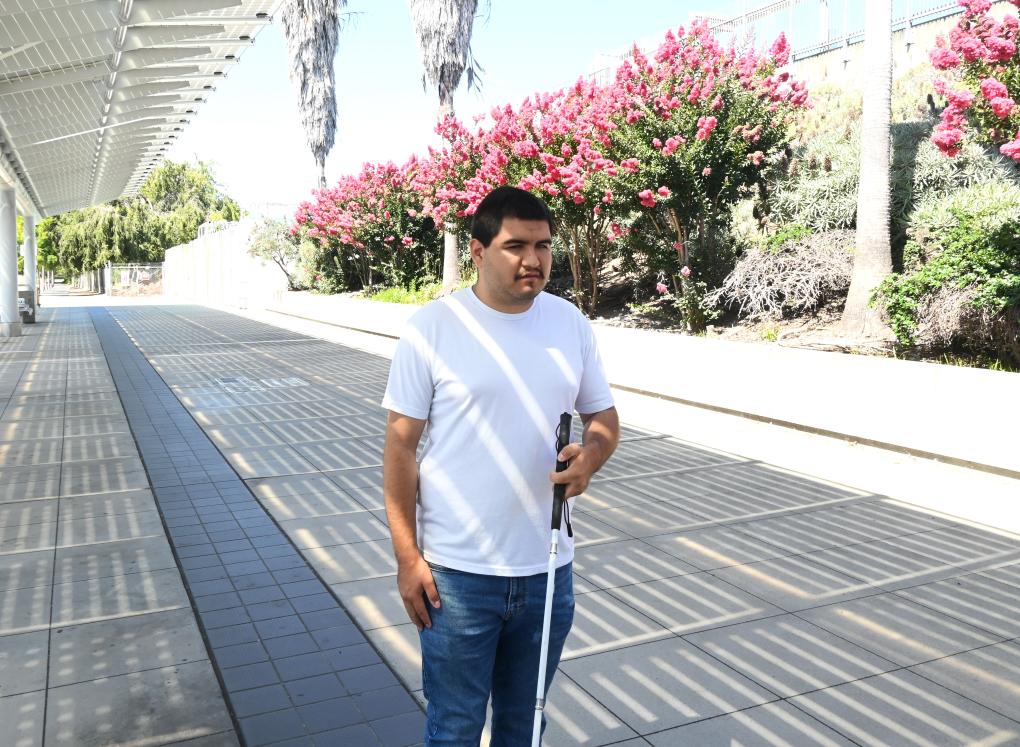
BART intern Erik Huizar poses for a portrait at Union City Station on Wednesday, Sept. 6, 2023.
Erik Huizar has a large task ahead of him. Over the coming months, the 19-year-old college student is visiting – well, not just visiting, but walking, memorizing, sensing, pondering – twenty stations around the BART system to build descriptive reports of their tactile guideways. Some of these reports have been uploaded to the BART Low Vision or Blind Accessible Services webpage and more will be uploaded in the coming months.
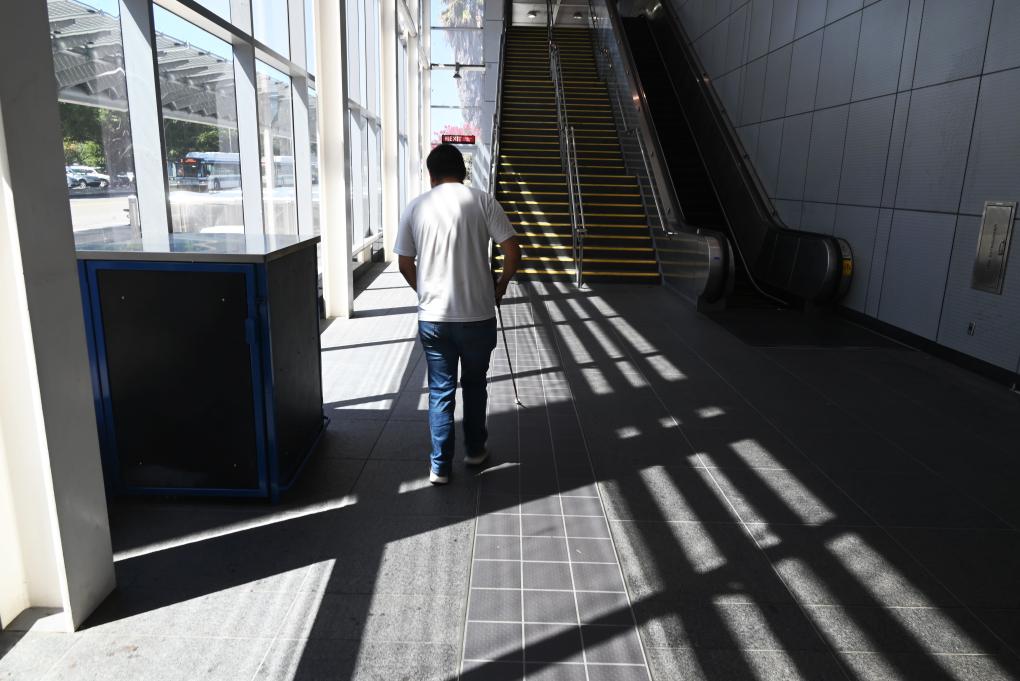
You might spot Huizar on one of his station visits, slowly and thoughtfully walking along one of these accessibility pathways with his white and red cane, tracing a pathway’s twists and turns, feeling its bumps and indentations, listening to the sound it makes when he taps its ridges, and noting down where it leads.
“I must look like such a weirdo,” he quipped on a recent information-gathering visit to Union City Station, as he walked back and forth over the pathways.
For blind and low-vision people like Huizar, tactile guideways are guide maps to station geography that enable them to independently travel from the bus intermodal area, into the station, through the accessible fare gates, then to the foot of the stairway to the platform. On the platform*, colored tactile strips denote the edge between the platforms and the trackway and mark where to board a train.
Tactile guideways often use a variety of cues for blind or low-vision riders to distinguish the pathways from the flooring around them. There is no national code or standard for these pathways, Huizar said, but typically, they are composed of materials and textures distinct from the station’s floor. Sometimes the pathways are yellow with truncated domes; other times, they may be gray and ridged; and sometimes, they are black with cones and bars.
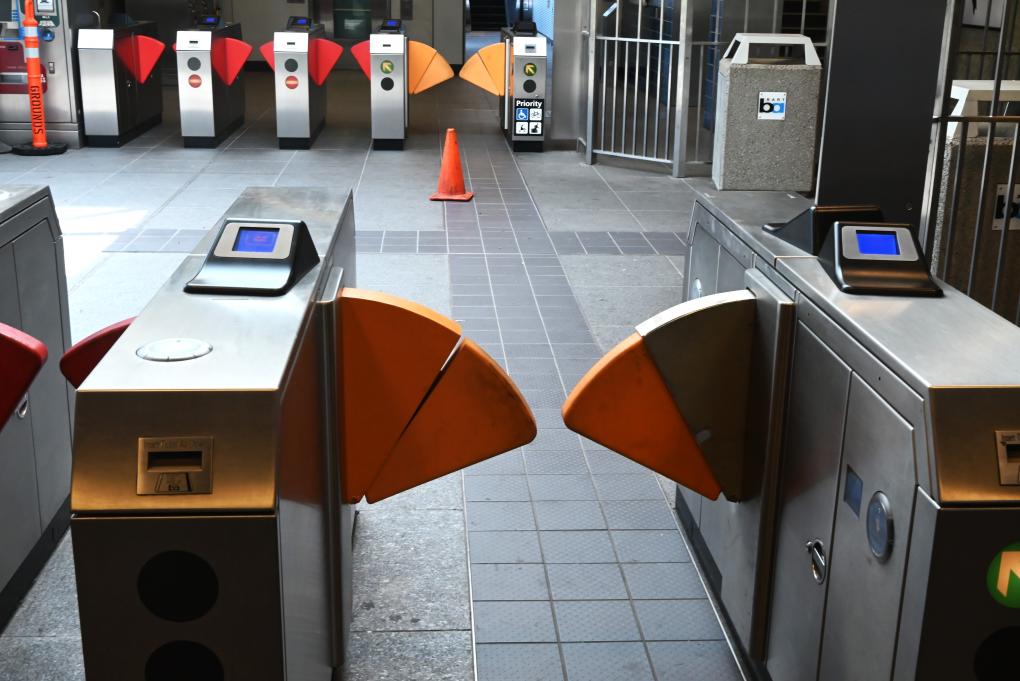
The tactile guideway passing through the accessible fare gate at Union City Station on Wednesday, Sept. 6, 2023.
“Basically, the architect who designs the station decides what the pathways’ patterns will be, and that’s why we have stations where either there’s no detectable path or the detectable path is more decorative than useful,” Huizar said. “Many of these stations were built a long time ago, and no one really knows how to build these pathways correctly, or at least how to standardize the way to do it.”
Bob Franklin, BART’s Director of Customer Access and Accessibility, noted that in a national accessibility working group, the forty-plus public transit agencies involved “all do something different for their pathways.”
Huizar hopes his reports contribute to this still-budding body of knowledge and motivate decisionmakers to fund and improve them.
“These pathways are not as good as they can be,” said Huizar. “And this is a national issue.”
Huizar’s tactile guideway reports are highly detailed and descriptive. A typical report reads something like this: “All the paths are made of yellow six-inch-wide plastic tiles. When there is an intersection or direction change in the path, there is a block of truncated domes to indicate this. In multiple places, there are spurs, which split from a path, this indicates a direction change, or the end of a section of path.” (This excerpt comes from Huizar’s Milpitas Station report.)
He expects this information to be valuable to blind and low-vision BART riders, enabling them to get around a station without having to ask for help – a sometimes necessary annoyance when you’re just trying to get somewhere, Huizar said.
Tactile guideways support riders’ independence and right to affordable mobility, he added. BART riders rely on the system to travel from place to place – to appointments, to work, to social engagements. Seven percent of BART riders report having a disability, a percentage of which who are not able to operate automobiles.
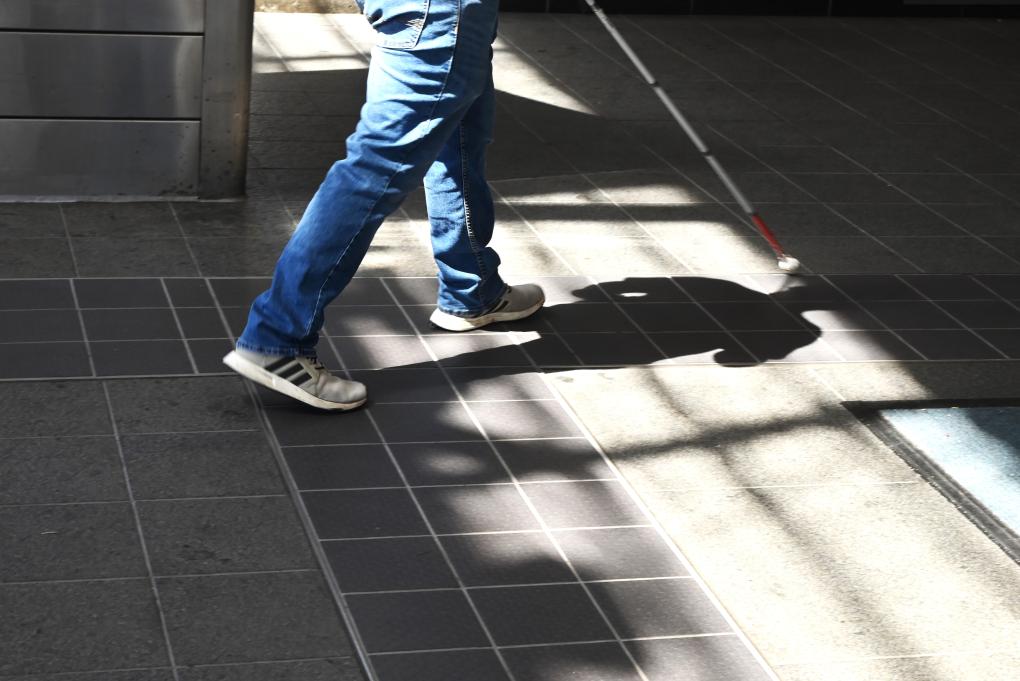
BART intern Erik Huizar studies the tactile guideway at Union City Station on Wednesday, Sept. 6, 2023.
"BART is my way to get out and be independent and self-reliant," said Sheri Albers, the Community Outreach Coordinator for The Lighthouse for the Blind, during a a Fleet of the Future safety orientation BART held this past winter for the blind and low-vision community. The orientation was followed by an online townhall BART hosted to gather input on upcoming projects and to hear directly from riders who are blind and low-vision about how it can improve accessibility services. BART plans to provide similar engagements for the deaf and hard-of-hearing and mobility-impaired communities.
"Information is powerful, and we want to ally the fear in our community of taking BART,” Albers said. “Once you eliminate the fear, the world is in your hands."
To capture the necessary information for his reports, Huizar often spends hours in a station, tracing its pathways and scribbling detailed notes. He then takes his findings and drafts his report, describing things like how many sections compose the station’s pathway system, where those sections lead, and what color and material they are made of.
BART offers additional station resources for members of the blind and low-vision community, including Braille/tactile signs at station entrances and exits, at public restrooms, at the start of stairways, and at emergency exits, elevators, and escalators. Every fare machine in BART stations has earphone jacks, so you can listen to its message privately – “You have $200 on your Clipper card,” it might say. For every visual announcement in a station, there is a corresponding audio announcement. On fare gates, riders can activate a series of beeps that provide an audio code, denoting information such as whether they have enough balance on their Clipper card or if they need to tap again. You can read about additional accessibility services for blind and low-vision riders here.
“It’s a public transportation system, and it’s a federal law that we’re accessible to everyone,” Franklin said. “When we design it that way, it benefits everyone. The more universally we design something, the better it will be.”
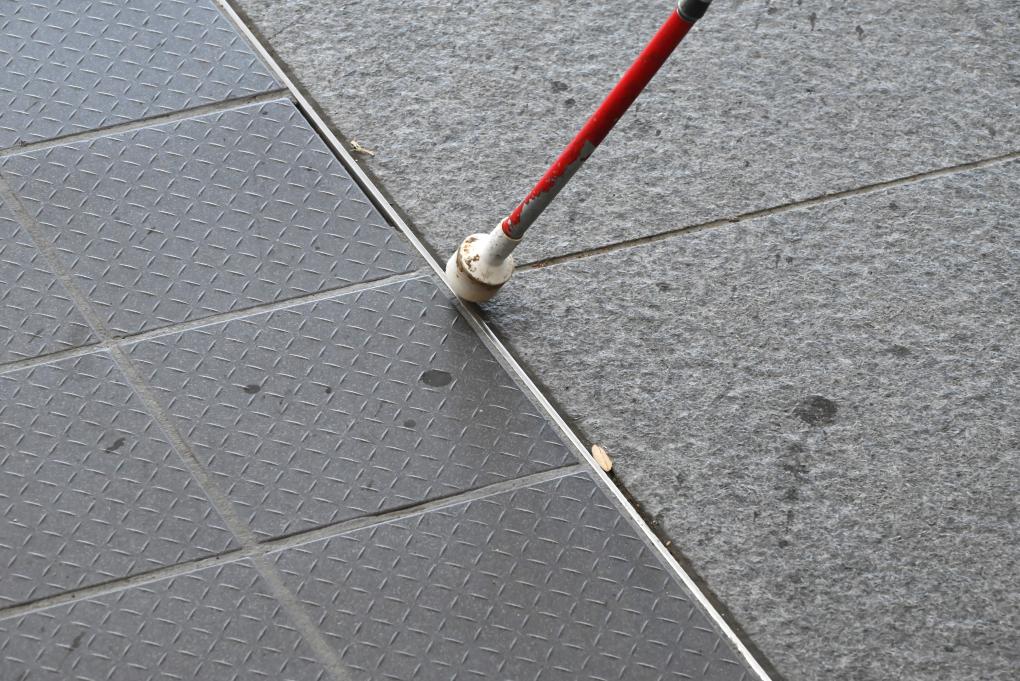
BART intern Erik Huizar’s cane studying the metal ridge of the tactile guideway at Union City Station on Wednesday, Sept. 6, 2023.
Huizar is passionate about public transportation because he uses it to get most places. He’s working on a sociology degree and hopes to continue his studies to earn a master’s degree in orientation and mobility.
“I definitely want to focus on public transportation because that’s my favorite thing,” he said.
Huizar regularly rides BART to explore new spots – mostly in search of hidden gems and great food – or to hike with his girlfriend or friends. On days he doesn’t have schoolwork or anything important to do, “I’ll just ride the train and be absolutely entertained that whole day.”
"There’s a little boy inside me screaming for joy every time I get on a train because it’s just a lot of fun,” he said.
Huizar also acknowledged how essential public transportation is to the fabric of a well-functioning, equitable society.
“People rely on these trains, and not just people like me who can’t get around without them, but sighted people, too, who use them to visit friends and family or to get to work,” he said. “Without buses, without trains, many people wouldn’t be able to do that.”
Huizar secured his BART internship in a somewhat unusual fashion – he emailed General Manager Bob Powers directly after watching him and fellow transit leaders speak during a press conference for the April Transit CEO Ride-a-Long (Huizar said he watched the video scrolling YouTube while procrastinating on homework.)
“A bunch of the CEOs went up and talked about accessibility, and providing quality transportation is something I’m passionate about,” he said. “I thought, you know, I’d really like to be involved in that.”
So, he decided to email Powers and ask for a conversation, “because, like, who else?” Huizar figured he wouldn’t respond, so he hit send on the message before “chickening out.”
Two weeks later, he received an email from Alaric Degrafinried, Assistant General Manager of Administration at BART. The gist of Degrafinried’s reply was: “When can you meet?”
After an initial phone call, Degrafinried invited Huizar to BART Headquarters. “I was really excited; it was crazy to go to the place where everything happens,” he said. From there, Degrafinried connected Huizar with Franklin for a possible internship.
“And now, I’m here,” Huizar said, tying a bow on his road-to-BART story. “And I’m uniquely suited for this because I’m someone who uses, who needs, these pathways to navigate these stations, which can sometimes be very daunting and confusing for people.”
“It would be great,” he concluded, “if people would put the effort in so people like me can find things on our own – without having to ask for help.”
* BART is currently in the process of updating station platform-edge warning strips, which will soon be all bright yellow tiles with truncated domes, eliminating the black tiles, which had denoted car boarding areas. To mark platform waiting areas for door openings for the 3-door train cars, BART will be installing stickers adjacent to the warning strip. The train car’s middle door will be a blue-edged sticker, to denote the dedicated space for those who use wheelchairs and other mobility devices. Additionally, at the center of the platform, there will be 3’ x 4’ yellow directional bar tiles extending from the platform edge tiles, to let blind and low vision riders know of the guaranteed boarding area, regardless of the length of the train. There is an exception to this rule, when the train is in “manual mode” and stops at the end of the platform.
Role in the Region: BART helps keep cars off the road
In July, BART released the Role in the Region Report, a comprehensive study of BART's impact on the Bay Area illustrated by new analyses, data visualizations, and powerful personal narratives. Over the coming weeks, we'll be sharing some of the key insights from the report in a series of Role in the Region articles here on bart.gov. Below is the first of these articles. We encourage you to read the full report - click here - and visit the project webpage at bart.gov/roleintheregion.
Today's post focuses on how BART keeps cars off the road, significantly reducing traffic congestion. See the full report for methodology.
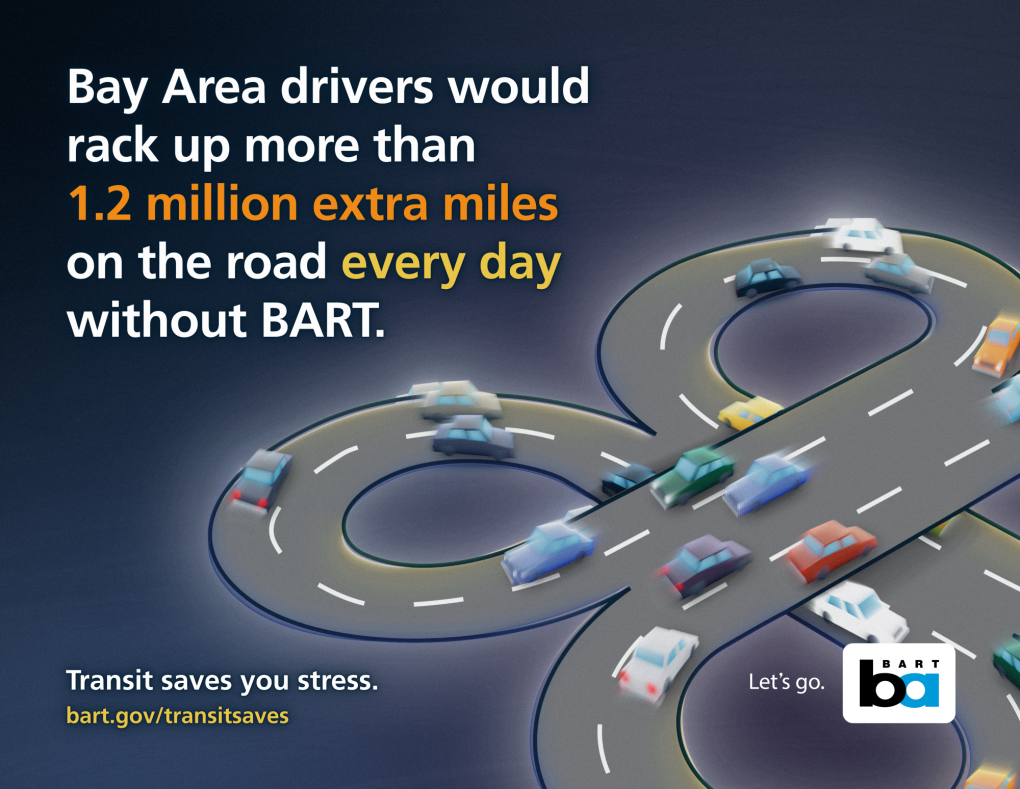
Spending hours delayed by traffic means less time spent with family and friends or for recreation, which degrades quality of life for everyone, regardless of whether they use transit. Time spent in congestion is also less productive time than working and shopping, which results in less economic activity across the region. Heavy congestion may deter people from taking trips. Since there are no viable alternatives aside from BART and driving between Eastern Contra Costa/Alameda counties and Inner East Bay/West Bay areas, increased congestion may lead to less regional mobility.
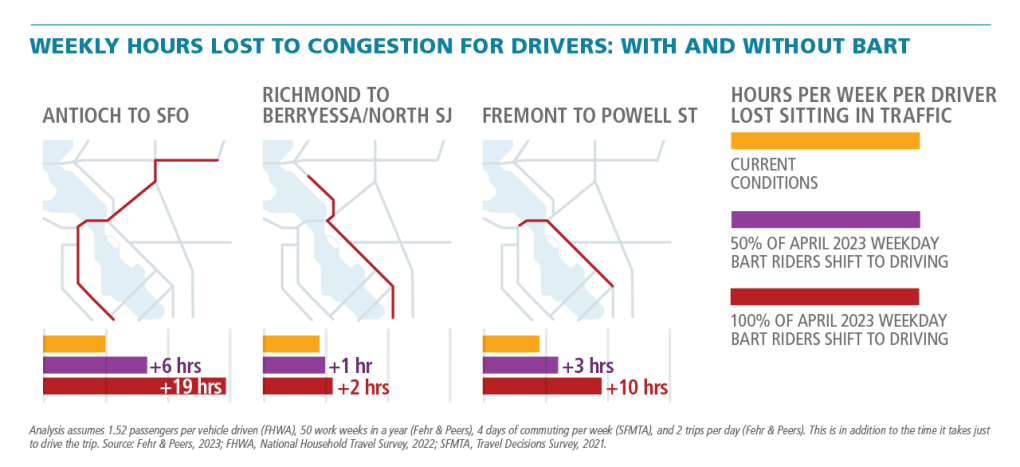
BART service even benefits residents that choose to drive, in part by significantly reducing their time lost to congestion and thereby improving quality of life for everyone who lives here, whether they use transit or not. As shown in the image above, if BART did not exist, for some trips drivers could experience upwards of 19 hours in congestion weekly, in addition to the time it would take without any traffic.
What BART Riders Say…
“When I worked, it was so nice to have downtime between work and being a busy mom. BART made it so when I got home, I was relaxed instead of stressed by traffic. It really was wonderful. Now it means I’m heading to fun!"
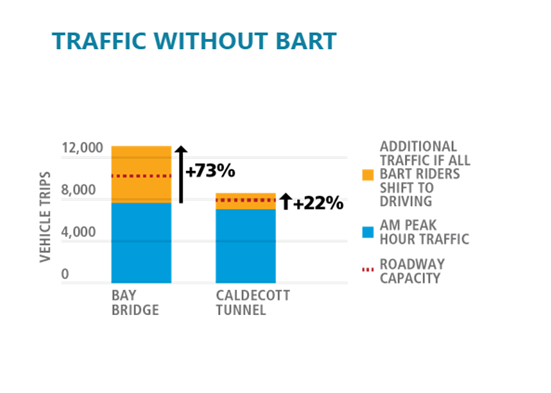
If BART ceased to exist and riders had to drive instead, traffic could increase by 73% on the Bay Bridge and 22% in the Caldecott Tunnel during morning peak commute hours, which would exceed roadway capacity. To support the increased traffic volume, up to three additional lanes would need to be added to the Bay Bridge and an additional lane in the Caldecott Tunnel.
What BART Riders Say…
“[Without BART,] we probably wouldn't go to as many activities where we'd be fighting traffic and trying to find parking.”
BART Connects
As part of the Role in the Region Report, BART solicited stories from riders to learn how our public transportation system impacts their lives. The stories are compiled at bart.gov/bartconnects.
Below, read an excerpt longtime rider Linda Healey and how BART allowed her time to relax between work and raising a child. Find the full story here.
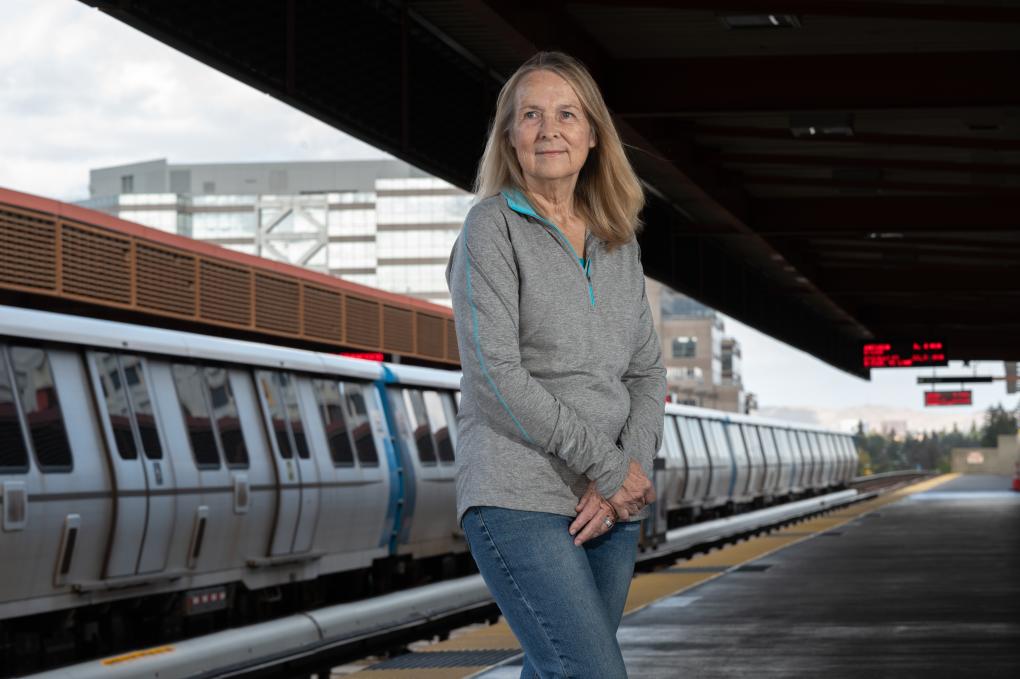
BART Connects: A working mom remembers when her only downtime each day was her BART ride
Linda Healey commuted to San Francisco from Walnut Creek for more than twenty years. When her son was young, those daily BART rides were her only downtime in the day. “BART got me home to my child quickly,” she said. “And it got me home unstressed because I could relax, rather than sit in traffic. That was a gift.” Today, Healey’s son – now in his thirties and living in Oakland – does the same commute his mother did for so many years, though he hops on the train a few stops up the line. He even works for the same company. “I passed the BART baton to him,” Healey said. “Hopefully one day, he’ll get to take it just for fun.”
Read the Story
Versatile but problem-plagued, the last 1990s-era C2 BART car is gone
The last-ever BART C2 car was decommissioned in August 2021 at Hayward Shop. Note the headlights on the end as well as the flat-shaped front. The C2s could serve as lead car with an operator cab or as a middle car, which ushered in a new era of efficiency in dispatch operations when they arrived in the 1990s
BART reports 69% reduction in greenhouse gas emissions over past decade
BART has reduced its total greenhouse gas emissions by 69% over the past decade, even as the system expanded by five stations and increased annual train miles by about 11%.
The milestone is highlighted in BART’s newly released 2025 Sustainability Report, which marks the final report under the agency’s 2015-2025 Sustainability Action Plan. The plan identified 120 sustainability projects across BART, and 80 have now been completed or incorporated into ongoing operations.
“Providing access to clean, reliable transit is one of the most powerful climate actions available to our region,” said BART General Manager Bob Powers. “We owe it to this region, and the people who will inherit it, to get this right.”
The report highlights sustainability work completed in 2025 as well as progress made throughout the 10-year plan. Among the highlights:
More than 90,000 LED lights have been installed at BART stations and parking facilities over the past three years, improving energy efficiency while reducing maintenance needs.
BART was awarded and signed an agreement to install EV chargers at all BART-managed parking facilities.
Energy use by BART’s non-revenue fleet declined 32% in 2025, helped by a new vehicle pool program that allows employees to share vehicles rather than assigning cars to individual departments.
Electric water heaters were installed at five out of six BART shops.
BART purchased 32 electric trucks and vans.
BART launched a new cross-departmental effort to define what resilience means for the agency and identify future initiatives to prepare the system for hazards and disruptions.
BART continued improvements that make stations easier to reach by walking, biking, and other forms of transit.
The report also highlights BART’s role in reducing regional greenhouse gas emissions by providing an electric alternative to driving. Each average BART round trip avoids an estimated 24.4 pounds of carbon dioxide emissions, according to the report.
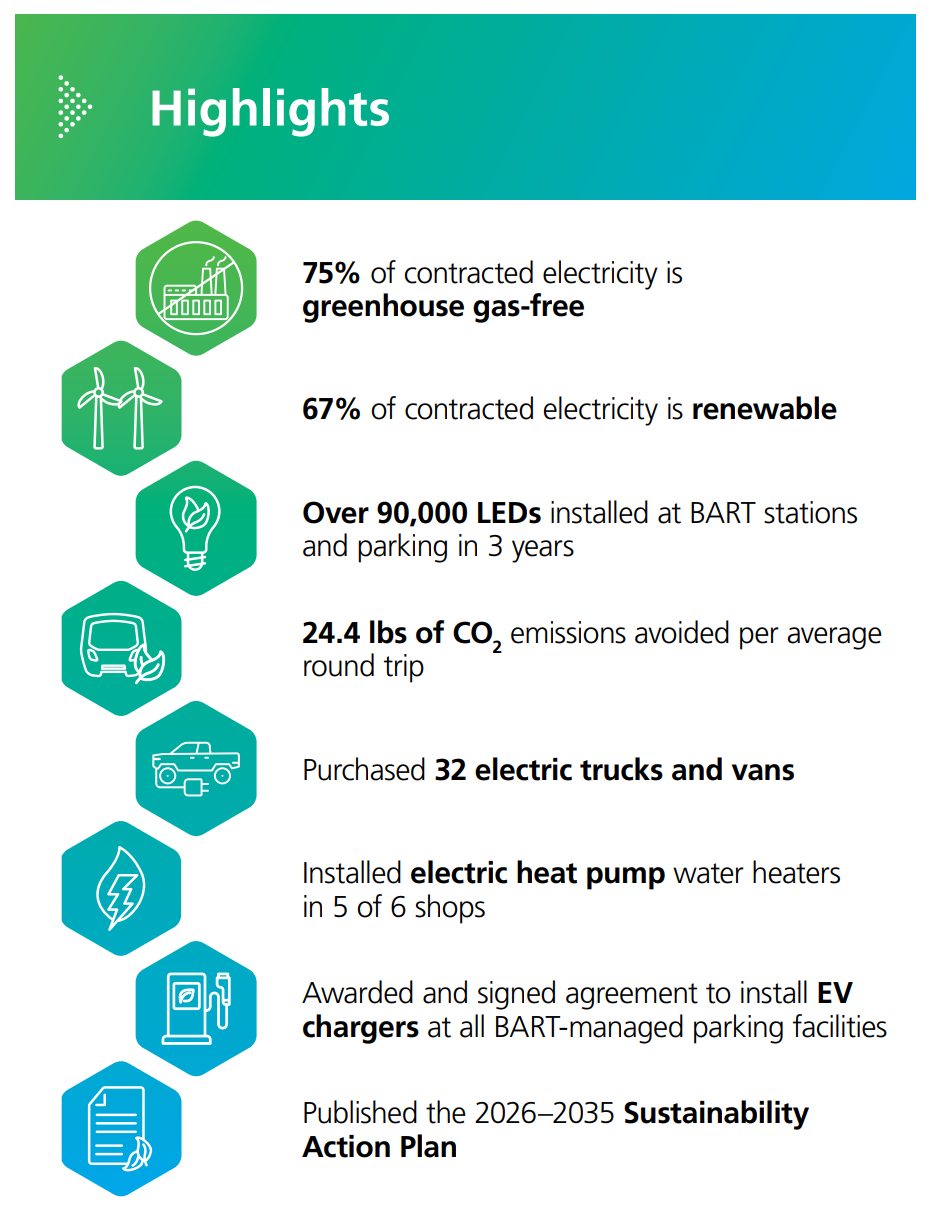
BART's electricity supply is largely renewable and greenhouse gas-free, thanks to several long-term power purchase agreements with wind, solar, and hydroelectric facilities across the state.
The 2025 report marks the end of BART’s first 10-year sustainability action plan. The agency has since released its new 2026-2035 Sustainability Action Plan, which includes 72 action items through 2035 and performance targets through 2030. The plan includes goals to procure 100% renewable power for BART’s electricity, conserve water, expand recycling & composting, adopt a Green Procurement Policy, assess climate risks, and expand Transit-Oriented Development at BART stations.
“Out and Proud” BART Directors lead virtual panel on LGBTQ issues for Pride Month
By MELISSA JORDANBART Senior Web ProducerMore than 100 BART employees joined a noon-hour virtual Pride celebration this week, reflecting on BART’s leadership for LGBTQ equality with hope and optimism on the same day California reopened and lifted most pandemic restrictions.The “Covid coming out party” of
Podcast: A trailblazing woman who brought inclusion and reform to BART calls it a career
Transcript below: HOST: "There are few people who can claim a career path like the one followed by Tamar Allen. Over a span that stretches across four decades Allen has worn many hats ranging from police officer to Assistant General Manager. Allen has played a critical role in some of the largest projects in
BART PD reports surge in arrests as more officers patrol trains
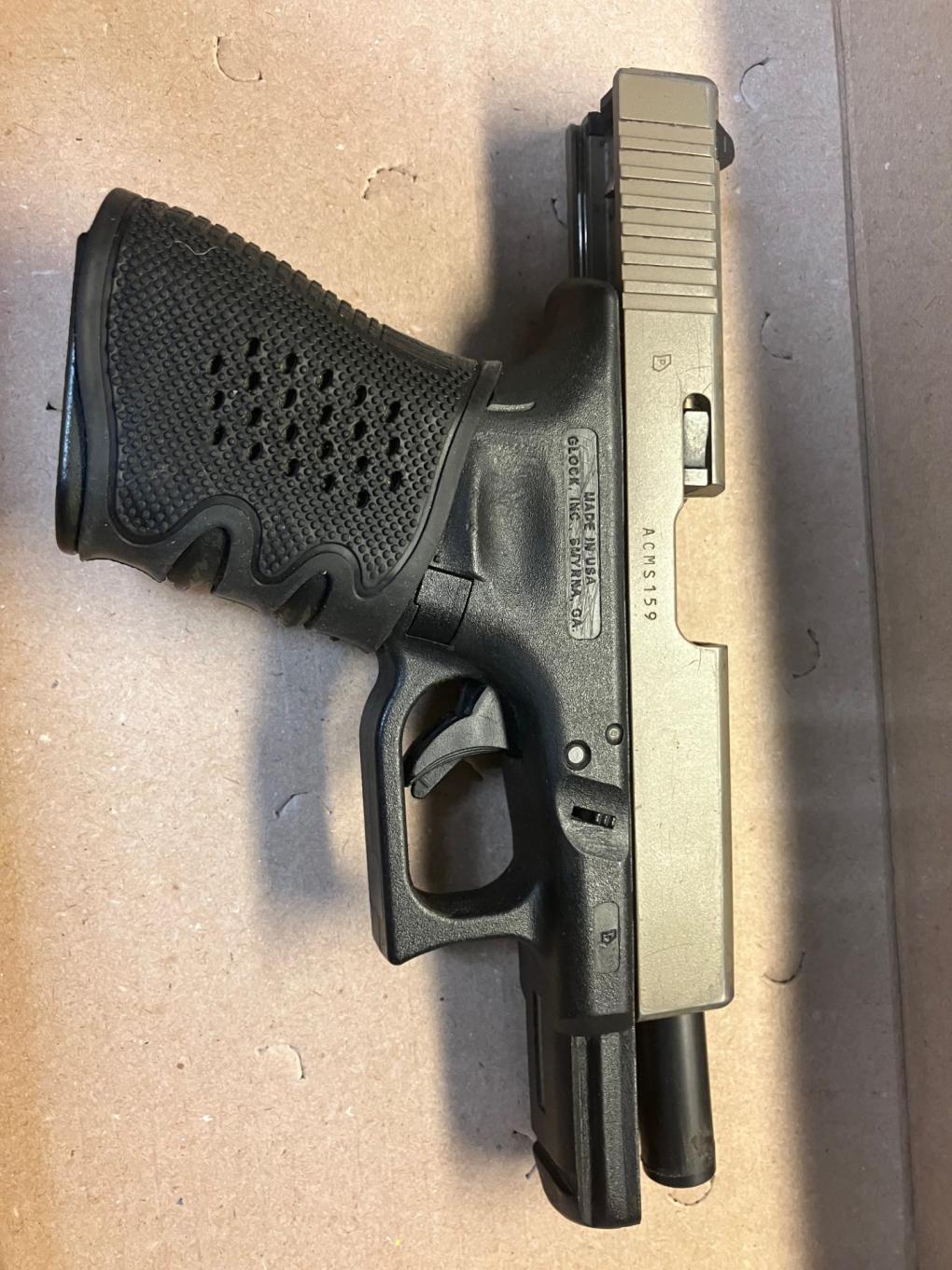
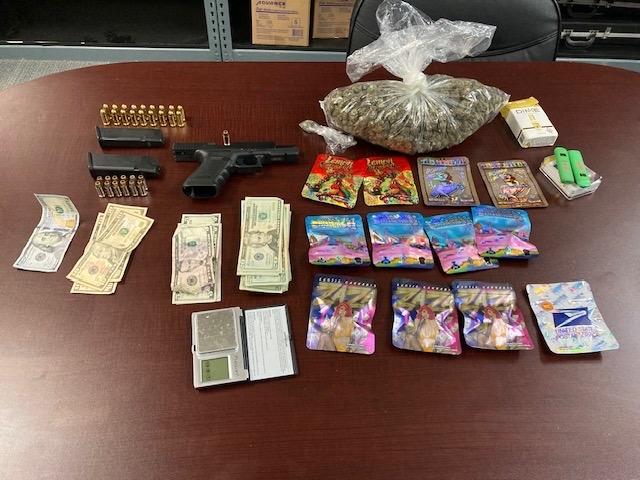
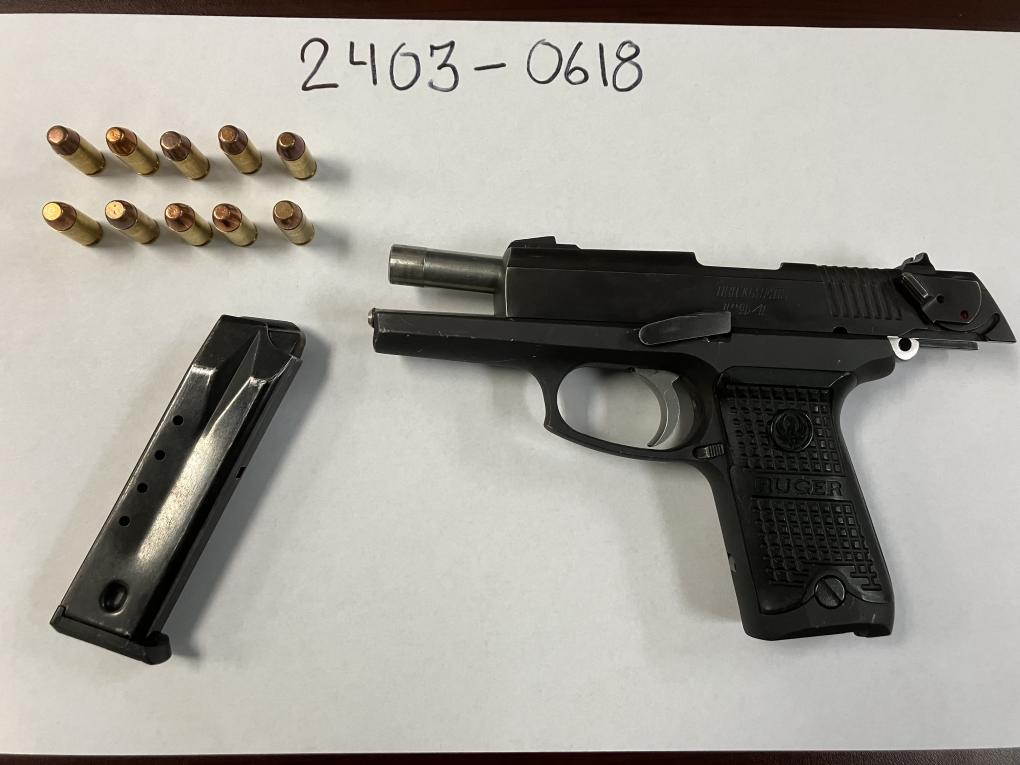
Felony arrests on BART increased 62% last year compared with 2022. The jump comes as BART PD has been aggressively recruiting new officers and ensuring safety staff are riding more trains to increase their visible safety presence. BART officers recorded 726 felony arrests in 2023 compared with 448 for 2022. Along with those arrests 49 illegal firearms were seized in 2023 compared with 40 the previous year. It’s the most guns BART PD has recovered in a year since at least 2003. BART PD has already recovered a dozen firearms so far this year.
“These latest arrest and gun seizure numbers are a credit to all the hard work of our officers,” said BART Police Chief Kevin Franklin. “Since we started deploying more patrol officers to ride trains we have seen an impact, and our riders are telling us they notice the difference.”
In the latest Quarterly Performance Review the percentage of riders who reported seeing BART PD on their trip reached a record high of 20%. That’s up from the previous record of 17% the previous quarter. The last two quarters have been the first in BART’s history where the percentage of riders who reported seeing BART PD exceed the department’s official goal of 12%.
BART has been working to implement its Safe and Clean Plan which focuses on boosting the visible safety presence in the system and increasing staffing to clean trains and stations.
BART PD has also been advancing an aggressive officer recruitment campaign to fill its remaining vacancies. This effort has been boosted by a 22% salary increase for officers, which was approved by the BART Board to ensure BART PD remains competitive with other law enforcement agencies in the Bay Area. Anyone interested in joining BART PD can learn more at joinbartpd.com.
(Examples of recently seized guns)
Mask mandate and labor agreements part of BART Board night meeting on 7/28
The BART Board of Directors on Thursday, July 28 will hold its third night meeting of the year. The Board this year is prioritizing holding several evening meetings to encourage greater public participation with virtual public comment as an ongoing option. The public portion of the July 28 meeting will begin
BART PD holds Black Friday safety events at Bay Fair and West Oakland stations
On Friday, Nov. 25 -- the busy Black Friday shopping day -- BART Police and partners will hold safety awareness events at Bay Fair and West Oakland stations. At Bay Fair, tables will be set up with safety information, focusing on particular crimes that tend to increase during the holiday season, when