
Search Results
BART service resumes following earlier computer problem
Read the update from Thursday March 14th into the cause of the network problem here. Monday March 11th Update At 2:45 am on Saturday we experienced a computer network failure. The failure was software related at one switch that is part of a complex computer network. As a result, trains were not dispatched
New hours for BART's Transit Information Center
Starting Mon., Jan 7, 2013, BART's Transit Information Center will be open from 8am to 9pm daily. Automated schedules, fares and real-time information is also available 24/7. If you'd like a help planning your BART trip, or more information about transit services that connect to BART, give us a call! Local
Take BART to SF Pride Celebration
The 36th Annual San Francisco LGBT Pride Parade and Celebration hits the streets Saturday, June 24 and Sunday, June 25. Join the party all weekend long at San Francisco's Civic Center. SF Pride is two days of music, food and fun?all for free! The celebration area will open Saturday from noon until 6 p.m. and
BART fares to increase July 1, 2022
On July 1, 2022, all BART fares will increase by 3.4% to keep up with the rising cost of providing safe and reliable service. This fare increase is well below the current rate of inflation and is part of the Board-approved Inflation-Based Fare Increase Program which has been in place since 2003 and offers
BART Board approves Art in Transit Program
“Where someone might see rafters, I see ladybugs. Where someone might see dividers, I see honey bears,” said the artist known as “fnnch,” who provide these mock up images. With the goal of making our stations and riding experience more inviting, delightful, and vibrant, the Board of Directors voted to adopt
Engineers Week: Meet some people and projects building a better BART
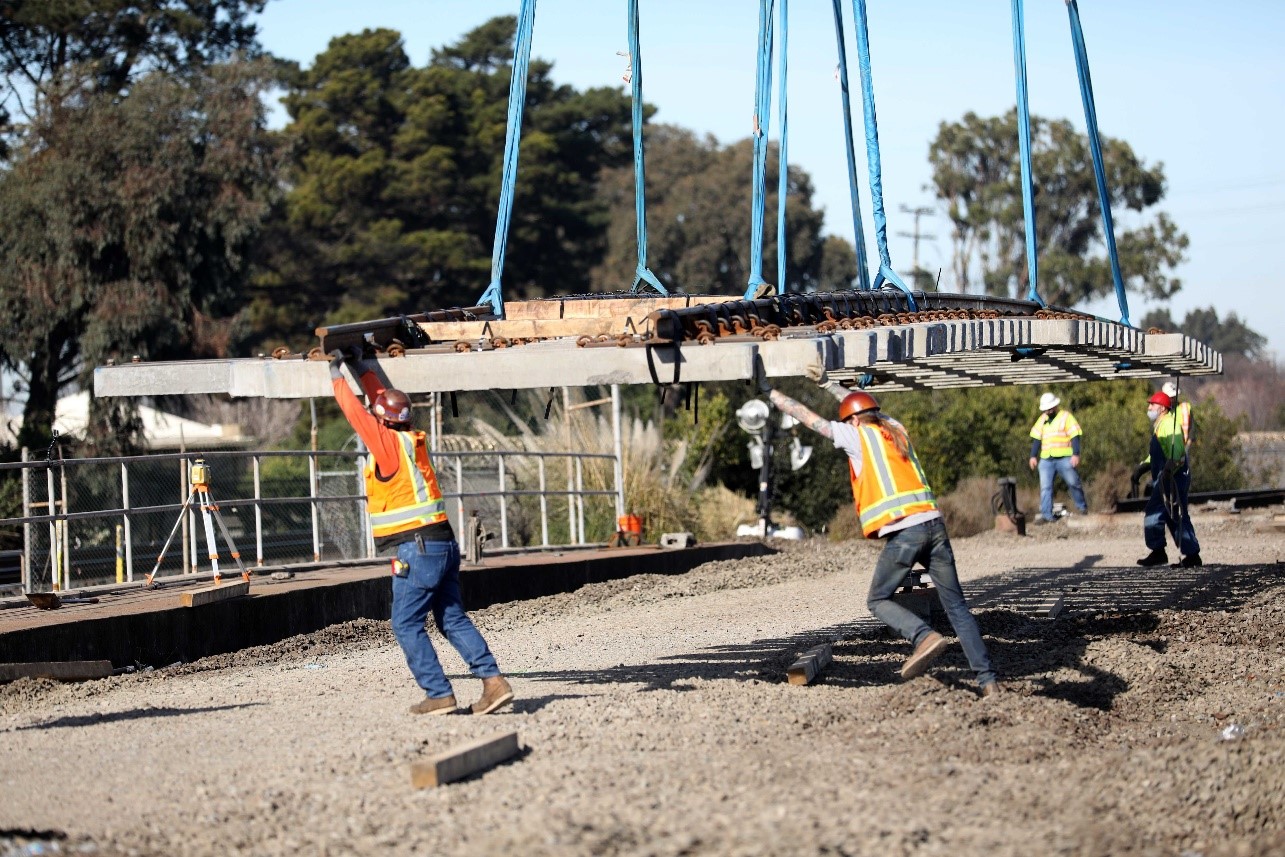
Workers guide a section of track into place as it hangs from a crane by Richmond Station.
Across the 131 miles of track and 50 stations of the BART system, Professional Engineers are working every day to deliver on our mission of safe and reliable public transit for the Bay Area.
This week, the National Society of Professional Engineers holds its annual Engineers Week to raise public awareness of engineers’ positive contributions to quality of life. Held every year since 1951, Engineers Week is also aimed at encouraging youth to pursue careers in engineering.
BART General Manager Bob Powers, a licensed Professional Engineer with degrees in civil and structural engineering, said his training and experience help him to be a more effective leader.
"My background as a Professional Engineer allows me to be a good listener," Powers said. "I'm able to grasp the technical concepts, how our system fits together, and then I can really focus on the person and what help they need to accomplish the goal. I'm constantly impressed with the BART engineering staff."
Five key engineering projects underway now are a major track replacement near Richmond, led by Linda Lee; a station hardening project led by Girish Koli; a tunnel repair project led by David Greenaway and Raymond Lai; platform edge tile project led by Travis Huang and Catalina Espino; and Civic Center stairs project led by Kevin Reeg. All of these projects are possible due to full or partial funding by the Measure RR bond approved by voters in 2016 for safety and reliability projects.
RICHMOND TRACK REPLACEMENT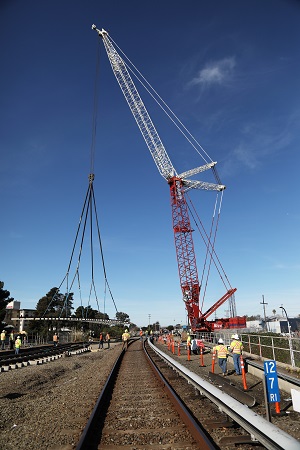
“My role is to make sure everything goes smoothly,” said Linda Lee, who is Project Manager on the massive Richmond project still scheduled for two more shutdown weekends this winter. BART is using down time during the coronavirus pandemic to accelerate infrastructure projects.
“We did it in-house,” Lee said, including design and construction. “Working together with so many different stakeholders, from purchasing to construction to maintenance, bringing everyone together to get it all done was a pretty big lift. It required a lot of orchestration.”
Speaking of big lifts – the Richmond project involved the largest crane ever used at BART, 153 feet and 10 inches in height, a gargantuan machine capable of lifting the crossover tracks, known as an “interlocking,” into the air and setting them into place.
The interlocking functions like an intersection for cars, allowing trains to safely move from one section of track to another. BART has successfully completed similar track replacement in Oakland, Concord, Lafayette, Orinda and Hayward.
“Our team is very experienced,” having done several of these interlocking replacements over the past few years, Lee said. “Working together has helped us to build the team. Everyone knows the drill now, and that consistency has been very impressive.”
The next weekends of work in the Richmond project are Feb. 28-8 and March 13-14.
SYSTEMWIDE STATION HARDENING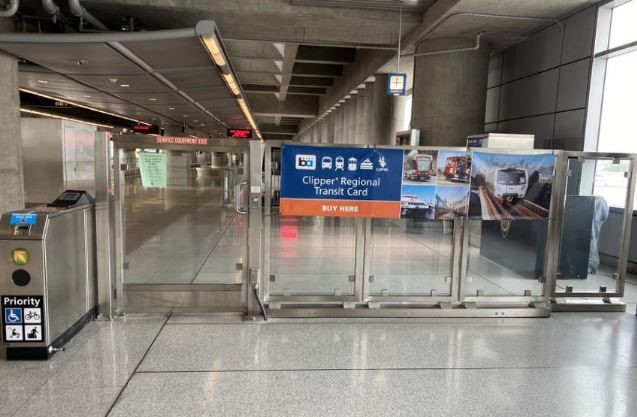
More secure barriers, like this one at SFO Station, are part of station hardening efforts.
Photo provided by Girish Koli
Girish Koli wanted to be an engineer since he was a young boy marveling at massive bulldozers on building projects. He came to BART about two years ago and is currently serving as Project Manager for an extensive, multi-year station hardening effort to increase safety and security.
“We have engineers from many disciplines collaborating around a common goal,” Koli said of the project, which is funded by Measure RR along with other operating funds.
Before joining BART, Koli had the idea it would be “old-school,” a slow-moving bureaucracy. He was pleasantly surprised to find a nimble team. “It was not at all what I expected,” he said. “There is a lot of innovation and collaboration among the staff with extensive knowledge of the industry.”
For example, he said, his team members made a site visit in early February to assess an issue at Fremont Station with a blind spot in the layout. “We did measurements during the field visit, came up with a design solution and plan to address the issue,” he said. “Something like that would have taken six months to a year” to troubleshoot in many organizations, he said.
Koli is leading the effort to raise railings, replace existing unlocked service gates with locking buzz gates, and reconfigure a few areas where elevators can be used to bypass faregates, all of which will enhance security. “It’s very rewarding to be able to bring things from design to reality, and to help people feel safer taking BART,” he said.
This work also is a prime example of the coordination and collaboration between the different maintenance and engineering disciplines at BART.
TUNNEL SCANNING AND REPAIR
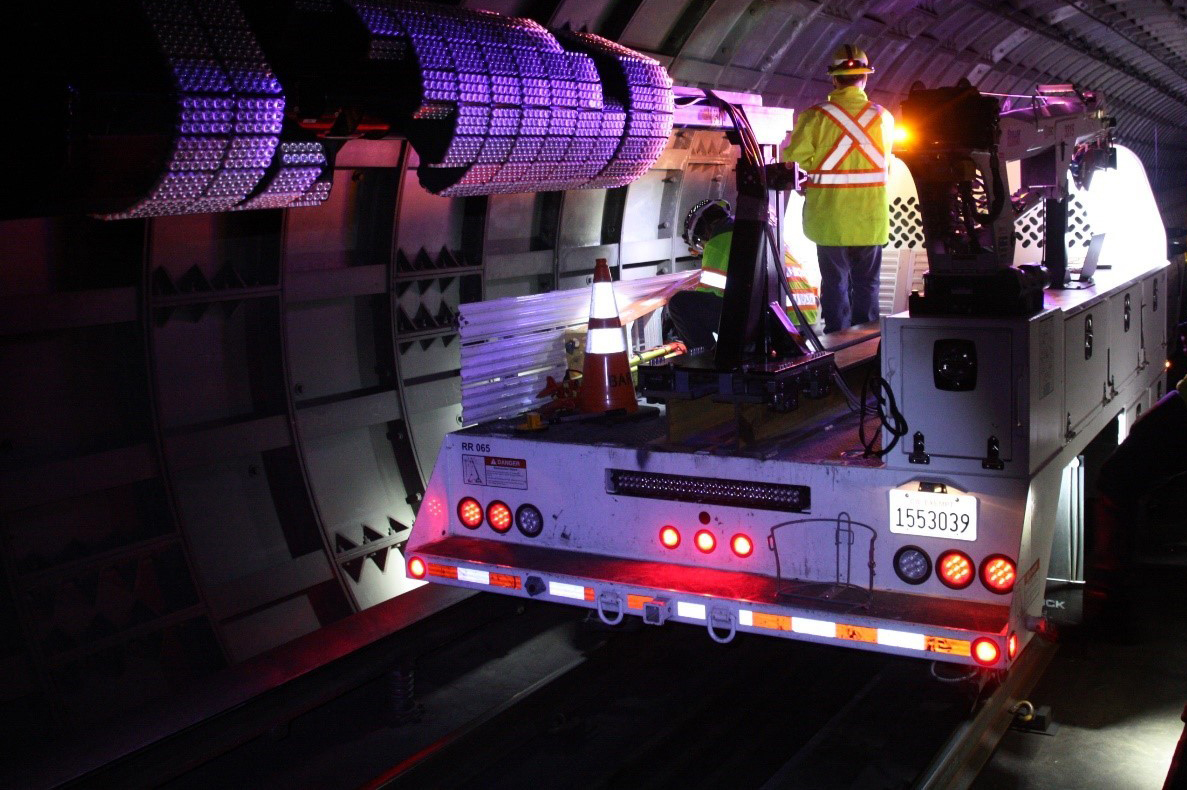
LiDAR and photogrammetry technology is used to create 3D modeling of BART tunnels
(Photo courtesy of HNTB)
The BART system has miles and miles of underground tunnels. In some areas, such as underneath downtown San Francisco, water intrusion is a fact of life. BART engineers are using cutting-edge 3D measurement tools to assess conditions in tunnels. By making measurements quickly on site, BART can reduce the impacts on passenger service.
David Greenaway, a Professional Engineer and Project Manager for the tunnels project, said the high level of detail in the 3D modeling can be used to identify tiny cracks so that they can be repaired before spreading.
Raymond Lai, Professional Engineer, who is assisting to manage the project, said LiDAR (light detection and ranging) and photogrammetry technology is used in making scans to identify very small cracks, pinpoint their location and assess their severity.
“It’s interesting to work at BART because we have so many different types of structures that create different challenges,” Lai said. “It’s fascinating.
PLATFORM EDGES AND TILES 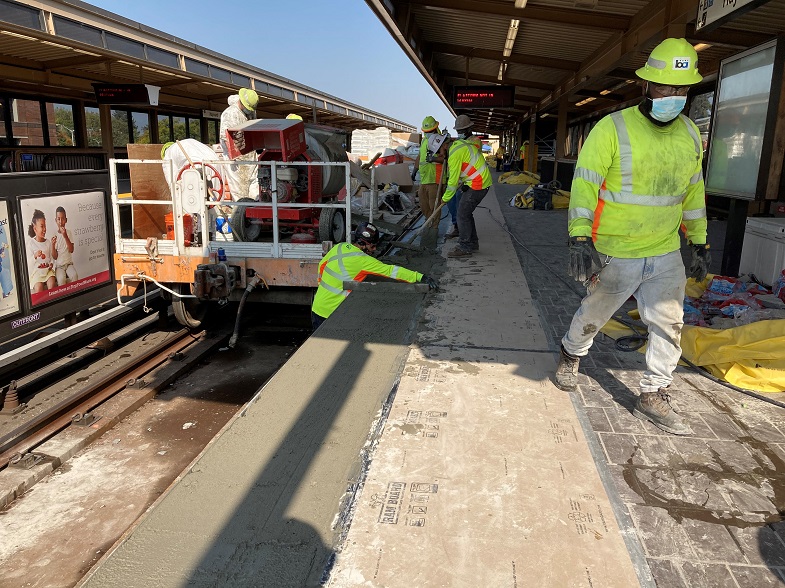
Workers leveling mortar bed for truncated dome tiles to be placed. Photo by Travis Huang
BART is systematically replacing platform tiles and edges to help people with disabilities navigate the platform. The old, truncated-dome yellow tiles in some stations exposed to the elements are worn down or not in the proper orientation for current Americans With Disabilities Act standards.
“These tiles do break down, especially ones that are outside,” said Travis Huang, Professional Engineer and the Project Manager.
The old tiles were also hard to replace. Set with mortar, they had to be jackhammered out. The new tiles have fasteners on the bottom in an easy-to-repair modular design. “You can just pop them in or out, without having to use a jackhammer and cause more disruption,” Huang said.
“We’ve had to do emergency fixes,” Huang said, which are disruptive to service. Instead crews are piggybacking on projects where there are planned track shutdowns, allowing them to do the most possible work in with the least impact to service.
“We have to be really creative in how we approach this work,” he said. “It helps that BART has so many engineers in different disciplines. If we ever get stuck on a problem, we come together and make pitches, we are our own sounding board, and we find a way to solve it together.”
CIVIC CENTER SCISSOR STAIRS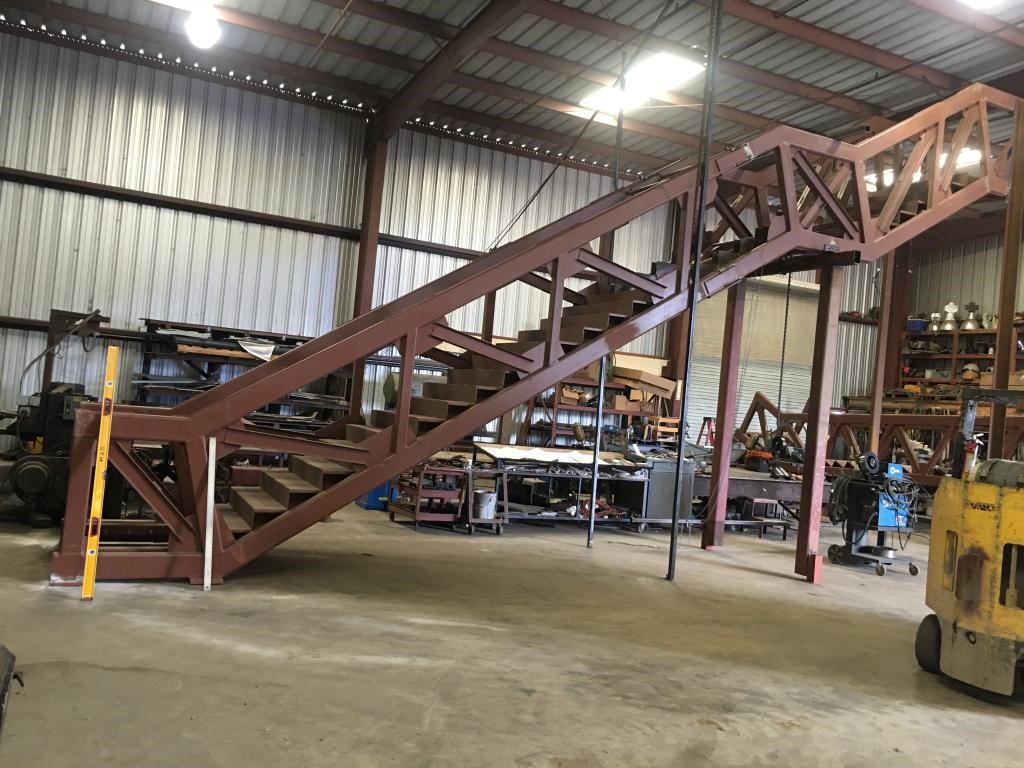
Part of the new scissor stairs being fabricated off-site for Civic Center BART.
Photo provided by Kevin Reeg.
This unique project taking place at Civic Center Station posed a number of tricky problems for the engineers pulling it off: adding two brand-new staircases in an existing station concurrent with ongoing train operations.
The new staircases are needed to meet current code for emergency exit requirements, which mandate how many exits are needed to clear the station in a major emergency situation. With little room for new construction, a creative solution was required: The staircases will be “scissored” (from the shape of half-open scissors) with the existing staircase at both ends of the station.
“It’s a challenging project,” said Construction Engineer Kevin Reeg, the Project Manager. “These stairs will cross the other set at the midpoint, creating scissor stairs.”
Besides adding more exits for emergencies, the two new staircases will ease congestion during the regular rush hour, too, as system ridership rebounds with progress against the coronavirus.
There’s extremely limited space for construction, which necessitated having the stairs fabricated off-site, to be dropped into their locations sometime this spring when the project is finished.
“The structural steel is coming in in big chunks on the Muni level, and we’ve had to do a lot of coordination to make that happen,” Reeg said. BART will use a specially configured high-rail trailer-type vehicle that, for the first time in memory, will have dual sets of wheels – one set for the standard-gauge of Muni rails and another for BART’s unique gauge.
“That will be the coup de grace of the whole project,” Reeg said.
ENGINEERING CAREERS AT BART
BART is under a general hiring freeze due to budget constraints, but certain mission-critical engineering positions will be posted and filled. To view openings, visit www.bart.gov/jobs
Start of construction at Hayward BART Station
As part of our systemwide Earthquake Safety Program, we will begin strengthening elevated structures outside Hayward Station to better withstand future earthquakes. This work will require the temporary closure of the sidewalk near the northwest corner of the Hayward Station parking lot starting the week of
BART explores late-night bus service options
The BART Board considered the late Friday Night Service Demonstration proposal at Thursday's regular Board meeting and decided to keep Saturday morning service intact. (To view details of the proposal go to the Board Agenda and Minutes page, click on "Agenda" for the Nov. 17, 2011, meeting, and go to the PDF
Take BART to San Francisco's "Sunday Streets"
Join an urban experiment this Sunday as San Francisco opens the streets along a four-and-a-half-mile route to encourage walking, biking, skating and other car-free activities. From 9 a.m. to 1 p.m. the city will limit traffic on a stretch of road connecting the Bayview to Chinatown via the Embarcadero. The
BART Connects: A high school for gifted neurodivergent youth relocated to be closer to BART
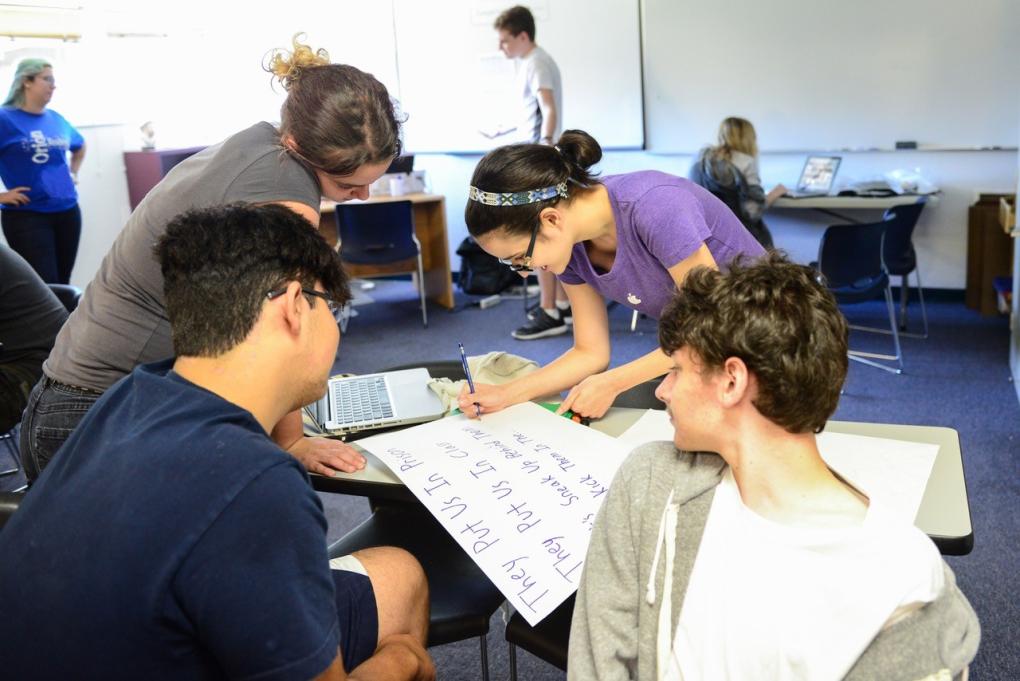
Students in class at Orion Academy near Concord Station.
Do you have a favorite BART memory or story to share? Email a short summary to BART Storyteller Michelle Robertson at [email protected], and she may follow up to schedule an interview.
In 2022, Orion Academy moved from Moraga to Concord, largely to be closer to a BART station.
The academy is a private high school that provides a comprehensive program for gifted students who are neurodivergent. In addition to rigorous college preparatory classes, such as Latin and physics, the 24-year-old school requires students to pass transitions classes that emphasize social and executive functioning skills.
“I don’t care how good you are at math and science, if you can’t keep track of assignments and turn them in on time, you’re going to fail,” said Dr. Kathryn Stewart, the founder and Executive Director of the academy.
More than half of Orion Academy’s students take BART to school, located just a short walk from Concord Station. Moving the school near a station makes the academy’s resources accessible to a broader community and teaches students how to independently navigate urban environments, where many will live and work after graduation.
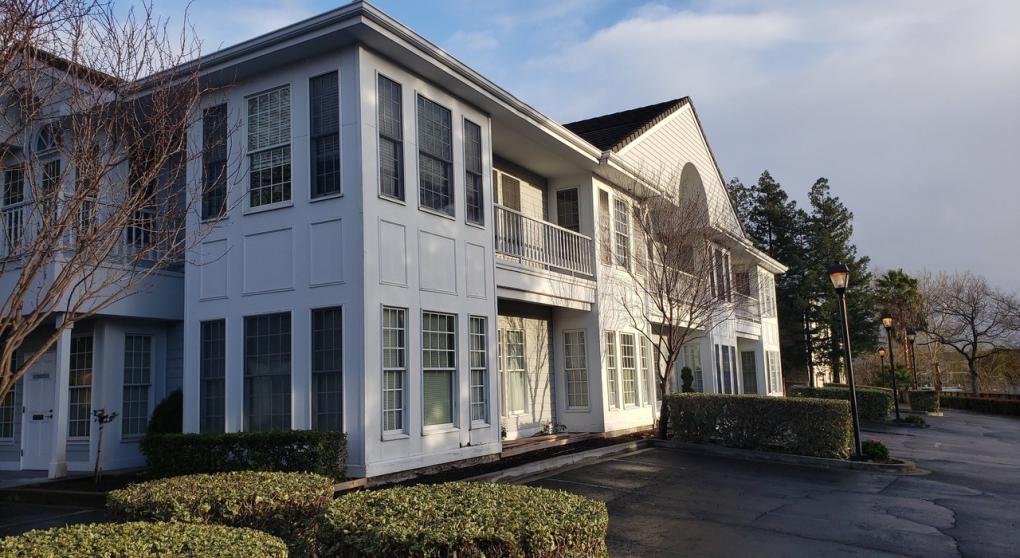
The Orion Academy campus near Concord Station.
“My kids are bright, but can you imagine working as a physicist at Lawrence Berkeley Lab and having mommy drop you off each day?” Stewart said.
Because many Orion Academy students have trouble with visual-spatial processing, driving a car can be overwhelming.
“So, what is your alternative? Taking public transportation!” said Stewart. She strongly encourages parents to teach their children how to navigate the BART system before the school year starts.
BART has also become crucial for field trips, transporting students to destinations like the Asian Art Museum, the California Academy of Sciences in San Francisco, and the Aquarium of the Bay. The school’s van was recently vandalized, so public transportation is the only way to take students off campus, Stewart said.
This past summer, Samantha Greenstone’s dad taught her how to take BART. She'd used the system only rarely before starting at Orion Academy this past fall, and when she did ride the train, it was always with her parents. Now, she takes BART to school every day by herself.
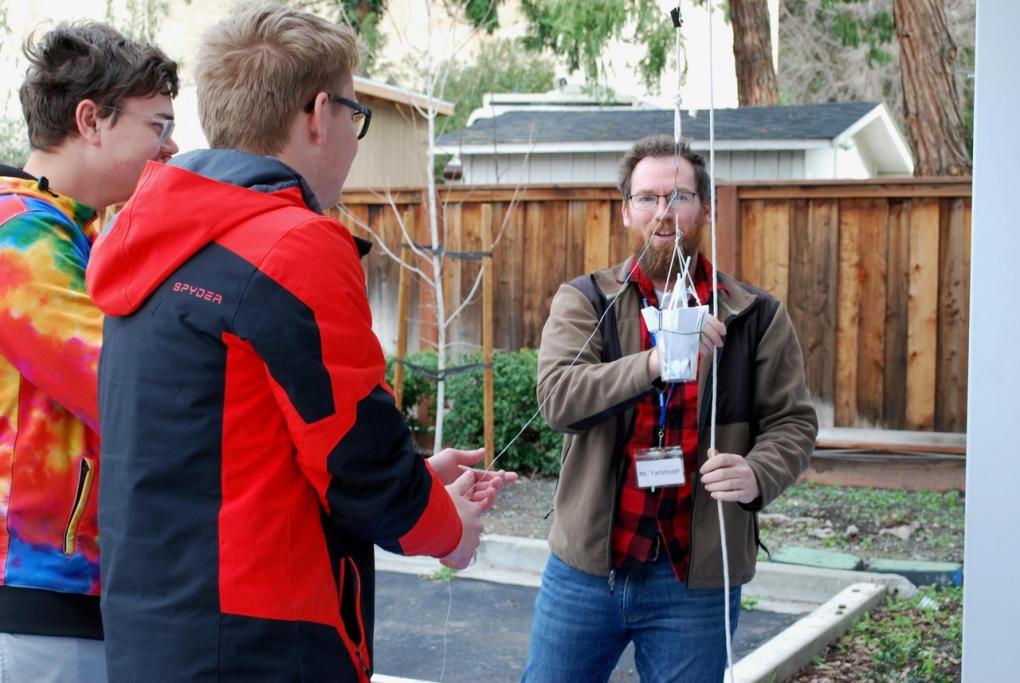
Students in class at Orion Academy near Concord Station.
Greenstone’s commute is slightly unconventional. She lives in Marin, and each day her mom, who works in San Francisco, drops her off at Embarcadero Station. From there, Greenstone catches a train to Concord Station then scooters the short distance to school.
Taking BART makes Greenstone “feel much more environmentally conscious,” she said. She appreciates its affordability and the fact that she never gets stuck in a traffic jam. Only once has she missed her stop.
“I think BART makes the world a better place,” she said. “It provides an economy of scale, is better for the environment, and allows for more urbanization in the region.”
It also makes her dad’s life easier, she said, “and I’ve learned I should be good to my dad.”
Greenstone intends to become an engineer or physicist. She says she’ll continue to take BART after she graduates, maybe even to travel to her future workplace.
About the BART Connects Storytelling Series
The BART Connects storytelling series was launched in 2023 to showcase the real people who ride and rely on BART and illustrate the manifold ways the system affects their lives. You can follow the ongoing series at bart.gov/news.
The series grew out of BART's Role in the Region Study, which demonstrates BART’s importance to the Bay Area’s mobility, cultural diversity, environmental and economic sustainability. We conducted a call for stories to hear from our riders and understand what BART means to them. The call was publicized on our website, social media, email blasts, and flyering at stations. More than 300 riders responded, and a selection of respondents who opted-in were interviewed for the BART Connects series.