
Search Results
Measure RR supports community projects that will make it easier to walk and bike to and from BART
An innovative community partnership initiative that leverages BART capital funding to help local agencies make it easier for riders to safely walk and bike to BART stations is awarding funding to seven projects. The Measure RR Safe Routes to BART (SR2B) grant program’s third and final cycle will provide $16 million in funding for the projects, which are located across the three counties that make up the BART District (Alameda, Contra Costa, and San Francisco). The program is made possible through Measure RR which was approved by District voters in 2016 and provides $3.5 billion to rebuild BART’s core infrastructure to make the system safer and more reliable.
The selected projects are focused on improving bike and pedestrian connections to BART. SR2B makes the most of Measure RR dollars by using them to support projects that can offer a minimum funding match of 30% and can provide evidence of governing body support, a full funding plan, and a minimum of 35% design completion.
Here are the projects selected for Cycle 3 awards.
Project Safe Routes to BART funding
- Lakeside Dr/Lake Merritt Blvd. Complete Streets Paving Project $3 million
- Clement Avenue/Tilden Way: Broadway/Tilden Intersection $2.1 million
- Central Embarcadero Safety Projects $1 million
- Fremont Blvd. Elevated Bikeway $3 million
- Union City BART Pedestrian At-Grade Railroad Crossing $3 million
- Ohlone Greenway Modernization and Safety Project $3 million
- North Bailey Road Active Transportation Corridor Project $0.9 million
The projects awarded SR2B funding were selected from 16 applicants. Equity was a key factor in determining the award recipients. Applicants had to show how projects would improve active access for members of disadvantaged communities. Projects were also graded on readiness, leveraged funding, connectivity, rider experience, community desire, and other factors.
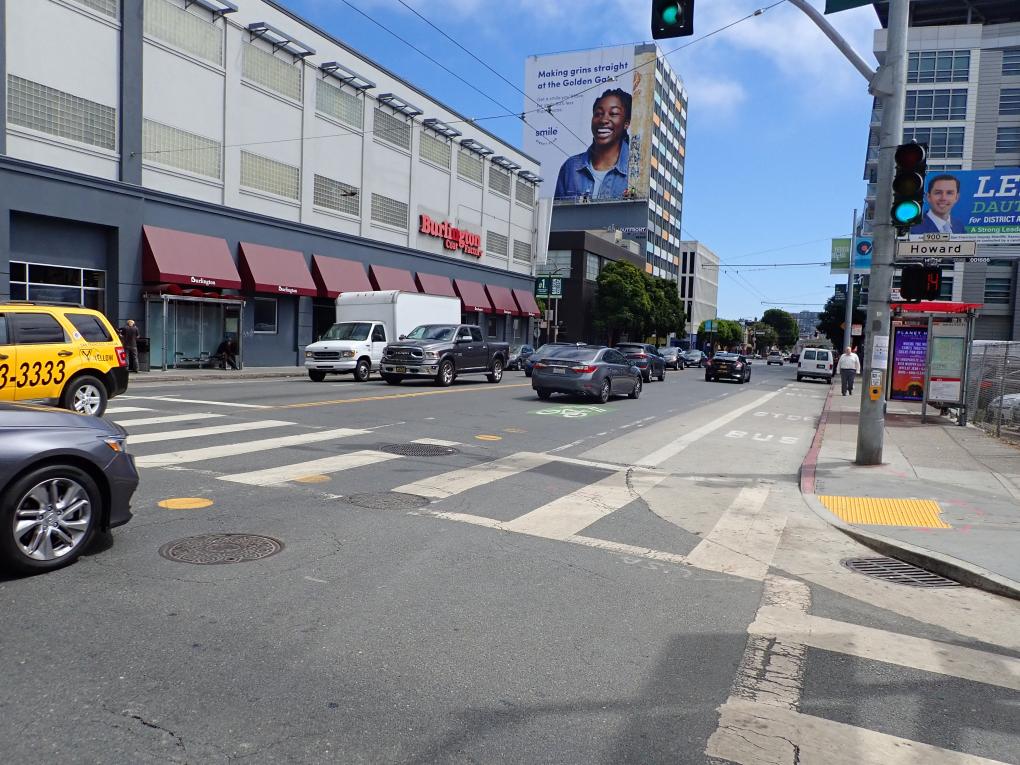
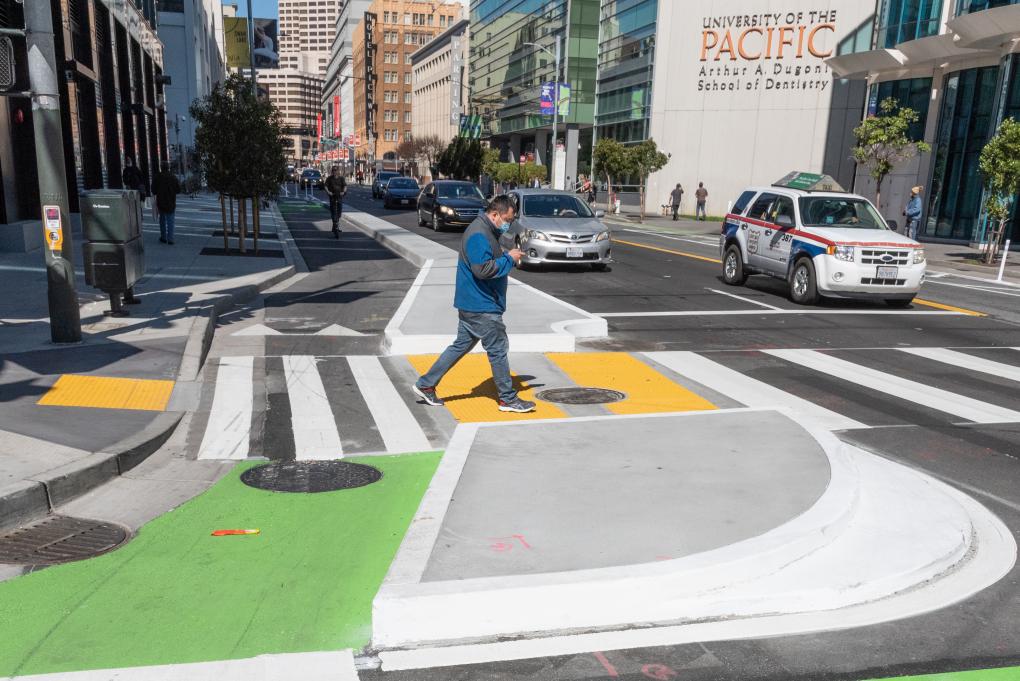
Projects now completed thanks to earlier rounds of SR2B funding include the 5th Street Improvement Project which enhances access to Powell Street Station in San Francisco and the Walnut/Liberty Protected Intersection Project which makes it easier and safer for riders to walk and bike to Fremont Station.
BART's Holiday Toy Drive collects more than 1,100 toys and $3,600 for Mission Food Hub families
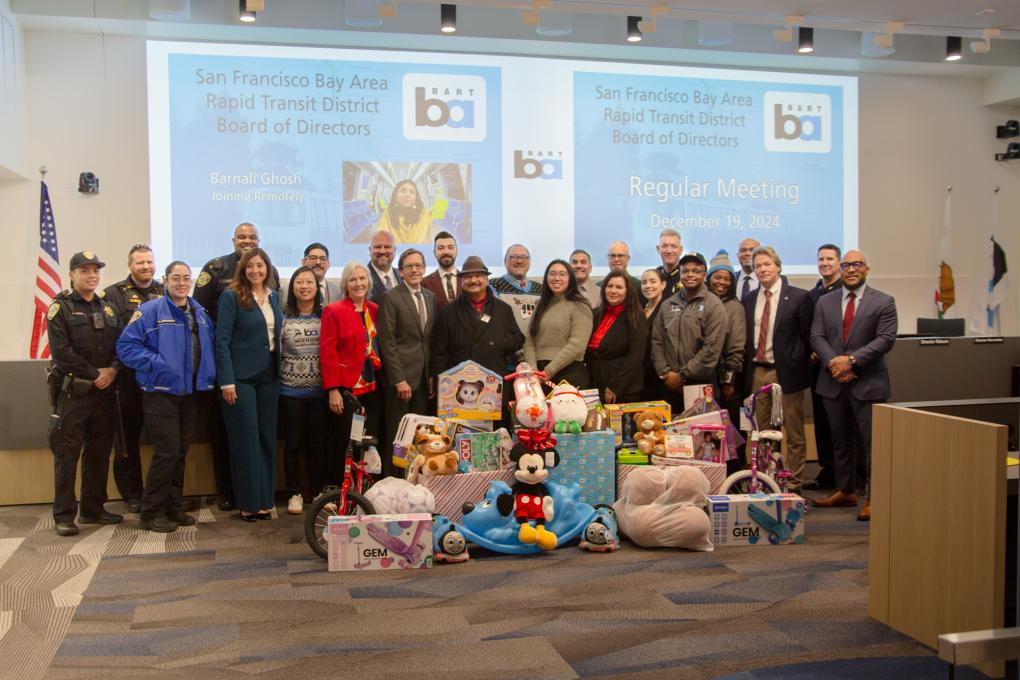
Members of the BART Board, BART executive staff, BART Police, OUTFRONT (BART's advertising partner), and CANA pose in front of some of the toys donated by BART for its 2024 Holiday Toy Drive.
Update: BART collected more than 1,100 toys and $3,600 in gift cards for Mission Food Hub families. More than 500 families attended the organization's recent toy giveaway, and each child was invited to select not just one toy, but two!
Each winter, BART hosts a holiday toy drive to give back to the diverse communities we serve. This year, we are honored to donate the toys to Mission Food Hub (MFH), a food bank that serves more than 300 families a week in San Francisco’s Mission District.
Mission Food Hub was founded in 2020 to provide nutritious, culturally appropriate groceries to families affected by the pandemic. Though the lockdown is over and most of the hub’s clients have returned to work, the need for groceries in the Mission’s Latino community remains, especially as the price of food continues to climb nationally.
Marisol and Otoniel Guillen's family of five relied on Mission Food Hub after the restaurant where Otoniel worked closed at the start of the pandemic. Now, Marisol, Otoniel, and their three children volunteer at the hub “to give back to the organization that gave to us,” said Marisol, speaking through a translator.
“This is my second family,” she said of the food hub. “It has been beautiful to see its impact on my friends, neighbors, and community.”
Mission Food Hub is under the umbrella of Cultura y Arte Nativa de las Americas (CANA), a 46-year-old organization whose objective is to educate people about the rich cultures and indigenous healing practices of the Americas and Caribbean. CANA is an outsize presence in the Mission – among other programs, it runs the San Francisco Lowrider Council, Somos Esenciales, Latin Jazz Youth Ensemble of San Francisco, and Carnaval San Francisco, the largest multicultural festival in California. BART has long been a Carnaval partner, and BART employees walk each year alongside the BARTmobile in the vibrant parade down 24th Street.
“We are grateful to have such a strong relationship with BART and to get to expand it with the toy drive this year,” said Rosine Garcia, Mission Food Hub Program Manager and Festival Coordinator for Carnaval. Many of CANA’s clients are transit-dependent and travel from across the city to access CANA events and opportunities.
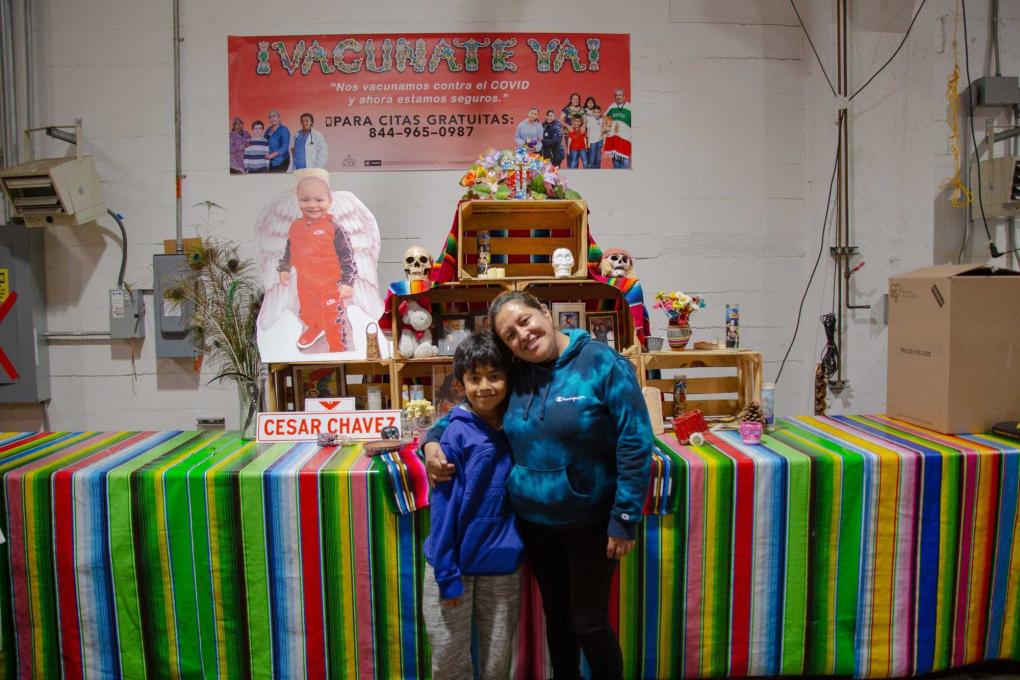
Marisol and her son in front of the altar at Mission Food Hub in San Francisco's Mission District.
BART’s annual Holiday Toy Drive is helmed by the Office of External Affairs and BART Police, who present the new, unwrapped toys and gift card donations in a joyful ceremony during the final BART Board meeting of the year. It’s tradition for the BART Board President to select the organization. Last year, BART employees donated more than 1,500 toys and $1,700 in gift cards to the Samoan Community Development Center of San Francisco (SCDC) and the Community Youth Center of San Francisco (CYC).
“Hardworking Mission families have been deeply affected by the pandemic, unstable housing, and business closures,” said BART Board President Bevan Dufty, who selected the recipient organization. “In a small, but important way, BART’s toy drive shows that we see these hardships and that we are fostering hope and keeping faith for Mission children during the holiday season and New Year. I want to thank everyone who made this possible through their time and generosity.”
Added Rodd Lee, BART Assistant General Manager of the Office of External Affairs: “It is an honor to spread joy to the youngest members of the Bay Area community with our toy drive. Connecting with the diverse youth who call the Bay Area home is an ongoing priority for BART, and the Holiday Toy Drive is a symbolic extension of this work."
Mission Food Hub does its toy giveaway a little differently. Staff display all the gifts on tables, and the children get to pick exactly what they want, without adult input.
“Toys are expensive, and many of our clients can’t afford them. For parents to come here and know their kid is getting a Christmas present means they don’t have to feel bad. It eases the parents’ pain,” said Rosine, adding that Christmas is an important holiday in Latino culture. “It’s about family and memories – that’s what the toys represent.”
Marisol, who immigrated from Guatemala more than twenty years ago, said there’s a conception among Latino immigrants in the U.S. that “you can’t complain here because it’s better than there.”
“It’s hard for parents to say no to buying a toy for their child,” she continued, “even when they really can’t afford one.”
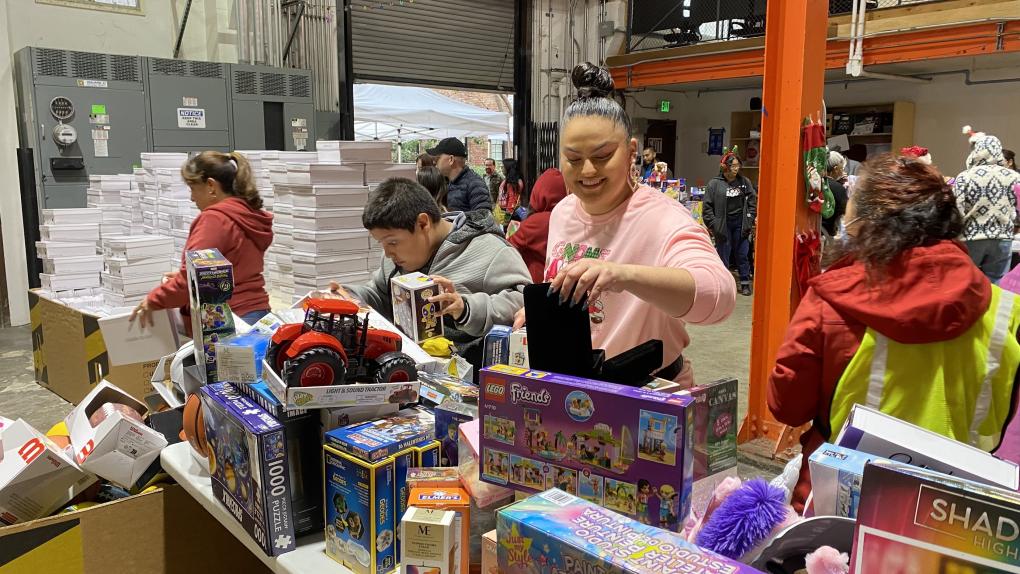
A photo from a previous year's toy giveaway at Mission Food Hub in San Francisco's Mission District.
During the pandemic, Marisol volunteered at Mission Food Hub, an opportunity that snowballed into her being hired as an ambassador for San Francisco’s Community Ambassadors Program, a safety and neighborhood engagement effort run by the city. CANA staff served as references.
"It’s not just me – my entire family has benefitted from CANA,” she said.
Marisol’s 14-year-old son, Emmanuel, is interested in business, so CANA gave him a space at 2024 Carnaval to sell soda, water, and chips. With the money he earned, he was able to purchase his own computer. Marisol said he cited CANA staff, including Rosine, in his recent school applications.
“I didn’t know that!” Rosine said through tears.
When CANA was founded by CEO Roberto Hernandez more than four decades ago, it was primarily an arts and cultural organization that sought to connect people to their Latino heritage and community. Since the pandemic, CANA has expanded that purview to include health in all its manifestations – mental, physical, financial, etc.
In February 2020, CANA pivoted after canceling Carnaval due to the onset of the pandemic. In those early months, COVID infections were concentrated among low-income Latino people with frontline jobs, who also experienced significantly higher mortality rates compared to other ethnic groups.
Roberto was scrambling to find a way to serve the community during the unprecedented and devastating time. The idea for the Mission Food Hub came to him a few weeks after an impactful phone call with a señora who was trying to apply for unemployment. The restaurant she worked for was paying her in cash, and since everything was off the books, she didn’t qualify for a scrap of governmental assistance.
So, Roberto asked her: “What’s the one thing I can help you with right now?” Her response: “Groceries.”
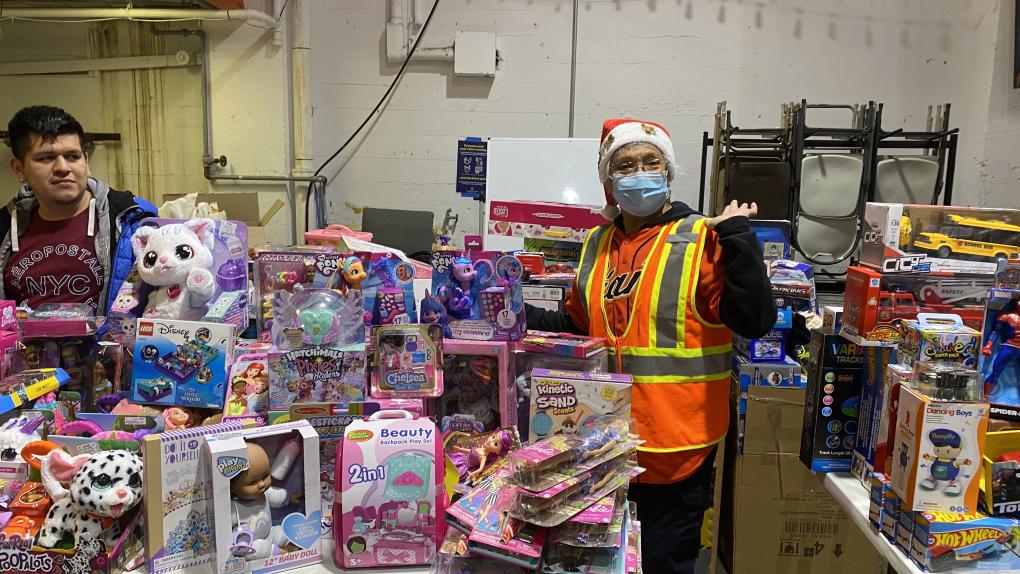
A photo from a previous year's toy giveaway at Mission Food Hub in San Francisco's Mission District.
In the days that followed, Roberto continued getting calls of that same ilk. The refrain: “We can't afford to buy groceries.”
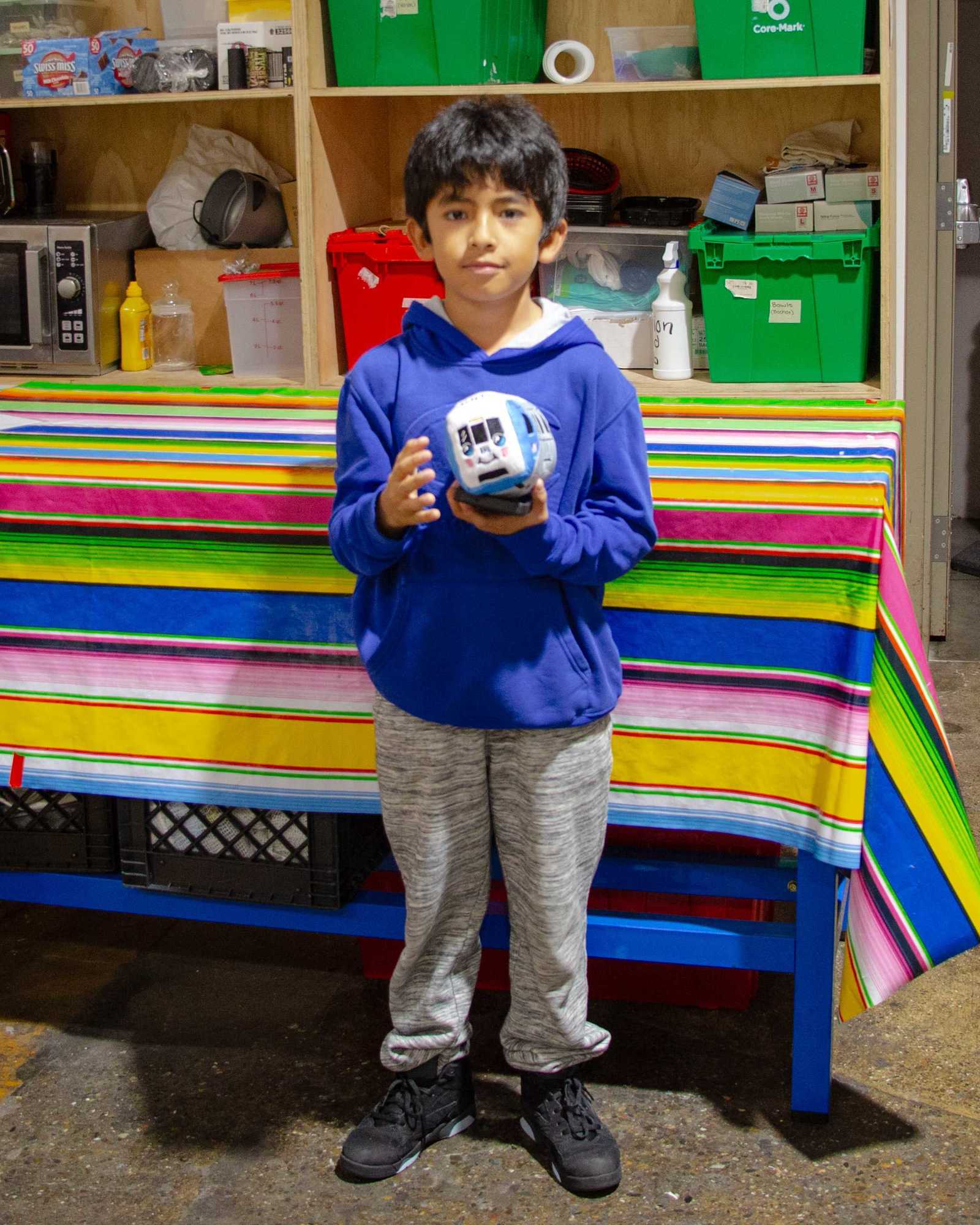
Roberto wanted to help as many people as he could, so he asked Carnaval sponsors if they could free up money from their festival contract to purchase food instead. Many obliged, and soon, dozens of pallets of food were headed to the ad hoc food bank Roberto was running from his garage.
There were so many incoming food donations – where would it all go?
Roberto started making calls and quickly struck a deal with the Mission Language and Vocational School on Alabama Street. They started with one school room, but quickly, the operation took over the building’s entire first floor. At the height of the pandemic, more than 9,000 families were picking up groceries from the food bank up to three times a week.
Mission Food Hub is still on that first floor, and it’s still serving up nutritious groceries to hundreds of families a week.
The umbrella organization, CANA, is growing too. Soon, it will open an Indigenous Peoples Cultural Arts Healing Center with the mission to preserve cultural roots and traditions for generations to come.
“Celebrating our cultural heritage is part of our healing mission, too,” Rosine said.
BART welcomes NBA All-Star Game by installing Next Generation Fare Gates at all downtown San Francisco stations
Just in time for the arrival of All Star weekend, BART has successfully installed new fare gates at all four of its downtown San Francisco stations. Riders who use Embarcadero, Montgomery, Powell Street, and Civic Center stations are now using the state-of-the-art gates that bring an entirely new look to BART and provide a boost for safety in the system.
“We’re excited to welcome visitors to BART in downtown San Francisco with these new fare gates that are helping to transform the rider experience,” said BART General Manager Bob Powers. “These gates are already proving to be an effective deterrent against fare evasion. The gates are not only boosting safety but they’re expanding access for people in wheelchairs and those who bring bikes or strollers to our system.”
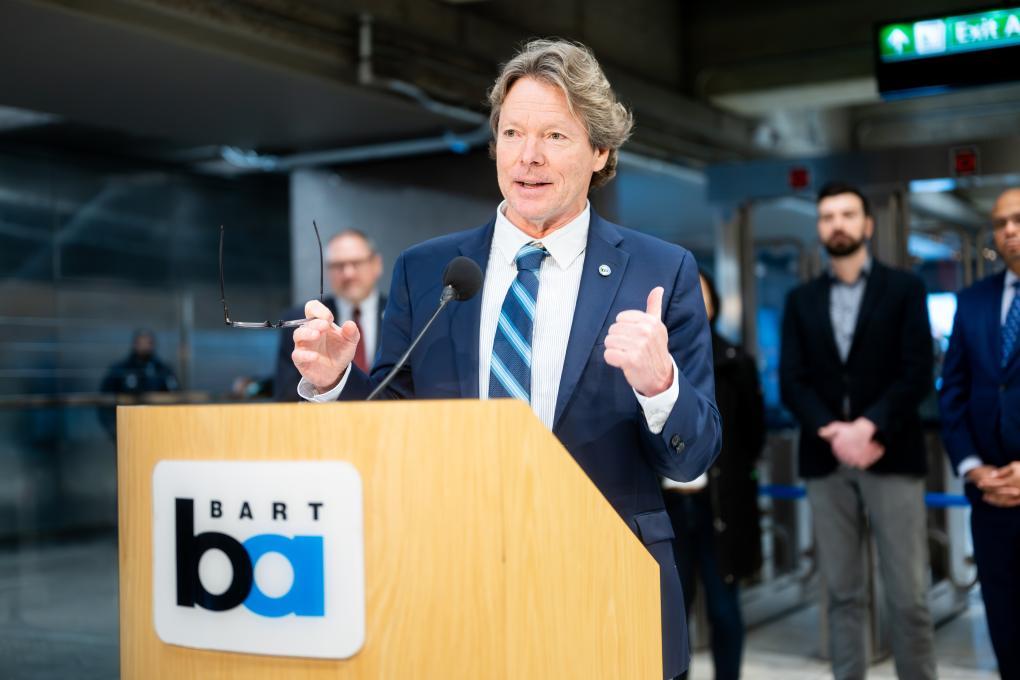
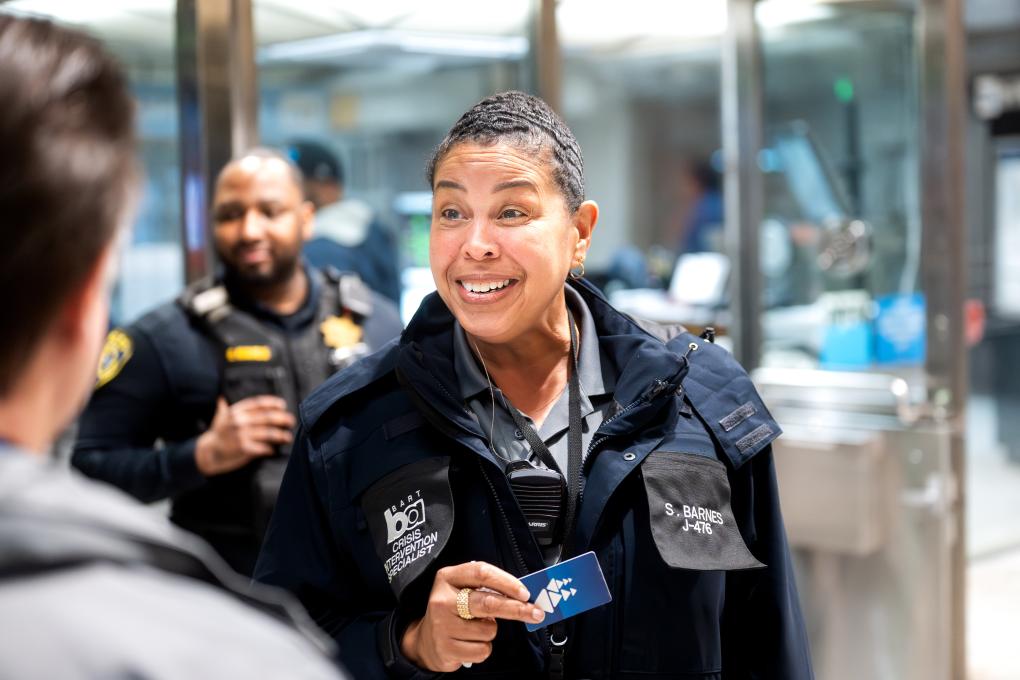
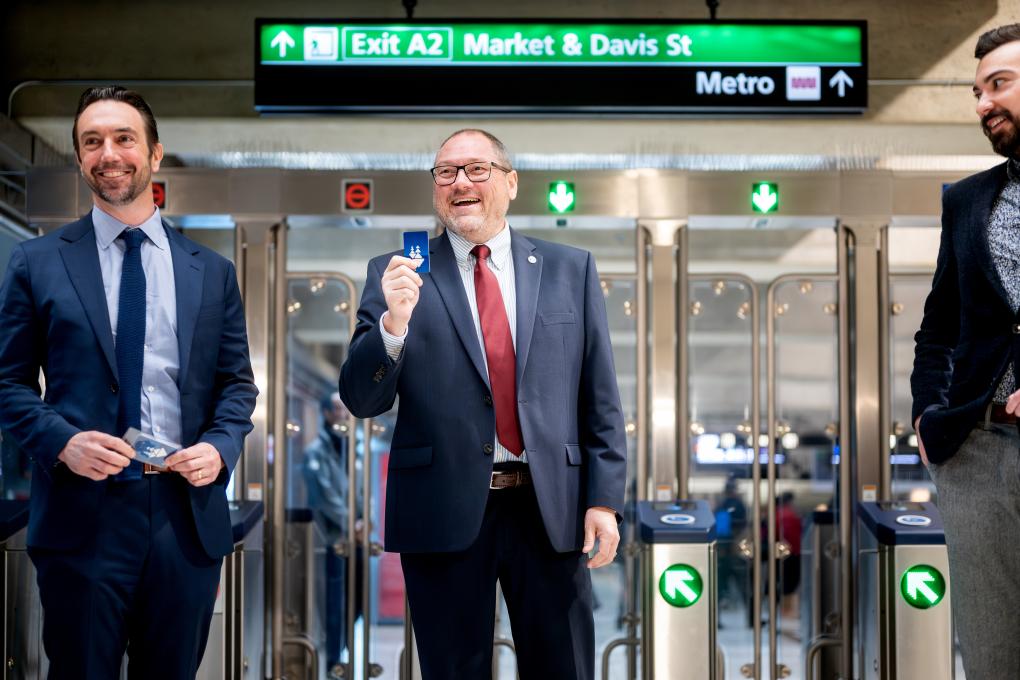
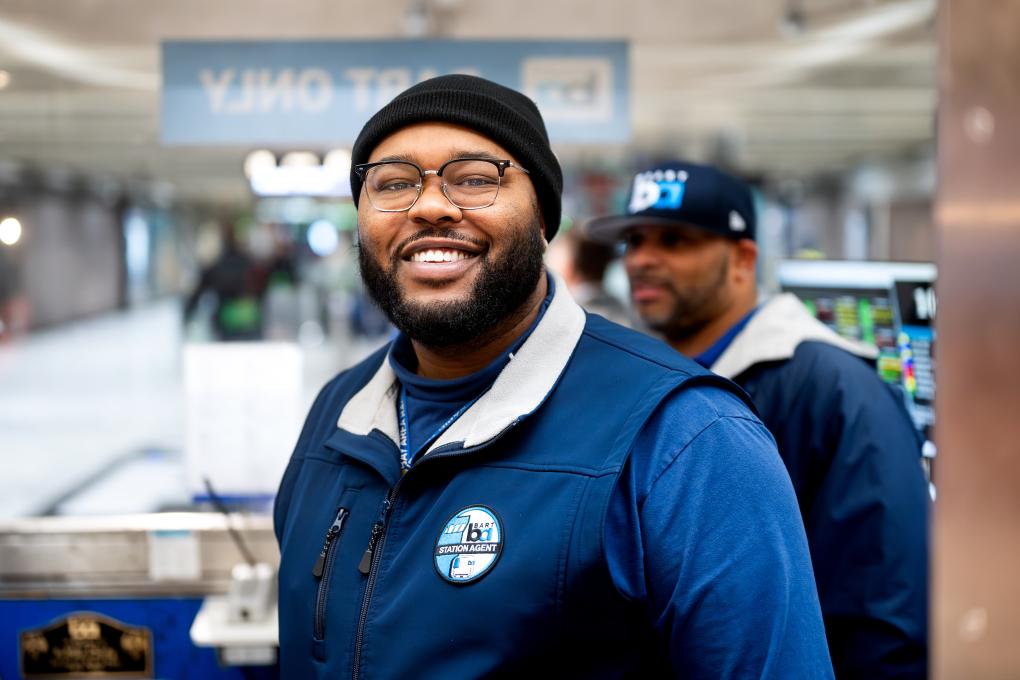
The new gates feature clear swing barriers with a one-of-a-kind door locking mechanism to deter fare evasion. The gates include advanced 3D sensors that can detect if someone is in a wheelchair or has a bike, stroller, or luggage with them, allowing for more time before the swing barrier closes. They feature LED lighting on the swing barriers and pathway through the gate to help visually impaired riders.
“Getting Next Generation Fare Gates installed in time for All Star Weekend is a huge win for riders,” said Bay Area Council Chief Operating Officer John Grubb. “These four stations are gateways welcoming thousands of visitors from around the globe to downtown San Francisco. The gates give BART a whole new appearance and they’re providing a big boost for rider safety.”
BART has successfully installed new gates at 18 of its 50 stations. Full deployment systemwide will be completed by the end of 2025. Learn more about the project here. Riders can provide feedback about the new gates at bart.gov/comments.
August BART ridership keeps growing, bolstered by weekend events, Tap and Ride launch, and UC Berkeley BayPass rollout
BART ridership saw steady growth this summer with August ridership up 10% compared to a year ago, a reflection of the ongoing success of BART’s efforts to enhance safety, cleanliness, and customer experience, including the new fare payment system Tap and Ride.
Tuesday, August 26, was BART’s third-highest ridership day since 2020 at the time, with 210,818 exits. This record was soon bested in the first two weeks of September, which experienced BART’s first and second highest ridership days since 2020 (219,918 exits on September 10 and 213,313 exits on September 9).
Weekend ridership continues to trend upward with Saturdays in August seeing an 11% increase over a year ago and Sundays an 8.1% increase. These increases were bolstered by major events, including a three-day Dead & Company residency at Golden Gate Park, Outside Lands, and the Bay FC vs. Washington Spirit match that sold out Oracle Arena.
A big win for customers was the launch of Tap and Ride on August 20, which gives BART riders the ability to pay adult fares at BART fare gates using contactless-enabled debit or credit cards and mobile payment methods. Tap and Ride trips accounted for 6.5% of total BART trips after the payment system launched in late August. Weekend Tap and Ride usage was higher than weekdays as tourists and infrequent riders took advantage of this new feature. Twenty-four percent of entries at SFO Station were paid for using Tap and Ride after it launched.
Also in August, San Francisco city workers began returning to their downtown office and local schools returned to session. With the start of the fall semester at UC Berkeley in mid-August, Clipper BayPass ridership more than doubled from the previous August as the all-in-one transit pass rolled out to the entire Cal student body. In March, students approved a referendum that increases annual student fees to provide 50,000 undergraduates and graduate students with unlimited travel on Bay Area transit agencies for two years.
Additional ridership information is publicly available here.
BART offers special early service with limited stops for first ever visit by ESPN’s College GameDay to Cal
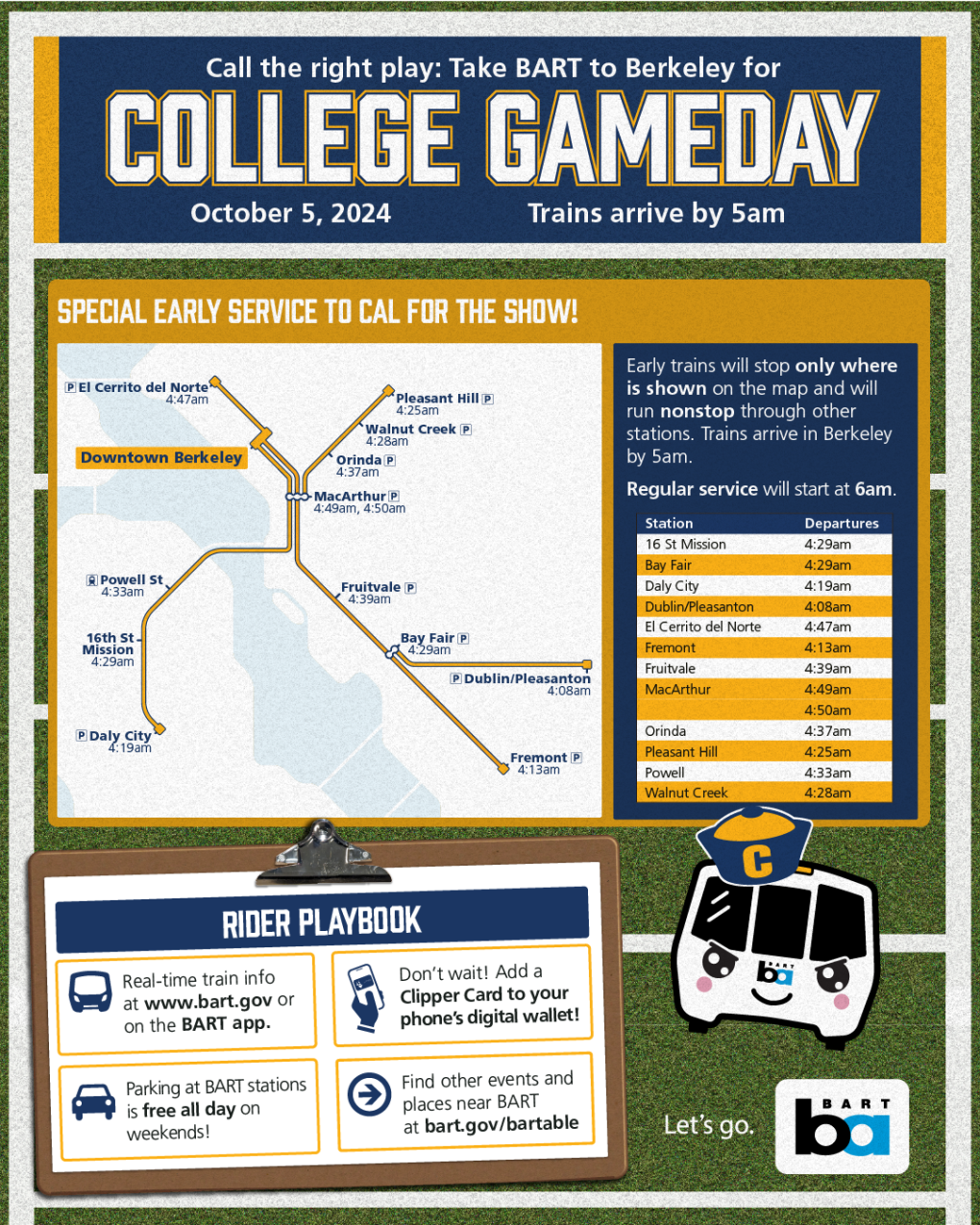
BART is launching an early morning service blitz to help Cal fans get to the first ever appearance of ESPN’s College GameDay pregame show in Berkeley this Saturday, October 5. BART will offer five trains with limited stops before our regular Saturday service begins at 6am. The special early service will get fans to Downtown Berkeley Station around 5am, before the start of the pregame show.
The special early morning event trains will only serve the following stations: Daly City, 16th Street Mission, Powell, Pleasant Hill, Walnut Creek, Orinda, Fremont, Dublin/Pleasanton, Bay Fair, Fruitvale, El Cerrito del Norte, and MacArthur. These 12 stations in addition to Downtown Berkeley will be the only ones opened for the special early service. Full details on our added early morning service are available in the Trip Planner at BART.gov and on the official BART app.
The added early morning trains will go out of service once they complete their trips. Riders cannot board a train at Downtown Berkeley before regular Saturday service begins at 6am.
The game against Miami kicks off at 7:30pm. BART will run longer 8-car trains on the Red and Orange lines as well as add several event trains to its normal service that night to accommodate the anticipated crowds.
Special Service Details
*A northbound Red Line train will leave Daly City at 4:19am and will make stops at 16th Street Mission, Powell, and MacArthur before arriving at Downtown Berkeley Station at 4:55am.
*A southbound Orange Line train will leave El Cerrito del Norte at 4:47am and arrive at Downtown Berkeley Station at 4:55am.
*A northbound Orange Line train will leave Fremont at 4:13am and will make stops at Bay Fair, Fruitvale, and MacArthur before arriving at Downtown Berkeley at 4:55am.
*A westbound Blue Line train will depart Dublin/Pleasanton at 4:08am and stop at Bay Fair at 4:25am where riders can then transfer to the northbound Orange Line train to Downtown Berkeley at 4:25am.
*A southbound Yellow Line train will depart Pleasant Hill at 4:25am and make stops at Walnut Creek and Orinda before arriving at MacArthur Station at 4:45am where riders can transfer to the northbound Orange Line train to Downtown Berkeley at 4:50am.
Tips
BART parking is free on Saturdays. People driving to BART to take the early trains should park at one of the stations being served. There is no BART parking available at 16th Street Mission and Powell stations.
Once on the platform, the added trains will be labelled as: “Limited Stops to Downtown Berkeley.”
Load your Clipper card in advance with enough funds for the round trip.
If you don’t have a Clipper card, add one for free ($3 savings) to your phone’s wallet in advance and use Google Pay or Apple Pay.
BART's annual Holiday Toy Drive collects more than 1,500 toys and $1,700 in gift card donations
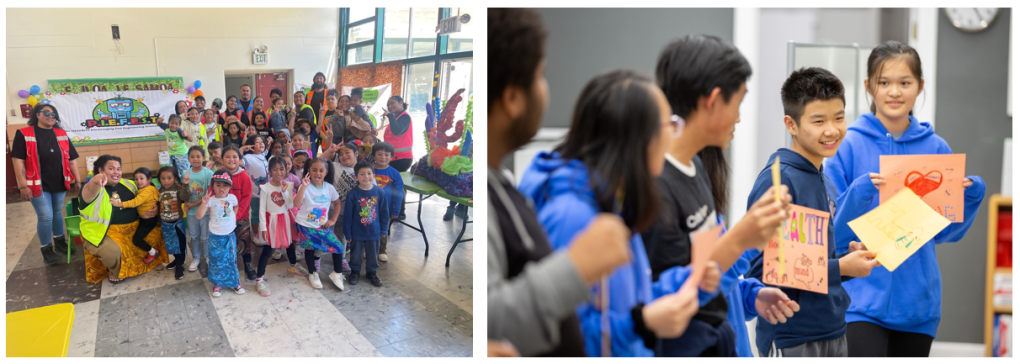
Left Image: A STEAM event with one of SCDC’s collaborative partners, "P.I.E.F.E.S.T." (Pacific Islanders Encouraging Fun, Engineering, Science & Technology). Right image: Participants from CYC’s Bayview Youth Advocates program work on an exercise of gratitude.
Update: The BART Holiday Toy Drive collected more than 1,500 toys and $1,700 in gift card donations this year. The toys were presented to the two recipient organizations, the Samoan Community Development Center of San Francisco (SCDC) and the Community Youth Center of San Francisco (CYC), during the December 21 meeting of the BART Board of Directors.
Each winter, BART gives back to the communities it serves with its annual Holiday Toy Drive, soliciting donations in the form of new, unwrapped toys and gift cards from employees. The donations are gifted to local organizations, selected by the BART Board President from within their district, in a joyful ceremony during the final BART Board meeting of each year.
Board President Janice Li selected two recipient organizations this year: the Samoan Community Development Center of San Francisco (SCDC) and the Community Youth Center of San Francisco (CYC).
“For immigrants like me, holiday time is community time. Growing up, it was important to me to have community spaces where I could speak my language, celebrate my culture, and be proud of my heritage,” Li said. “Organizations like CYC and SCDC are so critical to building welcoming and healthy communities"
She continued: “Both of these organizations have humble beginnings and have always been rooted in supporting youth and families in the community. I love that they believe in and know how to do transformational work, particularly for AAPI communities in the southeastern neighborhoods of San Francisco, where there are fewer resources and services available.”
BART’s Office of External Affairs and BART Police sponsor the drive each year. In 2022, BART collected more than 750 toys and $500 in gift cards for Building Opportunities for Self-Sufficiency.
“The Holiday Toy Drive is the highlight of the season for many BART employees. We are gratified to spread joy and cheer to local children and their families, many of whom rely on our system to get to school, to work, to appointments, and to gatherings with their families during the holidays,” said Rodd Lee, Assistant General Manager of External Affairs at BART. “It is a special honor to work with historic organizations like SCDC and CYC, who have long been committed to making the Bay Area a better place for our youth.”
SCDC and CYC support San Francisco youth with an incredible array of services, including afterschool programs, summer camps, mentorship programs, mental and physical health services, and enrichment activities. CYC was founded in San Francisco Chinatown in 1970 and serves youth across the city, aiming to provide them a sense of belonging as well as essential tools to succeed at school and in life. SCDC is located in the Visitacion Valley neighborhood of San Francisco, where it has worked for more than three decades to improve the quality of life for Samoans and Pacific Islanders in the Bay Area. It is the only funded organization in San Francisco that is devoted to supporting these populations.
Every single one of Treanna Noa’s seven children, ranging in ages from five to 21, has participated in SCDC’s programs.
“SCDC has opened so many doors for us. I don’t know where we would be without the center,” Noa said.
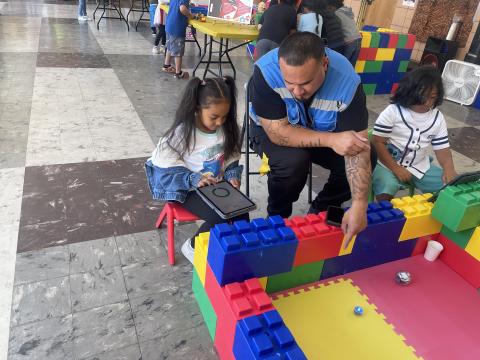
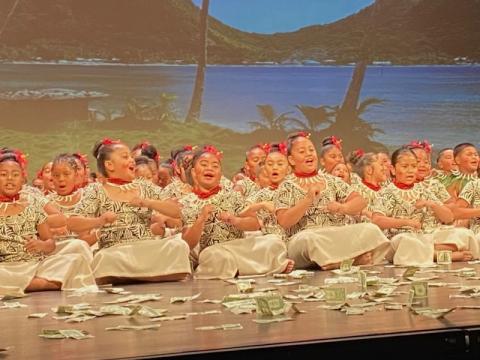
Top image: A STEAM event with one of SCDC’s collaborative partners, "P.I.E.F.E.S.T." (Pacific Islanders Encouraging Fun, Engineering, Science & Technology). Bottom image: A snapshot of SCDC’s PIYA Summer Celebration 2023.
SCDC “picks up where my kids’ schools are lacking,” she said. The children’s schools don’t have STEAM programs, for example, but every Wednesday, SCDC brings in a STEAM facilitator to teach kids about science and technology after school. The facilitator is a member of the Pacific Islander community, Noa said, and therefore understands the unique challenges her children experience in school and at home.
“My kids aren’t as open as they could be with their schoolteachers. They think, oh, you wouldn’t understand what I’m talking about; I’m Samoan, and we do things a bit differently,” she said. “Having someone who looks like you and who can relate to you, it brings your guard down and you’re more open to receiving information.”
Noa said SCDC even picks her younger children up from school, and the center provides them with a safe, supportive space where they can finish their homework until Noa gets off work. She said if SCDC didn’t exist, she wouldn’t be able to afford childcare.
“They do so much for us, including things we didn’t even ask for,” she said, like hosting drive-through graduations for her children when they finished high school and kindergarten during the pandemic.
“They have made life so much easier for us,” she said.
Susan Tan’s son, Ben, began attending CYC's afterschool program when he was in middle school. She credits the organization with helping him become the person he is today.
Ben was a preteen when he and his mother immigrated to San Francisco from China. They didn’t know English very well and assimilating was difficult. Ben struggled in school, behaviorally and academically, and his mother recognized his struggles as “a cry for help.”
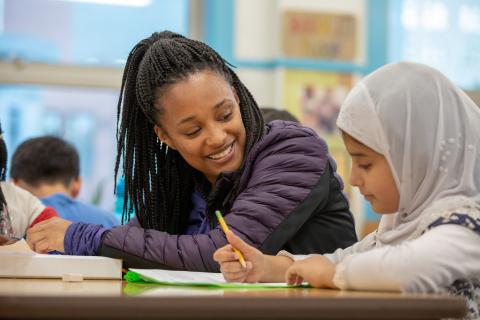
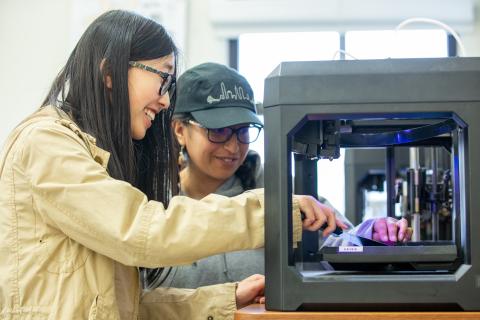
Top image: Erica Mitchell works with a student from Redding Elementary on academics at CYC’s afterschool program. Bottom image: Stefanie Almendares works with a student from Aptos Middle School during a 3D printing workshop as part of CYC’s STEM program.
“I reached out to everyone I knew to see if anyone could help, and CYC was one of the names that came up,” Tan said, speaking through a translator. She took a parenting class first, where she learned to be more patient and communicative, and then enrolled Ben in CYC's afterschool program. In the span of just two or three years, she said she saw him blossom and transform.
“It became a second home for him. I was working so much, and there was nowhere for him to go after school,” she said. At CYC, she knew Ben was safe.
Today, Ben is studying math and computer science at the University of California at Santa Cruz. Last summer while home from school, he participated in CYC’s transitional-age-youth program.
Administrators at CYC and SCDC said they are honored to be this year’s BART Holiday Toy Drive recipients. They emphasized the toys will immensely brighten their youth participants’ holidays. The organizations will receive the toy donations during the December 21 BART Board meeting at BART Headquarters.
“The majority of our youth come from low-income families, and they don’t necessarily have the means to give their kids many presents, if any presents. To provide families with something as simple as a toy can have a profound impact,” said Ben Mok, CYC Community Relations Manager.
Michelle Wu, a communications consultant for CYC, added: “One of the things we believe in the most is providing access to things, including providing access to moments of joy.” The toys from the drive will specifically go to youth at CYC’s Bayview program.
Lynn Peleseuma, Senior Program Specialist at SCDC, said her organization hosts a holiday celebration every winter before the kids start winter break. There’s caroling, cultural dancing, and festive food and drink. At the gathering, Peleseuma and her colleagues “want to make sure each and every kid has a toy to unwrap.”
“To get toys from BART, from folks in our community, is a blessing for us,” she said. “And it’s a blessing to our kids and their parents.”
If you are a member of the public interested in gifting a donation to SCDC or CYC, you can visit their websites here and here.
BART’s schedule will change on August 10, with big improvements and efficiencies that will reduce delays and crowding
BART’s schedule will change on August 10, 2026, with targeted improvements that will enhance reliability and reduce wait times for some riders. By making a change in how trains travel through Daly City Station and operating it as a center platform station, service will be improved throughout the system with more even headways, better transfers, and less train congestion.
With these improvements, some departure times will shift by a few minutes, and we encourage riders to check the schedule before August 10, 2026, to see if their trip is impacted. The new schedules are posted here as pdfs. BART's Trip Planner is updated with the changes when you input trips on and after August 10.
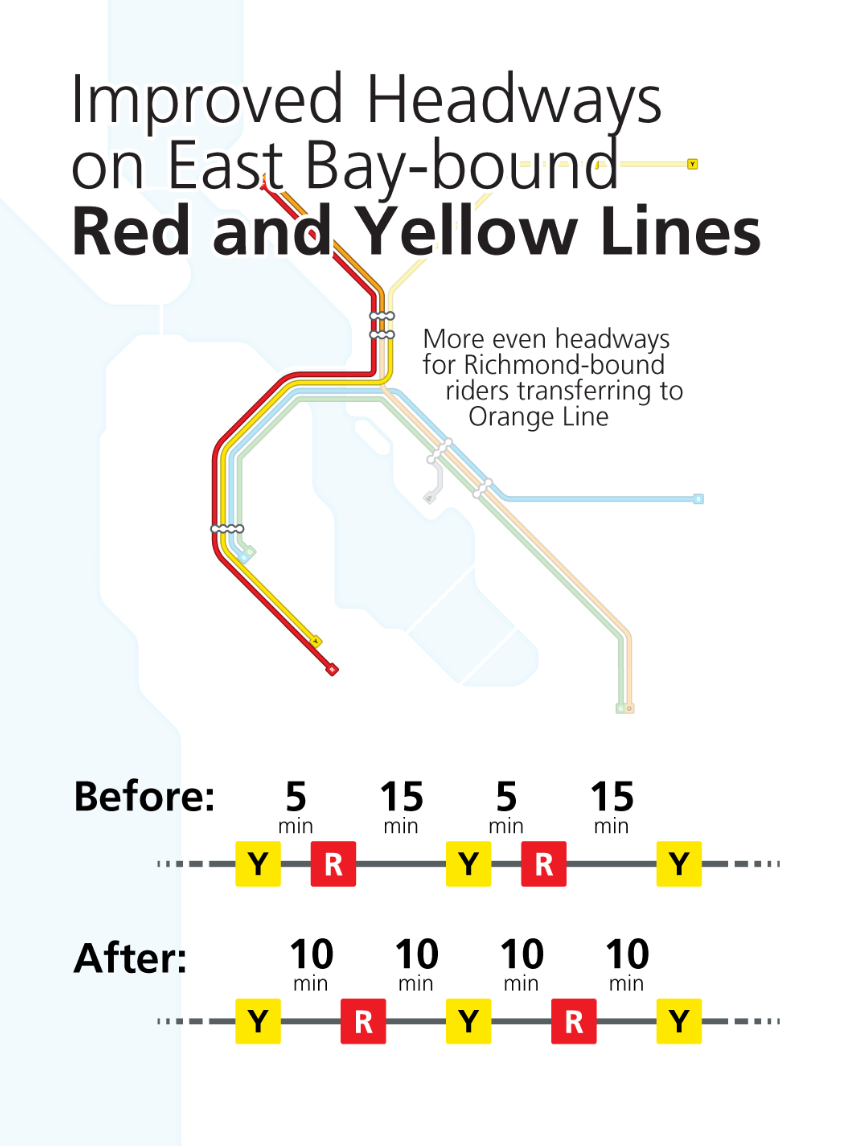
Even spacing for Berkeley, El Cerrito, and Richmond-bound riders
Trains will be more evenly spaced apart for Richmond-bound riders coming from San Francisco, which means wait times will be reduced and trains will have less crowding. Yellow Line and Red Line trains will be spaced 10 minutes apart instead of 5 and 15 minutes today. This gives riders the option to take a Yellow Line train and transfer at 19th Street/Oakland to a Richmond-bound Orange Line train or they can take the direct Red Line train. This will more evenly distribute riders in San Francisco and ease crowding.
Better spacing for Dublin and Berryessa-bound riders
Dublin- and Berryessa-bound riders will also have better spacing between Green and Blue line trains, from 3 and 17 minutes today to 8 and 12 minutes. This will reduce wait times on the platform and crowding on trains. Currently some riders are waiting 17 minutes in San Francisco between trains heading towards Bay Fair, leading to platform and train crowding. Now the wait time for these riders will be no more than 12 minutes.
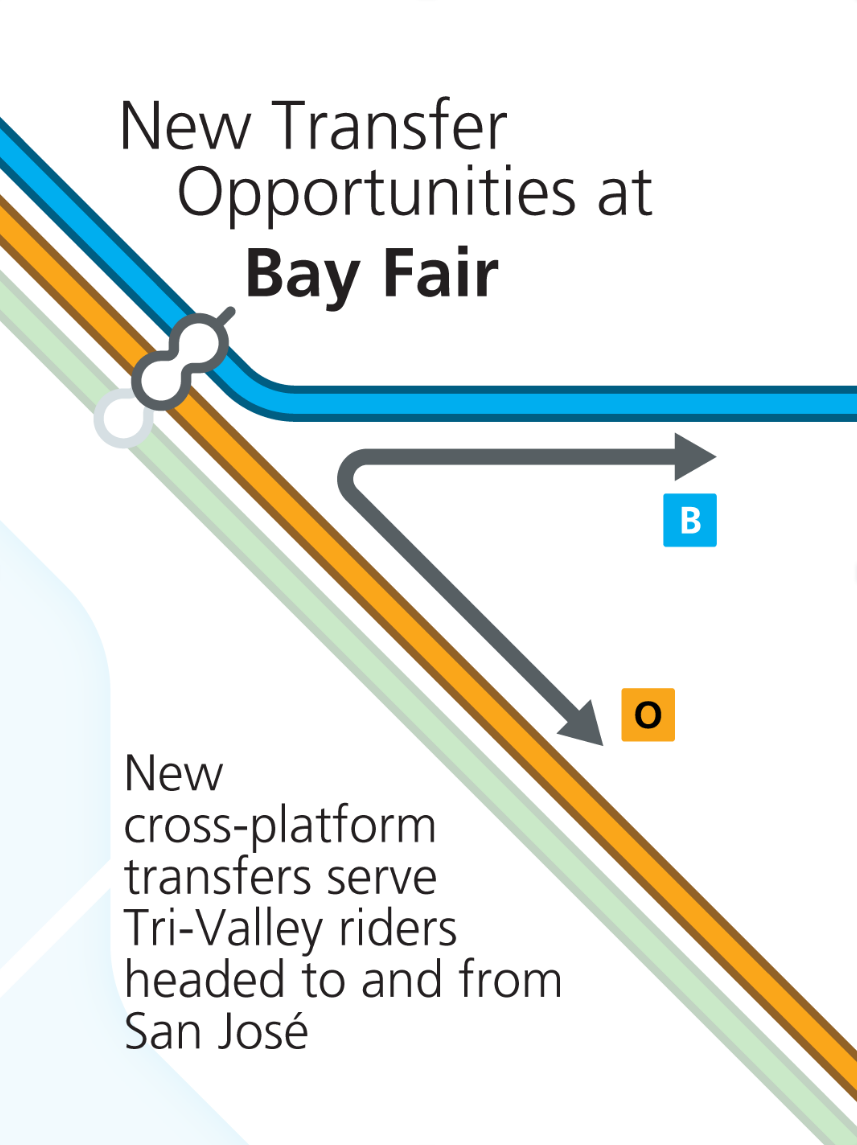
New and shorter transfers wait times
Riders who transfer will experience improvements.
Dublin to/from San Jose
There will be a new cross-platform transfer at Bay Fair for Dublin (Blue Line) to Berryessa (Orange Line) riders and the reverse trip. This improves service for riders commuting from Dublin and the Altamont Pass to San Jose. Currently the transfer is 19 minutes, now the trains will pull up together.
Antioch to/from Berkeley/El Cerrito/Richmond
Riders coming from Antioch (Yellow Line) transferring toward Richmond (Orange or Red Line) will save 17 minutes with a new four-minute transfer at MacArthur from Platform 4 to Platform 1.
BART to Antioch Transfer Platform
Yellow Line riders who transfer to and from the BART to Antioch service will experience better connections at the transfer platform in Pittsburg. Currently, regular Antioch-bound Yellow Line BART trains are often slightly delayed because they hold for an Orange Line train at 19th Street/Oakland. This is causing compounding delays further up the Yellow Line at the BART to Antioch transfer platform for riders connecting to and from a DMU train. This schedule change will now have the Orange Line train coming in sooner to meet the Yellow Line train improving on time performance and thus improving the timed connection at the transfer platform.
Reduced confusion at SFO Station
Red and Yellow line trains coming in and out of SFO Station will now be better spaced apart, reducing confusion over which train to board and which train will leave first. Currently, a Yellow Line train towards the city and the East Bay arrives first to the platform but holds longer due to a change in train operators. While a Red Line train coming from Millbrae arrives at the platform and then departs before the Yellow Line train following a brief dwell time. This pattern is frustrating to riders who have boarded the Yellow Line train thinking it will leave first. This schedule change will reduce the frequency in which both the Yellow and Red line trains are at the platform for boarding at the same time.
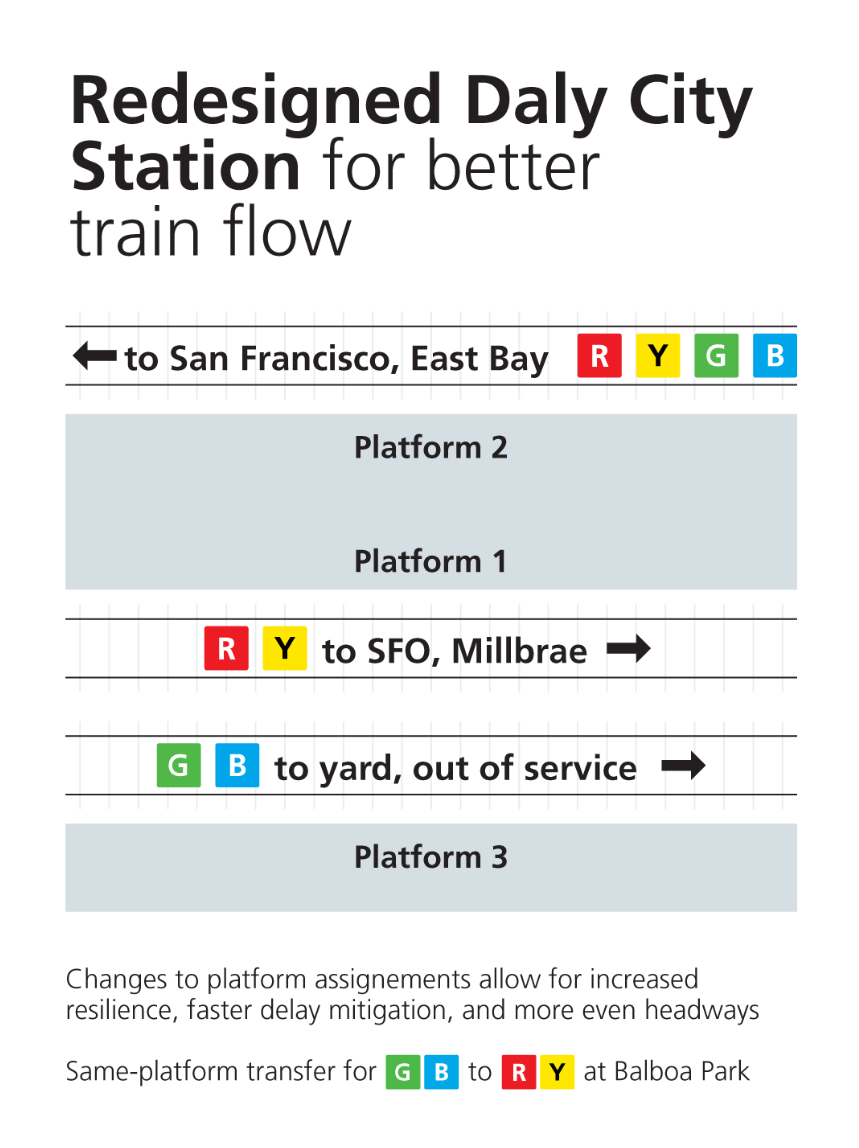
Changes at Daly City Station unlock benefits
The improvements being rolled out in the schedule change are cost neutral. They are realized due to creative train movement efficiencies development by BART’s Operations Planning Department. By changing how trains come in and out of the Daly City Station, the entire BART network will become more resilient because Day City Station’s current configuration, and the location and use of several track switches north of the platform, can be a choke point for train congestion and service volatility, causing ripple effects on the entire system.
The Daly City Station will now operate as a center platform station, like other stations in San Francisco, simplifying the rider experience. All San Francisco-bound trains will depart from a single platform. Platform 3 will now be a terminal for the Blue and Green lines, meaning it will be an exit only platform for riders getting off at Daly City and then those trains will head out of service to the nearby yard. Boarding trains will now only occur on Platforms 1 and 2 where Yellow and Red line trains will have a clear path for through service without being delayed by Blue and Green line trains being taking out of service to the yard.
Blue and Green line riders heading beyond Daly City, to the SFO Airport for example, should transfer to a Red or Yellow line SFO or Millbrae train at Balboa Park to ensure an easy transfer on the same platform. If they transfer at Daly City, it will require changing platforms.
Transfer to Caltrain at Millbrae
Some of the BART trains that currently line up with Caltrain at Millbrae will change. BART has coordinated with Caltrain on these changes. Connecting riders should review the new BART/Caltrain transfer timetable for trip planning to reduce transfer wait times.
Construction delays from Communications-Based Train Control
The schedule accommodates continued late evening construction between Daly City and Millbrae to replace BART’s aged train control system with a state-of-the art Communications Based Train Control System. Riders will continue to experience delays Sunday-Thursday through the area after 9pm.
Regional Coordination – The Big Sync
Bay Area transit agencies have been syncing schedules in a whole new way to make riding transit even faster and improve transfer reliability and timing. Transit agencies from across the region are rolling out new schedules in mid-August in coordination with each other and have now aligned the timing of schedule changes twice each year, once in summer (mid-August) and once in winter (mid-January).
Agencies met in February 2026 for the Big Sync to share planned changes and to look for opportunities to improve transfers. This gives agencies enough time to make changes to ensure buses and rail connect.
Advancing schedule change alignment is a key priority for Bay Area transit general managers who meet on a weekly basis to make transit more rider-focused and efficient.
Longer trains added July 20
On Monday, July 20, BART began to run some longer trains on the Red, Yellow, Blue and Green lines during peak commute hours with some shorter trains running during non-peak hours and on the Orange Line.
- For the Red Line, peak period trains run as 10-car trains (previously 8-and 6-cars) with 5-car trains during non-peak (previously 6-cars).
- For the Yellow Line, eight of the busiest morning trains and six of the busiest afternoon trains have increased to 10-cars during the peak periods (previously 9-cars).
- For the Green Line, two additional morning trains toward San Francisco are 8-cars in length (previously four trains ran as 8-cars and the rest were 6-cars).
- For the Blue Line, one additional afternoon Blue Line train toward the East Bay is 8-cars in length (previously four trains ran as 8-cars and the rest were 6-cars).
- For the Orange Line, four trains are running as 5-cars and the rest will remain 6-cars.
These longer trains will carry over to the August 10 schedule change.
*This article was posted on July 9, 2026
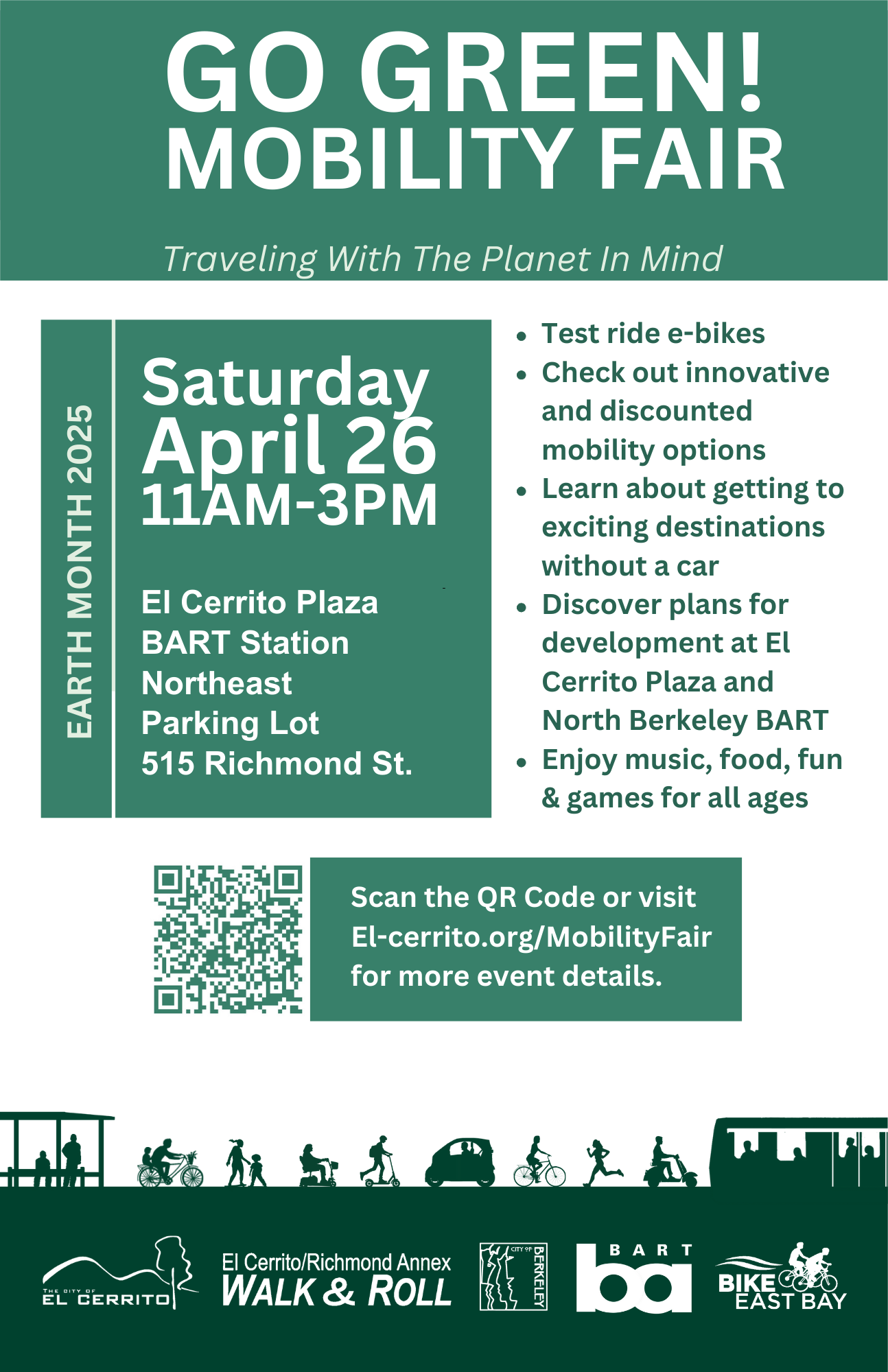
Go Green! Mobility Fair: Join BART on 4/26 for a fun family event at El Cerrito Plaza Station
We are taking over the parking lot at El Cerrito Plaza Station for a fun family event with music, food, fun, and games.
The Go Green! Mobility Fair will also focus on educating neighbors about the many different ways to get around without a car to reduce your carbon footprint, just in time for Earth Month. BART will soon transform the parking lot at El Cerrito Plaza into housing and potentially a library, so it is critical to start thinking about alternatives to car travel now.
At the Go Green! Mobility Fair you can:
- Discover plans to build housing at El Cerrito Plaza and North Berkeley BART
- Enjoy music, food, fun and games for all ages
- Test ride e-bikes
- Learn about discounts for environmentally friendly transportation options
Bike East Bay will be offering a free Family Cycling Workshop at the fair. Registration is required — sign up here!
The GO GREEN! Mobility fair is sponsored by the City of El Cerrito, ECRA Walk and Roll, City of Berkeley, Bay Area Rapid Transit (BART), and Bike East Bay. For more information about the GO GREEN! Mobility Fair, click here.
We need volunteers for this exciting event! If you are interested in volunteering, please sign up here.
When: Saturday, April 26, 11AM–3PM
Where: El Cerrito Plaza BART Northeast Parking Lot (515 Richmond St.)
Podcast: How BART’s Art Program uplifts community, culture, and the economy – it's not just throwing murals on walls
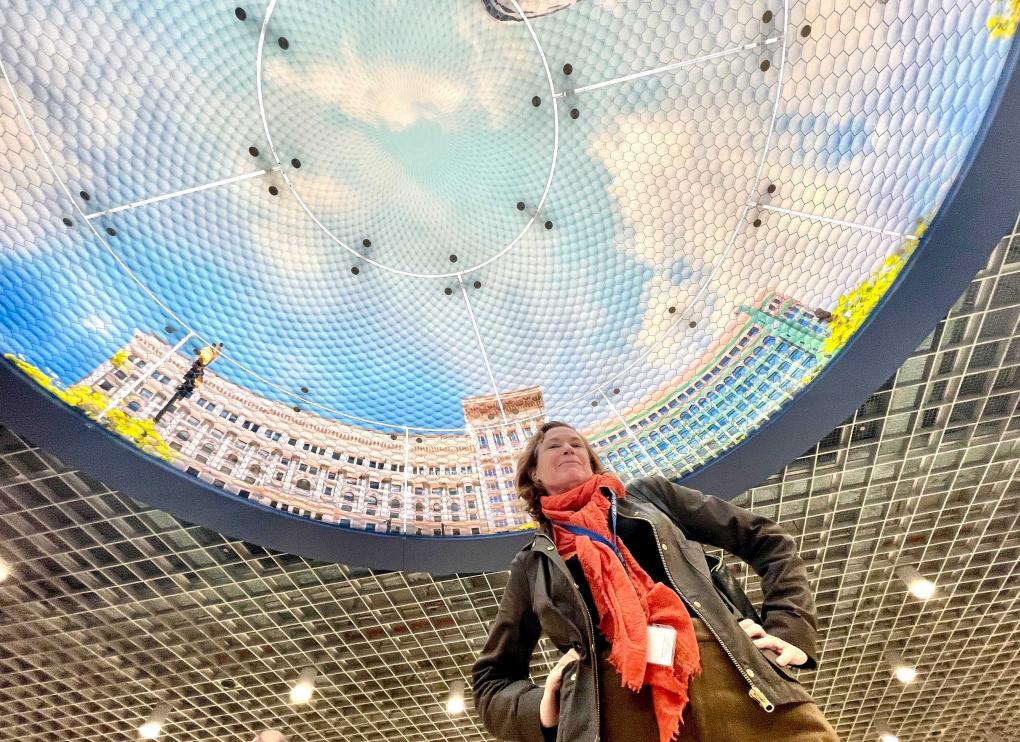
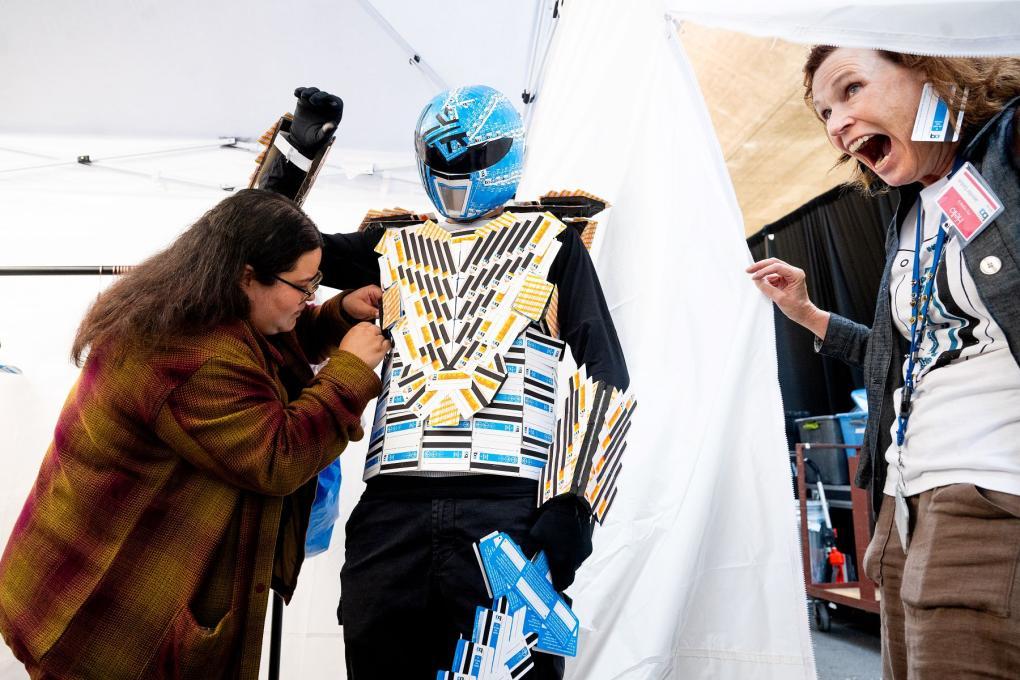
BART's innovative Art Program is making a huge difference in the transit experience of our riders. Since its inception in the 1960s, BART has prioritized bringing art and cultural experiences to stations. On our latest edition of “Hidden Tracks: Stories from BART,” BART Art Program Manager Jennifer Easton discusses the wide range of projects her one-woman department has undertaken – from murals and fashion shows to poetry contests and safety initiatives – and makes the case for the importance of weaving art and culture into the transit experience.
(TRANSCRIPT BELOW)
ROBERTSON: “Welcome to ‘Hidden Tracks: Stories from BART,’ I’m Michelle Robertson with BART Communications, and today I have the honor of being your host on this edition of Hidden Tracks. I'll be speaking with Jennifer Easton, BART's Art Program Manager. So, it's been a busy few years for Jennifer, who is the sole employee in the art program I'd like to point out. She has led a ton of projects that are hoping to make our stations more welcoming, safer, and let's face it, just nice places to be in while you're waiting for your train. In some ways, our stations are museums, not only for their architectural integrity, but also for many of the striking and historic artworks within and without. And we keep adding more. Jennifer, welcome to Hidden Track.
EASTON: Thank you, Michelle. I'm so happy to be here.
ROBERSTON: What prepared you for this role?
EASTON: I wish I could say I graduated nuclear scientist or something really tricky and try to dovetail from there. But I did start, my degree is in art history and museum studies, so, that's the road I went down. And I had been doing curatorial work for a number of years. I was a research assistant at LACMA (Los Angeles County Museum of Art) in Los Angeles and then I realized that all my colleagues were moving to very small towns and other places to kind of build their careers. And I was actually really interested in staying in Los Angeles at the time and I had early in college done some work around public art, really early on and kind of dovetailed back into that in Los Angeles and it just kind of went from there. It was a burgeoning field at the time and what was interesting to me and what's always been interesting is I'm a generalist in a lot of ways, right? I love just like the layers that public art is. I have to know construction. I have to know community engagement. I have to know artists. I have to know all these different cool things that I get to, so every day, I mean, maybe it's my ADHD, you know, it's like I get attached to 88 different projects.
I mean at a certain point I moved from Los Angeles to the Bay Area, and I went to tech and I was doing tech marketing, so I learned marketing when that kind of went downhill. I went into nonprofit management and I was doing PR and marketing and that and fundraising. So, I've learned all these crazy skills and then I was ultimately running the public art program for the City of San Jose, which is a pretty big program. Then this opened up and it was like my dream job, because I'd always been a BART girl and have loved transit, have used transit, and I always felt like the early BART program had art in it, but it never really advanced very far. Grace Crunican, the GM at the time, who had come from Seattle, had seen how positive that program was to the success of their transit system and brought it. We had always had somebody kind of babysitting art projects or doing some of the art projects, some of my colleagues when I started here had been doing like that San Francisco extension, there's art there, but it never really been focal. So, when they decided to do this, I was like, let me please let me and that's how I came to do it. I mean, it's really it is a field for people really interested in like a lot of different things, which is kind of exactly where my brain goes. So, it’s fun!
ROBERTSON: I want to talk about a project that's currently underway at Fruitvale Station that I think is indicative of a lot of the work that you do. You're working with BART's longtime community partner, the Unity Council, to create a street gallery at the station. That's what they're calling it and the Unity Council describes the project as a transformation of the station into a living canvas that reflects the rich culture and diversity of the Fruitvale community. Tell us more about that.
EASTON: So, I'll go back to Grace stating early one she wanted this art program and I think one of the things that she said to me early on and I will say our current GM, Robert Powers, is right on that page, too, is that our stations really need to be more reflective of our communities, and they need to be better partners with our communities, right? And it's not that just the person who drives in drops their car, comes back, drives away. But it's really like, how are we a better partner to our neighborhoods where we are? Because as we know, our history is not 100% grand in that, and I think we are still thinking about what does that look like? How can we be part of the, if it’s still people are still considering it healing or just like new direction, so how do we be part of that dialog? So, Unity Council, was a partner in the Oscar Grant mural and, that day, I think day two, I was called in and I was asked, can you work with Oscar Grant's family? They really want to do a mural at the Fruitvale Station to honor him. It's interesting because, then I was going out there and I had several people come up to me and, this is not too long after Oscar had been killed, and it's like, is this the station?
The people didn't really have a sense of the place. There were a lot of people visiting to kind of as part of their healing process, as part of their like learning about it. And so the notion of creating that mural became really important and I thought it was really, kudos to BART for stepping into that space, because I know this has happened in other transit agencies and I wouldn't say this always happens where they go in collaboration with the family. I mean, it's always a tense relationship, understandably. So, the Unity Council, because they are representatives of that neighborhood, very strong representatives of the Fruitvale, they came on as a partner to make sure that everybody felt comfortable. Well, not comfortable, but to make sure everybody was in dialog about, just that they were in support of the family, the mural being there at the station and helping to be in that dialog about how this could be very successful.
So, I really appreciated their voice at the table during that process. But as we were talking and as we were doing that project, the Unity Council and I were talking about these other columns, and they have new housing that they've been building there. So, really kind of start to make that feel more like their vision of the Fruitvale got put on hold. Everybody got busy and then post COVID a lot of neighborhoods have been, challenged, right? Safety, security, businesses closing, things like that and Fruitvale is one of our busiest stations. So, the conversation came back again, and the Unity Council said, we'll raise the money. I supported them on with some funds. But, as a percentage, hardly anything, just to get the project up and running and then they've hired already four amazing artists, including the artists who painted the Oscar Grant mural, Refa One, and we're painting the columns, and it just makes the station come alive because it came from a place of love for the community ,expression of the community and they see it just as like a gateway to all the other beauty that's in the Fruitvale. So, they're seeing the beauty of a place where other people might say, oh, this or that, but they're all in on making the Fruitvale a place for their community. So, it just that just felt like a win for BART as far as what Grace had laid out to me early on and what the community wants to see from BART as a partner.
ROBERSTON: This is a big question. Why does BART have an art program? And we've had one forever, like you said. Why did the founders make sure we had an art program, which was novel at the time? A lot of agencies didn't have art in the station. Why did they want us to have one and why do we need to continue funding this program, especially as we're in this fiscal crisis?
EASTON: It's a great and big question. The early stations were, their early thinking about the stations; if you look at them, the system was not designed by one architect. It was designed by many, many architects and I think the notion was to have that sense of uniqueness, that the system was not monolithic, that you had different experiences in different places.
I will say it was a little hodgepodge at first. A rumor I heard from the artist who's since passed away, who did the relief carvings in like Richmond and Lake Merritt and many other stations. He said, yeah, one of the guys came to this concrete conferences I was at in San Francisco and said, you need to work on our BART system? He said, okay.
ROBERTSON: A concrete conference?
EASTON: Right? However, there was an early arts committee with some very important art critics, curators, and artists on it who were, that's who were grabbing those early artists and looking at the diversity. I mean, they made sure they were from Contra Costa, Alameda, and San Francisco counties. And I think it was really, again, there was no plan to have art in all the stations, but they did want to have these moments, as we still say surprise and delight. They did want, art was really starting to be seen. Public art was starting to come into its own. It was still more that what is now called plop art. The grand sculpture by important artists in a plaza.
ROBERSTON: Did you say plop art?
EASTON: Drop it in one place to drop a big sculpture in a place. Plop it down.
ROBERSTON: I love that. Why don't love that? Because it's very thoughtless.
EASTON: Well, sometimes it I mean, there are some places, like the Alexander Calder in Chicago that that become iconic, but for the most part, yes, it typically is really about the artist and not the place. But integrative art was happening and if you look back to like Paris and New York and some of these old systems, you see beautiful tile work, so you see these things you appreciate. And so, it was as we've gone along, I think we're just getting kind of following that breadcrumb trail. But as we've been talking about hopefully, it's kind of starting to make sense of why it makes sense to keep it going.
At the end of the day, there are a lot of hard decisions that will have to be made relative to the fiscal cliff, right? Where does the money come from? I will say that even though my program was authorized at 2% of construction costs, it has never worked on that. We've never implemented that. We are finding, like the key projects where it work and finding like what's the budget we can work within to make an impact.
So, we've been, I mean we the royal we, has been actually doing that since the beginning and it's never changed, and I think there are ways to do this efficiently. There's ways to do it boldly and broadly. New York, L.A., they have good sized programs. They deliver lots of amazing projects. We have never been that. So, how do we blend all those things together to create a result, you know what I mean instead of being formulaic?
ROBERTSON: Safety. I want to push this subject a little more. One of my profound experiences with art and safety has been in 19th Street Station, which is my home station. You were heavily involved in this modernization project. There were so many different pieces to it. We opened up the concourse. We tore down all these pillars and walls and opened up the line of sight. So now when I enter the station, I can see directly across it. So, there's no one lurking in dark corners. We replace the lighting with LED lights, more sustainable but also brighter. I especially want to point out that there are these incredible light boxes. Is that what they're called? They're almost like murals, but they're illuminated light box murals made by three local artists, and they're put in the stairwells. So, when I'm walking down the stairs to go catch my train to San Francisco, there's this lit up thing and again, it's less creepy because sometimes stairwells can be creepy as a woman. It's not only bright and adding light to the space, but it's so much fun. There's the Saunders Daisy, it's a bright yellow daisy, and it just perks me up.
EASTON: Yeah, when we did that project, when it was planned it was before COVID and the platforms were so crowded, particularly at rush hours, and people weren't using the stairs and in a number of stations. So, this is all part of the station modernization program that has since kind of been been modified. I won't say put on hold, but it's been modified and how we go about it, and I'm glad we got 19th Street done and Powell Street because they were two critical stations.
A lot of the station we were having to look at how do we get extra stairwell capacity in there for emergency egress and things like that. I came upon it and it was like glass in stairwells. However, it has been fine. People are not using them as bathrooms and people are being I mean we were careful how we installed them, how we created them. There's room for the mops to move around bikes, whatever. The glass can withstand certain things. But people are using the stairwells more. They are willing to do it, like you say. How do you create a sense of better sense of comfort in a place through the artwork?
We also have light boxes on the concourse level with changeable art and another thing I will be working on shortly is changing that out with either a local artist or local arts organization, or potentially images from our fashion show, because they're so fun to just bring that out. So, it's another way to kind of create that special uniqueness to a place with artwork. Then the whole theme of the artwork is, of the station is really about Uptown Oakland as being an arts district and the city wanting that as a kind of a thing. First Fridays, music venues, all that sort of stuff as more people are moving into the new apartments, making this a place where people want to be where, where it's exciting and as we're dealing with, the backlash against COVID and just like new workforce, the work-live relationships, things like that. I think we're really, that station is just like people come in, they're like, wow, it really does feel like a place that I feel pretty darn good about moving through and being in, you know? And it doesn't mean it's like perfect. It's not. People still like are people. They're still peeling some of the letters off of my project. But I just have to figure that out. It doesn't mean, it hasn't stopped us from being human and there's humans on the street. We're humans. Humans do human stuff. But I think just having us all feel like we want to be in the space makes us feel like generally safer in the space, because we're all kind of part of it. We're all using it. We're all engaging in it on our own volition and because it feels like a better space.
ROBERTSON: Those light boxes I haven't seen, like graffiti on them. They didn't get broken, no one’s smashed. I think we have a culture in America of not necessarily respecting our public spaces and if you're going into this dark box of a station that looks crappy, it makes you want to defile things because it already looks bad. But when you have art there, I don't think people are prone to like, messing with stuff.
EASTON: Right, that was, which New York mayor, I think it was Giuliani, who did that with the New York subway. Right, and if a train got tagged, it came off the line and BART does that too. If a train gets tagged right, it gets brought off the line.
So, we want to put our best foot forward for folks. We have a really zero tolerance policy for graffiti. We try and get rid of it as fast as possible because we've brought on more cleaners. We're thinking about our spaces, making sure they look as good as we can. However, that's just part and parcel of it, right? So, if you start with a bar that's bringing light levels up, all that sort of stuff, that's that part of the magic.
ROBERTSON: What BART stations would you consider destinations?
EASTON: Well, I mean, now, Fruitvale. So, that's an interesting question because for me, it's both the physical station, but also where the station is. I also think of it as an extension of the neighborhood. So, I love the Fruitvale neighborhood. There's so many great restaurants and it's just fun. 16th and 24th, I think are really fun stations for different reasons. Do you want to talk about?
ROBERTSON: I want to talk about 16th and 24th Street very briefly. Jennifer, or actually customer services got an email from a woman saying her mother is this famous public artist who created the tilescapes is what we're calling them, mosaics in 16th and 24th Street. And you don’t necessarily notice them because I used to live there, and I just moved through the station, but there's, like, these beautiful, honestly, murals on the concourse and on the platform. They were created by this woman, Janet Bennett. I want to point out, Janet has never really been recognized. She was tying these, you know, right before the station open. She was an OG BART artist. Meanwhile, there's these William Mitchell concrete reliefs at the station that are in every must-see historic art in the Bay Area. So, we got in touch with Janet Bennett, who is in her 90s and living in New York City and we got to have this amazing conversation with her and bring her story to light. She was interviewed on the news after we spoke to her. And my favorite part of that interview, god I love Janet, we got to get in touch with her. She said, I'm open to work if you're hiring, let me know. Somebody reached out, so we'll have to follow up and see if she actually did that.
But that's just another great example of how communications and the art program work together, because there's stories to tell about these stations and about the art in these stations and about what, people consider Janet's work decoration, but it is so not that.
EASTON: No, I mean, it really definitely had a consciousness behind it in the design. What we also learned is she created the mosaics at LAX, which were also very critical to changing those long hallways to make them more….
ROBERTSON: These are in the tunnels. The famous tunnels at LAX, and it was misattributed.
EASTON: Same thing. Misattributed. Her boss took credit because she did not. She had to move on to another job after she designed them, and the same year I think she moved on to a different job after. No, she was here through the end, I would take that back. Remember because there's a picture of her with them being installed and she worked with Heath Tiles another woman-owned business, Bay Area business. So, that's a really interesting discussion about how many of our artists also work with local artisans, right? Or local fabricators. So again, they're often seeking out the local, the bespoke, the custom and I often will connect them to local fabricators instead of ones from out of the area because we want to try and keep these dollars local as well. So, another kind of layer of that economic dialog too.
ROBERTSON: So, I don't think most of us know what goes into getting a public art project done. I certainly don't. I'm like, oh, they're like throwing it up there and it's the thing and wow, that was fast. I recently sat on a selection panel for an artist for BART police's new headquarters, which are going to be right in the heart of downtown Oakland at the 20th Street exit of 19th Street Station, like in front of the Paramount, yes, the Paramount. I mixed that up with the Fox sometimes and across from this gorgeous patina building where the coffee shop Tierra Mia is currently located. The old I Magnin, the department store, Yes. It’s a police station. We opened this conversation talking about Oscar Grant and talking about policing and how we're re-envisioning safety, that's been such a key piece of this conversation and BART police headquarters is going to be right there and on this panel, we are having all these conversations about what it means for this police department to be headquartered right there in this historic neighborhood with the history it has, and how do we make it a part of this place? And, you know, make it not just this dark, bureaucratic building, but a beautiful contribution to the space where if something does happen to you, you feel welcome to walk in there. So, this panel was so eye opening, and it just takes so much expertise and work and collaboration. Walk us through the process of ushering a public art project, into existence through the lens of our new, forthcoming headquarters for BART police.
EASTON: No project is rote. I think that's the whole point of thinking about each project uniquely, in its place, in its community and its function. So, that's where you start is like, what's the basis? What's the building? What’s the built environment. In this case it is to your point, it's an existing building that started out as a bank. It's a very 1980s building. Let's be honest. It's not the world's most attractive building and in our conversations, in our initial conversations and this is what's so funny about my job as I sit next to the person who does environmental clearance for BART and he was doing environmental clearance on this building, and he so he had been doing outreach to some of what we would call, communities of interest. He reached out to the Uptown Downtown Association and they're like, it was a Kaiser building up until recently. We bought it, the building from Kaiser. Their concern was the street presence of the building. When we were in conversation with the police department early on in the project, is this like they don't have a ton of money for this building, right? So again, it's like, what can the art do? It was really critical that we cannot drop something that feels like Fort Knox in the middle of downtown Oakland and expect to be welcome.
ROBERTSON: But you also have to balance that. It is a police station.
EASTON: It is a police station, right. So you have to harden the building and do all those fun things.
ROBERTSON: But what role does art play, it has so many different things it does?
EASTON: “So that's why we want to bring artists on early and so that's one of the things we try and do really often. So, when we are kind of formulating what the project is, it’s like when can when does the artist come in? I have some projects, I will be honest that I've brought the artists in and say, great, we're going to bring them early. They’re sitting on the shelf as we speak because BART brings projects to a certain point and depending on the finances or whatever, it could go on the shelf for a while. I mean, I was here six years before my first project finished. You know, my first construction project finished.
ROBERTSON: What was that project?
EASTON: I think it was El Cerrito del Norte, the new mosaics at El Cerrito del Norte, maybe five, but I think the six and then came Powell and the 19th, right? But those all were in process. They had just started when I started here. So, six years later. But this one, it was really critical because it is a design build project. Progressive design, even more aggressive that the artist is part of the design team. So, her voice, Vicki Scurry, she's going to be in that process when they're considering hardening, when they're considering reinforcing the parking lot. So, how do we do it?
She came and spent, she's from Seattle, she came and spent a week here after she was selected, by our committee of police officers, community members, artists, you know, arts advisors, yourself, the project manager to really get a bunch of different voices in there, to really think about how do we make this something that reflects what I heard from the community as far as making this a place that doesn't feel, like doesn't add to a negative sense of this group, it adds to a positive sense of history? And everybody knows it has to function, there has to be a way in for the police to park their cars or whatever. There has to be secured parking. We understand that there's also a new cafe opening across the street, so I think there's an expectation. It's like, oh great, more employees here. So how do we build on that positive stuff.
The police have been really great about this. Like, no, we don't want to have shields and badges and pledges and that. We want it to reflect our values, but we want to be a good community partner and the police, you remember they were saying that at the meeting is that they want to be a place that the community actually feels like is part of their community.
ROBERTSON: All right. Jennifer, this was such a lovely conversation. Do you have any final thoughts?
EASTON: We didn't talk a lot about the collection and what it means to maintain a collection and it is like maintaining buildings, right? BART has, for better or worse, a lot of times been hands off with the artwork because there hasn't been somebody in my position to kind of shepherd that along. So, it's just like, how do we bring recognition internally as an organization? And then because I've had people interview me, it's like, oh, this collection's amazing, and why don't you do a map? Because I really need to get out there and get some stuff cleaned, you know what I mean? So, it's just like, as a party of one. I'm so fortunate I now have somebody who's assisting me for a period of time. She's at San Francisco State in a graduate program, and she's really excited about collection management.
So, she's helping me be that part of my brain to kind of get the collection into our inventory system and things like that. But it is a critical, part of doing that putting it out there is making sure it looks great for years to come and that it generationally kind of continues on, and then it starts to be part of those layers of the story, of the history of BART, and that we save it and talking about our historic preservation, now that we're 50 years old, we have to have some of those conversations. How are we part of that conversation? And just like continuing to respect our system and make the spaces as amazing as possible and have the best system possible,
ROBERTSON: Jennifer, we're so lucky to have at BART. I am so lucky. Talk about surprise and delight, you surprise and delight me every day. Thank you for joining us for Hidden Tracks: stories from BART. You can listen to the podcast on SoundCloud, iTunes, Google Play, and of course on our website at BART.gov/podcasts. Now get out there and check out some BART art, please.”
We want to hear from you! Tell us your favorite BART story and enter to win a $100 gift card
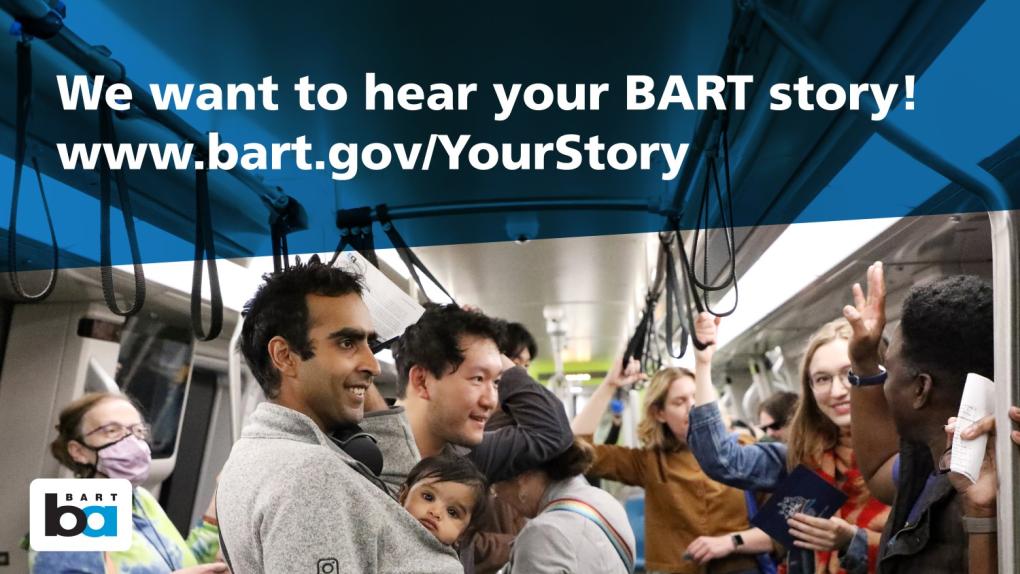
On Tuesday, Sept. 5, 2023, BART is launching a call for riders’ BART stories. We want to hear what BART means to you and gain insight into how we can continue to improve.
Do you have a favorite BART memory? Have you met a dear friend or life partner aboard a train? Did you take BART to a seminal life event? Have you been sitting on a unique idea to improve the system? We’d like to hear it.
To answer our questions, visit bart.gov/YourStory. We may contact you to learn more about your BART experience for future articles and communications (but only if you give us permission). You have the option to remain anonymous or share select information. Once you've answered the questions, you can enter a drawing to win one of three $100 e-gift cards. We’ll be sharing these stories in the coming months.
This call for stories is one aspect of our Role in the Region Study, which provides insight into emerging trends and outlines BART’s benefits to the Bay Area through illustrative data, personal narratives, and factsheets, culminating in a comprehensive final report. The final report is anticipated to be completed in Spring 2024. You can keep up to date with the project and explore factsheets at bart.gov/RoleintheRegion.
These materials highlight BART’s essential role in the region’s success as well as the compelling need for the continued funding and support of this essential transportation system. This study further develops the analyses and values illustrated in BART’s Transit Saves campaign and builds upon the findings from the 2016 Role in the Region Study.
This Transit Month, ride BART and tell us what it means to you!
Answer the questions and share your story at bart.gov/YourStory.