
Search Results
BART partners with Exploratorium to give Bay Area students free rides to the museum
BART is partnering with the Exploratorium to provide free transportation to the museum for students and teachers across the Bay Area.The partnership, which also provides free museum access,is made possible by a generous donation from Arthur Rock and Toni Rembe Rock. The pilot program in 2018 brought 23,000
BART management believes provision it did not agree to was inadvertently included in contract
BART management believes that a provision that it did not agree to was inadvertently included in the final labor package, which is scheduled to be considered by the BART Board next week. BART is currently costing out the impact of the provision. The BART Board will have to factor this item into its
Join the Oakland Ballers for BART Night on Wednesday, Aug. 14
Step up to the plate, BART x baseball fans! BART has teamed up with the Oakland Ballers for a memorable game on Wednesday, August 14, starting at 6:35pm, at Raimondi Park (1800 Wood St, Oakland). Buy your tickets here.
It's BART Night, Bay Area!
On this special evening, we want to celebrate the role public transportation plays in making sure fans can get out and watch their favorite teams play. BART and organizations like the Ballers are natural partners – BART helps you get there, and the Ballers give you a place to go. Take me out to the BART game!
Some of the activities planned for BART Night include:
- An appearance by the BARTmobile
- BART employees’ children serving as ball kids
- Special BART guests throwing out the first pitch and taking the first at-bat
- BART Police Honor Guard posting the colors
- BART Police Lieutenant Joshua Perez singing the National Anthem
- Lots of BART staff in the stands going wild for the Ballers!
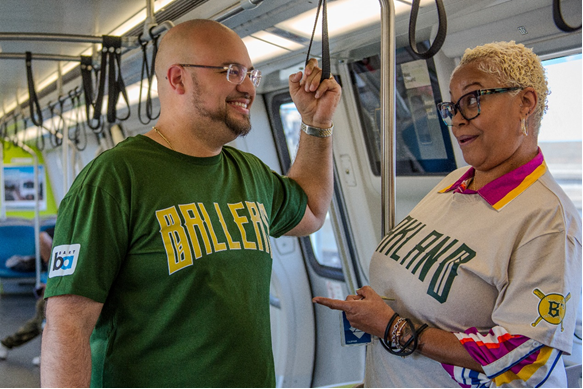
And let’s not forget the t-shirts. The Ballers, BART, and Oaklandish have collaborated to create two collectible “shirseys,” AKA a t-shirt mimicking the players’ jerseys. The tees, modeled above, feature the BART logo on the sleeve and the number 72 on the back, celebrating the year BART opened. Get yours on Railgoods.com.
The Oakland Ballers are a Pioneer League baseball team that plays at the historic Raimondi Park in West Oakland. Celebrating their inaugural season in 2024, the team is a BART partner and plays in uniforms with a BART patch on the right sleeve.
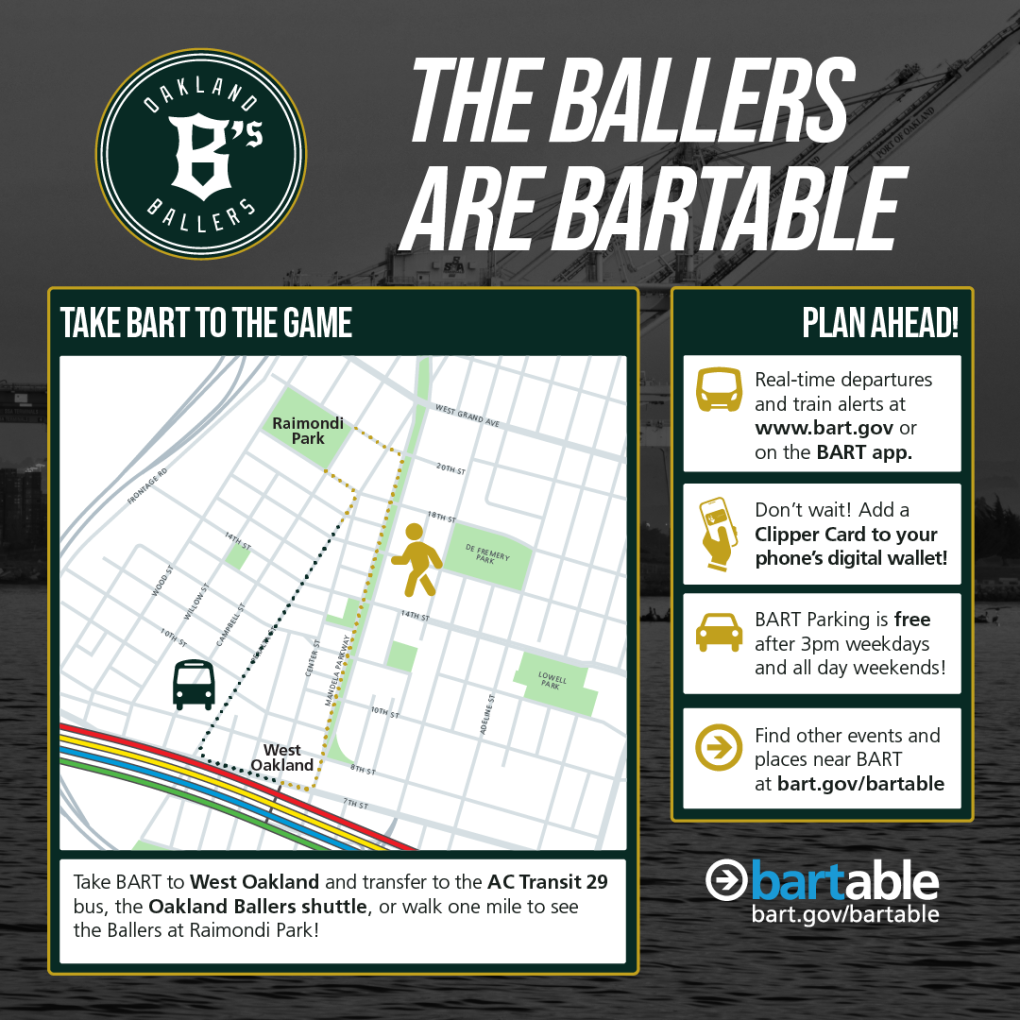
Get to the game by following the rider guide below and find more detailed directions here.
Center for Policing Equity and BART PD release findings from policing practices study
Today, the Center for Policing Equity (CPE) and the Bay Area Rapid Transit Police Department (BPD) released the findings of an analysis on the department’s policing practices and behaviors. Conducted as part of CPE’s National Justice Database (NJD) project, the report examined the incidences of vehicle stops
BART invites small business owners to its 2025 Small Business Summit
BART is pleased to announce it will host its 2025 Small Business Summit event on Monday, May 19th, 2025 on the first floor of its headquarters located at 2150 Webster St. in Oakland.
Attendees will have the opportunity to participate in BART’s new disparity study to help BART evaluate and refine its efforts to encourage small business participation, as well as meet BART staff from various departments to hear about upcoming contracts and purchasing needs, network with prime contractors, learn about BART’s equity program and certifications process and learn about resources available to small businesses from community partners.
BBC Research & Consulting (BBC) is conducting a disparity study for the Bay Area Rapid Transit (BART) to assess outcomes for person of color- and woman-owned businesses in BART's contracting and procurement. The study will help inform BART's efforts to encourage the participation of those businesses in BART's work. BBC, with BART's support, will be holding one in-person stakeholder engagement session to provide information about the study, answer questions about the study, and collect insights about business conditions in the Bay Area marketplace, which will be integrated into the disparity study.
Representatives from several departments and groups at BART will be available at the event to answer questions about upcoming contracts, programs and resources for small businesses. These include representatives from BART’s Infrastructure Delivery and Procurement departments along with staff from BART’s Office of Civil Rights and Small Business Support Services. May 19-23 is BART’s Small Business Week. Visit bart.gov/ocr for a list of scheduled events during the week.
Registration is preferred for BART’s 2025 Small Business Summit. Here are event details:
Date: Monday, May 19, 2025
Location: 2150 Webster Street, Oakland CA 94612 (1st floor)
Time: 1:00 PM-4:00 PM
Here is the event schedule:
- 12:30 -1:00 PM: Registration
- 1:00 - 1:30 PM: Opening Remarks
- 1:30 - 3:00 PM: New BART Disparity Study
- 3:00 – 4:00PM: Networking between BART Staff, Primes, Small Businesses and Community Partners
Please register at the link here!
25 Years of Pixar: Take BART to exhibit exploring history of pioneering animators
Bud Luckey, Woody, Toy Story, 1995. Mixed Media. ©Disney/Pixar By Xuan Lam BART Website Intern Pixar has a reputation for always upping the ante. A new exhibit at the Oakland Museum of California takes visitors on a tour of the Emeryville animation pioneer’s 25-year history, showing how it has created some of
Critical Asset Patrol team aims to boost BART Police presence in most critical areas
Train patrols just one aspect of multi-faceted efforts to ensure safety By Melissa Jordan BART Senior Web ProducerIn a series of ongoing improvements to the BART Police Department, one change of keen interest to the public has been an increased BART Police presence on trains.That effort received a huge boost
"We need to be able to move freely and independently”: BART intern Erik Huizar’s mission to increase accessibility for BART’s blind and low-vision riders
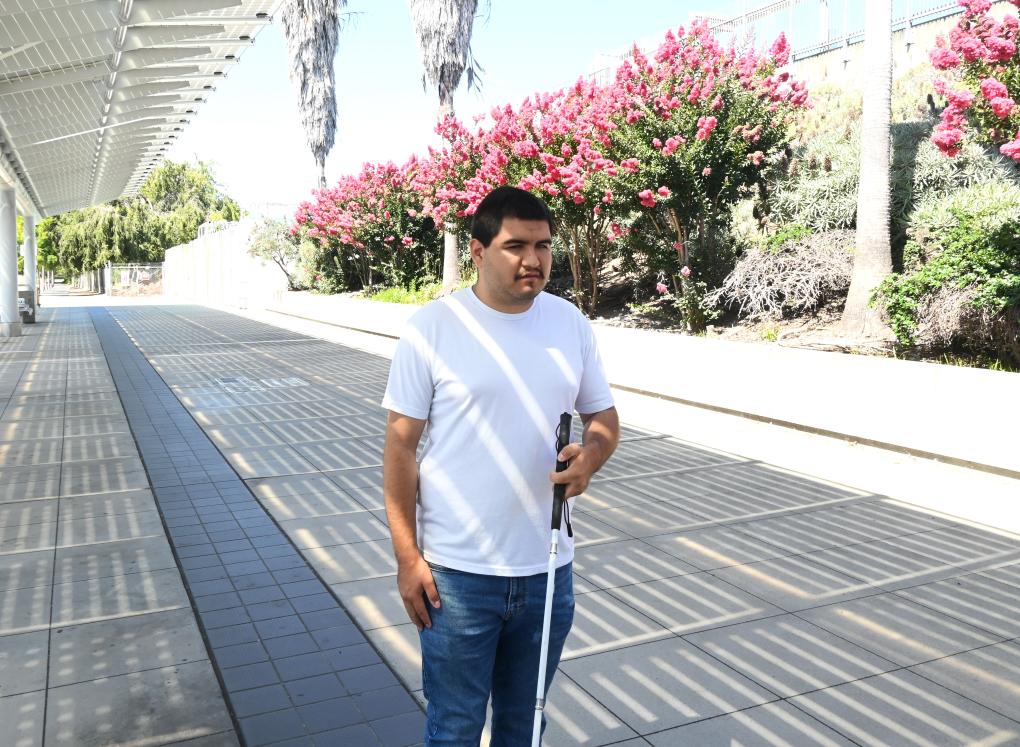
BART intern Erik Huizar poses for a portrait at Union City Station on Wednesday, Sept. 6, 2023.
Erik Huizar has a large task ahead of him. Over the coming months, the 19-year-old college student is visiting – well, not just visiting, but walking, memorizing, sensing, pondering – twenty stations around the BART system to build descriptive reports of their tactile guideways. Some of these reports have been uploaded to the BART Low Vision or Blind Accessible Services webpage and more will be uploaded in the coming months.
You might spot Huizar on one of his station visits, slowly and thoughtfully walking along one of these accessibility pathways with his white and red cane, tracing a pathway’s twists and turns, feeling its bumps and indentations, listening to the sound it makes when he taps its ridges, and noting down where it leads.
“I must look like such a weirdo,” he quipped on a recent information-gathering visit to Union City Station, as he walked back and forth over the pathways.
For blind and low-vision people like Huizar, tactile guideways are guide maps to station geography that enable them to independently travel from the bus intermodal area, into the station, through the accessible fare gates, then to the foot of the stairway to the platform. On the platform*, colored tactile strips denote the edge between the platforms and the trackway and mark where to board a train.
Tactile guideways often use a variety of cues for blind or low-vision riders to distinguish the pathways from the flooring around them. There is no national code or standard for these pathways, Huizar said, but typically, they are composed of materials and textures distinct from the station’s floor. Sometimes the pathways are yellow with truncated domes; other times, they may be gray and ridged; and sometimes, they are black with cones and bars.
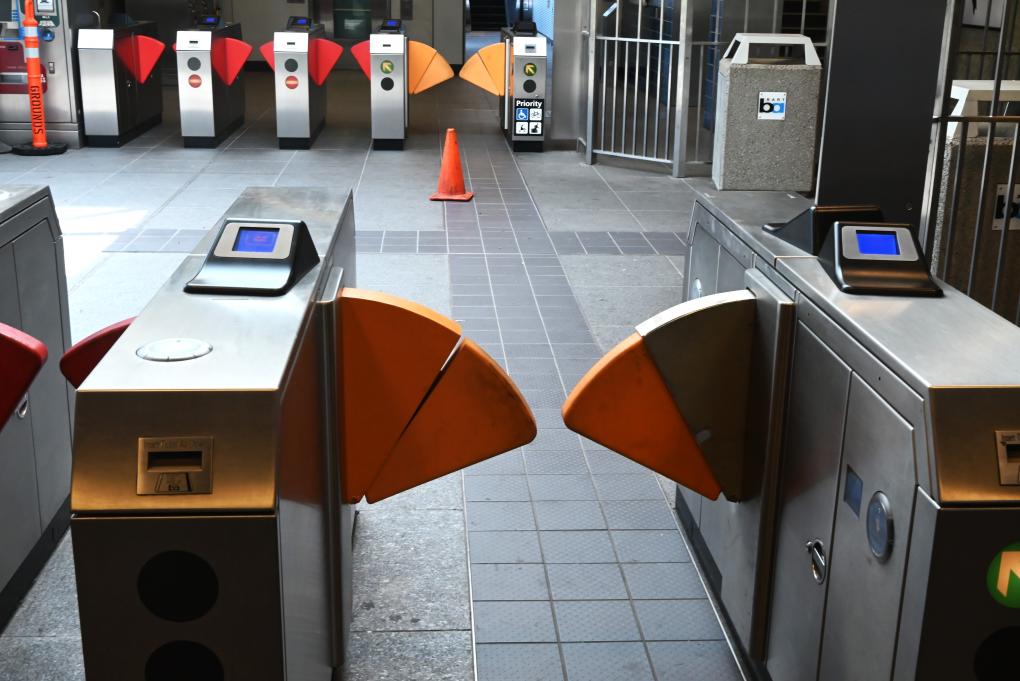
The tactile guideway passing through the accessible fare gate at Union City Station on Wednesday, Sept. 6, 2023.
“Basically, the architect who designs the station decides what the pathways’ patterns will be, and that’s why we have stations where either there’s no detectable path or the detectable path is more decorative than useful,” Huizar said. “Many of these stations were built a long time ago, and no one really knows how to build these pathways correctly, or at least how to standardize the way to do it.”
Bob Franklin, BART’s Director of Customer Access and Accessibility, noted that in a national accessibility working group, the forty-plus public transit agencies involved “all do something different for their pathways.”
Huizar hopes his reports contribute to this still-budding body of knowledge and motivate decisionmakers to fund and improve them.
“These pathways are not as good as they can be,” said Huizar. “And this is a national issue.”
Huizar’s tactile guideway reports are highly detailed and descriptive. A typical report reads something like this: “All the paths are made of yellow six-inch-wide plastic tiles. When there is an intersection or direction change in the path, there is a block of truncated domes to indicate this. In multiple places, there are spurs, which split from a path, this indicates a direction change, or the end of a section of path.” (This excerpt comes from Huizar’s Milpitas Station report.)
He expects this information to be valuable to blind and low-vision BART riders, enabling them to get around a station without having to ask for help – a sometimes necessary annoyance when you’re just trying to get somewhere, Huizar said.
Tactile guideways support riders’ independence and right to affordable mobility, he added. BART riders rely on the system to travel from place to place – to appointments, to work, to social engagements. Seven percent of BART riders report having a disability, a percentage of which who are not able to operate automobiles.
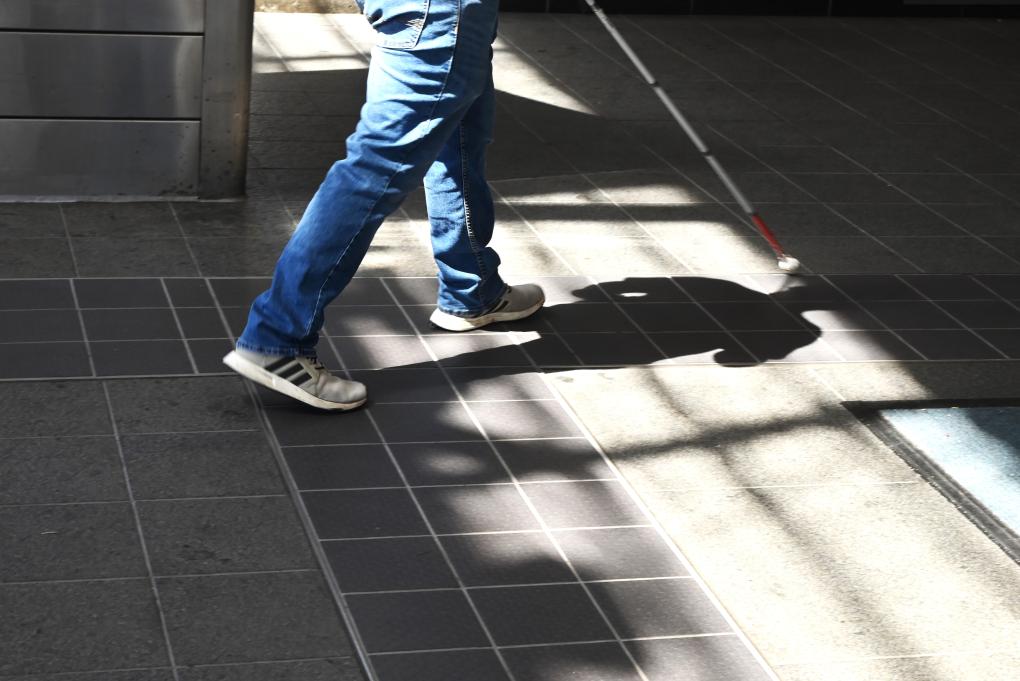
BART intern Erik Huizar studies the tactile guideway at Union City Station on Wednesday, Sept. 6, 2023.
"BART is my way to get out and be independent and self-reliant," said Sheri Albers, the Community Outreach Coordinator for The Lighthouse for the Blind, during a a Fleet of the Future safety orientation BART held this past winter for the blind and low-vision community. The orientation was followed by an online townhall BART hosted to gather input on upcoming projects and to hear directly from riders who are blind and low-vision about how it can improve accessibility services. BART plans to provide similar engagements for the deaf and hard-of-hearing and mobility-impaired communities.
"Information is powerful, and we want to ally the fear in our community of taking BART,” Albers said. “Once you eliminate the fear, the world is in your hands."
To capture the necessary information for his reports, Huizar often spends hours in a station, tracing its pathways and scribbling detailed notes. He then takes his findings and drafts his report, describing things like how many sections compose the station’s pathway system, where those sections lead, and what color and material they are made of.
BART offers additional station resources for members of the blind and low-vision community, including Braille/tactile signs at station entrances and exits, at public restrooms, at the start of stairways, and at emergency exits, elevators, and escalators. Every fare machine in BART stations has earphone jacks, so you can listen to its message privately – “You have $200 on your Clipper card,” it might say. For every visual announcement in a station, there is a corresponding audio announcement. On fare gates, riders can activate a series of beeps that provide an audio code, denoting information such as whether they have enough balance on their Clipper card or if they need to tap again. You can read about additional accessibility services for blind and low-vision riders here.
“It’s a public transportation system, and it’s a federal law that we’re accessible to everyone,” Franklin said. “When we design it that way, it benefits everyone. The more universally we design something, the better it will be.”
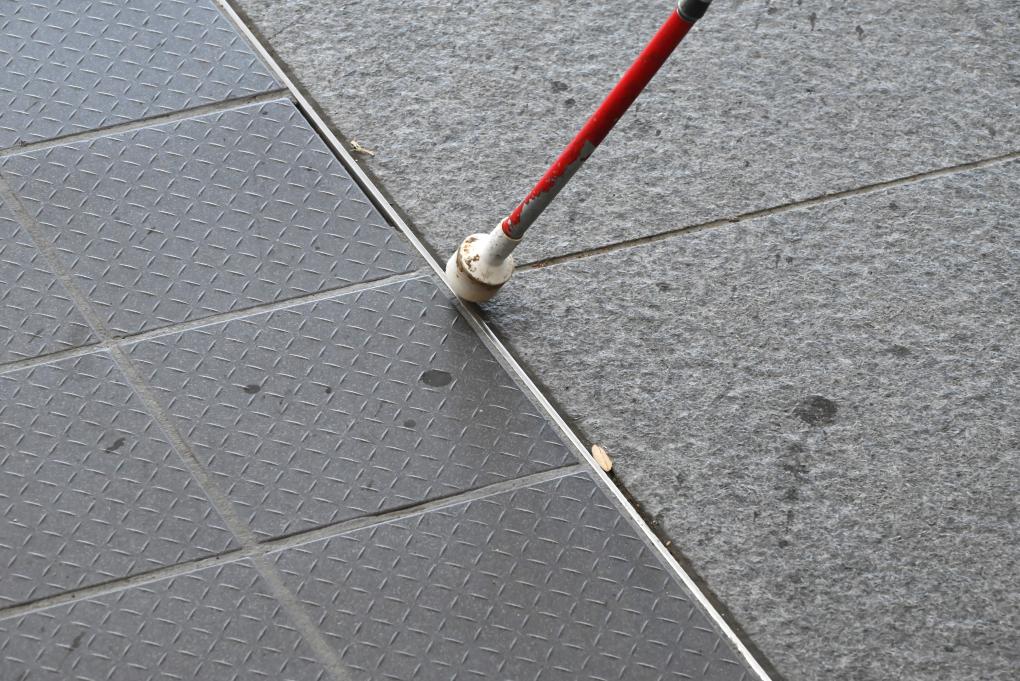
BART intern Erik Huizar’s cane studying the metal ridge of the tactile guideway at Union City Station on Wednesday, Sept. 6, 2023.
Huizar is passionate about public transportation because he uses it to get most places. He’s working on a sociology degree and hopes to continue his studies to earn a master’s degree in orientation and mobility.
“I definitely want to focus on public transportation because that’s my favorite thing,” he said.
Huizar regularly rides BART to explore new spots – mostly in search of hidden gems and great food – or to hike with his girlfriend or friends. On days he doesn’t have schoolwork or anything important to do, “I’ll just ride the train and be absolutely entertained that whole day.”
"There’s a little boy inside me screaming for joy every time I get on a train because it’s just a lot of fun,” he said.
Huizar also acknowledged how essential public transportation is to the fabric of a well-functioning, equitable society.
“People rely on these trains, and not just people like me who can’t get around without them, but sighted people, too, who use them to visit friends and family or to get to work,” he said. “Without buses, without trains, many people wouldn’t be able to do that.”
Huizar secured his BART internship in a somewhat unusual fashion – he emailed General Manager Bob Powers directly after watching him and fellow transit leaders speak during a press conference for the April Transit CEO Ride-a-Long (Huizar said he watched the video scrolling YouTube while procrastinating on homework.)
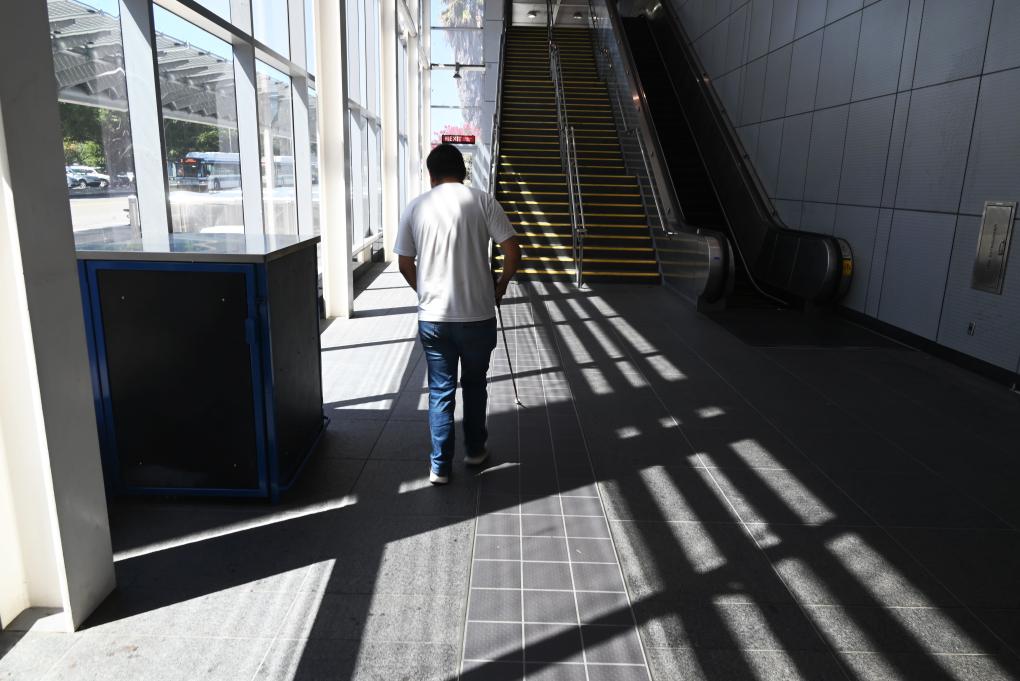
“A bunch of the CEOs went up and talked about accessibility, and providing quality transportation is something I’m passionate about,” he said. “I thought, you know, I’d really like to be involved in that.”
So, he decided to email Powers and ask for a conversation, “because, like, who else?” Huizar figured he wouldn’t respond, so he hit send on the message before “chickening out.”
Two weeks later, he received an email from Alaric Degrafinried, Assistant General Manager of Administration at BART. The gist of Degrafinried’s reply was: “When can you meet?”
After an initial phone call, Degrafinried invited Huizar to BART Headquarters. “I was really excited; it was crazy to go to the place where everything happens,” he said. From there, Degrafinried connected Huizar with Franklin for a possible internship.
“And now, I’m here,” Huizar said, tying a bow on his road-to-BART story. “And I’m uniquely suited for this because I’m someone who uses, who needs, these pathways to navigate these stations, which can sometimes be very daunting and confusing for people.”
“It would be great,” he concluded, “if people would put the effort in so people like me can find things on our own – without having to ask for help.”
* BART is currently in the process of updating station platform-edge warning strips, which will soon be all bright yellow tiles with truncated domes, eliminating the black tiles, which had denoted car boarding areas. To mark platform waiting areas for door openings for the 3-door train cars, BART will be installing stickers adjacent to the warning strip. The train car’s middle door will be a blue-edged sticker, to denote the dedicated space for those who use wheelchairs and other mobility devices. Additionally, at the center of the platform, there will be 3’ x 4’ yellow directional bar tiles extending from the platform edge tiles, to let blind and low vision riders know of the guaranteed boarding area, regardless of the length of the train. There is an exception to this rule, when the train is in “manual mode” and stops at the end of the platform.
Role in the Region: BART helps keep cars off the road
In July, BART released the Role in the Region Report, a comprehensive study of BART's impact on the Bay Area illustrated by new analyses, data visualizations, and powerful personal narratives. Over the coming weeks, we'll be sharing some of the key insights from the report in a series of Role in the Region articles here on bart.gov. Below is the first of these articles. We encourage you to read the full report - click here - and visit the project webpage at bart.gov/roleintheregion.
Today's post focuses on how BART keeps cars off the road, significantly reducing traffic congestion. See the full report for methodology.
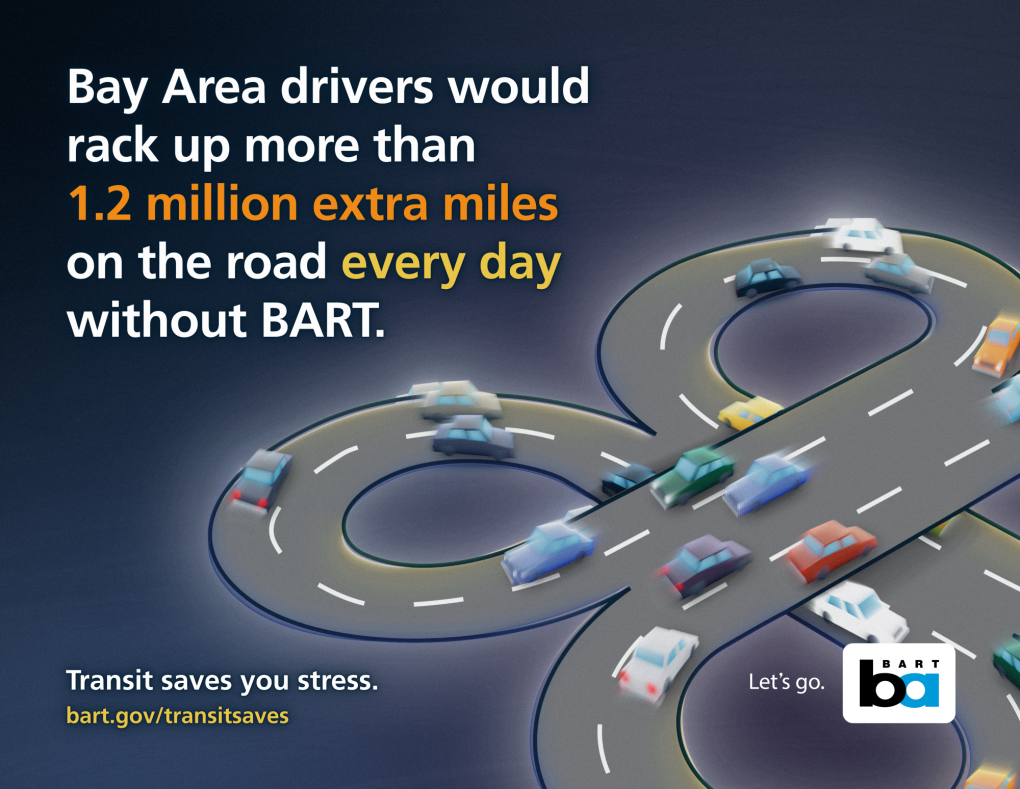
Spending hours delayed by traffic means less time spent with family and friends or for recreation, which degrades quality of life for everyone, regardless of whether they use transit. Time spent in congestion is also less productive time than working and shopping, which results in less economic activity across the region. Heavy congestion may deter people from taking trips. Since there are no viable alternatives aside from BART and driving between Eastern Contra Costa/Alameda counties and Inner East Bay/West Bay areas, increased congestion may lead to less regional mobility.
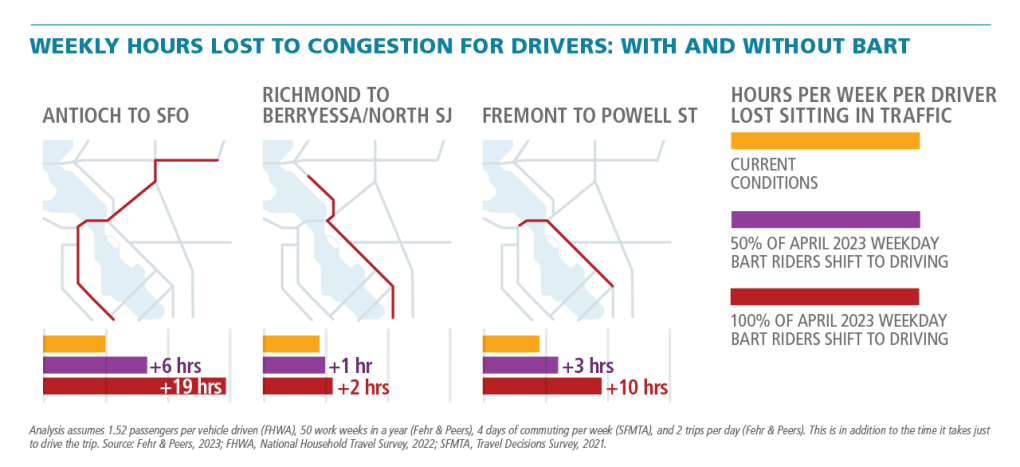
BART service even benefits residents that choose to drive, in part by significantly reducing their time lost to congestion and thereby improving quality of life for everyone who lives here, whether they use transit or not. As shown in the image above, if BART did not exist, for some trips drivers could experience upwards of 19 hours in congestion weekly, in addition to the time it would take without any traffic.
What BART Riders Say…
“When I worked, it was so nice to have downtime between work and being a busy mom. BART made it so when I got home, I was relaxed instead of stressed by traffic. It really was wonderful. Now it means I’m heading to fun!"
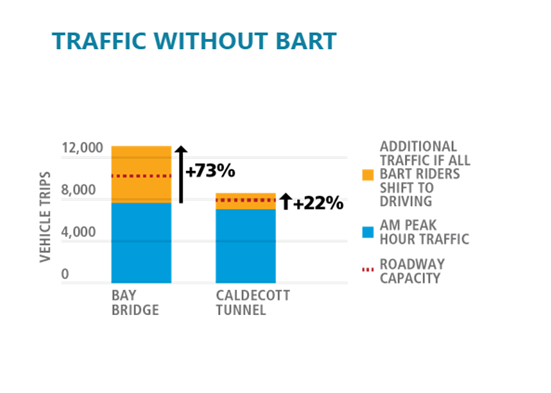
If BART ceased to exist and riders had to drive instead, traffic could increase by 73% on the Bay Bridge and 22% in the Caldecott Tunnel during morning peak commute hours, which would exceed roadway capacity. To support the increased traffic volume, up to three additional lanes would need to be added to the Bay Bridge and an additional lane in the Caldecott Tunnel.
What BART Riders Say…
“[Without BART,] we probably wouldn't go to as many activities where we'd be fighting traffic and trying to find parking.”
BART Connects
As part of the Role in the Region Report, BART solicited stories from riders to learn how our public transportation system impacts their lives. The stories are compiled at bart.gov/bartconnects.
Below, read an excerpt longtime rider Linda Healey and how BART allowed her time to relax between work and raising a child. Find the full story here.
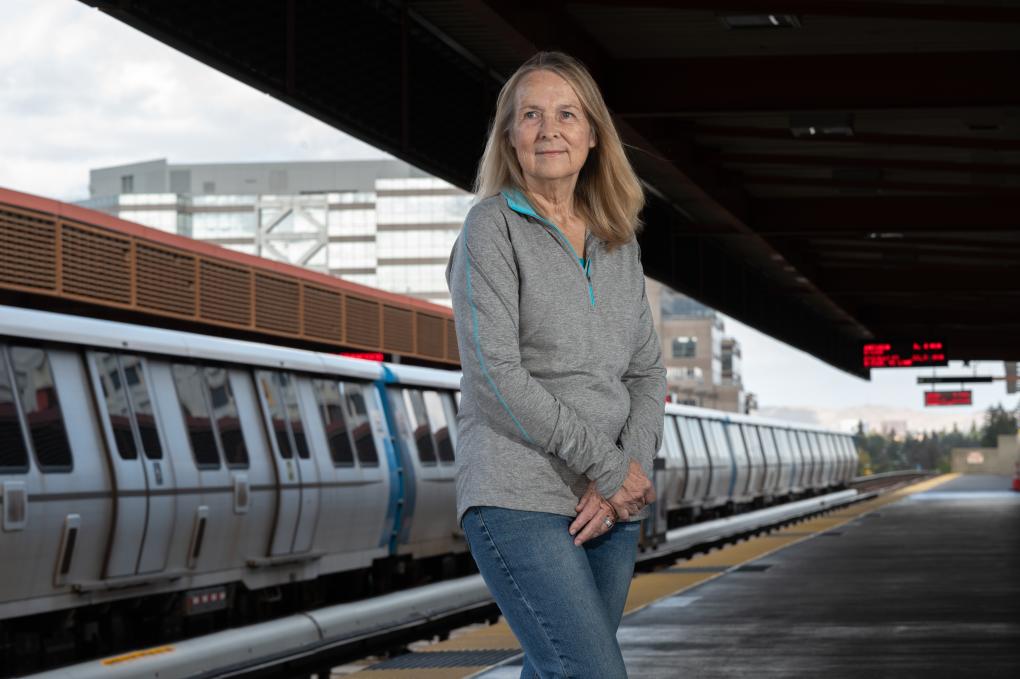
BART Connects: A working mom remembers when her only downtime each day was her BART ride
Linda Healey commuted to San Francisco from Walnut Creek for more than twenty years. When her son was young, those daily BART rides were her only downtime in the day. “BART got me home to my child quickly,” she said. “And it got me home unstressed because I could relax, rather than sit in traffic. That was a gift.” Today, Healey’s son – now in his thirties and living in Oakland – does the same commute his mother did for so many years, though he hops on the train a few stops up the line. He even works for the same company. “I passed the BART baton to him,” Healey said. “Hopefully one day, he’ll get to take it just for fun.”
Read the Story
Versatile but problem-plagued, the last 1990s-era C2 BART car is gone
The last-ever BART C2 car was decommissioned in August 2021 at Hayward Shop. Note the headlights on the end as well as the flat-shaped front. The C2s could serve as lead car with an operator cab or as a middle car, which ushered in a new era of efficiency in dispatch operations when they arrived in the 1990s