
Search Results
Solar energy from parking lot canopy system to help power Lafayette BART Station
A rendering of what the Lafayette canopies could look like A solar energy project is taking shape at the sun-drenched Lafayette BART Station -- the latest example of BART's commitment to sustainability. The BART system already has the lowest greenhouse gas emissions per passenger of any large transit system
Transit Oriented Development plans at BART stations get state boost
California Governor Gavin Newsom has announced new support for plans to develop climate-friendly homes near two East Bay BART stations. The Catalytic Infill Infrastructure Grant investments target plans at West Oakland and El Cerrito Plaza. The funding will go to affordable-housing developers as well as the cities of Oakland and El Cerrito. BART’s TOD program leverages outside housing and infrastructure funding to advance development at and around BART stations in support of the District’s ridership, affordability, and climate goals.
A $20 million grant to the City of El Cerrito will support transit-oriented development (TOD) by funding preparation for the affordable housing structured parking, bringing in site utilities, and enhancing an existing bike and pedestrian trail. Funding will also support landscaping and green space, a bike station, and bus shelters. BART hopes to bring as many as 800 housing units, a new public open space, and potentially a public library to El Cerrito Plaza.
The City of Oakland is getting $40 million to support site preparation work including clearing, grubbing, and erosion control. Money will also go towards utility improvements, resurfacing of roads, and various capital improvements. The TOD plan for West Oakland calls for 762 residential units including 240 that qualify as affordable housing. There will also be 382,000 square feet of office space and 75,000 square feet of retail on approximately five acres.
The funding comes out of $239 million announced by Governor Newsom to help launch housing projects across the state. The funding is meant to help underserved neighborhoods build greener, more walkable communities and allow Californians to live closer to work and other key amenities such as public transit.
BART has 13 completed TOD projects at its stations. Another four are under construction and seven approved projects are in the pipeline. Completed TOD projects at BART have created more than 3,200 housing units including 900 that are affordable.
Earth Week 2026: How BART helps keep the Bay clean
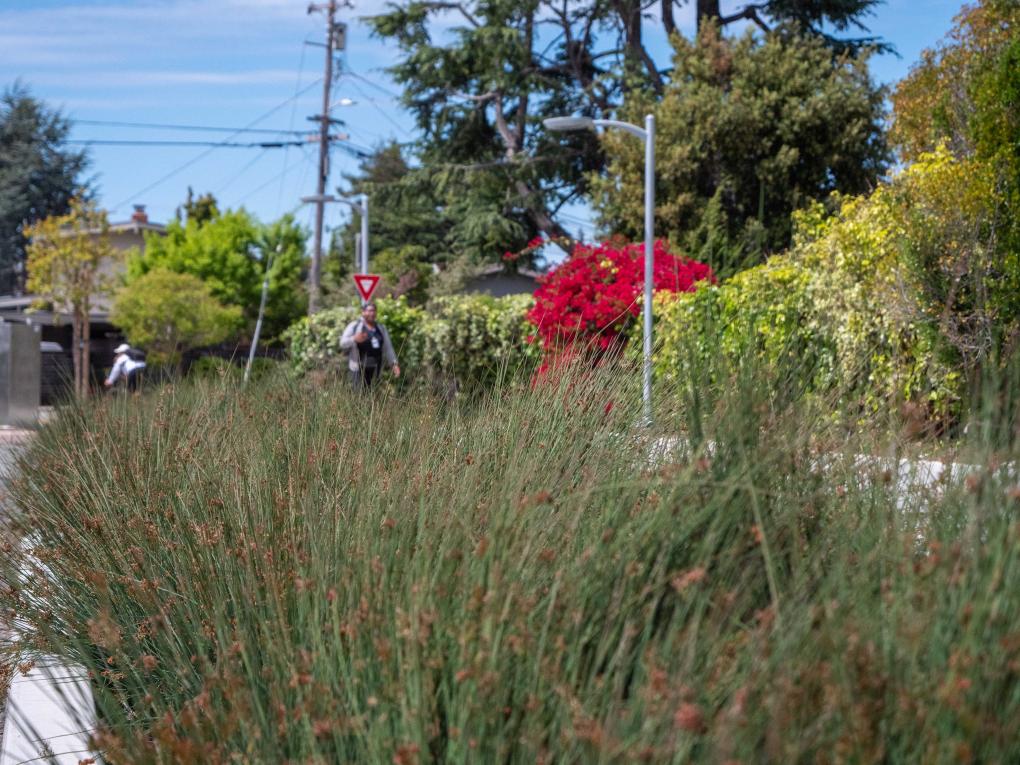
Juncus patens, a perennial herb native to California, is pictured in the bioretention area at North Berkeley Station.
California brown pelicans, salt marsh harvest mice, leopard sharks, flounder; a range of endangered species call the San Francisco Bay home. And like all of us, they depend on a habitat that is safe, clean, and resilient.
But the waterways these species rely on are increasingly at risk from climate change, development, and pollution, much of it originating from human activity.
At BART, sustainability is a core priority. Our stations aren’t just transit hubs; they are part of a larger ecosystem with the potential to improve environmental health across the Bay Area for people and wildlife alike.
One area of focus is stormwater. When rain falls on parking lots, roads, and plazas, it picks up pollutants like oil, trash, metals, and sediment, carrying them into local creeks and ultimately the Bay. This runoff can degrade water quality and trigger ripple effects throughout the ecosystem.
To help address this regional issue, BART has been installing bioretention areas, often called “rain gardens,” at stations across the system. You'll find them at Richmond, Warm Springs, Lafayette, El Cerrito del Norte, Concord, Millbrae, Balboa Park, San Bruno, and Antioch, among others.
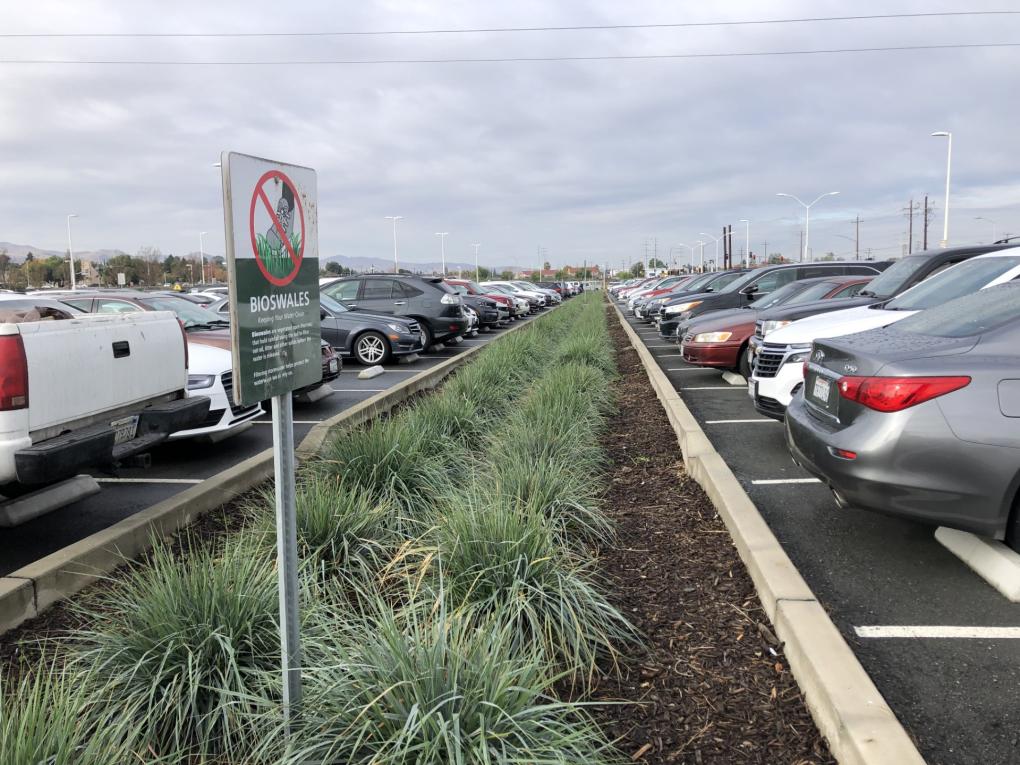
A bioretention planter at Antioch Station.
These landscaped areas are designed to slow, capture, and naturally filter stormwater before it enters waterways. Using layers of soil and climate-adapted plants, bioretention areas remove pollutants like harmful hydrocarbons, heavy metals, and debris.
They also deliver measurable benefits: bioretention systems can absorb significantly more stormwater than traditional landscaping and remove a large share of pollutants from runoff. By reducing the volume of water entering storm drains, they also help prevent flooding.
“Bioretention planters utilize natural processes to clean stormwater runoff. The plants work together with beneficial microorganisms in the soil to remove pollutants,” explained Cynthia Greenberg, BART Principal Landscape Architect.
These systems also help manage excess nutrients like phosphorus and nitrogen, which can fuel harmful algal blooms that deplete oxygen in the water and harm fish and other creatures.
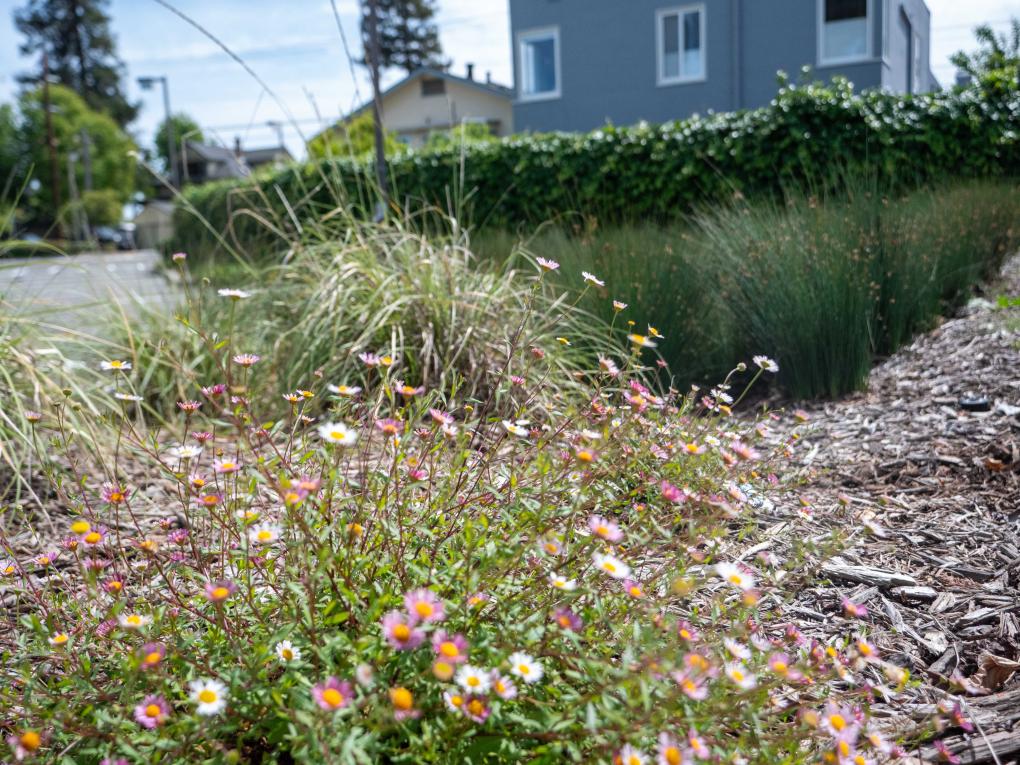
A bioretention planter at North Berkeley Station.
Most recently, new bioretention planters were added at North Berkeley Station as part of a broader effort to improve bicycle and pedestrian access. Runoff from the parking lot and nearby bike path is now directed into these planters, where it is filtered before flowing into Schoolhouse Creek and eventually the Bay near the Berkeley Marina.
The planters also support native plant species that enhance the station environment. Riders might spot California gray rush, a hard worker when it comes to filtering stormwater, as well as showy milkweed that attracts Monarch butterflies, and Douglas iris that supports pollinators like bees.
Beyond their environmental function, these green spaces create more welcoming, attractive station areas for riders and the surrounding community.
Next time you pass through one of these stations, take a moment to stop and smell the flowers and appreciate these landscapes that quietly help keep our beloved bay blue and beautiful.
What's in the North Berkeley planters?
| Scientific name | Common name |
| Muhlenbergia rigens | Deer grass |
| Juncus patens | California rush |
| Iris douglasiana | Douglis iris |
| Baccharis Pilularis 'Pigeon Point' | Dwarf coyote brush |
| Eriogonum fasciculatum | California buckwheat |
| Artemisia 'Powis Castle' | California sagebrush |
| Eriophyllum lanatum 'Siskiyou' | Common Wolly sunflower |
| Ceanothus griseus var. horizontalis 'Yankee Point' | Yankee Point caenothus |
| Erigeron karvinskianus | Santa Barbara daisy |
| Asclepias speciosa | Showy milkweed |
| Lagerstroemia indica 'Muskogee' | Muskogee crape myrtle |
What riders can do
- Put litter in its place: Dispose of trash into garbage and recycling receptacles provided by BART in our stations and parking lots.
- Use reusables: You can prevent litter by using reusable containers like travel mugs.
- Decline the printed receipt at BART ticket and parking machines if you can.
- Car maintenance: You may not be polluting but your car may be. If you drive to BART, please ensure your car isn’t leaking. Regular tune ups and leak inspections can prevent leaks or fix them if you have one.
- Car wash: The grime on your car that includes residue from gasoline, motor oil, and other chemicals can get washed off during a rainstorm if your car is parked in one of our outdoor lots. Help prevent this runoff by taking your car to a commercial or coin operated self-service car wash where all wash water is recycled and properly disposed of.
What BART is doing
- BART has installed storm drain markers to inform the public that what goes down that drain flows to the bay.
- BART cleans parking lots and plazas and landscape to remove trash and pollutants.
- BART has moved towards low-impact development (LID) as a standard practice, which is an approach to land development that works with nature to manage storm water as close to the source as possible.
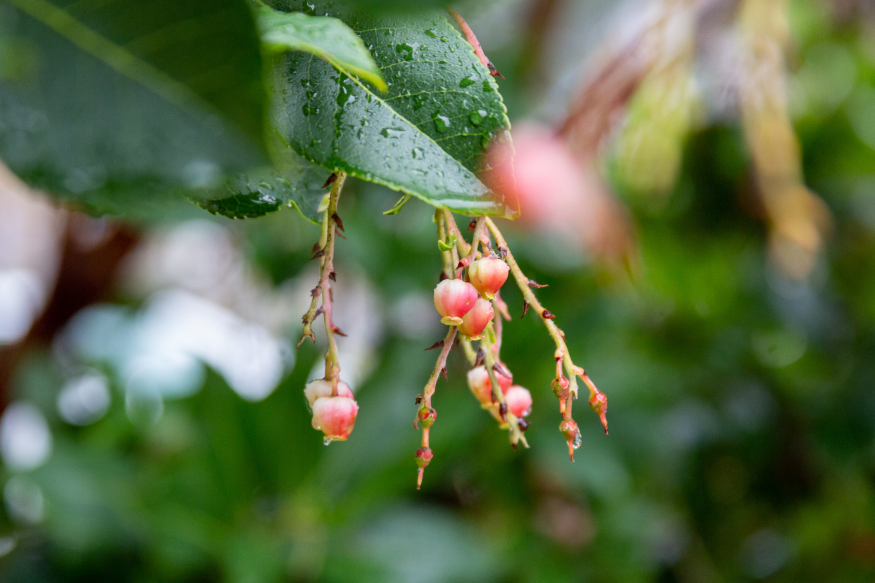
Rain drips from a strawberry tree at Lafayette Station during a storm.
Union City Police credit BART officer for the arrest of registered sex offender
BART Police Officer Kory Frost The Union City Police Department is publicly crediting 53-year-old BART Police officer Kory Frost for arresting the registered sex offender accused of molesting a 2-year-old girl in the aisles of a Dollar Tree store on Wednesday, December 1. According to the Union City Police
BART to open early and run long, extra trains for 2016 SF Pride
Download the 2016 Pride timetable BART will be opening early at 7:00 am on Sunday, June 26th to accommodate revelers attending San Francisco’s annual LGBTQ Pride parade. We strongly encourage customers to take advantage of this pilot opening time to beat the crowds and take one of the early trains downtown
Sunday Ridership in Top Ten Sundays; BART on Saturday Schedule During the Holiday
217,084 took BART Sunday during the Bay Bridge closure, the seventh highest Sunday ever. BART recorded 278,858 trips Saturday, August 31, 2013 during the Bay Bridge closure. It was the second highest ridership for a Saturday, surpassed only by October 6, 2012. Ridership that day was 319,484, boosted by the
16th Street Mission BART station elevators will be temporarily out of service
From Tuesday, April 8 through Friday, April 11, 2008, our crews will be interrupting elevator service at the 16th Street Mission Station to complete electrical improvements to the elevators. This elevator shutdown will limit access to our train platforms at this station. If you require an elevator, you must
BART to host final in-station events at 19th St/Oakland Station
BART’s 19th St/Oakland Station is entering the second phase of the Station Modernization Program and is one step closer to seeing major upgrades. BART is currently developing design and construction estimates for the station. The goal of the program is to modernize the station’s function, safety, capacity