
Search Results
Disability Pride Month: Harold Willson's fight to make BART accessible for all
Last week, Governor Gavin Newsom proclaimed July as Disability Pride Month. The month marks the anniversary of the Americans with Disabilities Act (ADA) that was signed into law on July 26, 1990. The ADA was a major milestone for civil rights in the U.S. that "prohibits discrimination against individuals with disabilities in all areas of public life, removing barriers to employment, transportation, public services and other critical areas," per Newsom's proclamation.
More than 7% of BART riders have a disability, and BART is continuously working to make the system as easy to use as possible for every single person who rides and relies on us. Our work is ongoing.
This month, BART will be celebrating riders with disabilities and the contributions they have made to our transportation system and region.
We begin with the story of Harold Willson, originally published in 2022.
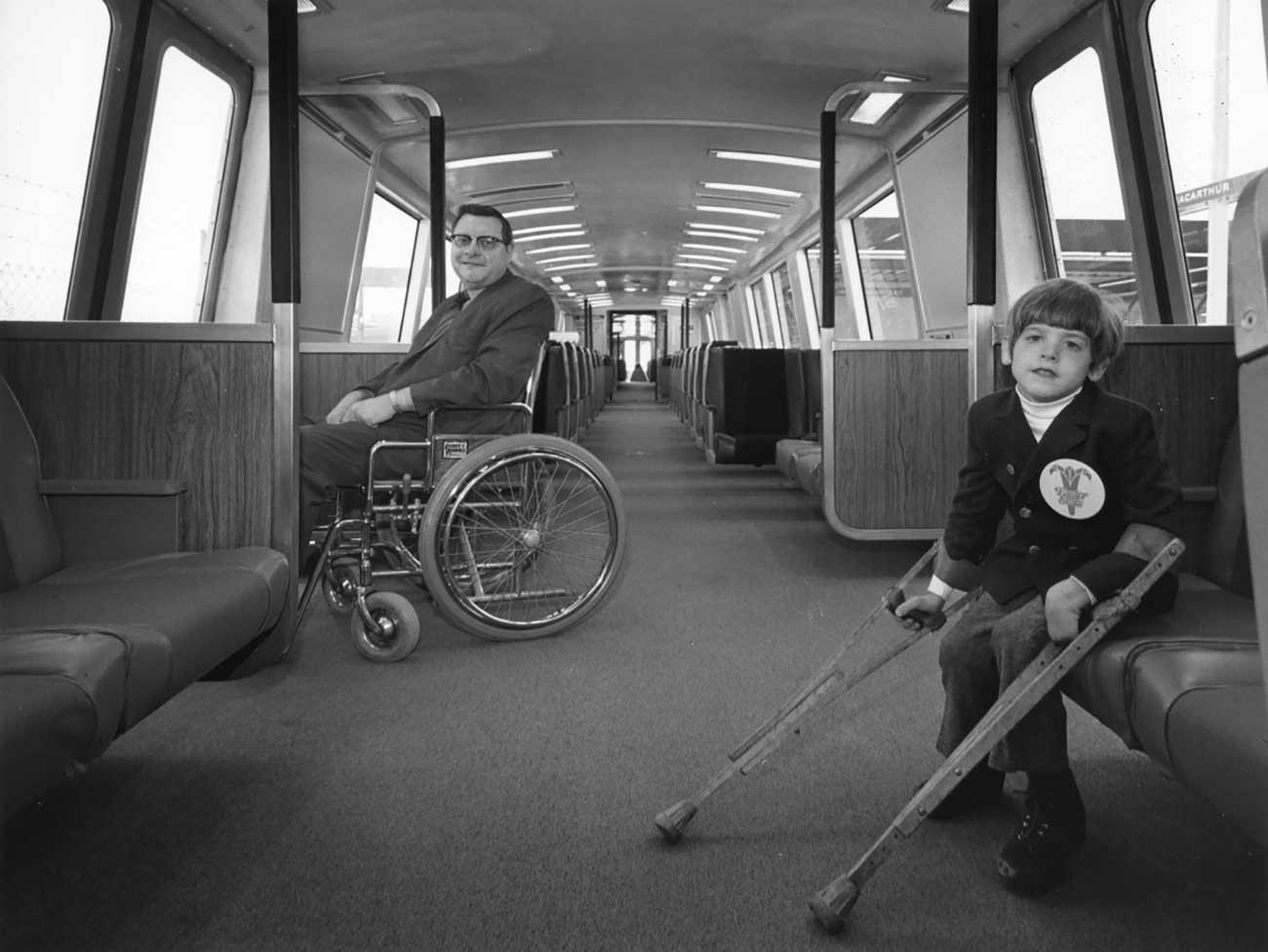
Harold Willson (left) smiles at Eric Staley (right) on a BART train in 1972. Photo courtesy of Kaiser Permanente Heritage Resources.
“There is a special personal pride in being the first handicapped person in a wheelchair to use a subway train, and to represent all handicapped travelers who will use the BART system in years to come. I’ll never forget that sense of freedom I experienced as I boarded the BART train.”
– Harold Willson, quoted in “Accent on Living,” Spring 1973
When Harold Willson was 21 years old, his life forever changed.
The West Virginia native dropped out of university when his funds ran out and started working as a coal miner. On a regular day in February 1948, about two years after he began working in the mines, Willson was caught in a slate fall. He suffered severe spinal damage, broken ribs, and a broken back.
Willson’s tragic accident spurred a lifetime of advocacy. His work to raise awareness and secure rights and access continues to impact the freedom and mobility of transit riders across the nation. Thanks to Willson’s efforts in the 1960s, BART became the first public transit system in the nation with accessible trains and stations.
“Never again would skeptics be able to argue that trains could not be made wheelchair accessible" after Willson, write Doriz Zames Fleischer and Frieda Zames in “The Disability Rights Movement."
Four months after his accident, Willson was transferred by train to the Kaiser Foundation Rehabilitation Center in Vallejo. It was a felicitous move, one that would forever alter the course of his life and public transportation. In his two years at the facility, Willson underwent intensive physical therapy and multiple surgeries. Doctors told the young man he would use a wheelchair for the rest of his life.
In 1950, Willson joined Bank of America and married Patricia Leister, who was a member of the nursing staff that treated him at Kaiser. Six years later, he completed a degree in business administration at Golden Gate College, and a year after that, he was hired as an accountant at the Kaiser Foundation Medical Care Program. Willson would go on to hold a variety of positions at Kaiser throughout his life. He’d retire as a senior financial analyst for the Kaiser Foundation Health Plan in 1977.
Said Cuong Le, historian for the nonprofit health care provider: "Kaiser Permanente is fortunate to have passionate and influential employees like Harold Willson, whose remarkable success advocating for historically overlooked needs of people with disabilities led to substantially improved conditions."
During the years that Willson lived in the Bay Area, the region was aflutter with the news of a soon-to-be-constructed rapid transit system that would connect the Bay. The tenor of excitement shifted for Willson when he learned the system, to be called the San Francisco Bay Area Rapid Transit District, or BART for short, would not be accessible for people with disabilities. Four percent of the Bay Area population at the time had severely limited mobility, meaning the BART system would exclude them from its ridership.
“When the system was built in the 60s, the elevators weren’t a consideration,” said Bob Franklin, BART’s Director of Customer Access and Accessibility. “They were completely an afterthought.”
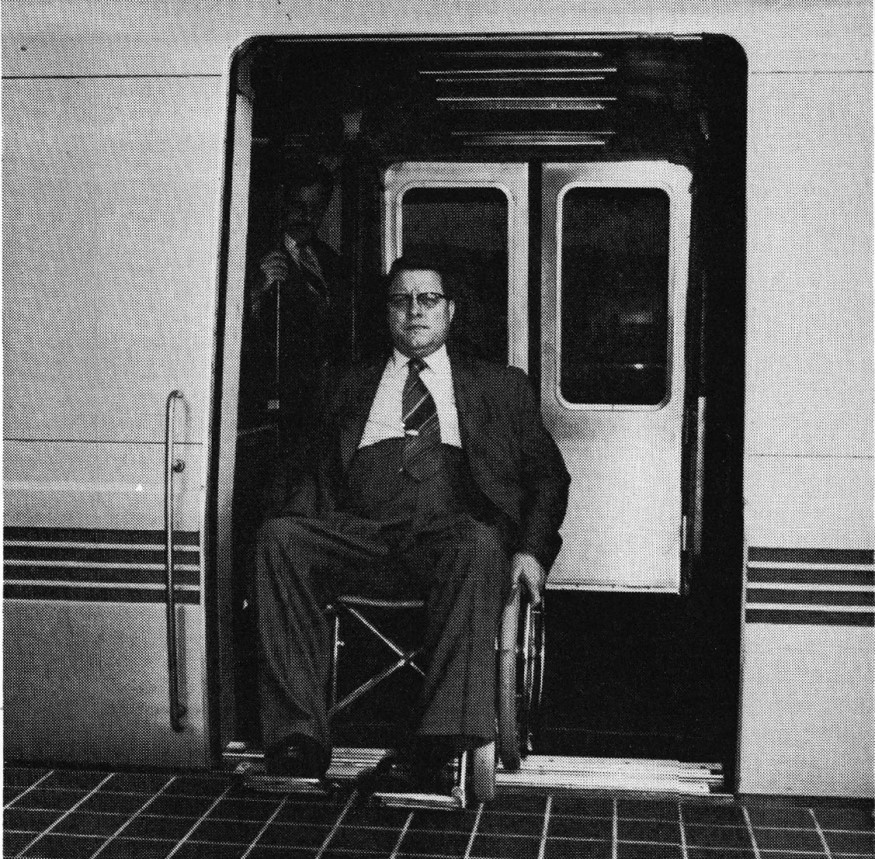
Photo courtesy of Kaiser Permanente Heritage Resources.
Willson reached out to BART and offered his services as a “volunteer consultant” to the BART Board starting in 1964. He had a unique and compassionate approach to advocacy, according to the people who knew and worked with him.
“His suggestion was novel for rapid transit, no one had tried it,” A.E. Wolf, the General Superintendent of Transportation for BART, is quoted as saying in the Spring 1973 issue of “Accent on Living." “It posed all kinds of problems; cost was significant. Our staff, including myself, was hardly enthusiastic.”
“But, he did not threaten, nor picket, nor sulk, nor lose patience,” Wolf continued. “Instead, he was professional, pleasant, firm and persistent. As a result, he won the support of each of our board members while maintaining a friendly relationship with our staff.”
Willson’s approach was to “sell” the idea for an accessible BART system by contacting people one by one and having individual conversations with them, slowly winning them over to his cause.
“You could be a pioneer in being the first major public transportation system to be accessible to the handicapped,” Willson told the BART Board and staff in 1963, according to Michael Healy’s “BART: The Dramatic History of the Bay Area Rapid Transit System.”
Willson’s methods worked. In 1968, the BART Board requested $7 million from the California legislature to include accessible elevators in its plans (the figure was later revised to $10 million).
Willson’s advocacy did not stop there. He and representatives from BART continued to lobby Sacramento until $150 million in additional funding for wheelchair accessibility was allocated to the under-construction system in March 1969. BART, with Willson's guidance and persistence, was ahead of its time. It would be more than two decades later that the Americans with Disabilities Act (ADA) was signed into law.
Among the accommodations the funding secured were elevators at every station, telephones in elevators and stations that were accessible for wheelchair users, special service gates and handrails, Braille symbols on elevator door casings, loudspeaker directions for those who are low vision and blind, closed-circuit televisions as needed, and level boarding between the platform and train.
In the years since Willson’s advocacy, BART has added even more accessible features to the system, which you can read about on bart.gov/guide/accessibility.
After BART was built, Willson would go on to continue advocating for accessibility. In 1971, Willson and Wilmot R. McCutchen, Chief of Design for BART, testified before a special U.S. Senate Committee on Aging. Their testimony was “an important precursor to raising public consciousness of the issue of disabled access,” writes Healy in his "BART" book. A robust disability rights and independent living movement would emerge in the years that followed Willson's lobbying.
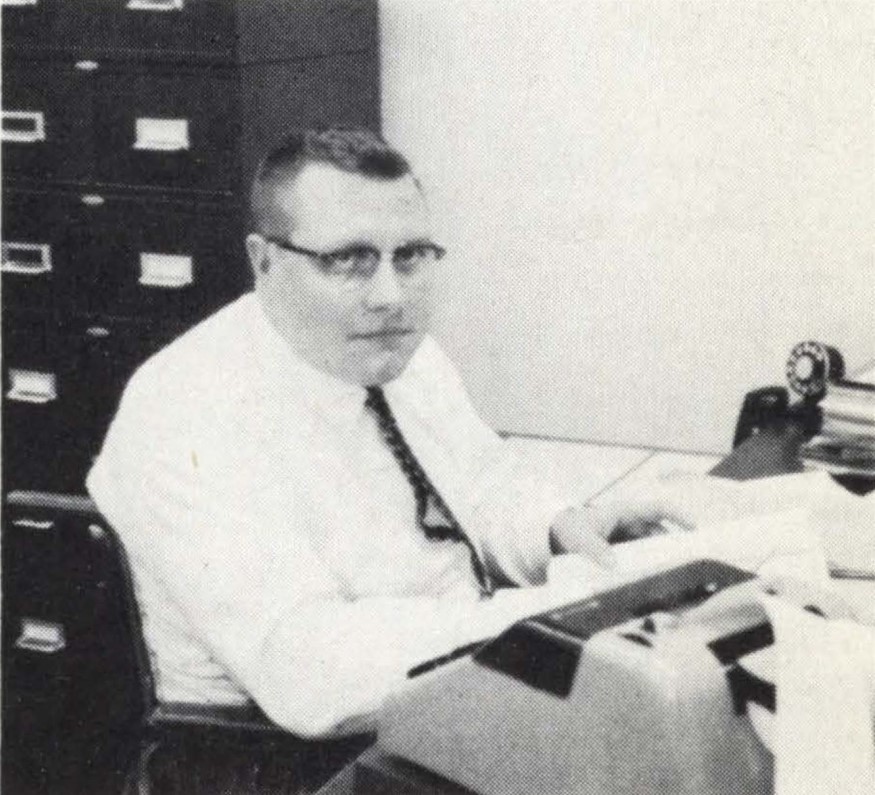
Image courtesy of Kaiser Permanente Heritage Resources.
Willson died in the Bay Area in 1994.
His legacy continues to reverberate across the nation. After BART, the newly built transit systems WMATA and MARTA also made their systems accessible, setting a new precedent for future generations of public transit.
“All of this is possible because one man had a bright shiny dream, and he made it come true,” Wolf is quoted as saying in a 2008 journal.
Denise Figueroa, the Executive Director of the Independent Living Center of the Hudson Valley and a longtime transit advocate, noted that transit has “come a very long way in terms of accessibility” from the 1950s and 1960s.
“In those days, when Willson first started out, there wasn’t an expectation of accessibility,” she said by phone. “Over the years, what has changed is that the public expects transit to be accessible – even non-disabled people.”
Figueroa said the mentality of transit systems was often, “It’s not my problem.” She said agencies would routinely cite cost as the prohibiting factor.
“The argument was always: It’s too expensive,” she said. That changed with the passage of ADA (1990), as well as Section 504 of the Rehabilitation Act (1973), which requires public entities that receive federal funding to ensure that people with disabilities are not discriminated against, nor denied goods or services.
Today, BART continues to bolster its efforts to make the system accessible for all riders. The transit agency hosts a monthly BART Accessibility Task Force on the fourth Thursday of each month, where the public can voice concerns, ask questions, and provide input. BART, which is ADA accessible by law, also encourages passengers to make a Reasonable Modification Request if their needs are not being met.
When transit systems are accessible for all, said Franklin in closing, everybody wins.
“It’s a federal law now that we’re accessible to everyone,” he said. “And when we design it that way, everyone benefits. The more universally we can design something, the better it will be.”
The BART Accessibility Task Force (BATF) is actively recruiting new members. If you are interested or have questions, please contact, Elena Van Loo, Customer Access and Accessibility Department, by phone at (510) 874-7366 or by e-mail at [email protected].
Provide feedback on BART’s 2026-2035 Sustainability Action Plan by October 31
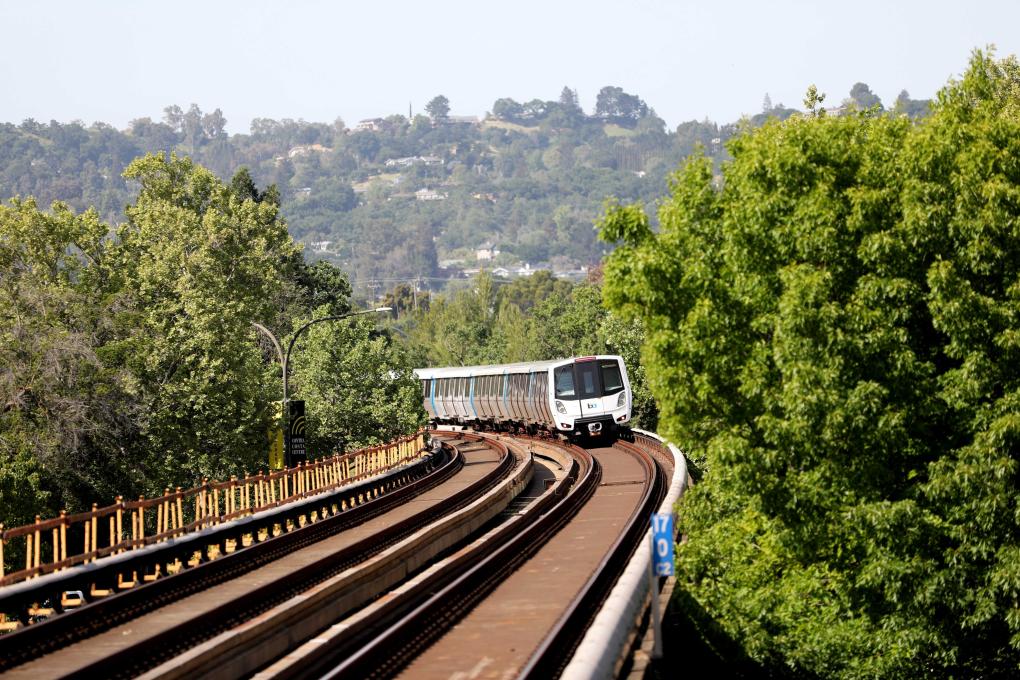
Over the past year, BART has been engaging with our riders and employees via surveys and community meetings to determine our sustainability program priorities over the next decade. We have received your feedback and are excited to share a draft of our new 2026-2035 Sustainability Action Plan (SAP), which will serve as our roadmap for implementing our Sustainability Policy through 2035.
The SAP outlines new goals, metrics, targets, and actions that will define our sustainability efforts, which means using energy and water more efficiently, reducing waste and emissions, improving access to BART stations, and delivering a quality experience for our riders.
The draft of the 2026-2035 SAP will be available for viewing online until October 31, 2026, after which we will make final revisions and publish the completed document in December 2026.
View the draft 2026-2035 Sustainability Action Plan
Please send any comments on the draft to [email protected] by October 31.
Overview of 2026-2035 Sustainability Action Plan
The San Francisco Bay Area Rapid Transit District (BART) is more than a transit system—it’s the backbone of the Bay Area. Every day, it connects people to jobs, schools, healthcare, and each other, linking key destinations across the region, including ferry terminals, airports, and other major transit systems. As the Bay Area grows and changes, BART’s role in supporting a more sustainable, resilient, and just future has never been more important.
The 2026–2035 Sustainability Action Plan (SAP) outlines how BART will continue to support climate resilience, public well-being, and responsible environmental practices through its operations and services. From reducing greenhouse gas emissions and conserving water to expanding access to clean, reliable transit, this plan reflects BART’s commitment to improving quality of life for all who live, work, and travel in the region.
Sustainability covers both environmental and social factors – protecting the environment and the people within those environments go hand in hand. BART aims to create cleaner air, safer stations, and more accessible communities, helping make Bay Area transit essential and transformative.
BART previously published a 2015-2025 SAP, which outlined our sustainability-related initiatives through calendar year 2025. We have taken many of the lessons learned from implementing that plan and applied them to our approach developing this new plan.
BART will publish annual sustainability reports throughout the 2026–2035 SAP to track progress toward its 2030 targets and any interim goals along the way. These reports help ensure transparency, show what’s working, and highlight where course corrections may be needed. As part of this process, BART will update its targets in 2030 to set goals for 2035.
For more information about other aspects of BART’s Sustainability program, please visit bart.gov/sustainability.
How BART's Earthquake Response Team is preparing for the next "Big One"
Find BART’s earthquake safety tips here.
When a big earthquake strikes the Bay Area, BART is ready with a series of stringent protocols and a specially trained team that's prepared to dispatch the moment after a quake hits to assess the system and ensure it’s safe to run.
BART is an industry leader when it comes to preparing and mitigating the impacts of major earthquakes. BART was an early adopter of the ShakeAlert Earthquake Early Warning System that gives us an alert before ground shaking happens. Read more about the system here.
BART also recently completed its Earthquake Safety Program (ESP). The ESP was instigated in the early 2000s and included a major retrofit of the Transbay Tube, which some engineers consider one of the safest places to be during a big earthquake.
Though the project is complete, BART engineers never let their guards down when it comes to earthquakes, and the recent Great ShakeOut earthquake drill is an example of the lengths BART takes to be prepared. BART knows its importance in the wake of major earthquakes. After the devastating Loma Prieta earthquake, when the Bay Bridge collapsed and BART was up and running within hours, the region witnessed how BART is as a transportation lifeline for the SF Bay Area during major disasters.
“Re-establishing train services quickly after a major earthquake is essential for regional emergency response and economic recovery. One key element of making this happen is prompt assessment and reporting of structure conditions throughout the system,” said Phoebe Cheng, Engineering Group Manager.
BART Principal Structural Engineer Alvin Tsui leads the Earthquake Response Team (ERT) with support from Engineer Recy Calma. Their goal is to train employees and continuously improve BART’s post-earthquake inspection procedures.
The ERT consists of around sixty engineers and thirty maintenance employees that fan out across the system in the advent of a major earthquake, defined as an earthquake with a magnitude of 6.0 or greater with an epicenter within 50 miles of the BART system. Since its inception, the ERT has never been activated for a real event, but they train throughout the year to prepare for the real possibility of a massive earthquake rattling the Bay Area.
The Great ShakeOut is the ERT’s big show. Once the international earthquake drill commences at 10:16am, BART staff hit the ground running. The first step is triggering the ShakeAlert early warning earthquake system, which signals trains to automatically slow to 27mph before briefly stopping. During the drill, BART also tests its internal communications systems while the Operations Control Center ensures the train control systems are working properly.
Meanwhile, ERT members travel to all 50 stations to conduct structural assessments, simulating damage inspections that would occur during a real earthquake. They inspect walkways, support structures, elevators, escalators – anything that could sustain damage in a powerful earthquake.
The Great ShakeOut simulation is designed to exercise “muscle memory” for BART’s earthquake response as well as identifying areas for improvement.
Safety is BART’s mission above all, and the practiced ERT is crucial for getting service up and running quickly.
The team focuses their observations on stations and aerial structures. They’re looking for physical damage – cracks, leaning, displacement, unevenness, and foundation damage – as well as issues like station power outages, falling signage, and water intrusion.
Members of the ERT can be activated at any time, and staff volunteer to join the team. Every ERT member is issued two big backpacks full of supplies they might need, from batteries and measuring tools to safety vests and protein bars. One backpack stays at their house: the other in their office. See what’s in their bags in the video.
It’s honorable to be a member of the ERT, who have signed themselves up to prioritize the safety of their community during a major disaster. Calma wanted to be a part of the ERT after witnessing big earthquakes while living in the Philippines.
“I was hesitant to join at first – it's a lot of responsibility,” she said. “But as an engineer, your goal is to serve the public.”
Added Tsui: “As an employee at a public agency, we are the heart of regional emergency response. As members of the ERT, we want to serve the community and help keep them safe during emergencies.”
BART's Safe and Clean plan transforming rider experience at Civic Center Station
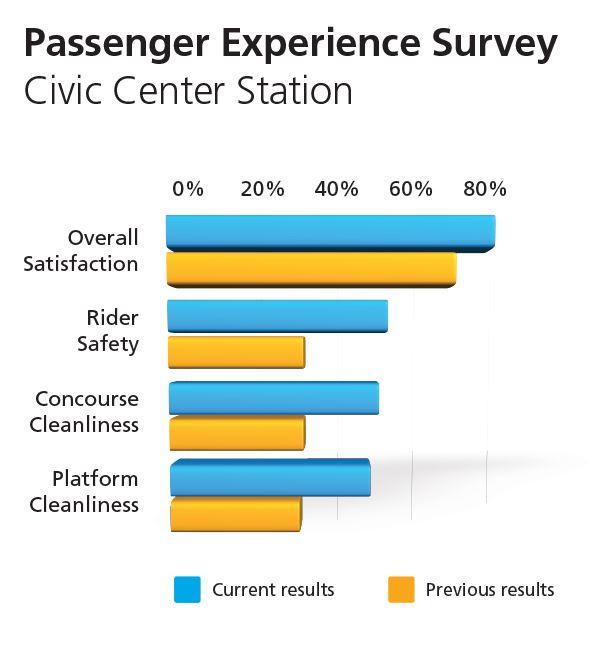
BART’s efforts to reimagine the rider experience through an unprecedented commitment to safety and cleanliness appear to be making a difference at a San Francisco station with a history of issues. Recent Passenger Experience Survey (PES) data shows an increase in satisfaction with Civic Center/UN Plaza Station as well as a jump in the percent of respondents who say they feel positively about station cleanliness and safety. Among the findings:
- Satisfaction with the overall BART experience for riders who boarded BART at Civic Center Station increased 9 points from 68% to 77% in the latest quarter (October-December) compared with the previous quarter (July-September).
- Satisfaction with rider safety at Civic Center Station surged by 20 points from the previous quarter from 32 to 52%
- Ratings of concourse cleanliness shot up 18 points from 32% to 50%.
- Ratings of platform cleanliness increased by 17 points from 31% to 48%.
The improvements at Civic Center come as BART has implemented its Safe and Clean plan, which focuses on boosting BART PD’s visible safety presence and increasing station cleaning crews by nearly two thirds.
“Civic Center has been a challenging station but that hasn’t stopped us from tackling a difficult situation and bringing stakeholders along with us,” said BART Board of Directors President Bevan Dufty. “The investments being made at Civic Center make it clear that BART cares that people of all walks of life should be able to access a safe, clean, and reliable system.”
“Maintaining a consistent safety presence has been critical to improving the overall rider experience at Civic Center Station,” said BART Police Chief Kevin Franklin. “Our presence involves traditional sworn officers as well as unarmed Crisis Intervention Specialists and Transit Ambassadors. Not only are we deterring bad behavior, but we have a Tier 1 emergency response time of about four minutes, which is among the fastest for any Bay Area law enforcement agency.”
Cleaning crews are now stationed at Civic Center during all BART operating hours on top of regular overnight power cleaning shifts. Every day there are 2-3 cleaners devoted specifically to the station. You can see an example of deep cleaning at Civic Center Station here.
BART has successfully boosted its cleaning staff but still has about 14 openings, which represents a vacancy rate of nearly 8%. BART is drawing from a list of qualified candidates to fill those positions. In the meantime, anyone interested in applying should visit BART’s Careers page and subscribe to receive notifications for when openings become available.
More improvements are on the way for Civic Center. The station was named earlier this month as one of the next eight in line to receive Next Generation Fare Gates once field testing of prototype units at West Oakland Station is complete. The Market Street Escalators Renovation Program is replacing 41 escalators at BART’s four downtown San Francisco stations including a new platform escalator that opened just last month at Civic Center. Within the last year BART reopened the Station Agent Booth at the UN Plaza entrance of the station which had been closed for more than a decade. Also, new canopies are being installed over entrances at all the downtown stations to make them more welcoming as well as to better protect escalators from the elements.
2025 BART holiday sweaters and merchandise available for preorder through August 17
Click here to shop the BART holiday merch presale
Update: Railgoods.com has extended the presale through August 17.
It’s chic and sophisticated. It’s cozy and warm. And it's available for preorder now.
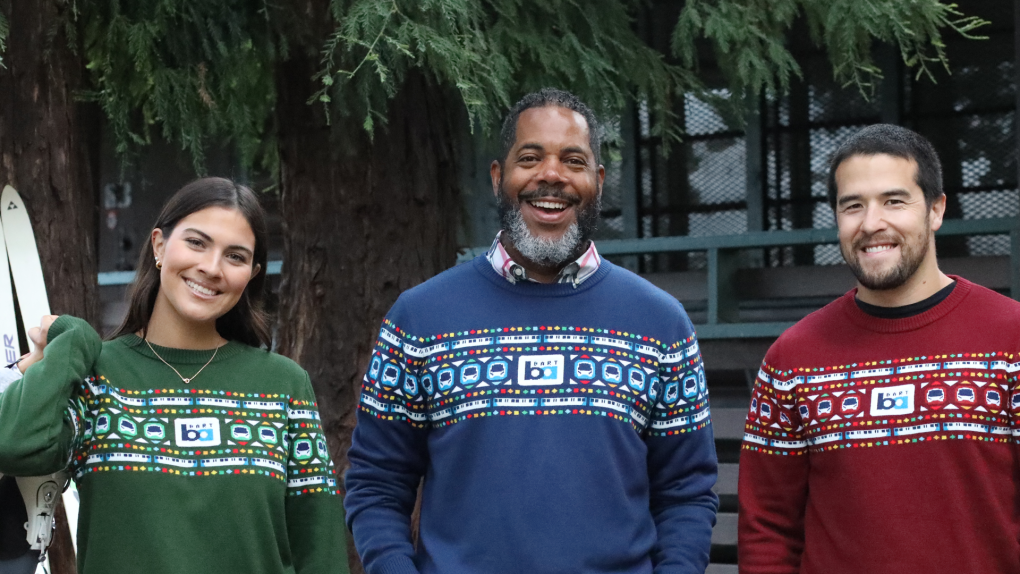
Introducing the 2025 BART holiday sweater.
BART's holiday merchandise presale starts July 24, and runs through Sunday, August 17, on Railgoods.com.
This year’s soft knit sweater is dashing and refined, colorful yet understated, and as always, it’s the best way to rep your BART and Bay Area pride during the winter season.
The new sweater is available in your choice of blue, red, and green -- only blue adult sweaters will be available for purchase after the presale. Collect them all!
And for the first time in BART holiday sweater history, we're offering a special BARTy sweater in youth sizes.
Don't forget your beanie -- the new design pairs perfectly with the sweaters.
Preordering ensures you'll get the BART holiday merch you want before it sells out! Sweaters and beanies ordered during the presale ship the first week of November, so you'll be the first to have your BART holiday merch in hand.

“The Bay Area should buy this year’s BART holiday sweater because it’s an elevated version of the fan favorite,” said Director of Customer Services Erica Iñiguez-Diaz, noting that this year’s holiday merch is being produced by local small business Oaklandish. “In past years, our sweaters featured traditional or playful ugly sweater designs. This year, we’ve gone with more of a ski-style sweater—a sophisticated look that BART fans can proudly wear not just to holiday parties, but to work throughout the season.”
BART was among the first public transit agencies in the U.S. to sell branded holiday sweaters, debuting its first design in 2021 followed by original designs each year thereafter. Sweater sales generate profit for the agency in addition to building community and generating goodwill. Last year alone, BART sold more than 5,700 holiday items.
The details + discount
Railgoods is offering $10 off when you spend $50 and $25 off when you spend $100 on holiday sweaters and beanies with discount codes HOLIDAY10 and HOLIDAY25.
Holiday merchandise purchased during the presale will ship and be available for pickup at the Lake Merritt Customer Services Center the first week of November.
If you don't preorder holiday merch during the presale, it will be available for purchase the first week of November via Railgoods; in-person at the BART Customer Services Center; and at Railgoods pop-ups at various BART stations (dates and locations to come).
Sizes + Pricing:
Adult Sweater – $49.99, S - 4XL
Youth Sweater - $34.99, S (6/8), M (10/12), L (14/16), XL (18/20)
Beanie – $15.99, one size
SweaterFest returns Saturday, December 13
SweaterFest returns on Saturday, December 13. We'll gather with the community and the thousands of people who own BART holiday sweaters to toast transit and the season with family-friendly activities, a group photo of everyone in their sweaters, and more.
We’ll share additional details as the date approaches. Railgoods will be selling holiday merchandise at the event.

Meet the BART Anime Mascots Saturday, Sept. 16, at Powell St Station
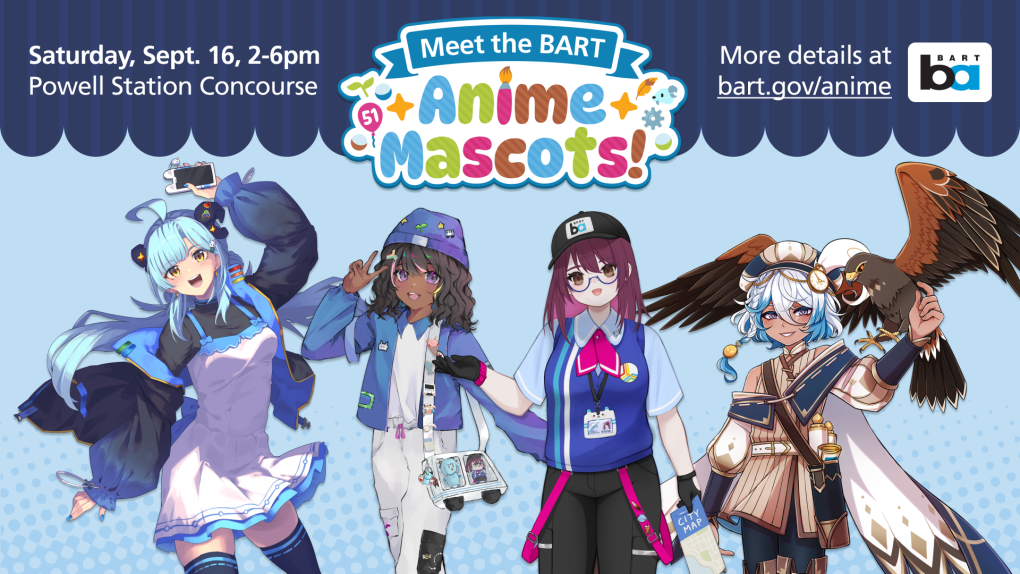
Join BART as our new Anime Mascots overtake Powell St. Station for Transit Month and BART’s 51st anniversary. Take photos with the mascots, make buttons with staff, grab a prize from the BART capsule ball machine, and meet cosplayers! Come in cosplay and get a rare BART anime charm.
The Link21 outreach team will also be there to talk about our project to build a second train crossing connecting Oakland and San Francisco.
When: Saturday, September 16, 2pm-6pm
Where: Powell Street Station in the free area on the concourse level between BART secondary Station Agent booth and Muni agent booth (4th and Market entrance/exit)
Learn more about BART's Anime Mascots at bart.gov/anime.
Sound Tracks, BART’s free summer concert series, returns; next performance is September 4

Sound Tracks, BART’s free summer concert series, returns for three shows in August and September. The outdoor series, presented by the BART Art Program, is part of BART’s rider engagement strategy to activate stations, show appreciation for riders and neighbors, and support local artists – all for the love of music.
Performances will be held in the unpaid areas of stations, and attendees are encouraged to take BART. Dance bands have been so successful at past events that for this series, we’re bringing out musicians that know how to get a crowd on their feet.
Said Jennifer Easton, BART Art Program Manager: “The BART Art Program centers supporting local artists and delivering arts and cultural programming to enhance rider and community experience. Sound Tracks encourages riders to take a minute to celebrate with station neighbors, support local businesses, and enables BART to show our appreciation for all the people who ride the system and to those that make the station areas vibrant.”
Up next on the schedule:
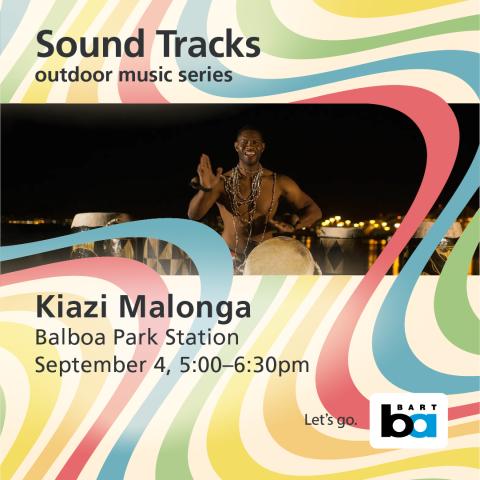
Wednesday, Sept. 4, 5 pm to 630pm, Balboa Park: Kiazi Malonga (Congolese drummer performing with full percussion band)
Previously:
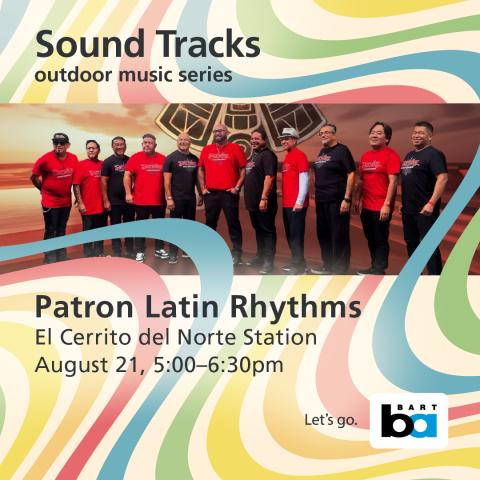
Wednesday, August 21, 5pm to 630pm, El Cerrito del Norte Station: Patron Latin Rhythms (Latin jazz, Latin rock, Mambo). Special reading by winners of the BART Lines Teen Poetry Contest.
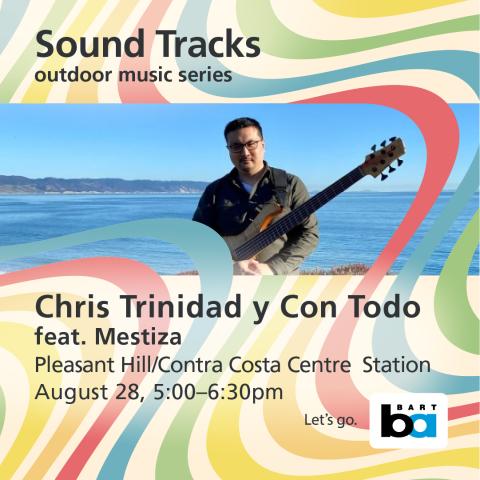
Wednesday, Aug. 28, 5pm to 630pm, Pleasant Hill/Contra Costa Centre: Chris Trinidad y Con Todo featuring Mestiza (Cuban Timba, Puerto Rican Bomba, and Afro-Caribbean genres mixed with Latin jazz, soul, and R&B)
BART officer helps mother find her homeless daughter: “People aren’t mentally ill from 9-to-5”
BART PD Officer Eric Hofstein delivers a care package to a woman whose life he helped save By MELISSA JORDANBART Senior Web ProducerThe care package had a childhood Bible engraved with her name, her favorite Lord of the Rings books, and a photo album with pictures of family members.BART Police Officer Eric
BART’s new budget avoids service cuts and continues investment in rider safety
BART’s new two-year budget maintains train service levels and staffing for enhanced safety and cleaning efforts while avoiding cuts that will have a negative impact on the local economy, traffic conditions, and the state’s ambitious climate goals. The BART Board of Directors voted to adopt the budget at its June 13, 2024, meeting.
The budget prioritizes the systemwide installation of new, taller, fare gates to add an additional layer of security at stations. As the new fare gates will make it harder to skip paying the fare, the budget continues to fund the newly increased discount for low-income riders, offering 50% off trips through the Clipper Start program.
“It’s more important than ever that we provide the best service possible for our nearly 200,000 riders we serve each day and to attract new riders,” said BART Board President Bevan Dufty. “This sensible budget preserves shorter wait times between trains, better weekend and evening service and, overall, more convenient public transportation to serve as an alternative to driving.”
Operating Budget Focuses on Improvements to the Rider Experience
The $1.1 billion FY25 operating budget supports optimized train schedules and train lengths. With more people working from home and commuting less during the traditional rush hours, the schedule introduced in September 2023 eliminated 30-minute wait times by increasing train service during evenings and weekends while maintaining adequate daytime service on weekdays. The longest interval between scheduled trains is 20 minutes and most riders have options about every 10 minutes until 9pm on weekdays.
The budget relies on right-sized trains to reduce costs, which also results in improved safety and cleanliness. BART now operates 8-car trains on the Yellow Line as well as selected Red and Blue line trains, and 6-car trains on all other lines on weekdays and weekends. This has reduced traction power costs by almost 20% and decreases mileage on the fleet overall.
The budget supports BART’s focus on safety and security and ensuring police are riding trains more, increasing their visibility, and deterring crime. BART Police will continue to recruit to fill all vacant officer positions and the General Manager has committed to adding 19 additional officer positions once vacancies are filled. Unarmed Crisis Intervention Specialists, Ambassadors, and Fare Inspectors will continue to ride trains to boost BART’s visible safety presence.
Capital Budget Prioritizes Reliability and Reinvestment
The $1.2 billion FY25 capital budget provides funding dedicated to important rider improvements such as the Next Generation Fare Gate program, escalator replacement, new train cars and Measure RR rebuilding projects.
It’s designed to be a flexible spending plan with the ability to adapt to changing priorities and project schedules, yet the capital budget retains a central focus: 98% of BART’s planned capital investment in FY25 and FY26 will be in System Reinvestment – investments to keep BART’s existing system reliable and safe – and Service & Capacity Enhancement – investments to enhance the rider experience, support more frequent service and add system redundancy to improve reliability.
Manageable Near-Term Outlook
While the FY25 operating budget is balanced, the FY26 operating budget faces a $35 million dollar deficit. Measures are being taken to reduce the projected deficit, such as containing discretionary expenses. A 5.5% inflation-based fare increase on January 1, 2025, combined with an identical fare increase this past New Year’s Day, is estimated to generate an additional $20 million over the two-year budget term. BART will also defer some operating budget allocations to capital projects.
“We have a number of options still available to address the FY26 operating deficit,” said BART Assistant General Manager for Performance & Budget Pamela Herhold. “We’ll be working with the Board throughout the coming year to chart the best course of action.”
Uncertainty Mid and Long-Term Outlook
The outlook after FY26 changes dramatically as BART is expected to exhaust the remaining emergency federal and state funding. One-time federal emergency assistance of $1.6 billion has allowed BART to sustain operations since 2020, but the last of this funding will be spent in FY25. SB 125 state and regional assistance of $352 million, to be allocated in 2024 and 2025, will also be used to offset operating deficits over the FY25 & FY26 budget period.
In FY27, BART’s first fiscal year without emergency assistance, the deficit is projected to be $385 million. Since BART’s outdated model of relying on passenger fares to pay most operating costs is no longer feasible, the agency must modernize its funding sources to better match other transit systems throughout the country that receive larger amounts of public funding. BART needs a more reliable long-term source of operating funding and continues to advocate at the federal, state, and regional levels for the permanent funding needed to sustainably provide the quality transit service the Bay Area needs.
Legacy BART car to become family-friendly beer garden in Downtown Hayward
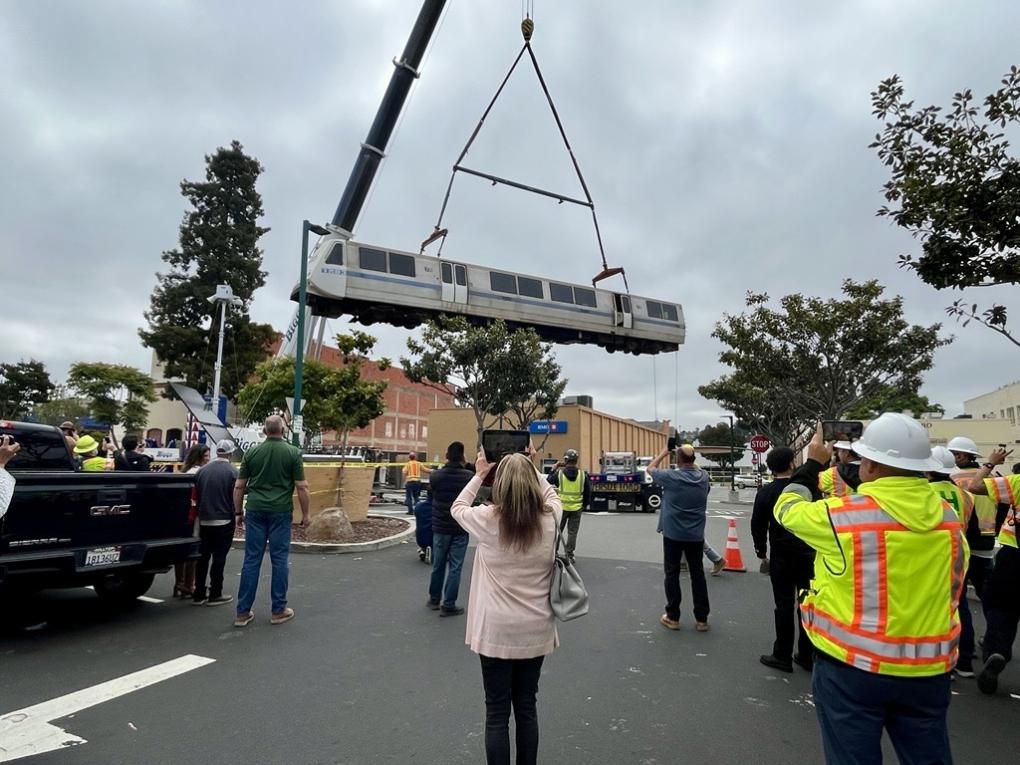
Trains aren’t known for stopping street traffic, but one flying BART train car did just that this past Thursday on B Street in Downtown Hayward.
On May 7, a legacy BART car landed (literally) in its final resting place as a Bigge crane deposited the decommissioned car from the back of a flatbed onto a cement platform that will become the centerpiece of Arthur Mac’s Big Snack, a family-friendly pizza-by-the-slice beer garden and neighborhood hangout spot, slated to open in the next few months.
Passersby and drivers stopped on the sidewalk and middle of the road to watch the cinematic process unfold. One driver stopped in the middle of the road to inquire what was happening. "It'll be a restaurant!” the sidewalk dwellers shouted to which the driver replied: “I don’t have experience, but can I be a hostess?” She went on her way as the cars behind her started honking.
Resting place isn’t quite the right word for this legacy BART car. That's because its second life, though stationary, has just begun.
“I feel emotions I’ve never felt before,” said Joel DiGiorgio, Arthur Mac’s cofounder and co-owner, as he watched the car fly over the lot by crane. “I’m slowly feeling 65,000 pounds of pressure off my chest.”
In the coming weeks, Arthur Mac’s will shine and spruce their BART car to serve as a dining car among a smattering of shipping containers that will make up the outdoor restaurant.
“Customers will be able to go inside and have a food and beverage experience you can’t have on a normal BART car,” DiGiorgio noted. Want to down wings and a brew on BART? Here's your chance.
The restaurant is the first Arthur Mac’s to land in Hayward. The first location is located across the street from the MacArthur BART Station, and the brand is an homage to BART, its name an anagram of “MacArthur.” They are selling their Oakland location in order to complete the more complicated buildout of the Hayward restaurant, which will be nearly double in size of the Oakland spot.
An East Bay 90s kid, DiGiorgio and his friends would often ride the 51 AC Transit bus to Rockridge Station then onto the Embarcadero to skateboard at famous spots like Pier 7 and Hubba's Hideout.
“This is in part why we named our family restaurant after a BART station, as it played into Bay Area culture and shared nostalgia,” he said. “We also believe that public transportation is a pillar of the American Dream…Public transportation gives us all a chance while acting as the connective tissue of our extended and disparate communities.”
In addition to the excited passersby, Hayward Mayor Mark Salinas and Hayward City Council member Angela Andrews visited the scene to check things out for themselves and celebrate the occasion.
“This is going to be a gamechanger in Downtown Hayward,” said Salinas, noting that effective economic development happens when municipal governments, businesses, and public transportation collaborate. “It’s iconic spaces like these that define the East Bay and bring the community together.”
BART gave Arthur Mac’s the car at no cost as part of its legacy car decommissioning program. The restaurant was responsible for the cost of transporting the car.
BART officially retired its more than 50-year-old legacy fleet in 2024. Acknowledging that its legacy cars have a tremendous sentimental value with the Bay Area community, BART gave the public the opportunity to submit proposals for repurposing retired cars, and eight recipients were selected after describing what they planned to do with the vehicles. Only one legacy car remains in BART’s possession, intended to serve as a bike shop and clubhouse for Oakland youth once the permitting process is complete. The unclaimed legacy cars were recycled locally.
The recipients are reusing their cars for a multitude of purposes, including a concession stand for the Oakland Ballers, a short-term rental in the Sierra foothills, and a regional fire training center. An A, B, and C car were awarded to the Western Railway Museum for its Rapid Transit History Center, which opens later this year.
Representatives from the Sierra Train House and Western Railway Museum came to Hayward to watch the second-to-last car be delivered, offering DiGiorgio pointers on how to restore the car, what to reinforce, and general best practices when refurbishing old BART cars.
Built in the 1970s and refurbished in the 1990s, the Arthur Mac’s train car will lean into the aesthetic of the latter decade, its ads to be swapped with those you might see on BART in the 90s. They intend to fully lean into the “time warp” by leaving the car largely as it is, with some seating rearranged. The front of the cab will retain the Train Operator’s seat and control panel for kids to explore.
“This is a new life for this BART car,” DiGiorgio said. “In the words of Bob Marley, this train is bound to glory.”